Author Archives: Alan Sircom

Edifier Stax Spirit S3

As you’re studying this in an audiophile context, some clarification is named for. The Stax Spirit S3 Bluetooth headphone is Edifier’s flagship moveable audio headphone. Edifier took over Stax in 2012 and the Spirit carries that title, however this isn’t a Stax product.

The Edifier Stax Spirit S3 comes provided in slick stiff-card packaging, with a helpful clamshell case for travelling. It has a no-nonsense but trendy look and that, plus the array of strictly helpful case sweet that comes within the field means the S3 scores extremely on the ‘yum’ chart. Any firm that provides two units of earpads to accommodate totally different consolation necessities ticks all the best bins, plus wired cables, USB-C charging cable, and an assortment of adaptors for six.35mm and two-jack in-flight leisure as commonplace is making all the best noises.

Planar Magnetic

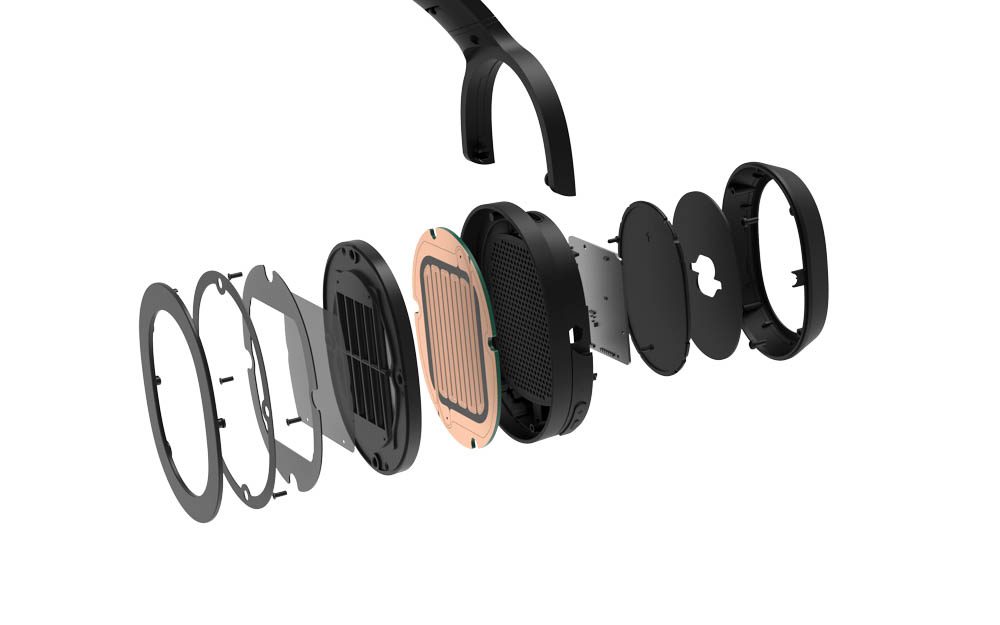
Edifier’s Stax Spirit S3 options its personal EqualMass planar magnetic drive items with Fluxor magnetic buildings in a closed-back design. This final has simply sufficient venting on the prime of the earpieces to make them directly simple to put on and onerous to leak. And if the Fluxor half rings a bell, sure… the motive force tech is constructed beneath license from Audeze.

Edifier Stax Spirit S3

The earcups (each the pre-fitted lambskin ones and the cooler mesh ones) are smaller than common however except your face can be utilized as a satellite tv for pc dish, this shouldn’t be a difficulty.

As the S3 are comparatively gentle and the headscarf doesn’t maintain you in a vice-like grip, you possibly can put on them comfortably for lengthy intervals. The battery life helps right here too. You can get 80 hours between prices. The absence of noise cancellation in all probability helps battery life and – whereas there’s little leakage – it’s presumably the one factor I missed from these in any other case wonderful headphones.

Pairing as much as two Bluetooth gadgets is straightforward, dependable and fast. It helps aptX HD, however not aptX adaptive. There can also be an App that controls the S3s settings, comes with a wealth of meditative and stress-free musical vibes and chill-out sounds of the forest, and hyperlinks to the net handbook for these unwilling to learn the tiny, printed handbook supplied.

The app additionally consists of three gentle tone-shaping modes; the default ‘Classic’ setting provides good bass and scoops the mids barely. Meanwhile ‘hi-fi’ provides a flatter general response making the S3 extra even-handed and ‘Stax’ provides a definite top-end tilt to attempt to replicate the vitality of Stax electrostatic ‘Earspeakers’. I’d like a little bit of consumer adjustability right here.

Fine general stability

Regardless of mode although, the efficiency is superb. Planar magnetics are comparatively uncommon within the wi-fi, moveable audio house, and the readability they convey is a welcome change. And on this case, the S3 are dynamic, thrilling sounding, with tight however targeted imaging. They are additionally extraordinarily detailed and with a effective general stability. Vocal readability is superb. Bass is nice too, though missing a contact of the vitality and drive of the very best dynamic driver headphones. Best of all, there’s nearly no distinction in efficiency between wired and wi-fi, which is exceptionally uncommon. You do must hold the headphone powered up even when wired, nevertheless, however with a lot battery life at hand, that’s not an enormous deal.

Edifier Stax Spirit S3

I’m all the time cautious of recommending wi-fi Bluetooth headphones for audio lovers as a result of they hardly ever come as much as code. The Edifier Stax Spirit S3 is totally different. It’s no doubt the very best I’ve heard to this point. Use it with the app and it’s a musical pleasure, particularly for travelling, regardless of the dearth of noise cancellation and consumer adjustable EQ. Put merely, the Edifier Stax Spirit S3 raises the bar for moveable audio.

Technical specs

  • Bluetooth model V5.2
  • Audio codecs Qualcomm® aptX Adaptive, Qualcomm® aptX HD, Qualcomm® aptX™, SBC
  • Driver unit 89x70mm Planar Magnetic Driver
  • Playtime 80hrs
  • Charging time 1.5 hours
  • Charging port USB-TypeC
  • Battery capability 1500mAh
  • Input 5V/1.5A
  • Microphone Type / Size MEMS/ 3.50×2.6 ×0.98mm
  • Microphone Sensitivity -37dBFS±1dBFS
  • Frequency response 20Hz~40KHz
  • Sound strain stage 94±3dB SPL (A)
  • Impedance 24Ω
  • Weight 329g
  • Dimension (L×W×H) 208 × 110 × 255mm
  • Price £399.99

Manufacturer

Edifier

edifier.com

Back to Reviews

The submit Edifier Stax Spirit S3 appeared first on Hi-Fi+.

Edifier Stax Spirit S3

As you’re studying this in an audiophile context, some clarification is known as for. The Stax Spirit S3 Bluetooth headphone is Edifier’s flagship moveable audio headphone. Edifier took over Stax in 2012 and the Spirit carries that title, however this isn’t a Stax product.

The Edifier Stax Spirit S3 comes equipped in slick stiff-card packaging, with a helpful clamshell case for travelling. It has a no-nonsense but fashionable look and that, plus the array of strictly helpful case sweet that comes within the field means the S3 scores extremely on the ‘yum’ chart. Any firm that provides two units of earpads to accommodate totally different consolation necessities ticks all the suitable bins, plus wired cables, USB-C charging cable, and an assortment of adaptors for six.35mm and two-jack in-flight leisure as commonplace is making all the suitable noises.

Planar Magnetic

Edifier’s Stax Spirit S3 options its personal EqualMass planar magnetic drive models with Fluxor magnetic buildings in a closed-back design. This final has simply sufficient venting on the prime of the earpieces to make them directly straightforward to put on and onerous to leak. And if the Fluxor half rings a bell, sure… the driving force tech is constructed below license from Audeze.

Edifier Stax Spirit S3

The earcups (each the pre-fitted lambskin ones and the cooler mesh ones) are smaller than common however except your face can be utilized as a satellite tv for pc dish, this shouldn’t be a difficulty.

As the S3 are comparatively mild and the headscarf doesn’t maintain you in a vice-like grip, you possibly can put on them comfortably for lengthy durations. The battery life helps right here too. You can get 80 hours between fees. The absence of noise cancellation most likely helps battery life and – whereas there’s little leakage – it’s presumably the one factor I missed from these in any other case glorious headphones.

Pairing as much as two Bluetooth units is simple, dependable and fast. It helps aptX HD, however not aptX adaptive. There can be an App that controls the S3s settings, comes with a wealth of meditative and enjoyable musical vibes and chill-out sounds of the forest, and hyperlinks to the web guide for these unwilling to learn the tiny, printed guide offered.

The app additionally contains three gentle tone-shaping modes; the default ‘Classic’ setting offers good bass and scoops the mids barely. Meanwhile ‘hi-fi’ offers a flatter total response making the S3 extra even-handed and ‘Stax’ offers a definite top-end tilt to attempt to replicate the power of Stax electrostatic ‘Earspeakers’. I’d like a little bit of person adjustability right here.

Fine total steadiness

Regardless of mode although, the efficiency is superb. Planar magnetics are comparatively uncommon within the wi-fi, moveable audio house, and the readability they create is a welcome change. And on this case, the S3 are dynamic, thrilling sounding, with tight however targeted imaging. They are additionally extraordinarily detailed and with a effective total steadiness. Vocal readability is superb. Bass is sweet too, though missing a contact of the power and drive of the most effective dynamic driver headphones. Best of all, there may be nearly no distinction in efficiency between wired and wi-fi, which is exceptionally uncommon. You do have to preserve the headphone powered up even when wired, nevertheless, however with a lot battery life at hand, that’s not a giant deal.

Edifier Stax Spirit S3

I’m at all times cautious of recommending wi-fi Bluetooth headphones for audio lovers as a result of they hardly ever come as much as code. The Edifier Stax Spirit S3 is totally different. It’s doubtless the most effective I’ve heard thus far. Use it with the app and it’s a musical pleasure, particularly for travelling, regardless of the shortage of noise cancellation and person adjustable EQ. Put merely, the Edifier Stax Spirit S3 raises the bar for moveable audio.

Technical specs

  • Bluetooth model V5.2
  • Audio codecs Qualcomm® aptX Adaptive, Qualcomm® aptX HD, Qualcomm® aptX™, SBC
  • Driver unit 89x70mm Planar Magnetic Driver
  • Playtime 80hrs
  • Charging time 1.5 hours
  • Charging port USB-TypeC
  • Battery capability 1500mAh
  • Input 5V/1.5A
  • Microphone Type / Size MEMS/ 3.50×2.6 ×0.98mm
  • Microphone Sensitivity -37dBFS±1dBFS
  • Frequency response 20Hz~40KHz
  • Sound strain stage 94±3dB SPL (A)
  • Impedance 24Ω
  • Weight 329g
  • Dimension (L×W×H) 208 × 110 × 255mm
  • Price £399.99

Manufacturer

Edifier

edifier.com

Back to Reviews

The publish Edifier Stax Spirit S3 appeared first on Hi-Fi+.

Vermeer Audio Model THREE D

Here, we had been enthused concerning the Vermeer Audio Model TWO. But the Model TWO is a heavy hitter; not everybody wants that form of firepower of their methods. Perhaps you might have a smaller system with out the necessity for analogue inputs. Maybe all you want is a streamer or DAC. And you need this stuff with out compromising high quality. Say ‘bonjour’ to the Vermeer Audio Model THREE D streaming DAC!

The Vermeer apple doesn’t fall removed from the tree. Much of what went into the Model TWO trickled right down to the Model THREE D. This additionally means the Model THREE D pulls in an awesome deal from the late, lamented Audio Aero LaFontaine. I’d like to say this conclusion got here from painstaking listening, evaluating circuits and background analysis. But I can’t; Vermeer Audio makes this clear by itself website. “The Model THREE D is totally based mostly on the Model TWO and the parts which have made this uncompromising unit a hit.”

Lighter case

Like Model TWO, it helps 32bit, 384kHZ PCM audio and DSD128 by way of its USB and LAN connections. The Vermeer Audio Model THREE D goes as much as 24bit, 192kHz and DSD64 on S/PDIF and AES/EBU. The large variations between the 2 are eradicating analogue inputs and utilizing a far lighter case.

Vermeer Audio Model THREE

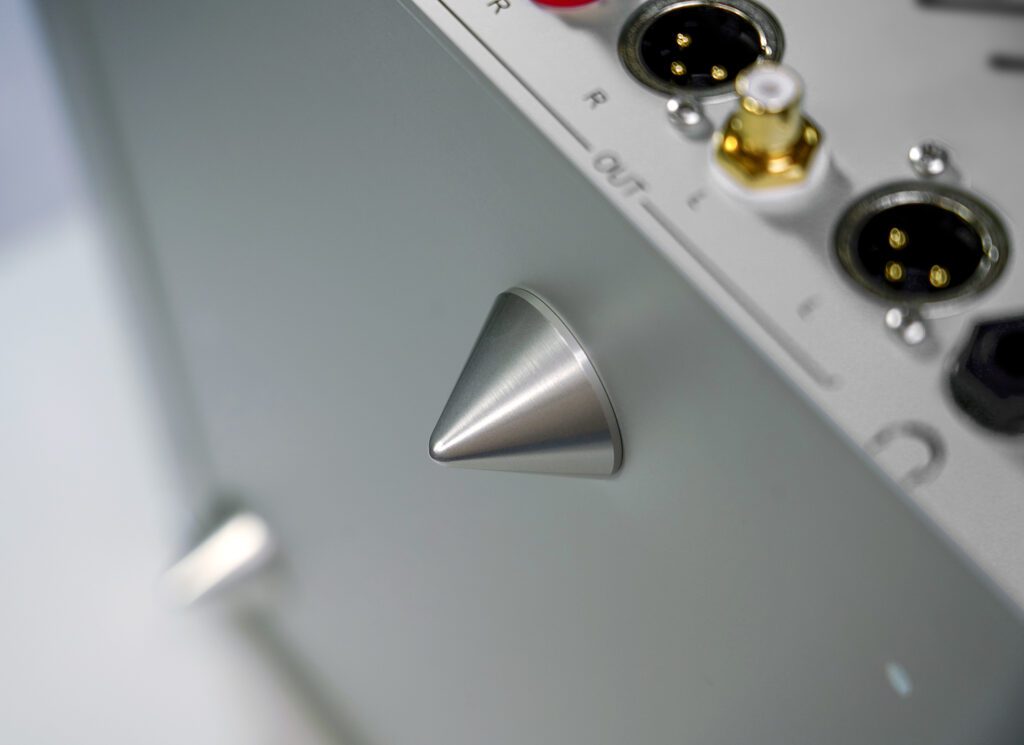
Let’s not underplay that ‘lighter case’, nevertheless. It doesn’t imply the DAC is light-weight or that its trio of armour-piercing cones don’t add as much as highly effective construct high quality in and of itself. However, not like Model TWO, something shy of ‘battleship construct’ is discovered wanting. The distinction is you may carry the Model THREE D out of its field with out visiting an osteopath.

Having no analogue inputs advantages the Vermeer Audio Model THREE D because it permits full Leedh integration. Leedh processing is an revolutionary all-digital quantity management. It happened as a result of digital audio nonetheless suffers from quantity controls that degrade the sound sign by modifying its form.

Circular logic?

A digital quantity management’s downside sounds round however is misplaced info brought on by itself. That misplaced info is expounded to modifying the amplitude of a digital datastream, often called ‘truncation’ and even ‘bit chopping’. How this truncation seems to the listener is a drop in low amplitude sign, making the sound seem ‘flat’ and ‘missing heat’; among the baseline normal criticisms of ‘digital audio’ typically stated by analogue music lovers.

What if a few of these limitations of digital audio had been purely capabilities of attempting to make a no-noise digital quantity management? This would go some approach to clarify the peculiar facet of high-end audio that whereas good digital gamers typically have digital quantity controls, many audiophiles nonetheless desire passing the sign by way of an analogue preamplifier. This intrinsically provides noise however is made as a result of pragmatic determination that it merely sounds higher.

Vermeer Audio Model THREE

Leedh makes an attempt to deal with this well-documented downside by making a quantity algorithm to minimise the variety of further bits in a datastream to cut back truncation loss. This is an awfully intelligent – and very advanced – means of modifying the amplitude with out altering the waveform utilized by among the brightest stars within the digital heavens, reminiscent of Lumin, Métronome, Soulution… and Vermeer.

Hushed tones

So, why is it Vermeer Audio isn’t spoken of with the identical hushed tones folks apply when discussing the very best of these different Leedh sign-ups? If you advised a fellow audio traveller you owned a type of different three names, you’d get a nod of recognition and respect to your discerning alternative. Do the identical with Vermeer Audio, and you’ll in all probability get a ‘who?’ Partly, it’s for all the suitable causes; even in an trade with a popularity for a bespoke construct, Vermeer Audio’s merchandise are resolutely hand-made. The firm is sufficiently small to make sure one engineer can observe a product from inception to ultimate sign-off, testing and aligning exactly alongside the best way. Where different corporations of Vermeer’s dimension normally have one or two folks in advertising and marketing and gross sales, it’s all about constructing the very best they’ll.

In that means, Vermeer Audio operates like Henry Poole & Co. This small Savile Row tailor is famously understated (it doesn’t even have its personal label to stitch into its clothes), but invented the dinner swimsuit and had Winston Churchill, Napoleon III, and lists quite a few Kings, Queens, Emperors and Princes as purchasers. Personally, I’d take timeless craftsmanship and understatement over flashy and trashy!

Of course, simply as a tailor is simply pretty much as good as its final sew, so Vermeer Audio depends on the standard of its two merchandise, and the Model THREE D is greater than ok. However, there are a few operational ‘quirks’ such because the rear-mounted headphone socket. From an aesthetic perspective, I approve because it makes the entrance panel’s strains look clear and uncluttered, however from a logistical place, having to succeed in across the again of the Model THREE D – particularly if it isn’t on the highest shelf of your system – isn’t the most suitable choice.

Decisions, Decisions

I’m cautious of going over outdated floor right here, however a lot of what applies to the Vermeer Audio Model TWO applies to the efficiency of the Model THREE D. It makes use of the identical high quality boards, substantial PCB tracks and high-grade parts. I didn’t have each merchandise at hand, so counting on a long-standing aural reminiscence of essentially comparable merchandise is troublesome. Still, I believe the variations in efficiency are comparatively slight. Model TWO largely provides weight and line inputs… and makes an even bigger gap within the financial institution steadiness. This is an excellent achievement for Model THREE D as a result of Model TWO was a stellar digital replay system, and this will get inside “a midge’s minim” or “a gnat’s crotchet” (thanks, Humph, and the I’m Sorry I Haven’t A Clue staff) of the Big Boy’s efficiency. In specific, Model THREE D retains that ‘drawing you in’ property that pulls you nearer to the music, just about no matter file sort or musical style. I discovered myself listening to a variety of listening pleasures and having fun with and understanding them completely.

Mentioning ‘Clue’ above was for a purpose; it’s a deep pool of a long time of foolish, freely out there and readily streamable half-hour slices of fried gold through BBC Sounds, and I discovered myself chuckling alongside to some traditional early night stupidity (singing the lyrics of ‘A Whiter Shade of Pale’ to the tune of ‘The Muppet Show’) and double entendre (“Samantha has to nip out now as she’s received a brand new job working within the sound archive because the supervisor. It’s her first day, so apparently she’s going to present a speech within the again room and hand jobs out within the workplace”). Toward the top of his life, former host Humphrey Lyttleton’s voice grew to become just a little vague. Model THREE D helps deliver out sufficient vocal high quality to hear joyously. You really feel as in case you are a part of the viewers and much more celebration to the jokes.

Vermeer Audio Model THREE

I learn by way of the Model TWO assessment and did the identical factor; I hung out discussing a BBC broadcast. There’s a great purpose for this and one which I didn’t essentially discover the primary time round. The Vermeer simply stayed on on a regular basis. You play Model THREE D at each alternative. It accompanies your digital music and makes a really fluid, participating and engaging sound. This digital replay system is on the complete aspect somewhat than stark, with an easy rhythm and loads of element. Still, finally none of these issues is as vital as simply what number of hours you log with the Model THREE D. And this listening in the course of the demise (pronounced ‘dem-EEZ’ as an alternative of ‘de-MIZE’) of the Crown, the place all issues British went maudlin.

Good instances dangerous instances!

There’s solely a lot of that one can take, and periodically one’s pipes want a great cleanout. Nothing appeared extra applicable than taking part in the entire first eponymous Led Zeppelin [Atlantic] album from one finish to the opposite, beginning with ‘Good Times Bad Times’… and it sounded prefer it was the primary time I had ever heard it. Wow!

THREE D by identify, THREE D by nature. The Vermeer Model THREE D produces an especially holographic soundstage. If that had been all, it could in all probability be sufficient, however because it follows carefully within the footsteps trodden by its larger brother, at a fraction of the fee and one-third the burden, it’s a tough factor to not love.

Technical specs

  • Digital inputs Asynchronous USB, AES/EBU (XLR), S/PDIF (optical and BNC coaxial)
  • Analogue outputs Single-ended RCA, Balanced XLR
  • Digital precision to 32bit, 384kHz PCM (utilizing Vermeer Audio resampling module), DSD 64/2.8Mhz
  • Output Voltage 2, 3 or 4Vrms in mounted output mode. Up to 7Vrms in variable output mode
  • Output Impedance 100Ω
  • Signal-to-noise ratio 129dB
  • THD < 0.1%
  • Dimensions (W×H×D) 450 × 130 × 440mm
  • Weight 9kg
  • Price £13,995

Manufacturer

Vermeer Audio

vermeeraudio.com

Manufacturer

The Audiophile Club

theac.co.uk

+44 (0) 20 8882 2822

Back to Reviews

The submit Vermeer Audio Model THREE D appeared first on Hi-Fi+.

Vermeer Audio Model THREE D

Here, we have been enthused concerning the Vermeer Audio Model TWO. But the Model TWO is a heavy hitter; not everybody wants that sort of firepower of their programs. Perhaps you have got a smaller system with out the necessity for analogue inputs. Maybe all you want is a streamer or DAC. And you need these items with out compromising high quality. Say ‘bonjour’ to the Vermeer Audio Model THREE D streaming DAC!

The Vermeer apple doesn’t fall removed from the tree. Much of what went into the Model TWO trickled all the way down to the Model THREE D. This additionally means the Model THREE D pulls in an awesome deal from the late, lamented Audio Aero LaFontaine. I’d like to say this conclusion got here from painstaking listening, evaluating circuits and background analysis. But I can’t; Vermeer Audio makes this clear by itself website. “The Model THREE D is totally primarily based on the Model TWO and the elements which have made this uncompromising unit successful.”

Lighter case

Like Model TWO, it helps 32bit, 384kHZ PCM audio and DSD128 via its USB and LAN connections. The Vermeer Audio Model THREE D goes as much as 24bit, 192kHz and DSD64 on S/PDIF and AES/EBU. The large variations between the 2 are eradicating analogue inputs and utilizing a far lighter case.

Vermeer Audio Model THREE

Let’s not underplay that ‘lighter case’, nevertheless. It doesn’t imply the DAC is light-weight or that its trio of armour-piercing cones don’t add as much as highly effective construct high quality in and of itself. However, not like Model TWO, something shy of ‘battleship construct’ is discovered wanting. The distinction is you’ll be able to raise the Model THREE D out of its field with out visiting an osteopath.

Having no analogue inputs advantages the Vermeer Audio Model THREE D because it permits full Leedh integration. Leedh processing is an progressive all-digital quantity management. It took place as a result of digital audio nonetheless suffers from quantity controls that degrade the sound sign by modifying its form.

Circular logic?

A digital quantity management’s downside sounds round however is misplaced data attributable to itself. That misplaced data is said to modifying the amplitude of a digital datastream, referred to as ‘truncation’ and even ‘bit chopping’. How this truncation seems to the listener is a drop in low amplitude sign, making the sound seem ‘flat’ and ‘missing heat’; a few of the baseline common criticisms of ‘digital audio’ typically mentioned by analogue music lovers.

What if a few of these limitations of digital audio have been purely features of attempting to make a no-noise digital quantity management? This would go some solution to clarify the peculiar facet of high-end audio that whereas good digital gamers typically have digital quantity controls, many audiophiles nonetheless choose passing the sign via an analogue preamplifier. This intrinsically provides noise however is made as a result of pragmatic choice that it merely sounds higher.

Vermeer Audio Model THREE

Leedh makes an attempt to handle this well-documented downside by making a quantity algorithm to minimise the variety of extra bits in a datastream to scale back truncation loss. This is an awfully intelligent – and very complicated – manner of modifying the amplitude with out altering the waveform utilized by a few of the brightest stars within the digital heavens, corresponding to Lumin, Métronome, Soulution… and Vermeer.

Hushed tones

So, why is it Vermeer Audio isn’t spoken of with the identical hushed tones folks apply when discussing one of the best of these different Leedh sign-ups? If you informed a fellow audio traveller you owned a kind of different three names, you’d get a nod of recognition and respect to your discerning alternative. Do the identical with Vermeer Audio, and you’ll in all probability get a ‘who?’ Partly, it’s for all the proper causes; even in an business with a popularity for a bespoke construct, Vermeer Audio’s merchandise are resolutely hand-made. The firm is sufficiently small to make sure one engineer can comply with a product from inception to closing sign-off, testing and aligning exactly alongside the way in which. Where different firms of Vermeer’s measurement normally have one or two folks in advertising and gross sales, it’s all about constructing one of the best they’ll.

In that manner, Vermeer Audio operates like Henry Poole & Co. This small Savile Row tailor is famously understated (it doesn’t even have its personal label to stitch into its clothes), but invented the dinner go well with and had Winston Churchill, Napoleon III, and lists quite a few Kings, Queens, Emperors and Princes as shoppers. Personally, I’d take timeless craftsmanship and understatement over flashy and trashy!

Of course, simply as a tailor is simply nearly as good as its final sew, so Vermeer Audio depends on the standard of its two merchandise, and the Model THREE D is greater than adequate. However, there are a few operational ‘quirks’ such because the rear-mounted headphone socket. From an aesthetic perspective, I approve because it makes the entrance panel’s strains look clear and uncluttered, however from a logistical place, having to achieve across the again of the Model THREE D – particularly if it isn’t on the highest shelf of your system – isn’t the most suitable choice.

Decisions, Decisions

I’m cautious of going over previous floor right here, however a lot of what applies to the Vermeer Audio Model TWO applies to the efficiency of the Model THREE D. It makes use of the identical high quality boards, substantial PCB tracks and high-grade elements. I didn’t have each merchandise at hand, so counting on a long-standing aural reminiscence of basically related merchandise is troublesome. Still, I believe the variations in efficiency are comparatively slight. Model TWO largely provides weight and line inputs… and makes a much bigger gap within the financial institution steadiness. This is an excellent achievement for Model THREE D as a result of Model TWO was a stellar digital replay machine, and this will get inside “a midge’s minim” or “a gnat’s crotchet” (thanks, Humph, and the I’m Sorry I Haven’t A Clue staff) of the Big Boy’s efficiency. In explicit, Model THREE D retains that ‘drawing you in’ property that pulls you nearer to the music, just about no matter file kind or musical style. I discovered myself listening to a variety of listening pleasures and having fun with and understanding them completely.

Mentioning ‘Clue’ above was for a motive; it’s a deep pool of a long time of foolish, freely out there and readily streamable half-hour slices of fried gold through BBC Sounds, and I discovered myself chuckling alongside to some basic early night stupidity (singing the lyrics of ‘A Whiter Shade of Pale’ to the tune of ‘The Muppet Show’) and double entendre (“Samantha has to nip out now as she’s received a brand new job working within the sound archive because the supervisor. It’s her first day, so apparently she’s going to present a speech within the again room and hand jobs out within the workplace”). Toward the top of his life, former host Humphrey Lyttleton’s voice turned just a little vague. Model THREE D helps carry out sufficient vocal high quality to pay attention joyously. You really feel as if you’re a part of the viewers and much more occasion to the jokes.

Vermeer Audio Model THREE

I learn via the Model TWO evaluation and did the identical factor; I frolicked discussing a BBC broadcast. There’s a great motive for this and one which I didn’t essentially discover the primary time round. The Vermeer simply stayed on on a regular basis. You play Model THREE D at each alternative. It accompanies your digital music and makes a really fluid, participating and enticing sound. This digital replay machine is on the complete aspect moderately than stark, with a simple rhythm and loads of element. Still, finally none of these issues is as essential as simply what number of hours you log with the Model THREE D. And this listening throughout the demise (pronounced ‘dem-EEZ’ as a substitute of ‘de-MIZE’) of the Crown, the place all issues British went maudlin.

Good instances dangerous instances!

There’s solely a lot of that one can take, and periodically one’s pipes want a great cleanout. Nothing appeared extra applicable than taking part in the entire first eponymous Led Zeppelin [Atlantic] album from one finish to the opposite, beginning with ‘Good Times Bad Times’… and it sounded prefer it was the primary time I had ever heard it. Wow!

THREE D by identify, THREE D by nature. The Vermeer Model THREE D produces a particularly holographic soundstage. If that have been all, it will in all probability be sufficient, however because it follows carefully within the footsteps trodden by its greater brother, at a fraction of the price and one-third the burden, it’s a tough factor to not love.

Technical specs

  • Digital inputs Asynchronous USB, AES/EBU (XLR), S/PDIF (optical and BNC coaxial)
  • Analogue outputs Single-ended RCA, Balanced XLR
  • Digital precision to 32bit, 384kHz PCM (utilizing Vermeer Audio resampling module), DSD 64/2.8Mhz
  • Output Voltage 2, 3 or 4Vrms in fastened output mode. Up to 7Vrms in variable output mode
  • Output Impedance 100Ω
  • Signal-to-noise ratio 129dB
  • THD < 0.1%
  • Dimensions (W×H×D) 450 × 130 × 440mm
  • Weight 9kg
  • Price £13,995

Manufacturer

Vermeer Audio

vermeeraudio.com

Manufacturer

The Audiophile Club

theac.co.uk

+44 (0) 20 8882 2822

Back to Reviews

The publish Vermeer Audio Model THREE D appeared first on Hi-Fi+.

Lindemann Audio Musicbook Combo

Trying to foretell the long run is inconceivable. The lack of lottery wins, flying automobiles, or dystopian post-apocalyptic hellscapes is a little bit of a giveaway. But, relating to audio, predicting the close to future is feasible, and a giant chunk of tomorrow’s audio is probably going Lindemann Musicbook Combo formed!

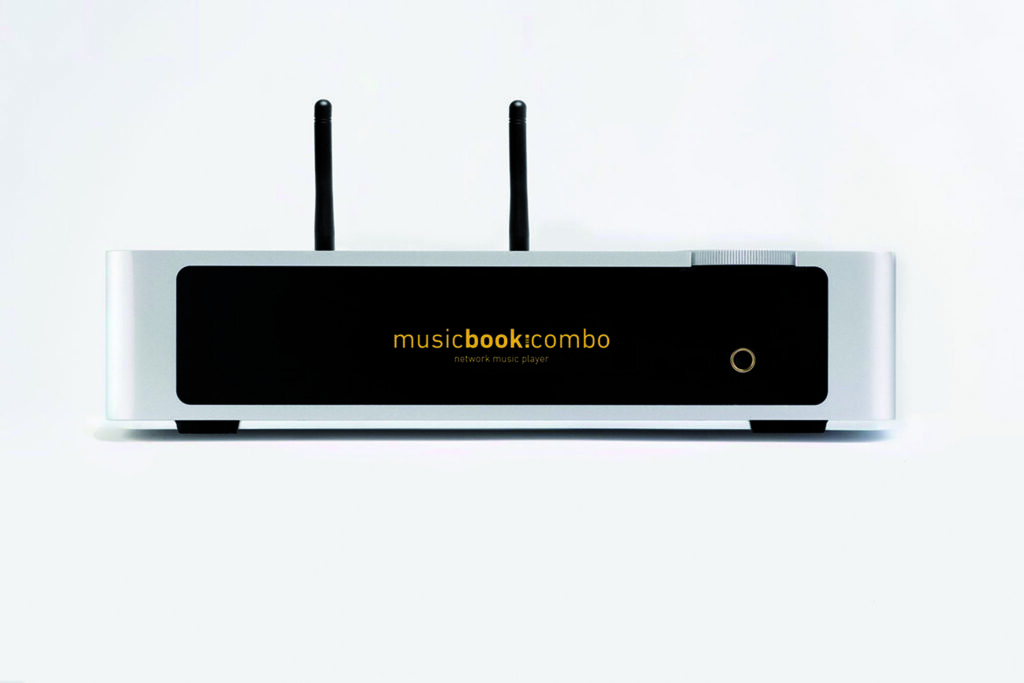
The Musicbook Combo addresses a niche in fashionable audio; the small, high-performance built-in amplifier with audio streamer. The audio world wants a small field to sit down on a bookshelf fairly than a devoted stand. It additionally requires a product that’s simple to put in and function. And it must sound good. The Lindemann Musicbook Combo does all these issues.

Does all of it

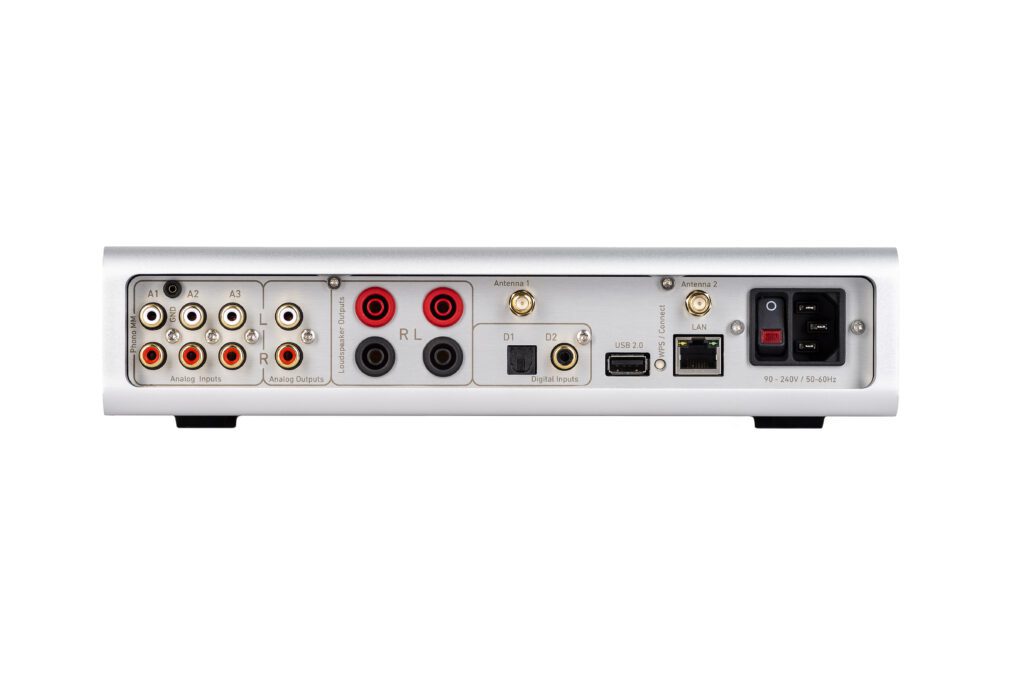
Lindemann’s elegant little field is a deceptively highly effective and versatile machine. Delivering a wholesome 70W into eight ohms, the amp features a community participant, DAC, MM phono stage, and two line-level analogue inputs. You can join it to A2DP-compatible Bluetooth gadgets, native networks, and on-line streaming companies by way of a router. You can play thumb drives or CDs from a CD-ROM drive inserted into the rear USB connector. There’s a good-quality headphone socket.

Lindemann Audio Combo

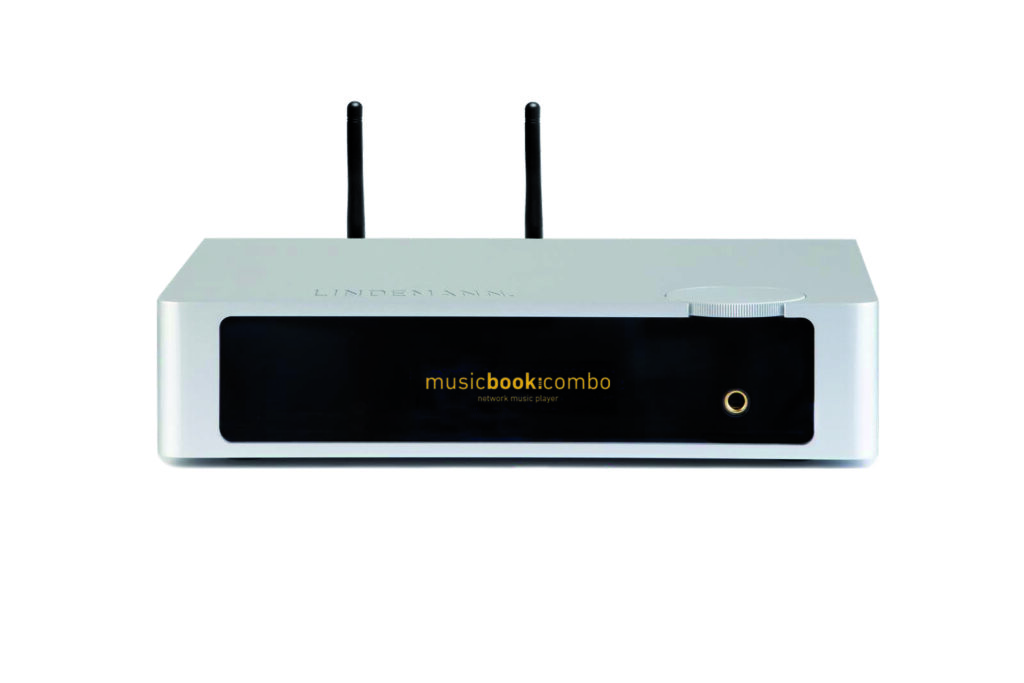
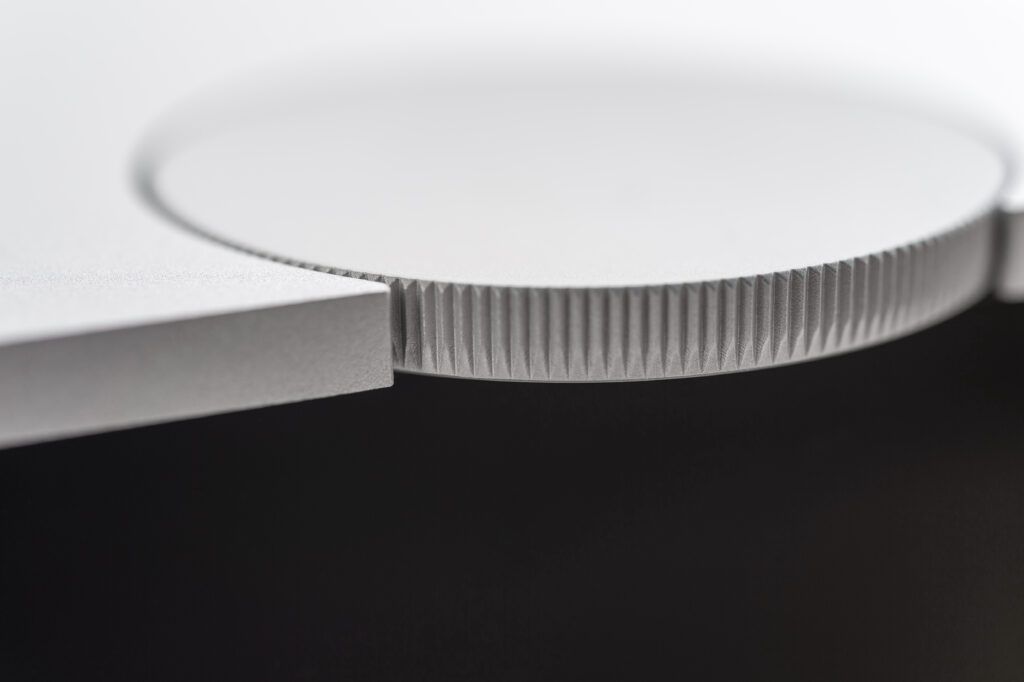
Everything is pushed from Lindemann’s iOS or Android app, and there’s a healthily sized yellow OLED read-out on the entrance panel. The amp’s management is minimal, only a energy button and a jog wheel, however this final double up as quantity and supply selector. There can also be a mini-remote with track-handling performance, however take into account this an adjunct to the app.

Once you go deeper, you start to see why the Musicbook Combo is so highly effective. First, it upconverts any PCM sign to DSD as customary (utilizing an AK4137 upsampler), however this may be deactivated, and any PCM alerts are saved bit-perfect to the dual AK4493 DACs and synchronised in opposition to an ultraprecise MEMS-Femtoclock. It might be run wired or wirelessly (inside 10m from a wi-fi router) into your Local Area Network. It’s fully Roon Ready and works with Tidal Connect, Qobuz, High Res Audio.com, Spotify Connect, Deezer and extra. If you just like the pitter-patter of tiny Lindemanns round the home, there may be additionally a multi-room characteristic.

Appiness is a heat iPad

While it’s notionally potential to function the Musicbook Combo with no smartphone or pill, it’s like asking a ballet dancer to bounce Swan Lake in leg irons. The absolute pleasure of the Lindemann design and why it justifies that ‘it’s the long run’ epithet is how nicely it really works with its app (and apps like Roon). This is one thing we sometimes battle to reconcile; a product just like the Musicbook Combo should dwell in that app-based ecosystem at present.

Sadly, too many audio corporations appear to be extra about ‘pivoting’ towards the place Lindemann already occupies. The trade is maybe universally responsible of being behind the curve right here; we, as audio writers, are extra wrapped up within the {hardware} than within the interplay between that {hardware} and the app. In the actual world, individuals care extra about how that app works and the way the product interacts with the app. In our defence, the app is usually nonetheless a piece in progress when the product will get into our fingers, however once more in the actual world, such a midway home is indefensible. Rant mode: disengaged.

Lindemann Audio Combo

Fortunately, the Lindemann app is a pleasure to make use of. It’s simply the appropriate steadiness of ‘informative’ with out being ‘busy’, and it responds shortly. Once arrange (no massive deal), the Combo additionally handshakes with different apps like Tidal or Roon, which means they do all of the heavy lifting, and the Combo reacts appropriately. I’d put this on a par with the higher company-made apps on the market; it’s not as intuitive as Sonos (few are), however it’s actually simple to navigate and extremely reactive.

Wired or wi-fi

I attempted connecting the Lindemann Musicbook Combo in each wired and wi-fi LAN settings, however in equity, my wi-fi router is simply about 1.5m from the Combo’s twin aerials. This means I may detect no sound high quality or latency variations between wired and wi-fi connections. If pressed, I’d go for the wired connection, however that’s extra to do with private desire than noticed variations. The Combo appears to make no distinctions both means.

Running Lindemann’s personal Streaming 4.0 platform and app, the Combo labored like a allure. The app gently guides you to constructing playlists in a extra thought-about means than monitor aggregation, however solely as a result of I discovered playlist creation is extra on reflection and made out of the last-played possibility. I favor this extra reflective strategy; it acts a bit extra like Roon. Streaming 4.0 and Roon work very properly collectively, and I discovered myself in that Roon area rather a lot right here.

Lindemann Audio Combo

The sound of the Combo is clear and clear, slicing a fragile steadiness and at all times staying on the appropriate aspect of ‘scientific’. Perhaps most noticeable is that this ‘spring water’ sound applies universally; there’s no level the place the sound warms up or blurs throughout the board. While that may sound like it might deter valve-amp customers and their seeming love of euphony, I believe they want the readability and focus of that Lindemann sound.

Go-to albums

My go-to albums for testing midrange readability and bass – Stella di Napoli by Joyce DiDonato [Erato] and The Last Resort by Trentemøller [Poker Flat] – highlighted exactly what the Lindemann Musicbook Combo does so nicely, as they delivered all of the element and perception required to make the previous album come alive and all of the precision and drive wanted to make the latter sound scary. But, in equity, what the Combo did proper, it did proper universally.

There’s a purpose we use these discs again and again. While vastly pleasant to listen to, I’m not going to extract review-grade data from a Half Man Half Biscuit album, however Achtung Bono [Probe Plus] wants one thing correct to serve up the lyrics of ‘Joy Division Oven Gloves’ with out it sounding too spikey and uncooked whereas retaining the fantastic belt-fed surrealist sarcasm dripping from each line. And Lindemann’s Combo makes quick work of strains like ‘Nero fiddles whereas Gordon Burns/In his Joy Division Oven Gloves.’

Everything I performed was given a good listening to by the Lindemann Musicbook Combo, which is extraordinarily uncommon at this degree. The clear, exact sound makes the Lindemann so musically versatile. I went from operetta to electro to sarky post-punk from the Wirral after which to Bach innovations, again by way of Dylan’s Desire [Capitol], over to some basic early Nineties Acid Jazz, and so it went on.

Class act

Getting that a lot from a small field with out it going into melt-down mode can solely imply one factor – Class D energy amp operation. And it will trigger some audiophiles to press the ejector seat on precept. More idiot them; they’re lacking a exact, correct, musically targeted, detailed, articulate and extremely dynamic sound, particularly when the goal loudspeaker viewers is taken into account.

Lindemann Audio Combo

With spiralling gas payments which means the working prices of a pure Class A amplifier start to get a bit noticeable, the good sound and funky working Lindemann makes a sturdy case for itself. I really feel what’s contained in the field is functionally unimportant so long as it really works nicely; the way it sounds and operates issues.

Don’t diss

So, are there any downsides to the Musicbook Combo? Surprisingly few, except you might be within the behavior of ‘dissing’ issues for being one thing they weren’t meant to be. It’s not meant to drive £300,000 tower loudspeakers with an impedance plot that eats amplifiers, however I used the Combo with KEF’s LS50 Meta, and the 2 labored collectively so nicely, so I felt no must look additional. I need shifting coil compatibility alongside shifting magnet, however not if it sacrifices the efficiency of the MM stage because it stands. I’d additionally favor if its Bluetooth connection included aptX HD (which may help as much as 24bit, 48kHz PCM) alongside A2DP, however that is removed from a deal-breaker. And realistically, that’s about it!

The Lindemann Musicbook Combo is among the methods good audio reaches these it can not. It’s sufficiently small to be domestically acceptable. It’s highly effective sufficient to drive the loudspeakers it can almost certainly companion with and sounds good. It’s made to be app-chummy and dwell fortunately in that area, and the app works exceptionally nicely. If that is the face of audio’s future, it’s vibrant and rosy!


Technical specs

  • Type streaming built-in amplifier
  • Power output 2×130W into 4Ω, 2× 70W into 8Ω
  • Analogue inputs MM cartridge (RCA), two line-level (RCA)
  • Analogue outputs one line-level (RCA), 6.35mm headphone jack, 2× BFA speaker terminals
  • MM specs 47kΩ, 150pF, 40dB acquire
  • Digital inputs Coaxial and optical S/PDIF, USB 2.0, 100Mbits/s RJ45 LAN, 2× antenna (Bluetooth, WLAN)
  • Bluetooth 4.2, A2DP
  • DAC decision as much as 768kHz, 32bit PCM and DSD 512
  • Supported codecs WAV, FLAC, AIFF, ALAC, MP3, AAC, Ogg Vorbis, WMA, DSD
  • Network UPnP and DLNA help
  • Dimensions (W×H×D) 28 × 22 × 6.3cm
  • Weight 3kg
  • Price £4,490

Manufacturer

Lindemann Audio

lindemann-audio.de

UK Distributor

Signature Audio Systems

signaturesystems.co.uk 

+44(0)7738 007776

Back to Reviews

The put up Lindemann Audio Musicbook Combo appeared first on Hi-Fi+.

Lindemann Audio Musicbook Combo

Trying to foretell the long run is not possible. The lack of lottery wins, flying vehicles, or dystopian post-apocalyptic hellscapes is a little bit of a giveaway. But, in relation to audio, predicting the close to future is feasible, and a giant chunk of tomorrow’s audio is probably going Lindemann Musicbook Combo formed!

The Musicbook Combo addresses a niche in trendy audio; the small, high-performance built-in amplifier with an excellent audio streamer. The audio world wants a small field to take a seat on a bookshelf relatively than a devoted stand. It additionally requires a product that’s simple to put in and function. And it must sound good. The Lindemann Musicbook Combo does all these issues.

Does all of it

Lindemann’s elegant little field is a deceptively highly effective and versatile machine. Delivering a wholesome 70W into eight ohms, the amp features a community participant, DAC, MM phono stage, and two line-level analogue inputs. You can join it to A2DP-compatible Bluetooth gadgets, native networks, and on-line streaming providers through a router. You can play thumb drives or CDs from a CD-ROM drive inserted into the rear USB connector. There’s a good-quality headphone socket.

Lindemann Audio Combo

Everything is pushed from Lindemann’s iOS or Android app, and there’s a healthily sized yellow OLED read-out on the entrance panel. The amp’s management is minimal, only a energy button and a jog wheel, however this final double up as quantity and supply selector. There can also be a mini-remote with track-handling performance, however contemplate this an adjunct to the app.

Once you go deeper, you start to see why the Musicbook Combo is so highly effective. First, it upconverts any PCM sign to DSD as customary (utilizing an AK4137 upsampler), however this may be deactivated, and any PCM alerts are stored bit-perfect to the dual AK4493 DACs and synchronised towards an ultraprecise MEMS-Femtoclock. It could be run wired or wirelessly (inside 10m from a wi-fi router) into your Local Area Network. It’s solely Roon Ready and works with Tidal Connect, Qobuz, High Res Audio.com, Spotify Connect, Deezer and extra. If you just like the pitter-patter of tiny Lindemanns round the home, there’s additionally a multi-room characteristic.

Appiness is a heat iPad

While it’s notionally doable to function the Musicbook Combo and not using a smartphone or pill, it’s like asking a ballet dancer to bounce Swan Lake in leg irons. The absolute pleasure of the Lindemann design and why it justifies that ‘it’s the long run’ epithet is how effectively it really works with its app (and apps like Roon). This is one thing we sometimes wrestle to reconcile; a product just like the Musicbook Combo should stay in that app-based ecosystem at this time.

Sadly, too many audio firms appear to be extra about ‘pivoting’ towards the place Lindemann already occupies. The business is probably universally responsible of being behind the curve right here; we, as audio writers, are extra wrapped up within the {hardware} than within the interplay between that {hardware} and the app. In the actual world, individuals care extra about how that app works and the way the product interacts with the app. In our defence, the app is commonly nonetheless a piece in progress when the product will get into our palms, however once more in the actual world, such a midway home is indefensible. Rant mode: disengaged.

Lindemann Audio Combo

Fortunately, the Lindemann app is a pleasure to make use of. It’s simply the correct steadiness of ‘informative’ with out being ‘busy’, and it responds rapidly. Once arrange (no huge deal), the Combo additionally handshakes with different apps like Tidal or Roon, which means they do all of the heavy lifting, and the Combo reacts appropriately. I’d put this on a par with the higher company-made apps on the market; it’s not as intuitive as Sonos (few are), however it’s actually simple to navigate and extremely reactive.

Wired or wi-fi

I attempted connecting the Lindemann Musicbook Combo in each wired and wi-fi LAN settings, however in equity, my wi-fi router is simply about 1.5m from the Combo’s twin aerials. This means I may detect no sound high quality or latency variations between wired and wi-fi connections. If pressed, I’d go for the wired connection, however that’s extra to do with private choice than noticed variations. The Combo appears to make no distinctions both means.

Running Lindemann’s personal Streaming 4.0 platform and app, the Combo labored like a appeal. The app gently guides you to constructing playlists in a extra thought-about means than monitor aggregation, however solely as a result of I discovered playlist creation is extra on reflection and produced from the last-played choice. I want this extra reflective method; it acts a bit of extra like Roon. Streaming 4.0 and Roon work very properly collectively, and I discovered myself in that Roon area so much right here.

Lindemann Audio Combo

The sound of the Combo is clear and clear, chopping a fragile steadiness and all the time staying on the correct facet of ‘scientific’. Perhaps most noticeable is that this ‘spring water’ sound applies universally; there’s no level the place the sound warms up or blurs throughout the board. While which may sound like it will deter valve-amp customers and their seeming love of euphony, I believe they want the readability and focus of that Lindemann sound.

Go-to albums

My go-to albums for testing midrange readability and bass – Stella di Napoli by Joyce DiDonato [Erato] and The Last Resort by Trentemøller [Poker Flat] – highlighted exactly what the Lindemann Musicbook Combo does so effectively, as they delivered all of the element and perception required to make the previous album come alive and all of the precision and drive wanted to make the latter sound scary. But, in equity, what the Combo did proper, it did proper universally.

There’s a motive we use these discs time and again. While massively pleasing to listen to, I’m not going to extract review-grade info from a Half Man Half Biscuit album, however Achtung Bono [Probe Plus] wants one thing correct to serve up the lyrics of ‘Joy Division Oven Gloves’ with out it sounding too spikey and uncooked whereas retaining the fantastic belt-fed surrealist sarcasm dripping from each line. And Lindemann’s Combo makes brief work of traces like ‘Nero fiddles whereas Gordon Burns/In his Joy Division Oven Gloves.’

Everything I performed was given a good listening to by the Lindemann Musicbook Combo, which is extraordinarily uncommon at this degree. The clear, exact sound makes the Lindemann so musically versatile. I went from operetta to electro to sarky post-punk from the Wirral after which to Bach innovations, again through Dylan’s Desire [Capitol], over to some basic early Nineteen Nineties Acid Jazz, and so it went on.

Class act

Getting that a lot from a small field with out it going into melt-down mode can solely imply one factor – Class D energy amp operation. And this can trigger some audiophiles to press the ejector seat on precept. More idiot them; they’re lacking a exact, correct, musically centered, detailed, articulate and extremely dynamic sound, particularly when the goal loudspeaker viewers is taken into account.

Lindemann Audio Combo

With spiralling gas payments which means the working prices of a pure Class A amplifier start to get a bit of noticeable, the good sound and funky working Lindemann makes a sturdy case for itself. I really feel what’s contained in the field is functionally unimportant so long as it really works effectively; the way it sounds and operates issues.

Don’t diss

So, are there any downsides to the Musicbook Combo? Surprisingly few, until you’re within the behavior of ‘dissing’ issues for being one thing they weren’t supposed to be. It’s not meant to drive £300,000 tower loudspeakers with an impedance plot that eats amplifiers, however I used the Combo with KEF’s LS50 Meta, and the 2 labored collectively so effectively, so I felt no must look additional. I would like transferring coil compatibility alongside transferring magnet, however not if it sacrifices the efficiency of the MM stage because it stands. I’d additionally want if its Bluetooth connection included aptX HD (which may help as much as 24bit, 48kHz PCM) alongside A2DP, however that is removed from a deal-breaker. And realistically, that’s about it!

The Lindemann Musicbook Combo is among the methods good audio reaches these it can not. It’s sufficiently small to be domestically acceptable. It’s highly effective sufficient to drive the loudspeakers it can probably accomplice with and sounds good. It’s made to be app-chummy and stay fortunately in that area, and the app works exceptionally effectively. If that is the face of audio’s future, it’s shiny and rosy!


Technical specs

  • Type streaming built-in amplifier
  • Power output 2×130W into 4Ω, 2× 70W into 8Ω
  • Analogue inputs MM cartridge (RCA), two line-level (RCA)
  • Analogue outputs one line-level (RCA), 6.35mm headphone jack, 2× BFA speaker terminals
  • MM specs 47kΩ, 150pF, 40dB achieve
  • Digital inputs Coaxial and optical S/PDIF, USB 2.0, 100Mbits/s RJ45 LAN, 2× antenna (Bluetooth, WLAN)
  • Bluetooth 4.2, A2DP
  • DAC decision as much as 768kHz, 32bit PCM and DSD 512
  • Supported codecs WAV, FLAC, AIFF, ALAC, MP3, AAC, Ogg Vorbis, WMA, DSD
  • Network UPnP and DLNA help
  • Dimensions (W×H×D) 28 × 22 × 6.3cm
  • Weight 3kg
  • Price £4,490

Manufacturer

Lindemann Audio

lindemann-audio.de

UK Distributor

Signature Audio Systems

signaturesystems.co.uk 

+44(0)7738 007776

Back to Reviews

The put up Lindemann Audio Musicbook Combo appeared first on Hi-Fi+.

Lindemann Audio Musicbook Combo

Trying to foretell the long run is not possible. The lack of lottery wins, flying vehicles, or dystopian post-apocalyptic hellscapes is a little bit of a giveaway. But, relating to audio, predicting the close to future is feasible, and an enormous chunk of tomorrow’s audio is probably going Lindemann Musicbook Combo formed!

The Musicbook Combo addresses a niche in fashionable audio; the small, high-performance built-in amplifier with a very good audio streamer. The audio world wants a small field to take a seat on a bookshelf slightly than a devoted stand. It additionally requires a product that’s straightforward to put in and function. And it must sound good. The Lindemann Musicbook Combo does all these issues.

Does all of it

Lindemann’s elegant little field is a deceptively highly effective and versatile gadget. Delivering a wholesome 70W into eight ohms, the amp features a community participant, DAC, MM phono stage, and two line-level analogue inputs. You can join it to A2DP-compatible Bluetooth gadgets, native networks, and on-line streaming providers through a router. You can play thumb drives or CDs from a CD-ROM drive inserted into the rear USB connector. There’s a good-quality headphone socket.

Lindemann Audio Combo

Everything is pushed from Lindemann’s iOS or Android app, and there’s a healthily sized yellow OLED read-out on the entrance panel. The amp’s management is minimal, only a energy button and a jog wheel, however this final double up as quantity and supply selector. There can be a mini-remote with track-handling performance, however contemplate this an adjunct to the app.

Once you go deeper, you start to see why the Musicbook Combo is so highly effective. First, it upconverts any PCM sign to DSD as commonplace (utilizing an AK4137 upsampler), however this may be deactivated, and any PCM indicators are saved bit-perfect to the dual AK4493 DACs and synchronised towards an ultraprecise MEMS-Femtoclock. It will be run wired or wirelessly (inside 10m from a wi-fi router) into your Local Area Network. It’s completely Roon Ready and works with Tidal Connect, Qobuz, High Res Audio.com, Spotify Connect, Deezer and extra. If you just like the pitter-patter of tiny Lindemanns round the home, there may be additionally a multi-room characteristic.

Appiness is a heat iPad

While it’s notionally attainable to function the Musicbook Combo with no smartphone or pill, it’s like asking a ballet dancer to bop Swan Lake in leg irons. The absolute pleasure of the Lindemann design and why it justifies that ‘it’s the long run’ epithet is how nicely it really works with its app (and apps like Roon). This is one thing we sometimes battle to reconcile; a product just like the Musicbook Combo should stay in that app-based ecosystem at present.

Sadly, too many audio corporations appear to be extra about ‘pivoting’ towards the place Lindemann already occupies. The business is probably universally responsible of being behind the curve right here; we, as audio writers, are extra wrapped up within the {hardware} than within the interplay between that {hardware} and the app. In the actual world, folks care extra about how that app works and the way the product interacts with the app. In our defence, the app is commonly nonetheless a piece in progress when the product will get into our palms, however once more in the actual world, such a midway home is indefensible. Rant mode: disengaged.

Lindemann Audio Combo

Fortunately, the Lindemann app is a pleasure to make use of. It’s simply the best stability of ‘informative’ with out being ‘busy’, and it responds rapidly. Once arrange (no large deal), the Combo additionally handshakes with different apps like Tidal or Roon, which means they do all of the heavy lifting, and the Combo reacts appropriately. I’d put this on a par with the higher company-made apps on the market; it’s not as intuitive as Sonos (few are), but it surely’s definitely straightforward to navigate and extremely reactive.

Wired or wi-fi

I attempted connecting the Lindemann Musicbook Combo in each wired and wi-fi LAN settings, however in equity, my wi-fi router is simply about 1.5m from the Combo’s twin aerials. This means I may detect no sound high quality or latency variations between wired and wi-fi connections. If pressed, I’d go for the wired connection, however that’s extra to do with private desire than noticed variations. The Combo appears to make no distinctions both manner.

Running Lindemann’s personal Streaming 4.0 platform and app, the Combo labored like a appeal. The app gently guides you to constructing playlists in a extra thought of manner than observe aggregation, however solely as a result of I discovered playlist creation is extra looking back and made out of the last-played choice. I desire this extra reflective strategy; it acts somewhat extra like Roon. Streaming 4.0 and Roon work very properly collectively, and I discovered myself in that Roon area so much right here.

Lindemann Audio Combo

The sound of the Combo is obvious and clear, reducing a fragile stability and all the time staying on the best aspect of ‘scientific’. Perhaps most noticeable is that this ‘spring water’ sound applies universally; there’s no level the place the sound warms up or blurs throughout the board. While which may sound like it might deter valve-amp customers and their seeming love of euphony, I believe they want the readability and focus of that Lindemann sound.

Go-to albums

My go-to albums for testing midrange readability and bass – Stella di Napoli by Joyce DiDonato [Erato] and The Last Resort by Trentemøller [Poker Flat] – highlighted exactly what the Lindemann Musicbook Combo does so nicely, as they delivered all of the element and perception required to make the previous album come alive and all of the precision and drive wanted to make the latter sound scary. But, in equity, what the Combo did proper, it did proper universally.

There’s a cause we use these discs again and again. While massively fulfilling to listen to, I’m not going to extract review-grade data from a Half Man Half Biscuit album, however Achtung Bono [Probe Plus] wants one thing correct to serve up the lyrics of ‘Joy Division Oven Gloves’ with out it sounding too spikey and uncooked whereas retaining the great belt-fed surrealist sarcasm dripping from each line. And Lindemann’s Combo makes quick work of traces like ‘Nero fiddles whereas Gordon Burns/In his Joy Division Oven Gloves.’

Everything I performed was given a good listening to by the Lindemann Musicbook Combo, which is extraordinarily uncommon at this stage. The clear, exact sound makes the Lindemann so musically versatile. I went from operetta to electro to sarky post-punk from the Wirral after which to Bach innovations, again through Dylan’s Desire [Capitol], over to some basic early Nineteen Nineties Acid Jazz, and so it went on.

Class act

Getting that a lot from a small field with out it going into melt-down mode can solely imply one factor – Class D energy amp operation. And this can trigger some audiophiles to press the ejector seat on precept. More idiot them; they’re lacking a exact, correct, musically targeted, detailed, articulate and extremely dynamic sound, particularly when the goal loudspeaker viewers is taken into account.

Lindemann Audio Combo

With spiralling gas payments which means the operating prices of a pure Class A amplifier start to get somewhat noticeable, the good sound and funky operating Lindemann makes a strong case for itself. I really feel what’s contained in the field is functionally unimportant so long as it really works nicely; the way it sounds and operates issues.

Don’t diss

So, are there any downsides to the Musicbook Combo? Surprisingly few, until you’re within the behavior of ‘dissing’ issues for being one thing they weren’t supposed to be. It’s not meant to drive £300,000 tower loudspeakers with an impedance plot that eats amplifiers, however I used the Combo with KEF’s LS50 Meta, and the 2 labored collectively so nicely, so I felt no must look additional. I need transferring coil compatibility alongside transferring magnet, however not if it sacrifices the efficiency of the MM stage because it stands. I’d additionally desire if its Bluetooth connection included aptX HD (which might help as much as 24bit, 48kHz PCM) alongside A2DP, however that is removed from a deal-breaker. And realistically, that’s about it!

The Lindemann Musicbook Combo is without doubt one of the methods good audio reaches these it can’t. It’s sufficiently small to be domestically acceptable. It’s highly effective sufficient to drive the loudspeakers it’s going to almost certainly associate with and sounds good. It’s made to be app-chummy and stay fortunately in that area, and the app works exceptionally nicely. If that is the face of audio’s future, it’s vivid and rosy!


Technical specs

  • Type streaming built-in amplifier
  • Power output 2×130W into 4Ω, 2× 70W into 8Ω
  • Analogue inputs MM cartridge (RCA), two line-level (RCA)
  • Analogue outputs one line-level (RCA), 6.35mm headphone jack, 2× BFA speaker terminals
  • MM specs 47kΩ, 150pF, 40dB achieve
  • Digital inputs Coaxial and optical S/PDIF, USB 2.0, 100Mbits/s RJ45 LAN, 2× antenna (Bluetooth, WLAN)
  • Bluetooth 4.2, A2DP
  • DAC decision as much as 768kHz, 32bit PCM and DSD 512
  • Supported codecs WAV, FLAC, AIFF, ALAC, MP3, AAC, Ogg Vorbis, WMA, DSD
  • Network UPnP and DLNA help
  • Dimensions (W×H×D) 28 × 22 × 6.3cm
  • Weight 3kg
  • Price £4,490

Manufacturer

Lindemann Audio

lindemann-audio.de

UK Distributor

Signature Audio Systems

signaturesystems.co.uk 

+44(0)7738 007776

Back to Reviews

The submit Lindemann Audio Musicbook Combo appeared first on Hi-Fi+.

GIK Acoustics Sound Blocks

There’s nothing new in acoustics! I’ve heard this a number of instances from fanatics who fortunately churn via a brand new preamp yearly as an excuse for acoustics avoidance. Sound Blocks are a revolutionary idea within the GIK Acoustics product line, establishing a brand new benchmark in efficiency and suppleness for high-end audio rooms that want world-class efficiency.

GIK Acoustics Sound Blocks

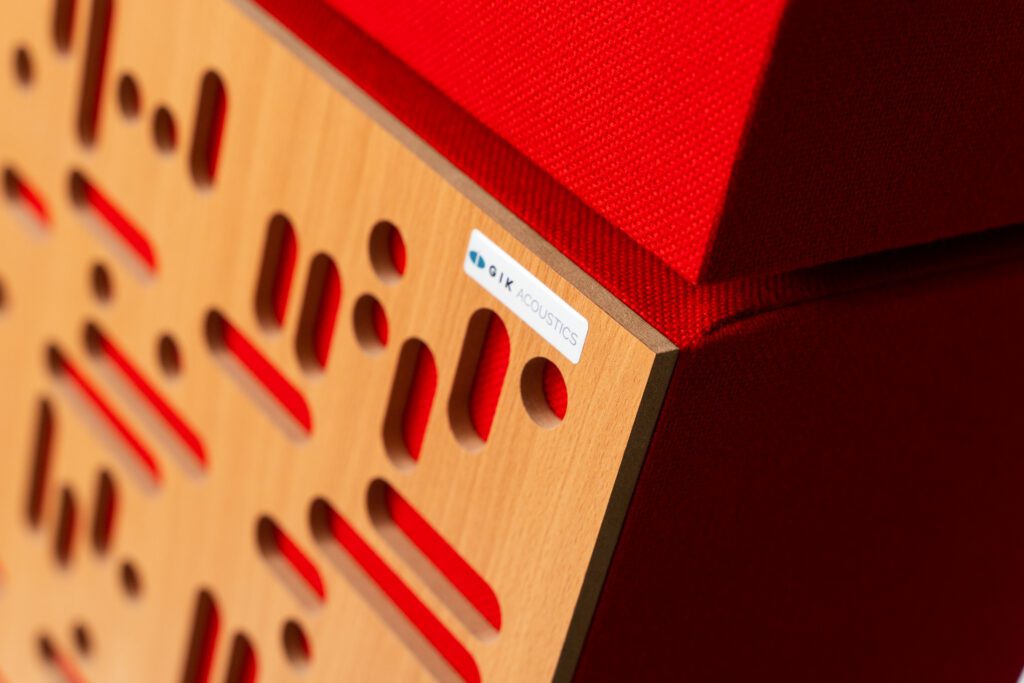
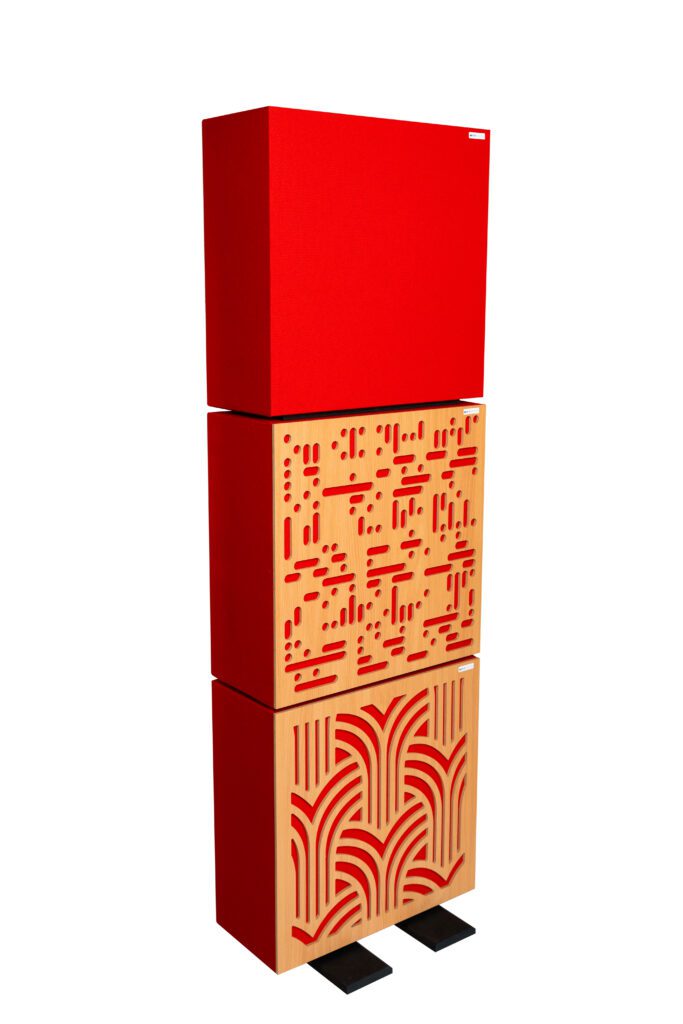
The Sound Block idea is modular and every Block is 23”×23”×10.5” deep. They will be mounted on the wall like common acoustic panels, or they are often interlocked along with rails to make massive, freestanding arrays to exactly suit your house as a false wall. You can select from over 70 completely different cloth coverings, 5 strong wooden again plates, 15 completely different entrance plate designs with 5 completely different finishes. Because they’re so thick, these are powerhouse broadband bass traps with nice efficiency nonetheless energetic beneath 50Hz, in all configurations.

How it really works

Freestanding arrays are made with three slight variations within the product to accommodate the interlocking capability of the array. Each array has a backside row, designed to be on the bottom, with just a few choices to find out its freestanding traits, and rails on the highest to attach the subsequent Sound Block. There will likely be a high row with a Sound Block with simply rails on the underside to hook up with a number of Sound Blocks beneath it. You can even use center items between the highest and the underside, for arrays which can be 69” (one center piece) or 92” (two center items) tall.

These rails permit for some adjustment ‘on the fly’, for ornamental functions. So, you may transfer the center one barely to the left and the higher one barely to the precise or vice versa. Please keep in mind that physics nonetheless holds sway, right here. You can transfer them a bit, however make one thing that considerably overbalances and it’ll fall.

Regardless, the efficiency and suppleness comes not from the set-up, however from the midrange/treble response choices obtainable for every Sound Block: full absorption, vary restricted bass trapping, Alpha diffusion plates, and the visually-oriented Impression plates. Each Sound Block will be individually configured inside the array for optimum midrange and treble steadiness.

GIK Acoustics Sound Blocks

In addition to the entrance face versatility for optimising each efficiency and aesthetics, GIK additionally has choices to complete the rear of every Sound Block. This is beneficial in freestanding false wall purposes, you may select to put in the identical veneer plates the corporate makes use of in its Alpha and Impression panels, however uncut for a constant, ornamental rear face.

The high-end room

The most quick utility is for high-end audio rooms, each for audiophile listening rooms and high-end house cinemas and recording/mixing/mastering suites. Great bass response is an area/aesthetics dedication, in that you just want plenty of thick panels within the room. Sound Blocks let you line the complete perimeter of the room if you want, giving the facility and suppleness of built-in remedies behind false partitions with out all of the constructing work and in a confirmed, modular system that may be simply shipped and assembled on web site.

We additionally count on corporations with smaller audio cubicles in exhibits to make use of a plethora of Sound Blocks as digital rooms.

Excuses, excuses

I’ve usually discovered some audiophile push-back for room remedy, which regularly begins, “Yes, however…” The excuses are usually “My room doesn’t want them!”, “I can hear previous the room!”, or “They are divorce-makers!” Unless your room has been professionally acoustically handled, that first excuse tends to endure from being complete nonsense, whereas the second and third fall on the first hurdle; in case you are unable to place up with the sound of your system with out the right alignment of ft, why would you be ready to ‘hear previous’ a poorly handled room that has an order of magnitude extra issues? Also, for those who suppose your six-foot-tall pair of enormous picket coffins at one finish of your room and a small steelyard on the different is met with heat fuzzies out of your vital different, I’ve a bridge to promote you. In brief, these excuses are excuses and nothing extra!

GIK Acoustics Sound Blocks

The Sound Blocks do what they are saying they do; block (properly, take in) these sounds you don’t need in your audio system. We went for a full absorption array with high and backside panels sporting Impression plates that gave the Blocks a appear to be an Art Deco wall panel (or possibly a Thirties radio); traditional and helpful. The removing and management of bass was extraordinarily good, each bit as highly effective because the nook traps we usually use, or GIK’s personal Monster Bass Trap we use alongside the wall behind the listener. Meanwhile the Impression panels helped diffuse mid and better frequencies successfully, hacking via gentle reverberation results we get from a window’s contribution within the listening room.

Observations

There are a few criticisms of the Sound Block array, however they’re extra observations. Our array had Impression panels on the high and backside and a typical panel within the center, and for home listeners, the place sitting in a settee places our ears aligned with the center panel, the direct advantages of the diffusion panels had been decreased; get that center panel with the diffusion panel as an alternative. Also, the 2 ft alongside the underside rail tended to group collectively and because the weight of all three panels pressed down on them, they tended to remain barely unaligned. A strong, single foot with a rail is likely to be higher than two ft.

GIK Acoustics Sound Blocks

Nit-picking apart, the one different downside is they’re addictive; don’t be shocked for those who begin with one trio of Sound Blocks and find yourself with a wall or two of them dotted round your listening room. It’s attainable to overdo acoustic remedy, however I feel the Sound Block’s steadiness is such you’d want to completely fill a room with them to get shut.

GIK’s Sound Blocks are a great tool within the audio fanatic’s arsenal. In truth, I can think about there will likely be a number of audio sellers shopping for these in bulk if solely to appropriate imbalances of their demonstration rooms. Whether bolted to the wall or used on their rail system, these are an especially efficient remedy that works exceptionally properly. We love ‘em!

Price and phone particulars

  • All costs excluding VAT
  • Sound Block (high and base) £127.50
  • Sound Block (center) £135
  • Sound Block (wall mount) £115

Manufacturer

GIK Acoustics

UK contact

Tel: +44(0)20 3815 8608

Back to Reviews

The put up GIK Acoustics Sound Blocks appeared first on Hi-Fi+.

GIK Acoustics Sound Blocks

There’s nothing new in acoustics! I’ve heard this a number of instances from fans who fortunately churn by a brand new preamp yearly as an excuse for acoustics avoidance. Sound Blocks are a revolutionary idea within the GIK Acoustics product line, establishing a brand new benchmark in efficiency and adaptability for high-end audio rooms that want world-class efficiency.

GIK Acoustics Sound Blocks

The Sound Block idea is modular and every Block is 23”×23”×10.5” deep. They may be mounted on the wall like common acoustic panels, or they are often interlocked along with rails to make massive, freestanding arrays to exactly suit your area as a false wall. You can select from over 70 totally different material coverings, 5 stable wooden again plates, 15 totally different entrance plate designs with 5 totally different finishes. Because they’re so thick, these are powerhouse broadband bass traps with nice efficiency nonetheless lively under 50Hz, in all configurations.

How it really works

Freestanding arrays are made with three slight variations within the product to accommodate the interlocking capability of the array. Each array has a backside row, designed to be on the bottom, with a number of choices to find out its freestanding traits, and rails on the highest to attach the following Sound Block. There might be a prime row with a Sound Block with simply rails on the underside to hook up with a number of Sound Blocks beneath it. You may also use center items between the highest and the underside, for arrays which are 69” (one center piece) or 92” (two center items) tall.

These rails permit for some adjustment ‘on the fly’, for ornamental functions. So, you possibly can transfer the center one barely to the left and the higher one barely to the best or vice versa. Please do not forget that physics nonetheless holds sway, right here. You can transfer them a bit, however make one thing that considerably overbalances and it’ll fall.

Regardless, the efficiency and adaptability comes not from the set-up, however from the midrange/treble response choices accessible for every Sound Block: full absorption, vary restricted bass trapping, Alpha diffusion plates, and the visually-oriented Impression plates. Each Sound Block may be individually configured throughout the array for optimum midrange and treble stability.

GIK Acoustics Sound Blocks

In addition to the entrance face versatility for optimising each efficiency and aesthetics, GIK additionally has choices to complete the rear of every Sound Block. This is beneficial in freestanding false wall purposes, you possibly can select to put in the identical veneer plates the corporate makes use of in its Alpha and Impression panels, however uncut for a constant, ornamental rear face.

The high-end room

The most instant utility is for high-end audio rooms, each for audiophile listening rooms and high-end residence cinemas and recording/mixing/mastering suites. Great bass response is an area/aesthetics dedication, in that you just want a number of thick panels within the room. Sound Blocks let you line all the perimeter of the room if you want, giving the facility and adaptability of built-in remedies behind false partitions with out all of the constructing work and in a confirmed, modular system that may be simply shipped and assembled on website.

We additionally anticipate corporations with smaller audio cubicles in reveals to make use of a plethora of Sound Blocks as digital rooms.

Excuses, excuses

I’ve usually discovered some audiophile push-back for room therapy, which frequently begins, “Yes, however…” The excuses are usually “My room doesn’t want them!”, “I can pay attention previous the room!”, or “They are divorce-makers!” Unless your room has been professionally acoustically handled, that first excuse tends to undergo from being complete nonsense, whereas the second and third fall on the first hurdle; if you’re unable to place up with the sound of your system with out the right alignment of ft, why would you be ready to ‘pay attention previous’ a poorly handled room that has an order of magnitude extra issues? Also, when you assume your six-foot-tall pair of huge picket coffins at one finish of your room and a small steelyard on the different is met with heat fuzzies out of your important different, I’ve a bridge to promote you. In quick, these excuses are excuses and nothing extra!

GIK Acoustics Sound Blocks

The Sound Blocks do what they are saying they do; block (properly, soak up) these sounds you don’t need in your audio system. We went for a full absorption array with prime and backside panels sporting Impression plates that gave the Blocks a appear like an Art Deco wall panel (or possibly a Thirties radio); basic and helpful. The removing and management of bass was extraordinarily good, each bit as highly effective because the nook traps we often use, or GIK’s personal Monster Bass Trap we use alongside the wall behind the listener. Meanwhile the Impression panels helped diffuse mid and better frequencies successfully, hacking by gentle reverberation results we get from a window’s contribution within the listening room.

Observations

There are a few criticisms of the Sound Block array, however they’re extra observations. Our array had Impression panels on the prime and backside and a regular panel within the center, and for home listeners, the place sitting in a settee places our ears aligned with the center panel, the direct advantages of the diffusion panels have been lowered; get that center panel with the diffusion panel as a substitute. Also, the 2 ft alongside the underside rail tended to group collectively and because the weight of all three panels pressed down on them, they tended to remain barely unaligned. A stable, single foot with a rail is likely to be higher than two ft.

GIK Acoustics Sound Blocks

Nit-picking apart, the one different drawback is they’re addictive; don’t be stunned when you begin with one trio of Sound Blocks and find yourself with a wall or two of them dotted round your listening room. It’s attainable to overdo acoustic therapy, however I feel the Sound Block’s stability is such you’d want to utterly fill a room with them to get shut.

GIK’s Sound Blocks are a great tool within the audio fanatic’s arsenal. In truth, I can think about there might be a number of audio sellers shopping for these in bulk if solely to right imbalances of their demonstration rooms. Whether bolted to the wall or used on their rail system, these are a particularly efficient therapy that works exceptionally properly. We love ‘em!

Price and phone particulars

  • All costs excluding VAT
  • Sound Block (prime and base) £127.50
  • Sound Block (center) £135
  • Sound Block (wall mount) £115

Manufacturer

GIK Acoustics

UK contact

Tel: +44(0)20 3815 8608

Back to Reviews

The publish GIK Acoustics Sound Blocks appeared first on Hi-Fi+.

GIK Acoustics Sound Blocks

There’s nothing new in acoustics! I’ve heard this a number of occasions from fanatics who fortunately churn by means of a brand new preamp yearly as an excuse for acoustics avoidance. Sound Blocks are a revolutionary idea within the GIK Acoustics product line, establishing a brand new benchmark in efficiency and adaptability for high-end audio rooms that want world-class efficiency.

GIK Acoustics Sound Blocks

The Sound Block idea is modular and every Block is 23”×23”×10.5” deep. They might be mounted on the wall like common acoustic panels, or they are often interlocked along with rails to make massive, freestanding arrays to exactly suit your area as a false wall. You can select from over 70 totally different cloth coverings, 5 stable wooden again plates, 15 totally different entrance plate designs with 5 totally different finishes. Because they’re so thick, these are powerhouse broadband bass traps with nice efficiency nonetheless energetic beneath 50Hz, in all configurations.

How it really works

Freestanding arrays are made with three slight variations within the product to accommodate the interlocking capability of the array. Each array has a backside row, designed to be on the bottom, with just a few choices to find out its freestanding traits, and rails on the highest to attach the subsequent Sound Block. There will likely be a high row with a Sound Block with simply rails on the underside to hook up with a number of Sound Blocks beneath it. You can even use center items between the highest and the underside, for arrays which can be 69” (one center piece) or 92” (two center items) tall.

These rails enable for some adjustment ‘on the fly’, for ornamental functions. So, you possibly can transfer the center one barely to the left and the higher one barely to the proper or vice versa. Please keep in mind that physics nonetheless holds sway, right here. You can transfer them a bit, however make one thing that considerably overbalances and it’ll fall.

Regardless, the efficiency and adaptability comes not from the set-up, however from the midrange/treble response choices out there for every Sound Block: full absorption, vary restricted bass trapping, Alpha diffusion plates, and the visually-oriented Impression plates. Each Sound Block might be individually configured inside the array for optimum midrange and treble steadiness.

GIK Acoustics Sound Blocks

In addition to the entrance face versatility for optimising each efficiency and aesthetics, GIK additionally has choices to complete the rear of every Sound Block. This is helpful in freestanding false wall functions, you possibly can select to put in the identical veneer plates the corporate makes use of in its Alpha and Impression panels, however uncut for a constant, ornamental rear face.

The high-end room

The most speedy utility is for high-end audio rooms, each for audiophile listening rooms and high-end dwelling cinemas and recording/mixing/mastering suites. Great bass response is an area/aesthetics dedication, in that you just want lots of thick panels within the room. Sound Blocks mean you can line the complete perimeter of the room if you want, giving the facility and adaptability of built-in therapies behind false partitions with out all of the constructing work and in a confirmed, modular system that may be simply shipped and assembled on website.

We additionally anticipate corporations with smaller audio cubicles in reveals to make use of a plethora of Sound Blocks as digital rooms.

Excuses, excuses

I’ve usually discovered some audiophile push-back for room remedy, which frequently begins, “Yes, however…” The excuses are typically “My room doesn’t want them!”, “I can pay attention previous the room!”, or “They are divorce-makers!” Unless your room has been professionally acoustically handled, that first excuse tends to undergo from being whole nonsense, whereas the second and third fall on the first hurdle; if you’re unable to place up with the sound of your system with out the right alignment of toes, why would you be ready to ‘pay attention previous’ a poorly handled room that has an order of magnitude extra issues? Also, for those who assume your six-foot-tall pair of huge picket coffins at one finish of your room and a small steelyard on the different is met with heat fuzzies out of your vital different, I’ve a bridge to promote you. In quick, these excuses are excuses and nothing extra!

GIK Acoustics Sound Blocks

The Sound Blocks do what they are saying they do; block (properly, soak up) these sounds you don’t need in your audio system. We went for a full absorption array with high and backside panels sporting Impression plates that gave the Blocks a appear like an Art Deco wall panel (or possibly a Nineteen Thirties radio); basic and helpful. The removing and management of bass was extraordinarily good, each bit as highly effective because the nook traps we recurrently use, or GIK’s personal Monster Bass Trap we use alongside the wall behind the listener. Meanwhile the Impression panels helped diffuse mid and better frequencies successfully, hacking by means of delicate reverberation results we get from a window’s contribution within the listening room.

Observations

There are a few criticisms of the Sound Block array, however they’re extra observations. Our array had Impression panels on the high and backside and a regular panel within the center, and for home listeners, the place sitting in a settee places our ears aligned with the center panel, the direct advantages of the diffusion panels had been lowered; get that center panel with the diffusion panel as a substitute. Also, the 2 toes alongside the underside rail tended to group collectively and because the weight of all three panels pressed down on them, they tended to remain barely unaligned. A stable, single foot with a rail is likely to be higher than two toes.

GIK Acoustics Sound Blocks

Nit-picking apart, the one different downside is they’re addictive; don’t be stunned for those who begin with one trio of Sound Blocks and find yourself with a wall or two of them dotted round your listening room. It’s attainable to overdo acoustic remedy, however I believe the Sound Block’s steadiness is such you’d want to completely fill a room with them to get shut.

GIK’s Sound Blocks are a great tool within the audio fanatic’s arsenal. In reality, I can think about there will likely be a bunch of audio sellers shopping for these in bulk if solely to right imbalances of their demonstration rooms. Whether bolted to the wall or used on their rail system, these are an especially efficient remedy that works exceptionally properly. We love ‘em!

Price and phone particulars

  • All costs excluding VAT
  • Sound Block (high and base) £127.50
  • Sound Block (center) £135
  • Sound Block (wall mount) £115

Manufacturer

GIK Acoustics

UK contact

Tel: +44(0)20 3815 8608

Back to Reviews

The put up GIK Acoustics Sound Blocks appeared first on Hi-Fi+.