With the Descend series of 8″, 10″, 12″, and 15″ subwoofers, Definitive Technology offers great low-frequency impact to meet performance demands in any size room.
Anker’s Soundcore brand has been busy this past year bringing lots of needed products to market. Despite already releasing their successor model of noise cancelling headphones, the Soundcore Q35, the Soundcore Q30 still represents an incredible value and remains available at many retailers. Perhaps best known for their chargers, hubs, docks, and other accessories for mobile devices, they also offer an expanding, wide range of audio products, including headphones and earphones. I recently reviewed their Liberty 2 Pro True Wireless Earphones and their Spirit X2 Waterproof Wireless Earphones, and was impressed with the quality and performance of both. Now Anker has sent me their Life Q30 wireless noise-cancelling headphones ($79) to review.
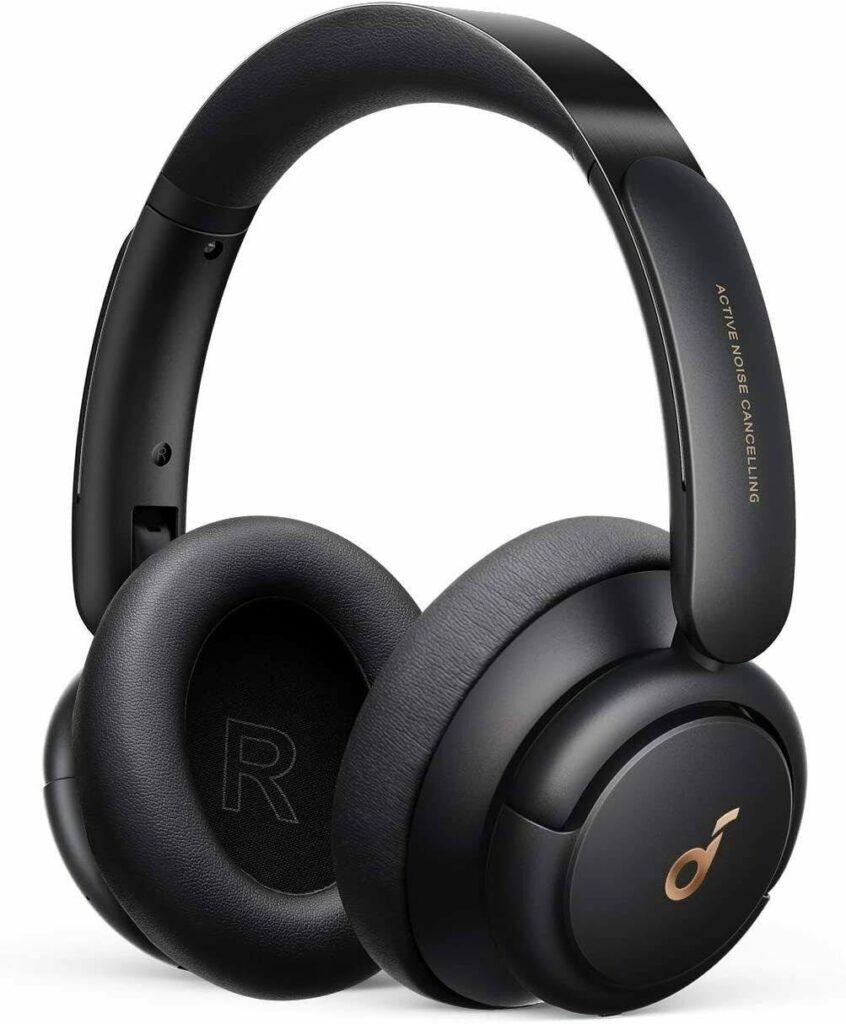
The Life Q30 is a wireless noise-cancelling headphone and is quite possibly the most comfortable full-sized rig I’ve ever worn. It’s not only light, but also passes the head shake test (not falling off or even drifting askew under strenuous activities) with just the right amount of caliper pressure. Too much caliper pressure, of course, and your head feels like it’s in a vice. Too little and the headphones fall off your head. The Q30 strikes just the right balance of secure fit and comfort.
Main Features of the Soundcore Q30
The Life Q30 boasts Hi-Res audio certification. What is that and what does it mean? The official Certified Hi-Res specification includes precise requirements for headphone performance. In order to be Certified Hi-Res, headphones must be able to reproduce frequencies up to 40 kHz or above. This is well above the standard “full-range” frequency response of up to 20 kHz. Additionally, Certified Hi-Res playback devices, like a set of headphones, must be able to convert 96 kHz/24-bit digital signals into analogue audio for listening.
The newer Q35 version adds LDAC Technology – this higher bit-rate Bluetooth mode uses 3 times more data for near lossless wireless transfer. This feature adds nearly $50 to the price and depending on how critical your listening is, may not make a huge difference to you.
The Q30 have something called Multi-Mode Noise Cancellation. This is basically three settings: ANC Off, ANC On, and Transparency Mode. In a quiet room, there is very little difference between ANC on and off, which is a good thing. This means the ANC processing is not adversely affecting the audio quality. Thankfully, neither does transparency mode. Again, in a quiet room there is very little difference in the sonic signature of what you are listening to, and that is as it should be.
But ANC’s value is in how it performs in noisy environments right? So how well does the ANC work on a plane, on a train, or when operating a crane (channeling my Dr. Suess here!)? They are good, offering competitive ANC to offerings from companies like Sony, Bose, Sennheiser, and Apple, all of which cost many times the price of the Q30. I’m not saying the ANC is on par with that of the Sony WH-1000XM4 (reviewed here) or Bose 700, so if ANC is your primary motivator, you might consider moving up to one of the aforementioned leaders in this area. But you will pay more for the best ANC. I rate these just a step down, and at this price point, they are quite the value.
The earcups of the Q30 enclose the ear fully, which provides an extra degree of passive noise attenuation even when ANC is switched off. Not a closed-in, stuffy kind of feeling, but a welcome comfortable sense of reduced noise. There is that word again: Comfort. Anker really got this right with the Q30.
The Q30 also comes with an attendant app called simply Soundcore, which is designed to support several Anker headphones and provides additional customization of sound via the EQ section, including a setting called Soundcore Signature that ends up bringing out the best in this headphone. I’ll qualify that by saying I tried all twenty-two options (yes, twenty-two!) and actually, if you include (and you should) the additional custom setting that lets you adjust any of the eight EQ bands from 100Hz to 12.8 kHz, it’s 23 settings. Yet, after trying all other options, I still favored the Soundcore Signature setting. But, different horses for different courses; I encourage you to try them all and try them while listening to all the various types of music, movies, games, and spoken word.. You can also open the app and change the EQ settings depending on what you are listening to at the moment, so there’s no need to commit to one sonic profile.
The Soundcore app also features something called Sleep Mode, which includes eleven ambient sounds designed to improve sleep. I like the first six and the last one: rain, birds, wind, chimes, fire crackling, and wind, but the other five are more like torture settings in my humble opinion. Can you really call water dripping, a thundering locomotive, a clock ticking, and seriously disturbed livestock mulling about “sounds to improve sleep”? Not me. But I’m not giving credit enough for the ones I like, and maybe others will prefer those that I don’t. Horses and courses again. so even if just one of them is useful to you, consider it a free bonus.
How Well Does the Soundcore Life Q30 Perform?
Since the primary use for wireless headphones is with our smart phones, it’s not out of line to start by asking: how does the Q30 handle calls? The answer: exceedingly well, mostly thanks to what Anker calls “uplink noise reduction.” The bottom line is voices are intelligible and clear on both ends of the call, even in windy or other noisy environments. There is one feature conspicuously absent here however: there is no voice control to summon your device’s smart assistant. Some competitor’s headphones and earphones have either button or voice-controlled access to Siri or Google Assistant or Alexa, or whatever digital voice assistant your device supports. There isn’t even mention of accessing your digital voice assistant anywhere on the box, website, or in the paperwork that comes with the Q30. That said, when wearing the Q30, I simply said “Hey Siri” and my iPhone responded just fine, so kudos to Apple for this and maybe even kudos to Anker for realizing they didn’t need to build something into their headphones that works anyway.
As for pairing, remember when it was rocket science to get Bluetooth to connect your phone and headphones? That’s been solved for a while now, to the point where it’s expected that your Bluetooth devices pair quickly and consistently, and that is the case with the Q30. They even offer NFC pairing in addition to the search and select method. I also had no problems pairing these with my laptop and even the Soundsync A3352 Bluetooth transmitter hooked up to my TV. Range was more than the expected thirty feet, line of sight. Impressed yet?
The battery in the Q30 gives you best-in-class 40 hours of listening (and that’s with ANC turned on) and if you run flat for any reason (forgot to plug them in after a week or so), five minutes of charge will give you four hours of listening. One drawback here is that there is no visual representation of battery level on the Q30 itself or via the Soundcore app. Turning it on after charging and you’re met with a pleasant female voice telling you “Battery High,” and I guess she would update that to “Battery Medium” and “Battery Low,” but even if so, I would rather have an LED readout on the headphone or at least a battery level meter in the app so I could check before hunting for an outlet.
There is an included eighth-inch cable to switch to a wired connection, but more and more mobile devices these days come without an analog headphone output, so the value of such is questionable. Still, it’s nice to have for that odd moment when that would work better for you.
How Does the Q30 Sound with Music?
Sitting down to audition the Q30 with my favorite tracks for a few hours, I noticed a few issues that would generally not present themselves unless critically listening while doing nothing else. Needless to say, the Q30 isn’t built to perform to audiophile standards, despite the Hi-Res certification.
Simply put: the overall sound, while pleasant, is not immersive. The soundfield is a bit constricted, and the focus is really on midrange frequencies, meaning the highs are there but don’t really sparkle and the bass definitely makes its presence known, but can be slightly distorted at times. Mids, as prominent as they are, also get challenged by dense mixes, resulting in a midrange flatness.
Mind you, these criticisms are measured against my internal baseline of audiophile-quality headphones costing many times the price of the Q30. If the Q30 did any better against this benchmark, I would be amazed. As it is, they sound very good for the price, better than anything anywhere near their overall value proposition.
Among the tracks from my demo playlist, I chose a classic by The Rolling Stones: “Angie” from Goats Head Soup
That amazing acoustic guitar work by Keith, Nicky Hopkins’ delicate piano accompaniment, and one of Mick’s best vocal performances backed by minimalist drum work by Mr. Watts challenges headphones to resolve the placement of each instrument in the mix. That said, it wasn’t as if the song was unenjoyable; it simply wasn’t what you’d get from much pricier cans. Mids were nice, as was the bass, but the music lacked something in terms of high-end sparkle.
Next, I thought I would check spoken word, since podcasts and audiobooks have become a much bigger part of my listening rotation this year. I’ve become a fan of WTF with Marc Maron. The show’s back-and-forth exchanges sometimes feature overlapping voices that can make it hard to understand what each participant is saying. Here is where the Q30 really shines. Speech is articulate and distinct, making listening a pleasure.
Last up I checked out how well the Q30 would handle the low-frequency effects elements from an action movie against whispered dialogue. The Q30, while not quite able to keep up with my 5.1.4-channel Dolby Atmos sound system, did a very good job of punching and thumping along with the soundtrack and effects, though not necessarily with the level of articulation or control you would get from much costlier headphones. The takeaway here is that you can enjoy an entire move or binge-watch for hours and enjoy solid sound quality in comfort – and with transparency mode on, you’ll hear Grubhub ring the doorbell with your pizza and wings.
High Points:
The Soundcore Life Q30 is extremely comfortable even during extended use, as in long plane trips or binge-watching half a season’s worth of The Walking Dead.
The Q30 is positively packed with features and offers an incredible 40 hours of playback time, even with ANC engaged.
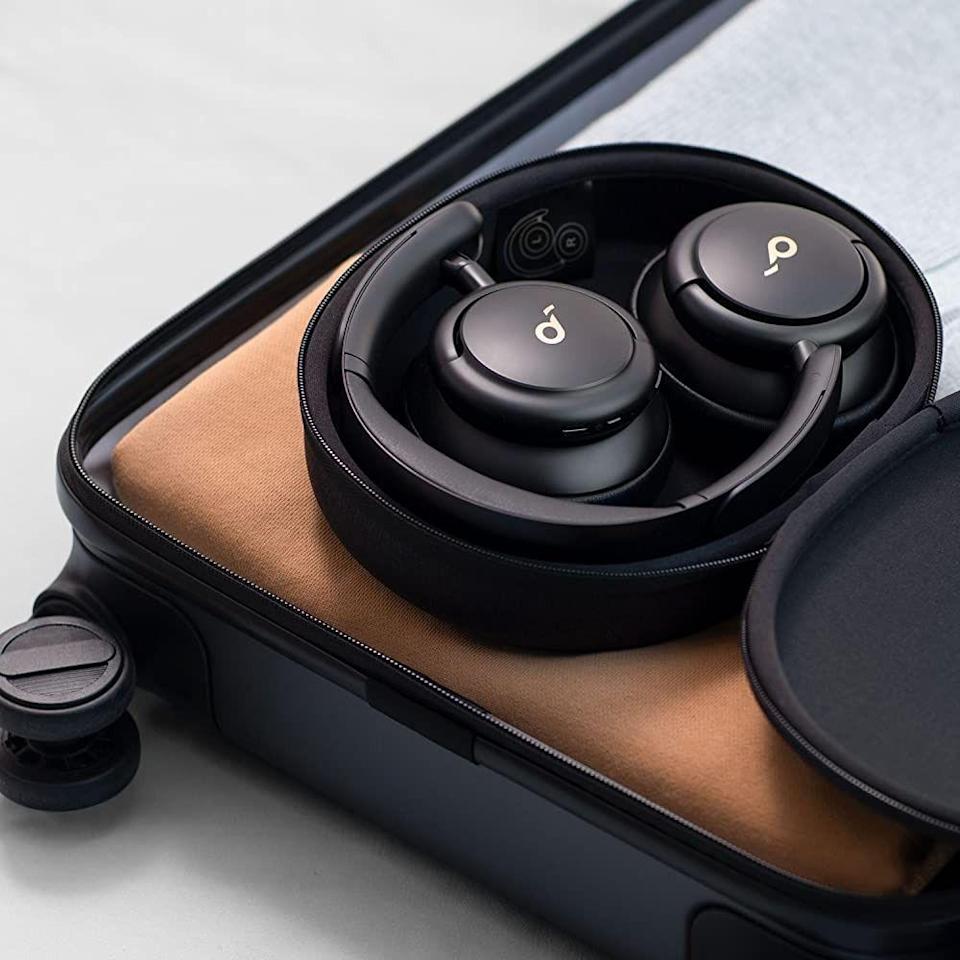
The fold-up design of the Q30 is much appreciated, as is the protective carrying case.
Low Points:
The Q30 and its companion app both lack a visual battery level indicator, meaning you’re left with vague vocal battery indicators to know when you need a charge.
Unlike many wireless headphones, the Q30 doesn’t turn off when you take it off your head.
Sound quality, while great for a full-sized headphone at this price, isn’t exactly world-class. There’s an overemphasis on midrange frequencies, highs are a little inarticulate, and bass isn’t as well-defined as I would like, though it can be a little too prominent at times.
Comparisons and Final Thoughts
The Soundcore Life Q30 is priced well against the Audio-Technica ATH-ANC500BT and JBL’s TUNE 750BTNC, both of which sell for a little more at $99. The Audio-Technica model sounds very good and has very good active noise cancellation, but half the battery life of the Q30 at 20 hours. The ANC500BT is also comfortable, but not the equal of the Q30 in that department, and there’s no associated app for more control.
JBL’s TUNE 750BTNC has even less battery life at 15 hours, but does allow hands-free voice control for digital assistants including Alexa, Google, Siri, and Bixby. It also supports Multi-Point Bluetooth Connection, which automatically switches to whichever device is “active” at the moment among previously connected devices. Sound quality is good, as is the ANC feature, but there’s no associated app for more control.
Amongst these three affordable feature-rich, full size Bluetooth headphones with ANC, you really can’t make a bad decision. It will come down to what’s most important to you. None sound truly bad, though I prefer the Q30, especially with its associated app offering tons of EQ options and three ANC modes. They all integrate well with your mobile devices, though I give the nod here to JBL for their enhanced hands-free voice control of all major digital assistants. All offer great clarity for making and taking phone calls. Battery life and extreme comfort are where the Q30 really set itself apart, so of these are important factors for your wireless noise cancelling headphone needs, the Anker Soundcore Q30 is a great choice even compared to more recently released models.
Fluance is a Canadian audio manufacturer with a 20-year history of making great sounding gear at accessible prices. Their Ai41 Powered Bookshelf Speakers ($249 for the pair at Amazon) are a new example of their heritage, showcasing impressive sound reproduction with Bluetooth 5, RCA and optical inputs and good value. Updating the outgoing Ai40 bookshelves, these speakers improve the electronics with the latest Bluetooth spec, increase amplifier power from 70 watts to 90 watts, and feature impressive sound in a small form factor. Even without a dedicated subwoofer, they are able to generate usable bass response down to a listed 35Hz on their own, and include a subwoofer output that when connected, automatically cuts off frequencies below 80Hz to the bookshelf speakers and passes the low frequencies to the sub.
The Class D, 90-watt RMS (2 x 45 watts) amplifier is built into the right speaker and will give you plenty of volume to fill small to mid-size spaces. One eight-foot, 18-gauge speaker wire is included as is a remote control and power cable (and thankfully no external brick power adapter as was the case with the predecessor Ai40).
The Ai41 tweeters are one-inch, silk soft dome with neodymium magnets and a ferrofluid cooled design, and the five-inch woofer cones are made from a glass-fiber composite with butyl rubber surrounds. These components combined with Fluance-engineered enclosure bracing, tuned rear ports, on-board amplifier and carefully integrated crossover result in a frequency response of 35Hz to 20KHz. Even without a sub, these small-sized bookshelf speakers deliver solid bass and impressive balanced sound that will fill all small to midsized rooms.
How do the Fluance Ai41 speakers perform?
These are not just good sounding powered bookshelf speakers – they are GREAT sounding powered bookshelf speakers and at only $249, make the case for great value. Remember, you don’t need a separate amplifier – so not only are you saving your hard earned cash, you are saving space and getting stellar performance from a tuned system. Much like most current powered monitors and soundbars, DSP works with the amplifier to match the capabilities of the drivers, cross-over (2800Hz Phase Coherent 12dB/Oct), and rear-firing bass port. They sound terrific as a 2.0 system and adding a subwoofer – which is easily done via the RCA subwoofer out on the rear of the right speaker, will extend your bass reach even deeper. I decided to conduct my listening sessions without a sub, but note you will undoubtedly get a more immersive feeling by adding the sub of your choice. I switched back and forth between Bluetooth and line-level inputs without any noticeable difference.
The first of my two ‘ah-ha‘ moments were musical selections. I wanted to be sure the mid-range would retain clarity and spaciousness while still getting the detail in the high frequencies and a solid anchor on the bottom. My new go-to reference track for this listening is Doja Cat’s Say So from the 2020 album Hot Pink.
Her vocals occupy the mid-high region requiring the sound system to resolve the mids and highs accurately to get this track right. The Fluance Ai41 were up to the task remaining clean and present with no harsh after-taste. Another test track for checking the mid-range performance is Circles by Post Malone.
The acoustic guitar is right in the middle of the mid-range and never loses detail when the drums drop in, nor does the track lose its definition when the backing vocals wash over everything. Moving off-axis, the Ai41s remain forgiving and true, keeping the sound field free of coloration. Finally, I switched to the optical input coming from my Roku-powered HDTV streaming Stranger Things, which has great sound effects coming from every direction and a lot of whispered dialogue. The speakers again delivered, letting me enjoy and engrossing me in this well mixed episode.
If you will be using these as a desktop system, either for gaming, streaming, or music from your computer, I wager you will be very pleased with these as your playback system. With rear firing ports, Fluance recommends placing these on the front of shelves to give the speakers little breathing room.
Fluance will also offer a slightly larger version called the Ai61 ($299.99) which, for fifty dollars more offers 120-watts and a 6.5-inch woofer with the same tweeter, same connectivity, and same finishes. Frequency response reaches slightly lower down to 32Hz. So, with such minimal differences, why would Fluance offer this option? I can only guess with the Ai41 they are appealing to placement constraints where the smaller footprint is preferred, and with an added subwoofer the smaller size speaker may not sound considerably different. If you have the space and an extra fifty dollars, the Ai61s make a lot of sense if you plan to skip adding on a dedicated sub.
If you wish to add a sub while staying in the Fluance line, they offer a 10” / 45-watt, ported front-firing option (the DB10 at $199.99) or a 12” / 240-watt, ported front-firing option (the DB12W at $299.99). Frequency response is 35Hz – 180Hz for the DB10 and 34Hz – 180Hz for the DB12. The Klipsch R-12SW ($249) is also a 12” front-firing, rear ported sub with 29Hz to 120Hz frequency response packing 200 watts RMS of on-board power. For bass you can feel as well as hear, I prefer subs that extend at least down to 20Hz and there are more than a few at these price points that reach even lower. My personal favorite is the RSL Speedwoofer 10S, which is a bit more expensive at $399, but delivers the goods with 350 watts and substantial output at 20Hz. The SVS SB-1000 Subwoofer and Paradigm Defiance V8 are excellent options for more refinement at a slightly higher price point.
Connections and Controls
Set-up is easy including Bluetooth pairing and selecting between sources (Bluetooth, RCA or Optical inputs) which can be handled from the included remote or via pushing the volume control knob on the front of the right speaker. There are color-coded confirmations of your selection and LED brightness can be dimmed via the remote control. The back panel is minimal on the passive speaker, while the active speaker includes all of the inputs, a Bluetooth reset button, and a power toggle and cord connection. Fluance recommends the active speaker on the right and also includes a simple EQ adjustment via the remote controls Bass/Treble buttons.
The Look
There are four available finishes: Black Ash with Black front, Dark Brown Wood with Black front, White with Black front and Natural Light Wood with White front. All look clean and fit most décors provided you don’t mind the visible drivers.
High Points
Simple usage and a range of inputs should support most listener’s sources
Subwoofer output with automatic cutoff at 80Hz
Exceptional overall sonic capability in a small bookshelf form factor
Low Points
No grill – some interior design aesthetics might lean towards a more finished look and you will be in trouble if your cat likes to play ‘poke the tweeter‘
No Phono pre-amp
Swapping the controls to the left side is not supported
Comparisons and Competition
The Klipsch R-15PM ($249 / pair) are exactly the same price and similar in size at 12.5” x 7″ x 8.1″, have similar size drivers but add a Phono pre-amp on board along with Bluetooth, RCA line level and optical inputs. The Klipsch are slightly (10-watts) more powerful with 100-watts RMS on tap versus the Fluance which sports a 90-watt amplifier. If you are not adding a sub, the Fluance Ai41 reach a little deeper down to 35Hz whereas the Klipsch start dropping off at 62Hz.
The Edifier R2000DN (249.99 / pair) are also the same price but are even more powerful with 120-watts on board. There is no subwoofer output which may make these a non-starter for those that want to extend the bass response of their system. Bluetooth is version 4.0, which is not the version 5 found on both the Fluance and Klipsch options. Bluetooth 5 brings greater range and less latency to the wireless party, making these Edifiers less appealing. Still, the sound quality is there so if you only care about music listening and don’t plan on adding a dedicated sub, these should be on your list.
Final Thoughts
Fluance has a winner with their Ai41 powered bookshelf speakers as their performance and connectivity make for an affordable high-quality sound system that is very easy to set up and live with. If you will be hooking up a turntable and/or prefer wired USB computer playback, the Klipsch Reference R-15PM present a compelling option. If you don’t plan on adding a sub and will only be listening to music, the Edifier R2000DN deserves consideration as well. I recommend the Fluance Ai41 system particularly for their musical tonality and detailed mid-range, as well as the dedicated subwoofer output and overall value.
The old adage about getting what you pay for rings less and less true all the time when it comes to earphones. Need proof of that? Just look at Tribit’s new true wireless earbuds. The FlyBuds 1 ($35.99 at Amazon) are designed to fit securely yet comfortably even during strenuous activities, including sweating in the gym, swimming and running in the rain thanks to their IPX8 waterproof rating. Add to that six hours of continuous playback and 30 hours of playback between charges thanks to the included charging case, and it would have been unimaginable to expect this generous a feature set for this little money just a few years ago.
How do the FlyBuds 1 perform?
Tribit includes six different pairs of soft ear tips with the FlyBuds 1, and after trying all of them, I found the size that was both most comfortable and secure for me.
It didn’t take much listening after that to realize that overall sound quality is surprisingly excellent. Plenty of bass that never steps on the mids, which are detailed and present. The high frequencies are clear and never shrill or harsh. I listened for hours to all genres of music before switching to a podcast, and then tried them while watching a movie.
Thanks to their reliance on Bluetooth 5.0, there were no lip sync issues when watching video or playing mobile games. Another benefit of Bluetooth 5.0 is extended range and battery life. The stated range from Tribits’ website is thirty-three feet — which is pretty standard for Bluetooth — and my walk test confirmed at least that distance, so no complaints in this department.
The FlyBuds 1 paired quickly and easily and you can use just one if you like. They 1 have what Tribit call Symmetrical Design, which supposedly means that the right and left cases are interchangeable. So how do they know which one should get the right stereo information and which one should get the left? In fact, they don’t. I switched back and forth between the FlyBuds 1 and my two-channel desktop system while listening to Steve Miller Band’s “Jet Airliner,” which has a signature guitar track panned hard right, and the FlyBuds 1 initially had that track where it should be: Hard right. But when I switched the one that was in my right ear with the one that was in my left, the stereo image was reversed, so unless you take note of which one is actually the right one, you may not be getting the stereo image the way it is intended.
Since The FlyBuds 1 only cost $35.99, this is wholly forgivable. If you’re watching a movie and the bullets are flying left but you are hearing them fly right, just pop them out and switch them around. I understand some may find this unacceptable, but I just don’t see this as a deal breaker considering how great the FlyBuds 1 sound and all the features and benefits you get for the money.
The buds themselves will give you six hours of continuous listening with another four full charges waiting for you in the case, for a total of 30 hours before you will need to hunt around for a wall outlet. The case can charge via USB-C, and there is an included USB-C to USB-A cable or you can set these down on any Qi-certified wireless charger. If you need a quick re-charge, ten minutes will get you one hour of playtime. For a full charge, placing the FlyBuds 1 in the case for 70 minutes will get the job done or 80 minutes to fully charge the case.
Speaking of the FlyBuds 1’s battery case, it has a loop that can be used with a carabiner for attachment to a backpack or belt loop or purse. There is also an included wrist strap that can be used in conjunction with the loop to make carrying the case even easier. The case only measures two inches in diameter and just an inch and a half high, which means it will also fit in most people’s pockets.
Inside, there is a four-segment LED battery charge indictor, which, at this price point is certainly not a given. There is a confidence-inspiring click heard when re-inserting the buds back in their cradle thanks to a magnet employed to insure a solid connection to the charging case. Removing them from the case powers them on and replacing them in the case turns them off.
Play / Pause, Answer / Hang up calls / Reject calls, Skip to the next song and activating the voice assistant associated with your device are all accessible via gentle presses on either earbud, and are intuitive and consistent. From the Tribit website:
Having to press hard on keys means squishing your earbud further into your ear which can be uncomfortable to say the least. That’s why these earbuds were developed to depress the buttons using only 4.23 oz of pressure (others require more than 5.64 oz). It’s also more accurate than touch controls so you’ll never have accidental button presses.
That’s really nice and yes, it works as advertised.
High Points:
The Tribit FlyBuds 1 deliver great sound quality, and not in a “for the money” kind of way.
Six included ear tips means that most people will be able to achieve a comfortable yet secure fit
The IPX8 waterproof rating is surprising and appreciated at this price.
Low Points:
Although the sound is good out of the box, it would have been nice to have some customization options, like an EQ setting.
Six hours listening time before needing a charge may not be enough, depending on your lifestyle. Some competitors offer longer life between charges.
The Symmetric design means if left-right stereo orientation is important to you, you will need to keep track of which one is which.
How do the Tribit FlyBuds 1 compare to the competition?
The Anker Soundcore Life P2 offer essentially the same features and benefits, including IPX7 waterproof rating that is just a step down from the IPX8 rating of the FlyBuds 1, but with an extra hour of playtime and a form-factor more akin to Apple AirPods Pro. Anker’s charging case is not Qi wireless charging compatible, but the Life P2 offer noise reduction technology that optimizes call clarity, a feature not found on the FlyBuds 1. The Life P2 call quality may be better in windy conditions.
The TaoTronics Soundliberty 97, like the FlyBuds 1, carry an IPX8 waterproof rating and sport a similar form factorm but have even longer playtime than the Life P2 at nine hours between charges. Like the P2, the Soundliberty 97 offer noise reduction for enhanced call clarity. The battery case does not support Qi wireless charging.
Final thoughts
There are a lot of wireless earbuds available right now with similar features and even some that are as affordable as the FlyBuds 1, but there aren’t any that combine all the features and benefits found here, in a form factor this attractive. They are comfortable, portable, wireless, and waterproof, but above all, they sound very, very good.
The Bose Smart Soundbar 300 ($399.95) is about as simple a one-piece audio solution as you could hope for. It took longer to get out of the box than it did to get it working. Plug the power cable in and then connect to your TV either via the included digital optical cable or HDMI ARC (you’ll need to buy your own cable if you go that route) and after selecting the proper settings in your TV’s labyrinthine menus (including turning off the on-board speakers), you’ll have an upgraded audio experience without the fuss or muss of a component sound system (or most soundbars these days, for that matter). Of course, you’ll have to tinker a little more if you want to access features like the Bose Music App, Voice4Video, SimpleSync, and additional connectivity via Wi-Fi, Bluetooth, Apple AirPlay 2, and Spotify Connect, but even adding those services are relatively straightforward and easy to access. We will dig into those features and benefits later in this review.
The soundbar measures 2.25 inches high by 27.5 wide by 4 inches deep and weighs 7 pounds. There are four “full range” drivers – one in each end cap and two flanking the tweeter in the center – and a whole lot of baffles and processing engineered to create a spacious, enveloping sound with an emphasis on dialogue intelligibility. What Bose is going for here is simplicity and clarity. If you want more low-frequency impact to reproduce explosions and the bass line of your favorite EDM tracks, you can add the Bose Bass Module 500 ($359) or Bose Bass Module 700 ($699), though the more expensive bass module is much preferred . And for enhanced spaciousness and immersion, you can add the Bose Surround Speakers ($299). All are wireless, though it should be noted that the surround speakers are wired to a common receiver, so they will require a speaker wire connection to that wireless receiver as well as power for the receiver. The soundbar can be positioned on a tabletop or wall-mounted with the optional Bose Soundbar Wall Bracket ($40.00).
Continuing with the emphasis on simplicity, the remote features 8 buttons: Power on/off, volume up and down, Mute, TV (input select), Bluetooth (input select), Music (Bose Music App select), and Play / Pause / Skip Forward / Skip Back. There are also dedicated microphone on/off and power on/off buttons on the soundbar itself.
How does the Bose Smart Soundbar 300 sound?
Clarity and intelligibility are front and center – literally – of the Bose Smart Soundbar 300’s overall sonic character. In these respects, I would put the SB300 (as Bose refers to this product) on equal footing with the best of the dozens of soundbars I have reviewed recently. To put this to the test, I sat down to re-watch Christopher Nolan’s Tenet again, since my first viewing was marred by an inability to hear important dialogue since the music and effects are so out front and much of the expository is sotto voce.
My first experience with Tenet was in my home theater, which has a full-on 5.1.4 Dolby Atmos system. It is a tribute to Bose’s articulation in the mids and mid-highs that I was able to understand much more of the dialogue via the SB300. No, not all of it, as Nolan intentionally obscures some of the dialogue. But at least it was better.
This prompted me to do some comparisons with the Yamaha YAS-209 I recently reviewed here. Again, I must rate the dialogue reproduction of the Smart Soundbar 300 just a bit clearer and more intelligible, but the sound field and effects impact of the Yamaha were superior. Yes, the YAS-209 has an included subwoofer, but fair is fair, and the Yamaha is $50 less expensive before adding on the Bose Bass Module 500, and a whopping $400 less if you do opt to reinforce the 300’s bottom end.
Bluetooth pairing was quick, easy, and reliable. My iPhone discovered the Bose soundbar as soon as I selected Bluetooth from the Smart Soundbar 300 remote. I opened the music app, selected a song, and it started playing straightaway. But music revealed inadequacies in terms of spaciousness and low frequency extension a lot more than did movies. Thin and narrow is how I would describe the overall music performance.
The same is true when using Pandora or TuneIn via the Bose Music app or using Spotify Connect or AirPlay 2. It’s nice to have all these options to stream, but they don’t make up for the limitations in sonic quality to the Bose one-piece design.
The Bose Music app does include a basic EQ section, but even after concentrated experimentation I was not able to get the rich, full sound I was looking for. Low-frequencies start to drop off at 60 Hz and then more steeply from 33 Hz to 28 Hz where they plummet so steeply that there is hardly any bass energy generated from the soundbar at all below 55 Hz. This is with the EQ settings flat and at an overall volume level just short of too loud for the medium -sized room where my testing took place.
Adjusting the bass level in the EQ section of the Bose Music app was not much help, as the mids get muddy and the highs start to lose their definition – along with dialogue intelligibility takes a hit, long before the bass can make any meaningful impact. For movies and TV low-frequency effects, you simply won’t get the intended the satisfying punch other systems offer and even music reproduction was a bit lacking as there can be a lot lost below 40 Hz across many musical genres. Still, it’s worth noting that if you’re shopping for a soundbar that delivers music well, the Bose 300 as a one-piece solution may not be your best pick without the add-on bass module. There are two available, the Bose Bass Module 700 and Bose Bass Module 500.
A unique feature of note and value is what Bose calls SimpleSync. To quote from the online manual: It lets you connect a single pair of Bluetooth headphones or a single speaker or soundbar to play along with your Bose smart speaker. While many Bluetooth speakers and headphones can connect via SimpleSync, many Bose products are optimized to play sound in sync with your Bose smart speaker. A full list can be found here.
In my opinion, the greatest value of SimpleSync is to connect to a supported Bose headphone, in cases where you might not want to wake the baby or the neighbors, for example.
Then there is Voice4Video, which works with Amazon’s Alexa voice assistant. This allows you to control your TV, or a source device like your cable or satellite box, with just your voice. Hands-free calling is also enabled so long as you have an Amazon Echo device on the same Wi-Fi network. There is also some compatibility with Google’s assistant but no support for Apple’s Siri.
High Points
In terms of delivering clear and intelligible dialogue, the Bose Smart Soundbar 300 is best-in-class.
Setup is as easy as anyone could hope for. The one-piece Smart Soundbar 300 will be up and running in less than ten minutes.
The soundbar offers an impressive array of source options, and Voice4Video and SimpleSync are great features
Low Points
Audio quality, especially for music, is thin and the sound field is narrow.
The system lacks the 360-degree immersion of other soundbars that include surround speakers and, in some cases, up-firing height channel drivers.
The lack of ethernet connectivity means that music services must be connected via Wi-Fi or Bluetooth.
How does the Bose Smart Soundbar 300 compare with the competition?
The Sonos Beam ($399) offers one-piece design and simple two cable set-up, voice control (Amazon Alexa and Google Assistant), and interconnectivity with all other Sonos speakers. You can add a pair of One SL speakers ($179 each) for surrounds and the Sub ($699) for low frequency extension, or just purchase the Surround Set for a bundled price of $1,359. This works out to a $300 premium over the Bose system. The Beam alone offers deeper, more impactful bass and a wider sound field than the Bose Smart Soundbar 300, but the latter’s dialogue is just a bit clearer and setup just a bit quicker and easier. Sonos products are available in black or white.
The Vizio SB36512-F6 is a four-piece, Dolby Atmos soundbar package that includes a wireless sub, which then feeds a pair of surround speakers. The soundbar sports up-firing height channel speakers to create a more immersive surround sound experience. It works with Google Assistant and includes Bluetooth and Chromecast wireless connectivity.
The Yamaha YAS-209 ($349.95) is a soundbar/wireless subwoofer package with Amazon Alexa capability. The YAS-209 soundbar alone will give you a wider sound field than the Bose SB300, and the included wireless subwoofer provides the thump and punch a soundbar alone just can’t match.
Final thoughts
Bose has always commanded a premium price by virtue of its storied legacy and Apple-like “it just works” approach to sound reproduction. The Smart Soundbar 300 has a lot of features that make this an undeniable upgrade to the paltry sound that comes from your HDTV. If a simple setup and clear, intelligible dialogue are the two most important reasons you are in the market for a soundbar, this is a top-contender.
You could be forgiven if you mistook Tribit for one of those Chinese OEMs making “me too” collections of audio products that litter Amazon’s listings. After having reviewed several of their products, though, I can tell you while their designs are not radically different from anything you have already seen, their form follows function and the quality of the materials and features and benefits are first-rate, despite the incredible value. The company recently impressed me with its StormBox Micro and XSound Go Bluetooth speakers, as well as the FlyBuds 1 wireless earbuds, and I was impressed with the sound quality, features, and build quality. So I’ll admit my biases right up front: I went into this review of Tribit’s QuietPlus 78, a full-sizes over-ear Bluetooth ANC headphones with higher expectations than one should probably have for a $79.99 pair of cans.
What does the Tribit QuietPlus 78 deliver for 79 bucks?
The first thing you notice about the QuietPlus 78 is that it’s quite comfortable for a full-sized, over-ear, closed-back wireless headphone. It may not be the lightest design you can get your hands on, but it’s nonetheless comfortable, with high-quality materials and just the right amount of caliper pressure. It features a fold-up design and comes with a very nice hard-shell carry case. The only finish option is black with a slim silver ring around each earcup, but it’s a classic, understated aesthetic.
Buttons are well-placed and feel solid. Once you get the hang of which button to press and how many times to press it for each function, you won’t have any trouble remembering how to select between the three ANC modes (Low, High, Ambient, and Off), volume up and down, next and previous track, play and pause, answer and end call, redial last called number, activate Siri, and enter and clear Bluetooth pairing.
There are some frustrations with the controls. To access Siri, you must press the multi-function button twice. I much prefer hands-free activation of digital assistants, which is the sort of thing you normally only get on higher-priced headphones. But it doesn’t take that long to acclimate to the double-press.
It also doesn’t take long to get used to toggling between the different active noise cancellation modes. Surprisingly, I found myself enjoying the ANC Low settings, as there are times when I just need a bit of noise attenuation, and that’s exactly what this mode provides. ANC High, on the other hand, is perfect for travel or for particularly noisy environments. The pass-through or Ambient mode is like Transparency mode on the AirPods Pro, just without the perfect level of balance you get with Apple’s pricey in-ears. Still, it works well considering the price. All things considered, the ANC on these wallet-friendly headphones is very good.
What can you expect in terms of connectivity and battery life?
The QuietPlus 78 employs Bluetooth 5.0, so it was no surprise to discover that, despite the price tag, this headphone benefits from a stable connection, excellent range, low latency (there was no noticeable lip sync issues when watching YouTube or other streaming videos or during gaming), and excellent battery life. Furthermore, the QuietPlus 78 can simultaneously connect to two devices and will switch to whichever device becomes active. For example, if you pair to both your smartphone and computer or if you are listening to music from your computer and you get an incoming call, the QuietPlus 78 will automatically switch to your smartphone for the duration of the call.
Battery life is listed as 30 to 35 hours on a single full charge, which takes roughly three hours. “Turbo-Charge” allows you to gain four hours of playtime from a quick ten minutes of juice. The package comes with a USB-A to USB-C cable. No wall converter is included, but any USB power adapter can be used. Also included is a 3.5mm audio cable that allows you to switch over to wired operation for uninterrupted listening on those long flights or if you simply forget to charge the headphone.
How does the Tribit QuietPlus 78 sound?
Should you expect audiophile-level performance out of Tribit’s flagship wireless headphone? No, but then that isn’t its intended purpose. If we can agree its purpose is delivering clear and intelligible phone calls and solid music, movie, and gaming experiences, The QuietPlus 78 is more than up to the task.
Low frequencies pack plenty of punch,the mids are never muddy, and highs never get shrill. They create a nice left-right soundstage but lack the spacious, immersive imaging you expect from flagship Sony, Apple, and Bose wireless ANC headphones. It really comes down to how much performance you’re willing to pay for, and the Tribit QuietPlus 78, while far from perfect, delivers far more listening enjoyment than you would expect, given its price.
High Points:
The QuietPlus 78 offers solid sonic performance with great features, including surprisingly good active noise cancellation, long battery life, and Bluetooth 5.0 connectivity with multipoint.
The ear cups and headband are comfortable, and materials better than expected.
The included hard-shell carry case and fold-up design are the sort of niceties that you would normally have to pay more for.
Low Points:
There is no attendant app for EQ adjustments or presets for music, movie, gaming, or spoken word.
The QuietPlus 78 doens’t have an auto-off feature.
There is no hands-free access to your smartphone’s digital assistant. Access is via double button-presses only.
How does the Tribit QuietPlus 78 compare to the competition?
The Soundcore Life Q30 has an attendant app that brings a great suite of sound customization. The Audio-Technica model has very good active noise cancellation, but less battery life at 20 hours compared to 30 or 35 for the QuietPlus 78. JBL’s offering here has the least battery life at 15 hours of operation between charges, but does allow hands-free voice control of digital assistants including Alexa, Google, Siri, and Bixby.
Final thoughts
Amongst these affordable, feature-rich, full-sized Bluetooth headphones with ANC, you really can’t make a bad decision. It will come down to what’s most important to you. None lack in sound quality. though the associated app for the Soundcore Q30 allows you to tweak the sound to your preference. They all integrate with your Bluetooth devices, though I give the nod here to JBL for their enhanced hands-free voice control of all major digital assistants. All offer acceptable clarity for making and taking phone calls. Deep bass and fold-up design are where the QuietPlus 78 sets itself apart, so if these are important factors for your wireless noise cancelling headphone needs, the Tribit QuietPlus 78 is a wonderful choice.
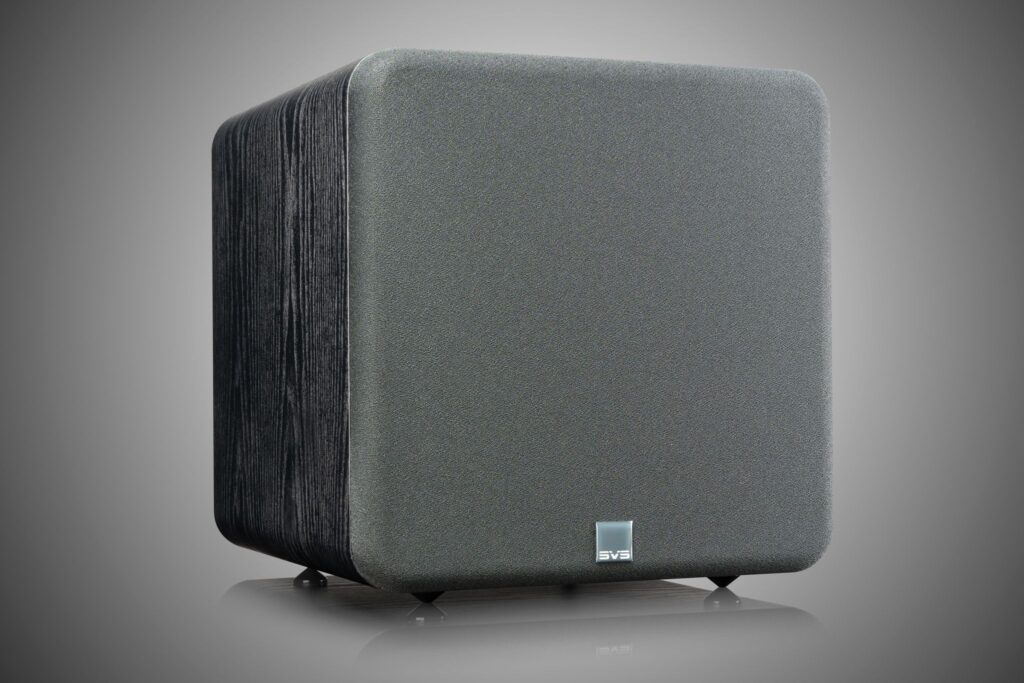
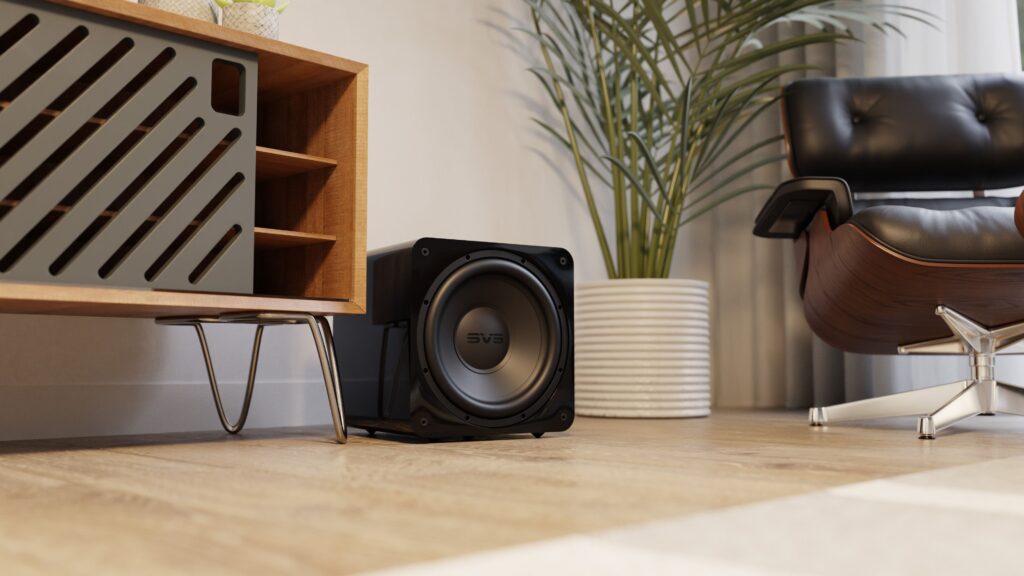
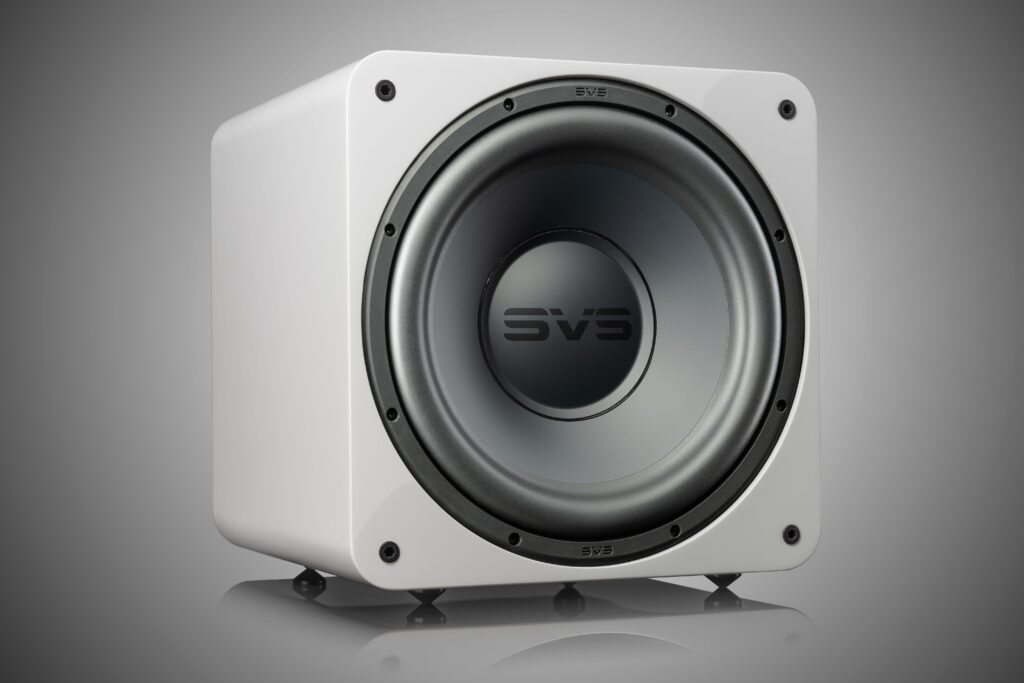
SVS has, for years now, developed a reputation for delivering incredible performance at affordable prices, but its latest offerings—the new sealed SB-1000 Pro ($499) and ported PB-1000 Pro ($599)—take this trend to the extreme. The 1000 Pro Series subs are equipped with the company’s new 12-inch high-excursion driver and 325watt RMS/820-watt peak power Sledge STA-325D amplifier paired with the latest Analog Devices DSP. They’re also the most affordable SVS subs yet with app connectivity for tuning and setup.
The smartphone app is available for Apple, Android, and Amazon devices, and gives you access to volume control, parametric EQ, crossover settings, phase, polarity, and room compensation, and allows you to store your settings in one-touch presets optimized for music, movies, gaming, etc.
While similarly named and part of the same series, the SB-1000 Pro and PB-1000 Pro are quite different in terms of size and aesthetics owing to their respective sealed and ported designs. Conventional wisdom holds that sealed enclosures are typically more accurate and better controlled, resulting in more articulate performance better suited to music, at the expense of low frequency extension. The SB-1000 Pro does boast bass extension down to 20Hz, though, which is plenty enough for most movie fans.
Ported enclosures like the PB-1000 Pro, by contrast, typically reach even lower, and the PB 1000 Pro is no exception, reaching down to 17Hz in standard mode and 19Hz in sealed mode. Bottom line: If you want a smaller sub and you have a medium-size room, you will get plenty of room pressurization and great performance from the SB1000 Pro while saving some money. For larger rooms, I would opt for the PB 1000 Pro to get that extra displacement and low-frequency reinforcement.
Setup and connectivity are straightforward and identical on both subs. Their back panels feature line-level stereo inputs (the right designated as the LFE input), along with line-level stereo outputs and speaker-level inputs as an alternate connection method.
As previously mentioned, the smartphone app connects via Bluetooth and allows control over all user adjustable parameters, which can be tweaked from your listening position. Alternatively, there are controls on the back panel for primary user settings. The back panel also has a connection to accept the SVS SoundPath Wireless Audio Adapter, sold separately.
In the few hours I’ve had to audition both the SB-1000 Pro and PB-1000 Pro with a variety of music and movie scenes, it is clear each represents a new level of performance at its respective price point. Both perform well across an extreme range of music genres and sounded great with whatever bottom-heavy action sequences I threw at them. The needs of my room and my sound system may have me leaning more toward the PB-1000 Pro for my own purposes, but there’s absolutely nothing lacking in the performance of either, and I look forward to giving both a thorough beating in the lead-up to my more comprehensive reviews.
Look for those reviews soon here at Home Theater Review.
Tribit is a company you may not have heard of before, but the brand is starting to garner some attention for bringing lots of useful, needed audio products to market with features that put some of the big boys to shame. Its XSound Go ($32.99) and StormBox Micro ($49.99) portable wireless speakers are waterproof, offer Bluetooth connectivity and are extremely portable, easily fitting in the palm of your hand, or pocket, or backpack, or … well, you get the picture.
What the speakers have in common is surprisingly good sound quality. They can get loud, though when pushed, they will distort and become increasingly unpleasant to listen to, but this is only after you’ve filled a medium-sized room or decent outdoor space (think at least a 25-foot circle). Really, one should not expect anything more from speakers this size.
To be clear, I am impressed with what they do and how well they do it. I’ve read other reviews, though, that state these “go to eleven” without distorting, and I just can’t support that. At their loudest, speech losses clarity and you will likely be turning it down quickly. However, before they start to get into trouble, they are plenty loud and still sound wonderful. There is a nicely balanced tonality with plenty of low frequency punch and clarity in the high frequencies, while the middle remains detailed and precise. You won’t feel the bass, but you will certainly know it’s there. I don’t know of a better option for strapping to your bike or using as a simple desktop system that you can move from room to room or listen while on the go.
How is the XSound Go different from the StormBox Micro?
The XSound Go is a small, rounded-off cylinder, while the StormBox Micro is an even smaller, puck-shaped speaker.The XSound Go measures a little over 2 inches high and deep and 6.5 inches wide and weighs a little over a pound.
The StormBox Micro is just under 4 inches wide and deep, and just over 1.5 inches high and weighs just over half a pound.
The larger XSound Go has a bigger battery and offers 24 hours of continuous sound, while the smaller StormBox Micro has 8 hours of operation on tap. The XSound Go is also more powerful, with 12 watts coursing through two drivers. The StormBox Micro delivers 9 watts of output and achieves its impressive bass response thanks to what Tribit calls XBass Technology, which I suspect employs some passive radiator or port (or a combination of the two) to deliver deep low frequency response that belies its size.
Both charge via USB-C and include USB-C charging cables, but only the StormBox Micro gives you visual battery level indication via a six segment LED display on the front. The XSound Go has an eighth-inch aux input for wired operation. The StormBox Micro can be used in pairs for stereo or party mode and employs the latest Bluetooth version 5.0, which has near zero latency, better battery performance, and greater range.
Tribit XSound Go and carrying case
The XSound Go Bluetooth antenna is version 4.2, which may translate to audible delay, so if you plan to watch movies, TV, or play games using a portable wireless speaker, you may want to go with the StormBox Micro.
While they are both waterproof, the Ingress Protection (IP) rating on the StormBox Micro includes defense against dust, sand, or other particulates (IP67) while the XSound Go (IPx7) might have some trouble with those. They should both handle water equally well, though. They both have built-in microphones for making and taking calls. The StormBox Micro also supports Multi-Point,which means you can connect to two sources via Bluetooth and play whichever one is active at the time, switching between the two automatically and nearly instantaneously.
High Points:
Both the Tribit XSound Go and StormBox Micro deliver excellent sound performance, way better than their size or price would lead you to expect.
Both are waterproof hand have great battery life, in addition to their extremely portable.
Both of these Tribit speakers offer speakerphone capability via a built-in microphone.
Tribit XSound Go
Low Points:
The XSound’s Go rounded sides prevent vertical placement, which would be useful when desk space is at a premium.
The XSound Go employs Bluetooth 4.2, which can cause latency issues when gaming or watching video.
The StormBox Micro only offers 8 hours battery operation between charges.
How do the Tribit speakers compare to the competition?
A few alternatives that come to mind with similar feature sets are the JBL Flip 5 ($99.99), the Sony SRS-XB12 ($58) and the Anker Soundcore Boost ($59.99). They are all portable, waterproof Bluetooth speakers that sound quite good. The Anker and JBL models are cylindrically shaped like the XSound Go, while the Sony model looks more like the newly introduced Apple HomePod Mini.
None have the form factor of the StormBox Micro, which, in addition to other applications, is really perfect for strapping to the handlebars of your bike.
None sound bad and none stand out as significantly better than another, so it will come down to price and personal taste between these three competitors, and the two options from Tribit and the Tribit are the least expensive of the bunch.
Final thoughts
It’s a great time to be a consumer, with the wealth of music streaming options available for a modest monthly subscription. But most of us spend our time listening to that music in isolation. If you’re in a party environment and want to share your tunes with your friends of family, grabbing a portable Bluetooth speaker is a great option. Make it waterproof, give it a microphone to make and take calls, and throw in long battery life in a form factor that lets you toss the speaker in a backpack or carry it around from room to room. It would have seemed like science-fiction not that many years ago, but Tribit has done all of the above with the XSound Go and StormBox Micro, and offered them both at impulse-purchase pricing.
Yamaha’s YAS-209 Soundbar ($349.95) is a two-piece surround sound system with a wireless subwoofer. From just these two pieces, you get DTS Virtual: X 3D sound and Amazon’s Alexa voice control capability. In addition to supporting WiFi or a wired network connection to access all your streaming services (including Spotify Connect, Pandora, Amazon Music, and others, depending on your subscriptions) and enable Amazon’s Alexa assistant, the soundbar includes two HDMI connections: One with Audio Return Channel (ARC), and the other an input for connecting a gaming console, Blu-Ray player, or other AV source device. There’s also an optical input with included cable that can be used for a high-quality audio connection from other audio sources. You can also stream audio via Bluetooth 5.0 There are no analog inputs on the YAS-209.
4K High Dynamic Range (both HDR10 and Hybrid Log Gamma) is supported, but not Dolby Vision, nor HDR10+. Remember, if your TV supports Dolby Vision / HDR10+, you can always rely on your display as your input switcher and send audio to the soundbar via ARC.
One of the nicest things about the YAS-209 is that it essentially disappears by virtue of its slim profile and rounded edges, with indicator lights that come on for just a few seconds when adjustments are made and, even then, are tastefully subdued. The soundbar measures roughly 36.6 inches wide by 2.5 inches high by 4.25 inches deep and includes two one-inch tweeters and two 1.75-inch mid drivers, with the sub sporting a single 6.5-inch woofer. The system sports a total of 200 watts: 100 watts to the soundbar and 100 watts to the subwoofer. The soundbar can be positioned tabletop or wall-mounted. The subwoofer is 7.5 inches wide, 16.5 inches high, and 16 inches deep, though it can be oriented in most any position as long as you keep the woofer and port off the floor.
Setting Up and Controlling the Yamaha YAS-209
The remote provides individual control over the volume of the soundbar and subwoofer. Mute, as expected, effects both. The Clear Voice and Bass Extension buttons toggle these EQ curves on and off, and after experimenting with them while watching movies, I actually prefer them both on, which is a tribute to the sound engineers at Yamaha.
The other EQ curves can be engaged independently from Clear Voice and Bass Extension and are categorized as Movie, TV, Music, Sports, Game, and Stereo. To my ears Movie mode in combination with Clear Voice and Bass Extension was my favorite for everything except when listening to music; then I preferred Stereo with both Clear Voice off and Bass Extension on, but again, this will be to your personal taste. When watching movies or TV, I found Clear Voice added clarity and presence to the dialogue, but when listening to music it was a bit sibilant and tinny.
Input selection, Bluetooth and Network buttons across the top allow for quick access to these functions, and last but not least, there is a button to step you through the 3D Surround settings. There is also a button to summon Alexa, even though the soundbar does a great job of hearing you simply say “Alexa…” I like the inclusion of a button for this anyway, as should you have the remote in your hand and are not close enough to the microphones on top of the soundbar, this would then come in handy.
Alas, the remote is not backlit, which makes it somewhat difficult to use in a dimly lit room. One final thought here: if your HDTV has Consumer Electronics Control (CEC), simply enabling that feature lets you use the HDTV’s remote or even a third-party remote to control most functions, but for quick access to the special options available on the YAS-209 soundbar, the remote is functional and well-designed to that purpose.
How does the Yamaha YAS-209 Perform?
As TV’s get thinner and thinner, the need for an additional sound system becomes more and more important. Streaming audio support and digital assistant access have become almost as important as audio performance. Or, at least it’s easy to get into the rut of thinking so until your video entertainment is accompanied by the sound of an explosion or jet takeoff, and what reaches your ears is less of a bang and more of a whimper. Thankfully, the Yamaha YAS-209 handles all of the above extremely well. My audition included several movies and TV shows, a few hours of music streaming via Bluetooth from my iPhone and WiFi from Pandora and Spotify Connect, and finally some Fortnite gameplay.
The Old Guard, streaming via Netflix, uses any excuse to fire really big guns, fly a helicopter overhead, and then deliver critically important dialogue in hushed whispers. This can really challenge a sound system. Any sound system. To my surprise, though, the YAS-209 handled these elements of the mix as well as my Sonos Soundbar + Play:1 + Sub system, which cost several times the price of the Yamaha.
Next, I played my jazz playlist via Spotify Connect, which included Miles Davis’ “It’s About That Time” from his In A Silent Way album. This is a very sparse track with great dynamic range, and I was listening for the sort of resolution and presence that only a good sound system will reveal. While the two-piece system does not quite reach the level of audiophile quality my two-channel system does, it does point you in the right direction, and that’s all I was asking for. Simply put, the YAS-209 exceeded my expectations.
Lastly, while taking a bit of a break from writing reviews, I played a half hour or so of Fortnite (). Here, I must admit, I would have hoped for a bit more sonic object placement outside of the flat plane of ear-level sound. I wasn’t getting that “you are there” feeling from the YAS-209 There are no up-firing drivers and no dedicated surround speakers from which to throw audio around the room the way a soundbar like the Vizio SB36512-F6 can. Granted, the Vizio is $100 more and the extra dimension of object based surround sound may not be that important to you. But it might be? I’ll leave that up to you.
High Points
The Yamaha YAS-209 is extremely easy to set-up. So much so that even a novice user should have it up and running in less than fifteen minutes.
The sound is rich and full, with great dialogue clarity and plenty of punch.
I really like that the Amazon Alexa digital voice assistance can be voice-activated or summoned by a dedicated button on the remote.
Low Points
Multi-Room Streaming is expected in a future update but is not available yet.
While the YAS-209 employs DTS Virtual: X for 3D audio processing, it only has two channels’ worth of drivers to work with, so the system lacks the 360-degree immersion of other soundbars that include surround speakers and up-firing height channels .
While I can understand the lack of HDR10+ support, the lack of Dolby Vision passthrough is really disappointing.
How Does the Yamaha YAS-209 Compare to the Competition?
For $100 more, the aforementioned Vizio SB36512-F6 (reviewed here) offers surround sound speakers in addition to a wireless subwoofer and up-firing height-channel drivers to more fully engage you in a more immersive surround sound environment.
The Sonos Beam ($399) is a one-piece soundbar that delivers great whole home audio and streaming connectivity within the Sonos family of speakers. On its own, though – without the addition of a Sonos Sub and a Pair of Sonos Ones for surround speakers, the Beam’s audio is limited to dimensionless stereo.
Final thoughts
There is a lot to like with the Yamaha YAS-209. I like the full sound and powerful bass, which handles music and movies equally well. The ease of set-up may tip the scales in favor of this simple two-piece system over its competitors.
You may not have heard of the brand Amphion, a relatively small Finnish manufacturer of loudspeakers for home and studio applications since 1998. The products are handmade, with a minimum 80 percent of components (including design) sourced in Finland. The company has made the conscious decision to put its money into the product, not the marketing, and as such rely on peer-to-peer word of mouth. The studio side of their business gives them access to music as it’s created, so they know how it should sound in your home. They are passionate about this and it shows.
The company’s Argon1 ($700 each) is a two-way, ported bookshelf speaker sporting a 5.25- inch woofer and one-inch titanium tweeter with a cross over point at 1600 Hz. Frequency response is reported as 45 to 25,000 Hz with 85dB sensitivity, and Amphion recommends using an amp with between 25 and 150 watts per channel.
Mounting points are provided, and adjustable wall mounts are available in black or white for an additional $130 per pair. Each speaker measures 12.5 inches high by 6.5 inches wide and 10.5 inches deep, and weighs 18 pounds, so the Argon1 is pretty beefy for a bookshelf.
The company offers an array of interesting color options if you prefer to have your speakers stand out a bit, and its distinct Scandinavian aesthetic is characterized by simplicity, minimalism, and functionality with a twist: Amphion offers selectable colorways for the enclosure and optional user-replaceable color grids that include from Stone Grey, Traffic Red, Heather Violet, Turquoise Blue, Sky Blue, Yellow Green, Sulfur Yellow, and Beige Brown. You can even pick your own distinctive hue from the RAL color chart, if none of these fits your needs.
This isn’t the level of customization you normally find in a $700 speaker, which makes one wonder why Amphion goes to such trouble. I asked founder and CEO Anssi Hyvönen about this and he had a very interesting answer: These speakers will last you 15 years or more, and in that time, you might move, and your preferences in interior design will likely change. The ability to tweak the look of the speakers makes it easy to adapt them to your current living situation or aesthetic preferences, he said.
The Argon1’s form factor also allows it to be employed as either a nearfield desktop system or an in-room stereo system, or even as part of a surrounds sound setup, alongside the Argon5C and your choice of subwoofers (Amphion doesn’t manufacture its own).
How Does the Amphion Argon1 Sound?
Of course, you can see from the photos that the Argon1 looks gorgeous in any number of configurations. But how does it sound? To find out, I cued up a variety of music and spoken word, as well as a few movies. I hooked the speakers up as a two-channel desktop playback system, a stereo playback system at about ten feet away, and finally as a substitute for my in-wall Definitive Technology DI 6.5LCRs in my media room system.
The first thing I noticed is that the speakers sound quite good at low volume, although the bass and midrange really start to come alive when you get into them a bit.
The second thing I noticed was their incredible clarity, exceptional imaging, and deep bass extension. There seems to be magic mixed in Amphion’s secret sauce of components, although a lot of that magic boils down to the waveguide design, which eliminates baffle diffractions. What this means is you are getting a pure, transparent sonic performance that is very forgiving when it comes to the dimensions of your room, placement in your room, and your use case — be it a desktop system, stereo listening space, or as part of a surround sound system for movies, TV, and gaming.
You can really hear the Argon1’s strengths on a track like “Don’t Start Now” by Dua Lipa. (As an aside: during the fact-checking process we were informed that the choice of this song was serendipitous, since it was originally mixed on the Amphion Two18 pro monitors by Grammy-winning mixer Josh Gudwin. Amphion has quite a few “Made with Amphion” playlists that include songs that were mixed on their pro line of speakers, which you can find on Tidal as well as Spotify and Qobuz.)
The female lead vocal needs to have its own space in this busy EDM Deep House mix, and this track can push the mid frequencies of lesser speakers to a muddled mass of incoherency. My reference three-way studio monitors, which cost several times the price of the Agron1 speakers, are a benchmark that’s hard to rival, but the Argon1 was just as good, with an additional broadness of soundfield that left me feeling like there were other speakers placed around the room. The high-frequency response is smooth and clear without any harshness or fatigue-inducing sibilance.
To test out the Argon1’s bass prowess, I flipped over to “I Can’t Stop” by Flux Pavilion. This track does have a fair amount of intentional bass distortion, so I wasn’t necessarily listening for the quality or clarity of bass, but rather quantity and extension. Although the reported low-frequency extension of the Argon1 is 45 Hz, my ears are telling me there is more than meets the spec. While that may be the -6dB point of the speaker, it definitely sounds like the Argon1 is still putting out appreciable energy below that point.
Remember, these are bookshelf speakers, and as such aren’t supposed to hit you in the chest with subsonic bottom end; however, they do deliver more bass extension than their size, their price, and even their specs would indicate.
Lastly, I decided to plug the Argon1 pair into my Dolby Atmos system, replacing my front left/right speakers. To give the bookshelf speakers the most thorough evaluation here, I switched my center channel on and off, and even with it out of the mix, I still got an unmistakable feeling that there was still sound coming from the now disconnected center channel. With the Netflix original movie 6Underground, I found dialogue to be crisp and clear, while the front soundstage didn’t sound incomplete in the slightest.
High Points
The Amphion Argon1 delivers honest, accurate sound reproduction at any entry-level price.
The speaker proved to be very flexible and forgiving in terms of placement.
The wealth of available color options/combinations make for a very interesting-looking speaker that should fit into just about any décor.
Low Points
While technically a bookshelf speaker, the Argon1 is quite a bit larger than the platonic ideal that comes to mind when you envision this category. It’s over a foot tall, and as such it still requires a bit of space. And although wall-mounting is very well accommodated, these things will look even bigger than they are hanging on your wall.
If you have a particularly reflective room, the Argon1’s wide dispersion may translate into a lack of directivity and colored sound. That normally wouldn’t be considered a downside, but many people buying a $700 speaker might not be accustomed to the dispersion of a studio-quality speaker.
How Does the Amphion Argon1 Compare to the Competition?
The Bowers & Wilkins 707 S2 ($1,499.99/pair) is a smaller bookshelf speaker with a smaller five-inch woofer that offers similar performance to the Argon1 — if and only if you’re willing to add a subwoofer to the equation. Remove the sub, and the Argon1 has a significant advantage in terms of bass output and impact, even if its stated low-frequency response is only 45Hz vs 50Hz for the B&W. This changes the value proposition considerably.
The MartinLogan Motion 35XTi ($699.99/each) will get a little louder with a little less power due to their folded motion tweeter, which has less mass than a titanium tweeter, contributing to a higher sensitivity rating of 93 dB. The 35XTi definition has a sonic signature that’s all its own, though, which may be fine or even preferred for one genre of music, but not so much for another.
Final Thoughts
The Argon1 does many things exceptionally well. Looking for a desktop system? A two-channel music playback system? Want to watch a movie or do a bit of gaming? This one pair will do it all with audiophile quality and style. Simply put, these speakers sound amazing and punch way above their weight both against more costly alternatives and physically much larger speakers.
I am firmly of the opinion that a subwoofer makes any stereo pair of speakers better for numerous reasons, but this is the first bookshelf speaker I’ve auditioned that honestly doesn’t need one. If you have one, by all means hook it up, but if you don’t already have one, save the money, the floorspace and the energy.






 Should you expect audiophile-level performance out of Tribit’s flagship wireless headphone? No, but then that isn’t its intended purpose. If we can agree its purpose is delivering clear and intelligible phone calls and solid music, movie, and gaming experiences, The QuietPlus 78 is more than up to the task.



 What the speakers have in common is surprisingly good sound quality. They can get loud, though when pushed, they will distort and become increasingly unpleasant to listen to, but this is only after you’ve filled a medium-sized room or decent outdoor space (think at least a 25-foot circle). Really, one should not expect anything more from speakers this size.


 4K High Dynamic Range (both HDR10 and Hybrid Log Gamma) is supported, but not Dolby Vision, nor HDR10+. Remember, if your TV supports Dolby Vision / HDR10+, you can always rely on your display as your input switcher and send audio to the soundbar via ARC.


 Of course, you can see from the photos that the Argon1 looks gorgeous in any number of configurations. But how does it sound? To find out, I cued up a variety of music and spoken word, as well as a few movies. I hooked the speakers up as a two-channel desktop playback system, a stereo playback system at about ten feet away, and finally as a substitute for my in-wall Definitive Technology DI 6.5LCRs in my media room system.
 You can really hear the Argon1’s strengths on a track like “Don’t Start Now” by Dua Lipa. (As an aside: during the fact-checking process we were informed that the choice of this song was serendipitous, since it was originally mixed on the Amphion Two18 pro monitors by Grammy-winning mixer Josh Gudwin. Amphion has quite a few “Made with Amphion” playlists that include songs that were mixed on their pro line of speakers, which you can find on