Tag Archives: 1970

The Beatles Let It Be Super Deluxe Editions: Part 3, The Session Outtakes and Alternates

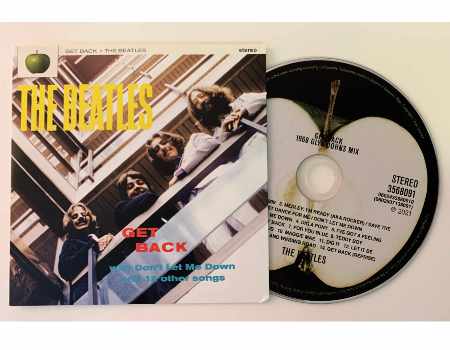
In part one of my listening report on The Beatles’ new 50th Anniversary edition of Let It Be we explored the Stereo and Surround Sound mixes in some depth (click here if you missed that).  In part two we touched on engineer Glyn John’s wonderful and legendary shelved vision for the original Get Back album which is also included in the set, its first official release (click here for that portion). 

Today we’ll explore some of the outtakes and alternates recorded during the Get Back / Let It Be sessions.  While there was much impromptu jamming and fun as the group ran through loose versions of favorite rock ’n roll oldies, the band members were periodically presenting new songs to one another for consideration on the new albums.  

Perhaps you have to be a deep fan to appreciate this fully, but if you love this music it is often spine tingling to hear these early versions of songs we came to know and love later on Abbey Road as well as individual Beatle solo albums. Its almost akin to watching a painter layering on colors on the canvas, revealing new textures, light and color combinations as the final work begins to take shape.  

Thus we get to hear fascinating early run throughs of songs which ended up on solo Beatle albums such as George Harrison’s “All Things Must Pass” (title of his eventual first album in 1970), John Lennon’s “Gimme Some Truth” (which appeared on Imagine in 1971) and Paul McCartney’s “Teddy Boy” (which was completed on his first solo album).

On two dedicated and great sounding stereo CDs included in the six disc boxed set 50th Anniversary edition of Let It Be we also hear early rehearsals and work outs on songs which ended up on Abbey Road. Included are McCartney’s “She Came In Through The Bathroom Window” and “Oh Darling.”  Lennon breaks out “Polythene Pam” and George offers up “Something” in an early version where he doesn’t even have the lyrics to the opening line complete (singing the placeholder lyrics “…. attracts me like a pomegranate”).  We are even treated to Ringo playing his “Octopus’ Garden” on piano for the band! 

The 50th Anniversary edition of Let It Be boxed set includes a bonus “EP” featuring four songs which have their own unique place in the Beatles universe.  The stripped back mix of “Across The Universe” is very close to the original 1968 version of the song which appeared on a benefit LP in the UK, featuring lots of Sitar droning and high background choruses from some fan singers who were brought in on the session.  There is a different mix of “I Me Mine” recorded by George, Paul and Ringo just after New Years in 1970 (John was away on holiday). 

Here you’ll also find a new mix of the original single mix of “Don’t Let Me Down” which appeared as the B-side to the classic “Get Back” single in April 1969 — this has some different overdubs on it than other versions.  And finally on this EP you’ll hear a sweet new mix of the original 45 RPM single version of “Let It Be” which again included very different overdubs from what you hear on the LP. For many of us, this was the first version of “Let it Be” that we heard on the radio so this is especially sweet to hear it with such clarity and focus. 

This single is great way to end the collection with that radio-ready mix. It was so comforting at the time to hear that on the radio in very heavy rotation. So many of us were grappling with the madness of the moment societally, coupled with the heartbreaking news of The Beatles breaking up. It was a “lotta lotta,” as a friend of mine sometime says. “Let it Be” took that sad song and made it a bit better…

50th Anniversary edition of Let It Be is available in a multitude of formats most every place where you can find music these days.  And while it is streaming, to get the most out of this package you really owe it to yourself to buy the boxed set in some form to get all these outtakes and alternates and the beautiful hardcover 100-plus page full color book. This is an elegant and fitting tribute to the Let It Be and Get Back albums and the band.

Now I’m just looking forward to the upcoming Peter Jackson-produced documentary on Let It Be and Get Back (airing on Disney + over Thanksgiving weekend!). Plus, there is the fanboy hope that maybe — just maybe, as I’m purely speculating here, folks — that we’ll get a companion soundtrack album featuring the entire rooftop concert the Beatles performed during the making of the album.  

Fingers crossed!

Until then the 50th Anniversary edition of Let It Be is a more than welcome addition to my collection and I know I’ll be listening to it a lot in the weeks and months to come. 

The Beatles Let It Be Super Deluxe Editions: Part 2, Glyn Johns’ Get Back Album

If you are reading this review of the new 50th Anniversary edition of Let It Be I assume you know some of the back-story on the making of the Let it Be album and the challenges the band faced in creating the recording as we know it today. If you missed part one of my listening report on the new Stereo and Surround mixes, please click here to catch up on that important portion which explores final producer Phil Spector’s vision for the recordings in 1970. And if you want even more insights on the entire related celebration series — including an upcoming documentary! — please click here to jump to my earlier preview overview. 

One of the central elements in the Let It Be legacy (and rock ‘n roll mythology, if you will) revolved around a series of test mixes and and potential album concepts assembled — back in the day before Phil Spector’s work — by acclaimed engineer/producer Glyn Johns. Test mixes were pressed on one-off acetate discs and distributed to the band members for consideration. But, in short, nothing was ever formally decided upon and ultimately Johns’ idea for what the Get Back album (as it was known then) might have been was shelved. 

However, before it was nixed and put into the archies, someone outside the Beatle’s internal universe got their hands on the recording — Lennon is quoted in the book in the new boxed set that he thought it was probably his copy — which leaked out. And, before you knew it bootlegs were appearing on the underground market being sold to ravenous hardcore Beatle fans even before the Let It Be album was eventually released (after Abbey Road) in 1970. Over the years various and sundry versions of this bootlegged — really, pirated would be a better word — album have appeared sometimes bearing rather sophisticated production qualities that looked — and sounded — quite legitimate to the average consumer (especially by the CD era).   

Well, now that we have the genuine real deal version of the Get Back album included with the new 50th Anniversary edition of Let It Be super deluxe edition boxed set. Now, this infamous and beloved precursor can take its rightful place alongside Phil Spector’s mix in Let It Be history. 

Glyn Johns’ Get Back album is important because in it is indeed closer in concept to The Beatles’ original vision for what the album was supposed to be about in the first place: a return to their roots, more stripped down and live sounding. That back to the egg (if you will) idea was taken all the way down to the album’s original design, which mimicked The Beatles’ first album, Please Please Me, featuring an updated photo taken in the exact location as their debut release. 

If you are listening to Get Back for the first time, you need to go into this with open ears. There are some very cool things happening on it but it is a much rawer listening experience, intentionally far from the pristine sheen of Abbey Road or even Spector’s Let It Be mix.

Listening to Get Back you feel a bit like (in Glyn Johns’ words) a “fly on the wall,” which was part of his intent.  At times you’ll hear songs start and stop in an abrupt manner as if you were in the studio with the group as they rehearsed.  You’ll hear snippets of studio chatter and other noises one wouldn’t necessarily come upon in a polished commercial album release. Some of the spoken word bits appear in very different places than where they showed up on Spector’s Let It Be. Most notably, Lennon’s famous line about hoping the band “passed the audition” appears at the end of Get Back‘s opening track “One After 909” instead of at the end of the song “Get Back” at the end of the Spector / Let It Be version.   

You will even hear works in progress such as Paul McCartney’s song “Teddy Boy” which eventually was released (in different form) on his first solo album.  We get to hear fun impromptu jams and a charming off the cuff romp through The Drifters’ “Save The Last Dance For Me.”

From my perspective Get Back is essential listening for even the casual Beatle fan (thus I dedicated a whole review to my listening report series!). 

How important was this album’s original concept to The Beatles themselves? Well, decades later eventually Paul McCartney took it upon himself to try to recreate the vibe they were going for initially, issuing Let It Be… Naked in 2003. Using different takes from the session, that album went a long way to correct some public perception about what the Get Back album might have been like.

I find Glyn Johns’ approach more intriguing and ultimately satisfying as an end-to-end album listen, however. Between the three versions you should be able to get a good sense of the depth and flexibility of the music on these albums. 

Many younger Beatle fans may find Glyn Johns’ versions of Get Back appealing because it frankly sounds like an indie rock album.  I’ll put it this way: if you like Guided By Voices’ patchwork approach on their legendary albums like Bee Thousand, you might well enjoy the vibe and surprises on Get Back.

Ultimately, we will never know what Get Back might have been had the group finished it the way they’d originally intended back in the day. But Glyn Johns’ Get Back is the next best thing, especially when coupled with the wealth of great sounding studio outtakes which we now have officially at our fingertips (more on that tomorrow). 

Get Back sounds fantastic and I could imagine hearing it played on FM radio in the 1970s or the 1990s!  Hopefully it will get some airplay in the 00s! 

The compact disc version of Get Back sounds wonderful, warm and round and very much like one might expect the raw Let it Be recordings to sound. 

And if the CD sounds this good, I suspect that the vinyl edition will sound even better so as soon as I get a copy of that version in hand, I’ll be sure to share an updated listening report with you here on Audiophile Review.  I do wish Get Back was included on the Blu-ray Disc in the set, but alas that was not to be.  However, the album is streaming in high resolution 96 kHz, 24-bit fidelity on Qobuz Hi Res (click here) and Tidal MQA (click here). Get Back sounds fab there! 

Get Back is also a great way to whet one’s palate for remainder of the new boxed set so please tune in tomorrow when we’ll explore some of the outtakes on the new 50th Anniversary edition of Let It Be.

The Band’s Stage Fright 50th Anniversary Boxed Set, Pt. 2: Surround Sound Blu-ray & CD

In Part One of my review of the new super-deluxe edition of The Band’s 1970 release called Stage Fright, we explored the new Stereo remix of the album including the dramatic restoration of the original track listing as first envisioned by the band. If you missed that review, please click here to jump to it. 

The Stage Fright – 50th Anniversary features not only a 180-gram vinyl LP of the new mix album but also a well designed and great sounding — if simple — Blu-ray Disc containing the album and their 1970 Royal Albert Hall concert mixed into 5.1 surround sound. 

Stage Fright : The Surround Mix

For the purposes of this review I listened to The Band’s new Stage Fright – 50th Anniversary surround sound mix via the DTS-HD Master Audio version on the included Blu-ray Disc. A Dolby TrueHD option is also included which sounds fine but I find it less distinctive in terms of discrete channel detailing. There is also a high resolution LPCM Stereo version included. All of the versions sound excellent overall, presented in 96 kHz, 24-bit fidelity offering a nice balance between crisp highs, firm mid-ranges and more resonant lows without losing the fact that it was at its root a recording made in 1970.   

The new 5.1 mix is gently immersive and very effective at creating a sense of the room the group was playing in while recording the album. The band is largely presented forward facing while the surround channels are used for selective overdubs and room ambiance. For example, on “W.S. Walcott Medicine Show,” the horn section fills up the room largely from behind, blending neatly at times when the solo saxophone takes center stage from the front.  

Levon Helms’ drums are very present, also front and center, and they sound terrific. This mix grows on you nicely, making you feel like you are there in the theater with the group. And given that the live playhouse stage feel was part of the original intention of the album concept (according to the liner notes), in that light I feel this surround sound mix is a strong success on all fronts. 

The Live Royal Albert Hall Concert

Included with Stage Fright – 50th Anniversary is a live concert recorded at the end of The Band’s 1971 European tour at the Royal Albert Hall in London.  EMI recorded the concert on a four track machine it brought into the venue. It is so fortuitous that this show was preserved. According to Robertson’s notes in the booklet, the tour found the group performing at the top of its game and this show really reflects that notion. 

Here they present a powerful 20 song set including a healthy dose of then-new material from the Stage Fright album. Consider how confident they were to open the show with a double whammy of then new songs “The Shape I’m In” and “Time To Kill” before playing familiar fan favorites like “The Weight.” 

They perform about 3/4 of their smash hit second album (the self-titled, brown covered one).  Given the simpler method of recording this concert, the producers wisely also kept the 5.1 mix quite simple. It is basically a Stereo spread across the front left-center-right channels with concert venue time-delay ambiance filling the room via the surround channels. It sounds extremely welcoming and enveloping — I found the 5.1 mix of the Royal Albert Hall concert a much more satisfying way to enjoy this excellent recording compared with the plain Stereo mix option that is also on the Blu-ray Disc. 

Robertson calls this one of their best performances in the liner notes and I can’t help but agree. The Band is clearly on a mission here.  

The CDs. The 45 and Other Things

Both the restored album and the live concert are included on standard CDs in the Stage Fright – 50th Anniversary set. These are handy for mobile use if you still have a car CD player or if you don’t feel like playing the Blu-ray or the vinyl LP.  But, of the three options, it is the least appealing sonics wise. It is perfectly fine as CDs go, don’t get me wrong, but the Blu-ray sounds better and the vinyl sounds warmer still.  

There are, however, some bonus tracks exclusive to the CDs which you’ll want to hear: acoustic rehearsals in a hotel room in Calgary while on tour! This is total fly on the wall stuff, things we were never supposed to hear. And, how wonderful it is to hear these legendary musicians work their way through their own songs and  nuggest like Huey “Piano” Smith’s classic “Rockin’ Pneumonia and The Boogie Woogie Flu.” They may be relatively LoFi recordings but they are no doubt special so you’ll want to hear this. 

In the Stage Fright – 50th Anniversary set you also get a reproduction of a rare Spanish picture sleeve and 45 RPM single featuring “Time To Kill” backed with “The Shape I’m In.” This is a very cool bonus for serious fans as finding original copies of rarities like this is difficult, at least here in the USA (there are some up on Discogs).  

Also in the boxed set are a set of lovely art prints with original photograph of The Band from the period. Suitable for framing, these images underscore the instantly iconic stature this group had at the time.

Stage Fright – 50th Anniversary is a great collection and if you are fan of the group and this album you need to hear it.  I would go so far as to call it an essential set given the way it showcases the music in such a positive new light.  Seriously, as far as I’m concerned this is like getting a brand new Band album to enjoy so in its own way this may well be my favorite deluxe edition from The Band thus far. 

Bravo!

The Band’s Stage Fright 50th Anniversary Boxed Set, Pt. 1: Vinyl

The new super-deluxe edition of The Band’s 1970 release called Stage Fright is both a celebration of the original album and an opportunity to present the music in a better light than it has received in the past. The original edition was engineered and mixed (respectively) by no less than Todd Rundgren and Glyn Johns, so it stands to reason that it was a pretty good sounding album.

Except for people like me and Robbie Robertson who didn’t connect with the mix…

Honestly folks, I never quite knew what bothered me about Stage Fright but compared to the glory of their second eponymously titled album especially, the original presentation of Stage Fright has always left me unsatisfied for some reason. 

But when I read Robbie’s opening liner notes to the new Stage Fright – 50th Anniversary collection, I had one of those big “ah hah” moments! In short: the track listing issued on the original album was not the first — and ultimately desired — version of the album and the band was not involved with the final album mix as they were on tour at the time!  

As the lone surviving creative writing member of The Band, Robbie Robertson saw this as an opportunity to re-cast the album in its original form. He addresses all this in the opening paragraphs of the booklet that comes with the Stage Fright – 50th Anniversary set.  

Apparently the decision to put Levon Helm’s “Strawberry Wine” and Richard Manuel’s “Sleeping” up front was designed to encourage them as song writers. But that wasn’t necessarily the best thing for the album’s pacing and vibe ultimately as it starts up with a loose rocker and then slams into a dramatic and beautiful farewell song.

Stage Fright was recorded on a small vintage play house stage in Woodstock, New York. Originally The Band wanted to to make a live recording but they could not get permission from the local community to do a concert there, so they ended up recording the album there in a live remote studio scenario.The original lineup of the tracks was going to proceed more akin to how a live performance might have. 

Now, please stop to pause for a moment and reflect on The Beatles’ Sergeant Pepper’s Lonely Hearts Club Band — that record which loosely proceeds like a show by an imaginary band opens with a welcoming overture of-a-sort before diving into the heart of the album. 

Likewise, Stage Fright now opens with the driving “W.S. Walcott Medicine Show” followed by the one-two punch of “The Shape I’m In.”  More or less. Side Two is now Side One, as it follows with the three songs which closed the old version of the album, “Daniel and the Sacred Harp,” “Stage Fright” and “The Rumor.”  Opening Side Two with the “Time To Kill” and “Just Another Whistle Stop” packs a wallop and sets the stage for Richard Manuel’s haunting“Sleeping” which closes the album on a beautiful, if a bit ominous, note. 

Stage Fright was never my favorite album by The Band for numerous reasons, many of which I could never put my finger on. Now I realize that the album never flowed well, and it didn’t draw me in, especially when compared to the prior release. So as soon as I heard the new running order for the album I loved it immediately — all of a sudden the song cycle is making a lot more sense. 

In the booklet included in the set, Robertson also reminds fans that the original album will always be there for them to listen to and enjoy – it is not going away! But if you too were unsatisfied with the old version of Stage Fright, this new version may well be a revelation. 

I think it is wonderful and for me it has made me completely re-consider this album. I’ll put it this way: now it feels like a strong and worthy successor to their 1969 breakthrough, The Band. 

The new Stereo remix is also quite a revelation. This is not just a remaster of the old mix.

Robertson wisely decided to remix the entire album from scratch while they had this opportunity to create something new. He hired legendary engineer Bob Clearmountain to work with him and the results are quite spectacular. Suddenly, Stage Fright sounds finished with a beautiful rich sparkle worthy of being a successor to their game changing second album from 1969 (which I reviewed a couple years ago, click here). 

The high end on Stage Fright – 50th Anniversary is noticeably brighter and crisp without feeling artificial. The low end is richer and rounder, expanding bassist Rick Danko’s work to more beautiful sonic pastures On the original version at times it sounded like the bass guitar was recorded in a tissue box. On this new edition the bass is richer and more open, seeming to capture more of the essence of the room where it was recorded.  

Levon Helms’ drums also sound much more alive and vibrant on the new mix.  His kick drum is much more distinct and the drums in general sound punchy, not like they are in a box. The cymbals are much clearer and they decay beautifully. There is a wonderful sense of detailing going on here. 

Listen on the title track how (I assume) Levon Helm drops out his drums during the solo supporting it with the most sparse of percussion and leaving space for him to drive home the song to the final chorus. Truly, its an orchestral drum performance delivered here and now this craft is much more audible than before.

Robbie’s guitars sound fuller with much amplifier tone coming through the mix. The acoustic instrumentation on “Daniel And The Sacred Heart” is gorgeous – rich strumming acoustic and slide guitars, harpsichord, violin, accordions are all now extremely present and resonant.  The electric guitars on “Time To Kill” are just pure rockin’ joy. 

So combining the new mix and the new track running order, I consider Stage Fright – 50th Anniversary effectively a new album that recasts the music in its most positive light.

And that is a very good thing, indeed because there are some tremendous songs here which became the basis of The Band’s legacy.

The new vinyl pressing, by the way, is excellent. It is pressed on perfectly centered and dead quiet 180-gram black vinyl and comes housed in an audiophile grade lined inner sleeve. So, no problems there. 

In part two of my review of The Band’s Stage Fright – 50th Anniversary, I will explore the Blu-ray disc included in the set which contains the whole album mixed into 5.1 surround sound. It also includes a fantastic concert recorded at The Royal Albert Hall in London, England.

Be sure to tune in tomorrow…