Am Abend des ersten Messetags fanden Autor Dr. Frank Lechtenberg und Chefredakteur Carsten Barnbeck Gelegenheit, in unserem Messe-Podcast ein erstes Resümee von der HIGH END 2023 zu ziehen.
Zum einen scheint es “nach oben” keine Grenzen mehr zu geben. In etlichen Hörraumen spielten Anlagen, die an der Grenze zum siebenstelligen kratzten – und diese bisweilen auch durchbrachen. Exemplarisch kann man hier den “Großen Drachen” von ESD Acoustic nennen. Das Chinesische Unternehmen zeigte ein schier unbegreifliches Highend-System mit raumfüllenden Hornlautsprechern. Angetrieben wurden die Boxen von insgesamt 25 Komponenten. Einer der Entwickler gab sich redlich Mühe, den verblüfften Anwesenden zu erklären, welche Aufgaben die einzelnen Elektroniken ausfüllen. Um alles zu begreifen hätte es allerdings Skizzen, Diagramme und eine Menge Notizzettel benötigt.
Bezahlbar im Trend
Etwas einfacher warfare das bei der großen Anlage der Audio Group Denmark. Die stellte die nun komplettierte 880er-Familie vor. Inklusive Streamer/DAC, Vorverstärker und Endstufen. Das System lief samt Aavik-Verkabelung an Borresens M3 und dürfte ebenfalls den Gegenwert eines (kleinen) Einfamilienhauses haben. Als Kompensation für die Investition erhält man allerdings den “analogsten” Klang, den wir jemals aus einem Streamer gehört haben.
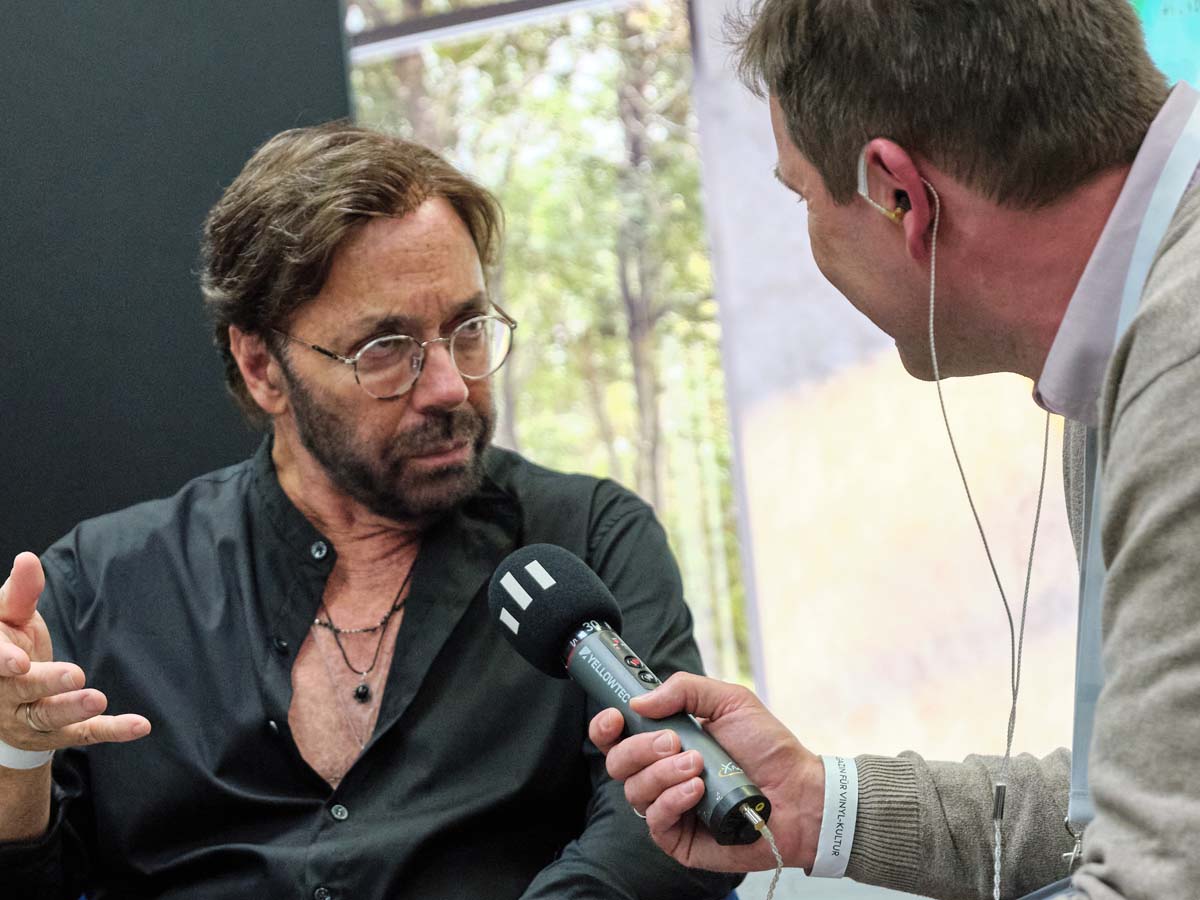
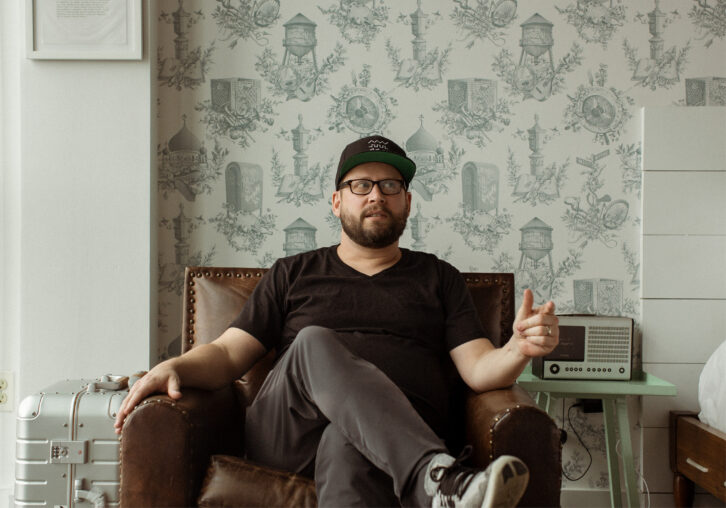
Unser Autor Dr. Frank Lechtenberg (rechts) konnte mit Al Di Meola sprechen.
Von diesen Showtreibern sollte man sich allerdings nicht täuschen lassen. Viele Hersteller zeigten auch günstige Komponenten, zahlreiche Features vereinen. So präsentierte die ADG den neuen bezahlbaren Alleskönner Axxess Forté. Cambridge Audio bringt einen passenden – ultrarobusten – CD-Spieler für die Evo-Serie und PMC zeigte gleich mehrere erschwingliche Lautsprechermodelle. Kennzeichen vieler dieser “Schnapper” ist die harmonische Zusammenführung von Analog und Digital. Canor etwa zeigte mehrere neue Verstärker, in denen die bewährte Röhrentechnik des Herstellers mit D/A-Wandlern und Bluetooth zusammenkommt – genau das, was man sich heute von einem Alleskönner wünscht!
Auf zwei, drei Sätze mit Al Di Meola
Nachmittags hatte Frank Lechtenberg Gelegenheit, einige Fragen an das Gesicht der Messe, Al Di Meola, zu richten. Aufgrund der Umstände – Live und umringt von etlichen weiteren Journalisten – konnten wir keine Übersetzung einflechten. Genießen Sie einfach die sonore Stimme des Virtuosen, Nach dem Interview folgt eine kurze Zusammenfassung seiner wichtigsten Botschaften …
Pünktlich zum Osterfest haben wir unseren neuen Podcast aufgezeichnet. Für uns warfare es diesmal sogar ein „kleines Jubiläum“: Bereits zum fünften Mal plauderten Autor und Moderator Dr. Frank Lechtenberg sowie Chefredakteur Carsten Barnbeck über Themen und Begebenheiten rund um die neue FIDELIDY-Ausgabe.
FIDELITY 67 – die Manufakturausgabe
Bereits früh in der Produktion unserer „Nummer 67“ manifestierte sich der Gedanke an eine Art „Manufaktur-Ausgabe“. Ein guter Teil der Testkandidaten wird direkt beim jeweiligen Hersteller in liebevoller Handarbeit entwickelt und produziert. Das gilt beispielsweise für die hochkarätigen Kabelfamilien der inakustik. Wir durften die „heiligen Hallen“ der Strippenzieher in Ballrechten-Dottingen bei Freiburg besuchen und waren begeistert von der Produktionstiefe und den vielen kleinen Kniffen, mit denen die Breisgauer die stete Qualität ihrer Verbinder gewährleisten. Feinste Handarbeit und hohe Fertigungstiefe sind auch im hohen Norden Dänemarks angesagt, wo der außergewöhnliche Aavik I-880 entsteht. Als erstes Testmagazin überhaupt durfte FIDELITY ein Ohr den exklusiven Vollverstärker legen – ein Vergnügen, dass in dieser Preisklasse sicher nicht selbstverständlich ist. Und Sie dürfen uns glauben: In vielerlei Hinsicht hat das Verstärker-Vollblut unsere Erwartungen sogar überflügelt.
Dass Handarbeit nicht automatisch mit einer extremen Preispolitik einhergeht, bewies uns schließlich Thivans 300B. Der Röhren-Vollverstärker ist vollständig diskret aufgebaut, wird beim Hersteller von Hand verdrahtet und weist in seinem Inneren keinerlei Platinen oder ICs auf. Dafür gibt’s feinste Zutaten und jede Menge Röhrenzauber: Eine rein analoge Schaltung für ein pures Musikvergnügen. Ebenfalls erstaunlich sinnvoll erschien uns das Konzept vonMarantz‘ jüngstem, dem überaus erschwinglichen CD-Spieler CD60. Der Player ist ohne jeden Schnörkel ausgelegt und passt optisch zu den „Upper Class“-Komponenten des Herstellers, darunter die vorzüglichen Vollverstärker Model 30 und Model 40.
Die Zukunft von HiFi im Podcast
Abschließend sprachen wir über musikalische Neuerscheinungen wie das packende neue Momentum Mori von Depeche Mode und stellten neuerliche Überlegungen zur Zukunft der Musikwiedergabe an: Hier ging es um die Frage, ob „Rollenmodelle“ wie Apples HomePod in Ausstattung, Funktionsumfang und Bedienung ein Vorbild für die HiFi-Branche sein können (… oder sollten?).
Nun wünschen wir Ihnen viel Spaß mit der neuen Folge des FIDELITY-Podcasts.
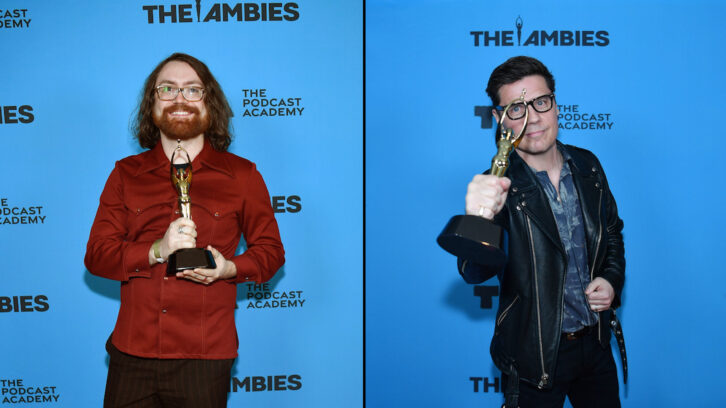
Defacto Sound’s Casey Emmerling (left) accepted Twenty Thousand Hertz’s Ambie award for Best Production and Sound Design, whereas Double Elvis Productions’ Jake Brennan (proper) took house Disgraceland’s award for Best Original Score and Music Supervision final night time at The Podcast Academy’s Third Annual Awards for Excellence in Audio. Photos: Denise Truscello/Getty Images for The Podcast Academy / The Ambies
Las Vegas, NV (March 8, 2023)—Hot on the heels of final week’s information that podcast listening has reached record-breaking heights after a startling 2022 post-pandemic drop, the third-annual Ambie Awards have been held final night time in Las Vegas. The occasion, introduced by The Podcast Academy, honors “excellence in podcasting and elevate consciousness and standing of podcasts as a singular and private medium for leisure, data, storytelling and expression.”
New York’s Defacto Sound’s long-running Twenty Thousand Hertz podcast received the Best Production and Sound Design Award. Meanwhile, Jake Brennan, Matt Beaudoin, Ryan Spraker and Bryce Kanzer of Boston-based Double Elvis Productions took house the Best Original Score and Music Supervision trophy for his or her work on Disgraceland.
While the overwhelming majority of the 26 award classes give attention to style—Best Comedy Podcast and so forth—solely a handful give attention to precise podcast manufacturing, highlighting writing (fiction and nonfiction) and reporting in addition to the 2 audio-related awards for unique rating/music supervision and manufacturing/sound design.
Twenty Thousand Hertz host Dallas Taylor makes use of the tales behind well-known sounds to take a deeper take a look at what sound is and means within the trendy world. Photo: Natalie Shields
Created by Defacto Sound—a sound design home that has labored with Tesla, HBO, Discovery and lots of extra—Twenty Thousand Hertz is a podcast centered on the histories of modern-day sounds and the way we expertise them. Hosted by Defacto’s artistic director Dallas Taylor, the present appears to be like at every thing from the origins of the Netflix “Ta-Dum” and Seinfeld’s signature slap-bass riffs, to extra technical matters just like the Loudness Wars and the way NASA communicates with astronauts.
Interviewed for Pro Sound News in 2020, Taylor defined the present’s ethos, noting, “I needed to make one thing that began to carry the enjoyment to sound itself, virtually like a chef’s desk really feel, however for sound, to hopefully get tradition extra in tune and extra aware about their sense of listening to.”
He added that educating the general public about sound and audio advantages each medium, from podcasting to movie, as he defined, “If the business itself—the place we solely have visuals and sounds—nonetheless has a tough time figuring out sound as a very artistic storytelling instrument, then I believe the remainder of the world in all probability nonetheless has a tough time with this.”
Berklee assistant professor of music manufacturing/engineering by day, podcast producer by night time, Matthew Beaudoin was one of many winners final night time for Disgraceland. Photo: Double Elvis Productions
Winning the Ambie for Best Original Score and Music Supervision was Double Elvis Productions’ podcast Disgraceland, a long-running true-crime present that appears on the dramatic, typically troubled pasts of musical icons like Led Zeppelin, Sid Vicious, Mac Miller, Chris Brown and others. As the present’s senior producer Matthew Beaudoin instructed Pro Sound News in 2020, “[We are] very a lot centered on, ‘How can we get music to help this narrative that we’re telling? How can we get the music to work in live performance to help that narrative, and make the expertise as immersive as attainable?’”
New York, NY (March 3, 2023)—After a lower in listenership final yr, elevating considerations that the format was a fad, podcast listening has bounced again and reached a file excessive, in accordance with Edison Research’s newly launched annual report, The Infinite Dial 2023. Additionally, listening to all types of on-line audio has additionally reached new heights as nicely. These findings are necessary for the pro-audio and studio sectors, each of that are important elements of the content material provide chain for radio, streaming providers and podcast networks.
While podcasting surged in recognition during the last 10 years, it was through the peak of social-distancing lockdowns in 2020 that the audio format really exploded, reaching new heights as Americans with an excessive amount of time on their arms hungered for leisure and dialog—and located a little bit of each in podcasts. That avid listening, nevertheless, fell off as COVID restrictions lifted.
However, the brand new 2023 report finds that month-to-month and weekly podcast listening have bounced again in an enormous means. A full 42% of Americans 12+ have listened to 1 within the final month—a brand new all-time excessive and up from 38% final yr, and 31% of Americans 12+ have listened to a podcast within the final week, up 26% year-over-year.
Who’s listening? Well, the vast majority of Americans ages 12-54 (53%) have listened to a podcast within the final month, and 39% % of Americans ages 12-54 have listened to a podcast within the final week. Not everyone seems to be enamored with the audio format, nevertheless; podcast listening continues to be stagnant amongst these 55+, with solely 21% of Americans in that age group listening to a podcast within the final month, and solely 14% within the final week.
Not solely are folks listening extra usually, nevertheless, however they’re additionally listening to extra podcasts, interval. Weekly podcast listeners heard a mean of 9 podcast episodes within the final week, up from eight episodes in 2022. The post-COVID return to commuting comes into play with regards to podcast listening—38% of U.S. adults age 18+ who’ve ridden in a automobile within the final month say they take heed to podcasts within the automobile, up from 32% final yr.
Edison Research vp Megan Lazovick famous with the report’s debut that “After two earlier annual research that confirmed clear results from the COVID-19 disruptions, the developments in audio and social media habits appear to be again on sample.”
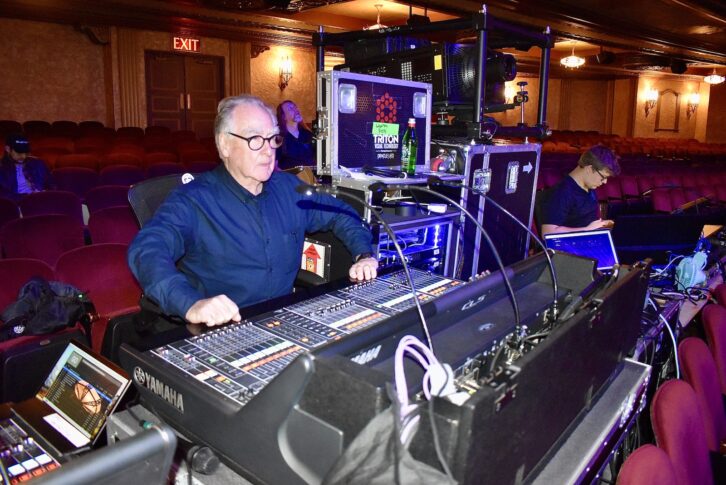
Frank Gallagher, seen here line-checking the B-52’s at New York City’s Beacon Theatre, has started his own podcast, Soundman Confidential, to explore the artist/engineer relationship.
New York, NY (February 9, 2023)—Frank Gallagher has a keen ear for two things—mixing a band and telling a story—and with a resume that includes engineering Talking Heads, Simple Minds, The Go-Go’s, The Bangles, Gang of Four, Buddy Guy, Suzi Quatro, Marshall Crenshaw, Skunk Baxter and dozens more on the road, he’s done a lot of one, which has led to a lot of the other. Blessed with a wry sense of humor and a Scots accent that sounds like a sly grin, there are few things he can’t get away with saying—which may explain his longevity in the field.
“I tell bands, if you’re not giving me what I need, there’s no point in me being here— you may want to find somebody else, because I’m not going to sit here and suffer and do damage control,” said the veteran FOH engineer, speaking backstage at New York City’s Beacon Theatre during a recent stop on the B-52’s farewell tour. “This band here, I’m going to give them notes tonight on the show last night. I’m a socialist when it comes to a show—we’re all equal, we’re all in this together!”
Gallagher’s Live Sound CV is epic—there’s also stints running a hip London eatery in the Seventies, helping open and book New York’s legendary Irving Plaza in the Eighties, production managing San Francisco’s annual OysterFest for 16 years, doing corporate audio to this day and more—but in recent times, he’s added another occupation to the list: Podcast host. An offshoot of an autobiography in the works, Soundman Confidentialfinds him talking to old pals and acquaintances, from rockers (Vernon Reid, Davey Johnstone and virtually all the aforementioned artists) to fellow audio pros (Ed Stasium, Steve Lillywhite).
“Originally, the premise was to explore the relationship between the soundman and the band,” he said. “How does what we do get in us— because sound is in us. I remember this vividly: I was three years old, living in a little Scottish mining village. Every year, the traveling fair would come by, and that was the first loud music I heard; it had to be loud to get over the hum of the generators. The speakers were big [Altec Lansing] Voice of the Theater models and they had these Vortexion amplifiers—metal, military-grade P.A. amplifiers that looked like an ammo case and were indestructible.”
The lure of loud sounds eventually snared Gallagher for good (“I got in a van in 1966 and never got out”) and by the early 1970s, he was mixing Suzi Quatro around the world on three prototype WEM six-channel mixers daisy-chained together and WEM Festival Stacks: “Incredibly clean, and you could do 4,000 people with a couple of bins; they’d blow the ice cream outta your cone.”
Moving on to work at UK audio provider Concert Sound, Gallagher was immediately sent to start a tour in Switzerland: “They couldn’t get anyone to do it; they said, ‘Pick up these two American bands in Zurich’—and it was Ramones and Talking Heads. Ramones had a full crew; Talking Heads had no roadies, no music out in Europe, nothing. The second man on the P.A. got to mix the opener, so I set them up at the Volkshaus in Zurich, and barely got a line check. They opened the doors, the place was sold out. Talking Heads came on stage, and first song, I was busy getting a mix. Second song, I began to pay attention. Third song, the hairs on the back of my neck stood up—‘Psycho Killer? What is this?!’
“True story: I went back to the hotel after the show, barely knew them, had a wee production meeting with them. I had a cup of tea and I said to Chris and Tina and David, ‘I have no idea what’s going on here— but I want in.’ Instant decision. I don’t believe in coincidences. Fate takes a hand, but you’ve got to be smart enough to take advantage of it; I’ve never been shy about letting people know. Talking Heads brought me to New York for a couple of shows at the Entermedia Theater in New York’s East Village; by that time, they had graduated from CBGBs. We started playing up and down the Eastern seaboard, and in America, I got used to using house systems, which I did not have the luxury of in England; I was so happy!”
The decades that followed found Gallagher moving to the U.S. permanently and honing mixing philosophies that he follows to this day:
“I believe in keeping it simple. I tell people it’s because I’m lazy, but that’s not the truth. I’m keeping it simple because I’ve learned the less there is, the less that can go wrong.”
“I never listen to the record. If I’ve got preconceived ideas about what’s going to come off the stage and it doesn’t meet expectations set by the record, that’s not really a good place to start. Also, I’m a realist: I have to deal with what’s coming off the stage because that’s all I have.”
“When I go into a house these days, I don’t touch the house settings because the guy’s usually got it dialed and why would I want to reinvent the wheel? Also, I want an easy day.”
“I don’t go over the top with effects. I’ve got one little reverb on drums and one on vocal—and if you can hear them, you’re lucky. I want it to be there without anybody knowing it’s that there, but when you take it away, you can tell.”
“Rock and roll bands are like buses: There’ll be another one along in a minute. Once you get a couple of names on your resume, people think it means something; it doesn’t. You’re only as good as your last show.”
For the B-52’s tour, he adhered to all of those rules and more (“I don’t work for anybody with more than a two-truck tour anymore; the personalities, I don’t want to be dealing with all of that”). For the journey, he opted to mix on a Yamaha CL5 console using only onboard effects (“Never owned a Waves license”), capturing vocals on Shure wireless mics outfitted with Heil PR 30 capsules (“They give me another 10 dB before feedback over anything I’ve heard”).
The jaunt capped off a busy 2022 that saw Gallagher also mix runs with Gang of Four and Skunk Baxter, as well as tech at multiple corporate events. “Post-Covid, people are working again,” he said. “Hugo [Burnham], the drummer from Gang of Four, called and said, ‘Do you want to come out?’ I was quite enjoying being at home—Flagstaff is beautiful—and my wife said, ‘Get out of the house; go do this tour.’ And I’m not gonna say ‘my mojo,’ but my mix is back with a vengeance.”
The B-52’s tour may be over, but Gallagher will see them soon enough, helming the desk for their upcoming Vegas residencies in May and August; more runs with Baxter and Gang of Four, as well as Indian artist L. Shankar, are also in the offing. It’ll be a hectic year ahead, which suits him just fine. “I’ve lived a charmed life,” he admitted. “I’m from a little coal mining village in Scotland, got pulled in by the fairground, and had a restaurant in the middle and a dance hall in Manhattan, so I’m not afraid of anything really. Except my wife. Sometimes.”
Plattenduett, der Musik-Podcast mit Jenny Karpe und Frank Lechtenberg
Ein Musik-Podcast von Jenny Karpe und Frank Lechtenberg aus Lemgo. Die Moderatoren stellen in jeder Ausgabe jeweils ein Album vor. Im “Plattenduett” spielen sie daraus jeweils zwei Tracks und diskutieren darüber. Außerdem suchen die beiden Podcaster einen gemeinsamen Klassiker aus.
Dieses Mal: Hot Chip, Au Suisse, Hall & Oates
Das neue Album “Freakout/Release” der Band “Hot Chip” erscheint im August 2022. Jenny Karpe findet die erste Hälfte der Platte großartig. Danach verliert “Freakout/Release” für die Musik-Podcasterin ihren Charme. In “Plattenduett” spricht sie mit Podcaster Frank Lechtenberg über die Band. Die beiden sind sich einig: Die Band “Hot Chip” lässt seit einigen Jahren nach. Außerdem: Frank Lechtenberg stellt das Duo “Au Suisse” und sein gleichnamiges erstes Album vor. “Au Suisse” besteht aus den erfahrenen Musikern und Produzenten Morgan Geist und Kelley Polar. Die Band überzeugt mit verträumten Synthesizer-Sounds, 80er-Ästhetik und eingängigen Pop-Melodien. Der Klassiker in dieser Ausgabe stammt vom Duo “Hall & Oates”. Das Album “Big Bam Boom” erschien 1984. Auf dem Album findet sich unter anderem der Welthit “Out of Touch”.
Regelmäßig stellt FIDELITY Highlights der audiophilen Musikwiedergabe vor: exklusive Verstärker, Lautsprecher, Plattenspieler und vieles mehr. Im Rahmen des Magazins konzentrieren wir uns dabei vorrangig auf die Qualitäten, Funktionen und Eigenheiten der Komponenten sowie auf unsere musikalischen Erlebnisse im Hörraum. Viele Informationen, Notizen und Erlebnisse um den Test herum bleiben derweil unausgesprochen.
Genau an diesem Punkt knüpft unser neuer HiFi-Podcast an: FIDELITY-Autor, HiFi-Fan und Medien-Profi Dr. Frank Lechtenberg sowie Chefredakteur Carsten Barnbeck rekapitulieren und kommentieren in regelmäßigen Abständen die Themen der aktuellen Ausgabe. Wir kommen auf Details zu sprechen, die nicht in den Kontext des Magazins passten oder für die schlicht zu wenig Platz war und verraten Ihnen, wie unsere Autoren an Testgeräte herangehen, welche Songs sie als erstes hören und welche Aspekte im Verlauf des Tests besonders unter die Lupe genommen werden – die Geschichten hinter unseren Geschichten.
Hinter den Kulissen von FIDELITY No. 63
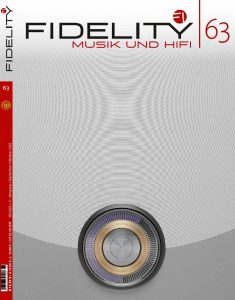
In der ersten Folge von FIDELITYs HiFi-Podcasts dreht sich natürlich alles um Ausgabe No° 63, die seit dem 12. August im gut sortierten Zeitschriftenhandel erhältlich ist. Zentralen Raum unserer Talk-Runde nimmt das aktuelle Titelthema Linn Klimax DSM/3 ein. Die dritte Generation des State-of-the-Art-Netzwerkspielers kommt nicht nur im völlig neuen Design daher, sondern bietet auch eine Vielzahl neuer Funktionen und Technologien. Neben einer integrierten Vorstufe und Linns hauseigener Raumkorrektur besitzt der Streamer erstmals einen eigenentwickelten D/A-Wandler, auf den wir im Podcast ausführlich eingehen.
Natürlich kommen auch die übrigen Highlights der Ausgabe nicht zu kurz, darunter etwa PMCs Lautsprecher-Flaggschiff Fact Fenestria, der Voxativ-Röhrenverstärker T-211 oder Teacs neue 701er-Linie, die sich gar nicht erst müht, ihre Verwandtschaft zu Esoteric zu verheimlichen.
Was tut sich in der Branche?
In FIDELITYs HiFi-Podcast geht es natürlich nicht nur um interne Entwicklungen. Wir sprechen auch über aktuelle Tendenzen und Entwicklungen in der HiFi-Branche, allem voran den frischgebackenen Lifestyle-Trend: Immer häufiger berichten uns Händler und Hersteller, dass die Optik und Integrationsfähigkeit ihrer Komponenten eine – wenn nicht sogar DIE – zentrale Rolle für die Kunden spielt. Außerdem thematisieren wir einen der großen Aufreger der vergangenen Wochen: Das hochspezialisierte Analog-Label MoFi (Mobile Fidelity) musste seinen Fans gegenüber eingestehen, dass in der Produktion hier und dort doch digitale Zwischenstopps eingelegt werden (müssen). Ein kleiner Kommunikationsfehler oder doch ein riesiger Affront gegenüber der Analog-Community – wir schildern Ihnen unsere Sicht auf das Phänomen und erläutern die technischen Notwendigkeiten, die MoFi bisweilen zu diesem Schritt zwingen.
Stay Tuned
Wir planen, unseren FIDELITY-Podcast regelmäßig zum Erscheinen der aktuellen Ausgabe zu veröffentlichen. Während wir unseren „Piloten“ noch in kleiner Runde hielten, soll es in kommenden Produktionen auch Interviews mit Branchenvertretern und weiteren Kollegen geben. Halten Sie also die Augen (und Ohren) offen …
Throughout the pandemic, Marc Maron (left) and producer Brendan McDonald have continued to record the WTF podcast in Maron’s garage.
Los Angeles, CA (June 9, 2021)—When the popular podcast WTF with Marc Maron debuted 11 years ago, the iPhone was only on its third iteration and couldn’t muster downloads larger than 20 MB. That’s an important fact in understanding the evolution of podcasting fidelity from tinny and flangey in the early ’00s, as the podcast’s producer Brendan McDonald describes, to the comparatively crystalline audio available from podcasts today.
“When podcasts were a fairly young medium, there were a lot of data concerns about them from users,” says McDonald, “people with early data plans or devices that did not hold particularly a large amount of data and did not have cloud storage plans yet. So, you had to be very mindful.”
As MP3 compression technology progressed and the show upgraded to a server whose bit rate was 128 Kbps, he found some listeners still preferred the original 22050 Hz mono file, which was 32-bit at a constant 40 Kbps. Those longtime listeners can still find that format on the podcast’s website, while podcatchers and platforms like Spotify get a modern formatted file.
“I was like, if the default setting is [128 Kbps] and I’m compressing down, [then] we’re getting like a VHS copy of a copy here,” he says. “Now we’re using a more standard, almost stereo MP3 style setting of 44.1 stereo, 16-bit and 128 Kbps—which is a much bigger file, but in the style that people are generally listening to podcasts now.”
McDonald has been with WTF with Marc Maron for all 1,200-plus episodes and worked with the host in terrestrial radio in New York and Los Angeles before transitioning to the podcast format. While he can hear improvements in the quality of the show and audio over that time period, the equipment he used to get the show to today has changed very little. Maron, in his home studio, still tracks with a Shure SM7 microphone and a Samson MDR6 tabletop mixer with Garage Band. McDonald edits in Adobe Audition, the latest version of the Cool Edit software he used in the show’s earliest days.
The only measurable changes to the show’s production, in fact, came with COVID-19. Maron and McDonald had to ease off their policy of only taping interviews in person, but maintaining the easy, conversational vibe that comes from conducting face-to-face interviews was a top priority during the upheaval of 2020.
“These interviews, and this show in general, really connect with people because the conversations feel so intimate,” says McDonald. “Marc, over the course of a decade, has gotten very good at that—basically creating an environment for people to feel like they’re comfortable and they can share with him. It doesn’t have a lot of pretense, it doesn’t have a lot of roadblocks to actual conversation, as opposed to feeling like it’s stilted or a list of Q&A. He wanted it to be personal; he wanted it to feel like two people connecting. And so that was really important to us.”
Social distancing protocols meant that videoconferencing became a necessity. For interviews in which the subject has a home recording setup, McDonald is able to get a tape sync recording, but most audio now comes through Zoom with the Audio Hijack extraction tool by Rogue Amoeba added to the mix. In the software’s Voice Chat mode, McDonald can select Skype, Zoom or another videoconferencing platform as the audio source and tweak the audio on the fly while Maron conducts the interview.
“It’s actually brought me back to my early days of live radio production, in that now I can actually sit on the live call with Marc and I can tinker with the sound if I need to,” he says. “It’s been more work in the last year, but we’ve been able to make it work and largely have been very satisfied with the way things have sounded.”
PreSonus’ Revelator USB microphone is aimed at content creators of all kinds.
The Revelator is PreSonus’s latest venture into USB microphones, touting three different microphone polar patterns—Omni, Cardioid, and Figure 8—as well as onboard DSP, software, accessories and more. We recently used it on The Art of Music Tech Podcast throughout an entire episode as I tried each polar pattern and even featured my co-host Denis performing a song on an acoustic guitar. At $249, it’s meant for podcasting, solo musical performances, livestreaming and more, and it handles those duties well.
The microphone comes with an optional table-top weighted base with a great sleek appearance, but it can also be mounted to a traditional mic stand using an included adaptor. We used that adapter on the podcast so it was easier to record Denis and myself on the couch in our studio.
The Revelator comes with access to PreSonus’ Universal Control software, which can also control other PreSonus products like its StudioLive console and StudioLive RM32 audio interface. It also controls the Revelator’s audio preferences like sample rate (44.1-96 kHz), clock source, input and output format, and Device Mode.
One of Device Mode’s key features is the Multi option, which lets you send audio simultaneously to three different platforms—for instance, YouTube, DAW and Skype. A pop-up software control panel lets users control every aspect of the mic, providing four preset modes that can be tweaked and room for another eight user-definable presets.
On the mic itself, those four main preset modes can be changed via a preset button, while both gain and headphone levels can be adjusted via the monitor button and volume knob. If you’re familiar with PreSonus’s StudioLive consoles, this is where you can dig into what they call the Fat Channel settings that control the gain, EQ, limiter, high pass filter, compression, gate and effects.
Revelator’s software mixer simplifies sending dedicated mixes to certain destinations by providing two dedicated channels just for loopback audio on both macOS and Windows. This means users can mix and record the audio from two different applications on a computer along with a voice, all at the same time. Everything that’s tweaked in the Universal Controller can be recorded or heard through the platform being used, whether it’s a DAW, Zoom, Twitch, Skype or something else. This is also useful for musical performers who want to use a preset reverb or delay effect for a livestream.
I recorded our podcast using the Revelator to Logic via my MacBook Pro and the results were great. For podcasting purposes, this microphone can be used for any situation you could possibly run into, whether you’re home and recording a podcast via Zoom, or face-to-face with a guest but with only the one microphone. As an audio professional, I’d stick with having multiple mics, but I would suggest this set up to a beginner that needs a budget-friendly set up. At times in omnidirectional mode, I felt there was a slight delay, but I just needed Denis to get closer to the microphone for the best sound. Overall, I’m very impressed by the Revelator’s flexibility and possibilities for so many content creators.
Former Mafia hitman Salvatore ‘Sammy The Bull’ Gravano on the set of his podcast, recording through a Shure SM93 lavaliere microphone.
Phoenix, Arizona (March 25, 2021)—Emmy-award winning sound designer and FX editor Angelo Palazzo has worked on blockbusters such as Disney’s Frozen, Stranger Things and Bridgerton, but he hit the curveball of a lifetime last year when COVID-19 brought the world to a standstill. Palazzo was working with filmmaker Robert Rodriguez on another project when the pandemic halted production one Friday afternoon in early 2020; by the following Monday, he was on board with Our Thing with Sammy the Bull, a Mafia podcast that puts his cinematic skills to use in a new format.
Emmy-award winning sound designer and FX editor Angelo Palazzo
“I’m steeped in feature films and the TV world,” says Palazzo, “[and] it’s a real fine line when you’re putting sound to narration. The music is what is emotionally leading you through the story, but the sound design and sound effects root you in the reality of it. I didn’t wanna go too deep, because if you go too deep, then it can get corny.”
Instead of relying on gimmicky, on-the-nose audio cues that closely follow the action of a story—for example, the sound of a door creaking on its hinges when the protagonist walks into a dark room—Palazzo strives to put listeners in a scene without them even noticing.
“If it’s too literal, it can backfire, so when there was a major plot point, I wanted to kinda ease you into it and set you up for the big moment,” he says. “Then, slowly fade that reality out and bring you back in with just the narration with the music. If you’re nuanced about it, before they know it, you’re out of it and there was no distraction.”
Sammy the Bull (left) with podcast producer Richard Miller, the general manager of the Sammy the Bull organization.
The protagonist of Our Thing with Sammy the Bull is Salvatore Gravano, the notorious mobster whose hit list runs 19 murders deep and who served as underboss of the Gambino crime family under John Gotti.
Palazzo works with Richard Miller, the general manager of the Sammy the Bull organization, to produce each episode of Our Thing with Sammy the Bull. Miller, whose background is in seminar production, records the narration with Gravano on a Shure SM93 lavaliere microphone (Gravano’s preference over typical podcasting models) into a Zoom H6 recorder. Miller says they’ve since moved on to the Shure MX150 lavaliere, which doesn’t pick up as much ambient sound.
After a few rounds of editing in Adobe Audition, the narration tracks and archival sound clips go to Palazzo for placement and mixing with the score, which he composes and records himself using Native Instruments and vintage synths.
“Most everything starts with a piano idea, and as I get a certain progression or vibe, piano and strings are where I usually start,” says Palazzo. “There’s these moments where there’s a lot of flutes riffing in the background that has a real ’70s vibe to it that I liked. Also, in the beginning, I went with this beat bassline thing with a Fender Rhodes, just to set the city vibe.”
Elements of Palazzo’s original score pop up in various moments throughout the podcast, including a piece he wrote for the finale that is now the signature opening and closing music for each episode of the podcast.
“They wanted a big orchestral thing—a big, sort of swelling finale,” he says. “If someone gives me a reference, I’ll check out the reference and I’ll listen, and as soon as I get into the vibe of it, I’m almost immediately off onto my own tangent. And then it becomes its own thing, which is what happened with that.”


 New York, NY (March 3, 2023)—After a lower in listenership final yr, elevating considerations that the format was a fad, podcast listening has bounced again and reached a file excessive, in accordance with





 Elements of Palazzo’s original score pop up in various moments throughout the podcast, including a piece he wrote for the finale that is now the signature opening and closing music for each episode of the podcast.