
World News
Grimm Audio PW1 Phono Preamp
Grimm Audio PW1 Phono Preamp
Nestled within the lowlands of the Netherlands, Grimm Audio has carved out fairly a pleasant area of interest for itself, one which resonates with precision engineering and well-reviewed sound high quality. In the realm of digital audio, Grimm stands out, as plenty of their merchandise — the MU1 streamer, the MU2 preamp/DAC/streamer, and the LS1c playback system amongst them — are extremely regarded. In reality, the latter two have acquired raves for each sound and measurements over on our sister web site Stereophile. Grimm Audio has actually pushed the boundaries of hi-res digital playback with an virtually informal brilliance — they usually’ve additionally been making their presence recognized in the case of what they provide within the analog realm as properly.
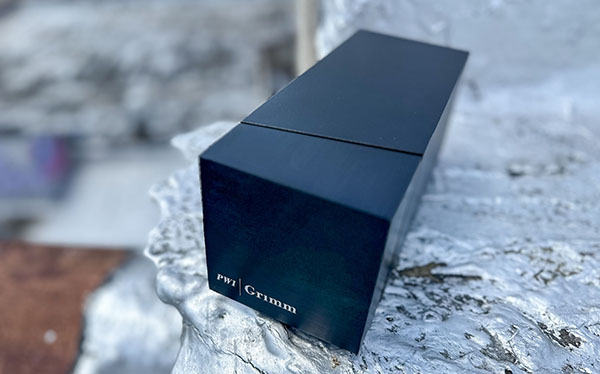
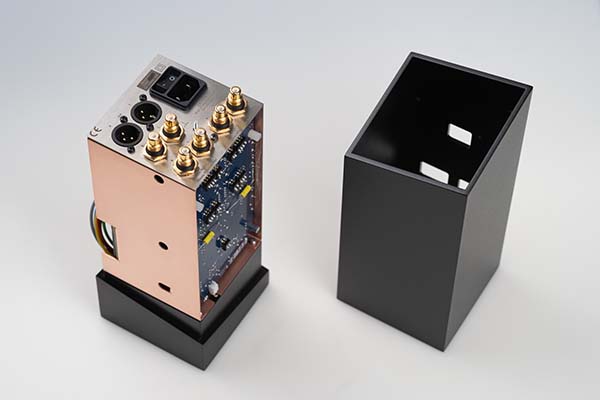
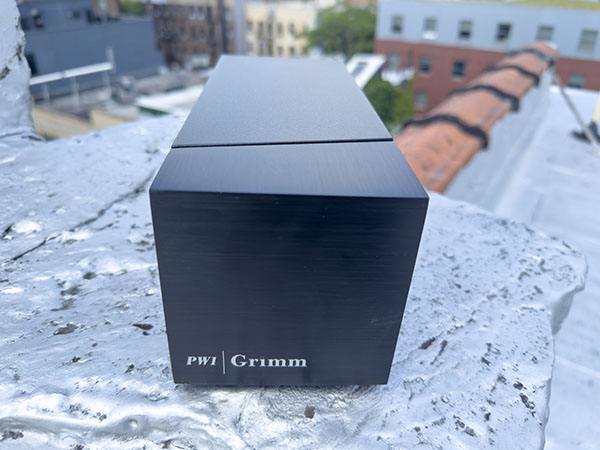
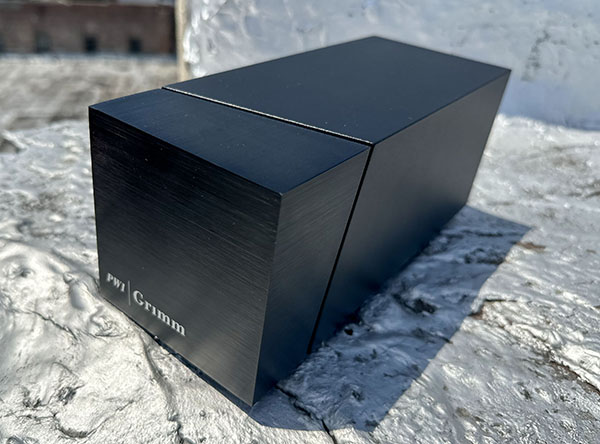
Case in level: The Grimm PW1 phono preamp ($4,900), with its rectangular, brick-like look, is a stark distinction to traditional audio gear. Despite its aesthetics, this unit packs a critical wallop in its modest body. The Grimm web site touts a “distinctive minimalistic digital design” in describing the PW1, because it provides each MC and MM cartridge inputs, RCA and XLR outputs, and acquire and cargo settings tucked away below a slidable backside plate. It boasts an inner linear energy provide, a copper-shielded inside, and fairly compact dimensions of 4 x 4 x 10in (w/h/d). Topping it off is a beneficiant 5yr restricted guarantee, making it a compelling alternative.
For the creation of the PW1 “Phono Wizard” (because it’s referred to in its handbook, and elsewhere), Grimm Audio’s co-founder Peter van Willenswaard joined his digital design to Michiel Uylings’ “easy however highly effective cupboard form.” Grimm’s design group made the copper-shielded inside.
Willenswaard himself has characterised the PW1 as being designed for low noise and velocity, including that the toroidal transformer was developed along with Netherlands toroidal producer Amplimo in order that it might be built-in with out creating hum. Furthermore, all energy provides are of the interior shunt selection, and the variety of capacitors has been saved to a minimal, the considering being that they might, at any time, have an effect on playback — particularly in the case of part and timing.

Features & Specs
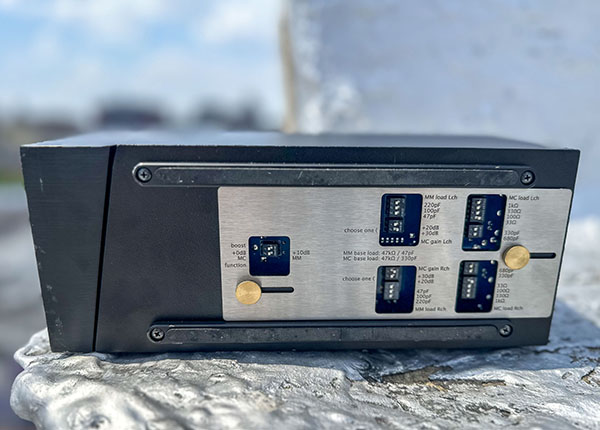
An informative and well-written PDF handbook lays out all the mandatory specs (for the hands-on-paper-preferred people amongst us, a printed handbook can be included within the field), however let’s take a second to dive into the choices panel intimately. Two substantial rubber strips border the unit’s backside management panel, its slidable metallic door held in place by two giant brass thumbscrews. Five small home windows include a number of dip change changes on this hefty phono preamp. Laid out in a mirror-like, left channel/proper channel array, a single window holds a lift operate of +0dB for MC, +10dB for MM. The 4 remaining home windows provide MM loading of 47pF, 100pF, and 220pF, whereas MC loading stands at 1kohms, 33ohms, 100ohms, and 330ohms. Gain switches comprise 330pF and 680pF for MM, and +20dB and +30dB for MC. In quick, this extraordinarily well-constructed phono preamp is infinitely, simply adjustable.
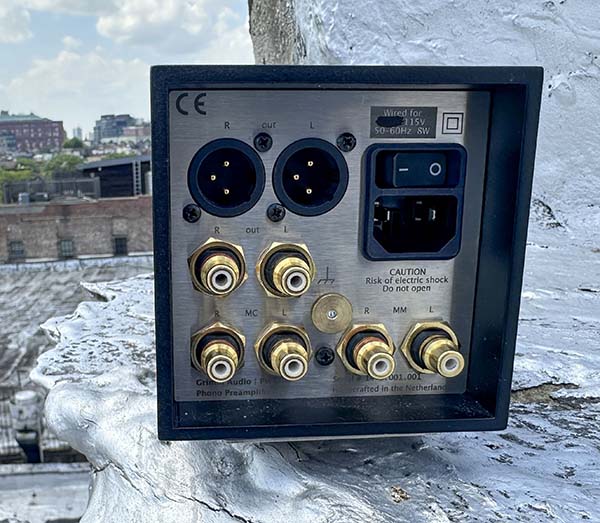
The PW1’s entrance panel, positioned forward of its diagonally minimize indentation seam, options an LED that lights up blue when powered. At the rear, pairs of industrial quality RCA jacks for MM/MC inputs are accompanied by each RCA and XLR outputs, together with a grasp energy button and floor screw. The PW1 is exquisitely completed in black brushed aluminum.
Setup
My system for this evaluation included Tavish Audio Design Adagio, Manley Labs Chinook Special Edition MkII, PrimaLuna EVO 100, and Allnic DT-5000 phono preamps, and Voxativ Ampeggio loudspeakers. Cabling got here courtesy AudioQuest Pegasus and Firebird, Triode Wire Labs Spirit II (RCA) interconnects, and AudioQuest William Tell Zero (10in) speaker cables.
My Tavish Adagio phono preamp (now sadly discontinued) is the king of 2k tubed phono preamps, with glorious tonal saturation and a lush smoothness that makes elements sing. Switching to the Grimm PW1 delivered a dramatic sense of benevolence in each space. The soundstage appeared to face at consideration and develop in all instructions. It forged a deep, large soundfield that solely modified parameters when the report modified, adjusting accordingly, grandly, surprisingly. Perhaps not as lush and easy because the Tavish, the PW1 bettered it in most different regards.
If I didn’t know beforehand, my listening classes wouldn’t have confirmed whether or not the Grimm is a solid-state or tubed phono pre — it’s merely stable, musical, and natural with a way of boldness and authority that by no means confronts however solely represents, like a trend mannequin assured of their presence, without having to show exceptionality.
The Grimm PW1 delivers a strong, well-defined, and exact dealing with of devices and vocals, with a slight ahead presence. Its bass is potent, dense, and tightly managed. Overall, it maintains a balanced tonal and frequency profile, providing ample punch, drive, drama, and maintain.
It’s additionally cool, calm, measured and a bit calculated — however finally expressive, embracing vinyl so superbly it makes music reconstruction a pleasure. Unerring transparency, advantageous dimensionality, and a stable stability between tonal coloration and timeless readability are the PW1’s raison d’être.
Listening Sessions
To decide the Grimm PW1 in opposition to my aforementioned in-house phono preamps, I upped its acquire +30dB and adjusted the opposite preamps accordingly. I performed one report as a barometer, Yusef Kamaal’s 2016 LP Black Focus (Brownswood Recordings BWOOD0157LP), a recent jazz/breakbeat album of propulsive grooves, deep ’n’ low electrical bass, and probing melodic textures. Spoiler alert: The Grimm did its factor.
AP editor Mike Mettler additionally occurred to spend some high quality time with the Grimm PW1 hooked as much as his system earlier than he despatched it over to me for my portion of this evaluation, so I’m going at hand over the stability of the listening part to him to share his findings. Take it away, Mike.
Mike Mettler: Thanks, Ken. This explicit Grimm PW1 mannequin was first despatched on to me as soon as I had returned dwelling from AXPONA. In reality, I took receivership of it not all that lengthy after the unit had been proven to me in individual on the large present by artistic director Eelco Grimm as we huddled collectively simply exterior the corporate’s predominant demo room on the fifteenth flooring.
Before I commenced my listening classes, I plugged in and turned on the PW1 for the advisable 24hr burn-in interval, as advised within the handbook. I left the PW1 turned on in the course of my testing interval even after I wasn’t utilizing it, additionally as advisable. Shortly after that preliminary burn-in interval had handed, I then ventured to hitch it into the sign chain of my reference system, which features a Pro-Ject PerspeX turntable fitted with a Sumiko Blackbird MC cartridge, and a pair of chin-high GoldenEar Triton One floorstanding audio system. AudioQuest cabling, much like Ken’s array, dealt with the connections. As I’m one who tends to choose darkish black finishes for the stability of the gear in my system — to not point out most any accent that’s additionally within the gear combine, equivalent to my present IsoAcoustics zaZen II stabilizing base and Reliable UberLight Frame so I can see what I’m doing — the darkish Grimm brick slot in simply completely.
After I settled on a acquire of +20dB (the underbelly change adjustment was a cinch, btw), I obtained all the way down to some critical listening. First, I needed to flex some late-’70s/early-’80s grooves, so I pulled out my Specialty urgent of Diesel’s 1981 Watts in a Tank LP (Regency/Atlantic RY 19315). After an intensive cleansing session with my Degritter Mark II RCM, I cued up the Dutch rockers’ hit album opener, “Sausalito Summernight” (Side One, Track 1). The Grimm ensured that the center “ping-pock” synth break held its regular sonic character — stated break courtesy some eager Moog synth programming, although its general vibe recalled the traditional ARP Odyssey synth break that’s within the solo part of Joe Walsh’s perennial 1978 crowd-pleaser, “Life’s Been Good.” Even higher, the signature, wide-panned predominant “Sausalito” guitar riff that returns proper after the bridge displayed all of the meant influence, replete with that just-right quantity of echo. Prior to that sequence, the tradeoff solo part between guitarists Mark Boon and Rob Vunderink — the primary yet one more new-wavish, the second a Southern-rocklike scorcher — was energetic, individualized, and fascinating.
Since I had simply seen them carry out in Buffalo again on March 28, 2025, I used to be wanting to play Herb Alpert’s Tijuana Brass’ everlasting 1965 A&M jazz traditional Whipped Cream & Other Delights by way of its new sixtieth anniversary LP reissue (HRB 255). A heavy image disc that includes the notorious “en-crème” cowl artwork replicated on either side, this new-to-2025 LP evidenced no playback points, and the Grimm saved it swinging in all the best methods. The trumpet mix of Alpert (90 years younger, as of this posting!) and Tonni Kalash on “A Taste of Honey” (Side One, Track 1) swayed with head-bopping-induced aplomb, whereas the separation on “Tangerine” (Side One, Track 3) — interval percussion on the left, piano tinkling on the best that I imagine is courtesy Leon Russell, semi-subtle buzzing down the center — had me visualizing a sunglasses-always-on keep in Magic City. The groovy, full horn mix on Allen Toussaint’s tasty “Whipped Cream” (Side One, Track 5) was finely punctuated by taut song-ending drumbeats (probably a Hal Blaine particular).
Switching over right into a blues mode, subsequent got here Samantha Fish’s April 2025 providing, Paper Doll (Rounder 1166102521). I went proper to the brooding “Fortune Teller” (Side B, Track 1), which opens with a gnarly riff splay over on the best, and Fish’s slit-eyed ’n’ sneering vocals up the center. When she deigns to unleash her vocal fury, the organ fills round her might have threatened to overload the amount leap, however the Grimm saved the whole lot in examine — even when the tempo galloped as much as fuller steam after the exhausting cease in the midst of the monitor. (My interview with Fish about all of it will put up right here on AP pretty quickly, btw.)
After going by a couple of extra 2025-released style hops — Cosmic Cathedral’s prog-a-riffic Deep Water 2LP set (InsideOut Music IOM742) and Dean Wareham’s alt-dreampop reverie That’s the Price of Loving Me (Carpark CAK180; my interview with Wareham can be coming semi-soon!) — it wasn’t exhausting to fall additional in love with this ace unit. No matter what I cued up on my desk, the Grimm PW1 phono preamp delivered the products time after time, LP after LP. It all got here throughout as crisp and clear with no caffeine, to borrow a phrase of yore.
Back to Ken now to wrap issues up, and to additionally put the Grimm PW1 in correct phono-pre price-range comparative context.
Conclusions
Thanks, Mike. The Grimm Audio PW1 phono preamp stands out as probably the quietest phono preamp I’ve skilled, with a velvet-black readability that’s as placing as a dawn. Rhythmically, it almost matches my Manley Chinook ($3,199) however is simply shy of its distinctive viscosity, influence, and tonal richness. Compared to the PrimaLuna EVO 100 ($4,195), the Grimm provides harder grooves, transparency, and directness. It additionally rivals the Allnic DT-5000 ($6,000) in musicality, move, and coloration management, although it doesn’t precisely match that pricier mannequin’s tubed tonal magnificence, ambiance, softness, and treble sweetness. Instead, the Grimm PW1 serves as a managed but open channel, presenting every report in an enormous soundfield with maximized dynamics and energy, proper on the cusp of the heat and contact of top-tier tubed phono preamps.
The backside line is, the Grimm Audio PW1 phono preamp is a fascinating gadget, delivering a strong, decisive, and immersive expertise that generally feels three-dimensional. With a daring and clear perspective, it presents music on a grand stage, imbued with function and drama. It elevates each report, highlighting their greatest qualities with a easy but dynamic contact. The PW1 packs a punch, well housed in its placing, darkish rectangular case. We each heartily advocate you give it a attempt.
For extra about Grimm Audio, go right here.
To discover a certified Grimm Audio supplier, go right here.
Author bios: Ken Micallef — former musician, former artist, and former authorized wastrel — has written quite a few hi-fi gear critiques for Stereophile and Analog Planet, and his byline has additionally appeared inside Mojo, Electronic Musician, and The Grammys. You may also discover him at YouTube (Ken Micallef Jazz Vinyl Audiophile).
Mike Mettler is the editor of Analog Planet along with being the music editor of our sister web site Sound & Vision, and he’s additionally a contributing music editor to one in every of our different sister websites, Stereophile, along with being the common Vinyl Icons column scribe for Hi-Fi News. Plus, he’s fairly a fan of classic 1967 Mustang fastbacks, however that’s a narrative for an additional time and place.
HI-FI News
by way of Analog Planet https://ift.tt/MjBrX9D
July 29, 2025 at 12:57AM
-
Product on sale
 Audiophile Vinyl Records Cleaning BundleOriginal price was: €69.90.€59.90Current price is: €59.90. incl. VAT
-
Product on saleEasy Start Vinyl Records Cleaning KitOriginal price was: €69.90.€59.90Current price is: €59.90. incl. VAT
-
Vinyl Records Cleaner Easy Groove Concentrate€34.95 incl. VAT
-
Easy Groove Super Set€199.00 incl. VAT
-
Easy Groove Enzycaster – vinyl records prewash cleaner€34.95 incl. VAT
-
Easy Groove Extreme MK. II- vinyl records prewash cleaner€45.00 incl. VAT
-
Vinyl Records Cleaner – Easy Groove Virgin Concentrate€35.00 incl. VAT
-
Easy Groove Spray&Wipe vinyl records cleaner€34.95 incl. VAT


