
World News
April 2023 Classical Record Reviews
Dvořáokay: Violin Concerto, Trio Op.65
Isabelle Faust, violin; Jean-Guihen Queyras, cello; Alexander Melnikov, piano; Prague Philharmonia/Jiří Bělohlávek.
Harmonia Mundi HMM931833 (CD). 2023. Martin Sauer, prod.; Philipp Knop, eng.
Performance ****½
Sonics *****
Isabelle Faust makes a tremendous impression within the Dvořáokay concerto. She solutions the orchestra’s opening phrases with firm-bowed thrives, impeccably tuned, each within the “little notes” and when crusing in alt. Without sacrificing polish, she makes the second theme really feel shaggy and untamed. The curlicued cadenzas on the lead again are dazzling. The opening of the Adagio sings fervently, and Faust launches the finale with delicacy and incisive rhythm, capturing the boisterous Furiant temper with out dropping magnificence.
Supporting her, Bělohlávek and his gamers know easy methods to tease and form a melody into genuine Bohemian inflection, with sturdy, cushioned accents. Woodwind and horn traces stand in sharp aid, even in full scoring; the Adagio‘s targeted horns carry ominous portents. Only at first of that motion, the place Faust is so dedicated, does the enjoying get a bit clunky, the following passage a bit thick.
It’s uncommon for a soloist to current herself in chamber music. The Opus 65 Trio is a superb alternative, “constructed massive,” as cosmopolitan as it’s Bohemian, encompassing calm and battle. Where the violin leads, Faust shines—a hovering cantabile within the Poco adagio is breathtaking—and she or he has the musical smarts to subordinate herself elsewhere. She and her companions rise to the turbulent developments and inflect the lyric traces sensitively: Note cellist Queyras intoning the beginning of the Poco adagio. There are a couple of bits of mushed-up scansion, on the opening of the Allegro grazioso specifically, and pianist Melnikov’s accented single tones within the first motion are unsubtle. Otherwise, most spectacular.
The soundstage supplies width and depth within the concerto, however the unobtrusive atmosphere renders quiet woodwinds recessive. The Trio is vivid.—Stephen Francis Vasta

David Del Tredici: Pop-Pourri, Adventures Underground
Albany Symphony, David Alan Miller, cond.; Hila Plitmann, soprano; American Music Festival Chorus
Albany Records Troy1915 (24/96 WAV). 2022. Silas Brown/Legacy Sound, eng.
Performance *****
Sonics ****
David Del Tredici’s quarter-century foray into Lewis Carroll’s Alice in Wonderland has been the stuff of audiophile legend ever since soprano Barbara Hendricks and the Chicago Symphony Orchestra below Georg Solti recorded Final Alice (1974–1975) for Decca. It and In Memory of a Summer Day (1980)—a part of the bigger Child Alice (1977–1981) and winner of the 1980 Pulitzer Prize in Music—solely present two items of a particularly complicated, regularly phantasmagoric opus gigantus that may induce a drugless altered state of unfettered surprise.
Now, conductor David Alan Miller enhances our understanding and pleasure of the 85-year-old American composer’s supreme achievement with premiere recordings of two important Alice works: Pop-Pourri for amplified soprano, rock group, refrain, and orchestra—the very first Alice work—and Adventures Underground for amplified soprano, folks group, and orchestra. To describe these two items as mind-blowing boundary-breakers solely hints at what’s behind the trying glass. Intentionally exaggerated dialogue introduces sections during which each instrument below the solar, from tam-tam and shrieking piccolos and whistles to banjo, electrical guitar, and electrified bass, blasts away in an indefinable mixture of quasi-romantic, dissonant, and sometimes atonal insanity.
Irreverence abounds, most definitely in Pop-Pourri’s mash-up of Bach’s “Es ist genug” with Del Tredici’s therapy of Carroll’s textual content. The rating for “The Mouse’s Tale,” the second a part of Adventures Underground, resembles a mouse’s tail (as does Carroll’s textual content). The 13 minutes of instrumental and vocal insanity that observe marvelous soprano Hila Plitmann’s recitation—relish the squeaks—might ship you scurrying across the room. Nothing can comprise both mouse or music. FABULOUS!—Jason Victor Serinus
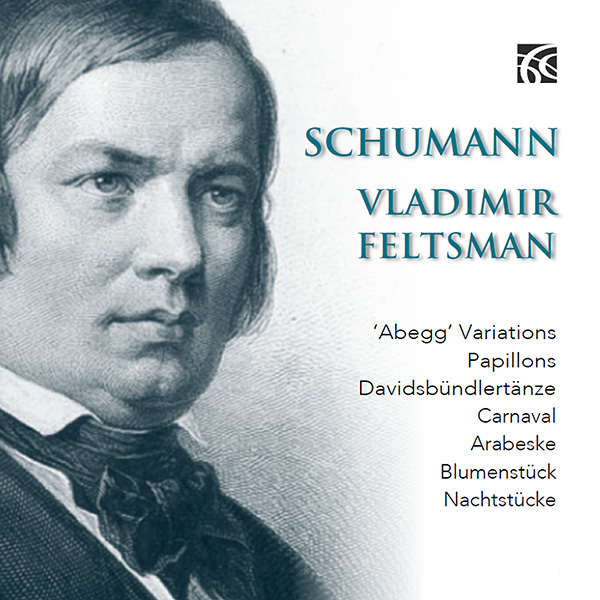
Schumann: Piano Works
Vladimir Feltsman, piano
Nimbus NI 6433 (2 CDs). Adrian Farmer, prod. and eng.
Performance ****
Sonics ****½
This neat assortment of Schumann’s early piano music peaks on the finish with the 4 Opus 23 Nachtstücke. In their clean-lined power—they start with a march—they’re as not like Chopin’s Nocturnes as you might think about, and Feltsman initiatives even the scampering second and rippling third with full-bodied tone. The temper adjustments abruptly for the calm, ruminative fourth piece; its chorale passage is quietly assured.
Feltsman’s Carnaval pivots adroitly amongst moods and tempos, capturing the unstable undercurrent of lyric passages particularly nicely. The soloist colours the episodes vividly, from the coyness of Coquette to the crisp, dazzling Papillons. The Valse Allemande‘s grace upbeats have a pleasant elevate.
The Davidsbündlertänze, too, are characterful, with exactly balanced, layered sonorities and, within the quicker actions, a pleasant sprint. The greater, lighter textures of the Frisch carry a lovely serenity. Only a couple of strained rubatos mar the impact.
Those rubatos, nonetheless, change into an actual drawback elsewhere. Feltsman burdens the much less technically demanding works with seemingly arbitrary tenutos and such, as if he is bored by them. The Abegg Variations, regardless of good voicings and zesty filigree, are a write-off, with tenutos obscuring the form of the phrases. In the Opus 19 Blumenstück, the chromatic passage fully loses the scansion. In the Arabesque, after an impulsive begin, fussy agogics—the other of “impulsive”—journey up the B part.
The Papillons, nonetheless too fussy, are higher, particularly the virile, assertive waltzes. The chording in No.6 (monitor 13) is impeccable; the shimmering pianos of the Prestissimo—not rushed—are flickering phantoms.
The sound is okay. Full chords are resonant and resounding; a contact of hardness there—together with the denatured high quality of among the pianos—most likely inheres within the enjoying.—Stephen Francis Vasta
-
Product on sale
 Audiophile Vinyl Records Cleaning BundleOriginal price was: €69.90.€59.90Current price is: €59.90. incl. VAT
-
Product on saleEasy Start Vinyl Records Cleaning KitOriginal price was: €69.90.€59.90Current price is: €59.90. incl. VAT
-
Vinyl Records Cleaner Easy Groove Concentrate€34.95 incl. VAT
-
Easy Groove Super Set€199.00 incl. VAT
-
Easy Groove Enzycaster – vinyl records prewash cleaner€34.95 incl. VAT
-
Easy Groove Extreme MK. II- vinyl records prewash cleaner€45.00 incl. VAT
-
Vinyl Records Cleaner – Easy Groove Virgin Concentrate€35.00 incl. VAT
-
Easy Groove Spray&Wipe vinyl records cleaner€34.95 incl. VAT


