
World News
May 2023 Classical Record Reviews
Alexander Melnikov: Fantasie: 7 Composers, 7 Keyboards
Alexander Melnikov, keyboards
Harmonia Mundi 902702 (24/96 WAV). 2023. Martin Sauer, prod.; Benedikt Schröder, eng.
Performance *****
Sonics ****½
On the face of it, Alexander Melnikov’s Fantasie: 7 Composers, 7 Keyboards is an audiophile’s dream. A follow-up to keyboard genius Melnikov’s marvelous 2018 Harmonia Mundi recital, Four Pieces, Four Pianos, it presents the keyboard fantasies of seven nice composers, from Johann Sebastian Bach to Alfred Schnittke, on seven very different-sounding historic devices. Each of the devices, which vary from a duplicate of Hans Ruckers II’s two-manual harpsichord from 1624 (rebuilt ca. 1720) to a Steinway & Sons Model D-274 piano from 2014, produces the sound the composer seemingly anticipated to listen to.
Superbly recorded within the supreme acoustic of the famed Teldex Studio Berlin, Fantasie is a superb take a look at for the timbral accuracy, decision, velocity, dynamic management, and realism of any system. If you crank up the sound of the harpsichord, which was designed with smaller venues in thoughts, you could be blasted away by the Steinway D. If they sound comparable in quantity and weight, your hi-fi system has an issue.
But Fantasie‘s worth extends properly past the audiophile kingdom. As historic keyboard specialist Melnikov traces the evolution of the “fantasia” (aka fantasy, fantaisie, Phantasie)—a free-form format via which composers usually share their most private and emotionally revealing music—he does in order a poet gifted with heightened emotional intelligence and excellent method. His performances ravish the feelings a lot as his instrumental selections nourish the senses.
The affect of Bach’s intense Chromatic Fantasia and Fugue in D minor may be heard in each different fantasy on this recording. Probably composed round 1720, it might convey his torment on the surprising demise of his first spouse, Maria Barbara. The harpsichord’s high-frequency clatter, the bass rumble of its motion, and its dynamic limitations enlarge the unrelenting sense of torment that pervades this shattering music.
Melnikov performs the Chromatic Fantasia and Fugue in D minor magnificently; the identical may be mentioned for the equally transferring Free Fantasia in F-sharp minor by J.S.’s son C.P.E. Bach. Melnikov’s keyboard of alternative for this piece, a tangent piano from 1790, which allows dynamic shading, permits the unleashing of a stunning flood of sound that at one level resembles a lovelorn songbird crying desperately for its mate earlier than sinking into silent resignation.
“Is this truly by Mozart?” you could ask upon listening to the surviving fragment of that composer’s Fantasia in C minor. Performed on a fortepiano impressed by Anton Walter’s Viennese fortepiano of 1795, the unhappiness and strangeness of this music may be overwhelming. The fortepiano’s responsive motion permits Melnikov to make use of the best grades of dynamic shading to specific the fragility and pathetic whimper within the surviving fragment of one other Mozart fantasia, in D minor. When Mozart shifts surprisingly from unhappiness to pleasure halfway via, the tonal envelope shifts as properly.
A Graff fortepiano, in-built Vienna a 3rd of a century later, gives additional heft supreme for Felix Mendelssohn’s ultra-romantic Fantasia in F-sharp minor. Longing, churning torrents of emotion—expressed via an instrument that produces delicate highs with considerably much less sparkle than the sooner keyboards—culminate in a breathtakingly quick Presto that dies off unexpectedly on the finish.
Chopin’s Fantaisie in F minor deserves at least a basic Parisian Érard from 1885—and it will get one. Melnikov exploits each sound this huge instrument can produce, from the depth of its prolonged low finish to the glowing chime of its excessive treble. It could also be true that neither an Érard nor an AI chatbot has a soul, however Melnikov makes it appear as if this Érard piano shares Chopin’s.
Busoni’s Fantasia in modo antico appears tailored for the darker, extra ponderous low finish of an early twentieth century Bechstein, and Schnittke’s genre-shattering Improvisation and Fugue calls for a contemporary Steinway, which successfully delivers its profane screeches, shocks, and disruptive outbursts. Schnittke’s music, with greater than a bit of assist from Melnikov, kilos the fantasy style to shreds earlier than laughing its strategy to its last bars. No surprise the Soviet Ministry of Culture, which commissioned the work for the 1966 Tchaikovsky Piano Competition, selected to not have it carried out there. An ideal finish to a nigh-perfect recital. Bravo!—Jason Victor Serinus
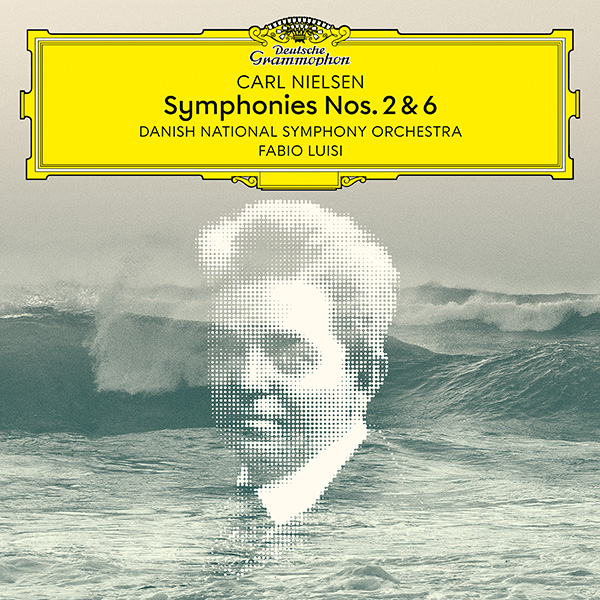
Nielsen: Symphonies 2 (The Four Temperaments) & 6 (Sinfonia semplice)
Danish National Symphony Orchestra/Fabio Luisi
Deutsche Grammophon 00028948634811 (16/44.1 WAV). 2023. Bernhard Güttler, prod.; Mikkel Nymand, eng.
Performance *****
Sonics ****
The second symphony, with its depiction of the 4 classical “humors” in typical, simply grasped buildings, is essentially the most readily accessible Nielsen symphony. For the maestro, although, it is tougher: The busy, virtually pointillist scoring requires expert balancing, and it presents a infamous conducting lure that is not averted even in some main productions.
Luisi is as much as the challenges, as we all know from the incisive opening deal with. The gentler following transition, and the plaintive oboe solo, bespeak a taut, characterful first motion with an occasional rhetorical contact. Luisi avoids the lure initially of the “phlegmatic” second motion—although the scansion is appropriately ambiguous—which is managed but easygoing. The major theme of the Andante malinconico, stoic and resolute, opens into an anguished lament on its tutti return. The reasonably paced finale is bustling, even boisterous.
The title of the sixth, Sinfonia semplice, is ironic: There’s nothing easy about it. Nielsen weaves the 2 outer actions from wisps and fragments: The opening bars are virtually Webern; later, a fugato develops from peculiar reed curlicues. Cutesy dance motifs belie, or are interrupted by, the turbulent goings-on round them. As carried out right here, each center actions jogged my memory of Bartóok’s Concerto for Orchestra, with the Proposta seria constructing to an intense outcry. Bracing brass assaults and fluid woodwinds shade the finale’s variations; the efficiency ends as mysteriously because it started, right here with a low unison.
In the second, the heavy atmosphere, noticeable after cadences and round solo reeds, produces a vivid presence however neutralizes a few of the rating’s shade. The sixth has loads of selection: The glockenspiel faucets are crisp and clear, whereas the unison horns have spectacular depth.—Stephen Francis Vasta
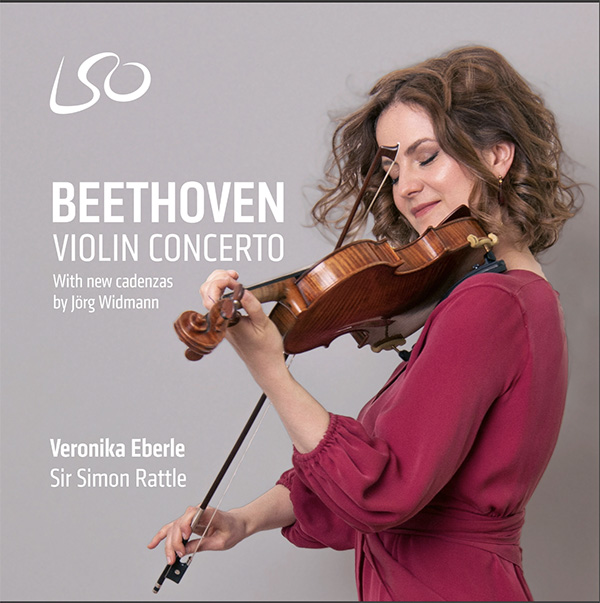
Beethoven: Violin Concerto in D Major (cadenzas by Jörg Widmann); Fragment from Violin Concerto in C Major
Veronika Eberle, violin; London Symphony Orchestra, Sir Simon Rattle, cond.
LSO5094 SACD (24/96 WAV obtain). 2023. Andrew Cornall, prod.; Neil Hutchinson & Jonathan Stokes, eng.
Performance *****
Sonics ****½
This D Major concerto is equally important due to Veronika Eberle’s musicianship, Rattle’s sympathetic conducting, and the energy of the percussion—all well-captured in DSD256. Rattle first started championing Eberle when, at age 16, she carried out this concerto on the 2006 Salzburg Easter Festival. If her enjoying is a mite emphatic within the opening motion, it sings tenderly, with heartbreaking loveliness, within the center motion. Her softest tones pull you deep into Beethoven’s world, which makes that motion’s unbroken transition from Widmann’s universe to Beethoven’s finale all of the extra placing. Equally placing: discovering the seeds of the D Major Concerto within the sole surviving fragment of a violin concerto, in C Major, begun 16 years earlier.
As accustomed as Beethoven lovers could also be to a alternative of a number of cadenzas, the cadenzas by Jörg Widmann stand distinct. Rather than both mimicking Beethoven’s fashion or wrenching his music forward 216 years, Widmann opts for a hybrid method wherein, in his personal phrases, “Beethoven’s themes might seem in a really totally different mild.” That they do, particularly when the violin is joined, as it’s right here typically, by timpani and double bass. In the primary motion cadenza, the violin appears to be at struggle with timpani, the recurring feeling of opposition associated extra to occasions in Beethoven’s life than to the music he composed for the concerto. Despite that weak point, Beethoven’s themes stay recognizable, in ways in which make this recording past fascinating. Add the defiant dialogue within the last motion cadenza, and you’ve got a must-listen recording for lovers of classical and modern music.—Jason Victor Serinus
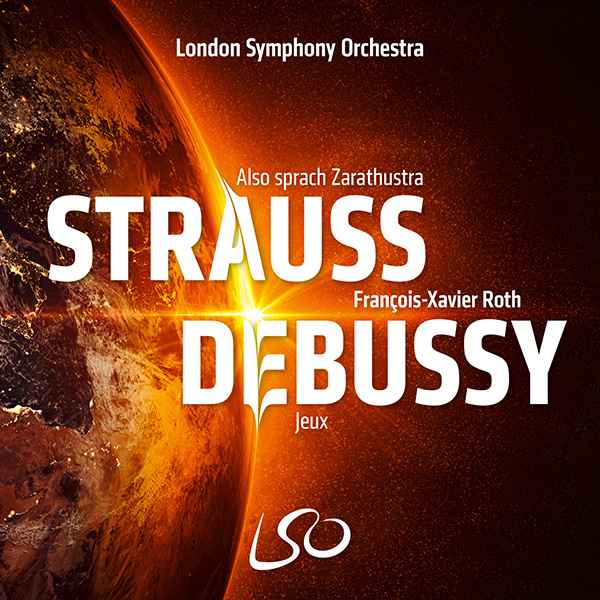
R. Strauss: Also sprach Zarathustra
Debussy: Jeux
London Symphony Orchestra/François-Xavier Roth
LSO Live LSO0833 (CD). Nicholas Parker, prod.; Jonathan Stokes and Neil Hutchinson, engs.
Performance ****
Sonics ****
For quarter-hour or so, Roth delivers among the best Zarathustras shortly, a studying marked primarily by restraint. He does not overplay the acquainted “dawn”: The organ pedal level is strong and unobtrusive, the fanfare agency and grand. The divided strings enter cautiously however with silky, vibrant tone. Roth’s velocity for observe 4 leaves the little notes sounding barely frazzled, however it surges successfully. The Grablied fugue begins virtually too quietly however builds steadily. Riding out of it, Roth nails the sudden upward shade shift.
But within the forthright Der Genesende, the enjoying turns barely nervous, missing buoyancy; solely on the violin solo do issues settle, although nonetheless with out the earlier unforced assurance. Das Tanzlied rolls alongside brightly, for as soon as avoiding longueurs, although the climax may very well be weightier. In the closing part, the string “duets” are calm, however the concluding bass pizzicatos teeter on inaudibility: They actually are too smooth.
The shimmering, oblique harmonic progressions of Debussy’s Jeux make it a great foil for the Strauss. Again, Roth begins a lot too quietly, however thereafter he invests a lot of it with an applicable dancing lightness and lilt—it is a ballet, in any case—and the LSO performs splendidly, the fleeting, darting fragments coalescing into small-scale surges.
How’s the sound? The disposition of devices throughout the enjoying space is obvious; Strauss’s organ bass pedal is clear, with the quieter ranks barely distanced. The timbres are vivid, and the brass choir—even in Zarathustra‘s smooth trombones—has loads of depth. In some climactic tuttis, nonetheless, the treble turns edgy.
Confusingly, the downloadable Zarathustra recordsdata credit score Dudamel and the Berlin Philharmonic as a substitute of the performers listed right here.—Stephen Francis Vasta
-
Product on sale
 Audiophile Vinyl Records Cleaning BundleOriginal price was: €69.90.€59.90Current price is: €59.90. incl. VAT
-
Product on saleEasy Start Vinyl Records Cleaning KitOriginal price was: €69.90.€59.90Current price is: €59.90. incl. VAT
-
Vinyl Records Cleaner Easy Groove Concentrate€34.95 incl. VAT
-
Easy Groove Super Set€199.00 incl. VAT
-
Easy Groove Enzycaster – vinyl records prewash cleaner€34.95 incl. VAT
-
Easy Groove Extreme MK. II- vinyl records prewash cleaner€45.00 incl. VAT
-
Vinyl Records Cleaner – Easy Groove Virgin Concentrate€35.00 incl. VAT
-
Easy Groove Spray&Wipe vinyl records cleaner€34.95 incl. VAT


