
World News
AUVA 50 SPEAKER ISOLATION FEET FROM STACK
AUVA 50 SPEAKER ISOLATION FEET FROM STACK
Joining the high-end vary of speaker isolation ft from Stack Audio, Paul Rigby opinions the AUVA 50, a brand new, lower-cost mannequin
This just isn’t the primary time I’ve checked out, used and reviewed a set of high-end AUVA speaker isolation ft from the British HiFi outfit, Stack Audio.

The AUVA 50s are the newest designs in that vary. That vary now consists of three fashions. At the very prime are the AUVA 100s costing £1,240 for a set of eight ft.
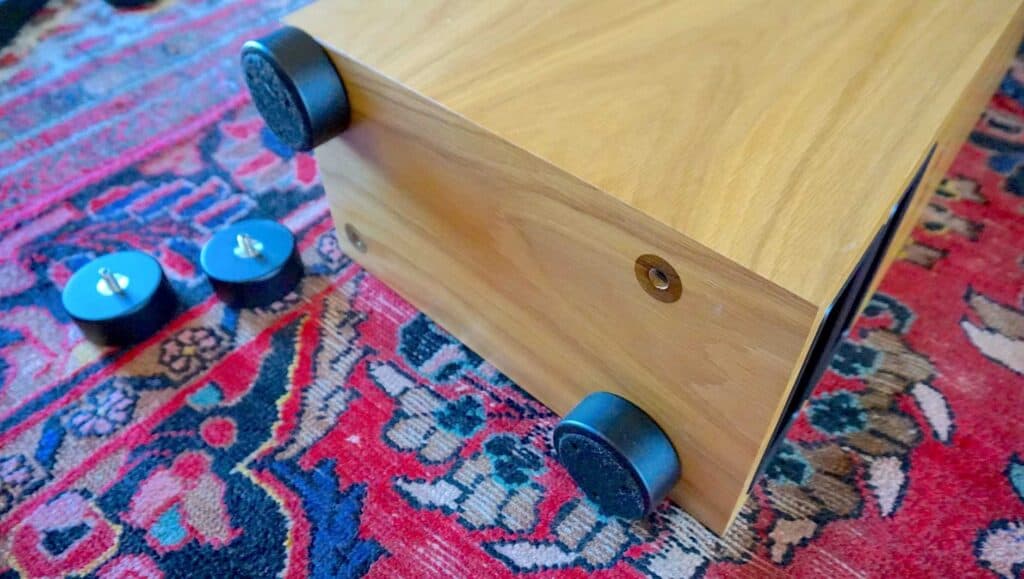
The smaller AUVA 70s price £840 for a set of eight ft. I’ve used and reviewed each of these designs.

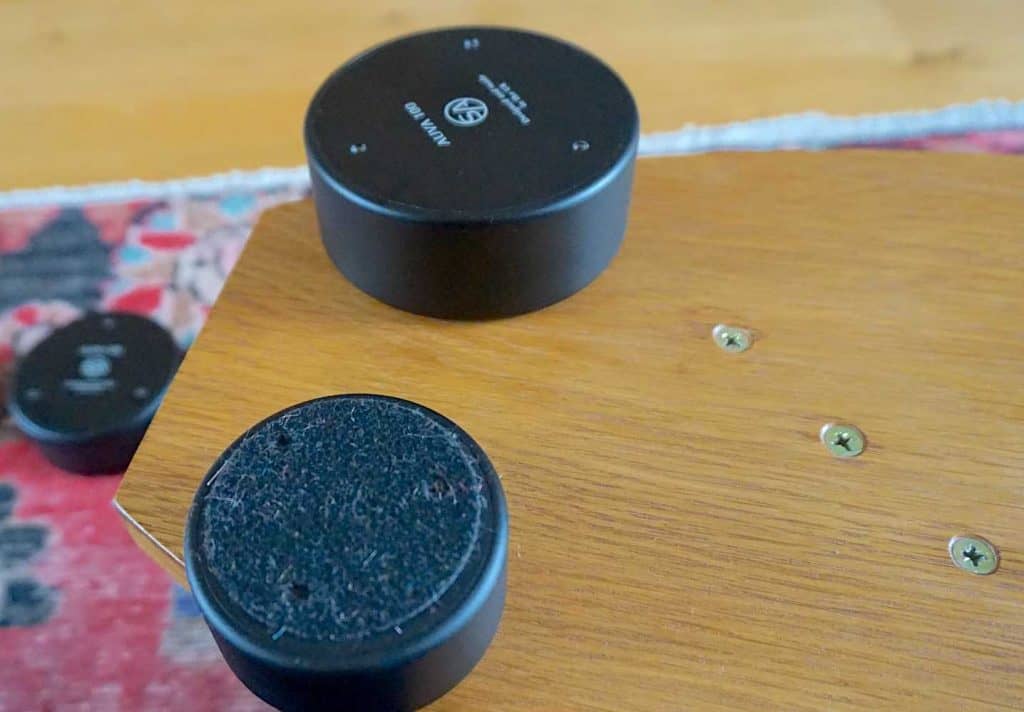
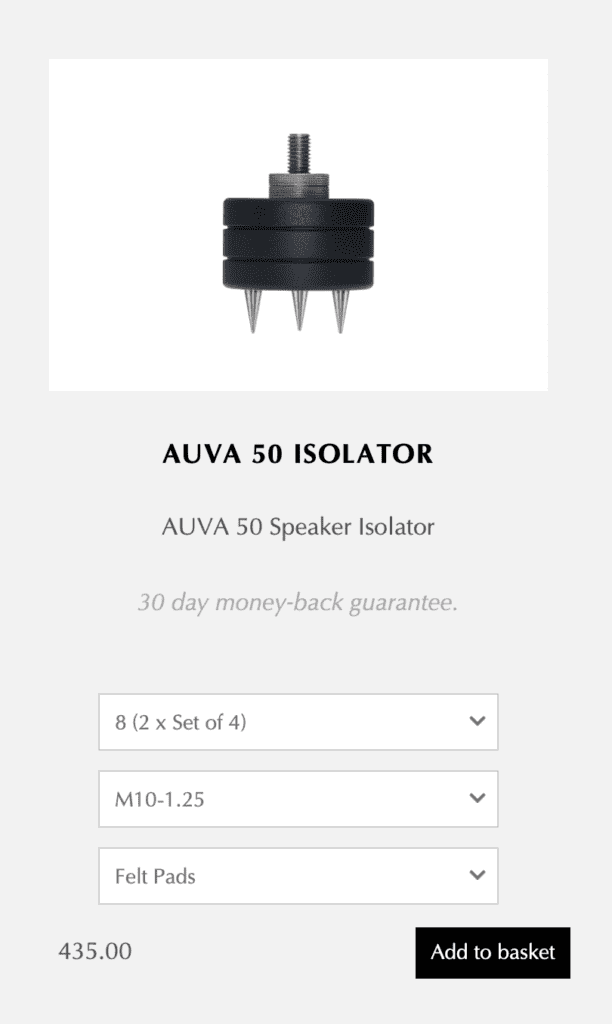
These smaller nonetheless ft, the AUVA 50s? They scale back the worth nonetheless additional to £435 for a set of eight ft. You can order fewer ft if required which can, after all, additional decrease the worth. And that worth features a 30-day money-back assure. So you may attempt them out to see if the ft are actually for you. There’s free delivery within the UK and part-subsidised postage for the remainder of the world.
SELECTION OF BOLTS
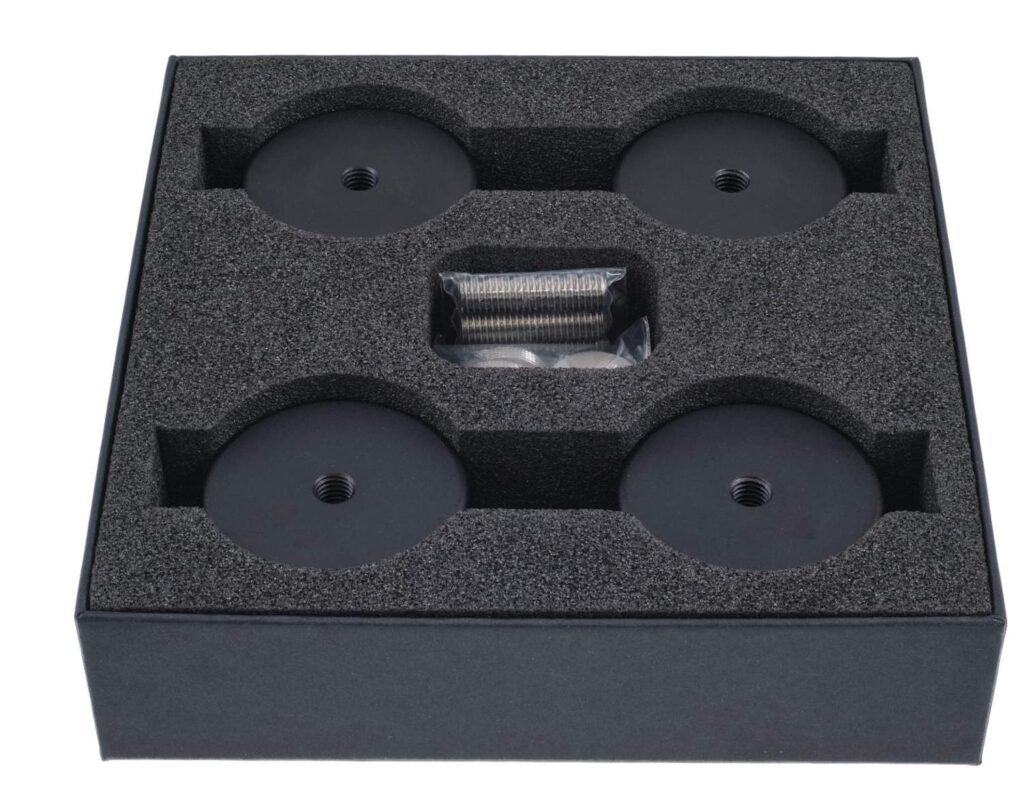
As with the AUVA 70s and 100s, the AUVA 50s are designed to screw beneath your audio system or speaker stands or linked out-rigger stands or some-such. Stack Audio provide a spread of screw-threaded bolt choices to fit your {hardware}. Once you’ve gotten chosen your bolt measurement, set up may be very straightforward. Just connect the chosen bolt to the speaker or stand after which screw the foot to the bolt – or vice versa – and that’s it. Job accomplished.
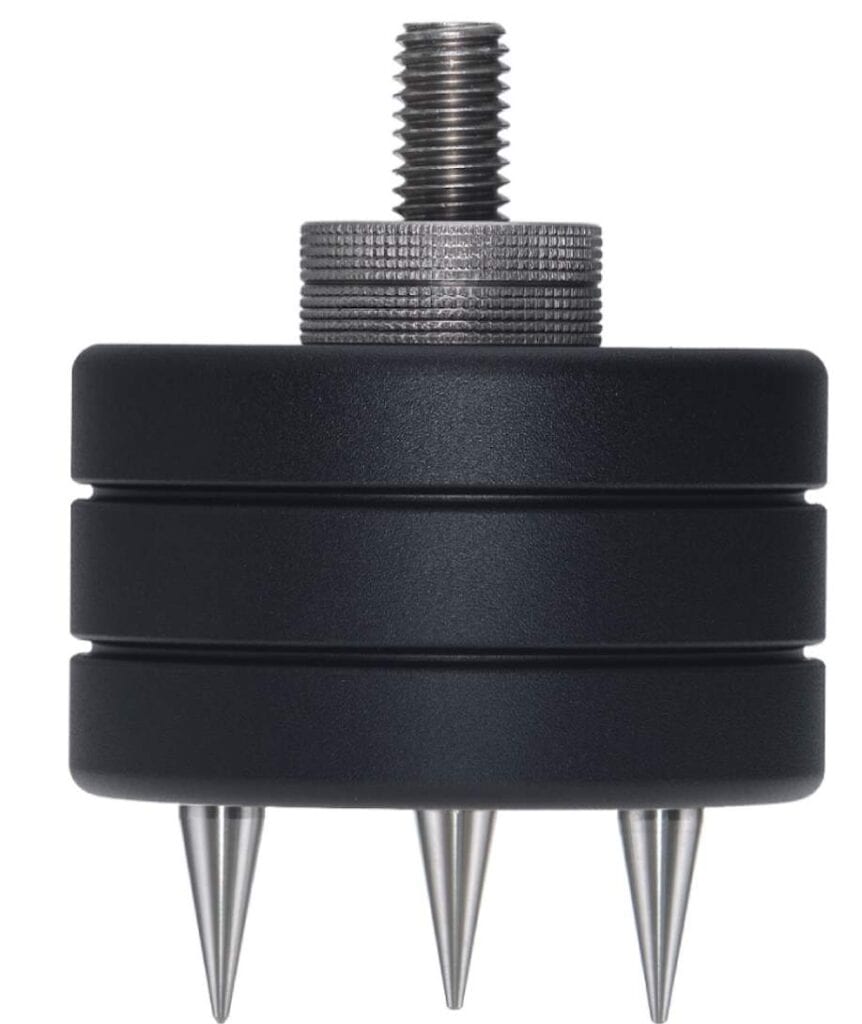
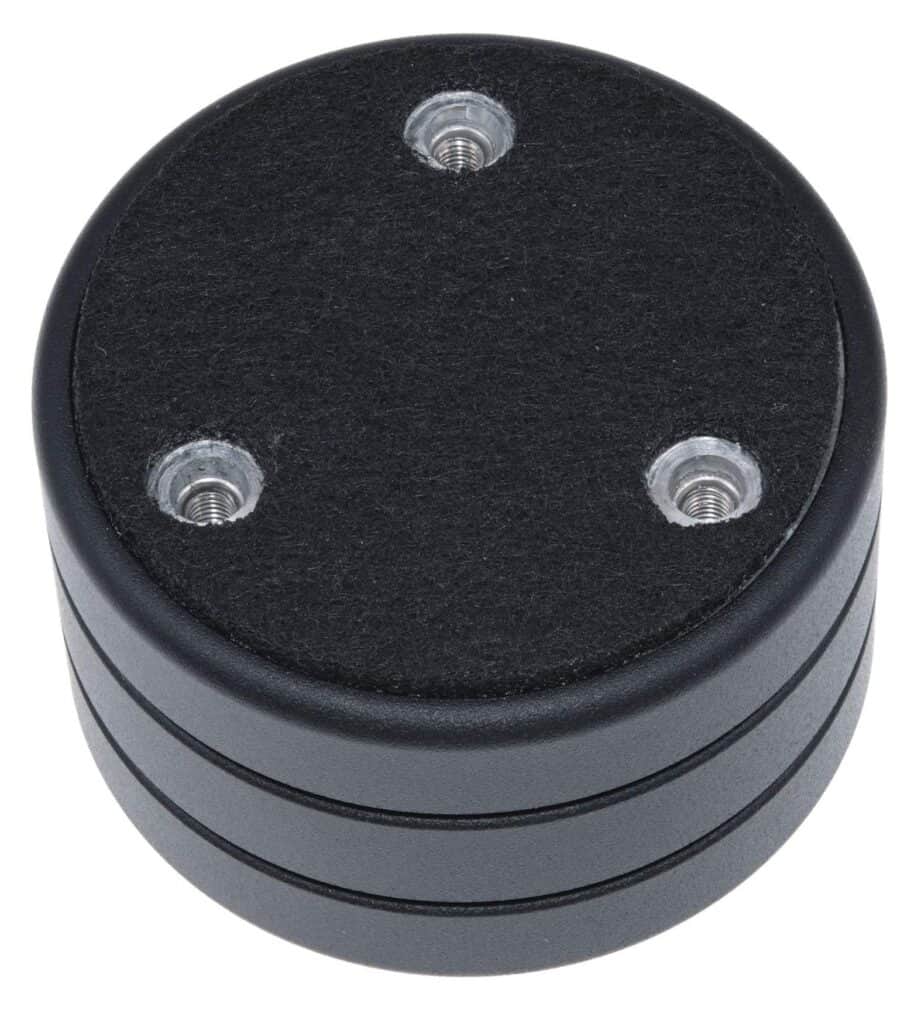
Once linked, the AUVA 50 just isn’t intrusive because it solely spans 50mm x 30mm or round and inch by two inches.

As I discussed within the evaluation of the AUVA 70s and 100s, most speaker ft characteristic a vibration-absorbing materials like cork or rubber, with a promise to decrease the noise flooring. The know-how tends to be compression primarily based with the load of the speaker and/or stand above working with the damping materials under.
Unusually, the AUVAs don’t use that strategy. And that change is, in itself, worthy of word and a focus.

Instead, they characteristic a powerful, hole pod containing cells. In the cells are unfastened particles (together with parts like tungsten). During use, the vibration from music play forces the particles to collide and any nasty vibration is dispersed by way of warmth. There’s not numerous precise warmth concerned as a result of we’re engaged on micro ranges right here. The ft don’t turn into heat, for instance, however there’s sufficient dispersion to do the job.

There is definitely extra happening however the design is patent pending so a part of the tech is secret. I’ve seen this type of tech strategy in different HiFi gear similar to cabling and grounding equipment but it surely’s not frequent in speaker isolation ft, particularly at this worth level.
For AUVA ft, the extra cells in a foot, the higher the efficiency however the dearer is that foot. Hence, the AUVA 100s characteristic 5 cells in every foot. The AUVA 70s characteristic three in every foot. The AUVA 50s right here embrace two per foot, therefore that lowered worth.
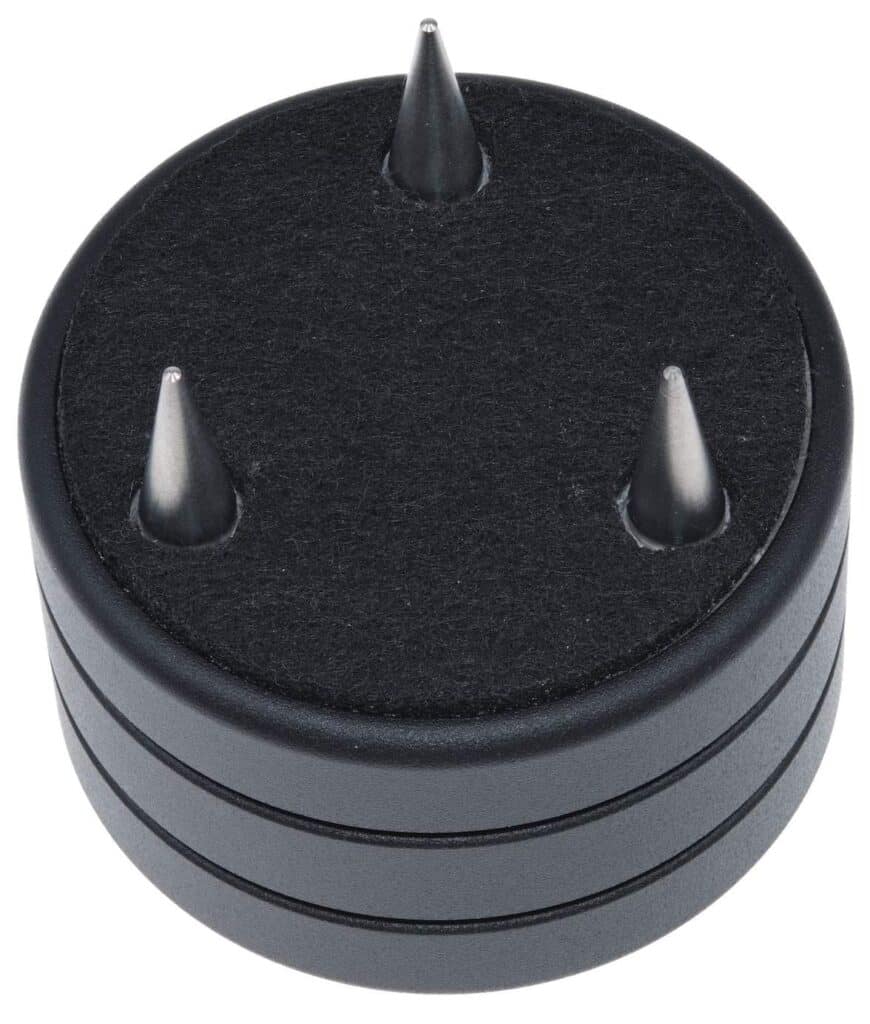
Apart from a collection of chosen set up bolts you additionally obtain carpet spikes or felt pads for laborious flooring to suit to every foot. I used the latter. Besides, I’m not a fan of spikes (no-matter what the accent) so felt pads can be my selection regardless of the flooring kind.

Once fitted, the ft are stable. Rock stable. They add speedy stability to any speaker or stand. But how do they sound?
SOUND QUALITY
I had numerous equipment hanging round from the latest Schiit Gjallahorn energy amplifier evaluation so, because it was already arrange, I used most of that. So I positioned a pair of Q Acoustic 5020 audio system on my HiFi Racks speaker stands and positioned the bottom of these stands straight on the rug on my listening room flooring and acquired used to the sound from that. Oh and I performed Glen Campbell’s previous hit Country Boy.
To start? Played ‘as is’, with no ft or any assist on my speaker stands? The sound was fairly boring with rounded off mids and treble, flabby bass, no focus and little precision within the midrange. Overall, the sound was slightly flat and appeared like sonic wallpaper.

SOUNDECK MK.II MINIS
I then tried a set of eight Soundeck Mk.II Mini ft underneath the stands, which I’ve reviewed already and advocate. These ft use constrained damping as their inside tech, to empty vibration. That is, two items of robust metal characteristic a gel substance in between in order that vibration is misplaced from this gel as warmth. They provide nice worth. I used a set of eight ft, 4 per speaker stand, for round £108.
The sonic outcomes, when in comparison with utilizing nothing in any respect, had been oh so significantly better with a clearer soundstage that moved away from the sooner muddy sound. This allowed extra midrange element to be heard. Acoustic guitar strums appeared like a bunch of strings flying in shut formation for the primary time whereas bass had a crisper, tighter impact. Strings had been smoother too. Oh and I might hear the bass guitar and cymbals for the primary time.
BLUE HORIZON FEET
I then moved up the ladder once more and drafted in a set of eight ft from Blue Horizon. I used the Mk.I variations though there are Mk.II ft obtainable. Part of the issue with the Mk.Is was that the higher protecting steel tarnishes over time. Again, I’ve reviewed these ft (not right here, I don’t suppose – probably over at HiFi World journal) and they’re really useful. These ft use compression know-how so every foot combines cork and rubber with a steel cowl to maintain structural integrity. The weight of the speaker stand permits the ft to damp any nasty vibration.
Moving to the Blue Horizons added further fragility to the higher mids and treble. There was extra air and house round this space too. Secondary percussion strikes prolonged additional in time. Bass was good, not fairly as stable or as deep because the Soundeck ft however nonetheless very respectable.
ENTER THE AUVAS
From this level, I then modified to the AUVA 50s, priced at greater than double the Blue Horizon ft at £435 for a set of eight ft. This was the primary design to repair the ft to the stands by way of a screw thread. More substantial in construct, the AUVAs regarded stable and massy when in place and when in comparison with the opposite ft however additionally they included that warmth dissipation tech, the key of the entire design.
During play? There are two components, two factors of curiosity, when listening to the AUVA 50s. Firstly, there’s the sheer rigidity of the ft. In relative phrases, these are chunky, they’re very robust, they really feel massy after which there’s the truth that they’re connected to the stand by way of a screw thread. So bass may be very agency, it’s robust and has a naturalistic, natural realism that sounds costly. Bass sounds critical, it will get it head down and concentrates. There’s no messing round right here.
The higher mids and treble drops the noise flooring which imply there’s an entire lot extra info coming via. Acoustic guitars have a distinctly metallic string response, there’s a resonance right here. Secondary percussion is fragile, it’s delicate with loads of reverb to carry the notes. Vocals provide emotion and nuance, strings sound easy but in addition giant. There’s an actual wall of sound from the string part.
It’s the main focus and precision across the mids that basically impress right here. Each and each word performed by each instrument is tracked whereas the soundstage, for the very first time, has actual construction. It sounds organised. As if somebody positioned the instrument right here and there for a motive. There’s an actual body across the soundstage. A way of form.
CONCLUSION
If you’ve gotten seen my evaluation of the AUVA 70 and 100 speaker isolation ft, you’ll know the way impressed I’m with this British design. Are the AUVA 50s higher or on par with the efficiency of the 100s? No. The 100s simply go additional however so does the worth. Same with the 70s. They are additionally sonically superior to those 50s however the worth is once more, that a lot increased. In phrases of the AUVA vary, you get what you pay for.
And positive, the AUVA 50s aren’t in themselves, precisely low cost however actually? When in comparison with different speaker isolation ft available on the market? If you might be in search of a steadiness, one that mixes a comparatively low worth – relative to the 70s and 100s at any fee – with top quality efficiency, then the AUVA 50s are what you want.
In efficiency phrases? There is nothing – nothing – to match. The AUVA 50s stand head and shoulders above anything available on the market for the same or lower cost.
STACK AUDIO AUVA 50 SPEAKER ISOLATION FEET
Price: £435 for a set of eight
Website: stackaudio.co.uk
GOOD: compact measurement, total sound high quality, straightforward to put in, construct & rigidity
BAD: nothing
RATING: 9

The publish AUVA 50 SPEAKER ISOLATION FEET FROM STACK appeared first on The Audiophile Man.
HI-FI News
by way of The Audiophile Man https://ift.tt/pxlrL4y
October 19, 2023 at 01:01PM
-
Product on sale
 Audiophile Vinyl Records Cleaning BundleOriginal price was: €69.90.€59.90Current price is: €59.90. incl. VAT
-
Product on saleEasy Start Vinyl Records Cleaning KitOriginal price was: €69.90.€59.90Current price is: €59.90. incl. VAT
-
Vinyl Records Cleaner Easy Groove Concentrate€34.95 incl. VAT
-
Easy Groove Super Set€199.00 incl. VAT
-
Easy Groove Enzycaster – vinyl records prewash cleaner€34.95 incl. VAT
-
Easy Groove Extreme MK. II- vinyl records prewash cleaner€45.00 incl. VAT
-
Vinyl Records Cleaner – Easy Groove Virgin Concentrate€35.00 incl. VAT
-
Easy Groove Spray&Wipe vinyl records cleaner€34.95 incl. VAT


