
World News
PMC prodigy1 Loudspeaker
PMC prodigy1 Loudspeaker
 It would not be a PMC loudspeaker with out transmission line bass loading, and the diminutive prodigy1 isn’t any exception
One of my secret loves has lengthy been transmission line audio system. I miss IMF (named after the designer, Irving M. Fried), the doyen of the style, though the know-how has been utilized by different manufacturers – most notably PMC. You can subsequently think about my delight when the prodigy1 arrived at a mere £1250. I’d been listening to about it for months, because the prodigy1 (with lowercase ‘p’) was a talked-about launch on the 2023 Munich High-End Show.
While the identical PMC-made drivers – the 133mm pure fibre long-throw woofer and 27mm tender dome tweeter – characteristic within the prodigy5 floorstander, I used to be particularly eager to expertise the prodigy1 as I’ve been on the prowl for a small speaker which inserts in price-wise between the ‘ribbon’ tweeter-equipped Quad S1 (£499) and LS3/5As from round £1800 upward. With the prodigy1 being arguably the smallest transmission line speaker ever produced, and a simple swap for each these fashions when it comes to dimension, how might I resist?
Critical Thinking
Not having the means to analysis each transmission line speaker produced, PMC’s boast about it being the smallest appears believable. The prodigy1 measures solely 320x162x237mm (HWD), plus one other 10mm if you happen to match the elective grille. The speaker is extremely gentle, too, at 4.5kg, which makes it simple to deal with whether or not you are muscle-bound or a weakling similar to I.
Although user-friendly in some ways, setup of the prodigy1 is achingly important, as optimum efficiency is all the way down to positioning. Aside from ample energy, amp selection is not a problem. But, oy vey! The toe-in! As one used to Wilson Audio’s to-the-millimetre siting, anticipated of utmost high-end merchandise, it is a shock to listen to how this reasonably priced, small two-way responds so dramatically to the slightest change in listening angle.
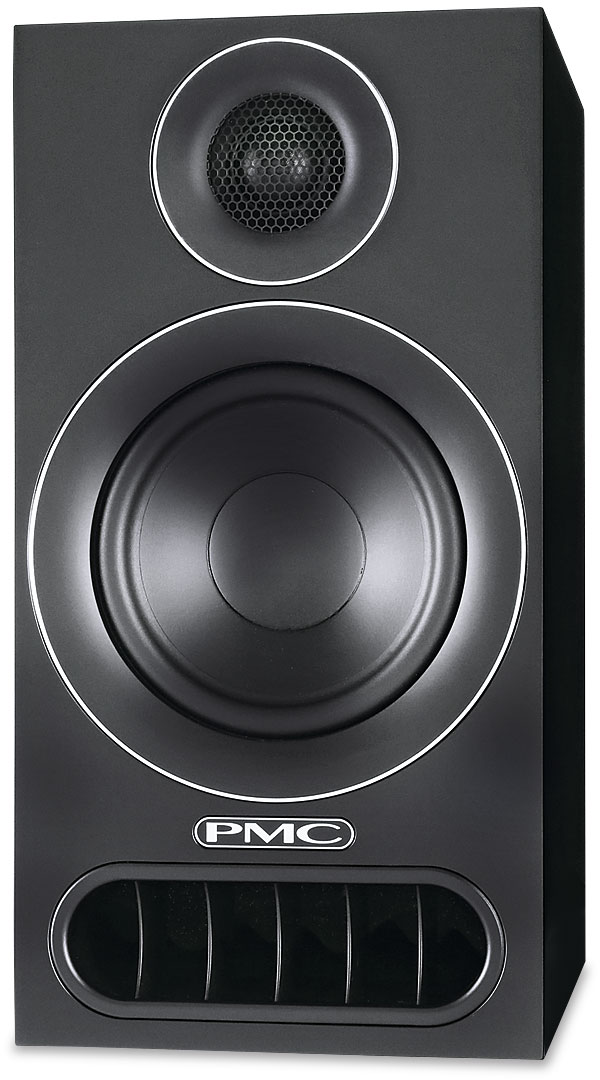
As you’ll be able to see from the photographs on these pages, that is in any other case a basic two-way bookshelf design but additionally appropriate for helps if you happen to favor your audio system free-standing for higher imaging. I opted for my venerable Foundation stands, after making an attempt the four-pillar Music Tools One, the latter being a shade too tall by inserting the tweeter above ear peak.
At 24in tall, the Foundations had been completely excellent as soon as rotated by way of 90°. (The high plate is similar footprint as an LS3/5A, wider than it’s deep, whereas the prodigy1 is deeper and narrower.) I added some Blu-tack between the loudspeakers and the stands on PMC’s recommendation.
Free-Stand And Deliver
Thanks to the port exiting on the entrance, PMC asks customers who need extra bass to position the audio system nearer to the again wall. I discovered the bass in free-standing mode greater than ample, so returned to the actual problem of focusing the tweeter. PMC gives detailed directions on learn how to place these, most notably advising a level of toe-in which has the tweeters crossing behind the listener. Off-axis listening considerably impacts the forwardness and/or brightness of the prodigy1. In different phrases, it is an important technique of tuning the general stability of the speaker.
To my shock, the prodigy1 gave of its greatest in my room when firing straight forward. What was instantly obvious is that the listener has to place them completely in an effort to discover the perfect angles for each the treble stability and soundstage width and depth. These aren’t audio system to share with audiophile friends throughout an extended couch…
In my scenario, with the prodigy1s crossing behind my head, the soundstage depth was huge however barely narrowed whereas the treble was a bit boring. Having them cross in entrance of me à la Sonus fabers of yore was not a dissimilar outcome. Firing straight forward proved ideally suited in each parameter for my tastes.
HI-FI News
through Hi-Fi News https://ift.tt/ME0QUZ4
December 19, 2023 at 01:16AM
-
Product on sale
 Audiophile Vinyl Records Cleaning BundleOriginal price was: €69.90.€59.90Current price is: €59.90. incl. VAT
-
Product on saleEasy Start Vinyl Records Cleaning KitOriginal price was: €69.90.€59.90Current price is: €59.90. incl. VAT
-
Vinyl Records Cleaner Easy Groove Concentrate€34.95 incl. VAT
-
Easy Groove Super Set€199.00 incl. VAT
-
Easy Groove Enzycaster – vinyl records prewash cleaner€34.95 incl. VAT
-
Easy Groove Extreme MK. II- vinyl records prewash cleaner€45.00 incl. VAT
-
Vinyl Records Cleaner – Easy Groove Virgin Concentrate€35.00 incl. VAT
-
Easy Groove Spray&Wipe vinyl records cleaner€34.95 incl. VAT







