
World News
dCS Lina Head-Fi Stack
dCS Lina Head-Fi Stack
Where most individuals are content material to easily plug the headphone jack into the entrance of their amplifier, dCS recommends constructing a veritable tower of fully-fledged parts particularly for this goal. I’ve listened to their three arguments – take into account me satisfied.

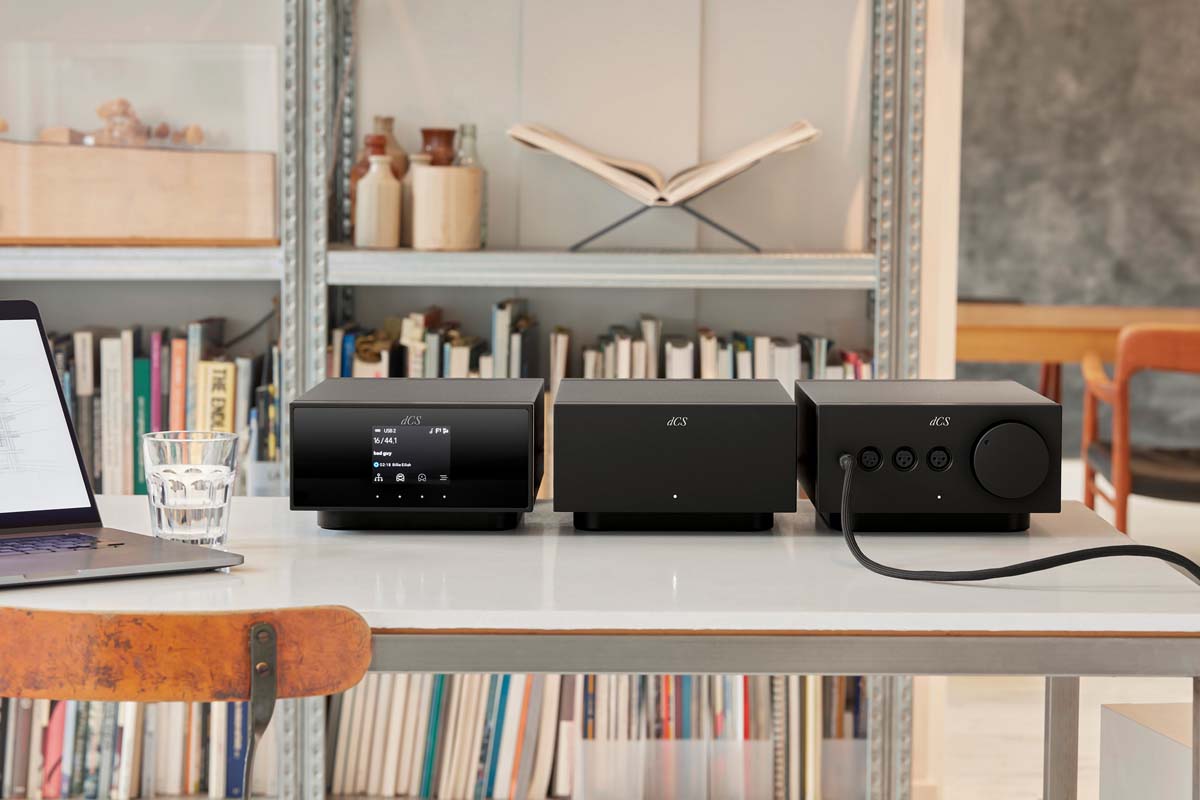
Sometimes I ask myself if we’re not going overboard a bit. As I push three cardboard bins stacked on a hand truck in the direction of the listening room, I can barely imagine that I’m actually solely doing this to take heed to music via headphones. But what the heck – taking issues to extremes is an integral a part of our passion. And earlier than you ask: no, the headphones aren’t even included. The trio in query is the dCS Lina system, a mix that was primarily developed with headphones in thoughts, however is after all additionally appropriate as a management middle for a stereo setup: The Lina DAC is a community participant with digital quantity management and may due to this fact function an entire entrance finish of a streaming system in its personal proper. The incontrovertible fact that the principle focus is on solo listening pleasure by way of headphones could be heard, amongst different issues, in dCS Expanse, an optionally switchable crossfeed optimization that leaves the reverb construction of the recording intact and thus ensures significantly lifelike imaging.
What it doesn’t have, nevertheless, is a headphone output; the aim right here was to translate the expertise from the following bigger Bartók Apex from its basic commonplace measurement right into a smaller format. And for the reason that dCS builders are usually not ones to just accept compromises, the headphone amplifier needed to be depart the enclosure and now resides in a housing of its personal. The third field comprises the Lina Master Clock, which, whereas non-obligatory, appears by some means indispensable on this combo. Once every little thing has been unpacked, the person parts look fairly dainty and fortunately could be stacked to kind a relatively cute little tower that solely takes up house on the highest rack stage.
A Ring for a Ladder

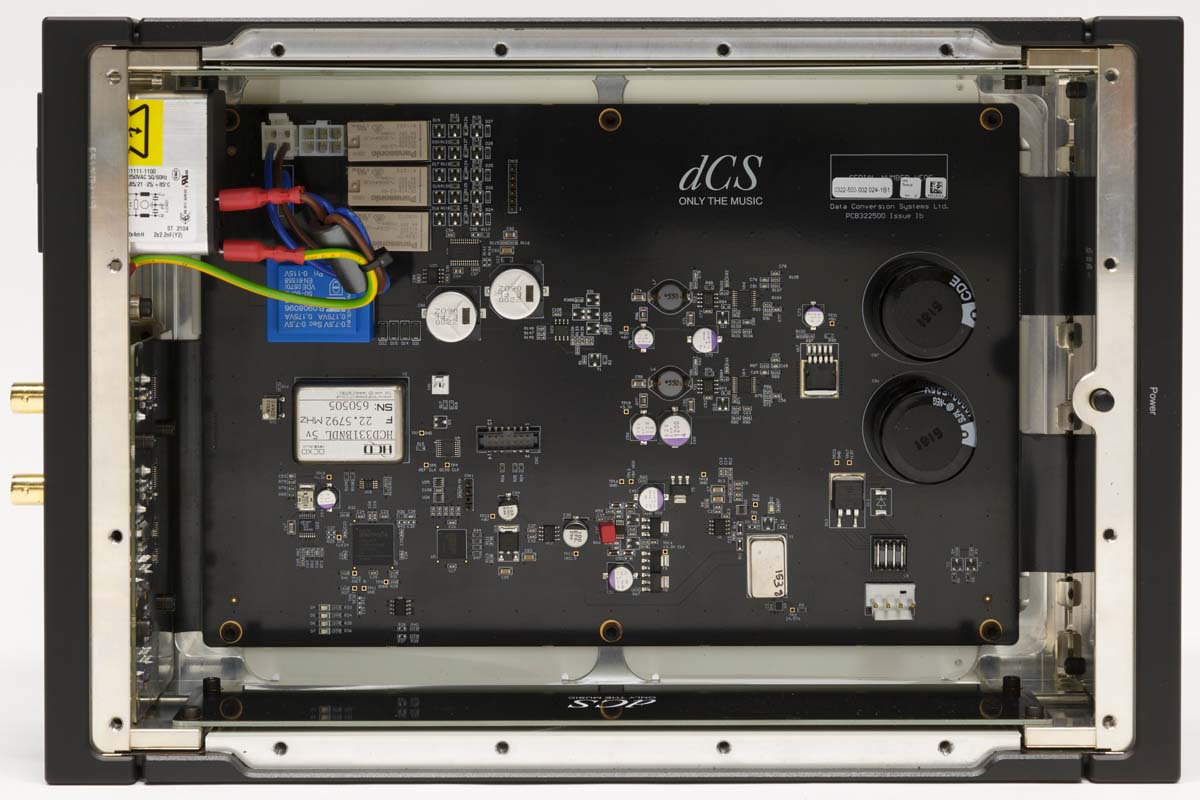
As regular with dCS, the guts of the Lina system is the distinctive Ring DAC, which superficially resembles a ladder DAC, however takes a distinct and relatively ingenious strategy to D/A conversion. One well-known downside with ladder DACs is part consistency – as every of the bits is twice as loud because the earlier one, the values of the parts should principally stay inside unrealistically slender tolerances: If, for instance, the resistance worth on the most vital bit deviates from the goal by only one p.c, the extent finally ends up being off by a higher quantity than the total amplitude of the seventh bit. The intelligent minds behind dCS have provide you with a relatively ingenious answer to this downside. Firstly, they recognized the foundation of the issue as the truth that every bit has its personal present supply and due to this fact feeds the identical error into the sign each time it’s activated, inflicting audible linear distortion.
The primary thought behind the ring DAC is that it has a surplus of equal present sources – 48 in all – and makes use of a intelligent FPGA-based circuit to assign a distinct present supply to every bit every time it’s activated. To make this attainable, the sign is first oversampled to 706.4 or 768 kilohertz after which modulated into 5-bit phrases, that are then run via a mapper at a pattern fee between 2.8 and 6 megahertz, relying on the supply materials. The mapper in flip makes use of clairvoyance and witchcraft to direct the motion of the 48 present sources in such a method that the tip result’s music – not less than that’s how I perceive it.

In any case, the excessive pattern fee is essential to the success of the operation: even at 20 kilohertz, every bit is addressed a number of instances and provided with energy by a distinct part every time, in order that the deviations roughly fully common out over time. The sign processing is thus decorrelated from the part fidelity, and we get hold of an especially linear and low-noise output sign, which ought to allow excellent decision, dynamics and spatiality, particularly at low volumes.
In my position as a consumer, after all, I don’t have to fret about all of the advanced sign processing; I’m happy with the clear navigation by way of the pleasantly responsive contact show. The Lina DAC is, after all, appropriate with all frequent streaming platforms and in addition accepts a laptop computer as a supply by way of USB. I might management the quantity by way of the DAC, however working the massive, silky-smooth management wheel on the Lina headphone amplifier is simply a lot extra enjoyable.

With its inputs for a 6.3 mm jack, XLR and a four-pole balanced enter, it would settle for just about any kind of headphones – and it goes method past simply compatibility: The circuit design, which is named “Class Super AB” within the dCS-Lingo, has been developed with a particular concentrate on the large vary of impedances that prevail amongst headphones. The dCS builders principally assume that the utmost energy in watts is of little significance for headphones – what’s way more essential is with the ability to provide significantly high-impedance headphones with enough voltage effortlessly, whereas for fashions with significantly low impedance present delivering functionality is essential above all else. This is achieved with a high-bias Class AB design, through which the bias present is managed by a particular circuit designed to maintain distortion in examine every time the amp transitions from Class A to Class B mode – if this ever happens, as a result of within the overwhelming majority of purposes the circuit reportedly stays in pure Class A mode. The individuals at dCS have sufficient confidence within the efficiency of the amplifier that they explicitly counsel pairing it with notoriously troublesome to drive greats such because the Abyss Diana or the HelloFiman Susvara of their advertising materials – an amplifier that may drive these can drive something.
A Worthy Playing Partner

I gave the Lina a go along with the Dan Clark Audio Expanse, which not solely performs in the precise league, but in addition boasts sensationally low distortion figures because of the usage of Metamaterial expertise, making it a greater than appropriate check software for the linearity of the Ring DAC.
I should have listened to Agnes Obel’s “Avenue” (Philharmonics) thrice in a row, and even then I nonetheless had problem describing what I had simply heard. Several instances I began to jot down notes, solely to discard them afterwards as a result of I used to be continuously discovering myself outlining solely the character of the recording and never that of the parts – till I lastly realized that it is a actually good signal: Rarely have I heard such a clear system. The streaming DAC, amplifier and headphones are all so near the perfect of absolute neutrality that they actually make the sound of the manufacturing shine.

By no means does impartial imply featureless, although: extremely delicate decision aside, what is especially hanging concerning the mixture is its capability to breed dynamic contrasts even at low ranges. The total Philharmonics album is usually blended very atmospherically – by way of the Lina mixture this already turns into very obvious in the beginning of the piece, through which Obel is just accompanied by minimal instrumentation. The piece then amps up the depth in two levels: as soon as when the cello and piano are available in, and a second time throughout the refrain – and what a rise that’s with this mix! As wave after wave of intricate sonic density washes over me, I’m amazed at how casually the Lina Tower traces the feel of the person devices via the heavy, reverb-soaked soundscapes.
To actually put the dCS ensemble via its paces, I placed on “Really Very Small” by Esperanza Spalding’s Chamber Music Society. On this excellently produced piece that sits someplace on the axis between jazz and postmodernism, you’ll search for reverb in useless; the composition and instrumentation alone end in a density of sound that may push even competent programs to their limits and may then typically condense right into a relatively exhausting, indiscriminate buzz. The Lina/Expanse staff pulls the strings right here with easy precision and weaves Spalding’s lyric-less vocals with double bass, drums, piano and strings right into a dense and delicate carpet through which I can take heed to the interior references between the person gamers at any time with none effort – at no level do I get the impression that the gear is dealing with any problem in any respect; I can’t hear any effort within the mixture, simply a whole lot of enjoyable at work.
Timing Outsourced

After some time I get curious concerning the clock’s contribution to the general efficiency and unplug it – and I don’t hear any distinction, not less than not immediately. No large shock, a DAC of the caliber of a dCS Lina naturally shouldn’t depart something to be desired. At this level, one might ask why an exterior clock is important in any respect. James Cook from dCS compares it to a conductor: orchestra is able to delivering an impressive live performance even with out the stick-wielding conductor – however solely when there may be somebody on the podium who actually is aware of their stuff can the gathering of musicians as a complete carry out at their very best.
As good as this comparability is, I take my time to hear backwards and forwards and let my ears alone determine. Gradually, some delicate benefits of outsourcing the clock do certainly emerge: particularly within the densest passages, the chain with the grasp clock retains a barely higher overview and listening turns into even much less strenuous. Clearly, the system works excellently even with out the exterior clock; the pacemaker is the icing on the cake for individuals who insist on the very best – or as an improve choice for a later date. In a value vary the place you’re step by step approaching the restrict of what’s achievable, one thing like this undoubtedly has a motive to exist.





The fantastic thing about head-fi is that you would be able to construct an entire hi-fi system with considerably much less cash and house. Of course, listening via headphones is totally completely different to listening via a stereo setup. But who hasn’t wished for a distinct pair of audio system every now and then – only for a change or to take heed to music that the high-resolution gems in the lounge don’t actually tolerate? Headphones for on daily basis of the week and each musical temper simply match on a shelf. And that is the place the dCS Lina has some main strengths. The system performs at a stage that even the easiest headphones can totally exploit, and is unconditionally freed from any character of its personal. If you personal a number of pairs of headphones and admire your assortment exactly due to the completely different sound signatures, you’ll be able to’t go flawed with this mix.
Accompanying Equipment
Variable output community participant/DAC: Lumin X1, Soulnote Z-3 | Streamer: Aavik S-580 | CD participant: Audio Note CD 3. 1x | Integrated amplifiers: Aavik I-580, Line Magnetic LM-88IA | Power amplifiers: Luxman M-10x, Burmester 216 | Speakers: DALI Epicon 6, Piega MLS 2 Gen2 | Headphones: Dan Clark Audio Expanse, Grado PS500i | Accessories: Finite Elemente Pagode Signature MkII, WestminsterLab cable set
Variable output community participant/DAC dCS Lina
Concept: compact streaming DAC with digitally adjustable quantity | Inputs: 2 x AES/EBU, 1 x S/PDIF BNC, 1 x S/PDIF RCA, 1 x Toslink, 1 x USB B (PCM and DSD; DSDx2 asynchronous), 1 x USB A for mass storage | Streaming/companies: all frequent ones, together with Tidal, Qobuz, Spotify, Deezer and Apple AirPlay 2; Roon prepared, UPnP help | Supported codecs: PCM as much as 24 bit/384 kHz; DSD as much as 128, DoP, FLAC, WAV, AIFF, MQA | Special options: Ring DAC with 5-bit phrase processing, enter for exterior clock | Weight: 7.4 kg | Dimensions (W/H/D): 22/12/34 cm | Warranty interval: 5 years | Price: round € 14,750
Headphone amplifier dCS Lina
Concept: transistor-based headphone amplifier with “Super-AB” topology | Inputs: 1 x RCA, 1 x XLR unbuffered (16 kΩ), 1 x XLR buffered (96 kΩ) | Outputs: 1 x 3-pin XLR, balanced, 1 x 4-pin XLR, balanced, 1 x 6.3 mm jack | THD+N: < 0.005 % at 1 kHz and 6 V balanced at 30 Ω | Weight: 7.5 kg | Dimensions (W/H/D): 22/12/36 cm | Warranty interval: 5 years | Price: round € 10 750
Master clock dCS Lina
Concept: exterior clock with separate outputs for 44.1 kHz and 48 kHz | Outputs: 1 x BNC for 44.1 kHz (75 Ω), 1 x BNC for 48 kHz (75 Ω) | Accuracy: ± 1 ppm or higher | Warm-up time: 10 min to the required accuracy | Weight: 7 kg | Dimensions (W/H/D): 22/12/34 cm | Warranty interval: 5 years | Price: round € 8750
Audio Reference GmbH
Alsterkrugchaussee 435
22335 Hamburg
Phone +49 40 53320359
[email protected]
The put up dCS Lina Head-Fi Stack appeared first on Fidelity Magazine.
HI-FI News
by way of Fidelity Magazine https://ift.tt/ZwBLkx5
December 22, 2023 at 11:17AM
-
Product on sale
 Audiophile Vinyl Records Cleaning BundleOriginal price was: €69.90.€59.90Current price is: €59.90. incl. VAT
-
Product on saleEasy Start Vinyl Records Cleaning KitOriginal price was: €69.90.€59.90Current price is: €59.90. incl. VAT
-
Vinyl Records Cleaner Easy Groove Concentrate€34.95 incl. VAT
-
Easy Groove Super Set€199.00 incl. VAT
-
Easy Groove Enzycaster – vinyl records prewash cleaner€34.95 incl. VAT
-
Easy Groove Extreme MK. II- vinyl records prewash cleaner€45.00 incl. VAT
-
Vinyl Records Cleaner – Easy Groove Virgin Concentrate€35.00 incl. VAT
-
Easy Groove Spray&Wipe vinyl records cleaner€34.95 incl. VAT







