
World News
Plinius Reference A-150 energy amplifier
Plinius Reference A-150 energy amplifier
When Jim Austin supplied the Plinius Reference A-150 stereo amplifier ($14,995) for overview, it felt like a welcome blast from the previous. Plinius has, these days, maintained a low profile within the US, probably resulting from a number of adjustments in US distributorship.
When was the final time I’d encountered a Plinius product? I discovered no discuss of the 40-year-old New Zealand model between a short point out in a 2015 column by John Marks and 2022, when Robert Schryer spied a Plinius element on the Montréal Audio Fest. The most up-to-date Stereophile overview of a Plinius element was Erick Lichte’s 2011 take on the SA-103 energy amplifier, wherein he concluded, "The Plinius SA-103 gives a pure, impartial tonal stability, simply the correct amount of musicality, very good bass efficiency, loads of present to drive essentially the most piggish audio system, practical and tasteful design. It is (dare I say it) a superb worth at its worth, contemplating its efficiency."
Under the auspices of Ralph Abramo and California-based Plinius Audio Sales and Repair, Plinius’s US profile appears to be rising once more.
The Reference A-150, which Plinius refers to because the RA-150, is not particularly new. It was launched in 2019, however it took some time to achieve a considerable presence within the US market. One notable function: It is bridgeable to be used as a strong monoblock. When so bridged, its rated energy greater than doubles; see under for particulars.
When I first communicated with Abramo, he had a single RA-150 accessible for overview. After I discussed my present standing as a serial monoblock reviewer, he supplied to ship a second RA-150 a bit later, as soon as the second amplifier had accrued a pair hundred hours of break-in time.
In session with Editor Jim, I made a decision to do one thing distinctive in my reviewing historical past (footnote 1). First, I’d take heed to a single RA-150 in stereo by way of its balanced inputs. When the second amp arrived, I’d swap to balanced, bridged mode utilizing the 2 RA-150s as monoblocks and evaluate the sound of stereo to mono. Why I’ve by no means achieved this earlier than, solely my hairdresser is aware of for certain.
Technical particulars
Abramo supplemented data within the guide by way of e mail messages and telephone calls. The predecessors to the RA-150 and its top-of-the-line huge brother, the RA-300, designated "SA," have been designed by the late Gary Morrison greater than 20 years in the past. Each had a quasi-complementary output part; all of the transistors have been NPN (footnote 2). In distinction, the Reference RA collection, designed by Karl Willoughby, has a real complementary output part utilizing matched NPN and PNP transistors. Abramo says this permits for extra energy output and delivers present sooner to the output stage, sooner transients, and higher bass response.
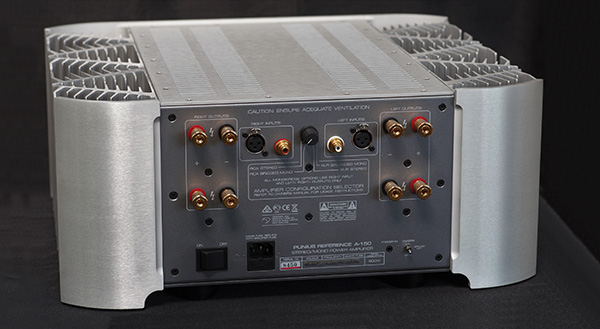
In stereo, the RA-150 is rated to ship 150Wpc into 8 ohms and 250Wpc into 4 ohms. Using a pair of RA-150s in bridged-mono is alleged to up the ability output to 450Wpc into 8 ohms, 600Wpc into 4 ohms. A rotary swap situated between XLR and RCA inputs on the amp’s rear panel permits customers to decide on one among 4 settings: RCA stereo, RCA bridged mono, XLR stereo, or XLR balanced mono. Operating in XLR balanced mono, Plinius says, the Reference A-150 is a real balanced monoblock amplifier.
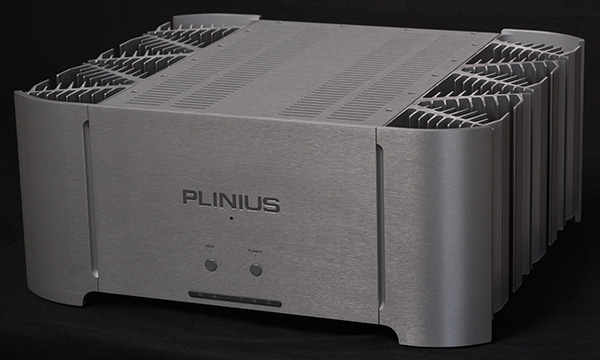
The RA-150 has a function that is uncommon: A button on the entrance panel means that you can swap between "class-AB" and "class-A" settings (footnote 3). Plinius says that the class-A setting "gives class-A bias to the output stage due to this fact making certain the optimum efficiency of the amplifier throughout all listening occasions" and avows that "a well-designed class-A circuit has inherently decrease distortion than another design" and that in class-A operation, "there’s an absence of energy provide modulation widespread in class-AB amplifiers." The guide calls class-AB "a bias configuration utilized by the vast majority of excessive constancy amplifiers," which "produces very prime quality sound, appropriate for all events the place essential listening will not be a precedence."
As John Atkinson noticed in final month’s overview of the Accuphase A-300, for an amplifier with this a lot energy to function solely in class-Ato remain in class-A all the way in which as much as its full rated energy"could be impractical" as a result of the heatsinks would have to be too massive. As Abramo confirmed, set to class-AB, the amplifier operates in class-A as much as some unspecified low energy. Set to class-A, it operates in class-A as much as some a lot increased energyadditionally unspecified, though 50W was talked about casually because the probably class-A/class-AB threshold. With 50W of pure class-A and fairly delicate audio system, most music can be reproduced in class-A, all however very loud, advanced peaks.
Like another highly effective amplifier, when working in class-A, the RA-150 runs scorching. Plinius says that in class-A operation, the amp consumes "roughly 1000 watts, just like a small electrical heater." (footnote 4) It goes on to notice, precisely, that class-AB permits an amplifier to run cooler and use much less electrical energy, particularly when it’s turned on and music is not taking part in.
States the corporate: "You will discover that the Plinius Reference A-150 will grow to be noticeably ‘purer’ in sound after being on for a time frame. We advocate ready not less than 24 hours earlier than anticipating the highest quality of sound replica out of your amplifier." Plinius additionally states that switching from class-AB to "class-A" operation requires only some minutes of further warm-up.
To additional preserve electrical energy and decrease prices, the RA-150 has a power-saving "Ecologic Control" that routinely switches from class-A to class-AB after a half-hour of nonuse. This management will be reconfigured internally to modify after 15, 30, or 60 minutes with out music taking part in, however you may have to open the case, which suggests eradicating and changing 14 screws.
The Plinius Reference amplifiers embrace a rectifier for every rail, which permits the addition of extra capacitors within the energy provide, for "sooner" operation. "The 4 capacitors within the corners of the amp on every rail present instantaneous response, as they’re positioned as shut as doable to the output transistors," Abramo defined. "The new design additionally has increased rail voltage, which will increase the accessible present and wattage. It additionally has a extra refined driver stage, the place the low enter sign is amplified, so that you match the impedance to the ability amplifier enter buffer stage, and this contributes to a decrease noisefloor. Precision DC regulators assist clear up any residual AC that is still within the line stage’s energy provide. There are not any coupling capacitors between the levels; it is all direct coupled. Direct coupling permits the amplifier to go right down to DC ranges and necessitates a DC safety circuit. Bypass capacitors are Audience AuriCap XO. All this stuff make for a greater sounding amplifier [that] reveals minor particulars and harmonics within the music."
At the RA-150’s coronary heart lies a 1100VA transformer. Its driver-stage energy provide incorporates Nichicon Gold Standard low-ESR (equal collection resistance) capacitors. Those Nichicon capacitors, that are polypropylene, "shortly launch energy upon demand." The RA-150 has 72,400µF of capacitance.
What you see/what to do
On the middle of the entrance panel, beneath the Plinius brand, sits a small, unobtrusive blue LED. When the RA-150 is plugged in and the rear-panel energy swap is switched on, the LED flashes till completion of a brief initialization sequence; when the ability is on, it is a regular blue. If digital errors ought to happen, the LED will once more begin flashing. During the overview interval, the RA-150s functioned flawlessly.
Lower down on the entrance panel are two buttons, aspect by aspect, above which sit two very small white LEDs. The Mute button on the left is very helpful for switching interconnects on the fly, as a result of Mute disconnects the speaker outputs. When the amplifier first powers up, it routinely goes into Mute mode. Pressing the Mute button takes it out of mute, turns off the LED, and means that you can start listening.
The proper button, labeled "Class A," is for selecting between class-A and class-AB operation. In class-A, the LED lights. If I forgot to modify to class-AB after a listening session, the amp’s "Ecologic Control" reverted to class-AB a half-hour after I departed. The rear panel consists of two pairs of speaker binding posts to facilitate biwiring (footnote 5), and one set every of RCA and XLR enter jacks. Between them lies the beforehand mentioned "amplifier configuration selector." An influence toggle swap, 15A IEC connector, distant set off socket (for integration into a house theater/multimedia system; I did not use it), and a ground-lift toggle swap full the back-panel structure.
The ground-lift toggle swap has two positions: floor elevate and chassis floor. States the guide, "In some installations a hum loop might exist resulting from duplicate floor paths from totally different gear. Use this swap to take away the connection from 0V to floor thus permitting some flexibility in your explicit set-up, though when utilizing Balanced XLR inputs, the bottom elevate swap ought to all the time be set to ‘chassis.’" Through experimentation, I discovered that in the event you do not swap to "chassis" when utilizing XLR cables, hum is current at ranges unimaginable to disregard.
Footnote 1: Jim Austin did the identical factor for his overview of the Burmester 216 amplifier.
Footnote 2: See eeeguide.com/quasi-complementary-push-pull-amplifier.
Footnote 3: The Gryphon Essence monoblock, which I reviewed within the December 2020 problem, additionally has a class-A/class-AB swap. The Gryphon Apex Stereo, which Michael Fremer reviewed in 2022, has a three-position bias swap.
Footnote 4: After consulting with Plinius engineers, Abramo added that class-AB consumes 92Wpc in comparison with class-A’s 485Wpc.
Footnote 5: For biwiring in a mono setup, care should be taken to solely use the purple, constructive binding posts.
HI-FI News
by way of Stereophile.com https://ift.tt/PlL9v1W
January 5, 2024 at 03:37PM
-
Product on sale
 Audiophile Vinyl Records Cleaning BundleOriginal price was: €69.90.€59.90Current price is: €59.90. incl. VAT
-
Product on saleEasy Start Vinyl Records Cleaning KitOriginal price was: €69.90.€59.90Current price is: €59.90. incl. VAT
-
Vinyl Records Cleaner Easy Groove Concentrate€34.95 incl. VAT
-
Easy Groove Super Set€199.00 incl. VAT
-
Easy Groove Enzycaster – vinyl records prewash cleaner€34.95 incl. VAT
-
Easy Groove Extreme MK. II- vinyl records prewash cleaner€45.00 incl. VAT
-
Vinyl Records Cleaner – Easy Groove Virgin Concentrate€35.00 incl. VAT
-
Easy Groove Spray&Wipe vinyl records cleaner€34.95 incl. VAT







