
World News
Denon DCD-600 CD Player
Denon DCD-600 CD Player
 Putting its re-badged CD gamers behind it, in 1987 Denon unveiled a machine to tackle fashions from the manufacturers that first introduced CD to the market. How will it shape-up right this moment?
Early CD gamers from Philips and Sony are thought of by some collectors to be essentially the most covetable classic fashions as a result of they got here from the very firms that created the format. You can add to this listing machines from Denon, whose Pulse Code Modulation (PCM) system underpinned the best way analogue indicators have been reworked into digital information, recorded, performed again and eventually turned again into music once more.
PCM was first demonstrated by Denon way back to 1970, so its use preceded the introduction of the CD by over a decade. To start with, the one machines with the capability to seize the high-speed information generated by the PCM system have been industrial video recorders, however rather a lot was discovered from how these machines have been utilized in skilled environments.

CD Dream Team
The mixture of Philips’ experience with laser optics and servo monitoring techniques, Sony’s extremely developed error-correcting methods and Denon’s PCM code is what made the Compact Disc a hit. Oddly although, Denon was not absolutely on the celebration when the format was launched. Philips and Sony confirmed gamers completely of their very own design and manufacture, however this was past Denon on the time. Nevertheless, the DCD-600, launched in 1987 and reviewed right here, provides an thought of how far the corporate would progress in just some brief years following the discharge of its debut machine – the DCD-2000 – in 1982. After all, the DCD-2000 was a frivolously disguised Hitachi DA-1000 [HFN Sep ’16], made by Hitachi in its personal factories.
A 12 months after the DCD-2000 got here the DCD-1800, which was an unique design supplied as a top-end mannequin. Here Denon was maybe distinctive in its try to emulate the Philips swing-arm optical mechanism rather than the motor-powered linear sled often employed by the large Japanese corporations. Although elegant, the system was complicated and never as readily adaptable to mass manufacturing because the Philips model (with which it shared no frequent components – the laser itself got here from Toshiba). It was quickly dropped from Denon’s gamers.
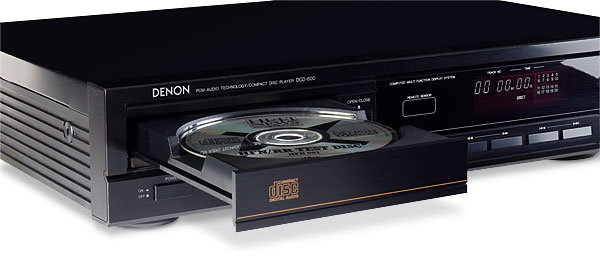
The DCD-600 was typical of the kind of midrange participant that the extra critical listener would select as a substitute of a packaged system. It was neat, fashionable and absolutely featured with out being extravagant. A CD participant of any description was nonetheless a luxurious product at the moment and the DCD-600 confirmed the advantages of spending a little bit extra on this vital buy.
Transport Union
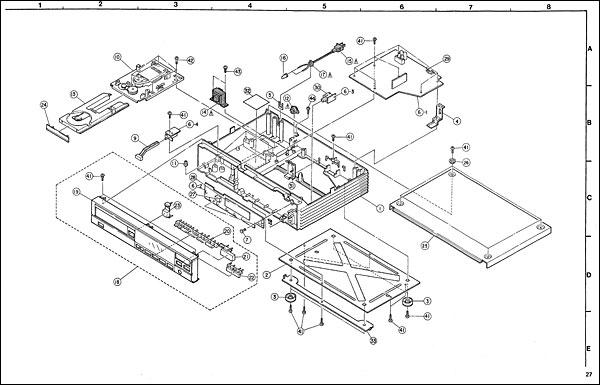
The DCD-600 arrived with a standard three-beam laser pick-up sourced from Sony however fitted to a Denon-designed transport. The bulk of the servo and decoding electronics additionally got here from Sony, which by this time might provide a variety of specialized ICs (and the technical backup to allow one of the best use to be product of them) to permit a CD participant to be designed with the minimal of value and fuss. An intriguing element of the design is that the decoder IC, which additionally contained the digital filter, was mounted on a small daughter board, so presumably the designers supposed that this half may very well be up to date with out the necessity for the entire PCB to be re-drafted.
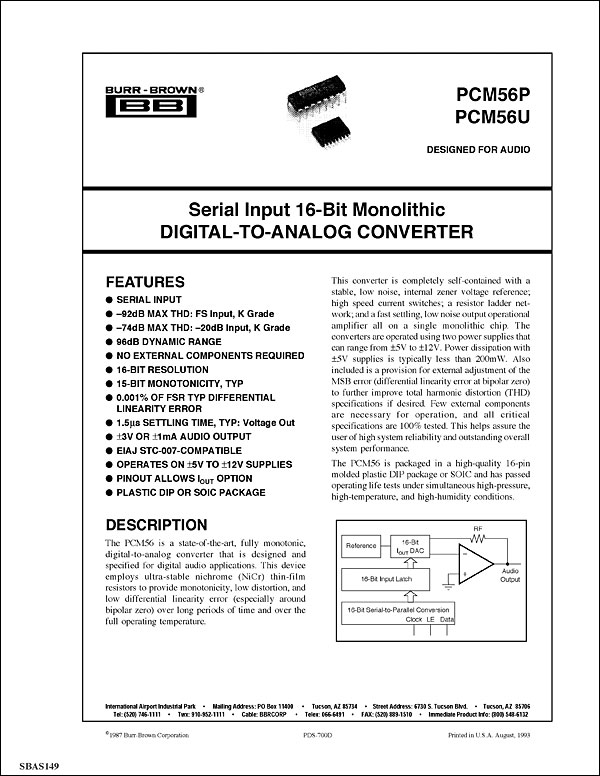
The DAC got here from Burr-Brown and was a normal 16-bit linear kind, time-shared between the 2 channels. A 2x oversampling digital filter was employed to minimise the adversarial results this structure might need on the part relationship between the 2 channels – a standard refinement to the higher class of Japanese participant on the time. If this had been all there was to the DCD-600 it might have been simply one other ‘me too’ participant, however this being a Denon product, there was a little bit extra to the design that – sufficient, actually, to make it a extremely noteworthy machine.
Firstly, the power to additional linearise the Burr-Brown DAC had been absolutely applied. The chip included additional connections to which a community of parts may very well be fitted to trim out the final of the ladder DAC’s linearity errors. Most different customers of this chip merely ignored this selection, however its inclusion is a standard characteristic of many Denon designs of this period. It was often known as the Super Linear Converter.
Hold In Play
The second refinement tackled head-on the phase-lag drawback between the 2 channels, which with a traditional machine with a 2x oversampling filter would quantity to about 45° at 20kHz. This is an analogous aim to that pursued within the Technics SL-P3 participant [HFN Sep ’22] with its analogue frequency-dependent part shifting circuit. The Denon strategy differed to this in that it made use of circuitry that already existed in each machine of the single-DAC kind.
All such designs use a ‘pattern and maintain’ circuit, which briefly shops the analogue worth of the output of the DAC whereas the opposite channel is up to date. One sample-and-hold association in every channel ensures a clean circulate of analogue sign from each the left and proper output, though the slight delay between every stays.
Denon solved this drawback by including an extra sample-and-hold circuit within the left channel solely, making the 2 channels asymmetrical (which is uncommon within the analogue sections of hi-fi tools). The motion of this was exactly synchronised to the one pattern and maintain in the suitable channel, that means each outputs have been at all times completely in step. This refinement, added little by way of value, element rely and complexity, however enabled the participant to lastly rival the precise channel matching of the Philips/Marantz machines, which had one DAC every for left and proper.
HI-FI News
through Hi-Fi News https://ift.tt/TnqyMif
March 8, 2024 at 11:49PM
-
Product on sale
 Audiophile Vinyl Records Cleaning BundleOriginal price was: €83.88.€73.88Current price is: €73.88. incl. VAT
-
Product on saleEasy Start Vinyl Records Cleaning KitOriginal price was: €83.88.€73.88Current price is: €73.88. incl. VAT
-
Vinyl Records Cleaner Easy Groove Concentrate€41.94 incl. VAT
-
Easy Groove Super Set€238.80 incl. VAT
-
Easy Groove Enzycaster – vinyl records prewash cleaner€41.94 incl. VAT
-
Easy Groove Extreme MK. II- vinyl records prewash cleaner€54.00 incl. VAT
-
Vinyl Records Cleaner – Easy Groove Virgin Concentrate€42.00 incl. VAT
-
Easy Groove Spray&Wipe vinyl records cleaner€41.94 incl. VAT







