
World News
ARCAM Radia A25 built-in amplifier
ARCAM Radia A25 built-in amplifier
I’ve been to a couple bowling events and handed a bottle round just a few fireplace pits, however I’ve by no means watched an audiophile unboxing video. Lately although, I have been paying nearer consideration to my first impressions of every new audio product because it enters my realm.
I’m discovering it attention-grabbing to note how a tool beforehand unseen and unheard declares itself one small step at a time as I open its field, really feel its heft, observe its type, research its guide, and, lastly, wire it into my system. Those start-up experiences, plus my intestine emotions throughout my first moments of music listening, set up a tone of harmless discovery I want would final the entire month. It by no means does.
I point out this as a result of my first impressions for my first-ever evaluate of an ARCAM product, the Radia A25 built-in amplifier, had been in that "harmless and receptive" mode from the moment I noticed the field sitting outdoors my door. The 26.5lb field seemed Jimmy Stewarttrim and fairly sized (8" × 23" × 17"), and it was simple to elevate. My first impression was that ARCAM had their field and packing sport collectively.
The first inform was the brown paper tape, which, with three fast box-cutter cuts, revealed an interior "tuck high" field with an enormous letter "A" printed on its cowl, fashioned from skinny black traces suggesting piano keys. This tuck-topped field opened to disclose a brown, cast-paper eggcrate-type spacer with a small brown cardboard field nested in its middle. That small field contained a sharp-looking (plastic) distant and an IEC energy twine. The A25’s nine-language quick-start information was in a brown paper envelope affixed with brown tape to the within of the highest cowl. The A25 itself was sheathed in a white paper-cloth bag.
This was my first-ever encounter with well engineered, artfully executed, 100% biodegradable packaging, and it felt like a honest handshake.
ARCAM
Back within the day, in Great Britain, Amplification & Recording Cambridge Ltd., t/a ARCAM, made slim-profiled built-in amplifiers reputed to work properly with England’s hottest speaker: the Wharfedale Diamond shelf-mount. That’s all I knew about ARCAM earlier than I began penning this report (footnote 1).
ARCAM’s web site says "The ‘A’ in ARCAM stands for Amplificationthat is our core competence. The A25 is the most recent in additional than 45 years of amplifier design and manufacture, going again to our first product in 1976the A&R Cambridge A60 amplifier."
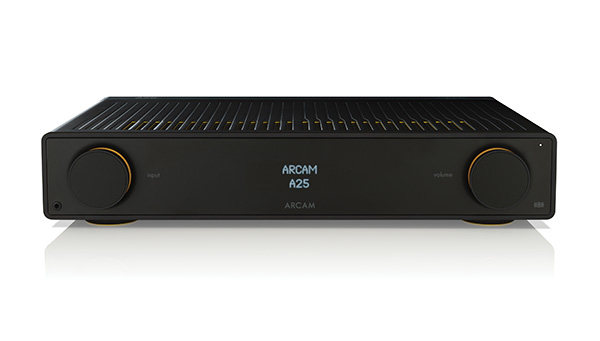
Description
ARCAM’s flagship Radia A25 is a slender, properly sculpted, matte-black, 19.8lb built-in amplifier that operates in class-G and is specified to output 100Wpc into 8 ohms and 165Wpc into 4 ohms.
The A25 is designed in Cambridge, UK, and in-built China. Its again panel options stereo pairs of loudspeaker binding posts plus three unbalanced RCA inputs and one RCA enter for a transferring magnet phono cartridge. There are additionally 4 digital inputs: two coaxial, one optical, and one USB-C. The A25’s DAC makes use of an ESS Sabre ES9280A Pro DAC chip, which permits a alternative of three reconstruction filters and helps PCM sampling charges as much as 384kHz and DSD as much as DSD1024. There can also be a variable (volume-controlled) pre-out on RCA, 12V triggers In and Out (additionally on RCA), an IR sensor enter, and Control enter over a LAN (RJ45) connection, and a USB Service port. The 19.8lb chassis measures a slim 3.27" excessive, 17" large, and 13.5" deep together with these binding posts. Bluetoothparticularly a number of flavors of aptX together with aptX Adaptive, Apple’s AAC, and the baseline SBCcan also be featured. The A25’s Bluetooth is two-way: It can obtain music knowledge from a telephone or pill or ship it out to a pair of wi-fi headphones.
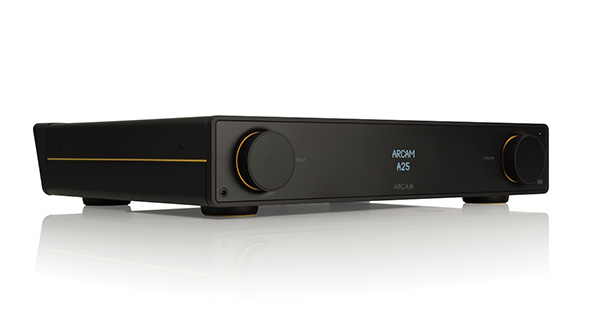
The A25’s "buttonless" entrance panel seems to be well styled by day and terribly good at nighttime, the place skinny, creamy-yellow bands of sunshine halo the Volume and Input Selector dials. Its slender LCD show is simply the appropriate measurementand brightness-adjustableto really feel well mannered and subdued but completely legible from 10′ away. Its 6" × 1.5" × 0.5" plastic distant seemed costly and felt proper in my hand.
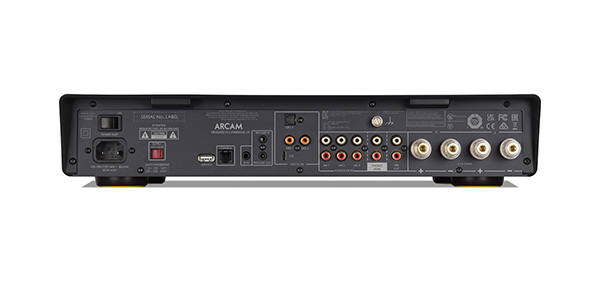
The A25’s 3.5mm headphone jack hides within the amp’s decrease left entrance nook. Opposite high proper is a tiny white LED that lights vivid when the unit is absolutely powered and turns into dimmer when it goes into standby.
In use, the A25’s subtly styled gray-black chassis got here off as uptown bureau-top prepared, like a product that ought to value much more than its $1499 value.
Listening with Heretic AD614s
I started my listening with the ARCAM A25 powering the Heretic AD614 audio system and a Roon-streamed digital remastering of one in all my all-time most-played LPs (Columbia LP ML 4587): the Budapest String Quartet performing Beethoven’s sublimely fashioned Grosse Fuge in B-Flat Major, Op.133.
The authentic 1953 Columbia mono disc produced an exceptionally dense, life-like sound that intensified the impact of the Budapest String Quartet in delivering this soul-stirring efficiency. That outdated black disc is gone, however the hi-rez remastering (24/192 FLAC, Columbia/Qobuz), performed by the Denafrips Terminator Plus DAC into the A25’s analog enter, made exceedingly easy, immediately participating sound laced with tone that was extra saturated and tempo-keeping that was extra toe-tapping than anticipated. Playing Op.133, the ARCAM exceled at sorting all of the sound molecules and never mucking them up. It felt good to listen to a $1499 built-in amp make a chunk of adverse music this affecting. Its pure ease invited me to lean ahead and shut my eyes.
Right now, my system is silent, however as I kind these phrases, I can nonetheless hear Op.133 enjoying inside my head. I hold attempting to think about what was happening inside Beethoven’s head as he composed these darkish, quivering kinds. Driving the Heretic audio system, the A25 introduced the Maestro’s Grosse Fuge as a daring inventive invention carried out by a superb quartet working in peak type.
Driving LS3/5a’s
The very first thing I observed once I switched from the 97dB-sensitive Heretic AD614 audio system to the 83dB-sensitive Falcon Gold Badge LS3/5a‘s is how a lot I needed to flip the amount up; 14dB is loads of acquire to lose and make up for. The second factor I observed is how little room air the Falcons transfer compared to the Heretics.
Besides transferring much less air, the chief sonic distinction between the Heretic and Falcon audio system is how the sealed-box Falcons place performers farther again and unfold them out extra. The different sonic distinction is a consequence of the primary: With the A25 driving the LS3/5a’s, the Budapest String Quartet’s efficiency of Beethoven’s Op.133 appeared much less uncooked, actual, close-up, and direct than it did with the Heretics. Less edgy, extra compressed, extra pipe’n’slippers British.
The best weak spot of this amp-speaker pairing was its lack of punch or sparkly zing. Bass was tight, tuneful, and well-managed however extra prosaic than visceral. The A25 + LS3/5a combo’s best power was how explicitly it invited shut listening whereas by no means being boring or fatiguing.
Driving headphones
Once once more, the ARCAM Radia A25 made a superb first impression. Its single 3.5mm headphone output powered Grado’s $295 Prestige SR325X dynamic headphones prefer it was designed particularly for the duty. I’m studying Robert "Mack" McCormick’s Biography of a Phantom (Smithsonian Books), so my thoughts is wandering Friars Point, Mississippi, on the lookout for Robert Johnson’s sassy girlfriend "Betty," who’s "received a mortgage on my physique and a lien on my soul," whereas enjoying Columbia’s paradigm-shifting 1961 LP, King of the Delta Blues Singers (16/44.1 FLAC Columbia/Qobuz). This recording didn’t promote many copies, however each rock and blues musician of the Sixties was impacted by it. Powered by the A25, the 32 ohm, 98dB/mW SR325Xs uncovered all of the darkness and vibrant vitality of Johnson’s spooky poetry. The Phantom’s haunting voice and stupefying guitar accompaniments got here by these Grados with all their sharecropper-minstrel mojo intact.
The A25 guide says the A25’s headphone output will drive headphones between 16 and 2k ohms, delivering 2.5V into 32 ohms, and 5V into 300 ohms. Naturally I needed to strive my 250 ohm Beyerdynamic DT 880 Pro headset. I performed "Cross Road Blues" at a loud quantity, and the 880s performed studio-monitor clear however a bit of darker and slower than Grado’s bright-and-awake, low-impedance SR325Xs.
Meze Audio’s $795 109 Pro dynamic headphones (see Gramophone Dreams elsewhere on this concern) is my present favourite headphone for on a regular basis all-genre use. The 109 Pro is superbly crafted and exquisitely balanced tone-wise. Like ARCAM’s A25, the sound is predominantly easy and mesmerizing, exactly how they sounded enjoying Ito Ema’s efficiency of Bach’s Goldberg Variations on a Steinway & Sons Model D piano (MA Recordings CD M024A). With the 40 ohm, 112dB/mW Meze 109 Pros, powered by the A25’s headphone amplifier, the sound was akin to excellent: creamy textured, easy-flowing, exact, and pure of tone. Never had this Bach appeared dreamier or extra thrilling to observe. A divine pairing.
Apparently the "A" in ARCAM does stand for Amplification, and this headphone amplifier achieved an A+ for amplification excellence.
Bluetooth
The A25 gave me an excuse to see how good Bluetooth is sounding lately. The reply: higherhowever nonetheless not audiophile high quality. What I heard streaming Tidal and YouTube from my iPhone 11 sounded reasonably purer and extra spatially descriptive (footnote 2).
Footnote 1: For what it is value, an ARCAM built-inI do not recall which mannequinwas one in all my earliest audiophile purchases, not counting the stuff I purchased in my youth. I used to be proud of it for some time, with my Vienna Acoustics Bach loudspeakers, however I had been bitten by the bug and the remainder is, if not historical past, then fairly well-known.Jim Austin
Footnote 2: It is necessary to say right here that as a result of the iPhone does not help AptX Adaptive (or any AptX Bluetooth), it is unlikely I heard the ARCAM’s Bluetooth at its greatest. If you plan to make use of Bluetoothand if optimum high quality on Bluetooth is necessary to yoube sure the sending system helps this AptX codec.
HI-FI News
through Stereophile.com https://ift.tt/mgtNAGI
April 9, 2024 at 04:37PM
-
Product on sale
 Audiophile Vinyl Records Cleaning BundleOriginal price was: €69.90.€59.90Current price is: €59.90. incl. VAT
-
Product on saleEasy Start Vinyl Records Cleaning KitOriginal price was: €69.90.€59.90Current price is: €59.90. incl. VAT
-
Vinyl Records Cleaner Easy Groove Concentrate€34.95 incl. VAT
-
Easy Groove Super Set€199.00 incl. VAT
-
Easy Groove Enzycaster – vinyl records prewash cleaner€34.95 incl. VAT
-
Easy Groove Extreme MK. II- vinyl records prewash cleaner€45.00 incl. VAT
-
Vinyl Records Cleaner – Easy Groove Virgin Concentrate€35.00 incl. VAT
-
Easy Groove Spray&Wipe vinyl records cleaner€34.95 incl. VAT


