
World News
Cambridge Audio MXN10 streamerD/A processor
Cambridge Audio MXN10 streamerD/A processor
For music listening circa 2024, streaming is each the current and the long run. Physical codecs are nonetheless round, and they’re nonetheless the only option in some instances, as with deluxe reissues of beloved albums, which can add worth with further dwell performances, full-resolution encompass sound, and different perks. The area of interest vinyl market continues to thrive, and that enterprise mannequin clearly works for releases of some thousand copies. (It additionally works, apparently, for releases of tons of of 1000’s of T-Swift platters to be displayed on cabinets and held on partitions.)
But details is details: Streaming is now the solely mass medium for listening to recorded musicthe first provider for musicand has been for just a few years now. According to RIAA statistics, the crossover yr was 2016. That’s when, in income phrases, streaming outpaced bodily codecs. By 2022, the most recent full yr tabulated, streaming accounted for 84% of US recorded-music income (footnote 1).
So what’s a long-time audiophile, born into the analog world, with robust roots in bodily media, imagined to do? We can cling stubbornly to our cabinets of LPs and CDsas I do. We can rage in opposition to lossy streaming akin to that supplied by market chief Spotify. (I try this, too.) We will pay $30+ for a vinyl copy of the most recent hit album, more than likely recorded digitally after which lower to a format rife with audible sound-quality compromises. (I do not try this.)
Or we are able to embrace the current and future, combine high-quality streaming and digital information into our audio life, and profit from the straightforward, low-cost musical exploration streaming presents. Streaming and bodily media coexist superbly and infrequently improve one another, aided by present hi-fi {hardware}.
For the good thing about those that have not executed it already, this is the argument for leaping into streaming, in a nutshell: For the price of a few cups of espresso a monthlower than the price of a single LP or CDyou may simply discover and shortly play a goodly portion of all of the recorded music that has been digitized, at house or on the go (footnote 2). You can get at the least CD high quality and infrequently HD from Qobuz, Tidal, Amazon, or Apple Music. Search for any track that pops into your head, or that you just examine, or {that a} good friend recommends, and extra doubtless than not, after just a few finger-punches in your telephone, it is taking part in for you.
Remember the unhealthy outdated days when FM-radio tastemakers (the music "influencers" of the day) determined what new music you can hear? Remember going to a retailer to purchase an costly LP or CD chosen largely on religion? (What FM station repeatedly performed entire albums? Mostly we heard a handful of hits.) Good riddance, unhealthy outdated days.
In the fashionable world, streaming is each the most affordable method to hear most recorded music and, in case you are mulling shopping for a bodily copy, it is low-cost try-before-you-buy insurance coverage.
The draw back, and it is actual, is that we’re solely renting the huge historical past of recorded music, month-to-month. There’s an opportunity our favourite streaming service might exit of enterpriseafter which what have we acquired? Just the information we have purchased (if we’re fortunate) and bodily media we have collected.
A younger grownup studying this journal (such a uncommon creature, alas, so welcome, good friend) may chuckle and say, "Hey outdated man, WTF? Physical codecs have been zombies for many years. Don’t you keep in mind Napster, the iPod, ripping your CDs into iTunes? You nonetheless maintain these shiny 5" relics round? Yeah, I dig the vinyls, however most music I hear streams out of my telephone. Get with this system, gramps!" Fellow analog-born audiophile, permit me to introduce a low-cost/low-risk method to get with mentioned program, even in the event you’re a die-hard CD hater and presently have a system that features no digital elements (footnote 3).
A bridge to the long run current
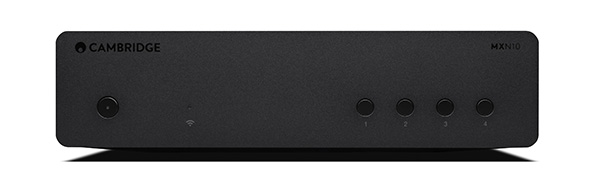
The Cambridge Audio MXN10 is a compact, self-contained gateway into the world of ephemeral music media, not solely streaming from the web providers but in addition music information saved domestically in your community, laborious drives, and thumb drives plus the fascinating world of web radio. The MXN10 has a streaming (Ethernet and Wi-Fi) enter and a high-quality D/A converter with unbalanced RCA analog outputs. Give it a music-data supply and plug it in to any old-school, beforehand all-analog system, no gear required however a pair of interconnects (footnote 4).
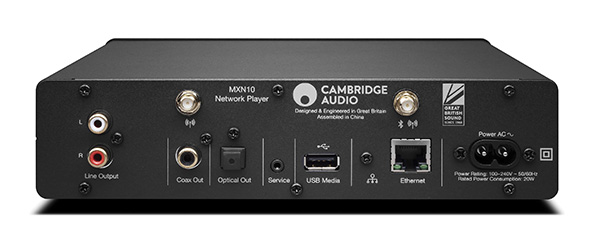
If you have already got a favourite DAC, whether or not it is a standalone element or a part of a DAC/preamp or digital built-in amplifier, the MXN10 has S/PDIF digital outputs, each RCA and optical (TosLink). As beforehand talked about, it connects to your private home community through Ethernet cable or Wi-Fi. The MXN10 is Roon Ready, which suggests it implements Roon’s wonderful RAAT (Roon Advanced Audio Transport); it labored properly as an endpoint in my Roon-based system. If you do not pay for Roon, you may stream utilizing Cambridge’s StreamMagic app, which works on Apple and Google smartphones and tablets and natively incorporates Spotify Connect, Qobuz, Tidal, and Deezer. You can stream straight out of your smartphone or pill at CD decision with Apple AirPlay 2 or Google Chromecast, or you may join your system utilizing lossy (however common) Bluetooth. You can join an SSD or thumb drive stuffed with digital music information to a USB socket on the again and play these. All that in an unobtrusive steel case with a self-contained energy provide (not a wall wart) for simply $500.
What the MXN10 would not have is a front-panel show or controls past an on/off swap and 4 Preset buttons, for one-push entry to favourite web radio stations or streaming albums or playlists, configured within the StreamMagic app. App management is the way in which to go.
The MXN10 has a siblinga fraternal twinthe AXN10with the identical options and innards however a distinct type issue. (A Black Edition of the MXN10, with an all-black face and case, was launched in October 2023; see Industry Update within the January 2024 challenge.) In its product announcement, Cambridge famous, "The MXN10 presents the identical options and performance in a extra compact type issue, making it a discreet and simple manner so as to add streaming to any music systemtogether with bringing classic package bang updated." Tuck it behind your Marantz 7B, plug into an AUX enter, and nobody will know your system has entered the twenty first century.
Under the hood is Cambridge’s fourth-generation StreamMagic module, constructed round a Quad core ARM Cortex-A53 1.8GHz CPU. This little laptop routes the streams of bits and bytes from the interwebs, connected drive, or the native community to an ESS Sabre ES9033Q DAC chip, the place the bits and bytes (PCM or DSD) get transformed to {an electrical} illustration of two-channel music, or towards these coaxial and optical S/PDIF transmitters. The laptop interacts with the telephone app through the house community. Use your telephone to pick out and play music, and inside that little steel field, the MXN10’s laptop takes care of issues, and music emerges.
Up and operating
I reviewed a Black Edition MXN10. I used the StreamMagic app or Roon (the server operating on my workplace desktop laptop, the management app on my telephone), pulling information from my music library grasp laborious drive, linked to the pc through USB. The library is mirrored on my NAS, which served because the supply for local-network audio I streamed. Using the StreamMagic app, I signed into my Qobuz account, permitting direct management of Qobuz by means of StreamMagic. The identical might be executed with Tidal and Deezer. In the case of Spotify, you choose the MXN10 because the vacation spot "speaker." Spotify Connect then makes use of the Spotify app because the management interface, however the MXN10 communicates straight with Spotify’s servers and the datastream is flowing straight by means of the MXN10 with out first passing by means of your telephone. During the course of this overview, I used an older iPad and my iPhone 15 as remotes for StreamMagic and Roon. I even ran StreamMagic on a decommissioned iPhone 7s.
Cambridge supplies a fast begin information within the field; an in depth guide is on-line (footnote 5). The first step was setting the MXN10 linked to my Wi-Fi community. In the Apple ecosystem, that is achieved by setting it as a brand new AirPlay system, then downloading the StreamMagic app and following its setup process. After this preliminary setup, firmware updates befell robotically once I wasn’t utilizing the system. As a part of the setup process, the MXN10 asks permission to affix your Wi-Fi community through your telephone. Once it is signed in, it is good to go.
Warning to the impatient: The setup process might require a firmware replace, which takes a very long time. As my spouse says, pull in your affected person pants and sit tight. Being the impatient type, my first transfer once I unpacked the MXN10 was to attach through Bluetooth and stream some music from the Qobuz app on my telephone. This no-fuss strategy yielded prompt satisfaction and confirmed that the factor labored, but when that is so far as you are going, simply get a pleasant Bluetooth speaker and be executed with it. The level of gadgets like that is all the opposite stuff they do.
Footnote 1: See riaa.com/u-s-sales-database. Note that regardless that streaming income has been a shot within the arm for the file biz, revenues adjusted for inflation are nowhere close to the height reached within the Compact Disc heyday.
Footnote 2: Estimates fluctuate as to how a lot of the music ever recorded ever made it to CDs or streaming providers. Google it to affix the fray, however put together for a visit down a rabbit gap. As an individual with comparatively extensive tastes and pursuits, I’d estimate that maybe 80% of what catches my fancy is definitely findable on Qobuz or Spotify.
Footnote 3: Hopefully, even die-hard CD haters perceive by now that digital audio can sound good; in spite of everything, the expertise has had 40+ years to mature, roughly the identical timeframe as from the daybreak of economic electrical recording in 1925 to the beginning of the CD. If you are decided to go to your grave hating all issues digital, you in all probability stopped studying earlier than you bought to this footnote.
Footnote 4: For the best-quality music streaming, an Ethernet connection is all the time most popularfor that, you’d additionally want an Ethernet cablehowever Wi-Fi works, too, and that is how most individuals will in all probability use it.
Footnote 5: See manuals.cambridgeaudio.com/mxn10.
HI-FI News
through AudioStream https://ift.tt/di5rnXS
April 25, 2024 at 04:04PM
-
Product on sale
 Audiophile Vinyl Records Cleaning BundleOriginal price was: €69.90.€59.90Current price is: €59.90. incl. VAT
-
Product on saleEasy Start Vinyl Records Cleaning KitOriginal price was: €69.90.€59.90Current price is: €59.90. incl. VAT
-
Vinyl Records Cleaner Easy Groove Concentrate€34.95 incl. VAT
-
Easy Groove Super Set€199.00 incl. VAT
-
Easy Groove Enzycaster – vinyl records prewash cleaner€34.95 incl. VAT
-
Easy Groove Extreme MK. II- vinyl records prewash cleaner€45.00 incl. VAT
-
Vinyl Records Cleaner – Easy Groove Virgin Concentrate€35.00 incl. VAT
-
Easy Groove Spray&Wipe vinyl records cleaner€34.95 incl. VAT


