
World News
The Revolution Will Be Archived
The Revolution Will Be Archived
Noor Aldayeh is a digital content material creator, however they’ve at all times been drawn to tangible issues. “I’ve at all times favored bodily books,” they inform me. “I’ve at all times favored cassette tapes, vinyls. Even simply knickknacks or trinkets. Even simply having small objects, I’ve at all times felt quite a lot of connection and sentiment in the direction of objects in that sense.”
As a half Palestinian dyke, the which means and urgency of bodily archives, particularly — how they final, how they’re protected, how they fill within the gaps — feels particularly essential to Noor.

Noor, who’s 23, is an artist, photographer, author and activist. They’re additionally a collector. Of vinyls, of books, of trinkets. Of different individuals’s tales. The act of amassing if you come from a tradition and those that has been closely colonized and intentionally worn out by imperialism is an act of affection, resistance, and necessity.
“There’s at all times been destruction of records, particularly when it comes to Palestinian id, as a result of when a genocide is happening, you wish to get rid of the individuals. That’s the purpose,” Noor says. “So you’re not simply attempting to kill the individuals, you’re attempting to kill any report, proof, id, tradition, heritage, custom, any of this stuff, you’re attempting to erase that as properly.”
Recently, Noor began volunteering with the Lesbian Herstory Archives in New York City to create an archival mission centering queer SWANA (Southwest Asian and North African) ladies and gender-nonconforming people, beginning with queer and trans Palestinians. At a time when Israel is decimating and erasing Palestinian life and tradition and when queer individuals’s lives are being exploited to fabricate consent for this ongoing genocide, the work of archiving Palestinian queer expertise is important on a number of ranges.
Noor’s the right particular person to supervise this mission for therefore many causes. “There was simply this microcosm of quite a lot of issues with my particular id and upbringing that made it in order that I care very particularly about this,” they are saying.
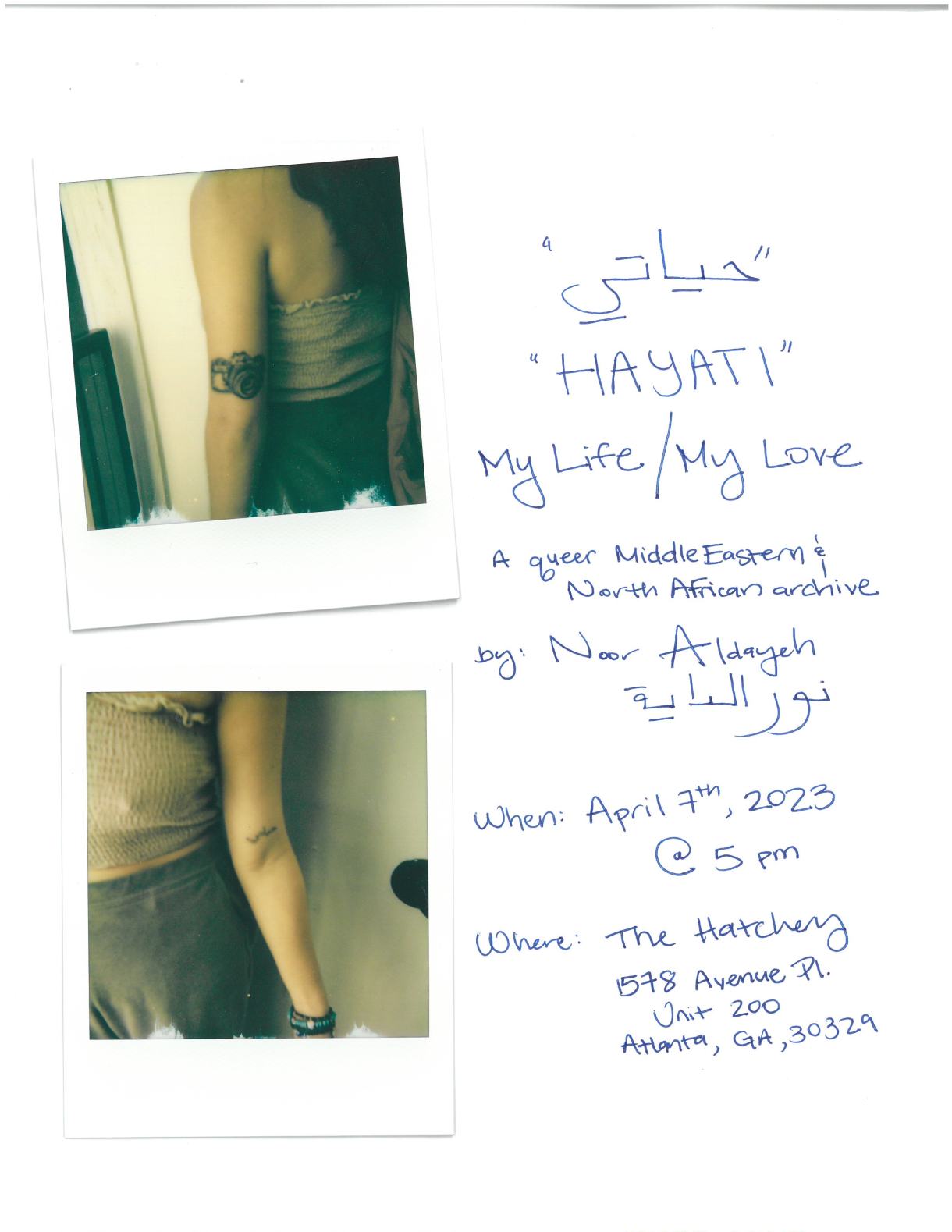
Noor moved to New York in August in hopes of extending their mission Hayati, an ethnography and photography-based archive about queer SWANA ladies and gender-nonconforming those that started as their honors thesis in faculty. It was engaged on this mission that led to an important realization about their life path: “I feel I want to do that. I feel I have to dedicate my life to telling this id’s tales.” They’d discovered their calling, and thus pivoted from pursuing a profession in movie and media manufacturing to dedicate themselves to archiving queer SWANA lives.
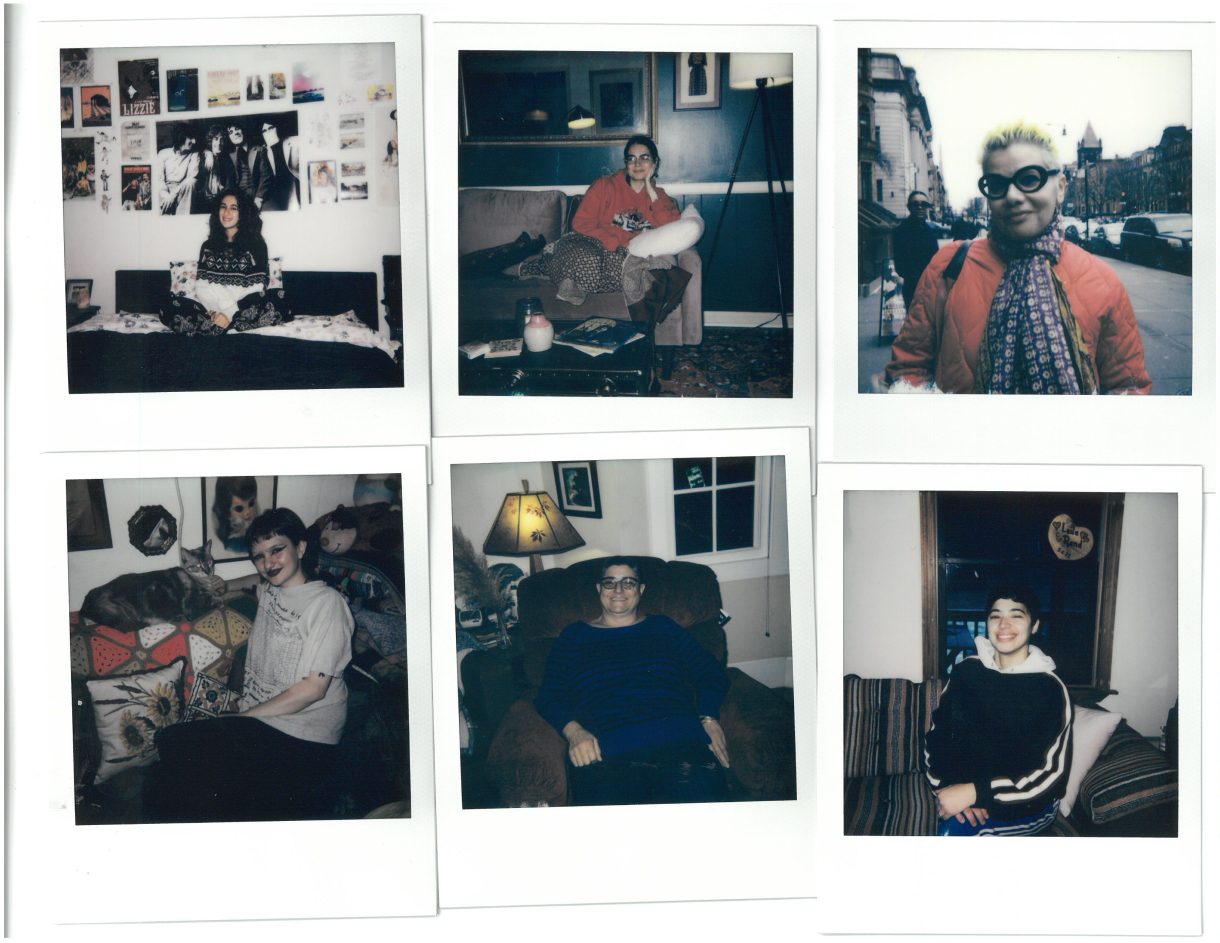
Meaningful archival work isn’t merely involved with the previous. It’s involved with the previous, current, and future unexpectedly. Archiving is an lively course of. And queer archival work is particularly very important, as a result of it might probably make clear lives and identities that needed to be hidden publicly. Archives can typically work towards filling in historical past’s gaps.
Through their work with Hayati, Noor certainly was beginning to fill in gaps, however she shortly realized that discovering queer SWANA sources was tough. The majority of what did exist already centered or predominantly featured homosexual males. Noor was blissful this illustration was on the market, however she knew it wasn’t the entire image and didn’t get at a number of the nuances of distinction inside queer SWANA id.
A month after transferring to New York to proceed the mission, the genocide in Palestine escalated.
“I principally dropped every little thing I used to be doing and simply dedicated full-time to content material creation,” they are saying. “I’m not making any cash off of it or something, however I simply was like, ‘that is what I must be doing.’”
They found the Lesbian Herstory Archives whereas wanting up museums to go to (Noor excitedly and charmingly refers to themself as a licensed Nerd™ all through our interview).
Founded in 1974 by lesbians of the Gay Academic Union, the Lesbian Herstory Archives in Brooklyn are fully volunteer-run and the most important lesbian archives within the world. Until the Nineteen Nineties, the archives had been on the Upper West Side in Manhattan, housed in co-founder Joan Nestle’s precise residence. They had been moved to a brownstone in Park Slope bought by the founding group — which along with Nestle included Deborah Edel, Sahli Cavallo, Pamela Oline, and Julia Penelope Stanley.
For their first few months in New York, Noor was so immersed in activism for Palestinian liberation that they didn’t have an opportunity to go to the archives. They lastly made time to go on their birthday. “I used to be identical to ‘I have to do one thing that brings me pleasure. And the factor that’ll carry me pleasure proper now’s to examine lesbians.’”
“I’m a homosexual little one of immigrants from a white conservative city. I spent quite a lot of time in libraries,” she provides. Libraries had been the place she found herself and felt protected, a sense that has lasted into their grownup life as they’ve sought out the security and luxury of archives, of collections like the private ones she retains.
So Noor went to the Lesbian History Archives and did what they at all times do in queer areas: seemed for SWANA illustration, to see lives like their very own. Sometimes, they’ll get fortunate and discover one. As in, actually, one.
She says it was form of like that on that first go to. She discovered one Syrian lesbian folder. Noor is half Palestinian, on their mom’s facet, and half Syrian, on their father’s facet. “So to discover a Syrian factor, I used to be like ‘Oh my god, Syrian lesbians!’”
It was one piece of paper that detailed a extremely tragic story. And whereas they had been blissful to see any illustration in any respect (“Okay, that is true and actual and I find it irresistible”), they had been longing for one thing past that one tragic story. They’d gathered extra sources for Hayati than the huge Lesbian Herstory Archive had. Another hole was coming into focus.
Noor returned to the archives on Nakba Day, the annual remembrance each May 15 for Israel’s violent expulsion of greater than 700,000 Palestinians from their properties and communities. Noor says they had been attempting to preemptively self-care on a day after they knew they’d be much more upset than regular. Self-care can appear like quite a lot of issues. For Noor, it appears to be like like being within the archives. “This is simply how I take care of issues,” they are saying, “by being a nerd.”
While there, they overheard another volunteers say “Dykes for Palestine.”
“I whipped my head and I walked over and I principally was identical to ‘Hey, I’m a Palestinian dyke. Do you’ve any of these to do any of this work? Because that is form of my entire schtick.’”
It was a real “proper time, proper place” form of second and a pure subsequent step for Noor. “I’ve simply felt this accountability nearly, like this actually incessant want and accountability to do that work,” Noor says. “Sometimes it looks like sure issues are being finished, just like the ancestors are calling you to do it. Hayati felt like that, and I feel this looks like that, the place I simply know in my being, I’m like, ‘I must be doing this.’”
That sense of calling and function is palpable simply from speaking with Noor, whose whole power lights up after they’re speaking about particularly nerdy shit. In speaking with them, it’s additionally simply so clear to me simply how considerate and intentional they’re with each their work as an artist and activist. Their fundamental creative apply is images, however they’ve labored in “a bit little bit of every little thing artistry-wise.” And then with regards to activism, they’ve “been concerned in quite a lot of actions by means of time.” When Noor began in advocacy, they had been primarily organizing round disordered consuming. They struggled with bulimia from ages 12 to 18 and began talking about psychological well being actually younger. While nonetheless actively coping with disordered consuming, they had been speaking about restoration to assist others.
Revisiting my dialog with Noor, I maintain interested by the idea of queer time and the way the collision between the previous, current, and future is mirrored in queer archival work. You can be within the throes of disordered consuming whereas nonetheless advocating for and elevating consciousness about restoration for others. Queer liberation is not a straight line — like how ACT UP NY, which Noor is concerned with, is bringing again its messaging of SILENCE = DEATH from the AIDS disaster and reapplying it to the genocide in Gaza.
Noor says they grew out of psychological well being advocacy after which shifted priorities. “And I at all times embrace all of my prior advocacy sooner or later work I do,” she says. Again, queer time.
They began making academic movies on TikTok about queer SWANA id and expertise in 2021, and after October 2023, they had been doing full-time information content material about Palestine day by day.
The Lesbian Herstory Archives offered a brand new alternative to construct on the work Noor was already doing. Since 1948, as an occupying power, Israel has deliberately destroyed archives, libraries, universities, household records, and one-of-a-kind paperwork in Palestine. This isn’t a brand new phenomenon however moderately an ongoing one, one which haunts Noor and numerous others who’ve been impacted by it.
The significance and grief of misplaced objects is deeply private for Noor. The place the place their father’s from in Syria has been severely impacted by the conflict there, and his childhood residence was demolished.
“My dad’s an enormous audio file music nerd, and I inherited that from him,” Noor says. “And he’s a music nerd in an old style method. So I’m form of old-timey. I like vinyls and cassettes, and he used to gather these.”
Noor was born in California. Her dad and mom had been immigrants in a really white suburb the place there weren’t many different immigrant dad and mom. Other children would inform tales about their dad and mom residing in LA within the 70s and seeing Led Zeppelin for $10. “And I’d be like, ‘oh my god, that’s so cool. My dad raised me with Led Zeppelin. He was in Syria, they usually didn’t go there, however sick. And I had this factor rising up the place I used to be identical to ‘Dad, I need your whole vinyls. All of my mates get all of their dad and mom’ vinyls, and I need them.’ And he needed to be like ‘Hey Noor, I actually don’t know in the event that they exist or not. I don’t know if my dad and mom had been capable of evacuate all of my cassettes and vinyl records from our childhood residence, which I do know has been demolished.’” From a younger age, Noor needed to reconcile with that a part of their Syrian id. You may not take into consideration vinyl collections and cassettes if you first hear about destroyed properties, but it surely’s all a part of how tradition is destroyed.
Noor was raised to protect tradition and custom even with out anyplace to place it. Her grandparents on her Palestinian facet had been exiled, and so was her mom and all of her siblings. They’re all barred from returning to their homeland. The solely method Noor may be capable of go to Palestine at some point is because of their American citizenship. Archiving within the face of exile is tough — and purposefully so. Barring entire households from returning to their very own properties, their very own land, is an try to expel their customs, traditions, and sure, private issues.
“We come from not solely historical cultures, however we come from historical cultures that care about preservation,” she says. “We come from cultures the place you realize tales that your great-great-great-grandmother instructed you. Or your great-great-great-great grandmother, after which handed on.”
I’m reminded of Elena Dudum’s essay for The Atlantic, “I Am Building an Archive to Prove That Palestine Exists,” through which she writes of her father amassing 100-year-old magazines about Palestine, about her grandfather reciting his family tree to her father when he was a baby. Elena’s relations begin sending her their very own private collections of Palestine. “I’m realizing that this archiving isn’t solely work I’ve to do, however one thing I get to do,” Elena writes. And additionally, “Our liberation might ultimately hold on these numerous archives.”
The intentional destruction of paperwork and records in Palestine has ripple results outward, making accessing and preserving records about these cultures and histories tough in every single place. When Noor was in faculty and going by means of the method all new faculty college students do of studying the right way to navigate databases, do analysis, and use key phrases, she instantly realized it was tough to search out educational sources that mirrored her personal identities. “Because of ten million layers of issues,” she says. “Because of colonialism, as a result of individuals have hidden these sources, due to my college being Zionist, a billion issues.” The forces that exiled her household and that prevented her from discovering educational sources reflective of her intersectional identities are all finally the identical.
After October, Noor was so immersed in creating content material concerning the genocide and doing activism within the streets — each, in their very own methods, a part of contributing to a residing archive — however she was feeling helpless, particularly concerning the everlasting losses of household records and one-of-a-kind paperwork occurring on an enormous scale.
Again, because the little one of an exiled individuals, this sense was deeply private and complicated. Noor’s grandfather is from Gaza. “I’ve this explicit tough guilt that I bear the place I don’t know what number of members of my household have been killed, as a result of we had been displaced,” they are saying. “So I do know I’ve household there, I do know I’ve direct household there. I don’t know their names, and I don’t know what number of of them have been killed, and I’ve by no means met them.”
Noor spoke particularly about this tough grief of not understanding what number of relations have been killed on the protest of Outright International this June. They’d discovered an inventory of names of individuals killed in Gaza from October to January 31 that included over 40 names of individuals from her household. That was simply up till the tip of January. “And issues have escalated rather a lot since then,” Noor says.
All of those contexts — their Palestinian and Syrian roots and the displacement skilled by either side, their consolation in archives and libraries, their want to protect and acquire every little thing from knicknacks to books to tales, their Hayati mission, and their grief over mass destruction of tradition and records — led Noor to the Lesbian Herstory Archives.
“This is it,” they are saying. “This is the most important archive of and by lesbians in all the world. I’ve been searching for to attempt to protect these from our id, and now I bodily have an archive that I can try this in.”

Having minored in ladies’s gender and sexuality research, Noor says they care about queer historical past normally. “Not simply SWANA, simply historical past, interval,” they are saying. “But with that, SWANA individuals aren’t emphasised in that or included in that. So that’s why I’m making it a degree to so particularly discuss concerning the identities I do…But it’s at all times grounded in collective liberation and in our collective liberation historical past at massive.”
Just like as Elena Dudum writes in her Atlantic essay that Palestinians need to show their very own existence, Noor talks of how that is very true for queer and trans Palestinians and of the flawed “logic” of sure Zionists that the existence of homophobia in Palestine justifies genocide. “It’s bizarre that individuals are like ‘you should die as a result of your individuals are homophobic,’” Noor says.
“Make it make sense,” Noor and I each say back-to-back.
“It was colonial white individuals who enforced [a gender binary and condemned homosexuality], not simply on SWANA, on each tradition that priorly had been very queer in numerous methods,” Noor says. Not to say that we lived in some utopia the place there wasn’t sexism, however we didn’t have concepts of binary.”
“As anyone who’s queer and Palestinian and Syrian, when individuals throw homophobia in my face and it’s a white particular person, I’m like, ‘I’d such as you to go a pair generations up as a result of it’s your fucking fault that I’m coping with this shit.’”
Queerness and gender nonconformity certainly have at all times existed, everywhere in the world. Kit Heyam’s guide Before We Were Trans: A New History of Gender complicates our understanding of gender and trans id all through historical past. Samra Habib’s memoir We Have Always Been Here equally works towards an understanding that queer Muslims have at all times existed, its title a succinct and highly effective manifesto of existence.
“We had been so homosexual,” Noor says of distant generations. “And that’s why I feel I’m so obsessed with it, as a result of the extra sources I discover, the gayer it will get.”
When it involves true liberation, attending to the basis of homophobia is extra essential than simply speaking about homophobia and its impacts.

Archival work is particularly pressing on this period of social media, as a result of there’s a false notion that issues are being saved and recorded on a regular basis on these platforms. But you don’t personal these records; the social media firms do. And as we’ve seen with rampant shadowbanning of accounts posting concerning the atrocities in Gaza, every little thing from the biased algorithm to what might be shared and disseminated is managed by, finally, those self same silencing and erasing forces that search to impede or destroy archives.
Even newspapers, typically regarded as an correct historic report for various time intervals, can’t at all times be trusted to replicate actuality. I’ve written earlier than about the failures and flaws of journalistic “objectivity,” which regularly harms queer, trans, and in any other case marginalized teams by placing forth biased dominant ideologies below the guise of objectivity. Lots of content material creators like Noor have collected and offered knowledge and evaluation of the biased methods mainstream newspapers have lined what’s occurring in Gaza (which, after all, these newspapers refuse to name a genocide). In a number of generations, if somebody had been to look again at our present occasions purely from the attitude of the New York Times, they’d get a really restricted — dangerous, even — image. If we glance again in historical past, white newsrooms everywhere in the nation failed totally of their reporting on lynchings of Black individuals (in 2018, a newspaper in Montgomery even apologized for its biased, incomplete protection of lynchings, however that’s an anomaly).
“Just normal author integrity, journalistic integrity, I don’t know what the fuck occurred to that,” Noor says.
Even although she knew how biased the media is with regards to Israel and Palestine, Noor admits they had been shocked on the protection instantly after October. “Even although I knew that these methods had been the best way it was, I used to be nonetheless identical to ‘wow, y’all are actually simply full chest publishing this,’” they are saying. “It simply felt bizarre, as a result of if you research it, you’re like, ‘Oh, this was in 2000, so issues had been completely different then.’…And then now, it’s like, ‘Okay, properly, it’s been 24 years, and also you’re nonetheless being fucking bizarre.’ So it seems you’re simply bizarre. Okay. Good to know, I assume.”
This is, once more, the place archives can right the report. Because with archives, particularly these contained in and guarded by the Lesbian Herstory Archives, there’s an emphasis on individuals preserving their personal tales as a substitute of those media firms who’re attempting — and failing — to inform the tales of others. Archives can even protect conventional records like newspapers particularly to present their biases.
As Noor explains it: “Things have simply gone in a method the place I really feel like issues like archives or libraries are overshadowed or seen as unimportant or outdated or ineffective, when it’s like, no. If something, this strengthens issues like social media or strengthens sources on the web or newspaper clippings, as a result of we will put all of that into an archive and have report of all of it after which see, ‘Oh, that is how biased it was within the New York Times, but additionally, Autostraddle lined it in this method.’ And then you’ve all of it in a single place. That’s actually essential, as a result of we additionally don’t know if the web’s going to nonetheless be round or if individuals may have entry to that or in the event that they’ll be capable of know the right way to search issues.”
We see this impression of archival work on a regular basis with regards to queer and trans historical past. The Lesbian Herstory Archives are a chief instance of how archives can step in when different establishments and methods fail us. Throughout historical past, queer books have been banned or destroyed. So many queer tales had been misplaced earlier than they could possibly be recorded. Mainstream media lies about queer and trans individuals on a regular basis. Again, take a look at the AIDS disaster for a concrete and apparent instance. Or, look presently on the media’s framing of healthcare for trans youth. Queer archival work is at all times about preserving pasts which were intentionally hidden or manipulated. Palestinian queer archival work is working in opposition to much more instruments of erasure.
Noor is present process coaching to digitize supplies on the archives in order that they received’t simply be housed in a bodily place — Noor, once more, reiterates her love of the analog and the bodily — but additionally digitally so, within the occasion that something occurs to the Lesbian Herstory Archives, there will probably be digital backups.
As for the way this Lesbian Herstory Archives mission will work, it’ll be a two-pronged strategy of Noor conducting analysis particularly round SWANA queer id after which individuals amassing and placing forth their very own private archives. This builds on the work the Lesbian Herstory Archives was based for: permitting queer ladies and gender nonconforming individuals to gather and report their very own tales. Individuals can create their very own folder and file within the archives and add to it indefinitely in addition to create particular guidelines for what the archive must be used for within the occasion of their loss of life. Some individuals have a folder of each enterprise card they’ve ever had, documenting all the roles they’ve held by means of the years. Others have lots of of containers of every little thing they’ve owned. The archives acquire 2D and 3D supplies, together with digital information, VHS tapes, CDs, DVDs, and cassettes. Drafts of artistic work, handmade objects, handmade t-shirts, images, journals, blogs, ephemera, zines, all of this stuff and extra might be collected.
“People will be capable of autonomously, their very own self, submit what they wish to submit,” Noor says. And that autonomy is particularly significant to them as a SWANA particular person, as a result of quite a lot of occasions SWANA tales are instructed by individuals exterior of the id and, whether or not deliberately or not, it might probably result in Orientalism. People will submit what they wish to submit, after which Noor’s solely involvement is on the technical facet of processing the supplies and archiving them appropriately.
This is a eternally mission, not some one-off stint. “Basically, I bought accepted to be a volunteer indefinitely,” Noor says. “And I instructed them, ‘Are you positive? Because I’m going to be right here until I die.’ And they stated, ‘We have lots of people who try this.’”
Noor’s certainly planning many years into the longer term for the varied phases and implementations of this mission. On the brief time period, they’re beginning with Palestinians in New York or Palestinians who’re keen to commute to New York to archive their supplies in particular person. Palestine is at all times, at all times centered of their work — going again to Hayati — and in how they discuss every little thing. “I’m going to start out with Palestine,” Noor says at a number of factors of our dialog.
There’s a Google doc people can fill out to enroll in an in-person coaching. There are methods already in place to anonymize the collections. “And that’s an enormous, big factor with regards to queer SWANA stuff, is security, privateness, having the ability to management who sees what,” Noor says.
If individuals wish to maintain their archives fully personal and inaccessible to the general public and wish to simply realize it exists on the market, that’s an possibility. “But additionally, in case you are anyone like me who’s identical to, ‘Not solely do I wish to be archived, however I need everybody to fucking know, and I need it to be public. And if nobody is aware of me for the rest, I simply need them to know an Arab lesbian nerd who cared about this shit was round,’ that’s my legacy and purpose. I can try this,” Noor says.
People will be capable of search for Noor’s file and discover no matter she desires to place in there, whether or not it’s written work, transcriptions of speeches they’ve given, and even their jackets.
Following the preliminary first section of the mission focusing particularly on Palestinians in or close to New York, Noor plans to develop. “I’m hoping that this can change into one thing {that a} fuckton of Arab lesbians are simply in there doing,” they are saying. They wish to open it as much as the entire world.
On their particular person analysis facet of the mission, Noor will probably be build up and including to the Lesbian Herstory Archives’s databases to incorporate extra of the SWANA sources Noor has been amassing by means of the years and can proceed to dig up. They’ll be including new topic information and including to present topic information within the archives. “The topic information are literal bodily information and these cupboards,” they are saying. “It’s so enjoyable. I find it irresistible a lot.” The topic information are sorted by particular phrases, and it’s implied that the phrase “lesbian” follows. So, for instance, there’s an Arab lesbians file. There’s a just lately added Palestinian lesbians file. There’s even a file for astrology.
“So principally, the purpose is to get any and each supply that we will about id on this archive, simply to have this centralized place,” they are saying. “And I’m not saying that is the right remedy. I simply know as anyone doing this work that there hasn’t been a spot that has occurred.”
This work will then radiate outward to different establishments. Noor will probably be serving to create a analysis information that may work towards updating precise library and archive databases past the Lesbian Herstory Archives with the sources they’ve been amassing. They hope to get different researchers and lecturers concerned, too. “We’ll be capable of do issues like create our personal key search phrases,” they are saying.
This is crucial, as a result of key phrases typically replicate biases and restrict one’s means to simply analysis sources pertaining to marginalized identities. When Noor was engaged on Hayati, she needed to search “actually annoying issues,” like “gay oriental ladies” simply to search out sources about homosexual Arab ladies. She’ll be including key phrases to the database and analysis guides, in order that if you search for ‘queer SWANA,’ these sources will come up. “That will probably be so revolutionary, I really feel,” Noor says.
On that be aware, Noor acknowledges that getting access to databases in greater schooling establishments is a privilege. Google, in idea, is extra accessible, but it surely’s dominated by issues like search engine marketing, which isn’t conducive to analysis or useful resource sharing.
“What I’m attempting to fill is that hole,” Noor says. “I don’t need simply nerds who care about digging by means of information to search out stuff about homosexual Arabs. I need all individuals to search out stuff about queer SWANA of us. Just having the ability to search it up on Google and one thing comes up, I don’t suppose that must be so fucking revolutionary, however proper now, it’s form of tougher.”
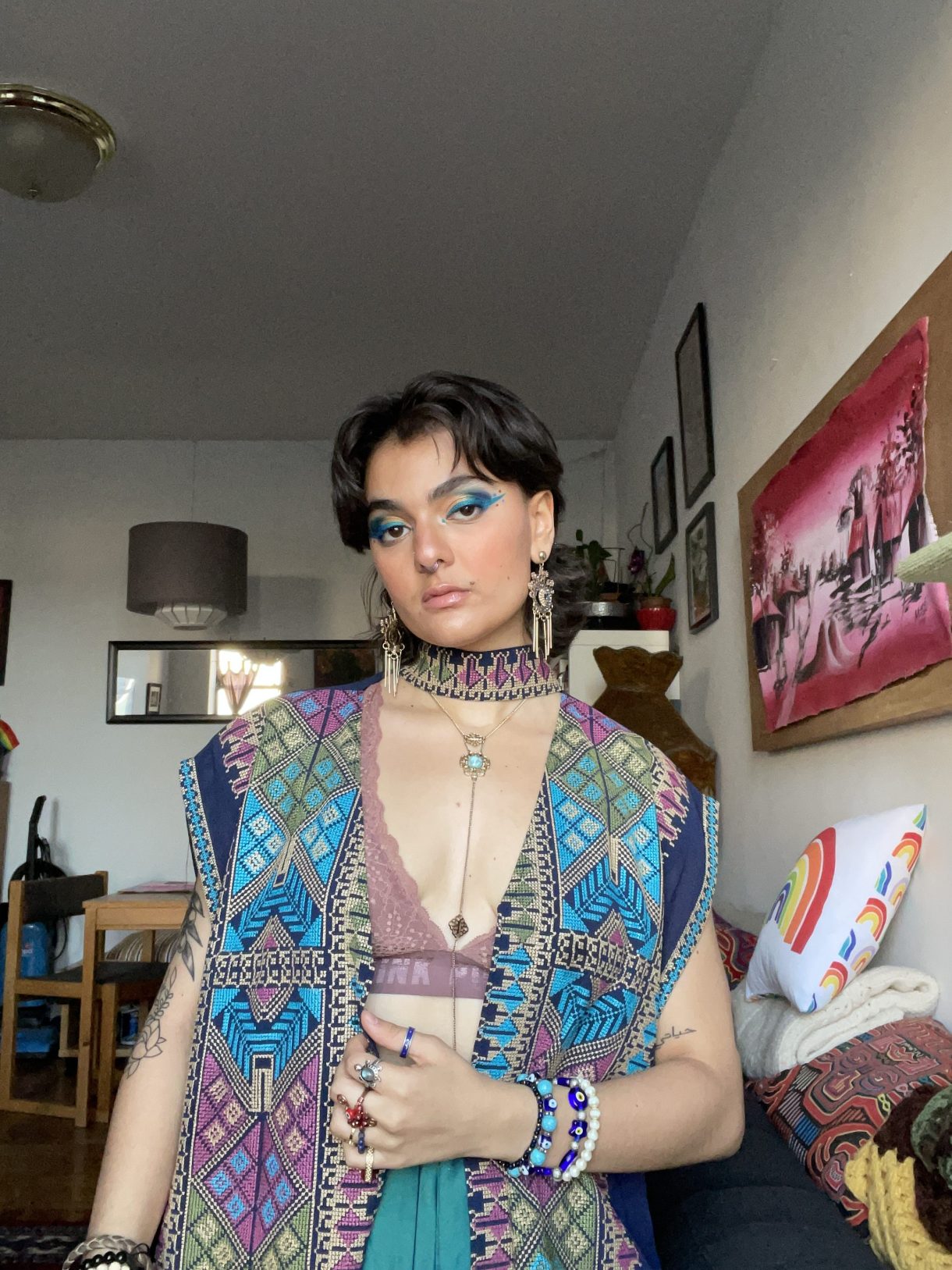
Noor, a licensed music nerd, quotes Nina Simone to me: “An artist’s obligation, so far as I’m involved, is to replicate. the occasions.”
“For me, it’s all intrinsically associated,” Noor says of their activism and artwork. “My artwork is an embodiment of me and what I imagine in and the issues I wish to do. And as such, it embodies all of the issues I care about and advocate for as properly.”
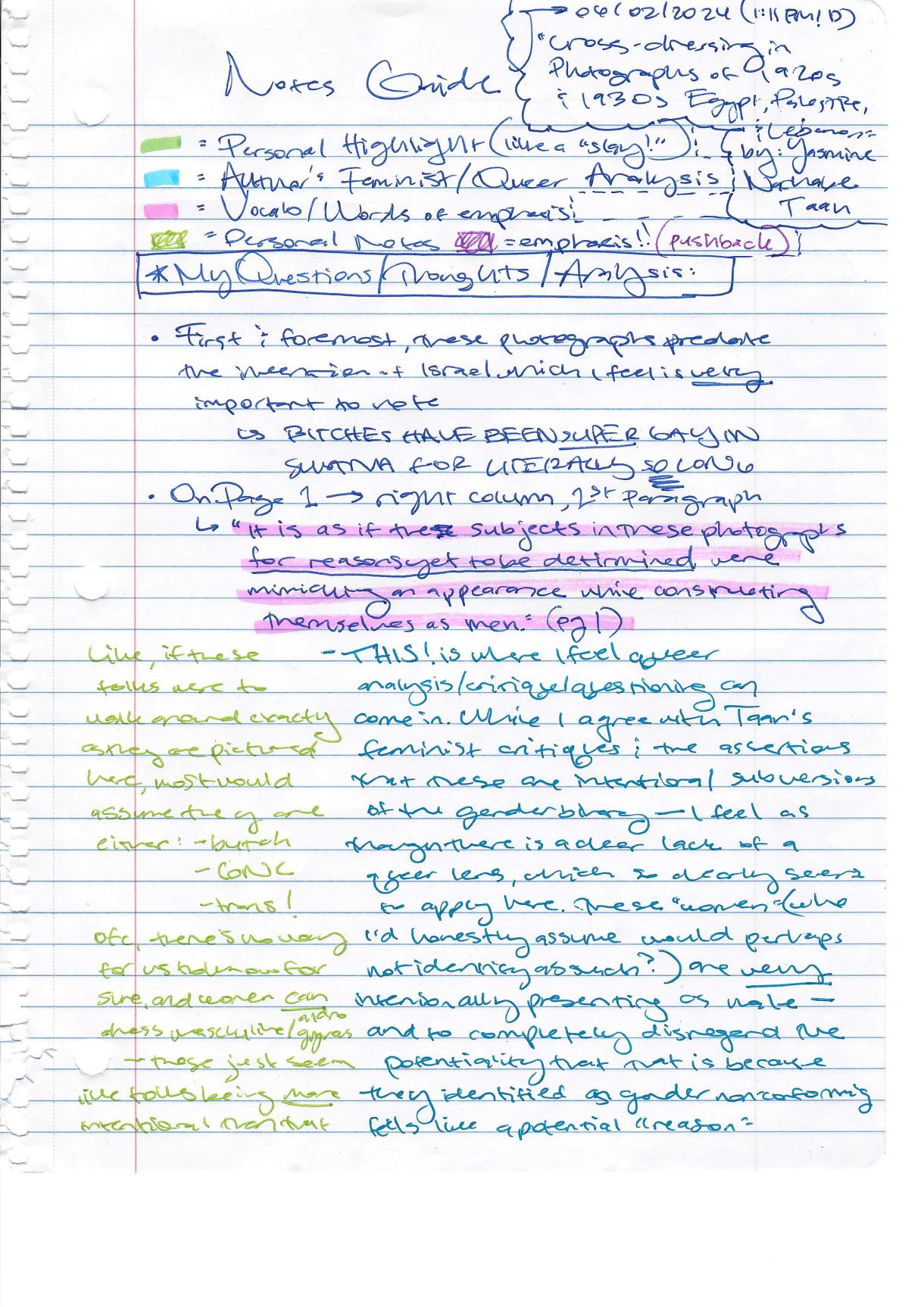
Hayati operated as each a images mission and an ethnography mission, completely encapsulating this mixture of artwork and advocacy. Even Noor’s Instagram grid equally presents a dynamic mixture of all these threads of their work: artwork, advocacy, activism, and archives. There’s a mixture of selfies (gotta feed that rattling algorithm), fundraisers, protest pictures, reposts of oldsters on the bottom in Gaza, and even a bit collection referred to as “Noor’s Notes on,” the place Noor posts scans of annotated historic paperwork pertaining to queer SWANA expertise, her handwritten notes typically increasing on and filling within the gaps of the paperwork. Take a glance (click on on a picture to make it bigger):
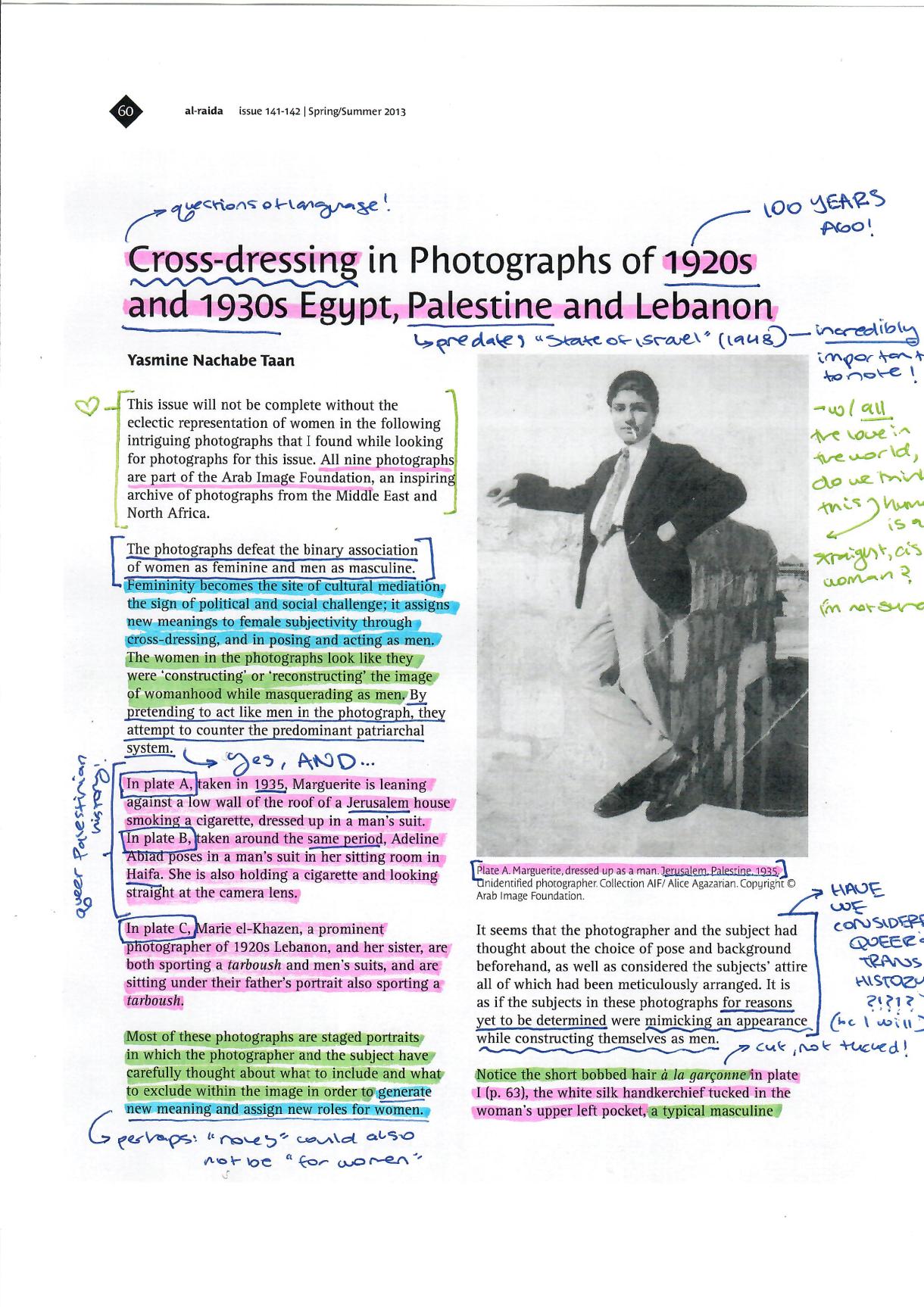
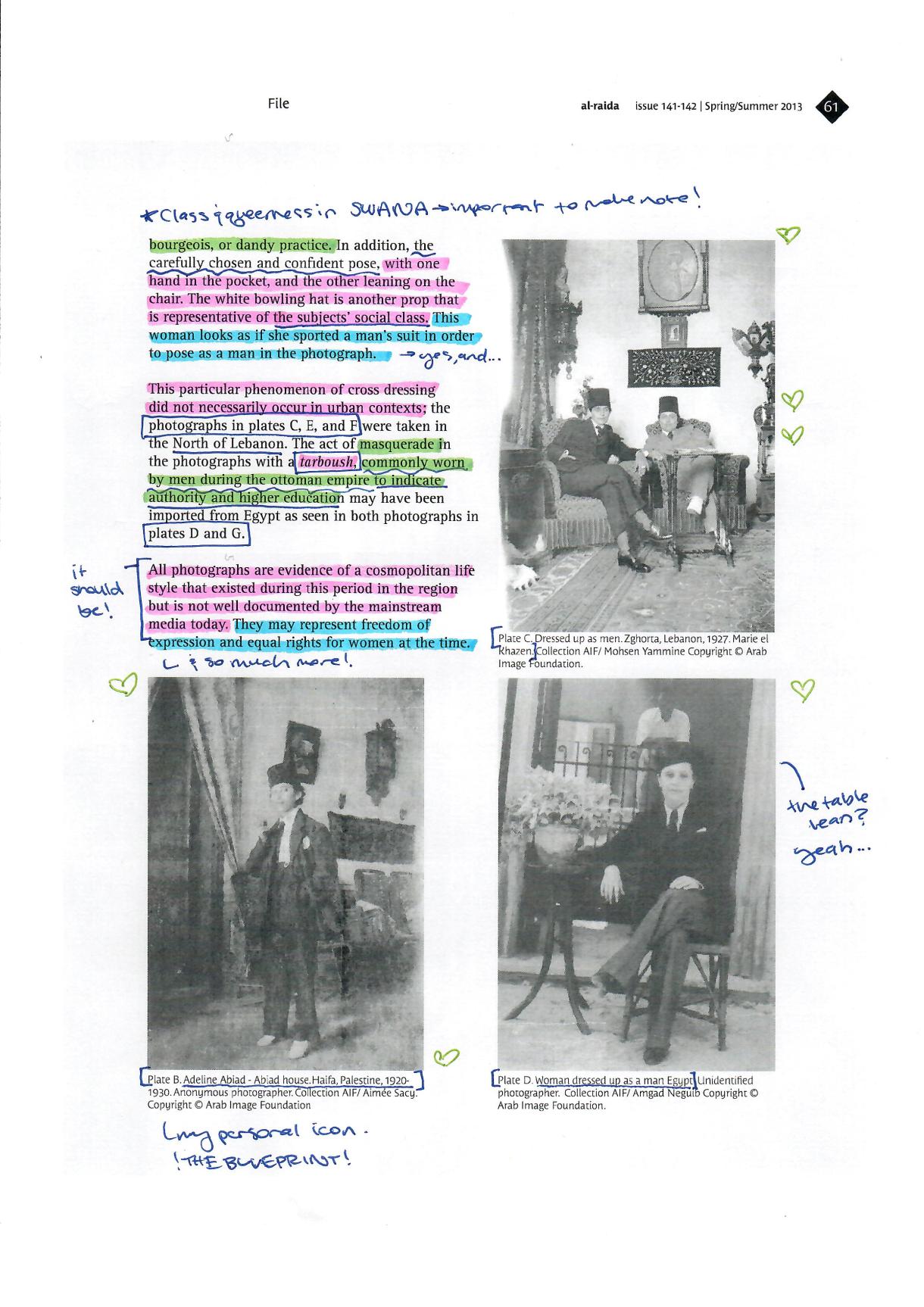
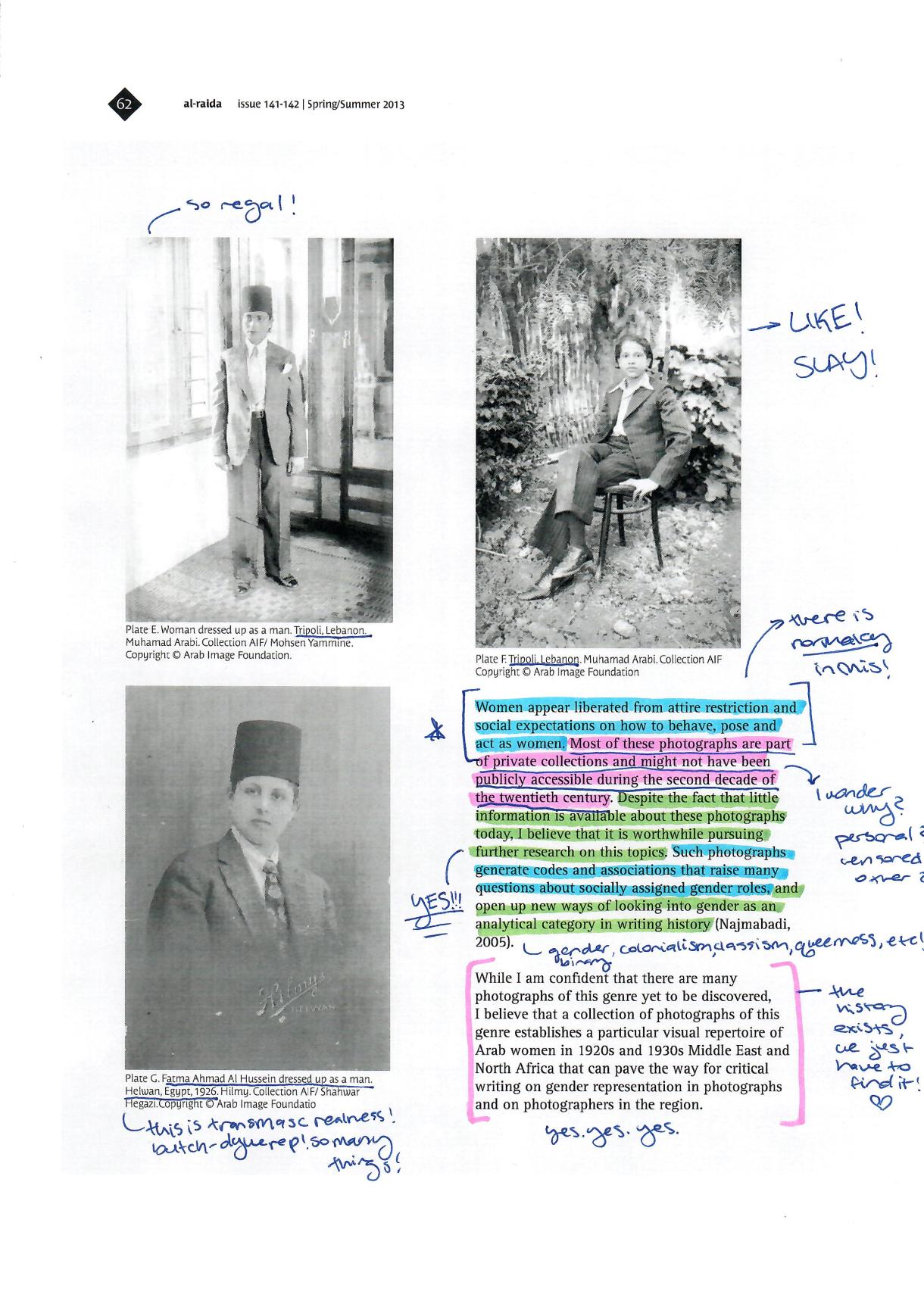
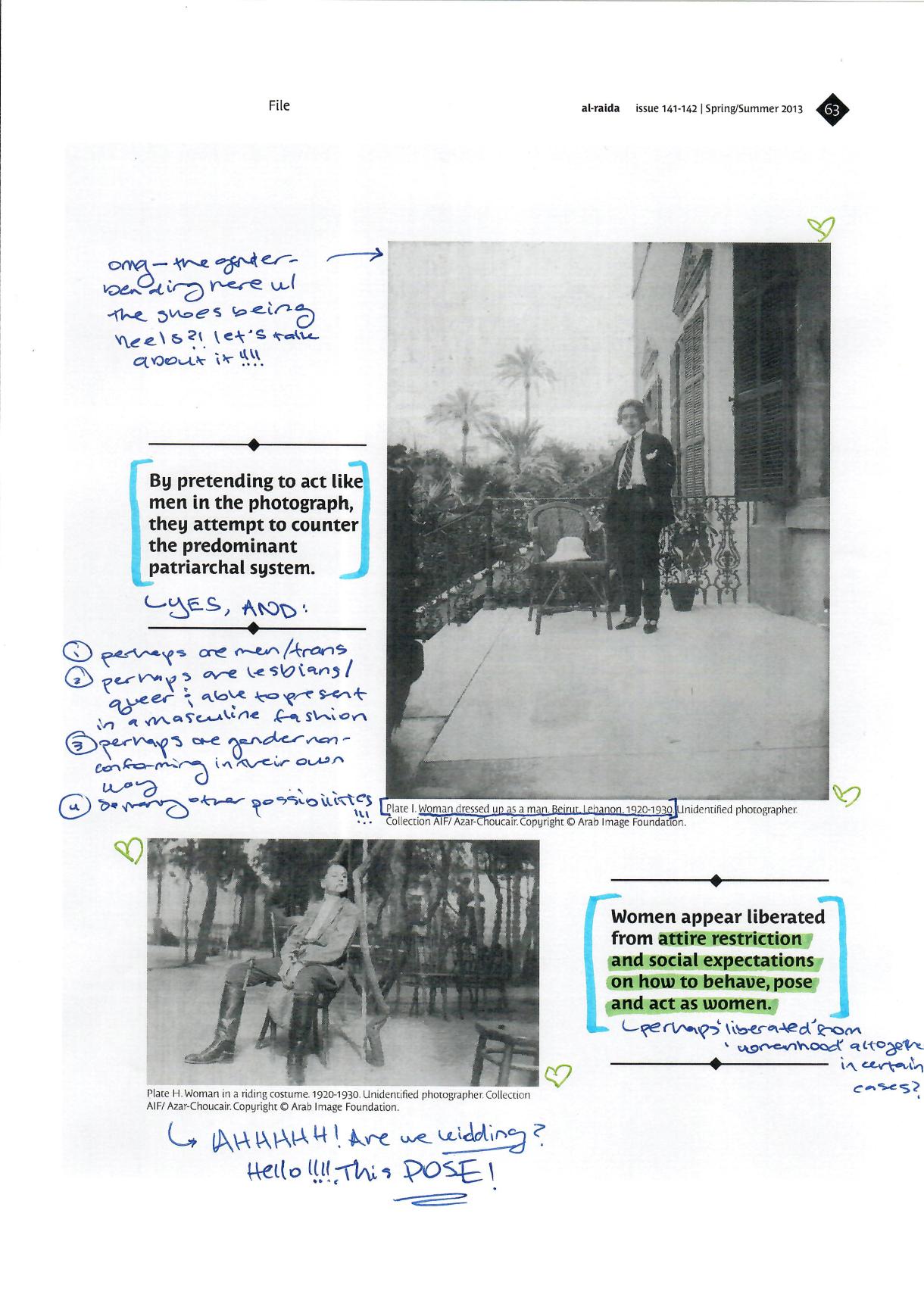
Noor does hope to at some point see the issues which were taken from their household. “I’d like to go to Gaza,” they are saying. They wish to see if their grandfather’s home continues to be there, although they admit they don’t have any method of understanding if it may presumably be. They wish to meet their household there.
“Not understanding about my household due to the best way we’ve been displaced, after which additionally due to that, not understanding what has been destroyed or not, I’m simply left to sit down and surprise,” they are saying.
“Will I ever get my dad’s vinyl records? I don’t know. I hope fucking so. I’d actually like to play a Pink Floyd report from Syria within the 70s.”
Before you go! Autostraddle runs on the reader help of our AF+ Members. If this text meant one thing to you at this time — if it knowledgeable you or made you smile or really feel seen, will you take into account becoming a member of AF and supporting the individuals who make this queer media web site potential?
Vinyl
through Autostraddle https://ift.tt/7VbTms4
July 4, 2024 at 04:07PM
-
Product on sale
 Audiophile Vinyl Records Cleaning BundleOriginal price was: €69.90.€59.90Current price is: €59.90. incl. VAT
-
Product on saleEasy Start Vinyl Records Cleaning KitOriginal price was: €69.90.€59.90Current price is: €59.90. incl. VAT
-
Vinyl Records Cleaner Easy Groove Concentrate€34.95 incl. VAT
-
Easy Groove Super Set€199.00 incl. VAT
-
Easy Groove Enzycaster – vinyl records prewash cleaner€34.95 incl. VAT
-
Easy Groove Extreme MK. II- vinyl records prewash cleaner€45.00 incl. VAT
-
Vinyl Records Cleaner – Easy Groove Virgin Concentrate€35.00 incl. VAT
-
Easy Groove Spray&Wipe vinyl records cleaner€34.95 incl. VAT







