
World News
A Digital Dance from Esoteric Japan
A Digital Dance from Esoteric Japan
Reviewing one other tackle a longstanding orchestral struggle horse
There’s a sure romance about audio and vinyl from Japan. For tools there’s a well-deserved reverence for the construct high quality and dedication to excellence from the engineers, and for vinyl records we’ve lengthy been fascinated by boutique audiophile pressings from the island nation, significantly I’ve lengthy held a steadfast love for King Records’ “Super Analogue Series” of Decca classical reissues.
Classical vinyl reissues from Japan have sadly dried up over time because the classical audiophiles there have turned to CDs and notably SACDs increasingly. One firm producing excessive finish classical remastering’s on SACD in the previous couple of a long time has been Esoteric. The Tokyo-based firm, based in 1987, has made a reputation for itself not solely producing excessive finish digital shopper audio tools, but additionally releasing their very own line of SACDs remastered on their very own flagship tools. For repertoire, Esoteric all the time picked the crème of the crop, well-known audiophile gems from the golden age of classical recording, reissuing many titles from Decca, EMI, Philips, and Deutsche Grammophon.
I’ve collected many Esoteric SACDs over time, they intrigued me with their distinctive jackets, well-detailed mastering chain, and naturally their extremely restricted nature on this facet of the pacific, promoting out in a short time and commanding giant sums on the secondary market. In complete I’ve about 13 releases from the corporate on SACD, and with every of them I’ve been extremely impressed, significantly on recordings of which there was room for enchancment reminiscent of Decca’s early digital recordings of the Eighties which by no means sounded fairly proper to my ears.
The firm experimented with a number of vinyl reissues earlier than, again in 2009 and minimize by Tohru Kotetsu, however little has been written about these releases and I’ve but to listen to one. But final 12 months, Esoteric determined to relaunch their vinyl collection, now known as the “Masterpiece Collection” with a set of a few of their “biggest hits.” These included Decca favorites like Anatole Fistoli’s properly regarded Swan Lake studying, in addition to Kertesz’ well-known New World Symphony, and Karajan’s Dvorak 8. Also, David Oistrakh’s rendition of the Brahms Violin Concerto with Szell and Cleveland from the EMI catalog, after which in fact the 2 recordings I shall be inspecting on this evaluation. But earlier than I spill the beans, let’s discuss what makes these records distinctive within the pantheon of classical vinyl reissues.
Esoteric have assembled the mastering chain for this new collection in-house, whereas slicing is dealt with by Katsuhoshi Kitamura at Mixer’s Lab. Esoteric declare the “unique grasp tapes” are the sources for these new reissues, nonetheless it’s unclear if that means new scans of the tapes for these cuttings, or if they’re utilizing the identical scans used for his or her earlier SACD launch, additionally extra clarification about how these scans had been obtained and what on format or bitrate can be useful. However Esoteric are very upfront about these being digital remasterings, and the English-language promotional supplies go to nice lengths to explain their tools and course of.
These albums are remastered on the “Esoteric Mastering” chain. This contains a lot of the corporate’s personal tools such because the Master Sound Discrete DAC, and Master Sound Discrete Clock. Esoteric truly hauled their very own tools over to Mixer’s lab to run it on to the studio’s Neumann SP79C slicing console, bypassing the console’s equalizer. The sign is then despatched to a VMS80 slicing lathe, of which apparently solely two exist in Japan, mounted with an SX74 slicing head.
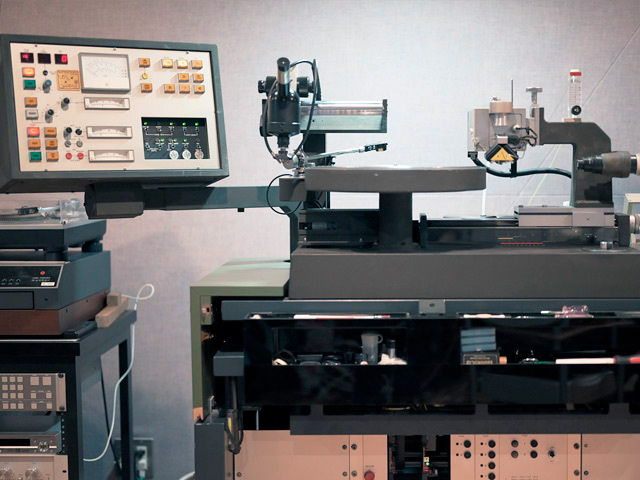
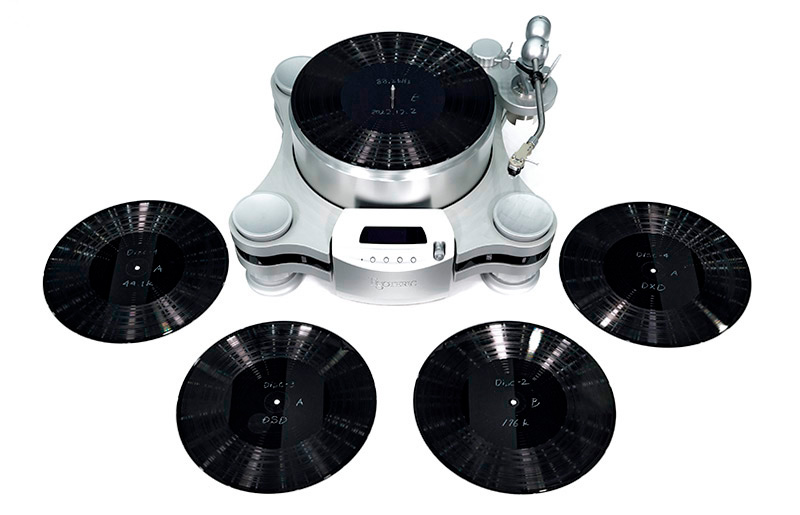
Esoteric declare that they’d make quite a few lacquer cuts of the identical LP to take again to the studio and pay attention on their reference system consisting of their Grandioso T1 turntable and Grandioso C1X preamplifier. This can be a comparatively distinctive methodology and it’s unclear to me if the Esoteric staff are then plating lacquers which were performed on a turntable, or if they’re then slicing new lacquers based mostly on their listening notes. Either means, a bit totally different than the conventional route of sending off check pressings. The firm doesn’t immediately state the place these records are pressed, however judging by the inside sleeve they arrived in and the truth that all the pieces on the product states “made in Japan”, I might guess Sony’s new plant is the offender. That’s excellent news as a result of they’ve been producing a few of the highest high quality pressings on the market, giving RTI and QRP a run for his or her cash.
I bought and listened in depth to 2 of those “Masterpiece Collection” reissues for this evaluation, each legendary recordings in their very own proper and each recorded in 1960: Ernest Ansermet’s Decca recording of the ballet Three Cornered Hat by Spanish composer Manuel de Falla, and longtime Leningrad Philharmonic conductor Yevgeny Mravinsky’s tour de power recording of Tchaikovsky’s Symphony No. 5 in E minor on Deutsche Grammophon. The first is a well known favourite of audiophiles for its prime Decca tube sonics, the opposite was by no means thought of a sonic marvel however a ferocious and historic efficiency that put Russian orchestras on the proverbial map. I’ll get to the Tchaikovsky in an upcoming evaluation, however for now the Falla takes middle stage.
There have been quite a lot of notable pressings of this recording over time. The unique wide-band Decca/London pressings command excessive greenback, with NM copies of the London unique alone reaching $200 on todays market. Alas I don’t personal this urgent, nor do I personal the 1997 Speakers Corner. What I do have although isn’t any slouch; the 2011 Original Recordings Group 45rpm version. This was minimize by Bernie Grundman from the unique grasp tapes and pressed at RTI. It’s a urgent that has been hailed repeatedly together with by our host Michael Fremer. If the brand new Esoteric digital minimize was going to be examined, this urgent would offer a path by hearth.
The piece on present here’s a ballet in identify solely, Three Cornered Hat was commissioned by Sergei Diaghilev and the Ballet Russes (the ballet firm finest recognized for premiering the notorious Rite of Spring) after being launched by the one and solely Igor Stravinsky. Falla has the excellence of being Spain’s most well-known composer each on the time, and at the moment within the trendy age. Falla composed a piece that’s a lot much less a ballet than a standard Spanish dance transposed by the lens of a ballet construction. The opening introduction contains percussive results from the dancers reminiscent of stomping, clapping, and shouting. The musical acts are interspersed with “Cante Jondo” by soprano Teresa Berganza, a standard vocal prelude in Spanish flamenco music. All of this can come throughout as very uncommon for listeners anticipating “ballet music”, however in no way stunning in the event you go in anticipating flamenco set to symphony orchestra. All these results in addition to the dynamic swings that happen naturally on this music create the proper situations for a hi-fi showstopper and that’s simply what the Decca engineers at Victoria Hall in Geneva (not the primary venue you’d consider for flamenco music) had been capable of seize.

The Esoteric urgent is flat and useless quiet. On my first pay attention I used to be struck by the readability of the human “devices” within the introduction, the diction of the shouted passages, and the transient assaults of the clapping “dancers” (it’s a recording session in spite of everything). The extra I listened I used to be impressed with a variety of issues, the higher harmonics of the woodwinds and brass that had a really pleasing and sunny extension, in addition to a superb quantity of instrumental separation. Things just like the English Horn solo cadenza within the “Miller’s Dance” (an excerpt I’ve performed on almost each English Horn audition for over 10 years) spot lit the reedy exuberance of the instrument. Let’s be clear, this can be a excellent recording and any model of it that you just hearken to goes to be a pleasure. But there was one thing nagging at me and that was that I recalled rather more impression and significantly extra bass on this album than I used to be getting listening to this new urgent.
Switching over to the ORG confirmed my suspicion. On the one hand: sure, a 45rpm document does have some pure benefits, however what I used to be listening to was way over the format benefits. Bernie Grundman’s minimize jogged my memory of all the pieces I liked about this classic Decca outing. The soundstage right here was HUGE and impressed upon me the dynamic scale a symphony orchestra might impose on the listener. There was additionally a lot resonance from the decrease strings that was lacking from the Esoteric.
Playing these two variations additional in a extra back-to-back setting confirmed my suspicions: The Esoteric model isn’t unhealthy by any means, and the higher frequency extension is definitely extra clear and extra well-defined than the ORG, however that’s about the one place it excels by comparability. Otherwise, it presents a really dry and considerably anemic perspective with a subdued bass. Lower bass is definitely good, however the “meat” of the mid-bass is lacking and makes the orchestra sound small in doing so. The soundstage can be far narrower than the expansive extensive and deep presentation Bernie was capable of extract out of the tapes.
This is perhaps analog affirmation bias, however in each measure, the Esoteric does sound extra digital. It is quiet, with glorious element and readability, however missing in colour, expansiveness, and most of all dynamics. The huge character shifts which can be inherent on this work are lessened. They ought to explode out of the audio system slightly than merely venture. The Esoteric sounds very “studio management sales space”, the ORG appears like you might be on the entrance row of Geneva Hall.
Does this imply that the brand new Esoteric urgent would lose out to all the opposite AAA variations of this document? I’ve no technique to inform. I don’t significantly need to pony up $200 for an unique urgent simply to do a shootout, however now I do have an inclination to need to attempt the rather more inexpensive Speakers Corner 33rpm urgent to see if it could actually seize a few of the magic clearly current on the ORG 45.
Pricing for these Japanese records could be very a lot nation dependent, however right here within the states these unhealthy boys are $100 for a single LP 33rpm album. Is that cheaper than what the ORG urgent is now going for 13 years later? Yes. Is it a superb worth for the customer contemplating the MSRP of most new AAA 33rpm recordings on the market now? In my humble opinion, No.
HI-FI News
through Tracking Angle https://ift.tt/d67EoM4
August 30, 2024 at 08:17PM
-
Product on sale
 Audiophile Vinyl Records Cleaning BundleOriginal price was: €69.90.€59.90Current price is: €59.90. incl. VAT
-
Product on saleEasy Start Vinyl Records Cleaning KitOriginal price was: €69.90.€59.90Current price is: €59.90. incl. VAT
-
Vinyl Records Cleaner Easy Groove Concentrate€34.95 incl. VAT
-
Easy Groove Super Set€199.00 incl. VAT
-
Easy Groove Enzycaster – vinyl records prewash cleaner€34.95 incl. VAT
-
Easy Groove Extreme MK. II- vinyl records prewash cleaner€45.00 incl. VAT
-
Vinyl Records Cleaner – Easy Groove Virgin Concentrate€35.00 incl. VAT
-
Easy Groove Spray&Wipe vinyl records cleaner€34.95 incl. VAT


