
World News
Robin Audio Domino
Robin Audio Domino
Right now, as I’m penning this piece, in tens of millions of houses across the globe, passive dynamic loudspeakers are pushed by low output impedance audio amplifiers. The decrease the impedance, the higher, says standard audio knowledge. But is it?
Here’s what’s will get incorrect. Think, as Robin Audio does, of a dynamic loudspeaker as nothing however a voice coil suspended by springs (that’s what it basically is), the entire mathematically described with a fancy impedance. The voice coil strikes (i.e. the cone accelerates) solely when present passes via it. When an electrodynamic factor is pushed with voltage with a low output impedance amplifier, that complicated impedance converts voltage into present, and like Esa Meriläinen has indisputably proven in his guide, the conversion is way from linear (see. Esa Meriläinen, Current-Driving of Loudspeakers – Eliminating Major Distortion and Interference Effects by the Physically Correct Operation Method, 2011. The guide remains to be maybe essentially the most complete work on the disadvantages of voltage management, and benefits of present management of loudspeakers.).
Why? Because when a dynamic speaker is voltage managed, indeterminate electromotive forces induced within the voice coil can freely distort the voice coil present. Part of those uncontrollable EMF components impairing the voltage/present conversion seem within the distortion measurements, half as different dangerous components. When the speaker is present pushed/managed, no inside voltage/present conversion is required.
No matter. The loudspeaker business has not warmed up for present management, one excuse being that there aren’t any appropriate drivers for it. The hassle could be circumvented by constructing a loudspeaker, as Esa Meriläinen has accomplished, round a standard dynamic driver (Scan-Speak 15W/8434G00) however through the use of a sequence impedance and a step-up transformer, enabling the usage of a small output impedance voltage amplifier (the speaker is launched in Meriläinen’s guide). However, nothing prevents one from constructing a real current-controlled loudspeaker, and that’s precisely what Philippe Robin has accomplished together with his Oloron sequence of loudspeakers.
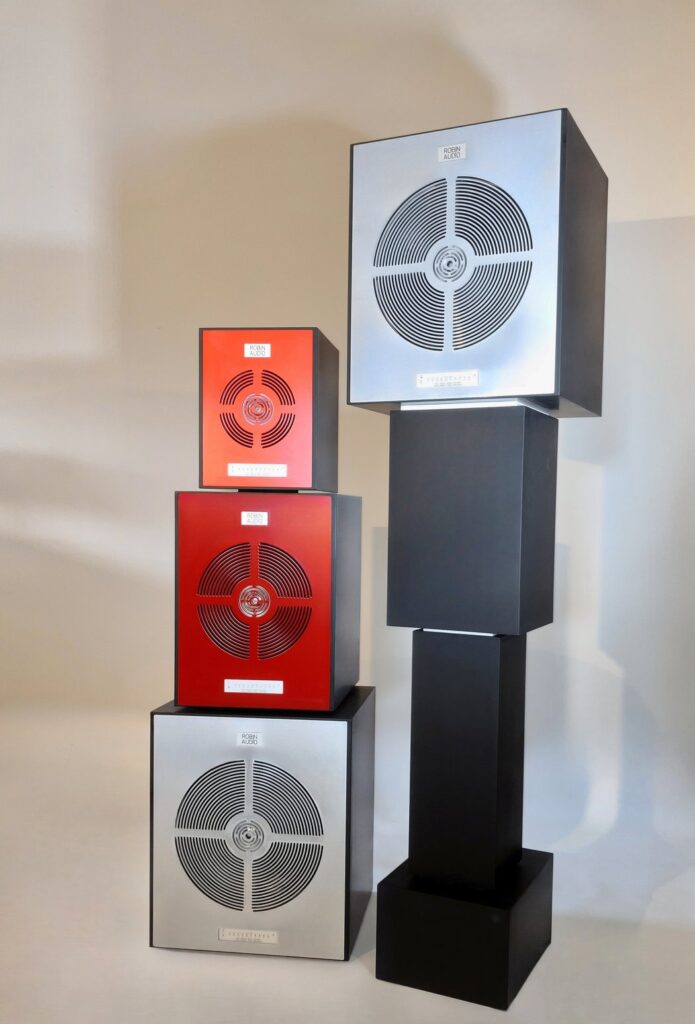
Philippe Robin, an engineer from the French Riviera, is aware of Esa Meriläinen’s guide like his pockets, in addition to related papers eg. by Mills & Hawksford and others. One day then he determined to place the knowledge of the books into follow and construct his personal loudspeaker. Thus was born the 100 kg 2-way energetic speaker Oloron Classic with a built-in-house 350mm coaxial driver in a big spherical cupboard stuffed with digital know-how. The expertise gained from the Oloron Classic, and the suggestions acquired, impressed and inspired Robin to construct a sequence of extra sensible and industrial audio system. This resulted in three field audio system of various measurement: Tenor, Monitor and Domino, so as of magnitude from largest to smallest. Let’s give attention to the smallest: Domino.

OLORON DOMINO
Domino is 36,5 cm excessive, 27,5 cm broad, and 13 kg two-way energetic speaker with the producer’s personal 200 mm (8-inch) coaxial driver in a 12 liter sealed cupboard. It’s a two-way as a result of, in line with the producer, the most effective dynamic woofers can work these days simply additionally within the mid-range, and when accurately applied, a 2-way speaker is ample to cowl all the ten octaves of music identical to multi-ways – however at decrease value. The driver is coaxial as a result of for Philippe Robin, identical to for a lot of different French audio fans, a coaxial driver remains to be one of the simplest ways to emulate the theoretical ideally suited: a full-range point-source widebandwidth speaker (ie. one-way).
And Domino is closed/sealed as a result of bass reflex, regardless of its recognition, produces an “uncontrollable bass response”, which in line with Robin ought to don’t have anything to do with Hi-Fi speaker. For him, the motion of the woofer cone can solely be managed precisely sufficient in a closed cupboard. For those that doubt, Philippe Robin recommends Grimm Audio’s Robert-H Munnig Schmidt’s article “Why Bassreflex isn’t Suitable for Low-Frequency Musical Sound Reproduction” from 2017 (accessible on the web). The article resembles Esa Meriläinen’s guide in that it reveals how loudspeaker business, for purely industrial causes, works towards higher technical information.
COAXIAL ELEMENT AND AMPLIFIERS
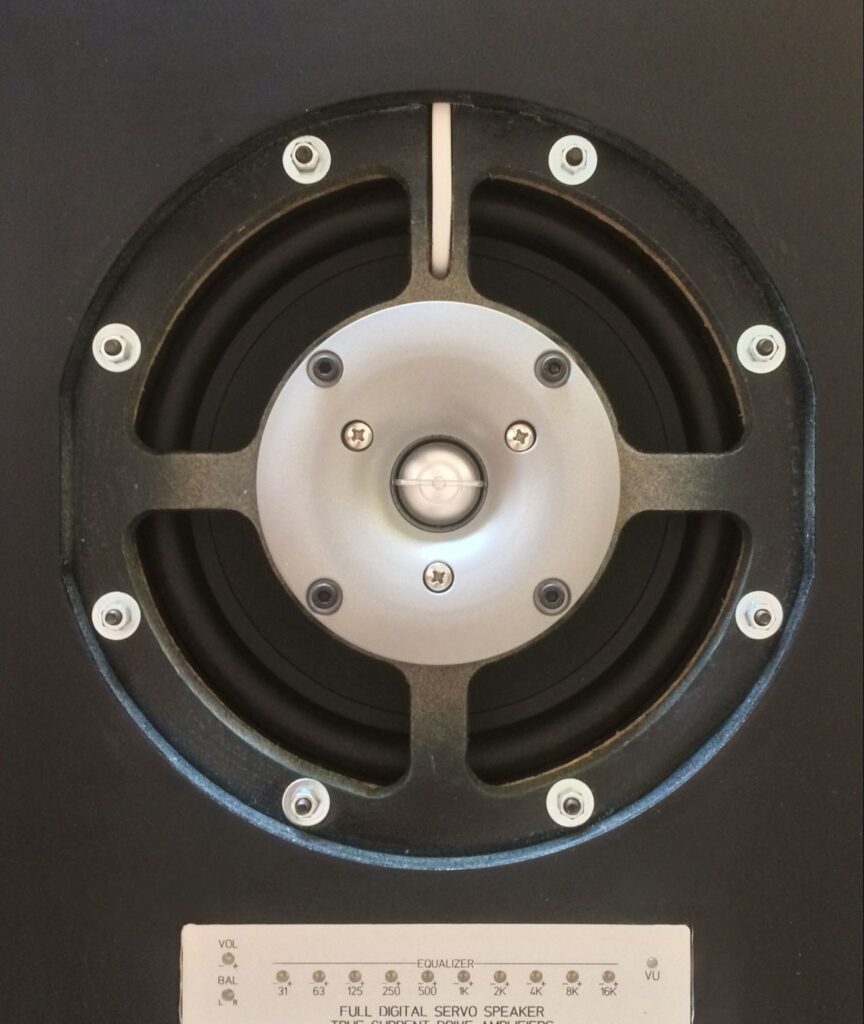
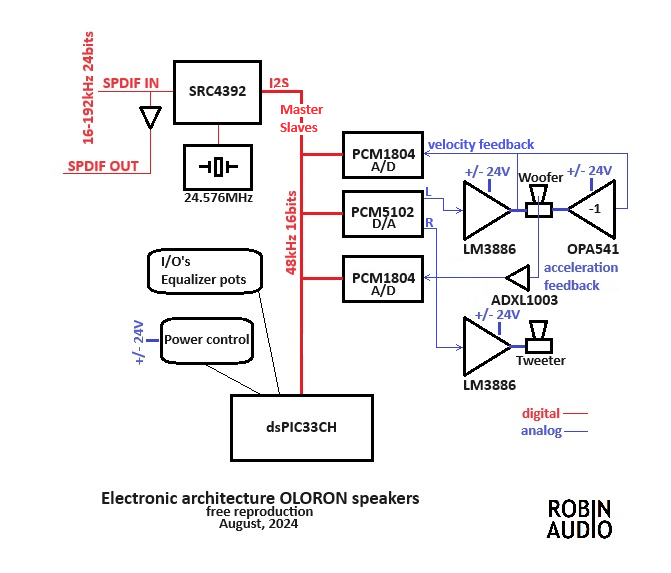
The woofer of the Domino’s coaxial driver is Beyma 200mm 8BR40/N with a ferrite magnet and a 25.4 mm copper voice coil. The tweeter is Beyma 32mm T-2030 aluminum dome with a ferrite magnet and 60º waveguide. The tweeter is about concentrically in entrance of the woofer with a thick grid, and its indicators are digitally delayed in relation to the woofer. The crossover frequency is round 3 kHz, however there isn’t a standard passive crossover filter. Amplifiers ‘see’ the drivers immediately whereas the electronics dose the facility exactly for each drivers in an effort to keep the response uniform and even.
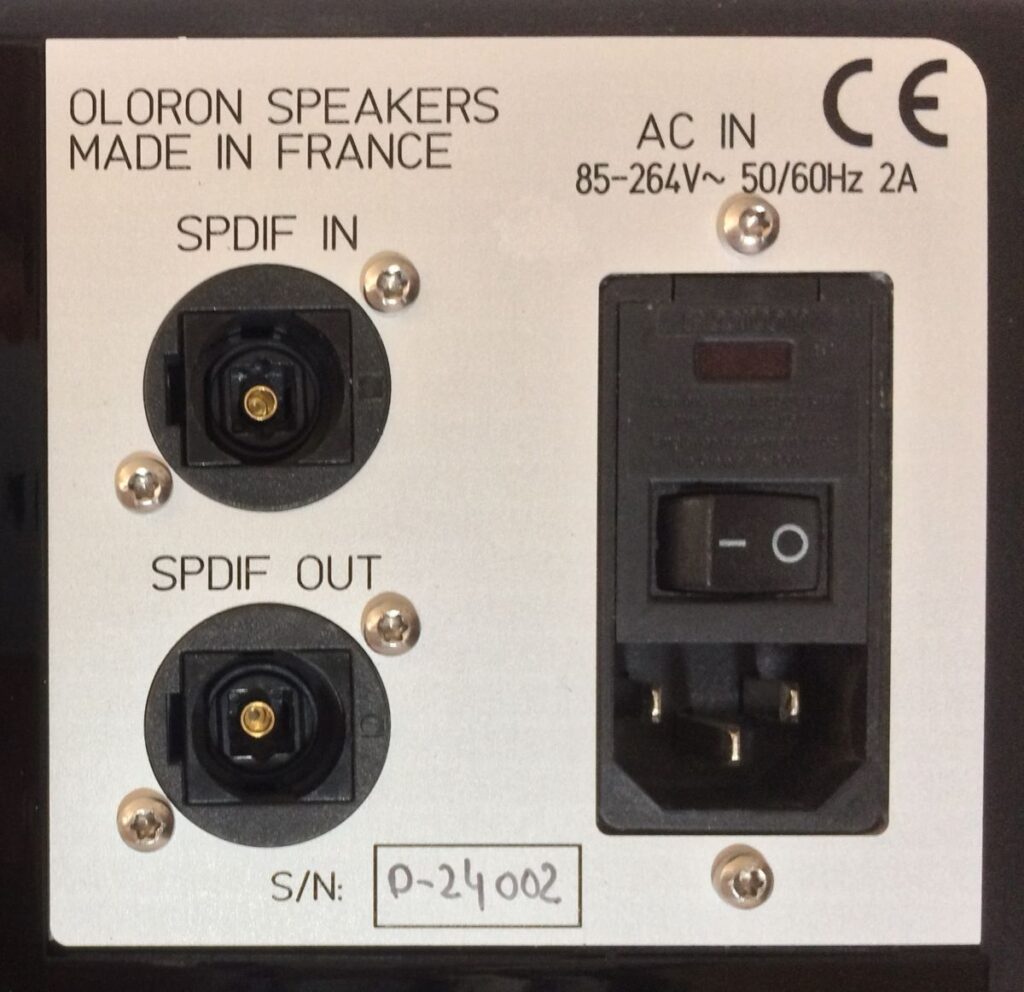
When eradicating Domino’s backplate (I didn’t and also you shouldn’t both, however take a look at the picture under), issues grow to be thrilling. Behind the cooling parts the attention meets first the center of the speaker: a multi-core digital sign controller (Microchip dsPIC33CH) with environment friendly DA/AD converters and and different digital peripherals. Incoming audio sign is optical SPDIF solely.
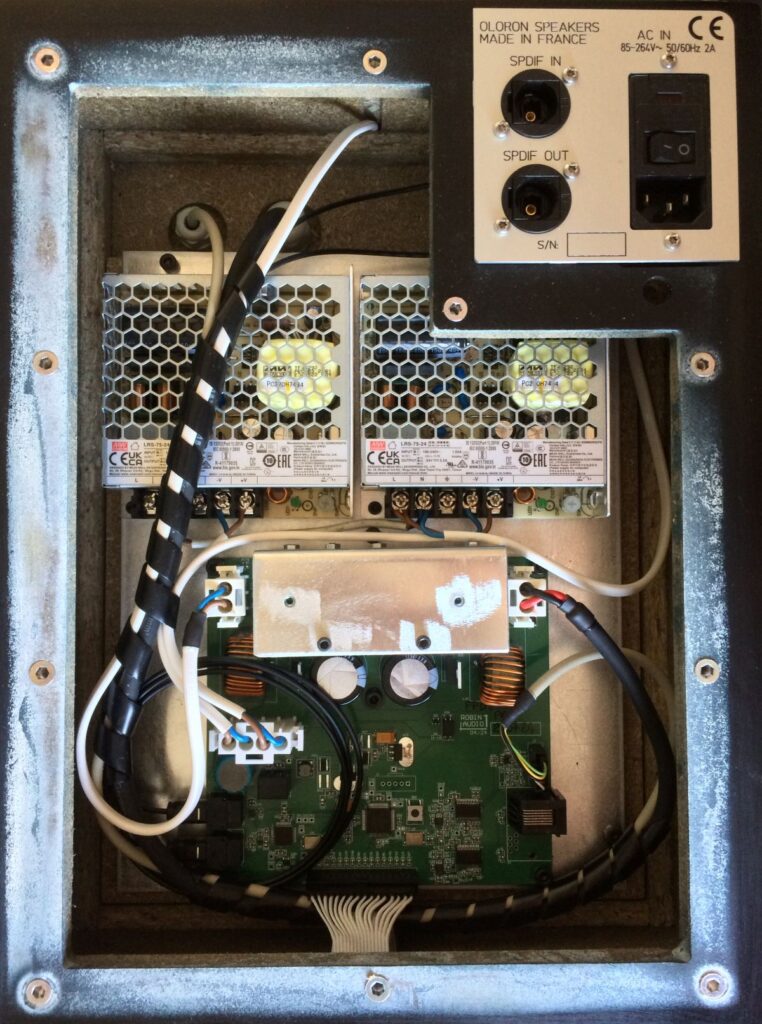
Then come the present drive transconductance amplifiers. They are constructed round, in itself a easy however in follow not that simply applied, Modified Howland Current Pump circuit (Texas Instruments, Application Report AN-1515) consisting of operational amplifiers and resistors, in Domino’s case, Texas Instruments’ linear Class AB LM3886 microcircuit and customary adjusted 0.1% resistors. The identical might have been realized discretely, however Robin didn’t see any good technical motive for that. According to him, the output impedance of the amplifiers by no means drops under 40 ohms.
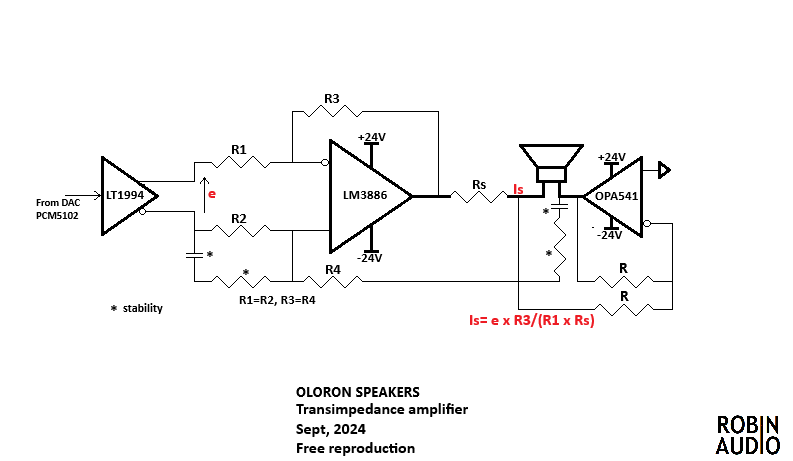
For the woofer, there’s an H-bridge, the LM3886 on one facet, and on the opposite facet, a standard operational amplifier (OPA541) to extend energy and enhance compatibility. The output energy of the amplifier for the woofer is alleged to be about 50 W and 15 W for the tweeter. With this energy reserve Domino is claimed to provide about 100 dB SPL to the gap of 1 meter.
Here’s the entire structure:
MOTIONAL FEEDBACK
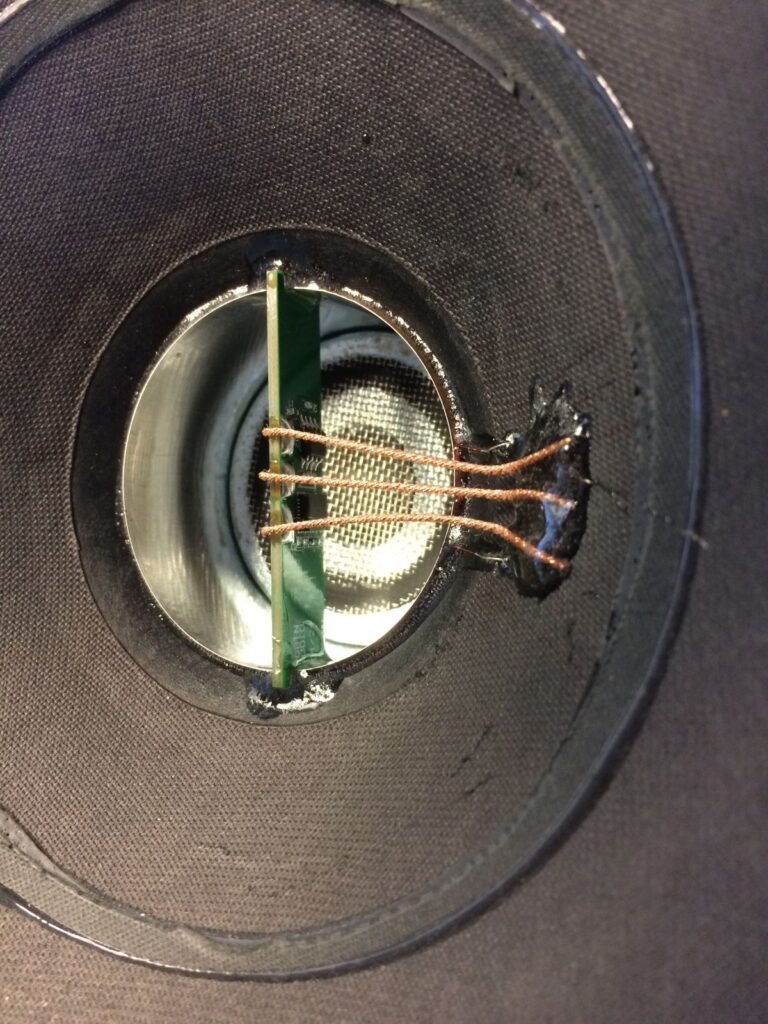
Current drive takes care of the treble response and distortion, however to manage the woofer behaviour is a far more troublesome when approaching the resonance frequency. Meriläinen solved the issue by setting up a closed rear labyrinth to his speaker. In the Domino’s case, the bass resonance is managed with a assist of a digital suggestions loop, together with each the acceleration sign (Analog Devices’ ADXL1003 accelerometer) and velocity sign. The accelerometer acknowledges the acceleration of the voice coil/cone, which data is shipped to the suggestions loop accompanied by the audio sign. The distinction/error sign is fed to the amps controlling the woofer. The technique is acquainted from Philips Nineteen Seventies Motional Feed Back (MFB) audio system.
Motional suggestions reduces distortion (in line with the producer at worst: 1.5%/92dB at 75Hz), but additionally transfers the resonance frequency, in a closed cupboard, half an octave decrease whereas the speed servo ranges the resonance peak. Domino’s woofer response is additional adjusted with the equalizer for the primary two octaves, as is the treble response (two highest octaves) in an effort to compensate for the rising impedance on the tweeter voice coil.
DAISY CHAINING
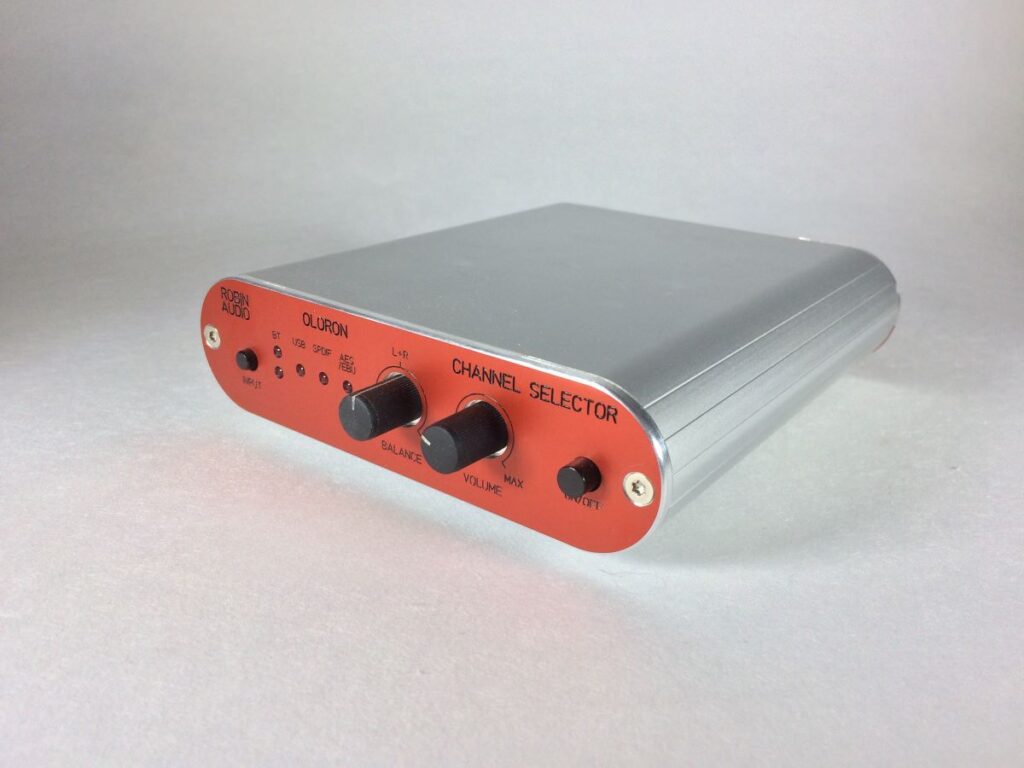
Two Dominos are related as a stereo pair digitally with an optical SPDIF cable. For these whose digital supply doesn’t function a quantity management, Robin Audio affords a small management field designated as Channel Selector, with quantity and channel steadiness adjustment plus 4 digital inputs (mini-XLR, optical SPDIF, mini-USB, Bluetooth). The proven fact that inputs are digital solely is Robin’s aware alternative. Domino was designed with the ethos that what matches for the wants {of professional} sound replica, is, as a matter of precept, additionally appropriate for beginner audiophiles.
The selector field is related to one of many speaker (doesn’t matter which one) with an optical cable. From the small entrance plate trims the consumer chooses the channel (left/proper) and the native quantity management is about on the max place. Using Domino was trouble-free. All inputs labored as anticipated. I might have made use of a distant however I understand that it’s my self-importance. The speaker cuts itself off pretty shortly when detects no sign, but additionally comes again to life in a couple of seconds. The idle energy consumption is 1.5 VA, so no no chapter if left on.
For the audition, I positioned the audio system kind of because the producer recommends, i.e. both listened on axis or just a bit off-axis. Marrying a small tweeter with a comparatively massive woofer will inevitably lead to off-axis responses beginning to drop early on. More off-axis and, for example, human voice turns into coloured. The directivity of the Domino is one thing Philippe Robin was properly conscious of. He is, nevertheless, strongly of the opinion that every time the idea is that the listener(s) stays nonetheless within the spot, a directional speaker is the winner, whether or not in a studio or at house. As he places it: no person wants Hi-Fi audio system for dancing and partying!
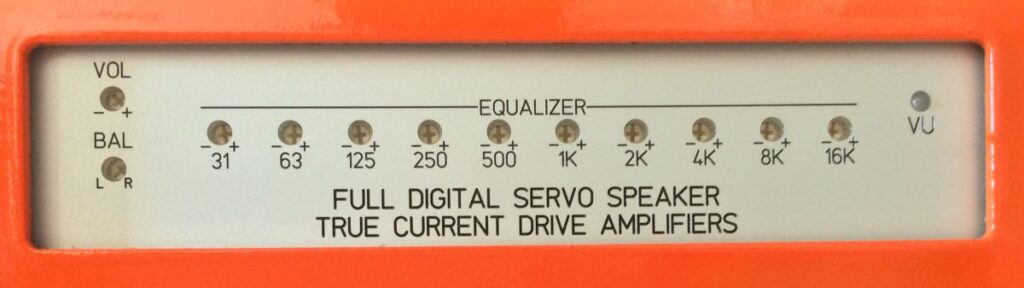
In the identical method, I didn’t contact Domino’s entrance panel 10 band EQ (31Hz – 63Hz – 125Hz – 250Hz – 500Hz – 1kHz – 2kHz – 4kHz – 8kHz – 16kHz) digital EQ (-60dB .. +12dB), as a result of I didn’t need to manipulate the frequency response chosen by the producer (additionally, the trims might have been a tad larger). But I do like the thought of Domino’s handbook EQ. After all, it’s the ear that’s usually the final word choose for telling what’s incorrect with the sound of that music. But as mentioned, I stored the trims of the equalizer of their zero place as a result of on this speaker the EQ is the nerve middle and absolutely answerable for the tonal steadiness chosen by the producer.
LISTENING IMPRESSIONS
Although I firmly consider that the richer the descriptive vocabulary of the reviewer, the higher s/he hears and understands the sound (that’s as a result of ‘sound’ isn’t a property of ‘air molecules’ that trigger it, however depends upon the sense impressions/sensations that it causes within the listener), within the Domino’s case I need to hold the subjective description succinct in an effort to give attention to what this speaker does so properly.
Perhaps essentially the most outstanding facet of the Domino’s sound is its purity from backside to high. This purity shouldn’t be confused with what I assume is usually meant by loudspeaker ‘transparency’, which in all probability has extra to do with the traits of the speaker’s frequency response. The purity within the Domino’s case means, for one factor, that the speaker has fairly an distinctive capability to clarify, a layer after layer, not solely what’s taking place on the entrance of the stage of the orchestra, but additionally on the again stage, within the second and third rows. I discover this stage of ‘see via’, that’s, the flexibility to make small and distant sonic cues audible, uncommon, and it jogged my memory of my tentative impressions relating to Meriläinen’s present pushed loudspeaker years again (so maybe it has to do with present drive and lack of dangerous EM results?) When further obscurity or haze – I don’t know precisely what to name it – has vanished from the floor of the sound, the listening expertise turns extra informative and significant. Music makes extra sense, merely.
The purity equals to extra music/sound going into the speaker, together with dynamic and sophisticated one. First week I spend by listening solely to traditional music on dozens of a long time outdated Nouvelle Revue du Son Test CDs. One of my amusements was taking part in again essentially the most dynamic/complicated samples of orchestral music that I might solely discover, and do it at slightly excessive quantity ranges. Apart from a few excessive exceptions I didn’t really feel that there would have been an excessive amount of materials for the Domino to chew up. The sound remained clear and smart all through.
The second praiseworthy function of the Domino’s sound is its bass efficiency (the producer claims -2dB / 52Hz and 40Hz, +/-3dB). One technique to formulate the thought right here is that this: Domino dares to sound mid-rangy. It sounds mid-rangy every time there’s nothing else on the document than midrange content material, however lo and behold when the document actually accommodates mid and upper-bass notes, the speaker reproduces them as they need to and with out pushing them into the lap of the listener. To me that’s all the time a mark of a high quality speaker. The bass is springy, because it usually is from a sealed cupboard (and BR hardly ever is), however I felt that the Domino took issues a step ahead on this respect. The Domino doesn’t necessitate a subwoofer however after listening to it for an extended time frame, I grew to become tempted to listen to one of many two larger sister fashions, Monitor or Tenor. Not a lot due to their decrease Fc (e.g. Tenor: 25Hz/104dB@1m), however extra in view of the final breathability of the sound.
Thirdly, there isn’t a distinct treble to concentrate to. This presumably outcomes from how the sound of the woofer and the treble have been cooked collectively. Most coaxial drivers excel on this regard to some extent, however there are variations as properly. In the Domino’s case, the speaker paused me to assume greater than as soon as that, in comparison with standard 2-way field audio system with two drivers mounted onto the entrance panel, the ear all the time senses the presence of a separate tweeter in a method or one other, no matter how meticulously the crossover have been realized, and all different issues being equal.
So how was the sound total? Did it have any attribute shade? Given that the Domino was sculptured to sound like a monitor speaker in a studio, the presumption naturally is that the sound lacks any recognizable shade. But since we’re coping with mortal objects right here, the Domino can not escape of getting some sonic qualities of its personal; and when it’s does, it can’t be its reverse. For instance, though it exudes monitor-like neutrality the Domino ain’t a BBC LS33/5 kind of monitor. Not in any respect. It places what’s on the document earlier than how pleasing the sound is to the ear. At the opposite finish, some monitor audio system faux neutrality by sounding uncooked and metallic, and the Domino isn’t one among these screens both. The sound of the Domino merely lacks a straightforward attraction issue, and that’s what makes it so interesting. Very consisting and assured sound. It could take a short time to grasp what’s the secret right here, however when you’ve bought it, it’s laborious to let go.
SUMMARY
All in all, Domino is a completely digital (dsp 48kHz/16bit) 2-way energetic speaker with a present pushed, motional suggestions/servo managed 8-inch coaxial driver in a closed cupboard that includes a ten band digital EQ. As such, it’s a extremely uncommon loudspeaker. It might not be for everyone for it preconditions sure issues. It preconditions that one shouldn’t take heed to it from one other room or simply within the background. And when you’re sit within the spot it recommends form of nearfield listening during which the audio system are directed kind of towards the listener. And for the homeowners of RIAA-preamps or FM tuners (sometimes with analogue outputs solely) it’s of no use. But if and when one accepts the boundary situations, the Domino is ready to supply a sound that has many really rewarding components.
HI-FI News
by way of Inner Magazines https://ift.tt/bGWtmHi
November 4, 2024 at 06:05PM
-
Product on sale
 Audiophile Vinyl Records Cleaning BundleOriginal price was: €69.90.€59.90Current price is: €59.90. incl. VAT
-
Product on saleEasy Start Vinyl Records Cleaning KitOriginal price was: €69.90.€59.90Current price is: €59.90. incl. VAT
-
Vinyl Records Cleaner Easy Groove Concentrate€34.95 incl. VAT
-
Easy Groove Super Set€199.00 incl. VAT
-
Easy Groove Enzycaster – vinyl records prewash cleaner€34.95 incl. VAT
-
Easy Groove Extreme MK. II- vinyl records prewash cleaner€45.00 incl. VAT
-
Vinyl Records Cleaner – Easy Groove Virgin Concentrate€35.00 incl. VAT
-
Easy Groove Spray&Wipe vinyl records cleaner€34.95 incl. VAT







