
World News
“Queen I” Gets A Facelift
“Queen I” Gets A Facelift
Digitally retouched drums and pitch-corrected vocals?!
“I’ve seen the long run in pop music, and it’s a band referred to as Queen” – Jac Holzman, Elektra Records
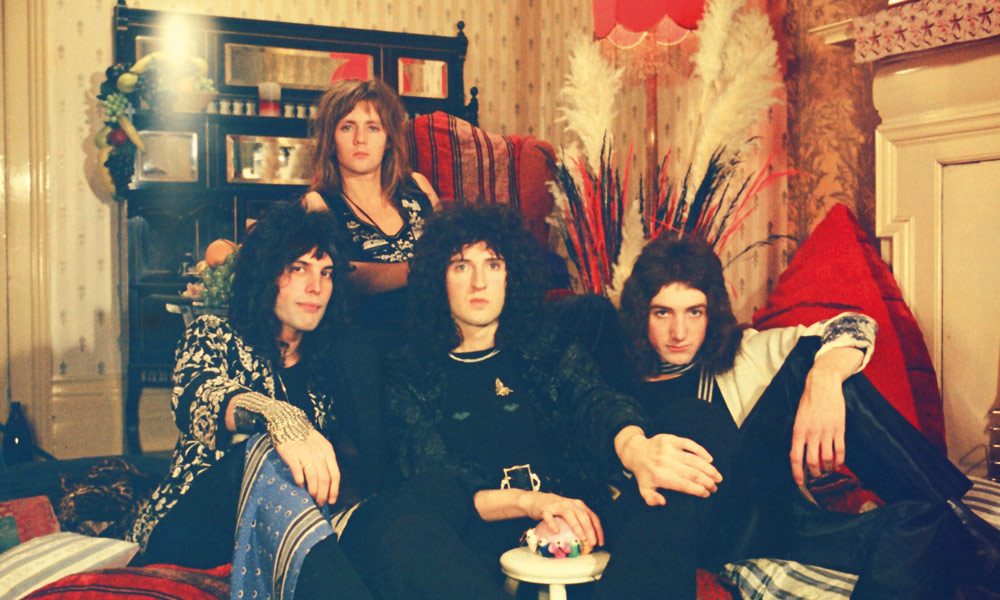
The beginnings of Queen got here from the remnants of guitarist Brian May and drummer Roger Taylor’s former group, Smile. The two bounded collectively and recruited vocalist Freddie Mercury, who pushed to rechristen the group Queen, and so they added bassist John Deacon. The group gigged round England’s school circuit earlier than chopping a demo at De Lane Lea Studios to check the studio’s acoustic remedies. The Sheffield brothers, who oversaw Trident Studios and Neptune Productions, took Queen below their wing and allowed the group to file their debut album in the course of the studio’s downtime over 3 months in mid-1972. After buying the completed album to each UK file firm for almost a 12 months, Trident licensed the album to EMI Records.
Released in July 1973, Queen’s self-titled debut album was a ballsy tour-de-force to reckon with on the time. Meat-and-potatoes laborious rock is available in abundance with the frantic-paced “Modern Times Rock ‘n’ Roll” and the bluesy “Son and Daughter.” The group teeters into progressive rock territory on “Great King Rat” and “My Fairy King” with dynamic instrumental preparations and Freddie Mercury’s fantasy-based lyrics. “Doing All Right” is just a little piece of pre-Queen historical past, a monitor initially a part of Smile’s repertoire. Tracks like “Keep Yourself Alive” and “Liar” turned staples within the group’s early reside set, the latter changing into Queen’s first single. The album nearer, a 75-second instrumental teaser of “Seven Seas of Rhye,” hinted at what was to return. Queen’s debut obtained a muted response from critics who usually in contrast the group to Led Zeppelin, but it surely stands as a place to begin for the way the group’s sound would evolve all through the last decade.
(I minimize the nationwide radio spot for Queen’s American debut on Elektra records. The label despatched me a British urgent with this cowl artwork that was modified for America_ed.)
From the album’s periods to the completed product, the manufacturing worth of Queen’s debut turned a bone of rivalry amongst band members. Brian May clashed with producer Roy Thomas Baker over the steadiness of the band’s genuine sound and studio perfection. A debate over Roger Taylor’s drum sound left the monitor “Mad The Swine” off the ultimate album. Whether it’s a means to rejoice the album’s belated fiftieth anniversary or a chance to proper some wrongs, a brand new stereo combine now offers Queen’s self-titled debut album some new life.

To distinguish the outdated from the brand new, the brand new stereo mixture of Queen’s self-titled debut will get rechristened with a brand new title: Queen I. Brian May revisited the album cowl through a digital recreation that eliminates a few of the grainy qualities of the unique; the gold foil inlays for the album’s title is a deluxe contact harking back to the unique 1973 US Elektra urgent. Queen’s longtime artwork designer, Richard Gray, lovingly recreated the again cowl’s picture collage from the unique footage to look as vibrant because it ever will look. Consumers can get one of the best of each worlds by receiving a poly-lined sleeve to deal with the vinyl and a printed internal sleeve of lyrics and credit. Instead of utilizing EMI’s inventory label from the timeframe of the album’s unique launch, a customized middle label using the album art work graces the heavyweight 180-gram vinyl.
The mixture of Queen I has divided followers and critics alike. The apparent differentiator is the sound of the drums. Instead of enjoying his drum package with its trademark sound, Roger Taylor was enjoying Trident Studios’ in-house package, described as “plastic, all lined in tape.” Despite the distinction in most popular sound, sure logos of the album’s unique combine give it its character. On Queen I, every drum hit received digitally retouched, producing a extra synthetic sound that loses a few of the subtleties in Taylor’s enjoying. Some on-line music analysts talked about that Freddie Mercury’s vocals had been additionally pitch-corrected. It takes a skilled ear to pick this discrepancy, however the considered making an attempt to good what many regard to be one in all rock’s best vocalists is inventive treason. These gripes nearly contradict the sentiment Queen sang about on the monitor “Machines (or Back to Humans)” from The Works album in 1984: “When the machines take over, it ain’t no place for rock ‘n’ roll.”
Brian May’s phased guitar licks on the opening of “Keep Yourself Alive” are unfold extensively throughout the stereo spectrum, creating a large soundstage. His lead guitar solo is extra upfront, whereas the harmonized components take a again seat. Freddie Mercury’s ethereal vocals within the soothing bridge of “Doing All Right” are contradicted by the depth of May’s energy chords and Roger Taylor’s thunderous flooring toms within the solo break. On “Great King Rat,” Mercury’s vocals sound extra obvious, and Taylor’s big drum roll playfully bounces backwards and forwards between the audio system in the course of the track’s outro. The aforementioned “Mad The Swine” is woven again into the album’s initially supposed operating order. The track’s unique combine was accomplished in 1991 as a bonus monitor on the Hollywood Records CD remaster of the debut, and it had extra dynamics and air than sounding squashed on this remix. “My Fairy King,” one of many album’s dynamic tracks, is stricken by internal groove distortion.
The hand-claps on the opening of “Liar” lose that slap-back echo high quality, sounding extra like a digital pattern. The nature of the combination’s drum sound doesn’t enable for them to have the identical affect as the unique. Mercury’s vocals have an ADT high quality that isn’t current within the unique combine however is a welcome inclusion. The auxiliary percussion within the track’s center break is extra pronounced. May’s acoustic guitar sounds extra clear on “The Night Comes Down,” and Mercury’s lead vocal takes priority over the harmonized vocals within the refrain. The new “Son and Daughter” combine attracts again the track’s heavy muscle, as Mercury’s vocals don’t have the aggressive chunk heard on the unique combine however enable the intricacies of May’s guitar work to shine. The religiously-influenced “Jesus” has some new aptitude between the backward echo to start with and the phased acapella outro, however internal groove distortion ruins the track’s busy moments.
Brian May and Roger Taylor had good intentions with Queen I, because it might’ve been an ideal facelift for top-of-the-line debut albums of the Seventies—ill-suited EQ selections and striving for over-perfectionism ended up with an odd end result. If this reinvention is to be the primary in a collection going ahead, one can hope future remixes get approached in another way.
Music Specifications
Catalog No: 00602465259186
Pressing Plant: Optimal Media GmbH
Speed/RPM: 33 1/3
Weight: 180 grams
Size: 12"
Channels: Stereo
Source: Remixed from the multitrack masters
Presentation: Single LP
HI-FI News
through Tracking Angle https://ift.tt/nM1Iwb4
November 9, 2024 at 02:26PM
-
Product on sale
 Audiophile Vinyl Records Cleaning BundleOriginal price was: €69.90.€59.90Current price is: €59.90. incl. VAT
-
Product on saleEasy Start Vinyl Records Cleaning KitOriginal price was: €69.90.€59.90Current price is: €59.90. incl. VAT
-
Vinyl Records Cleaner Easy Groove Concentrate€34.95 incl. VAT
-
Easy Groove Super Set€199.00 incl. VAT
-
Easy Groove Enzycaster – vinyl records prewash cleaner€34.95 incl. VAT
-
Easy Groove Extreme MK. II- vinyl records prewash cleaner€45.00 incl. VAT
-
Vinyl Records Cleaner – Easy Groove Virgin Concentrate€35.00 incl. VAT
-
Easy Groove Spray&Wipe vinyl records cleaner€34.95 incl. VAT







