
World News
Review: Bluesound NODE Nano Streaming DAC
Review: Bluesound NODE Nano Streaming DAC
Hello Bluesound Node Nano!
Goodbye Raspberry Pi?
Steve Graham ponders the potential of a Node Nano sending his music-playing Raspberry Pi into early retirement.
True Confessions
Up thus far, I haven’t taken the Bluesound Nodes significantly. I imply, no thick aluminum entrance panel? Come on! No full width chassis? Get actual! Audio snobbery at its worst? Guilty as charged. Don’t get me unsuitable, my NAD Masters 50.2 music participant has been a pleasure to make use of. I’ve had the 50.2 since 2017 or 2018, I can’t fairly bear in mind. I’m positive, like most, I can date issues as pre 2020 and put up 2020 however aside from that, dates get a bit fuzzy.
Anyway, NAD, Bluesound, PSB audio system and different manufacturers are all underneath the umbrella of the Lenbrook Group of Companies. Bluesound merchandise have been round for over ten years. This was lately celebrated with the limited-edition Node X. If you missed your likelihood to purchase a Node X, don’t despair. When Bluesound refreshes their product line, as has been achieved lately, upscale options on dearer discontinued fashions are sometimes integrated into their cheaper new choices.
Node Nano (A fast overview)
At $399 Canadian ($299 US), is the Nano a performance-compromised element? The Nano doesn’t have the subwoofer, HDMI eARC and a few of different connectivity options that its extra feature-laden, and better priced, siblings get pleasure from. See the image beneath and click on on the hyperlinks for a full record of the Nano’s options. For you chip obsessives (you understand who you might be), the Nano makes use of the identical ESS Sabre DAC chip that the usual 2024 Node and the all-singing, all-dancing Node Icon employs. The Nano is powered by a 5-volt, 2-amp switch-mode wall wart. Don’t rush to guage, I’ll talk about a reasonable improve later.
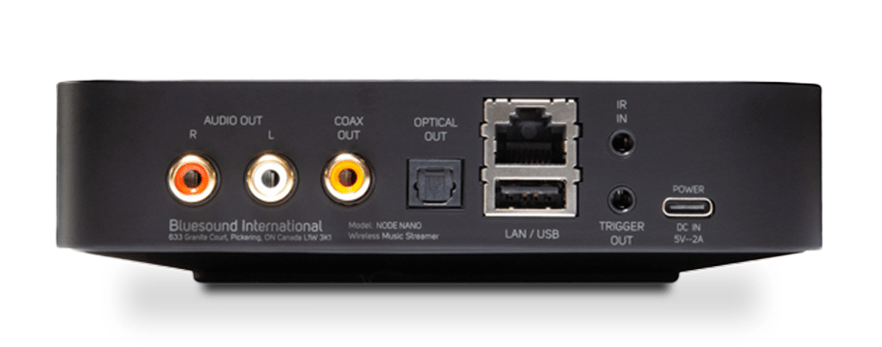
Link to Nano: https://www.bluesound.com/can/node-nano
Nano options: https://www.bluesound.com/can/amfile/file/obtain/file/3457/product/784/
I feel the Nano is geared toward people who simply wish to play or stream music, maybe by means of an present stereo system or with a pair of powered audio system. These are individuals not going keen on any bells and whistles. They simply need stable, trouble-free efficiency that’s straightforward to arrange and comes with a bulletproof, straightforward to make use of app. That’s Bluesound gadgets and the BluOS management app. If I sound like a BluOS fan boy, I’m. That doesn’t imply I feel BluOS is ideal. There are just a few modifications or additions I’d make. But total, it’s the most effective I’ve been uncovered to.
Though I could also be unsuitable, it appears most individuals want streaming music from paid companies. I feel audiophiles, basically, wish to personal the next proportion of the music they hearken to, if the sale of vinyl is something to go by. Vinyl diehards, and people like myself who’ve a substantial funding in CD and/or downloads wish to do extra than simply stream. These people, in the event that they don’t need the trouble of establishing a NAS (Network Attached Storage) of their residence, will need a streamer that may additionally settle for connection to a USB laborious drive or SSD drive. Some cheap streamers don’t have direct connectivity to digital storage gadgets. The Nano does have a USB port for exterior storage connection.
The Nano also needs to attraction to homeowners of NAD or different Bluesound streaming gadgets who need a second (or third) system that may be linked to their present NAD or Bluesound tools. If one other Bluesound/NAD machine is on your own home community, and it has storage hooked up or integrated, some other Bluesound machine can play from that storage as properly. If all of that appears tough, IT IS NOT. Bluesound gadgets are as near plug and play as it’s doable to be. Nearly the polar reverse of establishing Raspberry Pi-based techniques.
A fast phrase about streamers that includes shows. Myself and others are of the opinion that color show screens that includes art work and such are eye catching however nearly wholly pointless. I didn’t was of this opinion. Part of the rationale I bought my NAD Masters 50.2 digital participant was as a result of it has a show. Having lived with the 50.2 for some time, I turned the show off. The identical options, and plenty of extra, can be found through the BlueOS app in your telephone or pill.
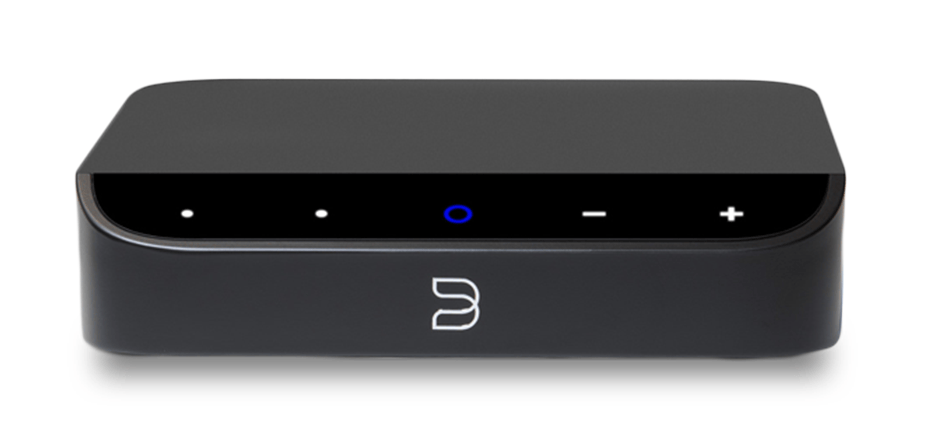
Pictures don’t present how very compact the Node Nano is. It’s in regards to the measurement of three compact disc instances – bear in mind these? – piled one atop the opposite.

Node Nano Setup (a fast look)
It takes extra effort to jot down about than it does to carry out. (I had disconnected the NAD 50.2 from my community to simulate an precise new-user expertise). Here, in level type, is the precise course of I used:
-Load the BluOS app onto a pill or telephone.
-Connect a USB drive containing music information to the USB port on the Nano (non-obligatory).
-Connect an ethernet cable from the modem or router to the Nano. Optionally you could join over Wifi however might want to enter your community password.
-Connect the Nano’s analogue outputs to your amplifier.
-Plug the switch-mode wall wart into the Nano.
-Open the BluOS app in your telephone or pill.
-Plug the wall wart into the ability supply.
The very first thing that may seemingly occur is that the multi-colour LED within the centre of the beveled entrance panel will flash inexperienced and pink, signaling {that a} software program replace is downloading.
If a USB drive is linked, the LED will flip a form of yellowish-orange color whereas the drive containing music is being listed. Be affected person, it’s going to take some time to index the drive. Progress might be monitored through the app in your telephone or pill. Click on Settings, Music Library and watch the Reindex Music Collection rely up.
When the LED turns blue, music might be performed from the USB drive. Internet radio might be accessed by means of the TuneIn app, an choice already loaded on BluOS. If you subscribe to a streaming service, choose it from the record, enter you account and password and play some music. Job achieved, have enjoyable.
Volume might be managed from the Nano’s entrance panel or the BluOS app in your machine(s), if desired. As properly, presets for favourites might be programmed.
Raspberry Pi Setup
A complete lot extra sophisticated, relying on working system used. I’ve tried three completely different OSs and have settled on piCorePlayer incorporating Logitech Media Server (LMS). It is maybe essentially the most complicated to setup however as soon as achieved, the iPeng app for Apple gadgets or Orange Squeeze for Androids are pretty slick at controlling the Pi. I’ve discovered different apps might be clumsy to function through internet browsers and at the least one requires a subscription to entry paid music companies.
Pulling collectively numerous bits of software program and writing it to a SD card to get a Pi up and working can, at occasions, be a colossal ache. Switching from a Windows 10 laptop to Windows 11 revealed glitches in software program (albeit free software program). The piCorePlayer and LMS software program requires customers to “level” it within the route of USB-stored music information. The Nano by comparability, will “discover” music information in your drive and index them mechanically. This is particularly helpful when music is added to a USB drive. If a NAD or Bluesound machine with music storage is already in your community, a brand new NAD or Bluesound machine will “discover” it and play it.
PiCorePlayer, and by extension LMS, will have to be “pointed” within the route of music information every time a drive is up to date. Also, paid streaming companies require the usage of plugins, whereas they’re already loaded into the BluOS app.
I had numerous enjoyable, and a few aggravation, establishing a few Raspberry Pis as music gamers. The first one, configured with a digital output, went to a superb buddy who didn’t have the finances for the then-available business streamers. Set up in late 2020, it has carried out flawlessly ever since. The second Pi, with an Allo Boss DAC board, sees use in my workshop. It has carried out reliably too.
My laptop expertise are restricted however I managed to get the Pis taking part in reliably. However, I can totally perceive people who don’t get pleasure from messing with something computer-related. The BluOS app and Nodes are frustration-free for customers in your family who would possibly in any other case get discouraged with the occasional glitchiness of a Pi-based music participant.
Some of the stumbles alongside the best way (this is applicable to all music gamers not simply Pi-based items):
An ethernet-connected Wi-Fi vary extender drove my modem/router nuts. It stored reassigning completely different IP handle to my music gamers. This in flip made doing something however taking part in music from USB linked drives almost unattainable. When I ditched the extender, made irrelevant by repositioning my modem, all IP handle points went away.
Nano Sound Quality
Differences in digital playback gadgets are, for essentially the most half, fairly minor in comparison with say, speaker techniques and even the rooms these audio system are situated in.
My essential reviewing system has modified considerably over the previous 12 months. Power continues to be fed by means of a PS Audio AC regenerator and the road stage is my outdated dependable Audio Research Reference 3 (retubed a 12 months or two in the past). Power amplification is a pair of Schiit Audio Aegirs run in balanced mono mode (see my Aegir evaluate: https://wallofsound.ca/audioreviews/amplification/review-schiit-audio-aegir-stereo-power-amplifier/). I’m nonetheless in love with the Aegirs. The sound of excellent tube amps within the mids and highs, with the drive, pressure and extension of transistors within the bass. The main addition late final 12 months was two REL Classic 98 subwoofers.
Spoiler alert: Quality audio streaming simply obtained an entire lot more cost effective.
I moved the Raspberry Pi with its Allo Boss DAC board from my workshop into the primary listening room. Identical USB laborious drives had been linked to the Pi and the Nano. Playlists of the next tracks had been set on each gamers:
From Sara McLachlan’s Afterglow:

World On Fire (Seems applicable of late) (16/44 file)
From Lee Ritenour’s 6 String Theory:

Taj Mahal and Keb’ Mo’ performing Am I Wrong (16/44 file)
From Loreena McKennitt’s An Ancient Muse:

Caravanserai (16/44 file)
Bach’s Christmas Oratorio performed by Karl Richter. Recorded 1965, the sound looks as if some early stereo recordings in that there isn’t a lot middle fill. The music appears to return from both the left or proper channel. But the voices are fantastic and the horn taking part in, particularly the trumpet within the finale, is really superb. (16/44 file)

John Coltrane’s Giant Steps (24/192 file)

(Nothing else want be mentioned.)
Jongen’s Symphony Concertante for organ and orchestra. An outdated Telarc digital recording that may sound a bit shrill and skinny to some immediately. One of the gadgets on my audio want record is for the proprietor of the Telarc catalogue to do a sympathetic, high-resolution remastering to say, 24/192 or DSD. Until that occurs that is nonetheless a compelling recording that may give subwoofers a exercise. (16/44 file)

From Clannad’s Lore:

Broken Pieces (16/44 file)
From Ralph Vaughn Williams: Fantasia on a Theme by Thomas Tallis

(24/192 LP rip)
Like I alluded to earlier, variations in digital sources are slight. But that’s to not say there are none. The sound of my Raspberry Pi, with the Allo DAC board and separate energy provides – one for the Pi and one for the DAC board – was and nonetheless is superb for the worth. Review Link: https://wallofsound.ca/audioreviews/digital/part-5-the-last-piece-of-pi-the-allo-boss-i2s-dac/ Though that worth may not be fairly what it was.
Though not heard on all auditioned tracks, the Nano had a slight edge with female and male voices. Lyrics had been barely extra articulate as if singers had been standing nearer to the microphones. This didn’t come on the expense of constructing them sound too ahead. If something, the Nano had a lusher and extra liquid rendition of voices. This could be the results of the Nano’s soundstage being extra unfold between the audio system. The Pi-based participant appeared to group each voices and devices nearer to the audio system with much less coherent centre photographs. In basic, depending on recording, the Nano had a barely extra vibrant and on the identical time, extra relaxed sound.
The basic frequency spectrum was very related on each gamers besides within the bass. Both gamers had been fast and tuneful however the Pi-based participant dug a bit deeper with barely higher slam. This may not be noticeable on speaker techniques that do not need prolonged bass response or on a system that doesn’t incorporate subwoofers.
Aside from the Nano’s efficiency relative to my Pi setup, it’s, on an absolute scale, superb and I don’t imply only for the cash. The Nano is neither hyper-detailed nor laid-back heat and fuzzy. It impresses due to its balanced presentation. The Nano doesn’t fairly compete with my dearer digital gear however that didn’t appear to matter throughout my time with it. There was nothing that made me lengthy for my NAD50.2 plus PS Audio DirectStream DAC. The Nano simply performs music in an interesting approach and the BluOS is simple to navigate. What else is there?
Tweak Time
I obtained fascinated about the distinction in bass response, Node vs Pi, then remembered that my Pi participant has two energy provides. A 2-amp provide for the Pi board and USB drive, and a 3-amp provide for the Allo DAC board. The Nano and linked USB drive had been working on a single 2-amp provide. Swapping out the Nano’s 2-amp provide with a 3-amp unit, that price about $16 CDN, moved its bass efficiency a lot nearer to the Pi-based system. This could be much less of a difficulty if a USB drive is just not linked to the Nano. While doing the ability provide swap, I found that the Nano was considerably fussy about energy provides. Supplies that had an intermediate adapter to go from a generic plug to the USB C connector didn’t at all times work. The Nano would get energy however wouldn’t run. A 3-amp, straight-to-USB C-connector energy provide labored properly.
Streaming
I’ve used streaming companies on and off however they actually aren’t my factor. If I’m not within the temper to choose music myself, there are just a few internet radio jazz stations I hearken to. But because the boss needed me to take a look at streaming, I shall.
Searching for the perfect service, I occurred on 4 headphone aficionados on YouTube performing blind listening exams of varied streaming companies. They had been using $20K+ price of streamer/DAC and headphone for this comparability. The basic consensus was that Tidal sounded the perfect. So, I signed up for a free month of Tidal. Is it simply me or does Tidal appear a bit clumsy to make use of?
Anyway, the house Tidal display screen appears to deal with standard music. I suppose ‘trigger that’s what’s standard. It wasn’t instantly apparent however to look Tidal, you want contact the Music icon on the aspect or backside in your machine display screen. Then choose Tidal. Next contact the Search icon and sort in what you wish to hearken to. At $10.95 a month I received’t be holding Tidal. Maybe Tidal Connect is less complicated, regardless of the heck that’s. I requested Noam about Tidal Connect, this was his reply: “If the platform helps Tidal Connect, then you definately don’t have to stream utilizing the third get together app, e.g. BluOS. You simply use the Tidal app, which is way richer in options. From the track view in Tidal, click on the little speaker icon on the backside to direct output to the streaming unit. Bob’s your uncle.”
The Node helps Airplay 2 integration, Spotify Connect, Tidal Connect and is Roon Ready. Others are within the works for later integration. So, I suppose the clumsiness I discovered with Tidal is all the way down to me.
But I’m with John Darko. (His web site and YouTube channel catering to audiophiles are superior.) John says, “Having a tough drive stuffed with your personal music is like having your personal streaming service.” Amen to that.
Dollars and Sense
Let us evaluate the Nano to the Allo-equipped Raspberry Pi. Note: as I write this the Allo internet retailer is briefly closed. Forging on, and assuming Allo merchandise shall be accessible once more, a Boss DAC with a Pi 4 in a pleasant Aluminum case will set you again 184 US {dollars}. You can avoid wasting cash in case you go for a budget and nasty-looking plastic case like I did. Add 22 bucks for 2 energy provides. An app like iPeng or Orange Squeeze provides one other 10+ bucks. Add an analogue interconnect (the Nano comes with interconnect and ethernet cables). Canadians, you do the maths to transform this to our greenbacks. At any fee, at north of 200 bucks US, delivery not included, for a decent-sounding Pi, is it actually worthwhile?
At $299 US ($399 CDN), delivery included, and an entire lot of not screwing round with software program, a Node Nano begins to look very interesting. Yes, there are numerous streamers accessible for lower than the Node. But the BluOS app is nice. The identical can’t be mentioned for streamers based mostly on the Android OS, if what I’ve learn is appropriate.
If you might be prepared to mess with a Raspberry Pi, and spend one other 30 to 60 {dollars} for a DAC board, the sound received’t be unhealthy, however I’d put cash on it not sounding pretty much as good because the Nano. There are cheaper streamers on the market however the Bluesound/NAD merchandise are nearly bullet-proof in my expertise. Bitter expertise has taught me to purchase merchandise from a retailer or distributor in my nation of residence, in case issues develop.
Streaming USB drive-stored Music
One of my vinyl-loving audiophile friends fell in love with the Node. He appreciated the sound however the Nano’s non-intimidating measurement and the BluOS sealed the deal. If, like my pal, you will have a CD assortment as properly, just a few bits and items shall be required to tear them to streamable information. A desktop or laptop computer laptop, a CD/DVD USB drive, a USB laborious drive or SSD drive and a few CD ripping software program. CD/DVD drives begin at about 20 bucks, although I’d spend 40 or 50 as it’s going to see some intense use on a giant CD assortment. Two terabyte laborious drives will maintain many hundred CDs and a bunch of high-res information too, begin at lower than 100 {dollars}. I’ve seen two terabyte SSD drives that may be had for 175 {dollars}, maybe much less in case you store round. Free CD ripping software program is offered from Exact Audio Copy or a trial model of dbpoweramp can be utilized free for 21 days. (Editor’s observe, Bluesound additionally makes an all-in-one field to do that, referred to as the Vault.)
The Wrap
The Node Nano is eminently recommendable. It sounds good, with efficiency past its very affordable value, and the BluOS app is nice. My solely query is, why didn’t Bluesound deliver us the Nano sooner?
Didn’t Make the Cut
I needed to attempt the digital output of the Node feeding a few DACs. As properly, I wish to evaluate the Node’s digital sign compared to my NAD 50.2, each feeding my PS Audio DAC. But this evaluate is already too lengthy. Look for a Steve’s Bytes follow-up quickly.
Disclosure
Node evaluate pattern was provided by editor Noam Bronstein, who can also be a supplier for Bluesound merchandise.
HI-FI News
through Wall of Sound | Audio and Music Reviews https://wallofsound.ca
November 27, 2024 at 01:27AM
-
Product on sale
 Audiophile Vinyl Records Cleaning BundleOriginal price was: €69.90.€59.90Current price is: €59.90. incl. VAT
-
Product on saleEasy Start Vinyl Records Cleaning KitOriginal price was: €69.90.€59.90Current price is: €59.90. incl. VAT
-
Vinyl Records Cleaner Easy Groove Concentrate€34.95 incl. VAT
-
Easy Groove Super Set€199.00 incl. VAT
-
Easy Groove Enzycaster – vinyl records prewash cleaner€34.95 incl. VAT
-
Easy Groove Extreme MK. II- vinyl records prewash cleaner€45.00 incl. VAT
-
Vinyl Records Cleaner – Easy Groove Virgin Concentrate€35.00 incl. VAT
-
Easy Groove Spray&Wipe vinyl records cleaner€34.95 incl. VAT







