
World News
December 2024 Classical Record Reviews
December 2024 Classical Record Reviews
Ives Denk: The Violin Sonatas; The Piano Sonatas
Jeremy Denk, piano; Stefan Jackiw, violin; Tara Helen O’Connor, flute
Nonesuch 075597899054 (auditioned as 24/44.1, 24/96 WAV). 2024. Adam Abeshouse, prod. and eng.
Performance *****
Sonics ****
One hundred and fifty years after his start, the music of visionary American composer Charles Ives has gained a level of public and significant acceptance, however even that acceptance has appeared confined to orchestral works, particularly The Unanswered Question and Three Places in New England. One of his thorniest compositions, the gorgeous, four-movement Piano Sonata No.2 ("Concord, Mass, 18401860"), is extra revered than embraced with the form of reverence loved by Beethoven’s "Appassionata" sonata and different classics of the European canon.
This recording’s remastering of Jeremy Denk’s good traversal of the "Concord" sonata, recorded in 2009, might change that. Each of the sonata’s 4 actions is an idiosyncratic musical portrait of a frontrunner of New England’s Transcendental Movement: "Emerson," "Hawthorne," "The Alcotts," and "Thoreau." In the primary motion, Ives focuses on Ralph Waldo Emerson’s assertion, "As ideas surge to his thoughts, he fills the heavens with them, crowds them in, if obligatory, however seldom arranges them alongside the bottom first." These scrumptious phrases give Ives a golden alternative to leap from one thought to a different with a clangorous unpredictability much like his penchant for leaping between snatches of the church hymns he carried out as an organist, common songs, spirituals, and just about anything that crossed his thoughts or path.
The march of concepts throughout the keyboard is breathtaking, distinguished by Ives’s unpredictable and discordant melding of seemingly inhospitable components. It’s the musical equal of the chatter that proponents of meditation urge us to rise above. But in the event you enable your self to enter it, just about any of the six sonatas on this recording will depart you whirling round sooner than on any carnival journey. Fantastic stuff.Jason Victor Serinus
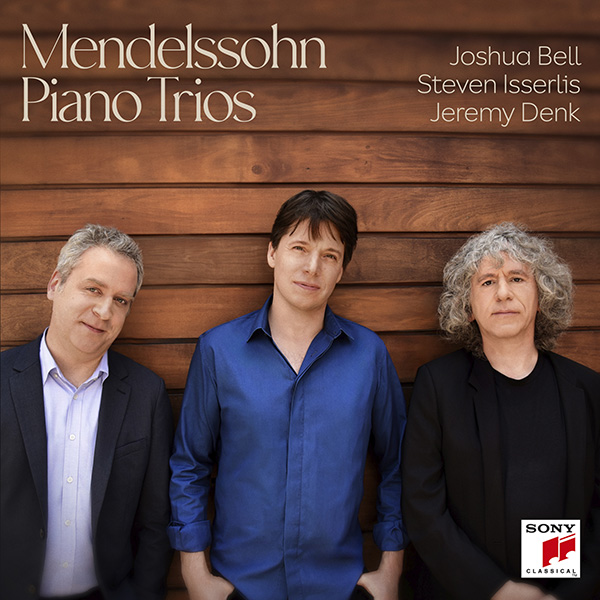
Mendelssohn: Piano Trios 12
Joshua Bell, violin; Steven Isserlis, cello; Jeremy Denk, piano
Sony Classical 0198028324823 (CD). 2024. Adam Abeshouse, prod. and eng.
Performance *****
Sonics *****
In the Sixties and ’70s, Columbia Records featured Eugene Istomin, Isaac Stern, and Leonard Rosethree eminent solo artistsbecause the Istomin-Stern-Rose Trio, in a distinguished chamber music collection. Sony Classical, Columbia’s successor, might have carried out itself one higher with Joshua Bell, Steven Isserlis, and Jeremy Denk.
This could also be "chamber music," however its expressive and dramatic scale rivals that of contemporaneous symphonies. From easy beginnings, the First Trio’s opening and the Second’s finale work up a head of steam; the Second Trio’s turbulence, with the piano bounding throughout, recollects the composer’s concerti. The two gradual actions sing sweetly, just like the Songs with out Words, whereas the scherzosdancey, scurrying, through-composed, comparatively briefkeep away from the Classical A-B-A type.
Both the older and the newer ensembles are attuned to the music’s expressive capability. But the place Istomin and firm painted with a broad brush, Bell et al. are delicate to nuances of inflection and shading. Their compact, unified sonority displays unanimity of objective in each the music’s taut, turbulent drama and its simple, unaffected cantabile, avoiding any trace of sentimentality within the restrained gradual actions. They accomplish this whereas sustaining a "Classical" sense of proportion, projecting clear, satisfying buildings.
Pianist Denk couldn’t have averted standing out. He delivers Mendelssohn’s prolonged passagework, together with the seemingly countless sequence within the growth of the First, with unruffled, lapidary agility. Cellist Steven Isserlis brings a formidable, dusky resonance to his themes, tapering to an incisive focus elsewhere. And Joshua Bell’s pinpoint intonation and pearly tone in alt are breathtaking. Engineering is first-rate.Stephen Francis Vasta
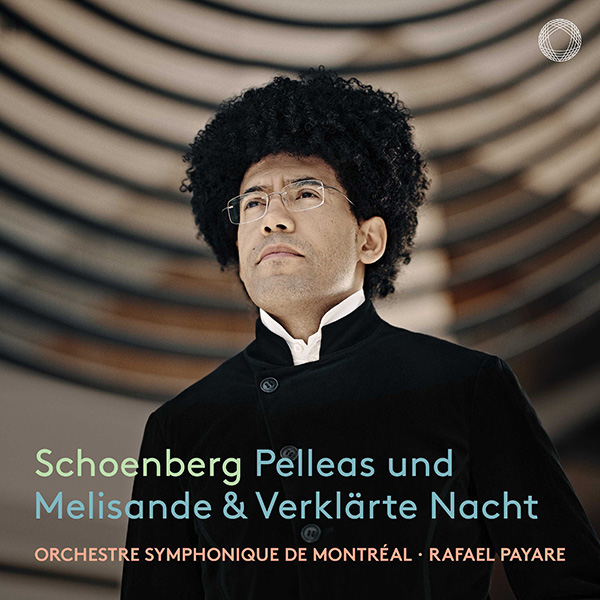
Schoenberg: Pelleas und Melisande; Verklärte Nacht
Montréal Symphony/Rafael Payare
Pentatone PTC 5187218 (CD). 2024. Martin Sauer, prod.; Philippe Bouvrette, eng.
Performance ***
Sonics ****
At first, Payare’s characterful Pelleas suggests the efficiency of a lifetime. In the exploratory, Expressionist opening, he attracts a agency, well-blended sonority. The transfer into the upper registers does not appreciably lighten, however there is a good quickening and buoyancy to the following part, with a welcome rhythmic alertness. The staccato woodwinds of the scene by the spring have a Mendelssohnian lightness; bubbly, elusive textures mark the scene on the fort tower. Payare initiatives the rating’s particular person sections extra clearly than most different performances.
As issues proceed, the enjoying turns into much less assured, nearly as if the piece have been recorded so as. Several sections, just like the "Reprise," start with a poised grace however thicken or turn out to be effortful as they unfold. The busy accompaniments do not all the time line up exactly, although they’re by no means "flawed." And the peaks are harsh and clatteryan unlucky holdover from the Dutoit régimewhich renders sustained tuttis nearly unlistenable. (Having seen the Montréalers in live performance, I’ve heard that grating edge within the enjoying.)
The Verklärte Nacht provides the identical strengths and weaknesses because the Pelleas. Payare, as soon as once more, shows a powerful sense of construction, leaning incisively into climaxes and vital cadences. The sectional blends are lovely and expansive though, oddly, ensemble among the many solo strings is uneasy. The slowish tempi within the quieter sections "get caught" greater than as soon as. After the large D main arrival, the solo cello and violin do counsel this system’s "dialogue," however the extra intricate writinga whole lot of itdoes not go a lot of anyplace. The lead into the ending, whereas gentle and clear, does not shimmer. It’s all a misplaced alternative.
The replica is superb, however the booklet lists monitor 2, unforgivably, as "Principle Theme."Stephen Francis Vasta
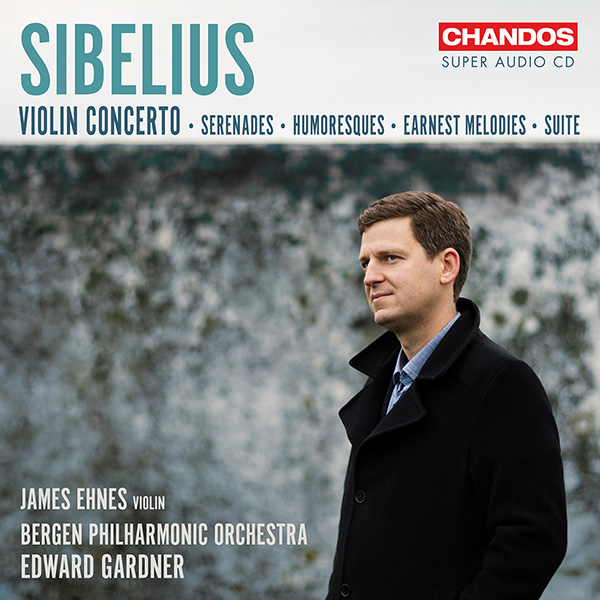
Sibelius: Violin ConcertoSerenadesHumoresquesEarnest MelodiesSuite
James Ehnes, violin; Bergen Philharmonic Orchestra, Edward Gardner, cond.
Chandos CHSA 5267 (auditioned in 24/96 WAV). 2024. Brian Pidgeon, prod.; Ralph Couzens, eng.
Performance ****½
Sonics ****
Despite its darkish, brooding introduction, inward center motion, and thrilling climax, Sibelius’s Concerto for Violin and Orchestra, Op.47 (19031905) took a very long time to win a following. Jascha Heifetz is the violinist most intently related to the work; most veteran audiophiles know the Lithuania-born, Russia-schooled grasp’s second, Living Stereo recording from 1959not his first, from 1935. With that recording already within the assortment, each Sibelius lover will possible ask, "Is Ehnes’s recording price listening to or buying?"
Absolutely. The darkish decrease tones of Ehnes’s 1715 "Marsick" Stradivarius are good for the primary motion, and his excessive tones soar sweetly. He finds a super mate in conductor Edward Gardner, who ensures that the Bergen Philharmonic’s quantity and tone complement Ehnes’s introverted strategy. Together, they obtain ranges of subtlety untouched by Heifetz’s conductor for his stereo effort, Walter Hendl.
Ehnes does not attempt to match Heifetz’s virtuosity and pace within the closing motion, taking 28 seconds longer, emphasizing lyricism over propulsive brilliance. Gardner is equally restrained; observe the absence of an emphatic closing chord. This pays dividends within the second motion, which is rather more shifting than Heifetz’s strategy, and within the fantastically executed opening motion.
The longest of the opposite, much less well-known itemsthe second of Sibelius’s Two Serenades, Op.69 (191213)is 6:28; most are shorter than 4:00. Many of those works are good "filler" for classical radio stations in want of one thing candy to fill a time slot; others, significantly the three-movement Suite, Op.117 (1928-29), abound in beautiful, charming, joyful music price enjoying on repeat.Jason Victor Serinus
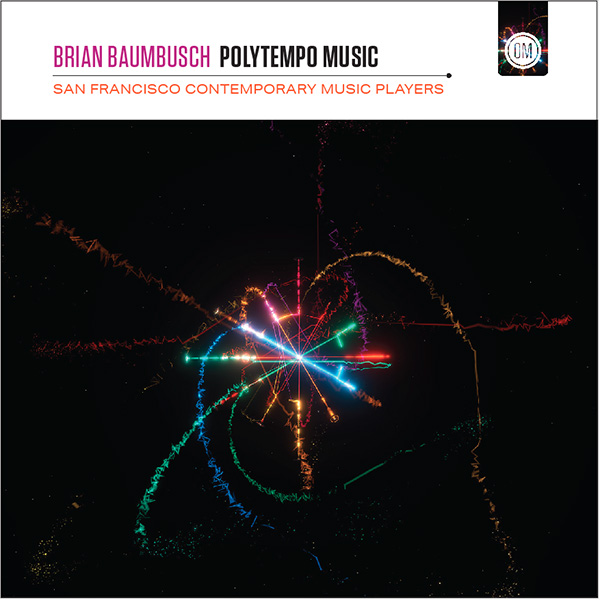
Brian Baumbusch: Polytempo Music
San Francisco Contemporary Music Players, Brian Baumbusch, cond.
Holography Records, no catalog quantity (auditioned as a VR app). 2024. Baumbusch, Eric Dudley, Richard Aldag, prods.; Baumbusch, eng.
Performance ****
Sonics ***½
This is not a lot a file evaluation as a evaluation of a brand new variety of recording. While the music is out there in quite a lot of codecs, you may want a VR headset for the total expertise, the one known as Meta Quest, beforehand often known as Oculus Quest earlier than adopting the title of father or mother firm Meta.
Brian Baumbusch composed this attention-grabbing music for 12 musicians, and every recorded their half to a click on monitor individually. This allowed Baumbusch to mix the music in time and in house; consider it as sonic choreography. (It additionally allowed every musician to play at a unique tempo, for attention-grabbing musical results when mixed.) Think of it as "immersive audio," like Dolby Atmos, however on steroids.
Baumbusch choreographs the musicians (or reasonably their sounds), shifting them round in 3D house. What’s extra, whereas Dolby Atmos permits listeners to rotate, tilting the top up or down or aspect to aspect, Baumbusch’s expertise lets listeners with a VR headset translate as effectively, navigating a path by means of the music and the musicians to supply a singular expertise every time. If you need to hear a musical line extra clearly, simply stroll as much as italthough the musician may additionally transfer.
Next, Baumbusch created a visible illustration of the music, a easy however enthralling 3D lightshow towards a black background, immediately from the musical rating. In some sense, the lightshow charts the trail of the musicians, by means of time and house however particularly relative to one another. Colorful spots and features swirl, diverge, and are available collectively as you look on and round, exploringswimmingtowards a background of seemingly infinite depth. For now, the music is compressed, and the headset drove my headphones poorly, however such issues could be improved.Jim Austin
HI-FI News
by way of InnerFidelity https://ift.tt/v7Gtopl
December 12, 2024 at 04:31PM
-
Product on sale
 Audiophile Vinyl Records Cleaning BundleOriginal price was: €69.90.€59.90Current price is: €59.90. incl. VAT
-
Product on saleEasy Start Vinyl Records Cleaning KitOriginal price was: €69.90.€59.90Current price is: €59.90. incl. VAT
-
Vinyl Records Cleaner Easy Groove Concentrate€34.95 incl. VAT
-
Easy Groove Super Set€199.00 incl. VAT
-
Easy Groove Enzycaster – vinyl records prewash cleaner€34.95 incl. VAT
-
Easy Groove Extreme MK. II- vinyl records prewash cleaner€45.00 incl. VAT
-
Vinyl Records Cleaner – Easy Groove Virgin Concentrate€35.00 incl. VAT
-
Easy Groove Spray&Wipe vinyl records cleaner€34.95 incl. VAT


