
World News
Maestros unfiltered
Maestros unfiltered
What do conductors do, and the way do they do it? Peter Quantrill says two latest memoirs elevate the veil on the supposed mysticism of a really sensible career, from contrasting views
There is a pleasant irony to the truth that probably the most silent musicians of all are required to be the perfect with phrases. Orchestras could just like the conductors who communicate the least, however clarification, correction and encouragement can’t completely be executed on the tip of a baton. Meanwhile, the general public is perennially fascinated by the ability dynamic at play when a single determine appears to conjure unity from the abilities of 100 people.
What do conductors do, and the way do they do it? The greatest reply I’ve heard got here from Bernard Haitink, interviewed late in life by John Bridcut. ‘I’m superb at translating music with my fingers.’ Conductors do much more than that, particularly within the subject of opera, however Haitink’s phrase elegantly outlines the paradox between the technical and ineffable parts of his career.
Made, not born
So it’s that, at a time when books about music compete for a readership ever dwindling by lack of primary musical training, conducting manuals and memoirs nonetheless maintain a spot out there. Faber & Faber has lately revealed two contrasting examples. Alice Farnham skilled with the Finnish magus of modern-day conducting expertise, Ilya Musin. Her expertise extends to opera homes and orchestras throughout the UK and Scandinavia.
Farnham has no glamorous submit or report contract, so the quilt of In Good Hands is an summary design which tucks away her title within the nook. Meanwhile Sir Antonio Pappano will get a gilt-edged portrait, and a subtitle so anodyne – ‘My Life In Music’ – that it features as an area filler. No introduction wanted.
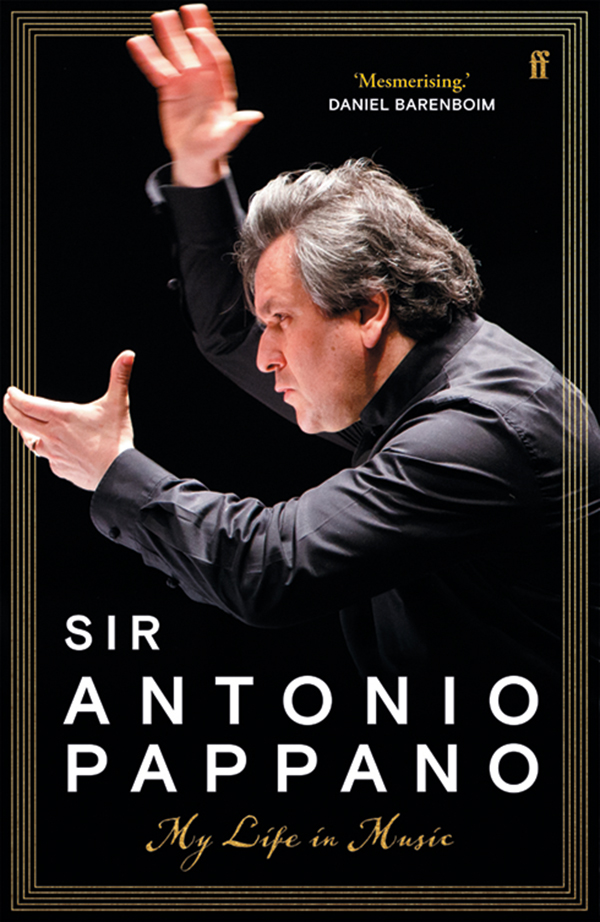
Sir Antonio Pappano on the quilt of his memoir My Life In Music [ISBN 9780571371730] whereas high image exhibits Alice Farnham, conductor and writer of In Good Hands [ISBN 9780571370511] pictured in 2017 by Swedish photographer Maryam Barari
Open them up, and each books tread parallel if contrasting paths. Conductors are made, not born. Farnham turned an organist and organ scholar, very a lot on her personal initiative. Pappano was pressed into working for his father’s studio. She took conducting classes at a formative stage, whereas he couldn’t conduct his means ‘out of a paper bag’ when he first stood in entrance of an orchestra on the urging of a singer he had coached.
Both books emerged from the interval of inactivity and reflection pressured on them by lockdown, and each authors are robust and practised communicators. Both are candid about their very own shortcomings and beneficiant in reward of others. Both of them, outlining their formation, element the 1000’s of hours of examine and follow that earned them the precise to be taken critically in entrance of hard-bitten skilled musicians.
Choosing between them, although, I might unhesitatingly choose Farnham. It’s partly a matter of tone. I as soon as noticed Pappano give a 90-minute illustrated lecture on Puccini, sitting on the piano with out notes, concepts tumbling out of a thoughts in fifth gear. The memoir, although, is written ‘with the assistance of Jon Tolansky’, and it exhibits, in lots of sudden shifts down from fifth to 3rd, when the necessity is felt to elucidate, to shine, to translate from speech to web page. It’s a disgrace.
Farnham shrewdly ignores the problem of gender, then dispatches it in a ultimate chapter. She takes the reader behind the scenes to show that the theatre continues to be the perfect place for a younger conductor to study the ropes in opera and ballet, overcoming challenges of co-operation and co-ordination extra complicated than something they are going to face in live performance. This is one thing Sir Charles Mackerras used to emphasize, but it surely nonetheless comes as a shock to readers outdoors the career.
Taking notes
Farnham’s phrases are all hers, I’m certain. I learn her prose and see her in rehearsal, inspiring her musicians with assurance and a touch of charisma. She takes a collaborative method to her craft, interviewing different conductors together with Pappano, who tellingly remarks that the picture of the conductor as ‘a grey-haired demi-monster with final authority is passé’. Whether sitting on stage or within the viewers, you’ll know that you just had been ‘in good fingers’ with Alice Farnham.
HI-FI News
through Hi-Fi News https://ift.tt/BNihXJn
March 4, 2025 at 09:57PM
-
Product on sale
 Audiophile Vinyl Records Cleaning BundleOriginal price was: €69.90.€59.90Current price is: €59.90. incl. VAT
-
Product on saleEasy Start Vinyl Records Cleaning KitOriginal price was: €69.90.€59.90Current price is: €59.90. incl. VAT
-
Vinyl Records Cleaner Easy Groove Concentrate€34.95 incl. VAT
-
Easy Groove Super Set€199.00 incl. VAT
-
Easy Groove Enzycaster – vinyl records prewash cleaner€34.95 incl. VAT
-
Easy Groove Extreme MK. II- vinyl records prewash cleaner€45.00 incl. VAT
-
Vinyl Records Cleaner – Easy Groove Virgin Concentrate€35.00 incl. VAT
-
Easy Groove Spray&Wipe vinyl records cleaner€34.95 incl. VAT







