
World News
March 2025 Classical Record Reviews
March 2025 Classical Record Reviews
Franck: Symphony In D Minor
Fauré: Pelléas et Mélisande
Berlin Philharmonic/Daniel Barenboim
DG 486 6008 (CD). 2024. Marco Buttgereit, prod.; Gregor Schweiger, eng.
Performance **
Sonics ****½
I used to be moderately hoping, given the Berlin Philharmonic, that this may enhance on Barenboim’s earlier Franck recording with the erratic Orchestre de Paris, which was stricken by his fake-Furtwängler mannerisms. This one has a number of ensemble issues attribute of Barenboim’s conducting, however the textures are constantly clear. Still, as Bernstein’s Cunegonde sings, "Ah, ’twas to not be." The enterprise suffers from terminal sluggishness.
The first motion is promising. The wind entry has acceptable organlike fullness. But the Allegro non troppo is non troppo certainly, with an oozy second group and a stiff climax. At the beginning of the event, the wind chords lag conspicuously behind the strings; unwieldy punctuations additional impede musical progress, and, regardless of Barenboim’s greatest efforts, he cannot get the wind again into its sails for the coda.
The Allegretto suggests spacious introspection, however at the price of any actual momentum. And the Finale, beginning with an unclear assault, is massively arthritic. Tempi go from very average to even slowerthe ritard between the principle themes nearly goes backwardand after the go to by the Allegretto‘s theme, the return to duple sounds misplaced within the woods. The first theme’s "triumphant" recap positively lumbers, because the symphony staggers to a dogged end.
Pelléas improves issues a bit. Barenboim brings to the Prélude a delicacy not usually related to him. The woodwinds add urgency, and the primary climax is warmly expansive, although Barenboim bangs into the second. But the opposite actions by no means notice their potential: Even the haunting flute-over-harp of the Sicilienne fails to construct to something extra. The acoustic is nice, with solo and unison horns exhibiting some depth.Stephen Francis Vasta
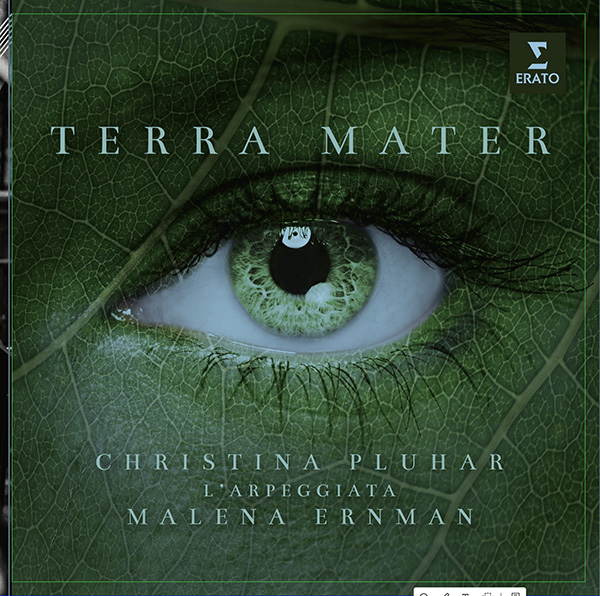
L’Arpeggiata: Terra Mater
L’Arpeggiata, Christina Pluhar, cond.; Malena Ernman, mezzo-soprano
Erato 5021732533753 (reviewed as 24/96 obtain). 2025. Mireille Faure, prod. and eng.
Performance *****
Sonics ****½
The liner notes to L’Arpeggiata’s marvelous Terra Mater (Mother Earth) start by summarizing a sobering speech delivered by Thomas Stocker, Professor Emeritus on the Oeschger Centre for Climate Change Research, in 2022: "One of the best issues of the age is the local weather disaster." That’s an uncommon lede for liner notes. But this maximally colourful recording, which till the ultimate observe, Eden Ahbez’s "Nature Boy," vegetation its roots in seventeenth century Europe, sprouts from the endlessly ingenious creativeness of multi-instrumentalist Christina Pluhar. A dry treatise on local weather change is the farthest factor from Pluhar’s thoughts. This is, in any case, the girl who fills Carnegie Hall with ecstatically cheering followers who ceaselessly leap for pleasure.
Terra Mater‘s nature-related repertoire mixes works by Biber, Monteverdi, Arne, and others with conventional English ballads and dance tunes. Some items are named for animals, whereas others heart on nature and the seasons. One large feather in Pluhar’s cap is her alternative of mezzo Malena Ernman as soloist in 10 of the 20 choices. Ernman, who’s the mom of local weather activist Greta Thunberg and the creator of a e-book on local weather change, has a remarkably androgynous, endlessly fascinating voice of the sort Pluhar favors. In some tracks, together with Handel’s "’Twas When the Seas Were Roaring," she sounds extra like a countertenor than a mezzo-soprano.
The baroque instrumentsourced nature sounds L’Arpeggiata liberally provides to some tracks are equally pleasant and hilarious. They go hog wild in Georg Caspar Schürmann’s Sinfonia pour la tempête (Symphony for the Tempest) earlier than ultimately grounding with "Nature Boy," which Ernman sings in a bluesy type harking back to Cécile McLorin Salvant. Terra Mater is a wonder-filled delight.Jason Victor Serinus
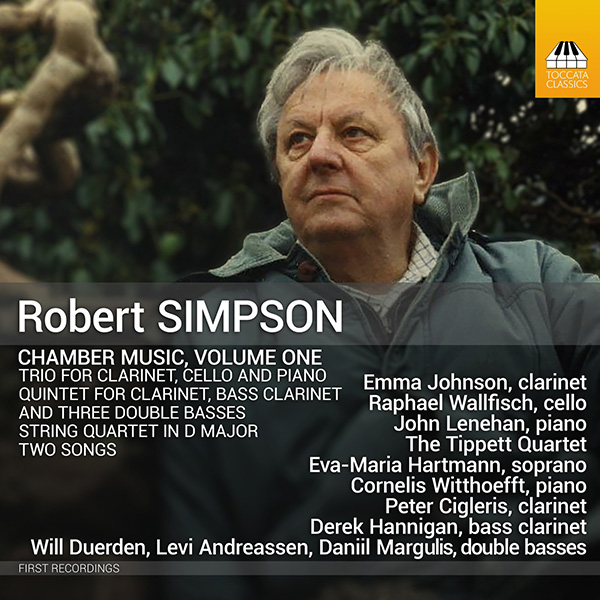
Robert Simpson: Chamber Music, Volume One
The Tippett Quartet; Emma Johnson, clarinet; Raphael Wallfisch, cello; others
Toccata Classics TOCC0701 (CD). 2025. Michael Ponder, Lorenz Lehmann, prods. and engs.
Performance ****
Sonics ****
Much of Simpson’s music was documented in a wide-ranging sequence on Hyperion. Now the intrepid Toccata Classics makes an attempt to fill in some nooks and crannies.
Many of the items do not sound just like the composer we all know. The Quartet in D main, a scholar work predating the numbered quartets, opens with an unabashed Romantic theme. The injection of acerbic dissonance appears arbitrary. Sustained sonorities disintegrate into an all-pizzicato texture for the second theme, a novel transition. The center actions are sleek and looking, respectively. The Presto‘s incisive theme brings a fugue, which ties issues up effectively. The exemplary, astute Tippett Quartet sells the piece convincingly.
Eva-Maria Hartmann’s tuningnow flat, now sharpdoes not serve Tröcknet nicht effectively; she’s extra dependable within the linear British idiom of The Cherry Tree. Cornelis Witthoefft is the achieved pianist.
The first motion of the clarinet Trio options sparse, "trendy" textures; within the second motion, clear rhythmic patterns do not segue logically. Only the edgy, agitated finale works coherently. Clarinetist Emma Johnson shows advantageous management, however Raphael Wallfisch’s vibratoless cello undercuts his lyric phrases. John Lenehan’s ringy piano chords assist.
The Quintet for Clarinet, Bass Clarinet and Three Double Basses works much better than the mix guarantees. In the ingenious opening, the basses enter one after the other, with every of the clarinets working unobtrusively right into a midrange texture; Peter Cigleris infuses clarinet traces with uneasy expression, whereas the bass provides resonant depth. Triplet curlicues in each clarinets dominate the central Allegro; the Adagio calms down, the clarinets mixing in thirds, however the ending is unresolved.
The sound is okay.Stephen Francis Vasta
HI-FI News
by way of Stereophile.com https://ift.tt/w27tR64
March 14, 2025 at 01:40PM
-
Product on sale
 Audiophile Vinyl Records Cleaning BundleOriginal price was: €69.90.€59.90Current price is: €59.90. incl. VAT
-
Product on saleEasy Start Vinyl Records Cleaning KitOriginal price was: €69.90.€59.90Current price is: €59.90. incl. VAT
-
Vinyl Records Cleaner Easy Groove Concentrate€34.95 incl. VAT
-
Easy Groove Super Set€199.00 incl. VAT
-
Easy Groove Enzycaster – vinyl records prewash cleaner€34.95 incl. VAT
-
Easy Groove Extreme MK. II- vinyl records prewash cleaner€45.00 incl. VAT
-
Vinyl Records Cleaner – Easy Groove Virgin Concentrate€35.00 incl. VAT
-
Easy Groove Spray&Wipe vinyl records cleaner€34.95 incl. VAT


