
World News
Cambridge EXN100 streaming D/A processor
Cambridge EXN100 streaming D/A processor
The marriage of little streaming computer systems to DACs was at first a shotgun factor, a means so as to add Swiss Army knife capabilities at a value level. That was again when it was cutting-edge to have a NAS server stuffed with digital information on the house community, and when industrial streaming was new, primitive, and lossy. Remember Pandora? Cool thought, however who desires to take a seat by adverts and never have the ability to skip over greater than a handful of disliked tunes each hour. Then Spotify got here alongside. Then Apple and Amazon jumped in, and that is all she wrote. Eventually, streaming even obtained round to us audiophiles who desired lossless audio of no less than CD decision. Viva Qobuz!
Since streaming grew to become the primary mass medium for listening to music, a tool that is only a DAC with out an hooked up streamer appears uninteresting, and a poor worth (footnote 1), until the streamer is just a little USB gadget to drive headphones from a telephone or laptop.
Many hi-fi producers appear to agree, since these days the market is flooded with streaming DACs of many configurations and dimensions, and costs starting from a pair hundred to tens of hundreds of {dollars}. A candy spot for construct high quality, options, and excellent sound appears to be between $1500 and $2500. Scan the previous two years of Stereophile, and you can see many streamer-DACs and streamer-DAC-amplifiers on this value vary. In this section of the market, competitors is fierce.
From England, a brand new contender
The EXN100 is Cambridge Audio’s state-of-the-art streaming DAC. It’s half of the brand new EX line; the opposite half is the EXA100 built-in amplifier.
These parts are positioned above Cambridge’s midline CX sequence and under the "reference-level" Edge sequence (footnote 2). Priced a buck lower than $1800, the EXN100 contains the newest iteration of Cambridge’s StreamMagic platform (4th era), an inner laptop that plucks music from numerous streaming companies or a house community and feeds the bits and bytes to the DAC, on this case one which’s based mostly on the well-regarded ESS ES9028Q2M (footnote 3). The predominant management interface is Cambridge’s user-friendly StreamMagic app, which is on the market for iOS and Google units. The EXN100 is licensed Roon Ready.
Beyond the full-function streamer, the EXN100 is a DAC with a number of and diverse inputs: coaxial S/PDIF on RCA, optical TosLink, HDMI-eARC for TV sound, USB connection to a pc, a USB socket for a flash drive, and wi-fi antennas for Bluetooth, Apple AirPlay, and Google Cast.

Internet and native community connectivity is supplied by an Ethernet port and/or Wi-Fi. Two digital outputs, RCA S/PDIF and TosLink, imply the EXN1000 can be utilized as a pure streamer with a separate DAC. Users can select both the balanced (on XLR) or unbalanced (on RCA) analog outputs.
To the best of the big 1280×569pixel TFT colour show display screen is a quantity management knobso the EXN100 can perform as a standalone preamp in an all-digital system. The StreamMagic app, and the machine’s on-screen menu tree, embody a setting to show "preamp mode" on or off; set to off, the quantity knob does not work, and the outputs are at normal line stage: 4V max from the balanced outputs, 2V max single-ended.
The EXN100 was designed in England by Cambridge’s crack engineering employees and manufactured in China.
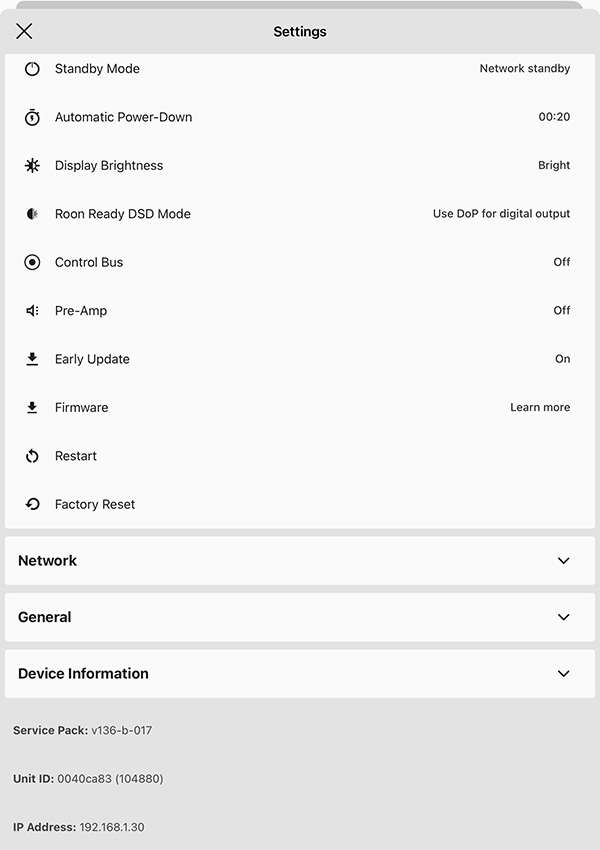
Getting it going
I nonetheless have the Cambridge MXN10 streamer-DAC I reviewed final yr; the StreamMagic app was nonetheless put in on my units. I began out by establishing the EXN100 in my Wi-Fi community: I plugged it in and turned it on. The app was in a position to find it by Bluetooth, pair with it, and signal it onto the Wi-Fi community. Then the EXN100 robotically undertook a firmware replace, which took a number of minutes to finish. Then it restarted, and the app took some time to find it within the Wi-Fi community once more, after which all was good. I streamed numerous albums and tunes from my native community’s NAS server (a Synology DS213i, working MinimServer), and from Qobuz, which may be accessed straight from the StreamMagic app.
This first dance with the EXN100 was with my workplace system: McIntosh MA6500 built-in amplifier driving Amphion One18 audio system. I linked to the amp from the RCA unbalanced output.
Right away, I used to be impressed with the EXN100’s sound. It is fast, exact, and full, just like the MXN10 however much more so. It appeared like I obtained even nearer to listening to every part there was to listen to, with my head about 4′ away from the small however mighty Amphion audio system, that are situated above and behind my laptop monitor on Auralex foam wedges that angle them down towards my face.

The a number of voices with Natalie Merchant on her tune "The Peppery Man" (from Leave Your Sleep, HD Qobuz stream) had been round and behind her, a wonderful 3D phantasm that served to maintain every voice distinct. A really completely different instance was "George’s Dilemma" from Clifford Brown and Max Roach’s Study in Brown (streamed from a needle drop I made from the Mosaic LP reissue). This previous (1955) recording, made at Capitol Studios in New York City, is a good instance of a 3D-sounding mono combine. Each musician’s sound was distinct. I heard every particular person be aware even when the group performed collectively. Each soloist appeared to come out to the entrance, between the 2 audio system (in fact), their life drive rising over many years, grooves, and digital bits. All this got here by tremendous with the killer-valuepriced MXN10, however with the EXN100, it was cinematic, with a bit extra flesh-and-blood humanity to the voices and punch and drive to the devices.
What’s not cinematic is the EXN100’s display screen, although it is pretty beneficiant. Using the Info ("i") button on the display screen’s high proper, I might change the show to a digital clock or animated "VU meters" (which look cool however do not react like actual analog meters, no less than not just like the skilled variety I’m used to), or monitor and album metadata, with a pleasant, full-color picture of album art work. From a few ft away, I might learn the metadata and absorb some art work particulars, however the display screen is just too small to be of a lot use from throughout a room. That’s okay as a result of all the identical information is displayed within the StreamMagic app or Roon (usually, with the latter, with further metadata and context data).
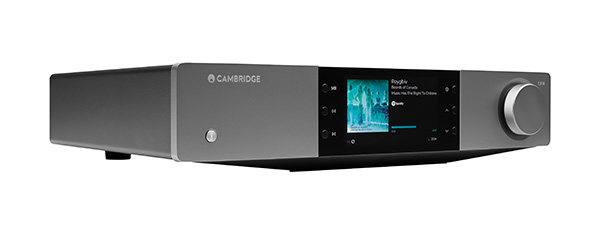
The entrance panel of the EXN100 is enticing. Far left is the ability On/Off button. Far proper is the quantity management. To the left of the show display screen are transport-control buttons (skip ahead, skip reverse, play/pause). To the best of the display screen, below the Info button, are scroll-up and scroll-down buttons. The information button additionally toggles to machine settings, all of which may also be accessed within the StreamMagic app.
Footnote 1: It may very well be argued that at a time when a top quality DAC is sturdy but streaming know-how remains to be evolving, it is smart to separate these features. It may very well be counterargued that firmware updates can accomplish quite a bit, that streaming tech is not altering very quick and that having the streamer and DAC shut collectively is smart.Jim Austin
Footnote 2: The EXN100 is the corporate’s state-of-the-art streamer-DAC as a result of, whereas the Edge sequence contains the Edge NQ, which Cambridge calls a preamplifier with community participant, there is no such thing as a Edge streamer-DAC. See Mark Henninger’s Industry Update merchandise about Cambridge’s EX line within the February 2025 concern of Stereophile.
Footnote 3: See tinyurl.com/subvwekc.
HI-FI News
by way of Stereophile.com https://ift.tt/vh4XokP
April 8, 2025 at 03:27PM
-
Product on sale
 Audiophile Vinyl Records Cleaning BundleOriginal price was: €69.90.€59.90Current price is: €59.90. incl. VAT
-
Product on saleEasy Start Vinyl Records Cleaning KitOriginal price was: €69.90.€59.90Current price is: €59.90. incl. VAT
-
Vinyl Records Cleaner Easy Groove Concentrate€34.95 incl. VAT
-
Easy Groove Super Set€199.00 incl. VAT
-
Easy Groove Enzycaster – vinyl records prewash cleaner€34.95 incl. VAT
-
Easy Groove Extreme MK. II- vinyl records prewash cleaner€45.00 incl. VAT
-
Vinyl Records Cleaner – Easy Groove Virgin Concentrate€35.00 incl. VAT
-
Easy Groove Spray&Wipe vinyl records cleaner€34.95 incl. VAT







