
World News
Technics SC-CX700 lively loudspeaker system
Technics SC-CX700 lively loudspeaker system
The normal Specifications sidebar on this evaluation is a nuts-and-bolts itemizing of {the electrical} and bodily properties of the Technics SC-CX700 loudspeaker ($2999.99/pair), who made it and the place, and a broadly various quantity of details about its electrical and acoustical efficiency. The info comes from the included literature, obtainable downloads, and no matter I may discover on the producer’s web site.
Note the whole absence of the standard technical details about the design or development of the coaxial driver or concerning the crossover frequency and slope. Missing, too, are efficiency specs for frequency response, sound-pressure stage, and distortion. That disappoints me as a result of I like numbers, however all of the actually fascinating stuff about these audio systemalthough expressed with out as many numbers as I’d wantwill be discovered on the Technics web site (footnote 1). These embody: what Technics calls "Acoustic Solitude Construction," which isolates the electronics from the loudspeakers structurally and spatially; "Model Based Diaphragm Control," which adjusts diaphragm motion in actual time; and "Space Tune," which incorporates 4 acoustical presets and two ranges of measurement-based room correction. In this evaluation, I’ll weave that info into my very own observations.
The CX700 wi-fi speaker system embodies two vital developments in twenty first century loudspeaker design. The first is using a coaxial driver. The idea will not be new; it dates to the large Tannoy Dual Concentric and Altec Lansing 604 Super Duplex Concentric drivers of the midtwentieth century, however these have been just about sui generis, heroic designs that didn’t trickle right down to the market’s decrease reaches. It took advances in supplies science and engineering to reach on the subtle coaxial drivers turning into in style right this moment. One of those drivers is the premise of Technics’s passive loudspeakers, together with these.
The different pattern is what’s known as "wi-fi audio system." Perhaps it might be extra applicable to name them "built-in audio system," or "system loudspeakers," as a result of they combine the whole lot mandatory for a whole stereo system that may entry, management, and stream music wirelessly (or with a wired Ethernet connection) from a wide array of on-line streaming sources in addition to native file sources with out another gear. Physical sources are additionally honest sport: a CD participant, a sensible TVeven a turntable with no phono preamp so long as it makes use of a shifting magnet cartridge. This speaker system additionally affords tone controls, room EQ, and a subwoofer output.
Arrival and setup
The pair of charcoal-black CX700s arrived in a single 50lb cardboard field, every nestled into multilayer corrugated blocks to assist and defend it. At first this appeared archaic on this age of customized plastic kinds, however the packaging was completely appropriate. The audio system have been well-protected regardless that they took a detour to managing editor Mark Henninger earlier than coming to me. Plus, it is good to know that the packaging (and the audio system!) are CARB section 2 compliant for formaldehyde emissions. The packaging is recyclable.
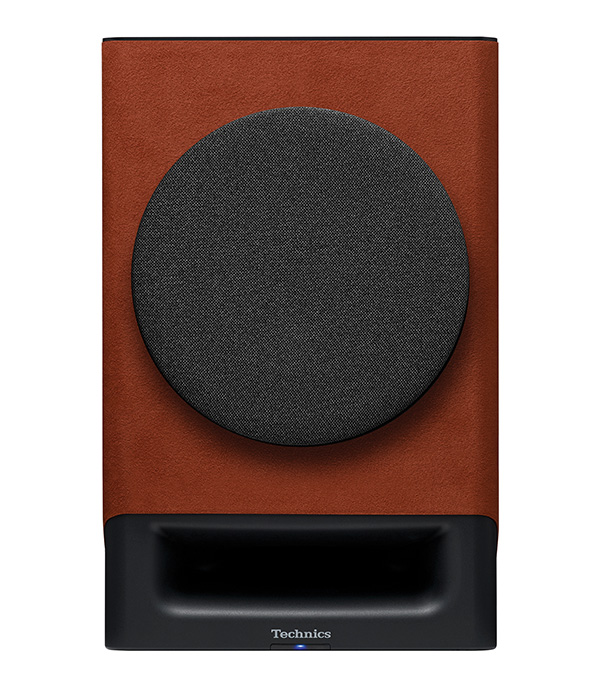
As I reached in to raise out every speaker, I spotted that, first, these are hefty for his or her measurement; second, they’ve slotted vents like these on amplifiers; and third, their entrance and sides are coated in a suede-like materials that is good to the touch and makes the speaker simple to grip. Many and maybe most wi-fi audio system have a "major" speaker that homes all of the electronics (besides in some instances, for the opposite speaker’s amplifiers). As in most such instances, the first and secondary audio system are simple to tell apart by the inhabitants of switches on the highest and again panel: The major speaker, after all, has way more switches. The major CX700 will be positioned proper or left, whichever is nearer to the enter connections; R/L sign routing will be chosen to go well with. Because every speaker comprises its personal amplification, each audio system should be plugged in to an AC outlet.
The two audio system have comparable dimensions and construction. The single coaxial driver dominates the entrance, with its silver diaphragm and tweeter. The black woofer encompass transitions easily to a large, rubbery, contoured ring that in flip grades easily right into a flat entrance panel. The woofer’s middle pole is flared to clean the transition from the ring radiator tweeter to the woofer cone; diffractive transitions appear to be prevented right here. There is a large rectangular port beneath the coaxial driver. At its backside edge is a blue LED energy indicator and, on the first speaker, a sensor for the provided distant management.
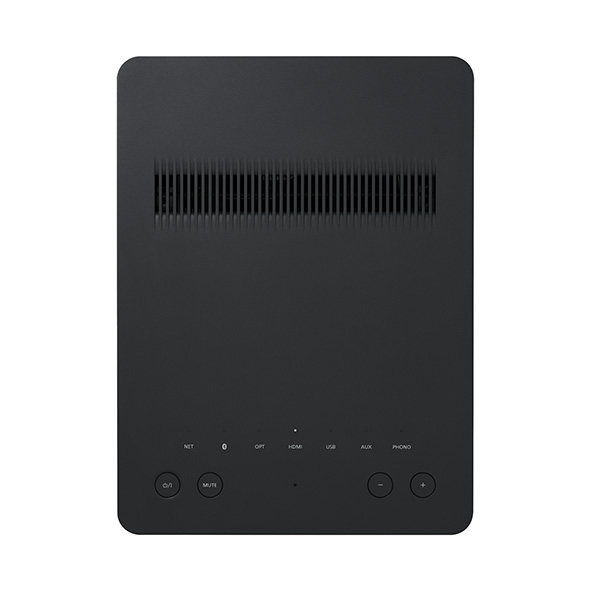
Each speaker is vented by way of a sequence of small slots on its prime floor which, in combination, vent the house that isolates the ability electronics from the loudspeaker drivers (the aforementioned Acoustic Solitude Construction). A lateral cutaway view reveals a considerable partition between the vented enclosure within the entrance and the separate, independently vented enclosure within the rear.
In addition, the first speaker has a management/indicator panel on the highest floor, above the acoustical compartment. Controls embody On/Standby, Mute, Volume (up and down), and a seven-button/LED array to pick out the enter: Ethernet, Bluetooth, optical, HDMI, USB, Aux (line-level analog), and Phono (to attach that shifting magnet phono cartridge). The seven LEDs additionally function error indicators. There can be a microphone for room-correction measurements.

The rear panels should not the identical in any respect. The secondary speaker has solely an AC enter receptacle, an RJ45 jack for making a wired reference to the first speaker, and a button for pairing it wirelessly with the first. This pairing is finished on the manufacturing facility, however this button can be utilized ought to that pairing fail or ought to one of many audio system should be changed.
The major, alternatively, is busy with connections. In addition to the AC enter and the RJ45 for that inter-speaker cable, there is a wired output for a subwoofer (RCA), a change to alter L/R channel project, and the precise inputs corresponding to 6 of the seven sign inputs talked about above. (You do not want a wired enter for Wi-Fi or Bluetooth!)
Finally, there is a floor put up for the phono enter.
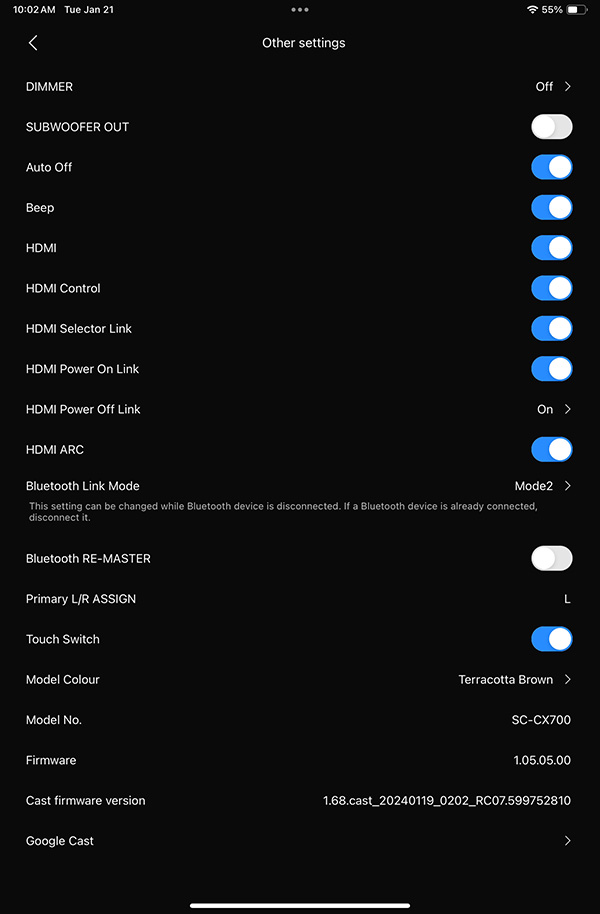
The CX700 will be operated with the offered distant management, the buttons on the highest of the Primary speaker, or the Technics Audio Center app on your smartphone or pill. Setup, nevertheless, calls for use of the app; it is without doubt one of the most complete and coherent management apps I’ve used. The speaker-top operations are restricted and can seemingly not be as handy to entry because the distant management or the cellphone app. The app affords a graphic interface, which I discover important for music choice, however preserving the distant on the listening seat makes it helpful to alter, skip, or repeat tracks, to play or pause the music, or to regulate the amount in case your cellphone or pill’s battery life is low or in the event you simply do not feel like opening the app.
Where to place them?
Technics does not provide devoted stands for the CX700s and didn’t provide me a pair. Many who purchase these audio system will most likely stack them on a console or different furnishings; anyway, in relation to speaker stands, you are by yourself. I had none, so I appealed to my Stereophile colleagues; Editor Jim Austin rescued me by Ubering over a pair of generic, 20"-high metal stands. Until then, I put the CX700s on an open, wall-to-wall shelf that runs throughout the entrance of my room, simply in entrance of the home windows. That put them about 6.5′ aside, about 15′ from me and a few ft behind my KEF Blade Twosnot a configuration I’d counsel or sometimes use myself.
When I ready to play one thing, I discovered that one should select a Space Tune setting; there isn’t a apparent bypass possibility (footnote 2). I attempted the acoustical presets for "Near a Wall" and "On a Shelf." With both, the CX700 sounded heat, a bit boring, and smallnot what I hoped for. Setting it to "Free" made issues worse, and "Corner" wiped away the bass.
I used to be very completely happy when the stands arrived, and I rapidly positioned them and the CX700s in entrance of the Blades about 7′ aside and about 11′ from my listening spot. As quickly as I turned them on, utilizing the now related "Free" setting, I knew issues have been going properhowever have been they proper sufficient? There was nonetheless quite a bit to determine. Are there too many choices?
Yes. And no. In addition to the 4 fastened Acoustical Presets (Free, Wall, Corner, Shelf; footnote 3), Space Tune affords two measurement-based choices. They function equally, by delivering a sequence of pulses and sweeps to every speaker and utilizing the recorded outcome to calculate a room-correction filter. The first of those two measurement choices, referred to as Auto, makes use of the microphone within the major speaker, whereas the second, referred to as Measured, makes use of the microphone on the smartphone the Technics app is working on. The Measured setting, taken on the listening place, ought to end in simpler correction.
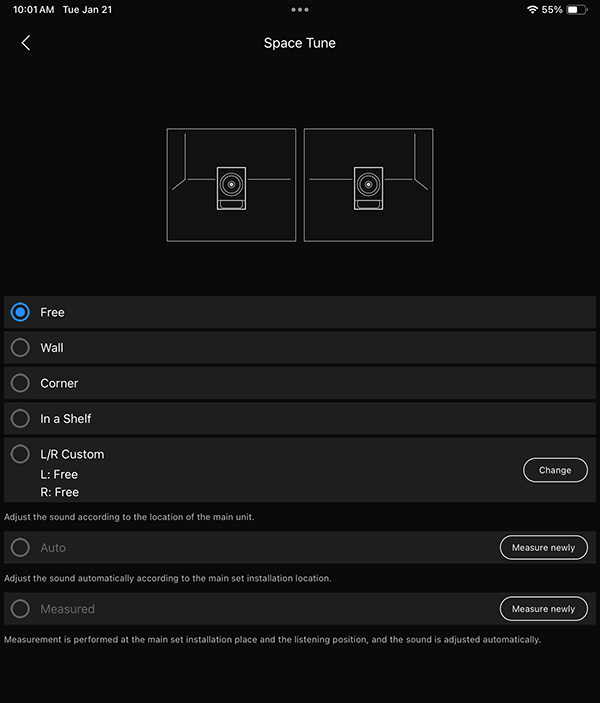
That’s a complete of six correction choices and a vast variety of placement choices. I selected to hear to 3: On the front-wall shelf the place the audio system began out, in entrance of the Blades as described above, and an analogous configuration with the CX700s 9′ aside. With all of the correction prospects, that is 18 mixtures. Rather than describe all of them, I’ll provide some common observations.
The fastened presets make the variations you’ll count on: "Corner" lowers the bass in comparison with "Free." "Wall" is someplace in between "Corner" and "Free"solely a bit heat but additionally brighter. The "Shelf " setting sounded skinny in all three places, most likely as a result of the audio system have been probably not on a shelf.
None of the fastened presets in any place let the CX700s sound pretty much as good because the outcomes of both "Auto" or "Measured."
The outcomes from "Auto" have been well-balanced tonally, however with all three positions, they tended to be spatially expanded"too massive"and endowed voices with a sure aura; my notes say "over ripe."
Consistently, the outcomes from the "Measured" EQ, those made utilizing the microphone on the listening place, have been essentially the most pure, balanced, and spacious sounding. Given the benefit of doing it, this must be each CX700 person’s default preset.
Footnote 1: See us.technics.com/merchandise/wireless-speaker-system-cx700.
Footnote 2: Technics tells me, "Free is the manufacturing facility default and could be thought-about the usual setting."
Footnote 3: There is one other preset, L/R Custom, which allows the person to assign any one of many 4 named presets to every channel individually. This is beneficial with uneven room layouts.
HI-FI News
by way of InnerFidelity https://ift.tt/E64ZkTg
April 9, 2025 at 04:08PM
-
Product on sale
 Audiophile Vinyl Records Cleaning BundleOriginal price was: €69.90.€59.90Current price is: €59.90. incl. VAT
-
Product on saleEasy Start Vinyl Records Cleaning KitOriginal price was: €69.90.€59.90Current price is: €59.90. incl. VAT
-
Vinyl Records Cleaner Easy Groove Concentrate€34.95 incl. VAT
-
Easy Groove Super Set€199.00 incl. VAT
-
Easy Groove Enzycaster – vinyl records prewash cleaner€34.95 incl. VAT
-
Easy Groove Extreme MK. II- vinyl records prewash cleaner€45.00 incl. VAT
-
Vinyl Records Cleaner – Easy Groove Virgin Concentrate€35.00 incl. VAT
-
Easy Groove Spray&Wipe vinyl records cleaner€34.95 incl. VAT


