
World News
dCS Varèse Music System D/A Processor
dCS Varèse Music System D/A Processor
It was throughout a go to to my music room by 5 members of the small Off-Islanders Audio Society that the magic of the dCS Varèse Music System ($267,500 as reviewed; $305,000 with CD/SACD transport) turned clear.
One member had requested the 24/192 model of "Splendido Sundance" from Saturday Night in San Francisco (24/192 FLAC, Columbia-Legacy/Qobuz), carried out by Al Di Meola, John McLaughlin, and Paco de Lucía and recorded stay within the Warfield Theatre on December 6, 1980. I’d attended the unveiling of the LP remastering of this recording, introduced by the album’s co-executive producer, Abey Fon, within the Audio Reference room at High End Munich 2024. The system, which was firstclass, included a VPI Titan turntable, D’Agostino Relentless preamplifier and Relentless 800 mono amplifiers, a VTL TP-6.5 Series II Signature phono preamplifier, Wilson Audio XVX loudspeakers, Nordost cabling, a Stromtank energy generator, and an unheard three-piece dCS Vivaldi APEX music system (footnote 1).
Because many of those elements or their smaller relations populate my reference systemI exploit D’Agostino Momentum M400 MxV mono amplifiers and a Relentless preamplifier, a dCS Vivaldi APEX music system, Wilson Audio Alexia V loudspeakers with LōKē subwoofers, Nordost cabling, and a Stromtank S-4000 MK II XTI discovered the system’s sonic signature fairly acquainted.
What was distinctly totally different about my dwelling setup was that as a substitute of the VPI Titan or the dCS Vivaldi APEX system, we used Qobuz to stream the 24/192 digital model of the album by means of the 5 important containers of the dCS Varèse Music System (footnote 2). Even greater than at High End Munich, I heard three distinct guitars, every with its personal uniquely identifiable coloration and timbre, unfold throughout a large soundstage. The sound could have been a bit brashthat is the character of this singular stay recording, although I could also be shot lifeless for saying sohowever each word was 100% clear and (that phrase once more) distinct. When the three males pull out all stops within the second half of the seven-minute observe, firing off extra notes quicker than anybody may probably tabulate with out AI help, each word remained clear. I heard no distortionnothing to distract anybody from the artistry of three guitar virtuosos of their prime and the thrill they generated. It was supera revelation.
Even earlier than he’d arrived to put in the five-piece Varèse system, Emron Mangelson, director of dCS Americas, had requested if it will be doable for me to maintain the Vivaldi APEX system on my double rack whereas he put in the Varèse system. In so many phrases, he informed me that I would discover it obscure the variations between them except I may carry out direct comparisons.
Having now spent a whole lot of time with the Varèse, each in my music room and through an all-day manufacturing unit tour at dCS headquarters in Cambridge, I have to disagree with Mangelson. The extra you take heed to Varèse, the extra apparent its distinct magic turns into.
The genesis of Varèse
When I reviewed the key Vivaldi APEX DAC improve in 2022the APEX improve can also be obtainable for different dCS DACsI discovered that in the course of the COVID lockdown within the UK, dCS’s two multidecade technical mainstays, Director of Product Development Chris Hales and Technical Director Andy McHarg, began exploring methods to enhance dCS’s proprietary Ring DAC expertise. Hales informed me that he did not have a particular challenge in thoughts, however when he thought he’d discovered one thing value pursuing, he put it on a board so that everybody at dCS may hear. The fruit of the lads’s efforts, he defined, was that main APEX improve.
What Hales didn’t inform me then was prime secret. During the pandemic, everybody was truly arduous at work on the DAC expertise that finally led to the creation of the Mono DACs within the Varèse music system. But once they put their preliminary technological advances, which they dubbed APEX, on a board and found how properly it measured, they determined to make APEX obtainable to house owners of dCS’s present DAC lineup properly earlier than the discharge of Varèse.
As dCS Product Marketing Manager James Cook explains in a video posted on our YouTube channel, the APEX improve features a fully new output stage, enhancements within the transmission of clock and energy provide alerts, and extra. Cook additionally explores why Mono DAC structure eliminates crosstalk and offers different the reason why having separate Mono DACs, energy provides, and transformers for every channel ends in higher efficiency.
"All the analog output circuitry is actually equivalent between an APEX model of Vivaldi and the Varèse Mono DACs," Cook mentioned. "But the Mono DACs take Varèse efficiency fairly a bit greater by advantage of the various enhancements within the energy provide and the mechanical design. For instance, every chassis higher isolates it from any incoming vibrations, and the ACTUS (Audio, Control & Timing Unified System) interface permits us to dump processes to the Core."
For extra on the genesis of Varèse and its Mono DAC expertise, see the David Steven sidebar.
Why add Varèse to a part lineup named for the far better-known composers Bartók, Rossini, and Vivaldi (with Elgar, Delius, Verdi, Scarlatti, Paganini, and Puccini earlier than them; footnote 3)? Multiple conversations yielded a number of responses. To summarize: Edgard Varèse’s compositions, which built-in digital and extremely uncommon devices right into a distinctly uncommon modernist soundscape, propelled classical music into the longer term, inspiring future creators of classical, pop, rock, and digital music. To dCS, naming their new flagship Varèse signified their effort to look into the digital future and study how they may advance person expertise, industrial and mechanical design, and sound.
What Varèse is
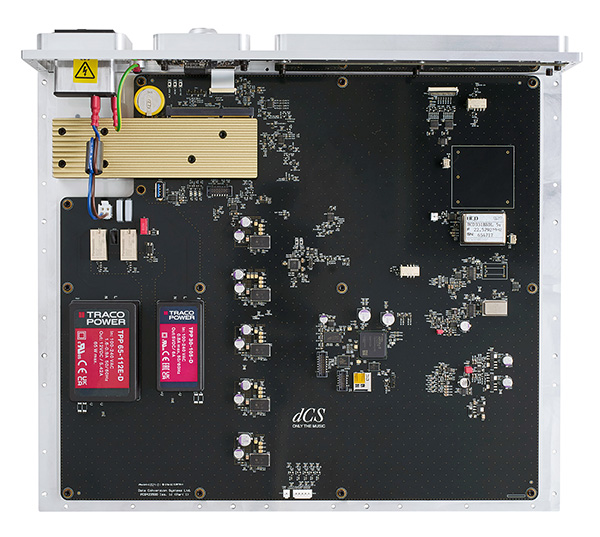
Varèse consists of as much as six part containers. Each has a single, small, fortunately unobtrusive LED on its entrance that blinks because the unit progresses from standby to on; a small standby/on button secreted proper beneath the middle of the entrance panel; and a serious energy on/off toggle swap subsequent to its 15A IEC connector on the rear. The first two chassis maintain the 2 Mono DACs, one for every channel, with new Differential Ring DAC (footnote 4) expertise; mains transformers, regulator topology, secondary circuits, and analog output stage. Each Mono DAC’s energy provide was designed to offer higher frequent mode efficiency on its balanced output.
Each Mono DAC homes twin transformers which might be particular to Varèse. Designed in collaboration with dCS’s longtime transformer builders, whose manufacturing unit is positioned three miles away from the dCS manufacturing unit, one transformer is devoted to analog; the opposite, which is totally different, powers the digital circuits.
The Mono DACs solely carry out D/A conversion; all different processes are dealt with within the Core, Clock, or User interface/show (see under). For extra element on the Mono DACs, please see the interview with David Steven, dCS managing director.
The third chassis is the Core, which dCS calls "the center" of the Varèse music system. The largest part within the system, the Core handles a number of operations together with audio enter, conversion, oversampling, noise shaping, filtering, and streaming. Indeed, the Core handles a lot of the Varèse music system’s processing and "heavy lifting," relieving the Mono DACs and their energy provides from a number of noise-inducing, power-draining processes. It contains an built-in community streamer that, along with the brand new dCS Mosaic ACTUS app, permits PCM charges as much as 24/384 and DSD as much as DSD512 (footnote 5), and routinely oversamples PCM to both DXD (24/352.8 or 384), DSD, DSD128, DSD256, or DSD512 (footnote 6).
The Core accommodates two i.MX 8 modules. Cook, with whom I spent appreciable time at dCS headquarters in Cambridge throughout an all-day tour, outlined i.MX 8 as "a system on a module, or a complete laptop on a chipset." One i.MX 8 module offers with web streaming and UPnP; the opposite runs the ACTUS interface.
Streaming throughout the Core is dealt with by bespoke dCS code; this offers dCS additional flexibility in the way it handles streaming. There is not any Stream Unlimited streaming card contained in the Core; solely the User Interface (chassis #4, above) has one. Consequently, if a brand new streaming service comes alongside that dCS desires to combine, it may well achieve this in a short time.
The Core’s rear panel contains eight distinctive ACTUS connectors that enable it to behave because the hub of the Varèse system. Only a single ACTUS cable connects the Core to every of the opposite elements. Only one in every of these connectorsthe one on the underside left labeled "Clock"is reserved for a particular part.
"We have additional ACTUS ports obtainable for elements coming sooner or later, together with the forthcoming Varèse CD/SACD transport," Cook mentioned. "It’s good to have additional built-in {hardware} headroom."
Designed to be future-proof, the Core has additional area for future add-on modules. If new expertise or options come up, dCS can problem a brand new module that sellers can set up by eradicating one of many again panels from the Core and inserting the brand new module right into a slot. All essential code will already be inside it; no guide programming shall be required. As you would possibly anticipate, dCS may also replace its software program as essential.
My assessment unit contained a brand-new, add-on I/O (Input/Output) module that allowed me to attach my Innuos Statement NG/PhoenixNet combo through USB. Early within the assessment interval, dCS developed new software program that enabled me (finally) to match streaming by means of the Statement utilizing the Innuos Sense app and InnuOS to streaming by means of the Varèse utilizing dCS’s proprietary Mosaic ACTUS app and streaming software program. More on that follows.
Chassis 4 is the User Interface. It features a full-color contact display to trace knowledge, album paintings, play queues, and different settings. Complete with a Bluetooth antenna, it really works in tandem with the Varèse distant management and dCS Mosaic ACTUS app.
Chassis 5 accommodates the Master Clock, which makes use of new ACTUS and patented Tomix protocols to ship dCS’s finest clocking efficiency.
Tomix clock expertise arose out of the necessity to make sure that the Mono DACs have been completely synchronized in order that left and proper digital samples have been transformed at the very same time, with no delay between channels. With all audio alerts passing by means of and processed within the Core, the Core wanted to put time stamps on every audio pattern. dCS’s resolutionTomixembeds a time stamp into the clock sign.
"Tomix is sort of a nifty approach of exactly sending time alerts and unscrambling them with out negatively impacting timing," Cook defined. Transmitted through Varèse’s proprietary ACTUS cabling, dCS claims it superior to the Differential Manchester encoding utilized in conventional AES3 and dCS-developed twin AES. In Differential Manchester encoding, zeros are assigned an extended pulse and ones are assigned a shorter pulse. The downside with this encoding scheme, in line with Cook, is that cable capacitance can have an effect on pulse size, thereby creating jitter. Tomix was designed to transcend such limitations.
The sixth chassis accommodates a CD/SACD transport that had not been launched at press time and so was not reviewed. The tray mechanism is identical as within the Vivaldi transport, however all the pieces else has been redesigned.
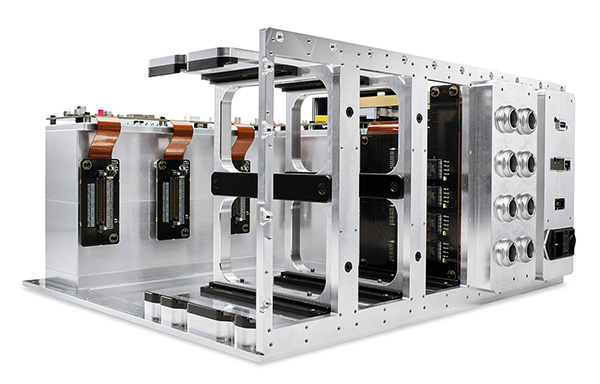
Beyond these fundamental main elements, Varèse contains:
The proprietary ACTUS cable system, mentioned to drastically cut back muddle by combining audio, management, and timing (clock) alerts in a single cable with its personal connectors. Its six twisted pairs of copper cablemuch like an Ethernet cablecarry asynchronous and error-corrected audio alerts, management alerts, and a grasp clock sign through the patented dCS Tomix protocol.
A brand new, downloadable Mosaic ACTUS app (footnote 7) for iOS or Android, designed particularly for Varèse, that permits playback from streaming providers, USB stick, or (with the I/O Module) exterior computer systems, streamers, and network-attached storage (NAS). Networked servers should be UPnP appropriate. The app helps with setup, guiding you thru preliminary system replace and distant configuration. It additionally detects audio sources and controls quantity. Google Cast permits streaming from cellphone, pill, or laptop; you may also use it for multiroom casting with Cast-compatible audio system. Apple AirPlay, Roon, and Tidal Connect are different choices.
The Mosaic ACTUS app lets you configure all system choices, audio sources, streaming providers, native community inputs, Digital I/O Module inputs, and sign path settings together with filters, conversion modes, and mappers. dCS provides six PCM filter selections, 4 usable DSD filter selections, three mapper selections, 5 conversion mode selections (DXD oversampling or DSD/DSD2/DSD4/DSD8 oversampling), absolute part alternative on the analog output, output voltage alternative, and extra. Thanks to Mosaic ACTUS, it’s miles simpler to vary these than in different dCS DACs and music programs. Everything is seen on the appno extra pushing buttons on the entrance paneland filter settings have been blessedly simplified.
For the report, I caught with my Vivaldi selections6V output, Mapper 3, and DXD oversamplingand moved between PCM filters F3, F4, and F5 (footnote 8).
A very new distant management with "capacitive contact glass display and illuminated icons," which expenses through USB-C and connects to the system with Bluetooth. Along with an iPad or laptop outfitted with the Mosaic ACTUS app, it may well management quantity, playback, supply choice, sign path (together with specialised filter selections), customizable favourite settings, and show choices.
An optionally available I/O Module, developed simply in time for this assessment, which may be ordered with the Core or dealer-installed. My I/O Module included three AES inputs for items with AES or Dual AES outputs (eg, Vivaldi or Rossini CD/SACD transports), WCLK Out, S/ PDIF out, USB-B for connecting servers and computer systems, and RS-232 for corresponding ports on Rossini and Vivaldi transports.
Footnote 1: Vivaldi APEX stays in manufacturing and can obtain a sequence of software program upgrades this yr.
Footnote 2: In each instances, I’ve chosen to forgo a CD/SACD transport. I have never performed a silver disc at dwelling for not less than two years. Instead, I’ve transferred most of my assortment to file format and obtain all music for assessment in file format.
Footnote 3: Lina, the title for the product vary (community DAC, headphone amplifier, grasp clock) launched in 2022, is an outlier of types within the dCS pantheon.
Footnote 4: For a brief video rationalization of Ring DAC expertise, see youtu.be/UY5qkK5Moyk.
Footnote 5: Only DSD64 and 128 have been obtainable on the time of this assessment; the upper charges could also be enabled by the point you learn this.
Footnote 6: DSD is neither upsampled nor transformed to PCM. Because DSD256 and DSD512 don’t require any digital filtering on dCS’s half, dCS customers who at present favor the sound of DXD upsamplingrely me amongst themmight want to re-evaluate their desire as soon as DSD256 and DSD512 are enabled.
Footnote 7: See dcsaudio.zendesk.com/hc/en-gb/article_attachments/17728273892380 for much extra.
Footnote 8: F5 routinely defaults to F3 at sure pattern charges.
HI-FI News
through Stereophile.com https://ift.tt/2aDSoFh
April 25, 2025 at 09:37PM
-
Product on sale
 Audiophile Vinyl Records Cleaning BundleOriginal price was: €69.90.€59.90Current price is: €59.90. incl. VAT
-
Product on saleEasy Start Vinyl Records Cleaning KitOriginal price was: €69.90.€59.90Current price is: €59.90. incl. VAT
-
Vinyl Records Cleaner Easy Groove Concentrate€34.95 incl. VAT
-
Easy Groove Super Set€199.00 incl. VAT
-
Easy Groove Enzycaster – vinyl records prewash cleaner€34.95 incl. VAT
-
Easy Groove Extreme MK. II- vinyl records prewash cleaner€45.00 incl. VAT
-
Vinyl Records Cleaner – Easy Groove Virgin Concentrate€35.00 incl. VAT
-
Easy Groove Spray&Wipe vinyl records cleaner€34.95 incl. VAT


