
World News
From Classroom to Code: Innovative Qt Apps by Future Developers
From Classroom to Code: Innovative Qt Apps by Future Developers
In this weblog put up, I need to share how we collaborated with the Cologne University of Applied Sciences (German: TH Köln) to help a brand new era of builders exploring C++ and Qt. As a TH Köln alumnus who started his journey at Qt, I used to be honored by the chance to return and contribute. Alongside the course story, we’re highlighting the work of 5 scholar groups — sharing their concepts, the functions they constructed, and what they discovered alongside the way in which.
The collaboration centered round a brand new course launched by Prof. Dr. Jan Salmen, titled Engineering Desktop Applications with C++ and Qt (EDA). It befell throughout the winter semester of 2024 and was restricted to 40 members. As a newly launched course protecting a variety of software program growth subjects, we didn’t anticipate an amazing response. However, curiosity exceeded expectations, and all obtainable spots had been taken very quickly.
Students at our school might encounter varied programming languages all through their research, corresponding to Java, Matlab, and Python. Courses in C/C++ are additionally provided, however Ulla Derichs and me deliberately needed to develop this to incorporate utility growth with Qt. I’m acquainted with this framework from a few years {of professional} expertise and so I used to be satisfied that we are able to present extremely practice-oriented information in a brand new course. It was an awesome coincidence {that a} scholar (Lucas Haupt), to whom I had talked about our plans, linked me with Dennis. The collaboration was implausible, and the members undoubtedly benefited from the joint effort. I used to be grateful that Ulla managed to deliver two extra motivated college students on board as assistants — Meike Goergens and Moritz Ackermann.
~ Jan Salmen
To deliver the course to life, Ulla offered C++ lecture movies whereas I targeted on Qt studying materials. We supported the scholars with weekly Q&A classes, giving them house to ask questions and dive deeper into the subjects. Their important task was to develop a music participant utility, both individually or in groups of as much as three.
As the course got here to a detailed, it was time for the members to disclose their tasks. Each group tackled the task in their very own method, and the outcomes had been spectacular. Let’s dive into their ultimate creations:
TotallyNotSpotify: A Qt-Powered Audio Player That Turns Sound Into Visual Art
When I began engaged on this venture, my purpose was easy: create a music participant that covers all of the important options whereas retaining the interface clear and purposeful. But as I obtained deeper into the method, I spotted I needed extra than simply an ordinary audio participant — I needed to experiment with visualizing sound in ways in which make listening to music a extra immersive expertise. That’s how TotallyNotSpotify got here to life.
At its core, TotallyNotSpotify delivers each important operate you’d count on from a contemporary audio participant. You can load and play audio information, create playlists, reorder tracks with intuitive drag-and-drop, and management playback with shuffle and repeat choices. The app additionally helps darkish and light-weight modes, letting you tailor the interface to your temper. Beyond these fundamentals, the participant goes the additional mile by fetching detailed metadata through the Last.fm API. When obtainable, you’ll see not solely cowl artwork but in addition extra info just like the artist, album, style, and extra. Clicking on a monitor title or artist seamlessly redirects you to the corresponding Last.fm web page for a deeper dive into the music.
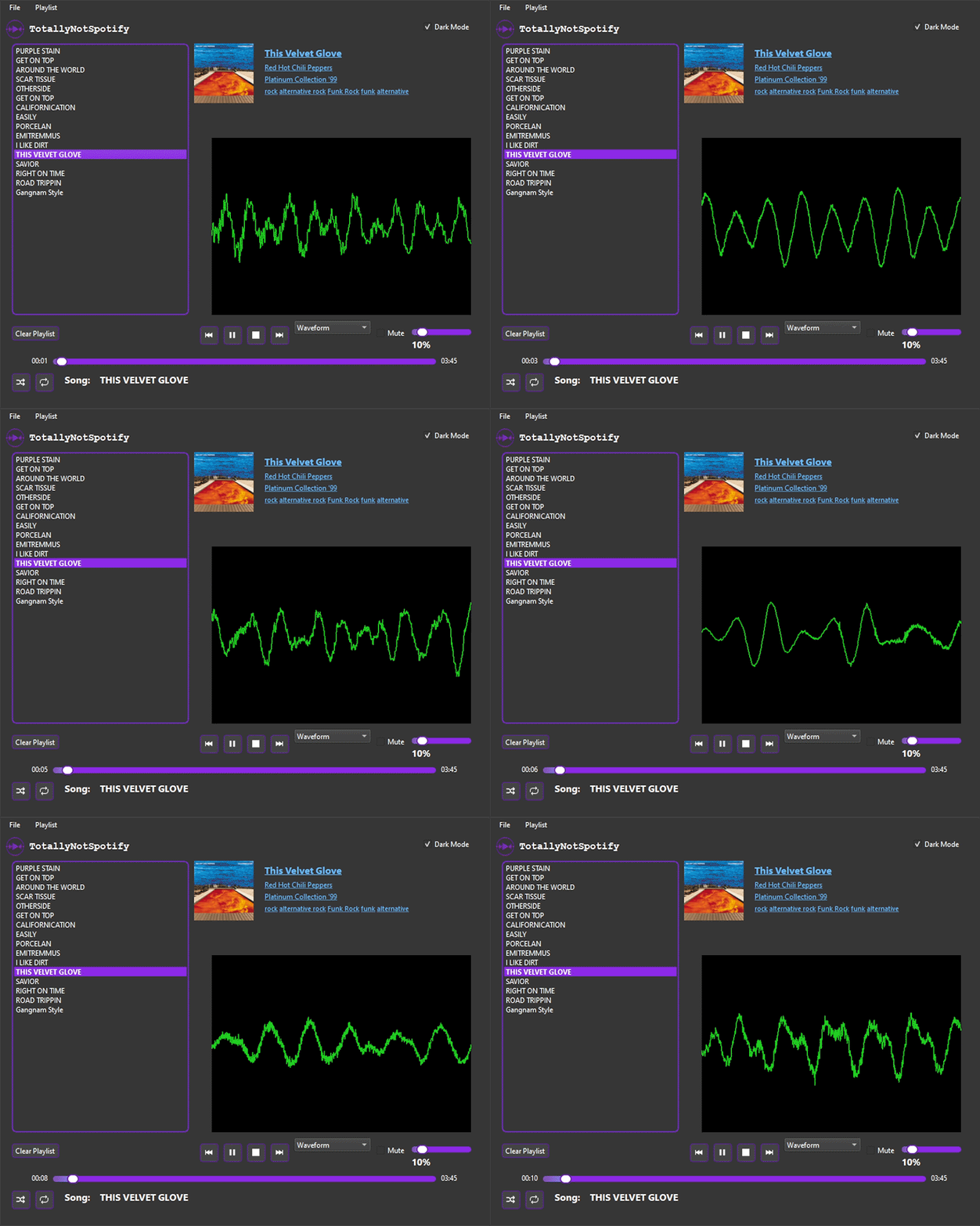
Building on that basis, I included spectrum evaluation utilizing the KissFFT library, so you may also visualize the frequencies of the track. But throughout my exploration for much more artistic methods to visualise audio, I encountered the fascinating world of Oscilloscope Music.
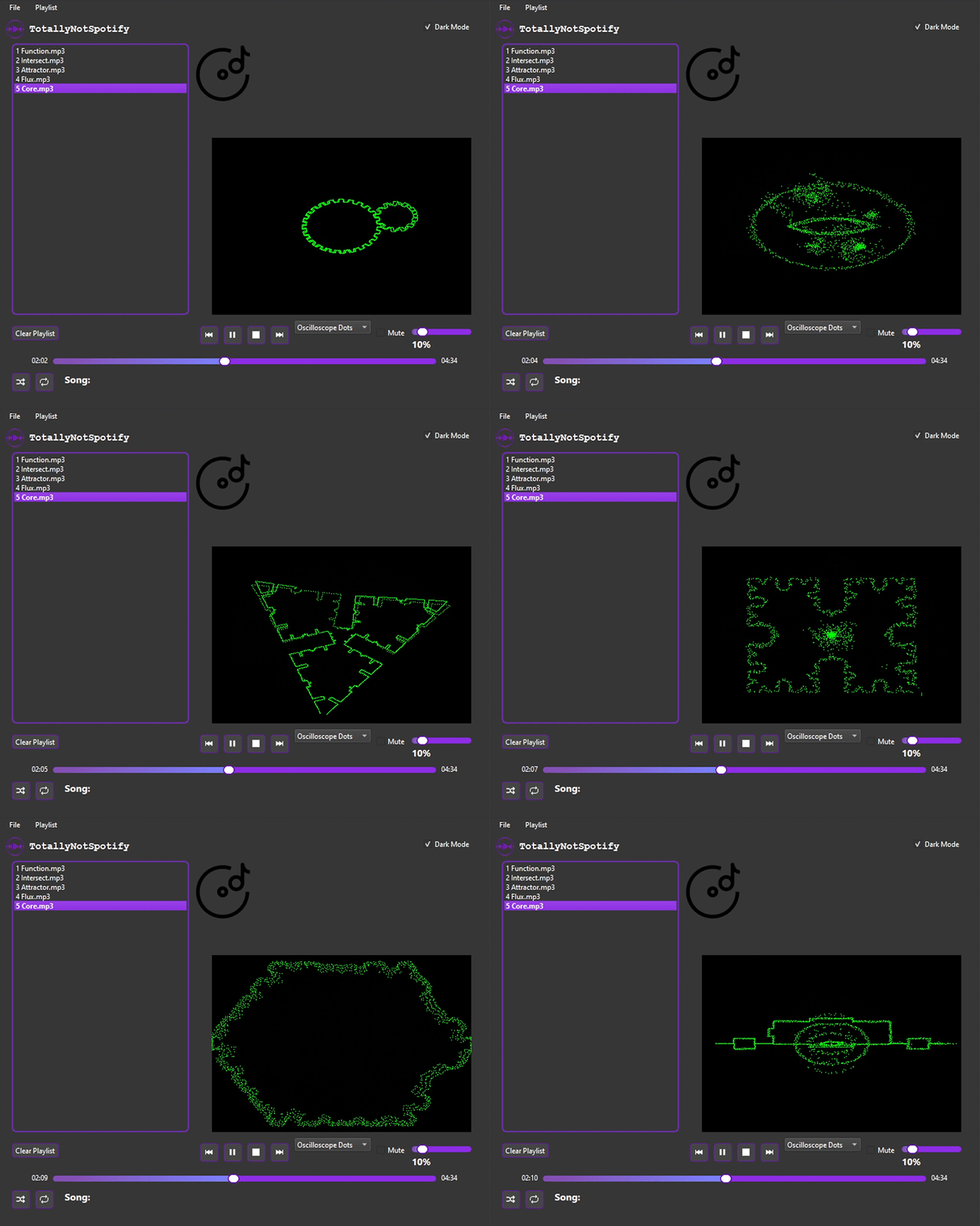
Oscilloscope Music is a style the place the music basically creates its personal visuals. The similar sign that energizes your audio system is fed into an analog oscilloscope, which pulls glowing inexperienced traces on display. Here, the left and proper audio channels map on to the horizontal and vertical axes, respectively. Carefully crafted parametric capabilities then generate synesthetic geometries that mix a retro lab aesthetic with futuristic vibes. The actual problem lies in creating visuals that not solely complement the sound but in addition improve the listening expertise—demanding novel approaches to synthesis, mixing, and mastering.
While exploring this idea, I used to be fascinated by the work of Jerobeam Fenderson and Hansi3D and their album N-Spheres. Their music is designed to create gorgeous oscilloscope visuals when performed by an applicable system. After buying the album, I needed to see how these visuals would seem in my audio participant, so I carried out modes that show the oscilloscope-style renderings their music produces. In addition to the waveform and spectrum shows, I developed two Oscilloscope modes: one which reveals particular person dots — every representing a pattern from the audio sign — and one other that connects these factors with easy traces. The Oscilloscope Dots mode illustrates how each pattern’s amplitude (from each left and proper channels) interprets right into a vibrant visible level, whereas the Oscilloscope Lines mode merely connects all samples in a body with straight traces, forming structured but dynamic shapes.
Team 02
by Pia Patza and Natascha Wolf
When we got down to develop our audio participant, we needed the design to be minimalistic and intuitive, but fashionable. We selected a light-themed design with black accents to spotlight key options.
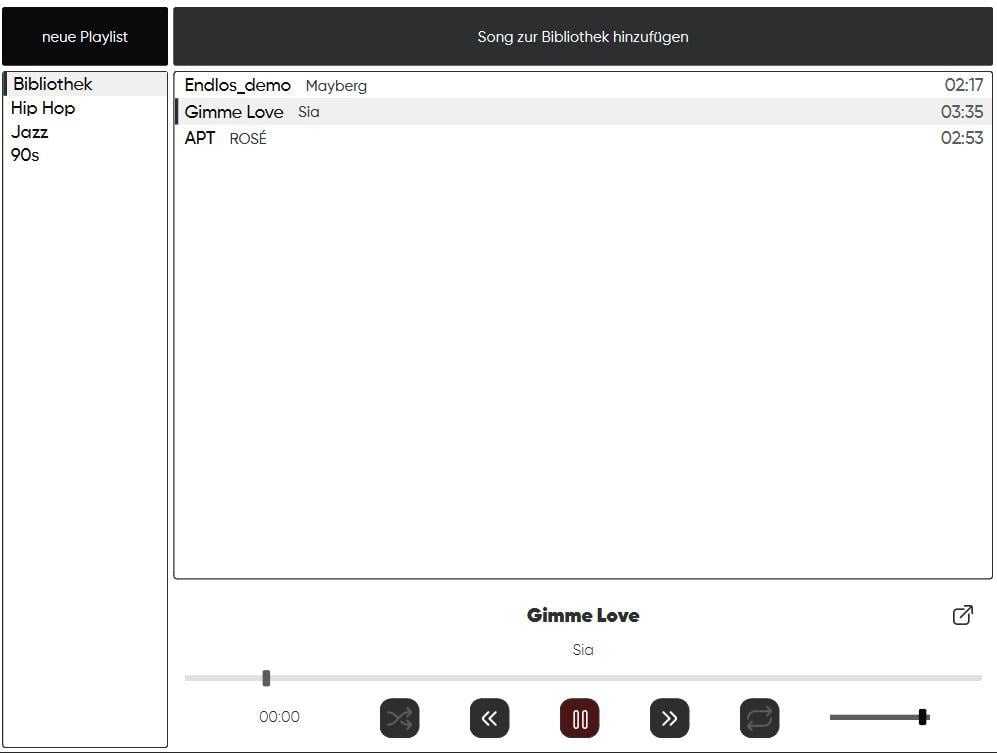
Our modular construction allowed us to implement all of the important options you’d count on from an audio participant – together with including, deleting, looping, quantity adjustment, and extra. On prime of that, all information is mechanically saved as JSON and loaded every time the participant begins, so you’ll be able to choose up proper the place you left off.
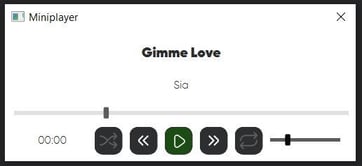
Our private highlights although are the mini participant and sleep timer options. The mini participant allows the consumer to make use of their display measurement extra effectively whereas nonetheless interacting with the app. The sleep timer mechanically stops the participant after a pre-set period of time, with the remaining time displaying on the display.
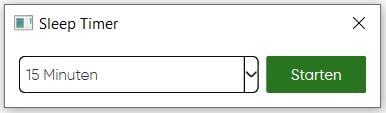
Overall, we actually respect the chance to share our expertise with you, because it was our first time interacting with Qt and C++, and we very a lot loved increasing our toolkit.
EDAmamePlayer
Vinyl records have a timeless appeal—the ritual of putting a needle on a spinning disc, the heat of analog sound, and the fastidiously designed album covers. But what if we may deliver this expertise into the digital world? That’s the thought behind our music participant, which mixes the aesthetics of a turntable with the comfort of recent MP3 playback.
The idea was sparked by an actual report participant one among us owns, together with its digital show, which grew to become a defining aspect of our UI. We shortly settled on the thought of a vinyl-inspired music participant, mixing nostalgic design with interactive digital options. After efficiently implementing audio playback, our first main milestone was chopping the album cowl right into a round form and making it rotate—a small however satisfying achievement that set the muse for our interface.
What we’re pleased with:
-
A Spinning Digital Vinyl – The report updates dynamically with every monitor and rotates because the track performs.
-
A Functional Tonearm – Instead of a progress bar, the needle strikes alongside the report, indicating playback place.
-
Retro Digital Display – The blue-screen interface presents track particulars in a classic type.
-
Playlist Management – Users can create, load, and delete playlists, in addition to add, take away, and rearrange tracks—all seamlessly built-in into the UI through a dockable widget.
Working with C++ and Qt, we encountered a number of hurdles. The mannequin/view structure initially gave us some complications, however after a number of refactors, we developed a strong system utilizing completely different fashions and proxy fashions to deal with sorting, transferring, and shuffling tracks effectively. The core function of our participant—the spinning report and transferring tonearm—was one other main problem. Getting it to a degree the place it felt intuitive and pure took time. In the top, customers can choose up the tonearm and transfer it manually to skip by a track, which was extremely rewarding to implement and provides a novel interactive aspect to the expertise.
We’re pleased with the ultimate outcome and hope it brings a bit vinyl magic to digital music!
Group 06
by Milan Jezovsek and Markus Heming
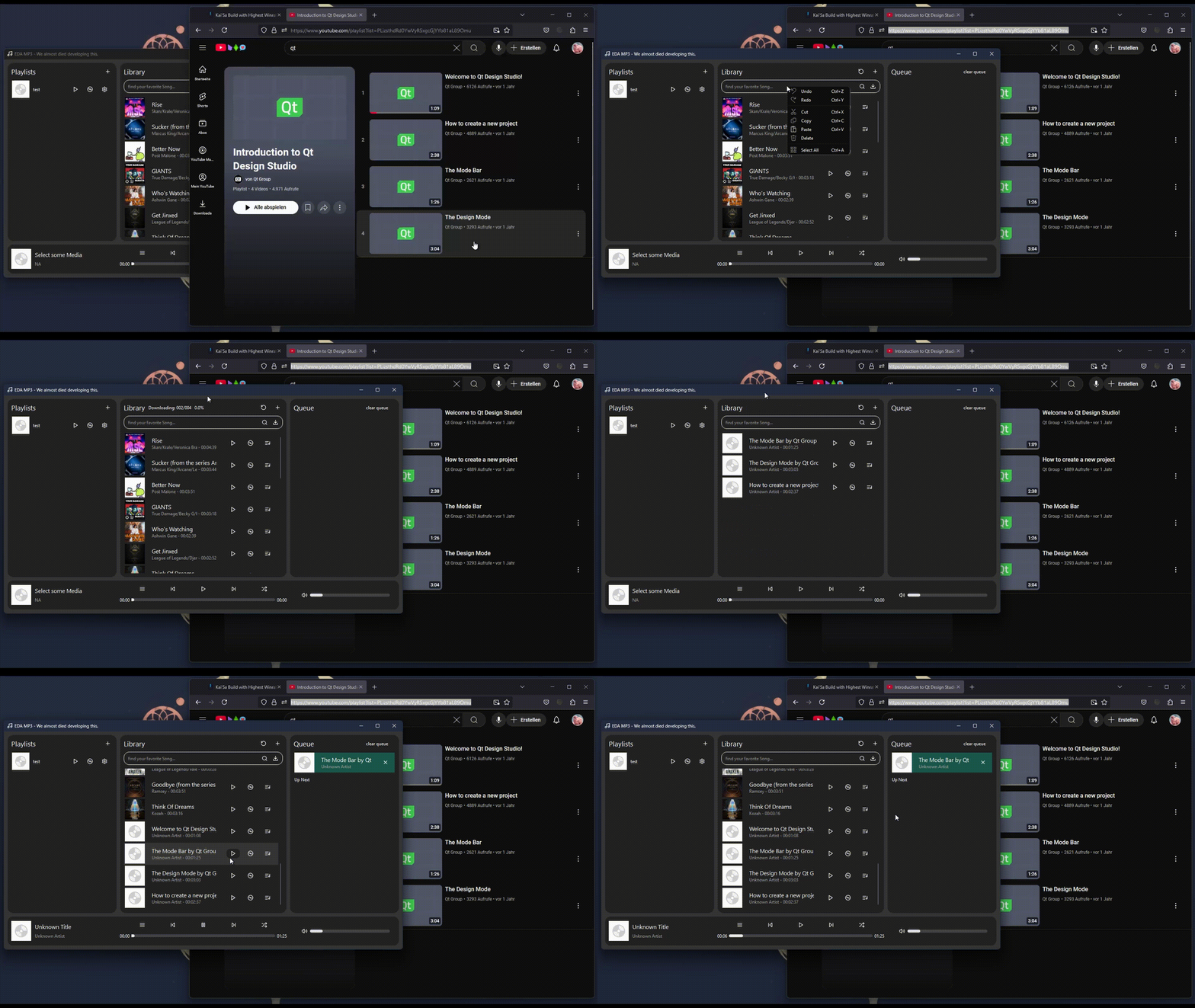
At first look this would possibly appear like a traditional Audio-Player … properly it kinda is. It has all of the fundamentals capabilities each different participant has corresponding to enjoying songs, altering loudness, creating playlists, managing your library and so forth. But we additionally carried out a neat little integration which allows the consumer to obtain audio from plenty of completely different web sites instantly into their library.
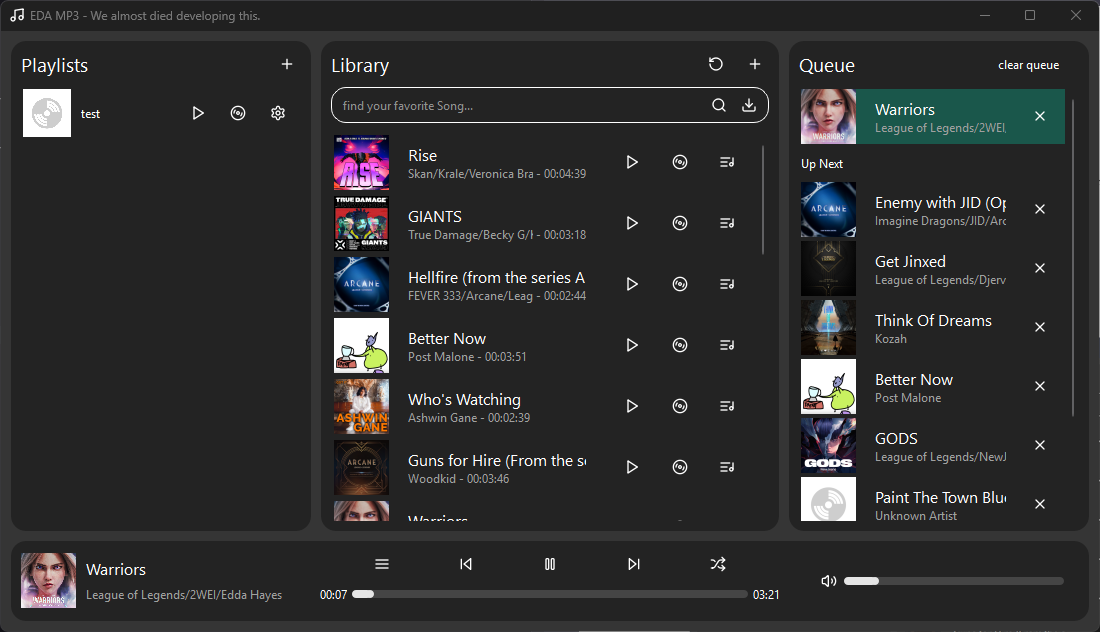
Markus: I feel one among my highlights of this venture was when our code simply labored after like an hour of coding with out testing in between as “that simply works with none issues” was often by no means the case. One factor I truly actually appreciated about Qt was indicators and the way they work. It’s such as you join two issues, and from then on, they’re able to talk and hear to one another. You must get into it, however when you do, it is easy to make use of.
Milan: For me, the perfect a part of this venture was studying extra about precise software program structure. When I discovered about writing code previously, it was at all times extra about programming paradigms, particular languages, or scripting-related subjects. This was the primary venture wherein I felt like truly understanding the significance of software program design. Which does not imply this venture is well-architected, but it surely taught me so much.
Check out the applying right here: https://github.com/MilanJzo/eda-mp3
nimamp – A Modern Take on a Classic Music Player
by Jonathan David Kron and Leo Kling
When we had been looking for concepts, we needed to seize the essence of a traditional: Winamp. But as an alternative of simply cloning it, we needed so as to add a contemporary twist – suppose a Spotify-esque queue and playlist administration system, a customizable UI, and lyrics help.
nimamp stands out with options corresponding to offering the traditional really feel of Winamp, paired with fashionable usability; lyrics help, utilizing both an open-source API or our personal Rust-powered API scraping Genius; a customizable UI and fashionable queue & playlist administration for seamless monitor group.
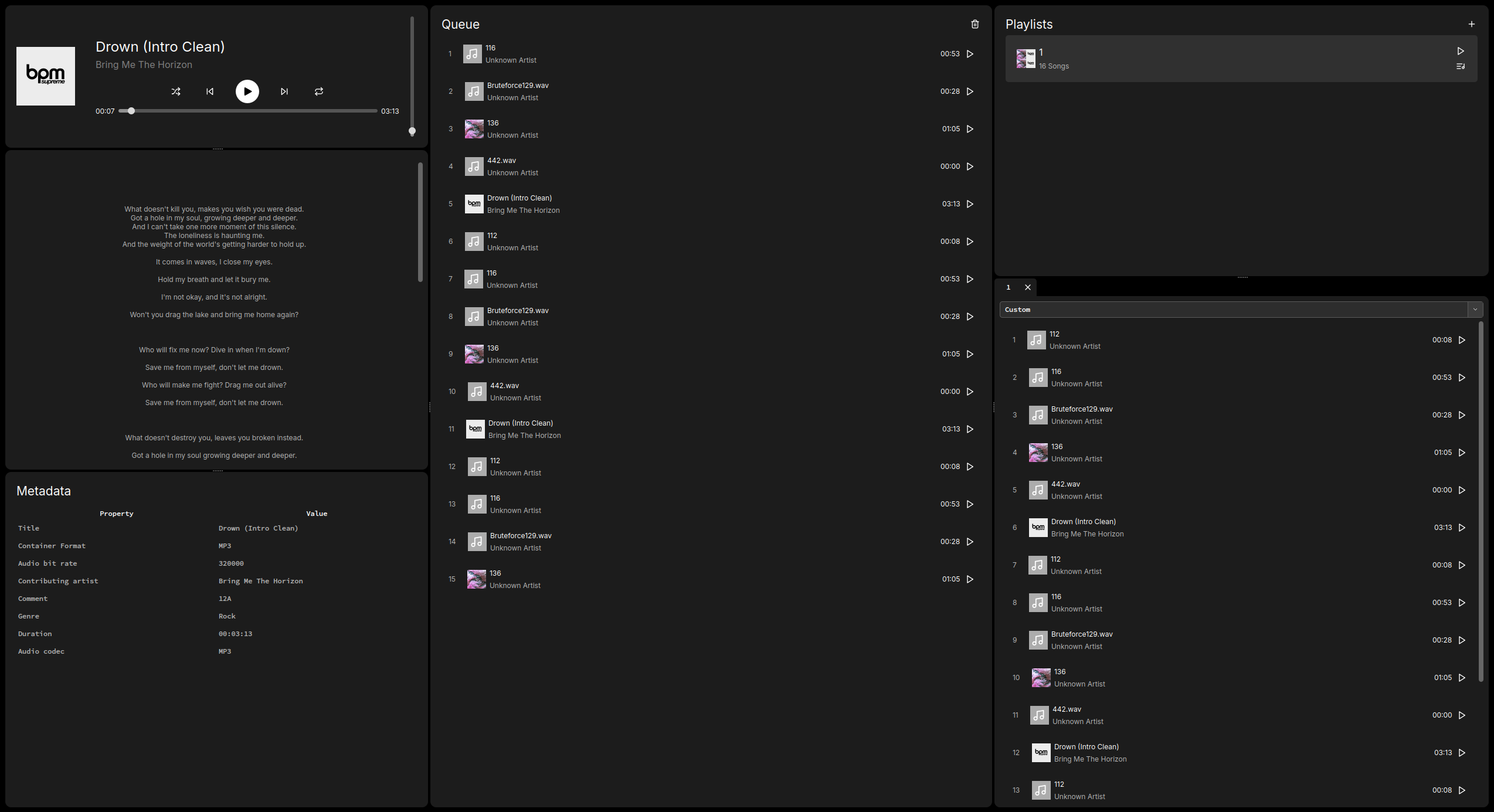
Coming from Rust, we approached Qt and C++ with skepticism, and let’s simply say we had fairly the journey.
Initially, we tried utilizing Qt Quick, pondering it could be the best approach to get a contemporary UI working. But documentation was sparse, and one thing so simple as displaying an inventory of parts was a battle. Lists felt overly optimized for contact interfaces, which wasn’t supreme for our desktop-first app. Once we switched to Qt Widgets, issues felt a lot better. More structured, extra acquainted, and extra suited to a conventional desktop utility.
Some issues in C++/Qt simply did not make sense to us coming from Rust. Why on earth do pop_back() and pop_front() on QLists not return the aspect they take away? Small quirks like this made the expertise unnecessarily irritating.
Throughout this course of, ChatGPT was a useful useful resource. Whether it was serving to us perceive obscure Qt documentation, debug unusual C++ behaviors, and even simply brainstorming potential options, having an AI assistant sped up our growth and diminished a few of the frustration. While it did not change correct documentation or hands-on coding, it undoubtedly made the journey a bit smoother.
While Qt Widgets proved to be a strong framework for desktop functions, the documentation and a few of C++’s oddities left us annoyed at instances. That stated, nimamp is right here, and we’re pleased with what we constructed!
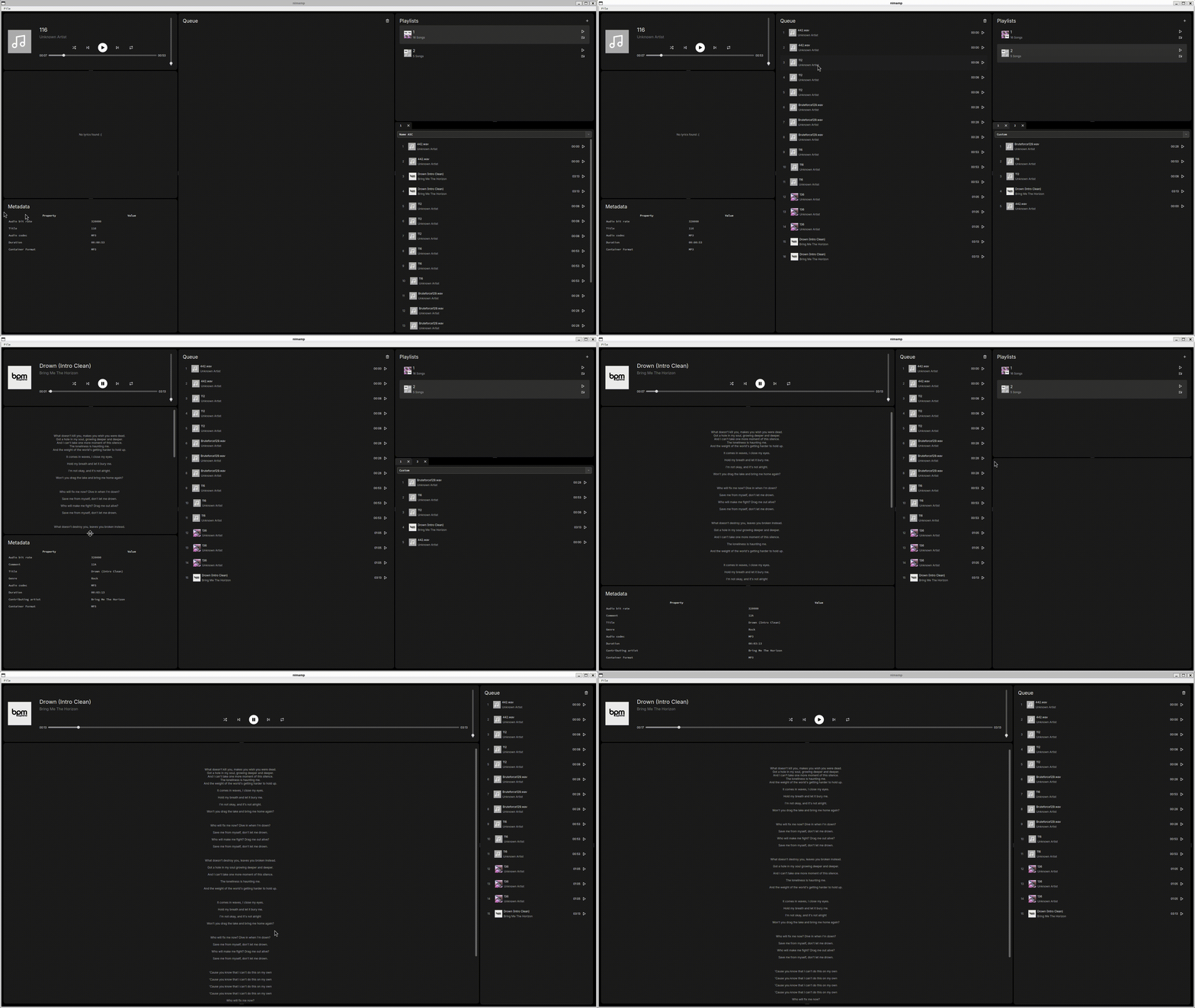
Check out the applying right here: https://github.com/nichilum/nimamp
Final Words
We had been pleasantly stunned by the excessive degree of curiosity the brand new course attracted. The proven fact that we may solely accommodate a 3rd of the college students highlighted not solely the significance of C++ and Qt but in addition the robust curiosity in programming graphical consumer interfaces.
As everyone knows, one of the simplest ways to study programming is by doing it. So we tasked the scholars with making a music participant app. They began by implementing the usual capabilities of a music participant and, as a ultimate problem, added a novel function. The purpose was for the perfect app to win a prize on the finish.
We had been impressed by the ensuing assortment of music participant apps, every with its personal distinctive design and invaluable options, which made choosing the right one fairly a problem. Personally, I’d love to make use of these apps, and even higher, have a single app that mixes all their options to create the last word Super Duper Music Player.
One studying we gained from the course is that our Q&A classes we provided appeared nearly redundant in an period the place instruments like ChatGPT and CoPilot function glorious programming aids.
~ Ulla Derichs
Evaluating such wonderful tasks in only a single session isn’t excellent—we ranked ‘winners’ and handed out prizes, however innovation doesn’t match neatly right into a scorecard. What mattered most was that everybody pushed boundaries, took artistic dangers, and made it an occasion to recollect—for all the appropriate causes.

from left ro proper: Dennis Oberst, Milan Jezovsek, Markus Heming, Mirco Tornow
Vinyl
through Qt Blog https://www.qt.io/weblog
May 12, 2025 at 10:57AM
-
Product on sale
 Audiophile Vinyl Records Cleaning BundleOriginal price was: €69.90.€59.90Current price is: €59.90. incl. VAT
-
Product on saleEasy Start Vinyl Records Cleaning KitOriginal price was: €69.90.€59.90Current price is: €59.90. incl. VAT
-
Vinyl Records Cleaner Easy Groove Concentrate€34.95 incl. VAT
-
Easy Groove Super Set€199.00 incl. VAT
-
Easy Groove Enzycaster – vinyl records prewash cleaner€34.95 incl. VAT
-
Easy Groove Extreme MK. II- vinyl records prewash cleaner€45.00 incl. VAT
-
Vinyl Records Cleaner – Easy Groove Virgin Concentrate€35.00 incl. VAT
-
Easy Groove Spray&Wipe vinyl records cleaner€34.95 incl. VAT







