
World News
Fezz Equinox D/A processor
Fezz Equinox D/A processor
It wasn’t way back that bottom-shelf DACs had this dry, grey, punchy, grainy sound, rising from a bizarre mechanical readability. Their sound jogged my memory of low cost whisky. The ones that did not sound like $1 photographs changed the dry grain with some blurry gel. No vitality. No refined contrasts. No nuance. No air. No atmospherics, no reverberance, and nothing I’d name transparency.
Digital’s quickly evolving know-how made the subsequent wave of DACs sound strikingly clear and quiet, with some touchy-feely hints of wetness to counsel a extra pure transparency. Unfortunately, most of those newfangled moist DACs seemed like distilled water tastes.
For me, digital transparency did not grow to be really moist, colourful, or naturalistic till I found NOS R-2R converters, which made midlevel four-figure DACs, like my Denafrips and HoloAudio, sound like bits bathed in luminosity. Very relaxed. Grainless. Ektachrome.
The dCS Bartók and Lina DACs confirmed me a totally completely different type of digital sound, a kind I by no means imagined. The DAC was delivering a musical imaginative and prescient that with all its mapping, filtering, and oversampling choices made me really feel I used to be collaborating in some type of ritual remastering.
Using these dCS converters satisfied me that, in distinction to analog masters, the place somebody can simply play again the tape, nobody actually is aware of, or can present me, what’s really in a digital file. But that does not cease me from questioning, what ought to this CD sound like? What did the producers hear? Followed by, how can I do know when a DAC is telling the reality?
Best I can inform, what differentiates one DAC’s sound from that of one other isn’t the quantity of truthfulness it supplies or some type of measured linearity however the colours in and energy of its vocal vary and the perceived high quality of its transparency. What else ought to I be listening for?
The primary issues I discover as I transfer up the digital-component value ladder are a extra visceral, much less processed really feel; extra exactly drawn pictures; extra color-saturated tones; and, particularly, a extra fascinating transparency.
Most of the six-figure DACs I’ve auditioned made recordings sound incredulously vivid and hyperdimensional, like MQA on steroids. Listening to those million-dollar sound methods induced my mind to marvel, how a lot of what I simply heard was really in the transformed file? These over-the-top-shelf DACs made pictures really feel denser than "regular" DACs and empty areas really feel energized in ways in which felt completely different from any actuality I knew. But I did not care. I really like visceral sound, so I applauded the vibrancy of those painted visions and the fuel-dragster depth of their displays. Maybe, after 40 years, digital audio is discovering its personal id.
It appears digital’s new id started when powerhouse tech companies began carving out technically subtle, painstakingly tailor-made home sounds. Chord, dCS, Wadax, and CH Precision come shortly to thoughts as leaders in these pursuits. The nearer I listened to this degree of digital, the extra I applauded what I referred to as "portray with bits." These DACs put some actual magic in digital playbackto not point out, it has been enjoyable watching my upscale associates select which of those competing audio aesthetics matched their personalities, like they do with vehicles, cologne, and phono cartridges.
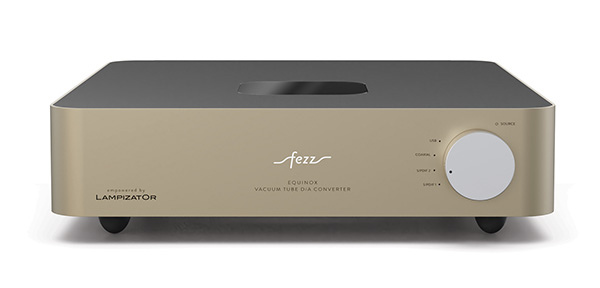
What it’s
The Fezz Equinox digital-to-analog converter was designed by a Polish engineering wizard named Łukasz Fikus, who is best often called Lampizator (aka tube terminator) for his shiny, costly merchandise with exotic-shaped vacuum tubes protruding of the highest (footnote 1).
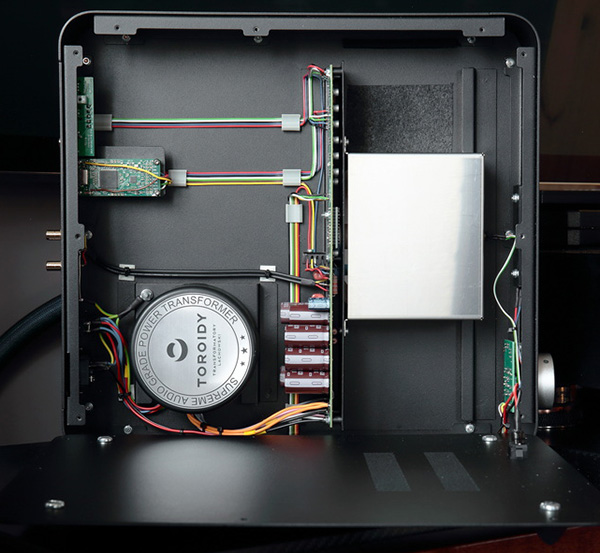
Fezz Audio merchandise are manufactured in Poland, in a manufacturing facility shared with their mother or father firm Toroidy, an OEM producer of toroidal inductors and transformers. I requested Jay Rein of Bluebird Music, Fezz’s charming importer-distributor, what’s the relationship between Łukasz Fikus’s Lampizator, Fezz Audio, and Toroidy?
Jay defined. "Fezz Audio has been supplying their Toroidy transformers to Lampizator for over 10 years. So a robust relationship existed between the 2 firms. When Fezz started scheming for a DAC to pair with their trendy built-in amplifiers, they naturally requested Łukasz Fikus if he may assist.
He responded with a design he had in a drawer that may match the Fezz chassis when it comes to sound high quality, worth, and model aesthetic. Fezz believed in the event that they mixed the high-quality Lampizator DAC with their custom-designed Toroidy transformers, they’d have a successful product that provided wonderful sound at excellent worth."
I selected to evaluation the Fezz Equinox D/A processor ($2995) as a result of these days I’m into DACs that outline themselves by the listing of options they do not have. In the case of the Fezz Equinox, that is an extended listing: no ostentatious casework, no tycoon pricing, no high-tech quantity attenuator, no contact display screen OLED show. No menu or distant. No oversampling. No reclocking or equalization. No XLR output. No AES, HDMI, or RS-232 inputs. No Bluetooth. No DSD, SACD, or MQA.
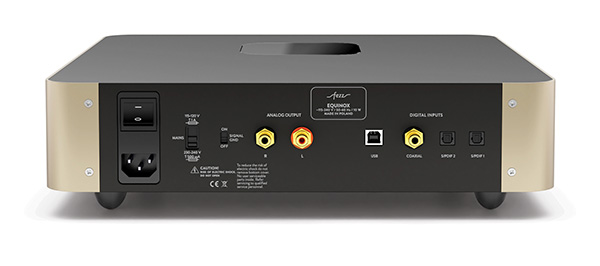
Apart from the IEC energy jack, a global voltage selector, a signal-ground disconnect change, and a pair of RCA line-level outputs, the one issues on the rear panel are two TosLink optical ports, one RCA coaxial S/PDIF port, and one USB Type B enter.
Features the Equinox does have: a decorator-friendly CNC-formed chassis with rounded vertical corners that is available in seven modern colours with 4 superior-quality delicate rubber footers and a sliding clear window on its high that exposes and supplies entry to its single ECC82/12AU7 tube mounted horizontally in a mirrored chamber. Tube rolling is thereby facilitatedand inspired.
According to Jay Rein, "The Equinox is in inventory now with a guaranty of two years, 90 days on tubes. Later within the yr Bluebird will start transport a second model of the Equinox, this one with balanced outputs, that can retail for $3795."
Setup
Setup was kid’s play. Crows and toddlers may do it. Just plug a number of wires into their matching holes, change it on, and choose a supply with the large front-panel knob. Qobuz acknowledged the Equinox as "FEZZ." The relaxation I describe under.
Listening
It’s after the top of the world Don’t you recognize that but?
Sun Ra’s It’s After the End of the World (Live on the Donaueschingen and Berlin Festivals) (24/88.2 FLAC MPS/Qobuz) is all the time a enjoyable begin to a very good day, listening to this reside German recording of Sun Ra pouring all his otherworldly outsiderness on the group, exhibiting how vibrations bind us to one another and the cosmos. With the Fezz Equinox, this reside 1971 efficiency displayed Webb Telescopedegree imaging, just like the Milky Way with black holes and planets exploding between the audio system. Bass and treble got here by means of with extra-clean transients and extraordinary low-level element. Sun Ra’s face, physique, and piano have been exactly outlined and positioned with certainty. Presence and physicality have been four-star, which is uncommon with streaming.

My first style of the Equinox jogged my memory of the Wattson Madison streamer-DAC. The two DACs ship an analogous vodka-martini excessive that takes a number of tracks to kick in. This identical recording performed by means of the Denafrips Terminator Plus had extra of blissed-out, pink wine really feel.
Vs HoloAudio Spring 3 LTE ($3098)
The first time I heard Marianne Faithfull singing Shel Silverstein’s "The Ballad of Lucy Jordan," it was popping out of the jobsite boombox round Christmas of ’79. On my approach residence from work, I finished at J&R records, the place Faithfull’s first album in what appeared like a decade, Broken English (Island Records ILPS 9570), was being displayed all through the shop. Since that day, I’ve performed that disc on each report participant I’ve owned, and each time I play it, I’ve shuddered to its bleak tone.
I didn’t see this coming: The actuality of Marianne’s bleakness was by no means extra tangibleI by no means earlier than felt extra eye-to-eye, hand-holding near the legendary chanteusethan it was whereas listening to the Qobuz-streamed model of "The Ballad of Lucy Jordan" (16/44.1 FLAC, Island/Qobuz) by means of the Fezz Equinox. Through the Fezz DAC, Qobuz streaming sounded unusually alive and communicative. There was punch, and modern transients felt electrical. Images have been conspicuously massive. Faithfull’s persona was not submerged in overemphasized synthesizer power. However, I did hear some momentary parts of glare and higher-than-natural distinction that will have originated in my American urgent or from the Voxativ Hagen2‘s paper cone. Faithfull’s highest register sometimes jumped out and flashed me. Contrasts within the Fezz’s high octaves have been sharper and fewer subtly rendered than they have been with HoloAudio’s equally priced Spring 3 LTE DAC. The Equinox performed bigger volumewise however cooler and drier and fewer meaty than HoloAudio’s Spring 3 LTE with its PLL engine engaged. The Spring 3 exhibited that high quality of soundspace lighting photographers like: vivid solar evenly filtered by grey clouds. The Equinox’s soundspace seemed like a reasonably vivid cirrus-clouded day in my backyard.
A greater analogy may be: With the Spring 3 I really feel like I’m seeing the world by means of a digicam lens with a polarizing filter that reduces glare, naturalizes contrasts, and saturates hues. With the Fezz Equinox, I’m viewing recordings by means of a haze-reducing UV filter. The view feels crisp, vivid, and haze-free.
Footnote 1: See lampizatorpoland.com/about-us.
HI-FI News
by way of InnerFidelity https://ift.tt/Tued5iY
May 30, 2025 at 03:03PM
-
Product on sale
 Audiophile Vinyl Records Cleaning BundleOriginal price was: €69.90.€59.90Current price is: €59.90. incl. VAT
-
Product on saleEasy Start Vinyl Records Cleaning KitOriginal price was: €69.90.€59.90Current price is: €59.90. incl. VAT
-
Vinyl Records Cleaner Easy Groove Concentrate€34.95 incl. VAT
-
Easy Groove Super Set€199.00 incl. VAT
-
Easy Groove Enzycaster – vinyl records prewash cleaner€34.95 incl. VAT
-
Easy Groove Extreme MK. II- vinyl records prewash cleaner€45.00 incl. VAT
-
Vinyl Records Cleaner – Easy Groove Virgin Concentrate€35.00 incl. VAT
-
Easy Groove Spray&Wipe vinyl records cleaner€34.95 incl. VAT







