
Audio News
Rush – Xanadu
Rush – Xanadu
https://ift.tt/1wYygc6
Progressive rock features tempo shifts, echoes of classical and jazz, long instrumental sections, and unconventional instruments. Yet fitting all of that into a three-minute track is tough—that’s why epics exist.
The track unfolds at its own pace. The opening sound collage stretches close to two minutes, layering synthesizers, birdsong, woodblock percussion, chimes, tubular bells, and an effects-laden guitar that seems to wander. This introduction creates a mood. It makes sense, since the song centers on Xanadu, the enigmatic, magical place somewhere in Mongolia, symbolizing dreams realized. The enchanted Xanadu palace used to be a popular theme in pop music. Dave Dee, Dozy, Beaky, Mick & Tich hit No. 1 with “The Legend of Xanadu” in 1968, and Olivia Newton-John did so in 1980 with her disco track “Xanadu.” Both songs, of course, discuss love. Not so with Rush: their “Xanadu” is a philosophical, myth-inspired fantasy. Neil Peart, the band’s drummer and lyricist, drew inspiration from a Coleridge poem. Much of the song’s lyrics already appeared in Coleridge’s work: “the sacred river Alph,” “the caves of ice,” and “the milk of Paradise.”
Rush’s repertoire wouldn’t be what it is without fantasy and science fiction. The three musicians believed such lyrics were a vital element of progressive rock. It’s ironic: the Canadian trio aimed to become a prog-rock band precisely as prog rock was fading in England. They broadened their musical palette with new instruments, including a glockenspiel and a Minimoog, double-neck guitars, and synthesizer pedals. They cited Yes and King Crimson as major influences and even traveled to Britain to record their album A Farewell to Kings there. The album was mixed at a London studio where Yes and ELP had also mixed their records.
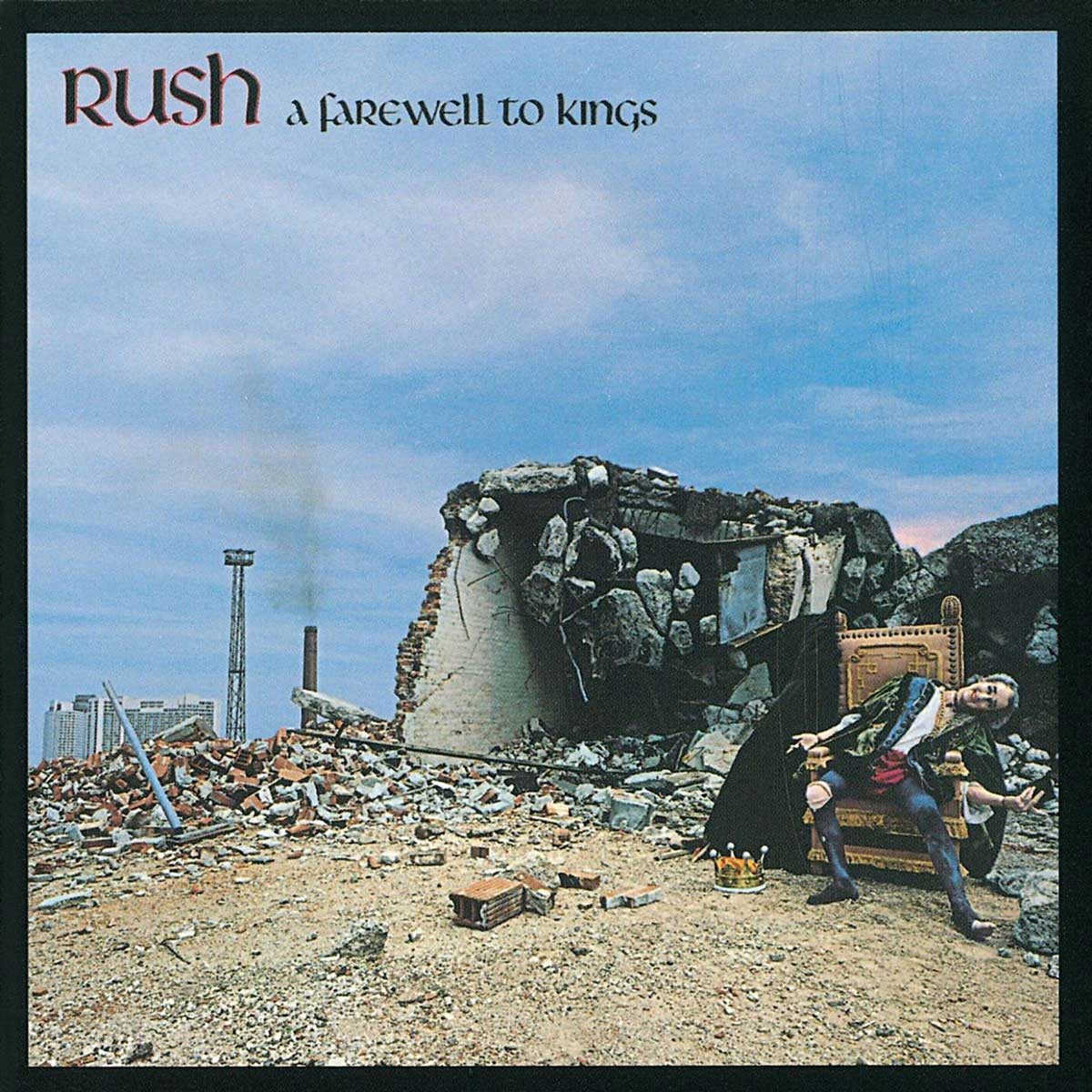
Big melodies were never Rush’s strongest suit. Their power lay in compact riffs that could be stitched together seamlessly, one after another—often in off-kilter, interlocking patterns and unusual time signatures, including 7/4. Consequently, it takes a full five minutes before Geddy Lee begins to sing: “To seek the sacred river Alph…” His high-pitched voice (even higher than Jon Anderson’s) may or may not suit your taste, but one thing is certain: at that range, he never obstructs the instruments. A few bars later comes another tempo shift, followed by another stylistic change. The three-note motif “Xa-na-du” marks the end of the first verse (5:50). Synthesizers, tubular bells, and glockenspiel then propel the first full chorus (beginning at 6:15). Before the second verse, there’s another instrumental passage, with a new tempo and a new motif (7:00–7:40). As noted, this band was never short on riffs and rhythms. After the chorus returns, the harmony shifts again (9:12), and Alex Lifeson delivers a graceful, laid-back guitar solo. One final tempo change (10:15), followed by a brief closing motif featuring guitar and glockenspiel.
“Xanadu” was “the most complex and multilayered piece” Rush had recorded up to that point, according to Neil Peart. After the band auditioned it once in the studio to set the mics and knobs, they nailed the eleven-minute epic on the very first take, without any tape edits. The song stayed in their live set for many years and became a fan favorite. Rolling Stone ranks it sixth among the band’s best songs. Rush also kicked off their comeback tour in Los Angeles on June 7, 2026, with “Xanadu.”
The post Rush – Xanadu appeared first on Fidelity Magazine.
HI-FI News
via Fidelity Magazine https://ift.tt/QmYO5BL
October 21, 2026 at 10:00AM
-
Product on sale
 Audiophile Vinyl Records Cleaning BundleOriginal price was: €69.90.€59.90Current price is: €59.90. incl. VAT
-
Product on saleEasy Start Vinyl Records Cleaning KitOriginal price was: €69.90.€59.90Current price is: €59.90. incl. VAT
-
Vinyl Records Cleaner Easy Groove Concentrate€34.95 incl. VAT
-
Easy Groove Super Set€199.00 incl. VAT
-
Easy Groove Enzycaster – vinyl records prewash cleaner€34.95 incl. VAT
-
Easy Groove Extreme MK. II- vinyl records prewash cleaner€45.00 incl. VAT
-
Vinyl Records Cleaner – Easy Groove Virgin Concentrate€35.00 incl. VAT
-
Easy Groove Spray&Wipe vinyl records cleaner€34.95 incl. VAT







