
Audio News
Henry Cow
Henry Cow
https://ift.tt/YUCeozw
Album Pairing: Henry Cow
Richard Branson had a clear career ambition: he wanted to be an entrepreneur. At 18, he launched a magazine; at 20, a mail-order record business, followed by a record shop and then an entire chain of stores … At 22, in 1972, he founded Virgin Records and set up his own recording studio. The new record mogul showed a remarkable instinct for emerging musical trends—and the courage to back them. He signed some of the wildest offshoots of the Canterbury scene, including Mike Oldfield and Gong; ventured into German krautrock with Tangerine Dream and Faust; and was quick to respond to the arrival of punk in Britain, followed by reggae. And Branson’s ambitions extended well beyond making records. He invested in videos and video games, launched airlines and radio stations, opened a travel agency, and put money into banks, racing teams, and space projects. In 1992, the man who had “discovered” Mike Oldfield became a billionaire.
One of the Canterbury bands signed to Branson’s Virgin label in 1973 was Henry Cow. The group had been around since 1968, when Fred Frith and Tim Hodgkinson founded it. Frith played guitar and Hodgkinson keyboards, but both were accomplished multi-instrumentalists. By the summer of 1973, when they entered Branson’s Manor House studio to record their debut album, Henry Cow had grown into a quintet. Virgin Records welcomed them into its label family. Four of the five band members, along with all three backing singers, were soon recruited to perform Mike Oldfield’s Tubular Bells live at the Queen Elizabeth Hall in June. At the end of the year, when Oldfield played the work again at a BBC studio, Henry Cow’s musicians joined him once more.
Henry Cow were regarded as the pinnacle of progressive, intricate Canterbury music. Their largely instrumental debut, Legend, brims with atonal motifs, restless jazz rhythms, and complex time signatures. At times, the band sounds like an experimental jazz ensemble somewhere between free jazz and fusion; at others, like an avant-garde chamber group or a noisy rock band. The rhythms, styles, and sounds sometimes shift every few bars.
Fred Frith’s inspired guitar solos and Chris Cutler’s restless jazz-rock drumming stand out in particular. At the heart of the album is the “Teenbeat” suite, comprising “Teenbeat Introduction,” “Teenbeat,” and “Teenbeat Reprise.” The band had spent at least two years developing the suite, weaving together a wealth of motifs and ideas. “Extract From: With The Yellow Half-Moon And Blue Star,” which appears between the suite’s sections, also grew out of the “Teenbeat” experiments. It was originally an excerpt from a piece of dance-theatre music by Frith.
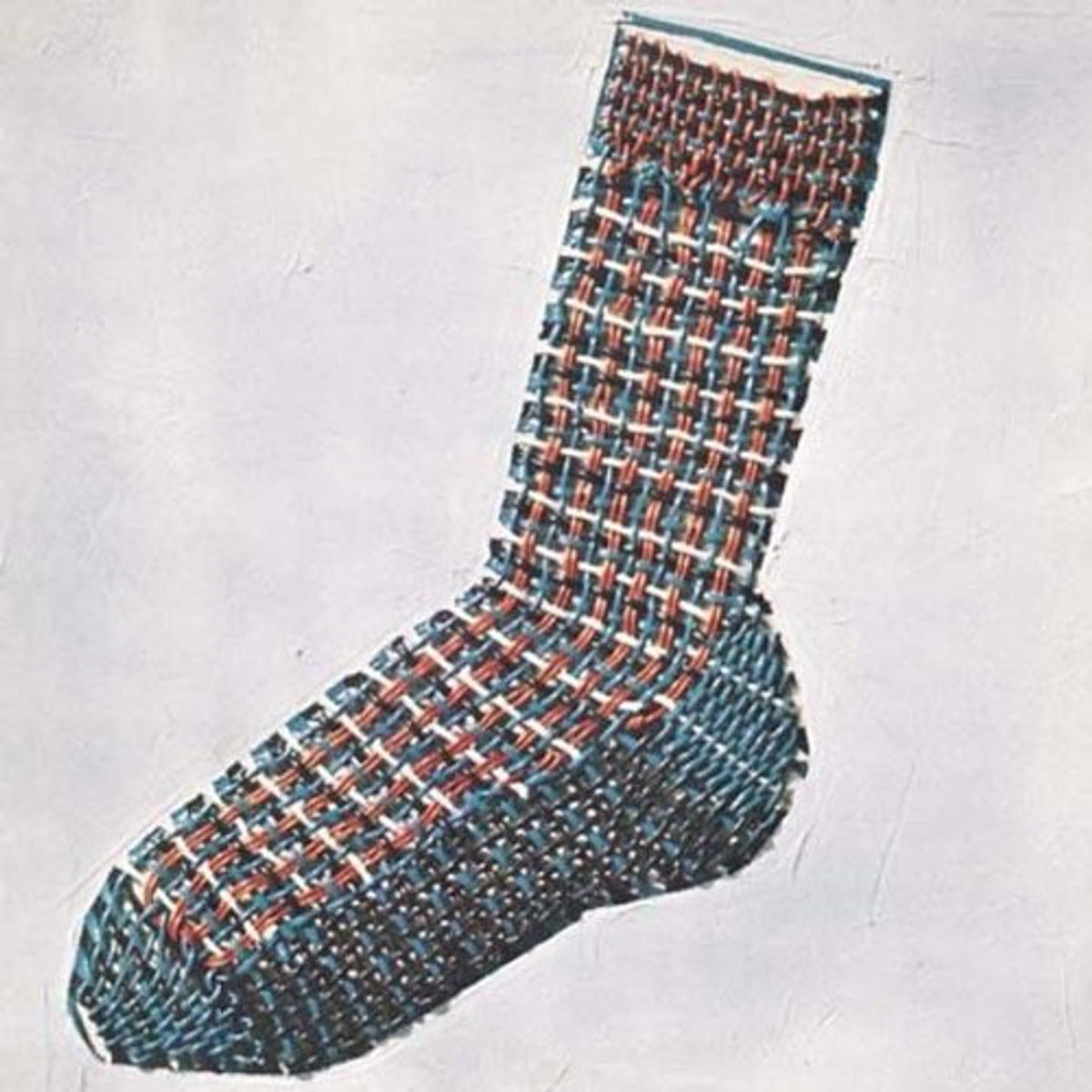
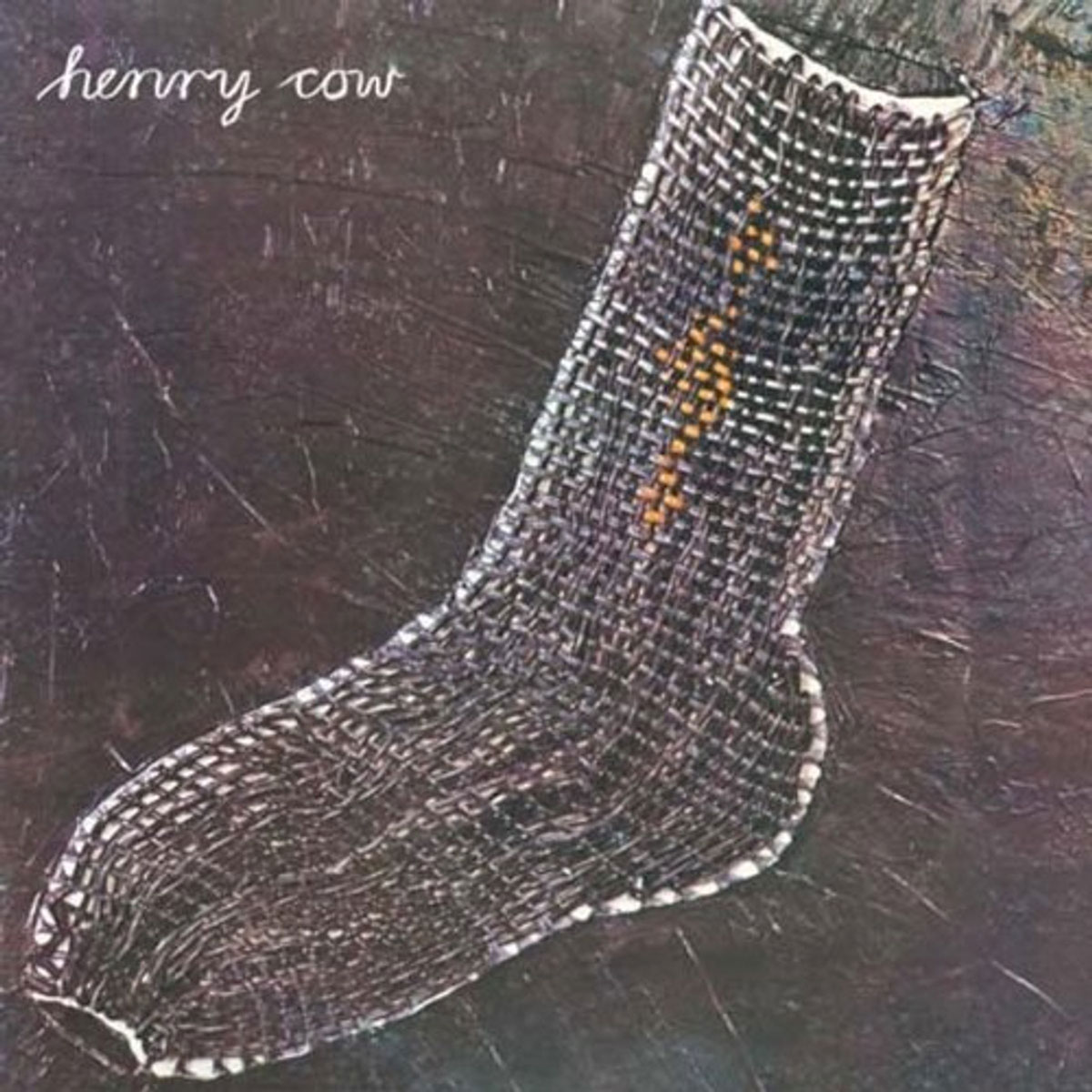
Ray Smith (1949–2018), who later became renowned for his sculptures and won numerous art prizes, was something of an all-purpose member of Henry Cow’s circle at the time. He designed the debut album’s front cover using acrylic paint and a piping bag. Its subject is a colorful sock. The title Legend contains a playful pun: “Leg End.” The cover artist wanted the band’s name left off the front, as major acts such as Pink Floyd and Led Zeppelin often did. He saw the sock as a kind of Pop Art object, much like Andy Warhol’s banana for the Velvet Underground. So, for the second album, he kept the same image and simply changed its colors, which were intended to reflect the music’s development. The sock appeared again on the later album In Praise Of Learning.
Henry Cow’s second album is titled Unrest—an apt name for music that is once again restless, unpredictable, and eclectic. Lindsay Cooper, then 23, joined the band in place of saxophonist Geoff Leigh. Her principal instruments, oboe and bassoon, brought a more “serious” avant-garde character to the music. This time, the album’s centerpiece is the twelve-minute, multi-part “Ruins,” another offshoot of the expansive “Teenbeat” experiment.
There are traces of Bartók and Messiaen, along with a passage featuring only violin, bassoon, and xylophone. But the band still lacked enough fully composed material for an entire album, so they developed four additional pieces spontaneously in the studio, using loops, overdubs, and tape experiments. Critics compared the results to an improvised Stockhausen. One reviewer suggested that, by comparison, the usual progressive bands were “moronic reactionaries.”
Neither Virgin Records nor Henry Cow was entirely happy with the other. After the first two albums, the band was forced to join forces with another Virgin act, Slapp Happy. In 1977, Virgin terminated the contract: the label wanted greater profits, while the band wanted more studio time. The record industry was undergoing a major shift, and progressive rock bands were under pressure across the board. In protest, Henry Cow launched the “Rock in Opposition” (RIO) initiative in 1978. Together with fellow musicians from Italy, Sweden, Belgium, and France, they organized a small London festival to challenge the record industry’s commercial dictates. The RIO movement, in turn, championed music “that continually challenges listeners to hear and listen again.”
Henry Cow: Legend (Virgin, 1973)
Henry Cow: Unrest (Virgin, 1974)
This article, Henry Cow, first appeared on FIDELITY online.
HI-FI News
via FIDELITY online https://ift.tt/0ynkuIB
November 12, 2026 at 11:51AM
-
Product on sale
 Audiophile Vinyl Records Cleaning BundleOriginal price was: €69.90.€59.90Current price is: €59.90. incl. VAT
-
Product on saleEasy Start Vinyl Records Cleaning KitOriginal price was: €69.90.€59.90Current price is: €59.90. incl. VAT
-
Vinyl Records Cleaner Easy Groove Concentrate€34.95 incl. VAT
-
Easy Groove Super Set€199.00 incl. VAT
-
Easy Groove Enzycaster – vinyl records prewash cleaner€34.95 incl. VAT
-
Easy Groove Extreme MK. II- vinyl records prewash cleaner€45.00 incl. VAT
-
Vinyl Records Cleaner – Easy Groove Virgin Concentrate€35.00 incl. VAT
-
Easy Groove Spray&Wipe vinyl records cleaner€34.95 incl. VAT







