Author Archives: John Archer

BenQ TH690ST Projector Review

hcc_recommendedThe projector marque is once again targeting bigscreen gamers, this time with a Full HD model with handy short-throw lens and 120Hz playback. John Archer plugs in


BenQ describes its TH690ST as the ‘world’s first short-throw 4LED console gaming projector’. While this description sums up its core appeal well, it only scrapes the surface of everything the unit has going for it.


Not that the projector’s talents are particularly obvious just by looking at it. It’s attractive enough with its textured black fascia, orange trim around the lens window and glossy white main bodywork, but the shape and size are pretty ‘normal’ compared with the eye-catching cube shape of BenQ’s EISA Award-winning X3000i model (HCC #332). Furthermore, some may be disappointed that the projector’s native resolution is only Full HD rather than 4K.


But dig deeper and the TH690ST has plenty of gaming and home entertainment tricks up its compact sleeve, starting with the short-throw nature of its lens. This will create a 100in image from a distance of just 4.9ft, which is potentially a useful talent for a gaming projector as likely to be working in a study or bedroom as a main living room. A 1.2x optical zoom adds a degree of setup flexibility.


Its 4LED claims are intriguing for gaming. BenQ says that by using a quadruple light source as part of its DLP optical engine, it can increase both general and colour brightness, as well as extend the lamp lifespan (to a claimed 30,000 hours). The projector’s remote carries a Game Mode hot key, and its connections continue the gaming theme with two HDMIs capable of handling 120Hz signals from the PS5, Xbox Series X or high-end PCs. Playing at 120Hz in Game mode yields a minimal 8.4ms input lag, and there are a number of game-friendly options in its menus, including a feature that exaggerates subtle details in dark areas so you can more easily spot hiding enemies.


Give Us A Ring

For audio, the TH690ST packs a 2 x 5W-rated chambered speaker system. This doesn’t enjoy the space to ‘breathe’ you get with much larger – often UST – models, but its sound projects well. There’s less of a feeling of a disconnect from the onscreen image than usually happens with built-in projector systems. Elden Ring’s immersive, atmospheric soundmix (Xbox One X) benefits from a solid mid-range and some skilful detail placement.


The TH690ST’s pictures also serve gamers well – provided you can live without a native 4K resolution. Brightness is a claimed 2,300 Lumens, which equates to more than enough to give Elden Ring’s varied, vibrant landscapes real punch and verve. This impressive light output is complemented by rich but also refined colour saturations (BenQ claims 84% of DCI-P3 colour, and 98% of REC.709).


And, really, you might not miss a 2160p presentation that much, as this projector’s pictures still look sharp and crisp despite the HD-only resolution – and running full tilt from the latest huge Elden Ring boss is an experience made all the more enjoyable/terrifying by judder-free motion handling. Black levels are solid for a feature-rich unit at this price, especially if you deploy BenQ’s Smart Eco lamp setting. This works well with films, too, helping the TH690ST deliver a ‘cinematic’ feel despite its gaming focus.


When it comes to colour, the tricky, deliberately muted tones of the final Harry Potter instalment on 4K Blu-ray are well-rendered by the projector’s film-themed presets, while black levels and shadow detailing are also agreeable in Smart Eco mode during the tricksy night-time attack on Hogwarts sequence. The relatively high level of grain in this Harry Potter transfer doesn’t pose it too many problems either, confirming a knack for detail retrieval and ensuring you get the maximum benefit from the available Full HD resolution. Motion again looks credible, with neither excessive judder nor blur to spoil the 24p show.


I found the TH690ST’s images did suffer with the rainbow effect, where stripes of pure colour flicker over high-contrast image elements. And its normally solid colours can smear a bit while panning around game worlds during 120Hz play. These issues somewhat dampen the TH690ST’s appeal, as does the presence of BenQ’s own 4K-capable – and generally better specified – X3000i gaming PJ. Yet as that model is around double the price, the TH690ST is free to carve its own niche, which it does successfully. BenQ seems to be on a winning streak right now.

HCC Verdict


BenQ TH690ST


Price: £1,099

www.benq.eu


We say: Despite some rainbowing and 120Hz colour smudging, the TH690ST is another excellent-value BenQ all-rounder.


Overall: 4/5

Specifications


3D: Yes. Active shutter 4K: No. 1,920 x 1,080 HDR: Yes. HDR10 CONNECTIONS: 2 x HDMI inputs; USB service port; 3.5mm audio in/out; RS-232; optical digital audio output BRIGHTNESS (CLAIMED): 2,300 Lumens CONTRAST (claimed): 500,000:1 ZOOM: 1.2x DIMENSIONS: 366(w) x 118(h) x 244(d)mm WEIGHT: 3.6kg


FEATURES: DLP projector; 4LED lighting engine; 2 x 5W built-in audio system; Room Light and Room Dark presets; multiple gaming features including HD/120Hz playback; 30,000-hour claimed maximum lamp life

Sony XR-55A95K 55in Quantum Dot OLED TV Review


hccbestbuybadgev3This Quantum Dot OLED flatscreen is the TV to beat right now, believes John Archer
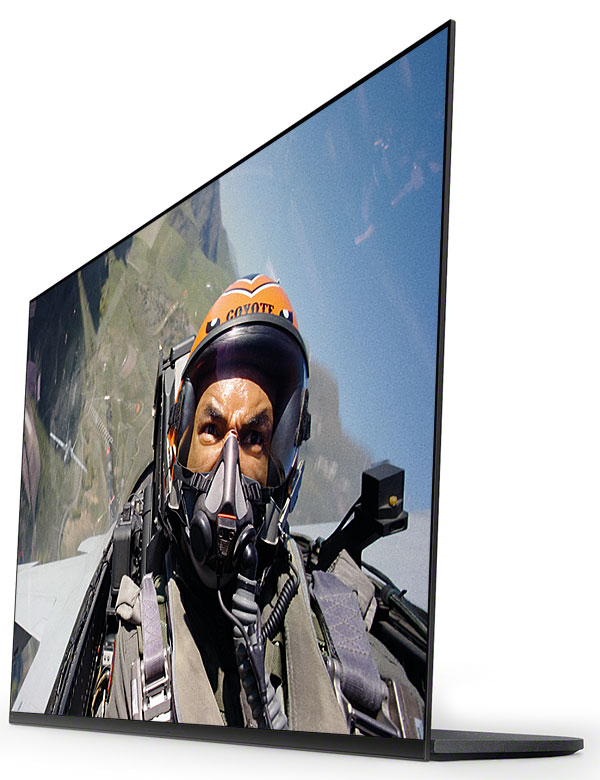

Samsung isn’t the only brand to combine OLED’s self-emissive contrast talents and the brightness/colour benefits of Quantum Dots in a TV this year. Sony is also in on the QD OLED act with its A95K series, in 55in (tested here) and 65in versions that command a premium over Samsung’s already discounted S95B model. Is the extra cost justified?


Aesthetically the £2,399 XR-55A95K (the 65-incher sells for a toppy £3,199) couldn’t be more different to Samsung’s first-gen QD OLED set. That TV has an incredibly thin, smart metallic finish, whole Sony’s is a chunky beast by modern standards. There’s still something stylish about it in an industrial kind of way, though, and I appreciate having the choice of whether to attach it to the front or back of its heavy-duty metal stand.


There’s an excuse for its bulk in the shape of Sony’s Acoustic Surface audio tech, where actuators behind the screen that turn it into the TV’s speaker system are backed up by two bass drivers built into the set’s rear. We’ve heard Acoustic Surface technology on Sony OLED TVs before, of course, and it works just as well with QD OLED screens. The pulsating Dolby Atmos soundtrack of Baz Luhrmann’s Elvis (4K Blu-ray) sounds consistently excellent through the XR-55A95K: dynamic, open and clean, with accurate effects placement both on and beyond the screen.


Just The Two Of Us

The TV’s connections are reasonably strong, with two of its four HDMIs supporting 4K/120Hz feeds, as well as variable refresh rates and automatic low latency mode switching. PS5 owners can also enjoy auto HDR optimisation, while image lag in Game mode is kept to a respectable 16.5ms with 60Hz sources.


1222sonyol.side

The TV can be mounted either at the front or rear of its low-slung stand


You might expect, at this price, for all four HDMI inputs to handle the full suite of gaming features, given that they do on Samsung’s S95B and LG’s C and G series OLEDs. Additionally, the XR-55A95K doesn’t support Dolby Vision gaming at 4K/120Hz – in fact, it won’t play Dolby Vision at all unless you make sure the feature is enabled from the TV’s connection menus.


HDR10+ playback is not on the menu at all, with Sony claiming it can ape HDR10+ with its own processing systems. We’d still like to see the company’s TVs joining Panasonic, TCL and Philips in supporting all main HDR formats.


Image processing is handled by is Sony’s latest Cognitive XR system. This sees the Japanese major refining the processor’s approach of subtly manipulating myriad elements in any incoming image, to try and make it look more as your eye perceives the real world. On paper this might get some home cinema enthusiasts thinking the XR-55A95K isn’t interested in delivering accurate pictures. Actually, though, the set is packed with independently certified settings, including Netflix Calibrated and IMAX Enhanced options, offering you a route to relative accuracy if that’s what you want (as we’ll see, the Cognitive XR ‘juiced’ pictures are quite gorgeous, however). Furthermore, the XR-55A95K is Calman Ready if you want to go the professional calibration route.


The TV’s smart features are, as usual with Sony TVs, provided by Google TV. This is mostly good news, at least to the extent that the interface is a nice presentational and organisational refinement on its Android TV predecessor, and carries a colossal amount of content. It also enables support for Google Casting and Google Assistant voice recognition, and there’s a nice Sony-specific wrinkle to the smart platform in the shape of the Bravia Core streaming service, which enables film fans (with sufficient broadband speeds) to watch 4K HDR movies delivered at bitrates of up to 80Mbps.


Unleash The Spectacle

At first glance the XR-55A95K’s image performance doesn’t feel like it’s delivering as much of a QD OLED ‘bonus’ as that of the Samsung S95B range. Pictures are not quite as bright or aggressively dynamic. Yet it doesn’t take long before you begin to realise that, while the screen’s take on QD OLED might not be as dramatic as Samsung’s, it’s certainly not any less impressive. In fact, I’d say it’s even better.

Sony XR-55A95K 55in Quantum Dot OLED TV Review


hccbestbuybadgev3This Quantum Dot OLED flatscreen is the TV to beat right now, believes John Archer


Samsung isn’t the only brand to combine OLED’s self-emissive contrast talents and the brightness/colour benefits of Quantum Dots in a TV this year. Sony is also in on the QD OLED act with its A95K series, in 55in (tested here) and 65in versions that command a premium over Samsung’s already discounted S95B model. Is the extra cost justified?


Aesthetically the £2,399 XR-55A95K (the 65-incher sells for a toppy £3,199) couldn’t be more different to Samsung’s first-gen QD OLED set. That TV has an incredibly thin, smart metallic finish, whole Sony’s is a chunky beast by modern standards. There’s still something stylish about it in an industrial kind of way, though, and I appreciate having the choice of whether to attach it to the front or back of its heavy-duty metal stand.


There’s an excuse for its bulk in the shape of Sony’s Acoustic Surface audio tech, where actuators behind the screen that turn it into the TV’s speaker system are backed up by two bass drivers built into the set’s rear. We’ve heard Acoustic Surface technology on Sony OLED TVs before, of course, and it works just as well with QD OLED screens. The pulsating Dolby Atmos soundtrack of Baz Luhrmann’s Elvis (4K Blu-ray) sounds consistently excellent through the XR-55A95K: dynamic, open and clean, with accurate effects placement both on and beyond the screen.


Just The Two Of Us

The TV’s connections are reasonably strong, with two of its four HDMIs supporting 4K/120Hz feeds, as well as variable refresh rates and automatic low latency mode switching. PS5 owners can also enjoy auto HDR optimisation, while image lag in Game mode is kept to a respectable 16.5ms with 60Hz sources.


1222sonyol.side

The TV can be mounted either at the front or rear of its low-slung stand


You might expect, at this price, for all four HDMI inputs to handle the full suite of gaming features, given that they do on Samsung’s S95B and LG’s C and G series OLEDs. Additionally, the XR-55A95K doesn’t support Dolby Vision gaming at 4K/120Hz – in fact, it won’t play Dolby Vision at all unless you make sure the feature is enabled from the TV’s connection menus.


HDR10+ playback is not on the menu at all, with Sony claiming it can ape HDR10+ with its own processing systems. We’d still like to see the company’s TVs joining Panasonic, TCL and Philips in supporting all main HDR formats.


Image processing is handled by is Sony’s latest Cognitive XR system. This sees the Japanese major refining the processor’s approach of subtly manipulating myriad elements in any incoming image, to try and make it look more as your eye perceives the real world. On paper this might get some home cinema enthusiasts thinking the XR-55A95K isn’t interested in delivering accurate pictures. Actually, though, the set is packed with independently certified settings, including Netflix Calibrated and IMAX Enhanced options, offering you a route to relative accuracy if that’s what you want (as we’ll see, the Cognitive XR ‘juiced’ pictures are quite gorgeous, however). Furthermore, the XR-55A95K is Calman Ready if you want to go the professional calibration route.


The TV’s smart features are, as usual with Sony TVs, provided by Google TV. This is mostly good news, at least to the extent that the interface is a nice presentational and organisational refinement on its Android TV predecessor, and carries a colossal amount of content. It also enables support for Google Casting and Google Assistant voice recognition, and there’s a nice Sony-specific wrinkle to the smart platform in the shape of the Bravia Core streaming service, which enables film fans (with sufficient broadband speeds) to watch 4K HDR movies delivered at bitrates of up to 80Mbps.


Unleash The Spectacle

At first glance the XR-55A95K’s image performance doesn’t feel like it’s delivering as much of a QD OLED ‘bonus’ as that of the Samsung S95B range. Pictures are not quite as bright or aggressively dynamic. Yet it doesn’t take long before you begin to realise that, while the screen’s take on QD OLED might not be as dramatic as Samsung’s, it’s certainly not any less impressive. In fact, I’d say it’s even better.

Posted in Uncategorized

Samsung HW-Q990B Soundbar

hccbestbuybadgev3For its range-topping 2022 sound system, Samsung has adopted an ‘evolution not revolution’ approach. John Archer appreciates the new-found sense of refinement


The first thing to point out about Samsung’s HW-Q990B soundbar is actually something it doesn’t do, which is add any new sound channels. It sticks with the 11.1.4 configuration introduced by last year’s Q950A (HCC #324), bringing to an end a proud Samsung tradition of steadily increasing channel counts in its sound systems.


However, the number of channels the Q990B has stuck on is still a lot. In fact, no other soundbar system I can think of offers more. And the point of all these drivers is to get as much immersive power and surround sound joy from Dolby Atmos and DTS:X soundtracks as possible.


You’re Surrounded!

It comprises four components: the main soundbar to go under your TV, a portly wireless subwoofer, and two wireless rears. These latter enclosures each deliver three channels of sound – height, rear and rear-side. Back at the front of the room, Samsung’s bar adds side and forward side channels to its LCR and Atmos arrays. Add in the subwoofer’s 8in driver and that’s how you get to the 11.1.4 channel count – without any being created ‘virtually’ by audio processing.


The rears revamp the design of those of the Q950A, including an angled top edge to improve directionality of their upfiring driver; an integrated pedestal stand said to better decouple them from whatever surface they’re sat on; and a new metal grille-style finish to replace the rather dust-prone felt visage of its predecessor. The Q990B subwoofer also has a new look, courtesy of an acoustic lens’ standing about an inch proud of the side-facing bass driver.


The main soundbar bins the felt cover of last year in favour of a more industrial but no less attractive grilled finish. This enclosure is one of the larger ones you’ll come across (it measures 1.23m wide), but should still fit under most largescreen TVs without butting into the picture. Just remember that you can’t place it on a shelf inside any (massive) TV stand. Its top has to be open to the heavens.


Made To Measure

As well as its individual speaker design tweaks, the Q990B finally introduces an auto-calibration system to Samsung’s soundbar range. Dubbed SpaceFit, this uses microphones built into the main soundbar to ‘measure’ your room characteristics and adjust the sound accordingly; it automatically re-runs itself every day. There’s also a useful Auto EQ system that constantly monitors and optimises the subwoofer’s bass contribution.


Connections include a twin HDMI loopthrough, an optical audio input, eARC, Bluetooth and Wi-Fi content sharing, and even the ability to receive DD+ (compressed) Dolby Atmos mixes wirelessly from compatible Samsung TVs. Tracking which input you’ve selected – as well as volume levels and sound modes – is helped by an LED display on the front of the ‘bar.


The HDMI stage supports HDR10, HLG, Dolby Vision and HDR10+, but there’s no passthrough support for the 4K/120Hz and VRR gaming graphics output by the PS5, Xbox Series X and top-end PCs. Control is via Samsung’s tidy remote handset, and the HW-Q990B is also compatible with Amazon Alexa voice control and can be driven from Samsung’s Smart Things app.


Ready For Anything

Samsung’s 2021 HW-Q950A delivered a barnstorming performance worthy of its price tag. The Q990B does the same, while outgunning its forebear in practically every way. The impact of the revamped rears is there to hear, as they offer more clarity, more detail and more presence to 3D soundtracks, as well as holding up substantially better when driven to extremes by crazy audio moments. In the first showpiece race in Ready Player One (4K Blu-ray), there’s a moment near the end where Wade grabs the hand of Art3mis and spins her around as her bike crashes towards King Kong. This could sound a bit stressed and harsh through the Q950A’s rear channels. On this new model, such aggressive effects still sound natural and defined. Just very, very loud. Exactly as they should.

Posted in Uncategorized