Luxman occupies an uncommon place within the hi-fi world. While lots of the manufacturers chasing final efficiency will battle it out within the bleeding-edge design stakes, Luxman makes what I wish to name luxurious gear. Everything they produce is gorgeous, not simply to the ear, but in addition to the attention and hand. Their design aesthetic retains one foot firmly planted within the fashion of traditional audio gear from a long time previous—for instance, a lot of their amplifiers have tone controls and massive energy meters, options harking back to topflight gear from 40 years in the past—whereas the opposite foot is updated with the most recent know-how.
Because of this deal with luxurious, the everyday Luxman purchaser is somebody who likes to contemplate the whole possession expertise when making gear decisions. Merely sounding implausible is not adequate; every little thing about utilizing the product must exude high quality, from the texture of the switches and ease of operation, to its styling and match and end. As a end result, Luxman gear tends to attraction to a wider group of householders, properly past the hardcore audiophile crowd. Their conventional design language makes Luxman interesting to individuals who wish to personal lovely issues with a touch of nostalgia for the audio gear they lusted after once they have been youthful however maybe could not afford till now.
The PD-151 MkII report participant ($5695) is a wonderful instance. If you had a time machine and will return and slot an image of the PD-151 into Luxman’s 1978 product catalog, no one would assume that they have been seeing a turntable from 45 years into the long run. Its timeless design makes it immediately recognizable as what it’s—it would not appear like a chrome wedding ceremony cake, for instance—so you will not have to elucidate it to most guests. The MkII is even accessible with a conventional, clear, hinged mud cowl ($795), one thing more and more uncommon on immediately’s higher-end turntables.

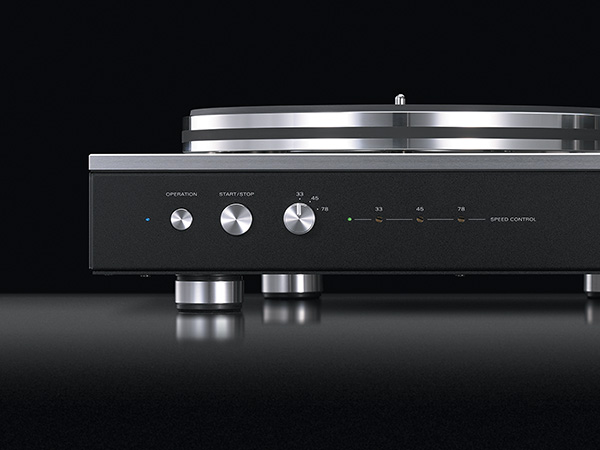
To keep its discreet, traditional look, the PD-151 MkII hides most of its working elements contained in the chassis: Most of the turntable’s enterprise elements, together with the motor, energy provide, speed-control circuitry, foremost platter bearing, and tonearm, are connected to the 10mm-thick slab of “diamond-cut” aluminum that types the highest floor of the construction. This plate is mounted onto the boxlike decrease half of the plinth, the entrance panel of which is dwelling to the ability and pace controls, whereas an IEC energy inlet connector is round again, and 4 adjustable isolating ft are on backside.
Normally when making a high-performance turntable, the designer will attempt to preserve any elements that may create vibrations—the motor, the ability transformer—remoted from elements which might be particularly delicate to vibrations, particularly the platter and tonearm. So it is uncommon to see all of those parts bolted collectively onto the identical structural a part of the turntable. To keep away from the issues this would possibly create, Luxman has mounted the motor and transformer utilizing particular rubber damping washers to maintain vibrations from making their means into the primary prime plate—a time-tested method. Furthermore, they’ve used a really quiet DC motor to keep away from vibrations within the first place: DC motors sometimes run quieter than the AC synchronous motors utilized in most turntables, and the MkII’s motor is among the many quietest I’ve ever encountered. The draw back is that they want very correct voltage management and loads of rotational inertia to keep up constant pace underneath load. The PD-151 achieves these items by combining a classy pulse-width modulation energy provide—the fundamental know-how behind DSD—with a proportional-integral-differential suggestions loop (footnote 1) to right pace variations. The high-inertia (heavy) platter and thick rubber drive belt additionally assist to clean out any pace anomalies.
What issues is the end result, and even after I held my stethoscope in opposition to the highest plate adjoining to the motor, I could not inform whether or not the motor was on or off. It’s that quiet.
Front-panel buttons, switches, and LEDs enable the consumer to manage the platter drive and pace. From left to proper, there is a foremost energy button for firing up the circuitry, a begin/cease change to activate the motor, and a three-position rotary change to pick 33 1/3, 45, or 78rpm. On the correct of the rotary change is a multicolor LED that means that you can monitor the standing of the speed-control circuitry; to the correct of which might be three recessed trim screws that will let you fine-tune the three speeds individually.
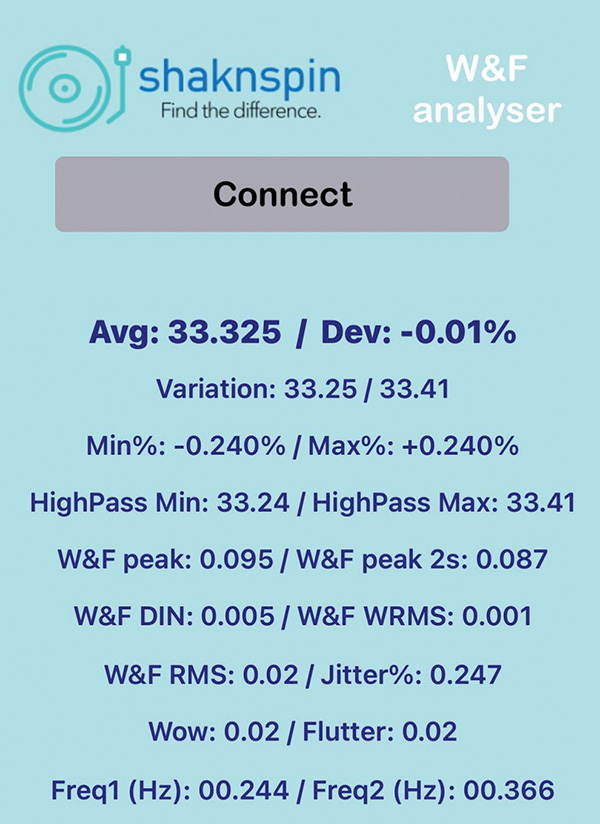
Luxman would not present any kind of strobe disc or different software for verifying the pace, though these are simple to amass. I used a Shaknspin wow and flutter measuring system to regulate the pace, however it’s also possible to use one of many free (or low cost) apps that depend on your telephone’s gyro—or an outdated strobe disc, which I desire to phone-based instruments. I discovered the 33 and 45 speeds shut to identify on out of the field (above). 78rpm was fairly far off, however correcting it was simple. Measured with the Shaknspin, wow and mixed flutter have been beautifully low, at 0.02% WRMS, about half the factory-specified worth.
What makes it ‘Mark II’?
Normally, when an organization introduces a brand new model of a longtime product, it is as a result of additional developments make it doable to enhance its efficiency. That’s true of the PD-151 MK II, nevertheless it’s additionally true {that a} change was vital: The earlier PD-151A used a tonearm equipped by Jelco; sadly, that Japanese tonearm maker introduced in 2020 that they’d be closing their doorways for good after nearly 100 years in enterprise. That left many turntable corporations scrambling to seek out options and led Luxman to strike a take care of one other Japanese producer, SAEC, which, in cooperation with Luxman, created the LTA-309.
Founded in 1974, SAEC lacks the identify recognition of Jelco however has loved a cult following in audiophile circles for the reason that Seventies. Most of their tonearms observe a design method much like that employed within the Sixties by SME, with a removable H4 bayonet-mount common headshell and knife-edge bearings for the vertical pivot. Knife-edge bearings work precisely as their identify suggests, with a pair of slim blades flanking the armtube on the pivot level, held by gravity to a pair of V-shaped blocks. The result’s vanishingly low static and dynamic friction because the arm strikes up and down and a sure robustness, or resistance to unintentional injury from overzealous cartridge-bolt tightening and different mishandling. Older knife-edge designs have been typically criticized as being susceptible to bearing chatter and poor power coupling from the cartridge to the turntable’s construction, however this is not an issue with a better mass design just like the SAEC. As with any gravity-supported bearing, you’ll be able to really feel slightly play between the arm and the bottom when you manipulate the armtube in a means that lifts the knife edges out of the V blocks, however on the Luxman/SAEC arm this motion could be very tightly constrained, and anyway it is not related throughout playback.
The H4 bayonet-mount common headshell has an extended historical past, going again greater than 60 years to the Ortofon G-type headshell and the SPU sequence of cartridges. It’s an excellent system, permitting for fast, simple cartridge swaps in just some seconds, nevertheless it has a number of limitations in relation to ultraprecise cartridge alignment. The pin that locates the headshell vertically within the armtube will sometimes have some play, making exact, repeatable azimuth setting troublesome, and the best way the collar holds the headshell into the armtube can change the front-to-back angle of the headshell relying on how a lot the collar is tightened. I discovered that with the Luxman arm, tightening the headshell collar firmly resulted within the headshell floor being about 1.5° out of parallel with the armtube. This is not actually an enormous deal as a result of you’ll be able to simply compensate by elevating the peak in the back of the arm, nevertheless it’s one thing to pay attention to when adjusting the stylus rake angle.
Setup
Despite the PD-151 MK II’s sophistication and excessive efficiency, Luxman has performed lots to make it very simple to arrange and get enjoying. The ‘desk arrives with its tonearm preinstalled, the cable plugged in and secured, and the adjustable ft in place. Just place the turntable in your rack or shelf and degree the chassis utilizing the 4 adjustable isolation ft, which have a 5mm adjustment vary. Luxman says that each one 4 ft ought to be lowered at the very least barely to permit the isolation operate of the ft to work as designed. Once the chassis is degree, decrease the platter onto the primary bearing, put the thick rubber platter mat in place, and set up the drive belt across the platter rim and motor pulley. A pair of handles helps elevate the platter into place, and these screw into threaded holes on the platter floor. This helps stop unlucky platter-dropping accidents and retains your mucky paw prints off the polished platter rim. Connect the ability cable to the again panel socket and the turntable is able to spin.
The LTA-309 tonearm presents no actual difficulties in setup and finetuning (footnote 2). The arm is absolutely adjustable, with a large height-adjustment vary (for setting stylus rake angle), a rotatable headshell (to fine-tune azimuth), and a easy rotary dial for antiskating.
For aligning the cartridge within the headshell, the guide says to make use of the outdated trick of measuring 52mm from the again of the headshell collar’s rubber washer to the stylus tip. That gives you an alignment near Stevenson, however to a fussy setup man like me, it appears to lack precision. I used an Acoustical Systems SMARTractor alignment protractor to regulate the arm extra exactly.
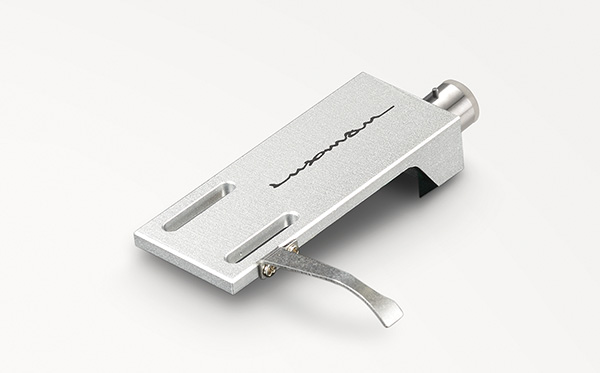
The tonearm comes with a normal counterweight appropriate for cartridges weighing as much as 10gm, whereas a heavier weight—half quantity OPPD-HW2—is on the market as an possibility for cartridges that weigh between 9gm and 19gm. I used two cartridges through the assessment, an Ortofon Cadenza Blue and Luxman’s personal LMC-5, and located the usual weight appropriate for each. Luxman supplied an additional headshell, the OPPD SH2, which allowed me to modify simply between the Ortofon and Luxman cartridges with minimal recalibration.
The OPPD-DSC151 dustcover is obtainable as an non-obligatory further; at practically $800, I suppose it is good that Luxman provides you the choice of going with out it in case your price range is tight. That’s some huge cash for a dustcover, however you get what you pay for: This lovely, thick, crystal-clear cowl actually completes the package deal visually. To set up it, unscrew two plates on the again of the turntable and exchange them with the 2 hinge brackets supplied with the dustcover. The cowl then slips simply into place.
Footnote 1: PID controllers are sometimes utilized in laboratory gear. By offering suggestions proportional to hurry, acceleration (the time-derivative of pace), and place (the time-integral of pace), such controllers present secure, well-damped suggestions that behaves properly.—
Jim Austin
Footnote 2: However, I used to be puzzled by Luxman’s resolution to supply no alignment instruments; maybe they assume your vendor will do the setup, or that you just or your setup man may have their very own instruments.