Author Archives: Paul Wilson

Why Reviews Are Important

In the early years of high performance audio, the hobby, predominately, was most aptly characterized as local. Dealers were in almost every city of any notable size and in most smaller ones as well. It was not uncommon for buyers to routinely visit their friendly dealer up the street to see what new gear awaited. They spent time hanging around the dealership and became friendly with the staff. It was almost an outing. 

As years passed, the hobby changed. Gear got better and most would perhaps agree more expensive. Although I would submit our hobby has always been a little on the expensive side relative to median income – regardless of the time frame or year. 

As prices increased, dealers, always under constant pressure, in many ways felt caught in the middle. They needed to make a profit to remain in business and make a living. Yet at the same time, they wanted to move product out the door and that required making concessions. One was irrevocably intertwined with the other. 

Today, the dealer business model ranges from very successful to almost a polar opposite. Consumers, who predictably are looking to save money, have turned to other creative methods to purchase gear. We know that sales outlet as the Internet. 

I enjoy talking to dealers and if there is one universal, incontrovertible gripe they all have it is the customer who comes into the dealership, plays with and listens to components, spends inordinate amounts of time asking questions, gets quotes and then buys online. Is it legal? Yes. Is it ethical? Dealers will universally tell you it is not. No way. Consumers may feel differently. In car parlance they are called “tire kickers.” Audio dealers are helpless because they never know who will buy online or become a paying customer. 

Regardless of how one secures a new purchase, it goes without saying it has become a process. Many feel a long and arduous process. For others, it is no more difficult than placing the order and writing the check. However any audiophile may end up with new gear, the first step of the process usually begins with research. 

It has been said a journey of a thousand miles begins with the first step. While buying a new audio toy is not, for most anyway, a journey of a thousand miles, it does invoke a certain amount of trepidation and hopeful expectations of sonic acceptance. For quite a few of us, step one is reading a review. 

Typically, if we have in mind a particular product, we are naturally curious about how it will perform. So, let’s be clear, there is no better substitute than demoing a perspective product in your home, on your system, playing your music. None. As true as that may be, it is not always an easy thing to accomplish. Dealers may not be conveniently located. They may not have the product in question. While all that is known and understood, it does not relieve the indecision in buying a new and untested product. 

Reviewers bring a measure of reassurance to the buying process. Most reviewers, particularly the more well-known ones, are in many ways like a trusted expert. Many have remarkable systems and have had years of practice learning how to diagnose and dissect exactly what a song is doing on an audio system. 

It is quite common for a reviewer to have multiple speakers, amps, turntables – whatever the case may be – the main function being variety in order to facilitate well rounded guidance to curious readers. Some systems will be very much on the budget side, some will be hyper expensive. What these systems provide the reviewer is a platform for reasoned, technical observations along with listening experience. 

Reviewers, however, are not infallible. It should be understood that to a certain extent, what is reported is based on personal preferences. I’ve read reviews about speakers, for instance, and based on my own experience I would disagree completely and absolutely with their findings. I’ve also read reviews with which I agreed completely and absolutely. 

It should also be understood that not all products will be reviewed. Maybe that new digital device you are all hot about is not on the radar for review. If not, what do you do then? Most commonly, search for something in the same family or something else by that same manufacturer. Maybe some insight may be gleaned, incomplete though it may be. 

Perhaps the most important service reviewers bring to high performance audio is a valued starting point. If someone reads a review about a speaker and the review was highly positive, the buyer should realistically add that speaker to their short list – and of course, make plans to hear the speaker for themselves. 

If, after reading an exceedingly glowing review on something, you hear the component and are completely dismayed, it might be natural to wonder what the reviewer was thinking. How could he like this awful sounding thing? 

It is important to remember that ours is a hobby of wildly divergent tastes and levels of enjoyment. What appeals to one may not to all. Not everyone likes Brussels Sprouts. Just because you disagreed with a review after hearing that particular component for yourself does not make the reviewer wrong. It’s as simple as their opinion differed from yours. 

Reviews are not an easy thing to do. Most reviewers live with a component for several months. They must haul these heavy things around, fenagle them into their audio rack, store the boxes somewhere, and once the review has been completed, pack it up and ship it back. All in all, a lot of work. 

This difficult task is most often done without complaint because at their core, reviewers, generally speaking, enjoy the review process. They are a valuable part of the buying practice. Information about any particular audio product, done under controlled conditions, with known music and with likewise quality associated equipment brings a valuable resource to what is otherwise a difficult part of the audio process – the part where a purchase decision is made. 
Do Looks Matter as Much as Sonics?

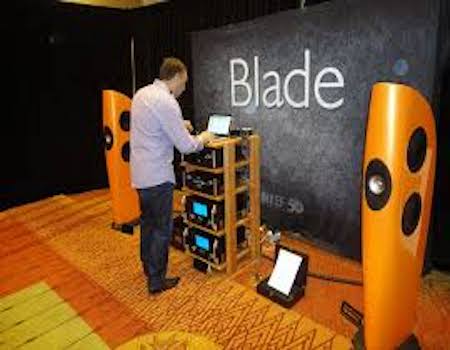
When I first saw the KEF Blade on the cover of The Absolute Sound, I almost started laughing. “What is this crazy looking thing” I asked myself. I so completely dismissed it from any new speaker system consideration that even reading the review was a waste of my time. 

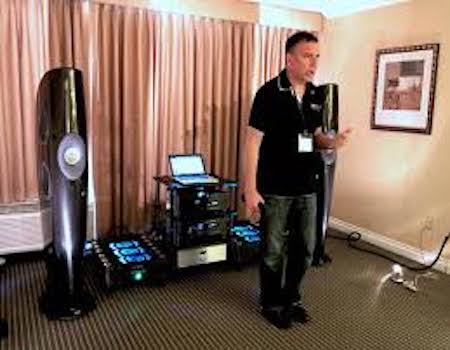
A year or so later I happened to walk into the KEF room at RMAF. The ever affable Johann Coorg, Brand Manager for KEF, was talking about the merits of this new speaker system. To say I was disinterested would be very accurate. I didn’t even care about this speaker system; I was never going to buy a pair so why have any concern about what they can do? Why am I wasting my time in this room?

About eight months later I owed a pair. 

What happened to me that day at an audio show was transformational. I was at the show because I wanted to narrow down my choices for a new speaker system. The KEF Blade was not on my short list. Why? Because of how they looked. I did pretty much the same thing I do with food. If it doesn’t look appetizing, it will taste bad. If it doesn’t look good, it will sound bad. Narrowminded thinking, I’ll admit. 

I was so captivated by the sound of the Blade that day in Denver I spent the rest of the audio show holding it as a benchmark against the other contenders on my list. None of those contenders really measured up. After the show, I visited a dealer to hear them again and ultimately bought a pair. Perhaps most strange, their look was suddenly “cool.” I even gave serious consideration to a bright orange color. How such a total transformational viewpoint occurred still mystifies me. 

This underscores a part of our audio choices, does it not? Our obvious first choice is how something sounds. I have always felt each of us has an intrinsic mechanism telling us when something sounds pleasing, accurate, dynamic, like live music, or any other requirement we may have. We are all looking for that certain sound. Asked to describe this mythical sound and we very likely cannot. However, we will know when we hear it played. 

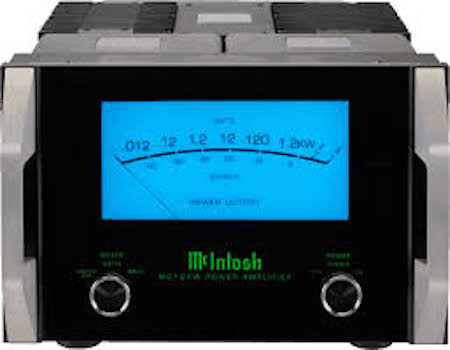
When considering how much an audio system can easily cost, do we not also want attractiveness as a feature and benefit? Who among us audiophiles do not think those iconic blue meters on almost everything McIntosh is way cool? It is so easy to imagine being in a magnificent audio room, lights down low, music at 85 dB, favorite beverage in hand, and not only listening, but also looking at that soft blue glow in the semi darkness. I know of what I speak as I’ve owned McIntosh gear in the past. It can almost be hypnotic. 

Who among us audiophiles would pay thousands, even tens of thousands of dollars for something friends and contemporaries would ask “where’d you get that ugly thing?” Not a question I ever want to field. 

Where then, do we draw the line between what we think looks attractive, what we think everyone else will see as good looking, and what offers sonic captivation? Do we forego any pretense of visual acuity in favor of sonic acuity? Or do we need both? 

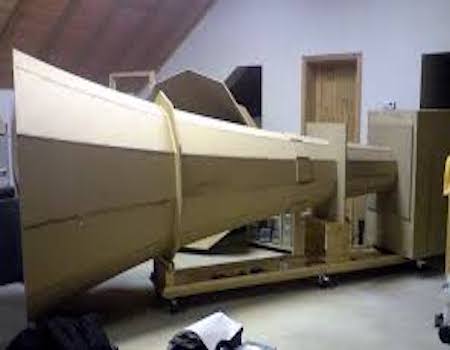
Speakers are perhaps the one component with “different” looking designs. Well, let’s be honest. Sometimes they just look flat out weird. Horn speakers can be particularly out there in gaga land when it comes to how they look.  There is another factor at work here, however. 

Is it not also likely the shape of the cabinet aims to improve sonics? That is exactly the case with the Blade. It was designed that way on purpose, and that purpose being meeting certain sonic goals. Looks were not the overriding objective, how it sounded was. One was an engineered means to the other. 

If we like the way something sounds, particularly a speaker system, can we get past the fact it looks crazy or just flat out ugly? When we listen in low light, something I am certain each of us has done at some time or another, do we see music or that crazy looking speaker? Or amp? Or whatever? 

Face it, we have to temper our viewpoints with a certain disconnect of the visual from the auditory. I fell in love with the KEF Blade because I heard it, not because I saw it. Had I not heard it, I seriously doubt I would have ever owned a pair. Auditory, not visual. 

Still, the fact remains, many of us need the speaker, component, or whatever the case may be to look as good as it sounds. Manufacturers try to accommodate our wishes when they can. Sonics will always win out. But looks also matter. Such is the reason we have things with nice soft blue lights, beautiful woods, and visual splendor intended to make anyone who looks it go “wow.” 

Beauty is in the eye of the beholder. Yes, that’s a well-worn phrase. In audiophile parlance, it means primarily how it sounds, but to a certain extent, also how it looks. Where the line is drawn between the two is an individualistic, debatable choice we all must make. We may view sonics as our purchase choice barometer. Visuals may enter into the picture as well. In the end, I suspect sonics win. It seems inevitably likely we will have as a continuing design feature the different, the outlander, the obscure when it comes to how something looks. How it sounds, ah, that’s the thing. We really can’t get past sonics. 

Audio Things I Wish I Had Done Differently

At the young age of 15, I became fascinated with my then best friend’s, older brother’s, all Mcintosh system. Charles had a Mac tube amp and preamp, that really cool (even then) Mac turntable and a set of Mac speakers. The first song he played for me was a track by Bob Marley or something similar, if memory serves. 

I was irrevocably hooked. Suddenly, the transistor radio I lashed around my bicycle’s handlebars was no longer in favor. What ensued was a year of neighborhood yard work and any scheme a teenaged venture capitalist want-a-be could use to earn enough money for a first audio system. 

Stereo Review became my most read publication, often to the exclusion of textbooks. Julian Hirsch became my de facto mentor just by his writings. I was, I told myself and my friends, an audiophile. Even if in name only, the moniker made me feel good. 

As time moved on, and finances improved, I ventured into new equipment. In my freshman year of college, I had the best stereo and probably the most records of anyone on the second floor of my dorm. My room was popular on the weekends. We played everything from Richard Pryor to some of the heaviest metal anywhere. We played it loudly. And if I could find the then hall monitor, or “RA,” I’m sure he would say “way too loud.” If only I had a do over. 

I was, in those early days, a vinyl guy. Of course, there were few choices. Outside of a turntable, there was little beyond radio, 8-Track, and reel to reel. Radio was awful. 8-Track was never even a consideration. I told myself I could not afford a reel to reel and what’s more, I didn’t have a nice enough system for one anyway. I wonder, had I saved my money and bough a R2R, would I still have it today? If only I had a do over. 

Okay, I’ll admit, I had an 8-track player in my car at the time – actually came with one. It was a 74 Monty Carlo with vinyl, swivel bucket seats. It also had a sunroof that leaked. So here I was, trying to be suave, sophisticated and impress girls, and what happened? The 8-track player seldom worked right, very often clicked to the next track in the middle of a song and anyone, girl or otherwise, who sat in the passenger seat got wet when it rained. I was anything but impressive. Do over? Oh yeah. 

As the 70’s gave way to the 80’s I added a cassette deck into the mix. Now I was buying cassettes and LP’s. I was making my own recordings. My whatever car had a cassette player. I was having an absolute ball! I started buying those (almost certainly) illegally made cassettes for $1.00 at gas stations and way out in the middle of nowhere country markets. They sounded terrible and it was not uncommon for them to break or, for whatever inexplicable reason, simply stop working. Buying those cassettes was a complete waste of money and I wish I had known better. Do over for certain. 

When full-time work became the norm, and disposable income grew (however modestly), new equipment found its way home. I was never so happy to upgrade my Marantz amp to a Nakamichi receiver. I was in audio heaven. I went from 40 watts per channel to a 140. Loud music knew no bounds. More than once, unhappy neighbors rang my doorbell demanding not so politely to TURN IT DOWN! If only I had been more considerate. 

In the mid 80’s I became part of a maelstrom sweeping the world, the Compact Disc. I bought a CD player and packed my LP’s up in boxes, put away my turntable, bought a nice entertainment center for the great room – with doors that closed and hid everything no less – making it possible to entertain friends with panache. I’m not sure a do over applies, I still listen to digital and buy CD’s. I do wish, however, I had kept my using my turntable back then. Do over? Well, maybe. Call it wishing I had made different choices. 

After buying a new townhome, I decided one Saturday to host a pool party. My townhouse overlooked the pool so genius me decided to move one speaker to the patio, shift the balance all the way to the left, and crank it up. I mean, it was a party! We needed music! Some party it was. I had to clean the pool the next morning in oppressive heat with a raging headache and even worse, I blew the tweeter on one of my Ohm Walsh 2’s I was using at the time. If only I had a do over. 

In 1988 I became self-employed. Predictably, money was tight for a few years. The savings I had when I started, savings calculated to last for two years, ran out pretty quickly. Audio took a backseat. In fact, it got moved to the trunk. I do not now, nor will I ever regret going on my own. I just wish things had worked out differently such that I could have enjoyed life a little more in those very lean early years. Call it a do it better. 

As circumstances improved, I began enjoying my early 30 something youth, the buoyancy of disposable income, however small it was at the time, and an active social life. I was a man on the move. Out and about. Or so I thought. Hindsight is an evil master. In retrospect, I wasn’t nearly as cool as I thought. And stereos? They were more or less a contrivance used for entertainment, not audiophile listening practices. But looking back, I gotta be honest, I had fun. No do over here. But a little more common sense and maturity? Well, maybe. 

In spite of all my past life events, I sometimes wish I had devoted more time and attention to the hobby that has been with me for 47 years. I wish, when in my 20’s and 30’s, I had been more like that 15-year-old hearing his first high end audio system. If only I had a lifetime audio do over. 

Then again, I suppose, now in my 60’s I am allowed to look back and reflect. I recently attended a funeral for a good friend I have known for thirty years or more. He died of cancer. He was 62. After his funeral, a group of us got together to tell “Jeff” stories. We laughed at all of the things we did, those horribly silly, even stupid things we did in our youth. We laughed and reflected on not only the passing of our friend, but also our own life choices. And for me, all along the way, to some degree or another, audio has been part of that journey. 

I could probably talk about do overs for a while. Many other things come to mind. One of my best choices was that day in 1972 when I decided I wanted to be an audiophile and have a nice stereo system. I have never wavered from that position. That’s not a do over for sure. 

Does Spotify’s Recent Announcement Signal Lossy’s End?

When Steve Jobs and Apple first began developmental work on the iPod, their goal was a device to fit into a shirt pocket and hold 1000 songs. Such was a worthy goal; handheld devices of the day were often somewhat cumbersome and could only play a cassette or CD. One major hurdle was a way to make the hard drive small enough while holding the envisioned amount of music. To reduce the file size of each song, Apple turned to a recently introduced digital code – MP3. 

Initially released in 1993, MP3 was the third digital audio format of the MPEG-1 (Audio Layer III) code. In very simple terms, MP3 reduces digital file size by lossy data compression. In other words, it strips musical files of much of their very body and soul. Steve Jobs seized upon MP3 in the development of the iPod because it enabled his initial goal of 1000 or more songs on a shirt pocket sized device. Never mind sonics. Lossy music delivers a musical experience I like to call the skin of the snake. Combine low resolution with a poor playback format and presto, inferior quality music awaits. 

Now, many years later, handheld devices have become ubiquitous and are exceedingly commonplace. As their use became more widespread, Mp3, called a “lossy” format, became the de facto standard for compressed music. This format has grown alongside the rise of digital music and what is today’s de facto standard – streaming. 

As streaming grew in popularity, handheld device manufacturers needed to add more features to what arguably began as a telephone. Music was one such feature. MP3 became the default code for musical playback on a smartphone.

No one, save for audiophiles, cared about sound quality. While Pandora and Spotify added subscribers at a frenetic pace, audiophiles continued to play CD’s. Then came Tidal. And the audiophile world changed – maybe forever. 

Today, we have a veritable smorgasbord of streaming services. In addition to the two main services, Apple, Amazon and You Tube are also very popular. Additionally, there are lesser used services such as SunCloud, Primephonic and iHeartRadio.

At a minimum, they all offer pretty much the same thing, a less than CD, or lossy quality streaming service for somewhere between free (at seriously compromised quality levels) and some sort of paid plan.  

When MQA was developed, it was first introduced to the audiophile market. While it has become far less controversial today than when initially announced, it is still not without controversy. MQA is viewed by some as an inferior lossy format and by others as a superior musical experience. I really believe MQA was intended all along as a replacement for a lossy format on smart devices. But that’s another story. 

Also concurrently taking place were vast improvements and miniaturization in hard drives. Likewise, other digital codes were introduced by streaming services allowing larger file sizes on handheld devices, yet still a lossy format. Device manufacturers, however, have not rested on their laurels. Smartphones can now play a wide variety of formats, both lossy and “lossless,” or CD quality. 

Recently, Spotify announced they would be coming out with a CD quality streaming service. Well, well – add another name in the hat. It seems CD quality is becoming a more popularized way to play music. Are we, could it be we are seeing a seismic shift in the quality level of streamed music? Is the lossy format on the way out and something better on the way in? If so, are audiophiles to thank for this? 

I’ll admit, thanking audiophiles might be somewhat of a stretch. However, with an increasing number of services advertising “CD QUALITY” at inexpensive monthly fees, does it not make sense someone is finally thinking about sound quality? Or is this perhaps a marketing ploy? 

Audiophiles, not surprisingly, are looking beyond simple CD quality. We want something better. Tidal offers MQA, Qobuz has high definition and both sites have very affordable subscription plans and costs. Why are these features demanded? Simple. We want quality. We want the whole snake, not just the skin. 

I would like to speculate that the audiophile hobby is rubbing off on everyone outside the hobby. We audiophiles, we humble audiophiles, are enriching and making everyone’s musical experience better. Because we actually care about sonics, we are making it possible for everyone to hear music presented more closely to how it was recorded. 

Yeah, that’s probably a stretch. 

We cannot, however, deny that Spotify and Pandora are still two services with millions of subscribers. Add that to the rest of the less than CD level providers and there are many millions of people listening to music every day. Most of them are doing so at less than CD quality. As it is right now, almost all of them doing so on a smart device are listening with an MP3 or other type of lossy formatted phone or tablet. 

Could Spotify’s adaptation of a CD quality service signal the beginning of the end of the lossy format and an adaptation of lossless? Will companies making smart phones and tablets standardize on a lossless level format? MQA is currently available on handheld devices but has in no way supplanted MP3 or any other lossy format. Will something else eventually become the de-facto standard? Will non audiophiles realize a betterment of their musical experience while using their iPhone? 

Here’s a way out there question: will the audiophile hobby actually realize growth because these “average” listeners will want to hear music with superior sound? 

Yeah, that’s probably a stretch as well. 

Whatever happens remains to be seen. With Spotify offering CD quality streaming, you can bet the rest soon enough will also. Amazon already does, in fact, they even offer HD. The world is starting to pay attention to the quality of their musical presentation. My hope is that some of them might wander into that nice green field we call audiophilia. Maybe a few converts await. 

Whatever happens, it’s a bad time to be a snake. 

Do Speakers Really Disappear?

We audiophiles may agree on the premise our audio systems are intended to mesmerize us with music spectacularly reproduced in our listening space. While the how’s and why’s differ widely, our end use expectation is to become irrevocably attached to the music our systems produce. We can endlessly debate the how’s and why’s, but we cannot dismiss the ultimate goal – stunning music stunningly reproduced.  

Some aspects of audiophilia are difficult for many to grasp, especially anyone outside the hobby. For the vast majority of those who typically listen to music on a handheld device, the perpetual and endless “tinkering” audiophiles perpetuate seems nonsensical. If we should be so bold to go out in public and talk about the incredible increase in sonics we were able to achieve because we repositioned or replaced something, we are very often met with blank and quizzical stares. Do what(?) is often the reply. The uninformed are steadfastly that.

One of the most cherished aspects of speaker set up, and likely difficult to achieve, is make speakers disappear. As we all know and understand, this is not a magic trick like sawing a woman in half. Making a high performance speaker system disappear is not being able to tell music originates at the transducers. This applies to the mains and also, if used in the system, the subwoofer – whether one sub or two. Our ultimate goal is to have imaging portrayed from side to side, well beyond and behind the lateral speaker boundary, and also depict layers of depth and height. We want to be able to pretend we are sitting in a concert hall and not our listening room. 

Making speakers disappear is rewarding and difficult. To do so to remarkable effect means we must overcome deficiencies in the recording itself, the degree to which the equipment ameliorates the signal as it travels along its path, and most difficult of all, the audio room. Propagation of direct and reflected output from the speakers is as much influenced by the room as speaker design. And when considering the design of the speaker system, placement within the room is of paramount importance. Because we all want one simple attribute in our stereos, we want to be bounded by music and completely removed from an audio system. 

If only it were so simple to achieve. 

When seated in the listening chair, most speaker setup methodologies will have the speakers facing the listener. There they are, right smack dab in front of us. If we only hear music radiating from the drivers on the speaker enclosure, we have not successfully completed a disappearing act. We therefore will have little in the way of imaging – whether lateral expansion or image depth. In most such cases, we have fallen victim to that one immovable force – the room itself. 

If we are able to create a sonic portrayal where the music is well defined with specific placement of instruments, and those placements occur from any point besides the speakers, we then feel we have done our job. We have succeeded in our goal. Or have we? 

Can our goal ever be successfully achieved when as soon as we sit in the sweet spot, we see those looming monoliths standing sentry right in front of us? Stand mount or floor standing, face it, speakers are a highly visible feature in any room, dedicated listening or otherwise. And only in high performance audio is the sole acceptable speaker placement not hidden away on a shelf or behind a piece of furniture. No, our speakers must be front and center, there for all to see. Having a set of speakers so prominently displayed in a room causes more than placement and imaging woes, it may create tension from other family members who are not audiophiles. Hence the term “WAF.” 

In most rooms, acceptable speaker placement for a realistic soundstage and imaging of instruments on that soundstage are possible. Yes, some better than others, but most any room can be tamed to a great degree. To what extent may depend on ancillary measures such as room treatments, or its electronic equivalent DSP, but rooms can be made (mostly) compliant. 

One trick, if it may be called that, is the practice of listening in the dark and / or listening with our eyes closed. If we have done our collective jobs correctly, we will have an image with lateral dispersion behind and beyond the speaker boundaries, and we will also have depth and height. When we listen, should we hear image placement so precise it would seem we can get up, walk over and shake hands with the musician, we have set things up correctly. 

Listening in the dark or closing one’s eyes only goes so far, however. We are conditioned to remember how our rooms are arranged. Those imprints on our brain allow moving around a room in low light.

We know the couch is “there” so we can avoid it even if we cannot see it. This memory function also works to our detriment. We know how large our room is so a full-size symphony orchestra cannot fit in that space. As such, listening in the dark with our eyes closed, and knowing we are in our audio room inside our house means the brain reduces the musical portrayal to something more plausible. This is called precognizance and conflicts with what our brain tells us we are hearing and what we would like to hear. 

Consider a large set of floor standing speakers. Many such examples are easily five or six feet tall, measure some twelve, maybe sixteen inches across, and weigh a hundred pounds or more. If they stand four, maybe six feet into a room only sixteen feet deep to begin with, it seems obvious they will be an imposing fixture in the room. 

Based on the ability of any system to develop a convincing soundstage, pre-cognizance and the psychoacoustics of the ear / brain mechanism, how likely is it that speakers actually, perceptibly disappear?

Something to consider the next time you listen in the dark or wonder why your music originates exclusively at the speakers. 

New Music for Friday

The Jeff Benedict Big Big Band – “The Weather is Here, Wish You Were Beautiful”

Maroon Creek Music

For most of the last thirty years, Jeff Benedict has been a staple in the LA music scene. He has performed with the Los Angeles Philharmonic, the Los Angeles Chamber Orchestra and other similar venues. He holds a B.M., M.A. and also a D.M.A. (Doctor of Musical Arts) in music composition and is currently Professor Emeritus of Music at California State University in LA. He has played in various quartets and has released very well received works in traditional jazz, both as part of a group and on his own. In 2014, Benedict formed his “Big Big Band” whose intent was to recreate the big band sound in 1970’s era TV shows and movies. “The Weather Is Here” is his second release under the Big Big Band name. Four of the ten tracks are original compositions. What remains are six diverse tracks, among which are covers of Miles Davis, Irving Berlin and a very cool remake of the Disney classic, “Someday My Prince Will Come.” All ten tracks have Benedict’s arrangements and interpretations through and through. Given the band name, the genre is pretty easy to figure out and all ten tracks are very well done. A strong horn section with sax, trumpet and trombone combines skillfully and seamlessly with bass, guitar, drums, piano and percussion. This release shows what someone who is skilled in both teaching and performing music is capable of accomplishing. Big band proponents will love this one. 

Overall: 8

Sonics: 8

Chris Rottmayer – “Sunday At Pilars” Pilars Records

Residing in the cold enclaves of Madison, WI, jazz pianist and composer Chris Rottmayer was once a pianist for Walt Disney World for one year and since 2007 has been a part time instructor of Jazz Piano at the University of South Florida. He is concurrently working on a Doctor of Music Arts in piano performance. “Pilars” is Rottmayer’s second release and like the previous one, features a piano as the principal instrument. Stylistically, “Pilars” is traditional, piano centric, straight ahead jazz. Most of the twelve tracks are more on the slow and melodic side. The quartet consists of piano, sax, bass and drums. From an audiophile perspective, and perhaps most interesting, this recording was originally recorded on a 2” analog tape. It was then transferred to ProTools for mixing. Mixes were recorded to 1/2” tape and mastered at Masterdisk by Scott Hull. All in all, the sonics were exceptional, even in CD form. 

Overall: 8

Sonics: 9

Deborah Silver – “Glitter and Grits” NTL Records

On the good side, music icon Quincy Jones once called Silver “the real deal,” saying her “strong and sultry vocals are seductive and soul-soothing.” On the downside, or maybe the good side revisited, is the fact that Silver had Covid for 40 days and at one time didn’t know if she would make it through. Now Covid free, she wanted to share a release of “fun and cheerful” songs that covers a wide swath through several musical genres. On display in the thirteen tracks are tunes ranging from country, to jazz to the Great American Songbook. I do not recall hearing a work with covers of songs like “Deep In The Heart Of Texas” immediately after “Fly Me To The Moon.” Track one is an excellent version of “I Got Rhythm” and the work moves on from there. Orchestrations and arrangements are superb and make listening to this entire work quite easy and relaxing. Toe tapping. I even found myself singing along on several occasions. Perish the thought…

Overall: 8.5

Sonics: 8

Patrick Bradley – “Exhale” Patrick’s Song Factory

Perhaps it was coincidental, maybe planned, but the January 15, 2021 release of the new work by keyboardist Patrick Bradley was intended to be a respite from everything going on around us. Bradley was quoted as saying “It’s kind of a release from all the tension and difficulty of 2020.” Like almost any of his other five releases, “Exhale” is a work of smooth jazz. Some may call it contemporary jazz. I call it my favorite musical genre and Bradley is one of my favorites as well. The title track was written by another one of my favorite artists, saxophonist Darren Rahn and it is superb. What Bradley has released is an outstanding amalgam of contemporary jazz, fusion jazz, rock, R&B and even some pop thrown in for good measure. This is music that flows along and at times imbues the listener in contemplation and reflection, and other times fighting the urge to jump up and dance. I spent most of my initial playing of this CD just smiling and turning up the volume. I’m all for something to remind us that our difficult times will eventually end. What I am most excited by is the sheer exultation I feel when I listen to Bradley’s latest work. Whether inspired by a pandemic or anything else is one thing. What matters to me most is how spectacular of a work “Exhale” really is. 

Overall: 10

Sonics: 8

Are You Ready for The Rebirth of Reel to Reel?

For those old enough to remember, the 1960’s and 1970’s were a unique time to be an audiophile. For most with a superior high end audio system, LP’s were the overriding favorite type of recorded medium. This was a time before streaming, digital and what is today the format wars. It was also a time before vibration control products, five figure audio racks, and speaker cables costing more than a passenger sedan. 

In that long ago age, we audiophiles had mostly one thing about which we worried – what record to play next. There were, however, audiophiles living in that rarified air that we now call “world class” audio systems. These were systems costing in the back then range of $50K and up when almost every other system in the high end sold for less than five thousand. Many of those oxygen deprived systems had a component which then as now was thought to be the pinnacle of sonic excellence – the reel to reel (R2R).

Before digital, recordings were made on tape, most using a 2” master. They could then be transferred to a conventional tape or LP format the general public could use and enjoy. Few systems back when had R2R. All who did thought they sounded magnificent. Many were ¼”, 7-1/2 or 15 ips formats that set the bar for recorded media in a home-based audio system. R2R had / has the advantage of greater dynamic range than vinyl yet because still analog, produces the warm, lush sound LP aficionados prefer. 

Generally speaking, R2R requires less signal processing which, for the most part, improves sonics. Simply put, in most cases there is less work needed on the master for R2R than an LP – thus improving sonic quality. Digital, of course, has excellent dynamic range, but anyone who prefers analog over digital will side with the (sometimes perceived) warm sound of analog over digital harshness. 

Because the R2R format almost evaporated entirely at the dawn of digital, new machines nowadays are difficult to find. There are numerous options for used equipment, but they typically carry an intrinsic quality risk. Very often, a used R2R will need extensive repairs. Finding qualified technicians is no small task either. Because of the scarcity of service parts, and experienced techs, particularly those close by, refurbishing a fifty-year-old R2R may quickly become time consuming and expensive. 

There are alternatives, however. Washington, DC area manufacturer / dealer United Home Audio has for years been selling their own version of R2R machines. They range in price from about $19,000 to $26,000 for the machine only. Add options such as a separate power supply and various recording system choices and another $12,000 or more may easily be tacked on. 

German manufacturer Ballfinger also sells three different decks, and they also have a very limited selection of tapes as well. To my knowledge, they have no dealers in the US so actually buying one may be a challenge. 

Tapes themselves are another issue – namely availability and cost. If you like classical and jazz, you may find a lot more music from which to choose than if you are a country & western or hip-hop fan. Provided actually finding music is possible, have the wallet ready because it will cost – and cost plenty. Most tapes will sell for a $150 to over $500, depending on the artist and length of the tape. 

Needless to say, spending $20,000 to $40,000 on a new machine, or the inherent difficulties of a used one, and factoring in the price and limited artist availability of the tapes themselves, it might make one wonder what all the fuss is about. That’s simple. 

Sonic excellence. 

If audiophiles will do anything, they will unfailingly chase that last vestige of sonic improvement. From simple, cost effective DIY tweaks, to multi thousand-dollar state of the art solutions, to major component upgrades, making a song sound better is of paramount importance. R2R accomplishes that in spades. United Home Audio owner Greg Beron was once quoted as saying “I could hear the pedal squeak every time John Bonham hit the bass drum.” I’m guessing most audiophiles do not typically enjoy that level of detail. 

When last audio shows actually walked the Earth, R2R was notably conspicuous. Several of the better sounding rooms had them. At one audio show, I heard a system by Nick Doshi of Doshi Audio with a R2R that absolutely stunned me while listening to classical. It sounded like the symphony was actually in the room. And of course, almost any show will include United Home Audio demoing their lineup of machines. They all sound remarkable. 

I suspect even today, where stunningly stratospheric costs for audio equipment is very commonplace, R2R will continue to grow. It seems the rebirth is underway. Audiophiles with the means to afford reel to reel, and the temperament to make it happen, and the acceptance of limited music will incorporate it into their component lineup. They will search high and low for tapes in genres and by artists they like and cherish. They will do what audiophiles have done since the term was invented, pursue increased sonic excellence in a home-based audio system. 

There’s certainly nothing wrong with that. 

Are You Ready for The Rebirth of Cassette Tape?

I was recently plugging around in a closet when I spotted it lurking in the semi darkness. I found myself staring at and wondering why, for about forty years, I held onto my JVC cassette deck. My trusty deck and I had some fun back in the day. Tapes, now so long ago, were not terribly expensive. If one was really adventurous, those (probably illegally made) gas station tapes could be had for about a dollar. And then, it seems now, poof, cassettes were gone. 

Anyone who does not think we had format wars in the 60’s and 70’s should revisit history. LP’s lead the way. They were the 800 lb. gorilla. The ringleader. Radio occupied a lot of listening time although I personally never considered it the ideal way to play a song.

8 Track tapes were somewhat popular, although never revered for sonic excellence. I don’t know of anyone who did not detest an 8 track changing tracks in the middle of a song. Probably second to the LP was the cassette tape. In fact, cassettes probably put the death nell on 8 tracks and forced reel-to-reel into near oblivion as a consumer product. 

Introduced in 1963 by Belgium manufacturing giant Phillips, cassettes were initially intended for dictation machines. As tape fidelity improved, recorded music quickly followed. Cassettes offered something LP’s have never been able to easily accomplish – allow users to make their own recordings. 

Raise your hands, how many audiophiles had a cassette deck and recorded their own music? I sure did. I made tapes for my car. A one-time next-door neighbor was an aerobics instructor and I made tapes for her workout sessions. I also recorded songs from the radio. It always drove me nuts when the DJ talked right up to the time when the singer actually started singing. SHUTUP! I used to pointlessly yell at the radio. Combine these features with a well recorded, studio authorized tape and cassettes were a force to be reckoned with. 

But alas, they couldn’t survive. 

In 1982, something called the “compact disc” came along and quite nearly, quite quickly, killed cassettes in whole. Didn’t do LP’s any favors either. Oh sure, handheld recorders using mini cassettes were still popular. Yet there was a gradual decline of tape use and by about 1990 they had all but disappeared. Soon thereafter, consumer oriented production essentially ceased. 

While not specifically a declarative statement, reel-to-reel, the “other” tape format, is widely considered the zenith of recorded music for home-based audio. In the 1960’s, R2R was typically found on the finest and most expensive systems. Today, we euphemistically call them a “1%” system – only one percent actually qualify. R2R also basically evaporated from the audio landscape, a fact made simple as it was never a widely used format to begin with. 

Cassette tapes were not without their drawbacks. Like any recorded medium, it was a challenge trying to fit songs on only so many minutes of tape. Then there was the issue of a song ending halfway through at the end of side one and continuing on side two. And if you were ever so unfortunate to have your tape get caught between the play head and capstan, well, game over for that cassette. I’ve had to rip more than one cassette out of a player because the tape somehow managed to get caught. And although probably not a serious issue, plastic cassette housings were breakable. I’ve had them crack just by accidentally dropping one on the floor. 

Ease and portability. Two words that absolutely mean something very important in recorded music. Cassettes allowed portable, handheld playback devices to become hugely popular. They also allowed users to create their own music, or offered customization, something an LP could not do. Liken that to what streaming is currently doing to CD’s. It would seem the cycle continues. 

Sonic quality? What about it? When cassettes were highly popular, manufacturers like TDK, Sony and JVC reminded consumers their music was recorded on tape (this was before digital) and the sound quality was as good as an LP. Remember the Memorex commercial? Were they correct? I’m quite dubious about that but we’re talking about marketing here. Manufacturers claims were then as now always in favor of their own product, never against. 

When the digital age began, cassettes started to evaporate and as earlier stated, “poof,” they were gone. CD’s, just like cassettes before, made playing music simple. My JVC cassette player was unceremoniously relegated to the closet, its place of residence for the last forty years. Has the time come to perhaps dig it back out, find some RCA cables and see if it will work with a modern audio system? Because maybe you didn’t notice, but cassettes have again begun to show up in the marketplace. 

I first began to notice them on Amazon. Where they list the available formats – streaming, CD, or LP, every so often I will see a fourth choice – cassette. Hmm, I would think, that’s interesting. While the cassette revolution, from an audiophile perspective anyway, is not on par with the LP revolution, juggernaut that it is, there does seem to be a revival of sorts. 

Cassettes have several things going for them. One, immense popularity back in the day. That popularity seems to be carrying over into today because of a modern idiom; “the coolness factor.” There are several names but let’s use one we all have heard before – “hipsters.” It would seem tapes have a certain “coolness factor.” From an audiophile perspective this is of little value. We are interested in sonic quality. But to consumers overall, maybe so. 

Another fact of paramount importance is cost. Cassettes are mostly less expensive to make and sell than CD’s – generally speaking anyway. New LP’s cost about $25.00, a new CD about $15.00 and a cassette? They can be had for about $10.00 making them highly marketable. 

Lastly is a possible explanation that mystifies me – nostalgia. Okay, I’ll go along with the notion there are those who enjoy returning to times past. But let’s be honest here, “back then,” cassettes were never a sonic tour de force in recorded music. My guess is they won’t be today either. But then again, I’m not especially impressed by streaming. 

Are we reverting back in time, playing that all too real game of completing the cycle? What was once is now? Or is the cassette a current day, legitimate, growth-oriented format option? Time will tell. Maybe I better start pricing a modern cassette deck – just in case my forty-year-old friend isn’t up to the task. 

Q&A: Audio Expert Stirling Trayle Explains Room Acoustics, How To Optimize Audio Systems

Audiophiles understand the importance of room acoustics and set-up. But many do not fully understand how to accomplish a proper acoustical methodology for their listening environment. Stirling Trayle with Audio Systems Optimized is a leading expert in managing a room’s acoustics and optimizing an audio system for superior sound. His work takes place in the listener’s home on their system. Trayle has worked with clients all over the world to startling results, and his services have provided remarkable sonic improvements. Trayle recently answered questions from Audiophile Review’s Paul Wilson regarding room acoustics and sonic management techniques. 

Why is the room so important in achieving superior sonics from an audiophile system?

This is a pretty difficult question to answer. I’ve seen — and worked on — some of the most elaborate and expensive audio systems in the world. Many are situated in professionally designed and treated environments. But I also work with markedly less extravagant systems, placed in environments that could charitably be described as implausible. I’ve seen wildly successful and wildly unsuccessful results from both types of environments. The room is, of course, important, but how do we define that? In terms of a room’s sonic contribution, most homes allow for surprisingly excellent sonic results with very little acoustic treatment. Typical homes have irregularly shaped rooms, and are furnished with a considerable amount of items that can double as sound absorption and sound scattering devices. In this way, the everyday things in your space can serve as acoustic treatments — though not scientifically derived. So, a typical living space can often make for a good to great listening room. 

Often overlooked is looking outside the room, i.e., the influence of noise from outside the room, and that noise’s ability to permeate your space. This impacts how quiet a room can get. The quieter the noise floor of the room, the greater the dynamic range the system can achieve. Typically, it’s the low-level dynamics that we tend to mask most effectively. There are several standard and scientifically derived solutions for addressing room acoustics and noise floor. However, many professionally designed concert halls and consumer sound rooms worldwide do adhere to modern formulas and techniques, yet fail to provide a superior music experience. So yes, of course, the room is important. I’ll probably get a lot of heat for this, but I think we don’t yet have a complete enough understanding of sound propagation in rooms — and how that sound propagation correlates to the functionality of our ear/brain mechanism — to consistently design and build great music listening rooms. There is an “art” of room design, and because of the complexities involved, it goes well beyond simply measuring impulse response data. Tuning a room is a bit like building a musical instrument, and along those lines, we are still trying to figure out a Stradivarius!

What room mistakes do audiophiles typically make? 

Many audiophiles try to exert too much control over the energy in the room. Very often, I begin the speaker set-up phase of my services by removing as much of the existing room treatments as possible — eventually adding it back as needed, if at all. A little bit goes a long way, and it is all too easy to over-damp or kill the essential delayed energy our brain needs to build a complete picture of what we are hearing. I think that in an effort to cure what problems they are hearing, many audiophiles try to apply some imperfect scientific principles regarding acoustic treatment with a “more is better” mindset. My experience is that much of what they are trying to solve can be cured with a more in-depth understanding and implementation of the speaker set-up process.

Also, not addressing the AC line feeding the stereo system. By comparison to the price of most components, having an electrician install an appropriate dedicated line to the stereo system, while ensuring there is a low impedance ground from earth to the service entry, is the least expensive and best way to improve any system.

Which is better, DSP or acoustical panels? Or both? 

Most of my clients are “purists” — accordingly, they want to have as little electronic influence over the music as possible. I tend to concur, so for me, the better choice would be an acoustic panel solution. But additionally, in order to use DSP, in the context of addressing room behavior by altering speaker behavior, it would require a thorough understanding of the mechanics of sound propagation. As I mentioned previously, I do not think we have a perfect handle on this topic yet. Using DSP to create a particular environment or playback effect can be a lot of fun. However, DSP doesn’t necessarily allow for controlled, considered sound room creation.

What is an ideal size for an audiophile listening room? 

Bigger rooms and smaller rooms each offer their own set of unique challenges. A listening space with many tightly grouped room modes in lower frequencies will likely become problematic and difficult to control. If, as a consumer, you’re considering building a room, there are several room mode calculators available on the Internet you can check out. After you plug in your room dimensions, these will provide a breakdown of room modes. As soon as we begin to consider windows, doorways, HVAC, furniture, etc., the room node calculations can become skewed and extremely difficult to predict. Knowing the theoretical or general behavior of your room can be helpful with how to approach an existing room — like where not to put your listening chair. Keep in mind, though, that these calculators will only give you theoretical results — there are many considerations that will determine your sonic outcome. Interpreting the data one collects and how to apply it is very difficult to determine. 

Additionally, when determining the right room size, bear in mind that a big room has a great deal of air mass. Therefore, a big room requires significant system capabilities that can move such air mass. This typically means large speakers, powerful amplifiers, and a generous budget. A fairly common room size for a U.S. consumer might be something like 16 x 12 x 8. This size room is moderate in dimension and air mass and has nicely spaced room modes. A room this size shouldn’t be problematic for speaker placement, and the requirements of air pressure changes over a fairly wide band shouldn’t be too difficult for most competent full-range audio systems to achieve.

Which is better for two channel audio — a rectangular or square room? Why? 

Rectangular. A square room has powerful standing waves that are stronger and more difficult to control than those generally found in a rectangular room.  Since there are not too many square rooms in most homes, this would most likely be a room by design, to which I would ask, “Why?”

Do audiophiles pay too little attention to the room and too much attention to the equipment?  

Equipment is fun. Room acoustics, electrical systems, HVAC noise, flooring, windows, and doors are less fun. However, paying attention to these basic things can yield great rewards — and a much better return on your audio component investment. Today’s modestly priced audio components are capable of delivering very compelling performance improvements, even revealing that which is most exquisite about the music we love. But just as these components, handled with care, can help us become more truthful to the process of reproducing music, their neglect can reveal the issues we’ve failed to address in considering the basics. The more thoughtfully you consider the audio system as a part of an ecosystem — rather than the ecosystem — the more rewarding your music experience will be.

PAUL WILSON: There you have it, a thumbnail sketch for enabling your audio room and the musical presentation to sound their best from one of the leading experts in all of high performance audio. We thank Trayle for his time and for sharing a small slice of his years of knowledge and experience with our readers. 

For more information on services offered by Stirling Trayle, visit Audio Systems Optimized.

How High-End Audio Appeals To Everyone (Or Tries To)

Pick a hobby, any hobby. Sports car enthusiasts have any number of makes and models from which to choose. Watches and wine, two hobbies frequently allied with audiophilia, have many different brands, features, benefits, tastes, regions, price levels, exclusivity – you name it, they both have it. As does audio – well, not taste…

In high performance audio, there exists old and new technologies – design and performance of those devices vary, as does implementation and preferences differ widely in their construct. 

I am sometimes intrigued by the opinions and inclinations exhibited by contributors to any of the various high performance forums. Ask a simple question about an amp or a speaker and whoa, do opinions come flooding in. They are also widely dissimilar. Some like things one way, others prefer something completely different. 

It seems like ages ago when I actually attended an audio show. In fact, it was in 2019, and I ventured into a room with an imposing set of horn speakers. Horn speakers have both attributes and detriments. Such could be said about any component, any speaker or any cable in the audio landscape. 

What I found really interesting was the opinions of a couple of the people in the room that day. Now let’s be honest, if anyone is not particularly given to a particular sound, it will be mostly difficult to appreciate hearing that technology at an audio show. 

I entered the room secure in the knowledge I was not especially enamored with the unique sound of horn speakers. My first and initial opinion was they sounded pretty good. First appearances are often misleading and as I listened, I discerned the sonic characteristics I find unappealing about horn speakers. 

I was about ready to leave when someone behind me said to his friend these speakers were “one of the best he had ever heard.” I immediately smiled because I realized my judgment was perhaps misplaced. Just because I did not find them especially engaging does not for a minute mean everyone will feel the same. Clearly the guy behind me thought they sounded wonderful. 

Rather than leave the room, I decided to stay and try to determine why he was so thoroughly captivated by these giant speakers and I was not. Setting aside any thoughts of where I needed to be next, dinner plans or anything else, I closed my eyes and tried to concentrate on what I was hearing and nothing more. 

Okay, I would love to report I fell in love with horn speakers but alas, I did not. I simply do not find them especially suitable to my own individual tastes. But I did manage to develop a respect for what horn speakers do well – that is, they are easy to drive, play very loudly, produce large scale dynamics and provide what is commonly known as “jump factor.” 

They also have the potential to “color” sonics because of how a horn works. 

Bottom line, just because I am not a fan of horn-based systems does not mean everyone is. There are sonic flavors for everyone. 

I have been to any number of homes and audio shows and have heard a wide variety of systems. In each instance, the owners or hosts of show audio rooms are happy with their system’s sonics. Most individuals are even captivated by what they hear when music is played through their speakers. 

I’ve had people tell me they simply “could not stop listening to music last night” because they were so mesmerized by what they heard. If the stereo was a budget system, and not necessarily very expensive, how can the owner be so completely enthused? Would that same listener not be absolutely overwhelmed by a truly world class, best of the best, cost no object system? Or would the stratospheric cost temper their praise? Cost is not always indicative of how well liked an audio system is perceived. 

Dissatisfaction sometimes happens to us all. At a listening session of the Carolina Audio Society, pre Covid that is, I later found out several members did not completely like what they heard. Really? Here’s the unfortunate news – just because one person likes the sound of a system does not mean everyone will. And that’s fine. Not everyone likes Brussels Sprouts. 

Fortunately, we audiophiles have available for our listening pleasure a wide variety of technologies and playback methodologies. Given the incredible variety in designs and different manufactures within each of those designs, it’s hard to imagine there not being something for everyone. 

It is probably an unwise practice to disavow something because said dissatisfaction was an historical standard. Times change. And as it applies to an audio system our hearing and acceptance of technologies likewise change. I have never been especially given to tubed components. Yet two years ago, I replaced a perfectly fine solid state phonostage with a tubed variety. 

Why did I do this? I have no idea. One day, for no particular reason, I just up and decided that tubes and vinyl go together like cake and ice cream. I wanted a tube phonostage and that was it. Now of course, I did my due diligence, did my research and auditioned several different components before making a decision. Once made, I plowed forward and have never looked back. 

But I have never given any thought about abandoning my solid state amp and preamp. Some things are resolute. 

We audiophiles should champion the variety our hobby offers. We have the wonderful condition of choices. We can choose budget or world class, analog or digital, tubes or solid state, and the choices in speaker technology is incredible. 

We have these, what, call them gifts, making our hobby more enjoyable. I’ll admit, it can also make it more confusing and probably even expensive. Roll all that up in a ball and what you come up with is all these choices makes audio far more interesting. Ours is a hobby that tries to appease almost everyone. 

For me, that is a wonderful way to enjoy a pastime.