
World News
Advance Paris A12 Classic
Advance Paris A12 Classic
Advance Paris is a well-established participant in Europe, promoting in additional than 40 international locations worldwide, however after I noticed it on the Bristol Hi-Fi Show earlier this 12 months, it was nonetheless a brand new identify to me.
Established in 1995 in France as Advance Acoustic, it began with a variety of 5 loudspeakers and solely branched out into electronics as soon as it launched its first built-in amplifier in 2004. The first product underneath the Advance Paris model got here alongside in 2013.
As the identify suggests, Advance Paris merchandise are designed in France however manufactured in China. But what impressed me at Bristol was the breadth of the product vary, the various services, and the flexibility provided by the amplifiers. Whenever I requested, ‘And how a lot is that?’ I responded, ‘Really?’, as all of them appeared to supply rather a lot for little or no cash. I couldn’t wait to get my fingers on one thing from them.

Its vary is intensive, with eight built-in amps starting from £500 to £3,750. There are two preamps (£1,500 and £3,500) and two stereo and two monobloc energy amps, priced between £1,500 to £4,000. Then there are two CD gamers for £650 and £890 and transport for £1,000. It additionally presents wi-fi audio system, Bluetooth receivers, a variety of streamers, and all-in-one programs.
Two hybrids
I used to be notably eager about their two hybrid built-in amps, the 130W A10 Classic priced at £2,000 and the 190W A12 Classic reviewed right here (£3,000).
The A12 Classic impressed me with its big selection of inputs, tube preamp stage, highly effective transistor energy amp stage, built-in DAC, transferring coil and transferring magnet phono stage and two headphone outputs, all for the modest asking value of £3,000. This amplifier is available in a really good package deal with a considerable steel case and trendy black acrylic entrance panel sporting two giant, blue VU meters and a window to showcase the 2 low-noise, triode ECC81/12AT7 preamp tubes.
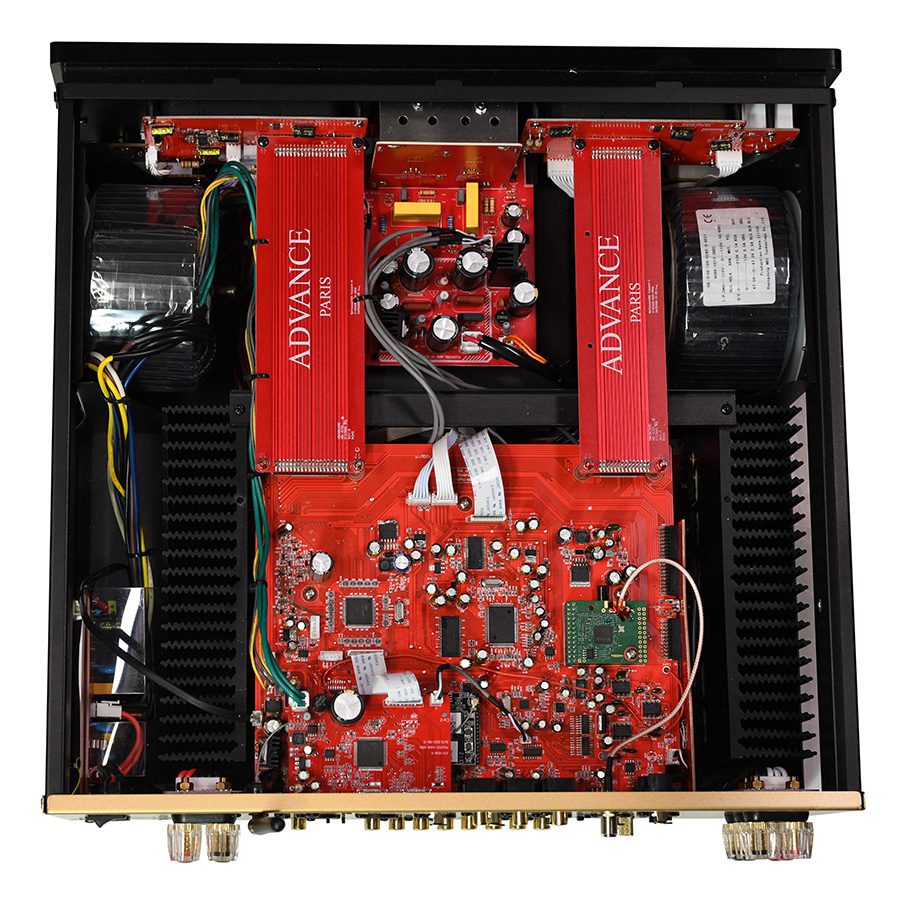
Advance Paris says the guts of its philosophy combines good sound high quality with a large selection of digital and analogue inputs. The Classic A12 makes use of a dual-mono circuit topology, and though its entrance panel appears minimalist, don’t be fooled—it offers entry to a broad choice of enter and output choices.
On the far left on the backside is the on/off/standby button, then a small show subsequent to it exhibits the chosen quantity and when the valve preamp part warm-up is full. An analogous show in the direction of the far proper shows the specified enter and, at the side of the big central quantity/multifunction knob, permits the consumer to pick out one (or each) of the 2 speaker outputs, regulate or bypass the tone controls, tailor the automated switch-off timer operation and choose ‘TV Audio’ and ‘Amp In’ so to use a unique preamp with the A12. Bottom proper are outputs for 2 pairs of headphones, that are individually adjustable for each acquire (-4dB, -0dB, +6dB) and headphone output impedance (100Ω for telephones with a center or excessive impedance between 100Ω and 600Ω, and between 0Ω and 32Ω for lower-impedance fashions).
Unusually, there are two separate rotary enter selector knobs on both facet of the amount management, analogue on the left and digital on the best.
Two units of binding posts present two pairs of speaker outputs, which may be chosen individually or collectively to offer sound in two rooms or bi-wiring a single pair of audio system.
Versatile
When it involves inputs, it isn’t a lot a query of what the A12 Classic has as what it doesn’t have.
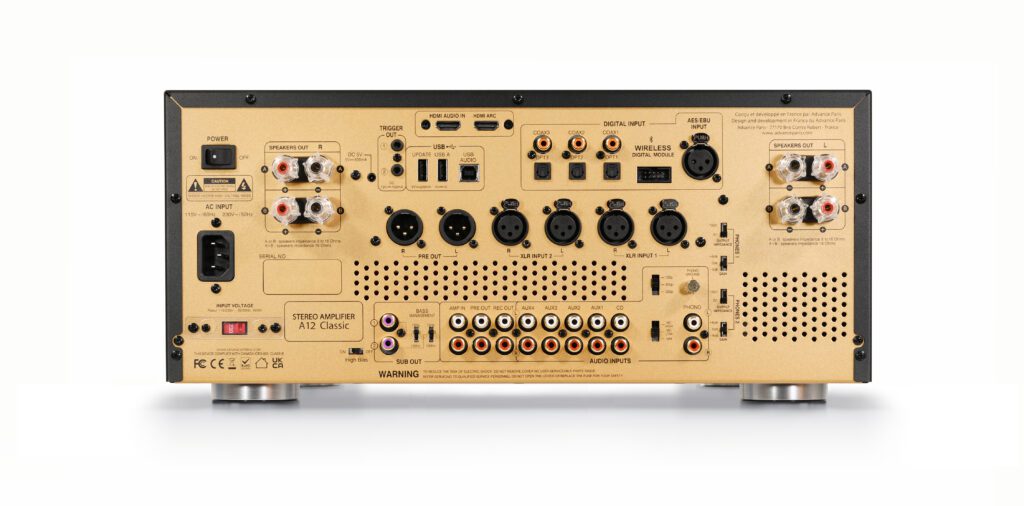
Let’s begin with analogue inputs. There are 5 RCA line-in sockets plus an RCA enter for phono, with adjustable enter capacitance (100pF, 200pF and 300pF) and adjustable acquire for transferring magnet and transferring coil (excessive and low). There are extra RCAs for preamp out, report out and energy amp in. There are additionally two units of balanced XLR inputs and one XLR balanced preamp output.
The A12 Classic has a built-in DAC based mostly on the well-respected and broadly used Burr Brown PCM1796 chipset. There are seven digital inputs, together with three optical, three coaxial, one AES/EBU and one USB, and connectors for non-compulsory aptX Bluetooth modules (the £100 X-FTB01 or £150 X-FTB02).
It can also be absolutely able to be hooked as much as a house cinema system, with two subwoofer outputs with adjustable roll-over factors of 75Hz or 150Hz, an HDMI enter for a DVD participant, and an HDMI ARC to be used with a TV.
Although a streamer is lacking from the A12 Classic, Advance Paris presents a compact WTX MicroStream plug-in high-definition streamer module, which operates through wi-fi and plugs into one of many auxiliary RCA inputs. At £150, this permits the A12 Classic to supply the consumer streaming for across the similar total value as some built-in amps with a streamer inbuilt. Setting up the app to regulate it proved simple sufficient.
For most of my listening, I used a Gold Note CD10 CD participant with Marten Oscar Duo loudspeakers. I used an Audio Note TT3/PSU3/Io1/AN-S9 entrance finish to judge the phono enter.
I began with CD as a supply, initially feeding the CD10’s digital output into the A12’s DAC. The sound was dynamic, detailed and syncopated with nice snap and poise to drums and percussion, deep tuneful bass guitar traces and open, articulate female and male vocals.
Street Racing
On Bruce Springsteen’s ‘Racing within the Streets’ from his Darkness on the Edge of Town CD, I used to be impressed by the openness of his vocals, the presence and physique of the piano on the intro, the crispness of drum rimshots, and the sheer energy and weight of the bass line when it kicked in. One well-respected rival sounded colder in its stability, and the A12 higher separated the varied strands of the music.
On ‘All I See is You’ from saxophonist Dave Koz’s Saxophonic CD, the A12 once more provided a clearer perception into percussion, conveyed the physique and chunk of his sax higher and conveyed the rhythmic impetus and movement of the music higher.
I additionally tried the A12’s built-in DAC towards the onboard DAC within the CD10, and it was not discovered missing. Bass traces had been tight, snappy, and moved properly, whereas vocals, piano, guitar, and saxophone had been well-voiced and pure. The music has a very good sense of rhythmic impetus and construction. If you pair the A12 with a CD participant priced between £1,000 and £2,000, strive its digital output into the A12’s DAC.
I subsequent tried streaming utilizing the Advance Paris WTX MicroStream. I rapidly arrange the app and searched Tidal for the monitor ‘A Place for Skipper’ from guitar legend Larry Carlton’s Discovery album.
Despite the modest £150 asking value of the streamer, I used to be impressed by the delicacy and element within the percussion traces and by the pure voicing and be aware element on the guitar. The bass line was weighty, tight, and agile, and in contrast with one well-respected competitor’s built-in streamer; it carried out extraordinarily properly.
Skip to Linda Ronstadt’s attractive ballad ‘Lo Siento Mi Vida’ from her Hasten Down the Wind album. It properly differentiated the sonic signatures of the 2 guitars within the intro, and Ronstadt’s vocals had been open, sensual, and packed a wonderful emotional and dynamic punch. When she turned up the amount on a be aware, the A12 rose to the problem with out turning into harsh or strident.
It could be simple to dismiss the tiny WTX MicroStream as an inexpensive add-on. But it’s higher than that. It punches properly above its weight and doesn’t let the A12 down.
Earning Ears
My ears had been actually incomes their preserve testing the a number of inputs of the A12. Next up was the phono enter. This phono stage options adjustable capacitance for MM and adjustable acquire for MC.
I used my Audio Note Io1 with its S9 transformer into the MM enter set to the bottom capacitance. From the primary few bars of the title monitor of the fantastic half-speed mastered model of John Martyn’s basic Solid Air, the A12 proved that its phono stage was greater than match for objective. The double bass was highly effective, tight, and tuneful, Martyn’s guitar was delicately painted and properly separated, his vocals had been open and articulate, and the staccato rhythm that drives this glorious monitor alongside was properly captured.
Next, I attempted ‘Red Lights within the Rain’ from Canadian singer/songwriter/guitarist Stephen Fearing’s The Secret of Climbing album for Rega (get one should you don’t have one!). Here, his vocals exhibited delicacy, energy, and emotional impression however with none harshness or sibilance, whereas his guitar had a very good physique and be aware form element. All in all, it was a wonderful efficiency.
But we’re nonetheless going! There had been two issues I nonetheless wished to take a look at. First, I attempted the headphone output and, lastly, the impact of utilizing the High Bias setting. You choose High Bias by working a toggle swap on the again panel with a small blue mild on the entrance panel to point when it’s in use. Advance Paris says that in High Bias mode, the sound “is similar to that of a Class A amplifier on the primary few watts of use”. Gotta be value a strive.
Trying it out on ‘Never Too Far to Fall’ from George Benson’s In Your Eyes album, the vocals appeared a bit extra open and sweeter on High Bias, however on the draw back, the bass line misplaced some weight and impulsion.
On ‘The Bright Side’ from Dave Koz’s The Dance: Yes, the general sound was sweeter, however the percussion lacked impression, and his sax was softer and missing chunk. Again, the bass line appeared fuller and extra melodic in regular bias mode. On stability, I concluded that the High Bias setting wasn’t for me, so I left it out of the circuit for all my listening. The amp was greater than adequate with out it.
From expertise, I do know that the headphone output may be an afterthought in lots of amplifiers, however I’m happy to say that this wasn’t the case with the A12 Classic.
Plugging in my Focal Clear headphones, after the primary few bars of ‘I Can See Clearly Now’ from guitarist Peter White’s glorious Groovin’ CD, I might put any such fears to at least one facet because the A12’s efficiency was detailed, dynamic, properly balanced and articulate. I might hear how White formed every be aware and what the backing gamers had been doing, whereas that nice, reggae-like bass line was weighty and moved properly.
‘No One Emotion’ from George Benson’s 20/20 confirmed the competence of the A12’s headphone amp. The monitor was conveyed with nice velocity, poise, and impetus, and the driving synth bass line was weighty and pacey, protecting the rhythmic vitality of the monitor flowing. Benson’s vocals had been open and articulate, and that screaming guitar solo from Michael Sembello was well-voiced, with nice energy and internal element however with out sounding harsh or strident.
Magnificent multitasker
I used to be questioning if there was something that the Advance Paris A12 Classic couldn’t do. It is a great-sounding amplifier with greater than sufficient energy for any audio system you care to throw at it, and it advantages from a valve preamp stage that offers it an edge in sound high quality over many equally priced rivals.
It has a built-in DAC and including £150 to your invoice for the tiny however glorious WTX MicroStream plug-in streamer lets you add one other supply with nice sound high quality from Tidal or Qobuz.
It not solely performs properly on its analogue line and digital inputs but in addition has a really succesful transferring magnet/transferring coil phono stage that lets you take pleasure in high-quality vinyl playback. Meanwhile, its glorious built-in headphone amp is greater than adequate to fulfill most listeners, saving you from shelling out on a separate one.
At £3,000, the A12 Classic is a discount, and I like to recommend it enthusiastically.
Technical specs
- Type: Class AB, two-channel hybrid built-in amplifier
- Analogue inputs: 5x analogue RCA line enter, 1x phono (MM/MC), 2x XLR balanced line inputs
- Digital inputs: 3x optical, 3x coaxial, 1x AES/EBU, HDMI ARC, USB
- Power output: 190Wpc into 8 ohms, 280Wpc into 4ohms
- Distortion: 0.007%
- Frequency response: 10Hz-35kHz (-3dB)
- Signal-to-noise ratio: 103dB
- Channel separation: >75dB
- DAC: Burr-Brown PCM1796
- Phono stage acquire: MM: 38dB (47kohms), MC: 48dB (low), 58dB (excessive) (47ohms)
- Dimensions: (WxHxD) 43x19x45.5cm
- Weight: 17.9kg
- Price: £3,000, $3,799, €2,690
Manufacturer
Advance Paris SARL
+33 (0) 160 185 895
UK distributor
Decent Audio
+44 (0) 1642 263765
The submit Advance Paris A12 Classic appeared first on hi-fi+.
HI-FI News,Audio
through Articles Archive – hi-fi+ https://ift.tt/F8wQBcn
June 3, 2025 at 04:00PM
-
Product on sale
 Audiophile Vinyl Records Cleaning BundleOriginal price was: €69.90.€59.90Current price is: €59.90. incl. VAT
-
Product on saleEasy Start Vinyl Records Cleaning KitOriginal price was: €69.90.€59.90Current price is: €59.90. incl. VAT
-
Vinyl Records Cleaner Easy Groove Concentrate€34.95 incl. VAT
-
Easy Groove Super Set€199.00 incl. VAT
-
Easy Groove Enzycaster – vinyl records prewash cleaner€34.95 incl. VAT
-
Easy Groove Extreme MK. II- vinyl records prewash cleaner€45.00 incl. VAT
-
Vinyl Records Cleaner – Easy Groove Virgin Concentrate€35.00 incl. VAT
-
Easy Groove Spray&Wipe vinyl records cleaner€34.95 incl. VAT


