
World News
April 2025 Classical Record Reviews
April 2025 Classical Record Reviews
John Zorn: The Complete String Quartets
JACK Quartet
Tzadik 9318-2 (reviewed as 24/96 WAV). 2025. JACK Quartet, Ryan Streber, prods.; Streber, Scott Hull, engs.
Performance *****
Sonics ****½
For one of many wildest and most unpredictable rides you could ever take, skip the Ferris wheel and racetrack and take John Zorn’s eight string quartets for a spin. Beginning with Cat O’Nine Tails (1988) and ending with Zorn’s final quartet (up to now at the least), The Unseen: music for the temple (2017), the JACK Quartet’s John Zorn: The Complete String Quartets guarantees to concurrently pull you in and ship you flying.
Take Zorn’s oft-hilarious Cat O’Nine Tails. Starting off a bit like Black Angels, George Crumb’s famed antiVietnam War quartet, however with fully totally different intent, Zorn begins with a screech. His sounds, nevertheless, invoke pictures of a cat dashing madly down a hall and colliding into partitions. The music grows by turns cautious, cautious, and poised, typically invoking ancestral recollections of Looney Tunes on acid because it jumps from mad sprint to sq. dance to crash to Viennese waltz to droll suspense. Though Zorn claims that his is "not music for leisure," Cat O’Nine Tails is among the most entertaining string quartets I’ve ever heard. Kudos to the JACKs for his or her plentiful variations of timbre and texture and to engineer Ryan Streber for capturing each random sound with readability.
Lest I mislead you: Many of Zorn’s quartets are deeply severe. The deep and all-abiding sorrow on the core of his Kol Nidre is shifting. The last quartet, The Unseen, is a nine-part, 13-minute surprise impressed by the philosophies and religious artwork of Hilma af Klint, as seen in a 2018 Klint retrospective at New York’s Guggenheim Museum.
Where Charles Ives patched collectively snatches of spirituals, marches, and different fragments of the New England expertise, Zorn jumps from one scorching mind cell to a different. Amazing, highly effective, deeply inspiring stuff.Jason Victor Serinus
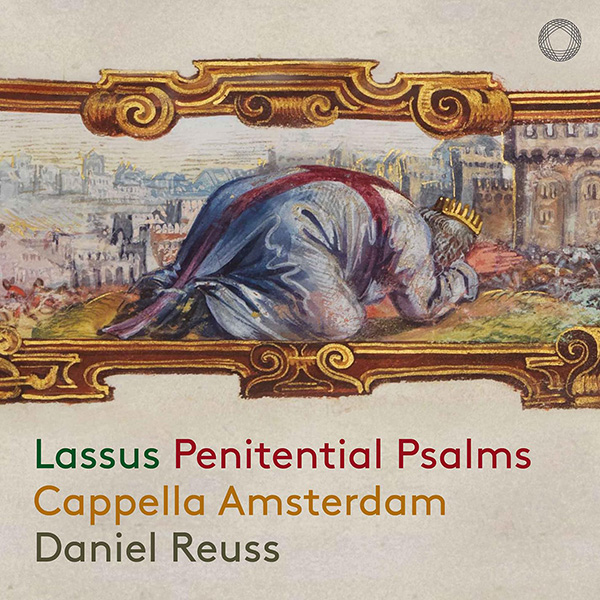
Lassus: Penitential Psalms
Cappella Amsterdam/Daniel Reuss
Pentatone Music PTC5187066 (CD). Florian B. Schmidt, prod.; Christoph Binner, eng.
Performance *****
Sonics *****
I’d by no means have suspected from the offhand consideration given to Lassus that he was, amongst Renaissance composers, forward-looking. His textures are unusually diverse. Answering an higher half with three decrease ones is virtually a interval trope, however Lassus additionally voices chords in simply a part of the vary, like totally different orchestral choirs. The occasional two-part counterpoint, the opposite elements tacent, provides to the aural selection.
The rhythmic schemes are additionally bold. Like a few of his contemporaries, Lassus units off his predominantly duple scansions with temporary three-beat passages, like a waltz. This lightens the musical and emotional impact whereas various the ahead movement. So do quite a lot of cadential feints, which "resolve" in sudden instructions whereas underlining necessary bits of textual content.
That such numerous musical components register so strongly is a tribute to the standard of the performances. From the primary agency, vibrato-free word, we all know these can be forthright renderings. The 15-voice blended refrain is impeccably tuned and balanced, sustaining legato of their temporary melismas. Exemplary enunciation permits us to catch the textual content among the many shifting elements. The pronunciation is inconsistent: "configitur" will get a smooth g, "magna" a tough one; there is a Germanic "iniqvitatem," and mihi with a ok.
Reuss and firm, in full command of the rhythmic pivots, attain their expressive peak within the seventh psalm, Domine, exaudi orationem meam ("Lord, hear my prayer"), with its emphatic homophonic cry for assist. The three decrease voices produce a wonderful, organlike mix. Strong accents stress "in me turbatum est cor meum" ("my coronary heart is troubled"); "defecit spiritus meus" ("my spirit has fainted") is highlighted by a brief silence. The closing Gloria Patri is reverent.
The engineers in some way contrive a direct, rapid vocal presence inside a heat atmosphere.Stephen Francis Vasta
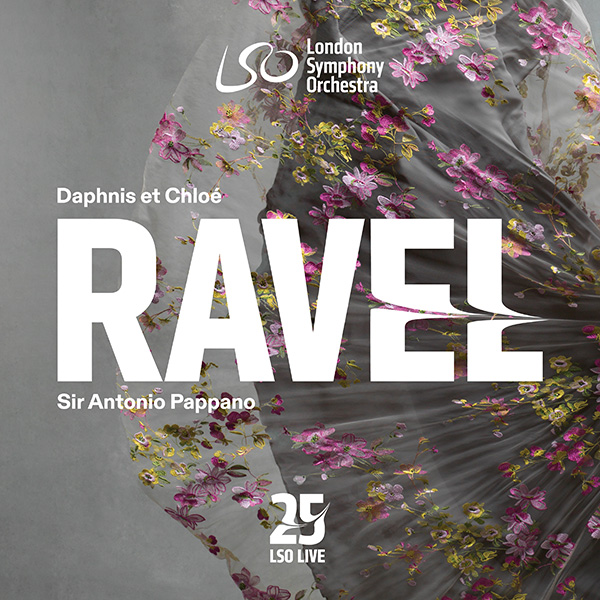
Ravel: Daphnis et Chloé
London Symphony Orchestra, Tenebrae/Sir Antonio Pappano
LSO Live LSO0089 (CD). 2025. Stephen Johns, prod.; Neil Hutchinson, eng.
Performance ****
Sonics ***½
Pappano’s studying of Daphnis, not inappropriately for a dance rating, is marked by an general lightnessnot an affected lightness however a pure, balletic one. Tempi do not stray removed from the norms, however the conductor infuses accompanying rhythmic patterns with an undulating form and dancelike raise. The finish of Part I, whereas fairly, feels amorphous, however then that is true in lots of performances. The rising violin strains of Daybreak are properly aspirational; the tip of the scene feels a bit rushed, however then the solo flute has loads of time in a spacious Pan and Syrinx Pantomime.
All that is not to counsel a scarcity of power the place it is required. The staccato trumpets in Part II are crisp and clear, and the 2 vigorous, incisive Danses générales go along with high-quality propulsion. Trenchant bassi challenge a stark Danse guerrière.
The LSO performs handsomely for Pappano, with the centered, expressive principal horn within the opening and the dusky cellos a bit later giving explicit pleasure. Tenebrae’s clear, blended choral vocalises set the bittersweet solo violin in high-quality reduction. The chordal trombone glissandos, whereas restrained, are efficient.
Here and there, some rhythmic imprecisions get by. A couple of landings, particularly of chords involving excessive strings, are nebulous; the stunning, liquid clarinet runs of Part II hold creeping forward of the beat. Other flaws are sins of omission: The shapely violin strains, the sensitively inflected woodwind phrasing, all gesture in direction of a sensuousness that is by no means fairly achieved. The flute duet that begins the Danse légère et gracieuse is tender fairly than actually delicate.
At my most popular playback degree, the climaxes of Part I hardened, with an edgy treble. Otherwise, views throughout the orchestra, and between orchestra and refrain, are glorious.Stephen Francis Vasta
HI-FI News
through InnerFidelity https://ift.tt/E64ZkTg
April 10, 2025 at 03:52PM
-
Product on sale
 Audiophile Vinyl Records Cleaning BundleOriginal price was: €69.90.€59.90Current price is: €59.90. incl. VAT
-
Product on saleEasy Start Vinyl Records Cleaning KitOriginal price was: €69.90.€59.90Current price is: €59.90. incl. VAT
-
Vinyl Records Cleaner Easy Groove Concentrate€34.95 incl. VAT
-
Easy Groove Super Set€199.00 incl. VAT
-
Easy Groove Enzycaster – vinyl records prewash cleaner€34.95 incl. VAT
-
Easy Groove Extreme MK. II- vinyl records prewash cleaner€45.00 incl. VAT
-
Vinyl Records Cleaner – Easy Groove Virgin Concentrate€35.00 incl. VAT
-
Easy Groove Spray&Wipe vinyl records cleaner€34.95 incl. VAT


