Author Archives: Andrey Henkin

Revinylization #42: Two Blue Note Tone Poet Releases, Andrew Hill & Carmell Jones

Blue Note’s Tone Poet audiophile vinyl reissue sequence, which has been written about incessantly in these pages, was inaugurated in 2019 and has now reached 70+ releases, principally reissues from the storied label’s catalog with outliers from Pacific Jazz/World Pacific and United Artists and a few new points thrown in. The Blue Note reissues have ranged from classics launched in myriad editions since their preliminary LP run to music held again for years and generally put out solely in Japan or solely lately found and launched on compact disc.


Pianist Andrew Hill, one in every of Blue Note’s stalwart artists from 1963–’70 and once more from 1989 till his dying in 2007, was the chief on three Tone Poet releases: Black Fire, his Blue Note debut; Passing Ships, a 1969 session first launched on CD in 2003; and now Dance with Death from 1968, first launched as a part of the Blue Note Classic sequence of 1979–’81, through the label’s fallow interval when it was owned by Liberty Records.


During that interval, 44 periods throughout jazz kinds had been deemed unworthy of situation, from artists together with Lee Morgan, Wayne Shorter, Hank Mobley, Jackie McLean, Donald Byrd, Grant Green, Bobby Hutcherson, and Stanley Turrentine. When they lastly got here out, the manufacturing was underwhelming, with unusual, pseudo-art covers printed on flimsy cardboard and mediocre vinyl with sound to match—hardly as much as the requirements set by Blue Note heads Alfred Lion and Frank Wolff and engineer Rudy Van Gelder. Dance with Death obtained a CD reissue in 2004—styled as it could have been if it had been launched when it was recorded—however there was no correct LP launch till now.


This re-creation presents it accurately: in a stunning, gatefold sleeve with high-quality vinyl mastered by Kevin Gray, pressed at RTI utilizing lacquers minimize by Joe Harley, the technical pair behind the sequence.


Hill modified personnel from album to album. His solely common companion was bassist Richard Davis, and solely from 1963–’65. Dance with Death is the primary of two dates Hill made with tenor/soprano saxophonist Joe Farrell (the opposite was the aforementioned Passing Ships). It’s additionally the beginning of Hill’s relationship with trumpeter Charles Tolliver, which might proceed by 1970 and be rekindled in 2005. It’s Hill’s solely recording with bassist Victor Sproles and drummer Billy Higgins.


This reissue, along with Blue Note’s lately unearthed 1967 Elvin Jones Trio date Live at Pookie’s Pub, ought to renew curiosity in Farrell, who has been considerably forgotten since his dying in 1986.


As with most Hill albums, the songs are all originals. His composing is on the heady stage of label mates just like the just-departed Wayne Shorter. The pianist had an unparalleled knack for mixing magnificence and bluesiness with complexity, buoyed by laconic accompaniment and sparse solos, the latter greatest heard on the title monitor. His music is spacious, which is why it’s so good to listen to each element, particularly from the always-subtle Higgins. Farrell is superb, his soprano tone on the opening tune, “Yellow Violet,” equal to that of better-known greats on the instrument. No, this is not Point of Departure or Compulsion!!! (two traditional albums with Hill as chief), however there was no good purpose to shelve it for therefore lengthy.


From the other aspect of the spectrum—reverse, that’s, to cerebral New York put up bop—is the opposite new Tone Poet reissue, The Remarkable Carmell Jones, a Pacific Jazz album by the West Coast–based mostly trumpeter. This is the primary US launch of this music because the preliminary launch in 1961, although it has been issued in Europe and Japan in intervening years. It, too, will get deluxe therapy by way of Gray and Harley: a sturdy sleeve and new liner notes by Tom Conrad, well-known to readers of this journal.


This was Jones’s debut as a pacesetter after a transfer out west from Kansas City and one in every of solely a handful of albums he made for Pacific Jazz and Prestige earlier than a transfer to Europe after which a closing album—Returns on Revelation Records—in 1982. It is among the many earliest documentations of Jones’s music, preceded solely by his work with Curtis Amy (Groovin’ Blue) and Bud Shank (New Groove; This Is the Blues, Vol.2) and the 2015 launch, Previously Unreleased Los Angeles Session, recorded in 1960. If his title shouldn’t be instantly acquainted, pull out your worn copies of Horace Silver’s Song for My Father (Blue Note, 1963–’64), Booker Ervin’s Groovin’ High (Prestige, 1963–’64), or Nathan Davis’s Hip Walk (SABA, 1965) for a refresher.


Here, Jones is surrounded by barely older veterans: tenor saxophonist Harold Land, pianist Frank Strazzeri, bassist Gary Peacock, and drummer Leon Pettis. The music is 2 originals and covers of Duke Ellington, Howard Arlen/Johnny Mercer, Jimmy Bond (a bassist Jones labored with below Curtis Amy), and a Buddy Kaye–Ted Mossman remodeling of Rachmaninoff’s Piano Concerto No.2.


While a lot has been fabricated from West versus East Coast jazz, Ellington’s “I’m Gonna Go Fishin'” and Bond’s “Night Tide” may very well be from a late-’50s Riverside report, with its crisp frontline unisons and agency rhythm part swing. (This is straightahead Peacock, not the Peacock of Albert Ayler or Paul Bley later within the decade.) On Arlen and Mercer’s “Come Rain or Come Shine,” Jones’s pure tone is featured with simply the rhythm part. The B-side has the Jones compositions: “Sad March,” which is definitely sort of peppy, then “Stellisa,” the date’s different ballad, on which the 2 horns intertwine lovingly. The LP closes with “Full Moon and Empty Arms,” the album’s hippest tune, which in Jones’s model is nearer to the angsty Russian supply materials than to its saccharine poppifications courtesy of Sinatra, Eddie Fisher, and Nelson Eddy.


The sides ought to have been flipped…too unhealthy Richard Bock, the unique producer, died in 1988 and so couldn’t be queried.

Revinylization #42: Two Blue Note Tone Poet Releases, Andrew Hill & Carmell Jones

Blue Note’s Tone Poet audiophile vinyl reissue sequence, which has been written about steadily in these pages, was inaugurated in 2019 and has now reached 70+ releases, principally reissues from the storied label’s catalog with outliers from Pacific Jazz/World Pacific and United Artists and a few new points thrown in. The Blue Note reissues have ranged from classics launched in myriad editions since their preliminary LP run to music held again for years and generally put out solely in Japan or solely lately found and launched on compact disc.


Pianist Andrew Hill, one among Blue Note’s stalwart artists from 1963–’70 and once more from 1989 till his demise in 2007, was the chief on three Tone Poet releases: Black Fire, his Blue Note debut; Passing Ships, a 1969 session first launched on CD in 2003; and now Dance with Death from 1968, first launched as a part of the Blue Note Classic sequence of 1979–’81, throughout the label’s fallow interval when it was owned by Liberty Records.


During that interval, 44 classes throughout jazz kinds had been deemed unworthy of concern, from artists together with Lee Morgan, Wayne Shorter, Hank Mobley, Jackie McLean, Donald Byrd, Grant Green, Bobby Hutcherson, and Stanley Turrentine. When they lastly got here out, the manufacturing was underwhelming, with unusual, pseudo-art covers printed on flimsy cardboard and mediocre vinyl with sound to match—hardly as much as the requirements set by Blue Note heads Alfred Lion and Frank Wolff and engineer Rudy Van Gelder. Dance with Death acquired a CD reissue in 2004—styled as it will have been if it had been launched when it was recorded—however there was no correct LP launch till now.


This new version presents it accurately: in a beautiful, gatefold sleeve with high-quality vinyl mastered by Kevin Gray, pressed at RTI utilizing lacquers reduce by Joe Harley, the technical pair behind the sequence.


Hill modified personnel from album to album. His solely common associate was bassist Richard Davis, and solely from 1963–’65. Dance with Death is the primary of two dates Hill made with tenor/soprano saxophonist Joe Farrell (the opposite was the aforementioned Passing Ships). It’s additionally the beginning of Hill’s relationship with trumpeter Charles Tolliver, which might proceed by means of 1970 and be rekindled in 2005. It’s Hill’s solely recording with bassist Victor Sproles and drummer Billy Higgins.


This reissue, along with Blue Note’s lately unearthed 1967 Elvin Jones Trio date Live at Pookie’s Pub, ought to renew curiosity in Farrell, who has been considerably forgotten since his demise in 1986.


As with most Hill albums, the songs are all originals. His composing is on the heady degree of label mates just like the just-departed Wayne Shorter. The pianist had an unparalleled knack for mixing magnificence and bluesiness with complexity, buoyed by laconic accompaniment and sparse solos, the latter finest heard on the title monitor. His music is spacious, which is why it’s so good to listen to each element, particularly from the always-subtle Higgins. Farrell is superb, his soprano tone on the opening tune, “Yellow Violet,” equal to that of better-known greats on the instrument. No, this is not Point of Departure or Compulsion!!! (two basic albums with Hill as chief), however there was no good cause to shelve it for thus lengthy.


From the alternative facet of the spectrum—reverse, that’s, to cerebral New York publish bop—is the opposite new Tone Poet reissue, The Remarkable Carmell Jones, a Pacific Jazz album by the West Coast–primarily based trumpeter. This is the primary US launch of this music because the preliminary launch in 1961, although it has been issued in Europe and Japan in intervening years. It, too, will get deluxe remedy through Gray and Harley: a sturdy sleeve and new liner notes by Tom Conrad, well-known to readers of this journal.


This was Jones’s debut as a pacesetter after a transfer out west from Kansas City and one among solely a handful of albums he made for Pacific Jazz and Prestige earlier than a transfer to Europe after which a remaining album—Returns on Revelation Records—in 1982. It is among the many earliest documentations of Jones’s music, preceded solely by his work with Curtis Amy (Groovin’ Blue) and Bud Shank (New Groove; This Is the Blues, Vol.2) and the 2015 launch, Previously Unreleased Los Angeles Session, recorded in 1960. If his title just isn’t instantly acquainted, pull out your worn copies of Horace Silver’s Song for My Father (Blue Note, 1963–’64), Booker Ervin’s Groovin’ High (Prestige, 1963–’64), or Nathan Davis’s Hip Walk (SABA, 1965) for a refresher.


Here, Jones is surrounded by barely older veterans: tenor saxophonist Harold Land, pianist Frank Strazzeri, bassist Gary Peacock, and drummer Leon Pettis. The music is 2 originals and covers of Duke Ellington, Howard Arlen/Johnny Mercer, Jimmy Bond (a bassist Jones labored with underneath Curtis Amy), and a Buddy Kaye–Ted Mossman remodeling of Rachmaninoff’s Piano Concerto No.2.


While a lot has been made from West versus East Coast jazz, Ellington’s “I’m Gonna Go Fishin'” and Bond’s “Night Tide” may very well be from a late-’50s Riverside report, with its crisp frontline unisons and agency rhythm part swing. (This is straightahead Peacock, not the Peacock of Albert Ayler or Paul Bley later within the decade.) On Arlen and Mercer’s “Come Rain or Come Shine,” Jones’s pure tone is featured with simply the rhythm part. The B-side has the Jones compositions: “Sad March,” which is definitely type of peppy, then “Stellisa,” the date’s different ballad, on which the 2 horns intertwine lovingly. The LP closes with “Full Moon and Empty Arms,” the album’s hippest tune, which in Jones’s model is nearer to the angsty Russian supply materials than to its saccharine poppifications courtesy of Sinatra, Eddie Fisher, and Nelson Eddy.


The sides ought to have been flipped…too dangerous Richard Bock, the unique producer, died in 1988 and so couldn’t be queried.

Posted in Uncategorized

Andrey’s Picks: New Jazz from Lakecia Benjamin, Jim Self, The Necks

Over the previous decade-plus, alto saxophonist Lakecia Benjamin, 40, has been one of many key figures reinvigorating jazz from the within. Born and raised in New York and educated at LaGuardia High School of Music & Art and Performing Arts (the famed Fame college) and the New School, Benjamin has labored with artists as numerous as David Murray and Stevie Wonder. Her final album, Pursuance, was a starry tribute to the legacy of John and Alice Coltrane. Phoenix (Whirlwind Recordings), her newest—to belabor an already labored metaphor—has Benjamin rising from the pandemic’s ashes.


The police siren and gunshots that open the album with an unsettling jolt foreshadow a number of the weighty sociopolitical themes Benjamin will deal with. Civil rights activist Angela Davis’s voice introduces “Amerikkan Skin”; Benjamin’s horn recollects the siren over a martial rhythm, her solo stuffed with anguish and anger. Other company lend vocals/recitation: on the spacy title observe, Georgia Anne Muldrow, founding father of the label SomeOthaShip Connect; jazz diva Dianne Reeves on the uplifting “Mercy”; poet Sonia Sanchez, first with simply bass on “Peace Is a Haiku Song” then with the entire band on “Blast.” Saxophonist Wayne Shorter contributes vocals and lyrics on the transient “Supernova.” Pianist Patrice Rushen contributes to her personal 1975 composition, “Jubilation.”


Benjamin receives robust assist from a wide range of gamers, particularly Josh Evans on trumpet and Victor Gould on piano, organ, and Fender Rhodes. Mostly, although, it is Benjamin’s saxophone that binds the album collectively, particularly on the hovering “Trane,” the aptly titled “Rebirth,” and “Basquiat” with its city jitters.


When composer John Williams calls you “one of many best instrumentalists of his technology,” you get some enjoyable gigs. You might not know his title, however you have heard Jim Self’s tuba. He makes his presence felt in Jabba the Hutt’s palace in Return of the Jedi, throughout the raptor assault in Jurassic Park, and, most notably, because the voice of the Mothership on the finish of Close Encounters of the Third Kind. When he is not recording for movie or filling the principal tuba chair for the Hollywood Bowl Orchestra or the Los Angeles Opera, he releases charming albums on his personal Bassett Hound Music imprint.


My America 2: Destinations (Basset Hound Music) is the second album Self has made that mines the wealthy vein of Americana. While its 2003 predecessor (My America) was a grab-bag, Destinations has a throughline: Each of its 13 tunes evokes a metropolis or area, from “New York State of Mind” by “Back Home Again in Indiana,” alongside “Route 66,” to “I Left My Heart in San Francisco” and “I Love L.A.” As a composer, Self attracts on the total vary of American masters; as a participant, he is heard on the F and CC tubas, the F “Jimbasso,” the BBb “Cimbasso,” and the “Fluba” (look ’em up). The modern preparations are by Kim Scharnberg, for an ensemble heavy on brass and horns. Self and Scharnberg give us “Kansas City” (Lieber and Stoller) and mashups of “King of the Road” (Roger Miller) and “Route 66” (Bobby Troup); of “Blue Bayou” (Roy Orbison and Joe Melson) and “Blue Bossa” (Kenny Dorham). Into John Philip Sousa’s “Washington Post” march go “Also Sprach Zarathustra” and strains of Viennese waltz and Latin jazz.


Self’s albums are about having as a lot enjoyable as attainable, and far of that enjoyable derives from his facility with an instrument that is already enjoyable all by itself. He can make investments the tuba with unusual lightness, making it as supple as a trombone, as brash as a trumpet, or as slinky as a saxophone. (For the latter, take a look at the plucky “Chattanooga Choo Choo” on this album.) His ‘Tis the Season TUBA Jolly!, with the Hollywood Tuba 12—Self describes the ensemble as “all the very best tuba gamers in Los Angeles”—is a should for vacation music lovers. It’s additionally a enjoyable take a look at of your system’s bass response.


Going robust after 35 years and practically as many albums, Sydney, Australia–primarily based piano trio The Necks—pianist/keyboardist Chris Abrahams, bassist Lloyd Swanton, and drummer Tony Buck—have a moniker that belies their music’s limpid, timeless grandeur. Their albums have names like Sex (their 1989 debut), Next (from 1990), Chemist (2006), Open (2013), and Unfold (2017).


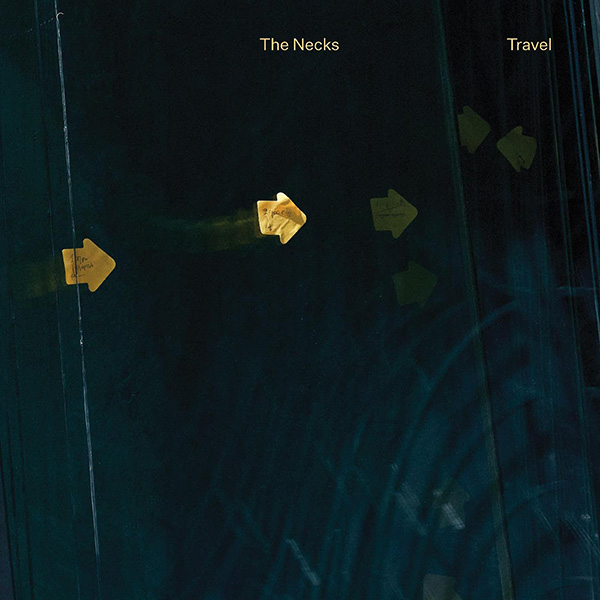
Travel (Northern Spy Records), the group’s nineteenth studio album (footnote 1), was born of the ensemble’s apply of starting every day within the studio with a 20-minute warmup improvisation. “It’s a very nice communal exercise to deliver us collectively in focus every day,” stated bassist Swanton, “and a few pretty music has resulted from it.” Travel was recorded by Tim Whitten and mastered by Douglas Henderson—the band’s audio group for the previous decade-plus—and launched as a gatefold double LP. Each aspect accommodates one spontaneous piece: “Signal,” “Forming,” “Imprinting,” and “Bloodstream,” the primary three initiated by bassist Swanton. While not one of the recordings are utterly dwell and untouched, the band says that is the closest they’ve ever come, with just a few mild overdubs and postproduction.


If the group’s instrumentation throughout the jazz custom appears unremarkable, its methodology—deliberate, microgranular evolution over lengthy stretches of time—simple, the actual artwork right here is within the exceptional endurance and complete subsuming of ego it takes to keep away from shattering these crystalline constructions with an errant observe or misplaced emphasis. The trio’s familiarity with each other presents an additional problem: to acknowledge actually new strains and keep away from rehashing outdated, acquainted conversations. Travel is a good introduction to the group—a tasting menu of types, with the flavors altering comparatively shortly—which might put together one for feasting on certainly one of The Necks’ epic, hour-plus banquets.


Footnote 1: Kurt Gottschalk additionally reviewed Travel in March 2023.—Ed.

Andrey’s Picks: New Jazz from Lakecia Benjamin, Jim Self, The Necks

Over the previous decade-plus, alto saxophonist Lakecia Benjamin, 40, has been one of many key figures reinvigorating jazz from the within. Born and raised in New York and educated at LaGuardia High School of Music & Art and Performing Arts (the famed Fame faculty) and the New School, Benjamin has labored with artists as numerous as David Murray and Stevie Wonder. Her final album, Pursuance, was a starry tribute to the legacy of John and Alice Coltrane. Phoenix (Whirlwind Recordings), her newest—to belabor an already labored metaphor—has Benjamin rising from the pandemic’s ashes.


The police siren and gunshots that open the album with an unsettling jolt foreshadow among the weighty sociopolitical themes Benjamin will deal with. Civil rights activist Angela Davis’s voice introduces “Amerikkan Skin”; Benjamin’s horn recollects the siren over a martial rhythm, her solo filled with anguish and anger. Other company lend vocals/recitation: on the spacy title observe, Georgia Anne Muldrow, founding father of the label SomeOthaShip Connect; jazz diva Dianne Reeves on the uplifting “Mercy”; poet Sonia Sanchez, first with simply bass on “Peace Is a Haiku Song” then with the entire band on “Blast.” Saxophonist Wayne Shorter contributes vocals and lyrics on the transient “Supernova.” Pianist Patrice Rushen contributes to her personal 1975 composition, “Jubilation.”


Benjamin receives sturdy help from quite a lot of gamers, particularly Josh Evans on trumpet and Victor Gould on piano, organ, and Fender Rhodes. Mostly, although, it is Benjamin’s saxophone that binds the album collectively, particularly on the hovering “Trane,” the aptly titled “Rebirth,” and “Basquiat” with its city jitters.


When composer John Williams calls you “one of many best instrumentalists of his era,” you get some enjoyable gigs. You could not know his identify, however you’ve got heard Jim Self’s tuba. He makes his presence felt in Jabba the Hutt’s palace in Return of the Jedi, through the raptor assault in Jurassic Park, and, most notably, because the voice of the Mothership on the finish of Close Encounters of the Third Kind. When he is not recording for movie or filling the principal tuba chair for the Hollywood Bowl Orchestra or the Los Angeles Opera, he releases charming albums on his personal Bassett Hound Music imprint.


My America 2: Destinations (Basset Hound Music) is the second album Self has made that mines the wealthy vein of Americana. While its 2003 predecessor (My America) was a grab-bag, Destinations has a throughline: Each of its 13 tunes evokes a metropolis or area, from “New York State of Mind” via “Back Home Again in Indiana,” alongside “Route 66,” to “I Left My Heart in San Francisco” and “I Love L.A.” As a composer, Self attracts on the total vary of American masters; as a participant, he is heard on the F and CC tubas, the F “Jimbasso,” the BBb “Cimbasso,” and the “Fluba” (look ’em up). The revolutionary preparations are by Kim Scharnberg, for an ensemble heavy on brass and horns. Self and Scharnberg give us “Kansas City” (Lieber and Stoller) and mashups of “King of the Road” (Roger Miller) and “Route 66” (Bobby Troup); of “Blue Bayou” (Roy Orbison and Joe Melson) and “Blue Bossa” (Kenny Dorham). Into John Philip Sousa’s “Washington Post” march go “Also Sprach Zarathustra” and strains of Viennese waltz and Latin jazz.


Self’s albums are about having as a lot enjoyable as potential, and far of that enjoyable derives from his facility with an instrument that is already enjoyable all by itself. He can make investments the tuba with unusual lightness, making it as supple as a trombone, as brash as a trumpet, or as slinky as a saxophone. (For the latter, try the plucky “Chattanooga Choo Choo” on this album.) His ‘Tis the Season TUBA Jolly!, with the Hollywood Tuba 12—Self describes the ensemble as “all one of the best tuba gamers in Los Angeles”—is a should for vacation music lovers. It’s additionally a enjoyable take a look at of your system’s bass response.


Going sturdy after 35 years and practically as many albums, Sydney, Australia–primarily based piano trio The Necks—pianist/keyboardist Chris Abrahams, bassist Lloyd Swanton, and drummer Tony Buck—have a moniker that belies their music’s limpid, timeless grandeur. Their albums have names like Sex (their 1989 debut), Next (from 1990), Chemist (2006), Open (2013), and Unfold (2017).


Travel (Northern Spy Records), the group’s nineteenth studio album (footnote 1), was born of the ensemble’s apply of starting every day within the studio with a 20-minute warmup improvisation. “It’s a very nice communal exercise to carry us collectively in focus every day,” mentioned bassist Swanton, “and a few beautiful music has resulted from it.” Travel was recorded by Tim Whitten and mastered by Douglas Henderson—the band’s audio workforce for the previous decade-plus—and launched as a gatefold double LP. Each aspect comprises one spontaneous piece: “Signal,” “Forming,” “Imprinting,” and “Bloodstream,” the primary three initiated by bassist Swanton. While not one of the recordings are utterly dwell and untouched, the band says that is the closest they’ve ever come, with just a few mild overdubs and postproduction.


If the group’s instrumentation inside the jazz custom appears unremarkable, its methodology—deliberate, microgranular evolution over lengthy stretches of time—easy, the true artwork right here is within the exceptional persistence and complete subsuming of ego it takes to keep away from shattering these crystalline constructions with an errant word or misplaced emphasis. The trio’s familiarity with each other presents an additional problem: to acknowledge actually new strains and keep away from rehashing outdated, acquainted conversations. Travel is a good introduction to the group—a tasting menu of types, with the flavors altering comparatively shortly—which might put together one for feasting on one among The Necks’ epic, hour-plus banquets.


Footnote 1: Kurt Gottschalk additionally reviewed Travel in March 2023.—Ed.

Posted in Uncategorized

Spelunking Jazz Caverns

I never collected baseball cards, played Cops & Robbers, or was a Boy Scout. From the moment I heard the opening guitar riff of Blondie’s “One Way or Another,” at age 6, it was clear that music would be central to everything I was going to do. It was my first important big thing, and my last.


Soon I was exposed to heavy metal, during its golden era. I devoured it with the voraciousness of one of the demons on those album covers. Money I made from chores went right into the cash registers of my town’s record stores. But unlike my friends, I wasn’t satisfied with the big, obvious bands; I read whatever books and magazines I could find to discover new groups and new music. When my parents went on business trips overseas, I would have them bring back albums I couldn’t find at home.


Wanting to investigate the punk and hardcore scenes but not having enough money for a deep dive, I made a list of the cassettes I wanted to sell and circulated it among my classmates. My school’s guidance counselor thought I was having trouble at home and didn’t get that I just needed money to buy Black Flag and Dead Kennedys albums.


One way I came across new music was the 99-cent cassette section at Sam Goody—big, round bins whose depth defied my short arms. These were filled, pell-mell, with the usual Billy Joel, Bonnie Raitt, and Steely Dan, but also sometimes Ozzy Osbourne or Dio. One expedition to the bins changed my life. Rifling through hundreds of cassettes, I came across a double-cassette package. I had never seen a cassette tape that opened both ways, with A, B, C, and D sides—and still 99 cents! Twice the music for the same price!


It was Miles Davis’s Bitches Brew. I had no idea what a Miles Davis was; my parents didn’t listen to jazz, I had no siblings, and certainly none of my peers were that hip. But the title sounded vaguely heavy metal to me, and the psychedelic artwork had the same epic quality. I got home and, as per ritual, sat in front of my boombox.


For whatever auspicious reason, I put on the second cassette first. If I had heard Joe Zawinul’s “Pharaoh’s Dance” first, with its light cymbals and swirling keyboards, I might have stopped after a few minutes and gone to dental school. Instead, the first track I heard was “Spanish Key.” The beat from drummers Lenny White and Jack DeJohnette was heavy and chugging like Black Sabbath, and John McLaughlin’s guitar was spiky and raw. There was an eerie, mesmerizing presence I later would learn was Bennie Maupin’s bass clarinet.


The piece is more than 17 minutes long; I was used to long songs via Iron Maiden and Helloween, but this was overwhelming. It wasn’t heavy metal, to be sure, but I was transfixed. I rewound the cassette and played it over and over, trying to understand what I was hearing. The more I listened, the less I comprehended as my small frame of reference fell short.


I kept at it. After a week, I was brave enough to listen to the next song on the side, the four-minute “John McLaughlin,” a feature for its dedicatee. Even coming out of heavy metal, where guitar is god, I was perplexed by what McLaughlin was playing and why he was playing it. He seemed to be pushing against his bandmates in a way I’d never heard before.


It took me about a month to absorb the two cassettes. I did my usual reading and found out I was listening to something called jazz but that this particular form—fusion, also called jazz-rock—was as divisive and repellent to some as my beloved heavy metal. That just made it more interesting.


In contrast to heavy metal, where bands are the discrete entities, learning about jazz meant learning about individual musicians. I started with McLaughlin. Anything I could find, I got. This led me in three directions: The Mahavishnu Orchestra, Shakti, and McLaughlin’s debut as leader, Extrapolation. The first introduced me to fusion; I learned that many of my favorite metal players had been influenced by that genre. The second opened me up to Indian classical music, something I had not known existed. And the third took me across the Atlantic, to the British jazz scene, from whence McLaughlin originated. That led me on to British collaborations with Germans, Dutch, Italians, French, and so on. I had read that jazz was American music, but I soon learned that its reach was international.


I spelunked assiduously with every musician on Bitches Brew. Through DeJohnette and bassist Dave Holland, the latter another vantage point of the British jazz scene, I came to another soon-to-be-favorite guitarist: John Abercrombie. Keyboard player Chick Corea pointed the way to reed player Anthony Braxton, and, by extension, the fertile Chicago jazz sphere, centered on the seminal Association for the Advancement of Creative Musicians. Maupin, that wizard of the bass clarinet, was my calling card to his illustrious forebear, Eric Dolphy, and Dolphy led to bassist Charles Mingus. Each player on Bitches Brew was a piece to a brand-new puzzle to solve.


That one chance encounter led to a career as a jazz critic. And even though I should already have entered my jaded years, there are still moments when I put on an album by a musician completely new to me and, as unfamiliar sounds waft out of my speakers, I find I’m that kid again, in front of the boombox, spellbound and eager to learn.


Footnote: Andrey Henkin is a new contributing editor for Stereophile and editorial director for the New York City Jazz Record.

Posted in Uncategorized