
It can be hard to stand out among Brooklyn’s thriving house and techno scene, but JADALAREIGN has more than earned her stripes. A DJ since 2015, …
Author Archives: Annabel Ross
It can be hard to stand out among Brooklyn’s thriving house and techno scene, but JADALAREIGN has more than earned her stripes. A DJ since 2015, …

Permanent Rotation is a series in which producers, DJs, and musicians go deep on the albums that have inspired them.
In June this year, Brooklyn singer-songwriter Yaya Bey released Remember Your North Star, a bold yet tender debut album that’s been met with almost universal acclaim and was one of our favourite releases of the month. Here, she talks about Roberta Flack & Donny Hathaway — the Grammy-winning duet LP celebrating its 50th anniversary this year — that changed the way she listens to music.
Yaya Bey remembers the first time she heard Roberta Flack and Donny Hathaway’s self-titled duet album, while sneakily playing her uncle’s records in her grandmother’s basement aged around 13. Around the same time that she discovered the album, a track called ‘On My Block’ by rapper Scarface was on the radio, sampling the Flack and Hathaway song ‘Be Real Black For Me’. Her father helped her join the dots between the two tracks.
“My dad is a rapper and a hip-hop producer and he would play records for me and have me guess the sample or play older records for me and tell me that such-and-such sampled this,” says Bey, speaking from her Brooklyn apartment.
“I think the first sample I could identify in a song was ‘Be Real Black For Me’.”
Bey’s father is rapper Grand Daddy I.U, who was signed to Biz Markie’s Cold Chillin’ Records in 1989. Bey says he taught her a lot about music from a young age but discouraged her from singing. “He told me that I could not sing, that I should not sing, but he encouraged me to write songs,” she says. “He always thought I was a good writer.”
Bey began writing poetry and songs while still in elementary school. She remembers being arrested by the lyrics on the opening track of Hathaway and Flack’s album, ‘I (Who Have Nothing)’, a depressive lament for unrequited love. The song was written by the legendary duo of Jerry Leiber and Mike Stoller — of ‘Hound Dog’ and ‘Jailhouse Rock’ fame — and adapted from an Italian song written by Carlo Donida. It has also been covered by Tom Jones and Shirley Bassey.
“I think it’s one of the first songs that I could sit and listen to, see the imagery in my head and create a story from the lyrics,” Bey says.
“I was always really impressed by that and, I mean, Donny Hathaway, his voice is just one of the most special voices that we’ve had.” Hathaway, who tragically died of suicide aged just 33, has been cited as an influence by artists as varied as George Benson, Aaliyah, Common and Alicia Keys. Amy Winehouse called Hathaway her favourite artist of all time.
“Everything he sings, he sings with such sincerity that you believe him, you believe he has a connection to what he’s saying,” says Bey, who has been lauded for her own incisive lyrics, “braiding confidence and vulnerability into one.”

Roberta Flack & Donny Hathaway, Bey says, “changed the way I listen to music.”
“It helped to open my ears up because I’m listening for more things, especially as a writer. I’m listening for lyrics, I’m listening for melodies, I’m listening to the tone in their voices and I don’t think I was doing that, or consciously doing that, before [hearing] this album.”
While Flack, Hathaway and Bey’s lyrics all trade in love and relationships, Bey found inspiration in her predecessors’ ability to intertwine love stories with broader political and cultural themes.
“Even when they have a song that just seems to be about romantic love or a walk through the park, there’s always something in it that reflects what people are going through at that time,” she says, returning to ‘Be Real Black For Me’, released in 1972.
“You’re in the Black Power movement, you’re in a time where Black people are starting to wear their hair natural and starting to take pride in being Black,” she says. “‘Be Real Black For Me’ is a love song but they found this way to address something that’s important to people beyond the surface level that gives the narrative of the song layers.”
Bey’s own lyrics are similarly layered, fusing generational trauma and feelings of invisibility in one song, self-worth and the destructive effects of capitalism in another. Remember Your North Star, released in June this year, is an album Bey was working on while releasing another EP and LP. It was originally going to be called Safe Travels.
“It needed time to simmer, I needed to become a different, stronger or more experienced artist to pull the idea off,” she says, adding that the new title felt more self-assured than Safe Travels.
“The whole concept of a North Star just feels more sure of itself,” she says. “You have to know what your North Star is to aim at it.” On her latest album, Bey sounds like she’s found it.
Photo: Keamber Pearson

In Permanent Rotation, producers, DJs, and musicians go deep on the albums that have inspired them.
Montreal-based electronic musician Marie Davidson is best known for her thrilling solo work, but she’s also produced and performed as Essaie pas, alongside her husband Pierre Guirineau, and most recently as L’Œil Nu, with Guirineau and Asaël Robitaille. She’s currently working on an upcoming solo album.
When asked to choose the record that’s had the most impact on her, Marie Davidson’s first instinct was to groan.
“There were at least 50 records I could have chosen from,” she says. “I could have picked any Kraftwerk album, I could have talked about any early Detroit techno album, like Model 500 or Underground Resistance. I could have chosen any Giorgio Moroder album made with sequencers that had a very big impact on me at the time.”
Ultimately, she selected Double Invitation by Montreal-born, Paris-based electronic artist Bernardino Femminielli, a record that had a strong influence on not just her music, but her personal life too.
Davidson was in her “baby step era” of learning how to use drum machines and synthesisers when she first heard it, in 2012.
“I was 24 or 25 when the record came out and I was a nobody,” she recalls. Bernardino was a friend and already an important figure in the Montreal underground scene. He was “making the kind of music I wanted to make,” says Davidson – specifically: using hardware alongside real drums, bass, and guitar.
“I thought it was so mysterious, elegant and very sensual, yet very cold and rigid,” she says of the album, a Lynchian, noirish blend of post-punk and Italo disco. “That’s why I like working with sequencers so much, there’s precision and a mechanical feel, but it’s very groovy and sexy at the same time. It’s different to just programming on a laptop, the feeling is very different when it’s done on a machine.”

So enamoured was Davidson with the record, “I confused my feelings and I thought I was in love with the person,” she laughs. She and Femminielli ended up dating for a couple of months, “just to the point where we realised we were just meant to be friends.”
Content as friends and, a decade on, happily married to other people, the pair’s stories have remained interwoven – laced together by Double Invitation.
One track on the album, ‘Chauffeur’, is named after the man who would become Davidson’s husband – Pierre Gurieau, the other half of the minimal duo Essaie pas with Davidson – who drove Davidson and Femminielli to a music festival they were both playing at in Quebec around a decade ago. It was with Femminielli and other friends that Davidson went to Berlin for New Year’s Eve in 2012, fell in love with the city, and moved there a few years later.
“We’re more like brothers and sisters at this point,” says Davidson, adding that she and her husband often hang out with Feminielli and his wife. “We’re all friends and family.”
According to Davidson, Femminielli’s music was very present in her sound early on, particularly on ‘Excès De Vitesse’, from her third record, 2015’s Un Autre Voyage.
Made using machines including Roland’s TR-505, the Arturia Minibrute with the MFB Step 64 sequencer, Boss Digital Delay (“DD3 or DD6”) and a Korg monotribe for overdubbing, “it’s very very stripped down,” Davidson says of the track that put her on the map, “influenced by that kind of early sequencer, drum machine music that Bernardino was capturing so well on Double Invitation.”
By contrast, Davidson says Femminielli “doesn’t really like to nerd out about music equipment at all.” She able to use one of his synthesisers for a few weeks when he went on tour to Europe around the time Double Invitation came out, allowing for a palpable connection with her inspiration.
The pair have shared decks – most recently DJing together in Paris – but have never talked about making music together.
In some ways, there’s no need – such has been the influence of Double Invitation.
“For me, in my first year of making music, it was very, very present in my influences and an example of good music. It was something to look up to,” says Davidson. “There’s no Marie Davidson without Bernardino Femminielli.”
Photo: Olivia Vale

In Permanent Rotation, producers, DJs, and musicians go deep on the albums that have inspired them.
Brazilian-born, Amsterdam-based DJ and producer LYZZA is readying for the release of her 10-track alt-pop mixtape Mosquito on Big Dada next month. Combining dark hyperpop, reggaeton and prismatic, hard-edged club tracks, it’s a high-energy thrill ride and the most comprehensive expression yet of the 23-year-old’s knack for hooky, off-kilter electronica.
LYZZA recalls cycling to school in Amsterdam in her early teens, Nicki Minaj’s Pink Friday: Roman Reloaded album blasting through her headphones.
“It gave me so much energy in the mornings,” she says, giggling as she feigns the tutting British accent of Martha Zolanski, one of the characters assumed by Minaj across the record. (Martha is the mother of Roman, Minaj’s best-known alter ego, an outspoken homosexual who features prominently).
“It’s like, you’re 13, you’re going to high school. Obviously, you hate it,” LYZZA reflects. “You’re like, if only I could be someone else, because in school as a Black immigrant in a country like the Netherlands, you don’t feel like you could constantly truly show who you are, you know?”
Minaj’s rebellious alter ego Roman resonated with LYZZA’s own pent-up frustrations about feeling like an outsider at school. “That’s what I needed before heading to school, someone that’s just crazy and like, ‘No, I don’t want this. Roman hates all of you!”
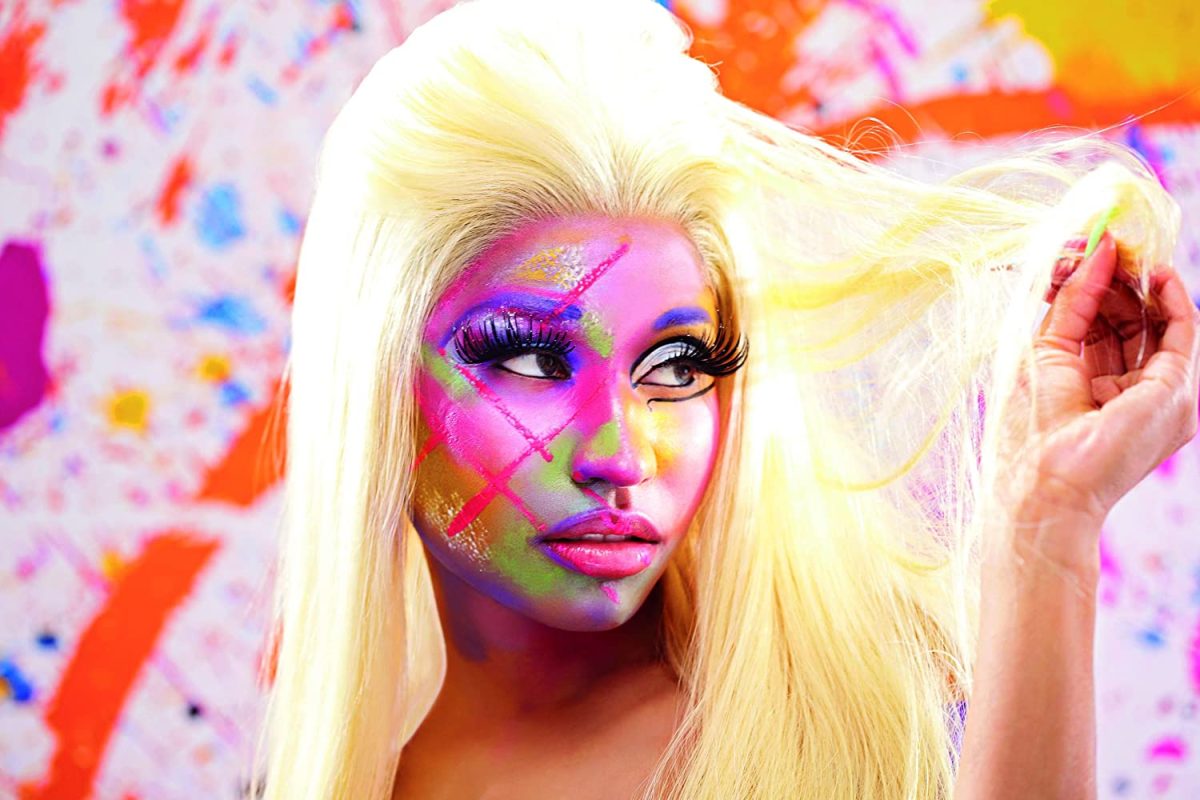
Arriving in April 2012, Roman Reloaded was a revelation in both style and format to LYZZA, aka Lysa da Silva, who names Minaj as one of the first and most prominent artists in the realm of rap and hip-hop to successfully incorporate EDM and electroclash sounds into their music. “We could say technically that Kid Cudi did that with David Guetta,” she observes [on 2009’s ‘Memories’]. “But Kid Cudi’s raps are very different to the way Nicki was rapping, I feel like she was like bringing some oomph and gangsta to the genre. Looking back, I think a lot of people have co-opted the sound from the mixtape but at the time, beats like that [in rap] were not normal.”
It’s a “psychotic-ass record”, LYZZA says, singling out ‘Stupid Hoe’ for its subverted rap beats, in which “the hi-hat is basically a flute, so it’s giving you that rhythm, but it’s a tone.”
“I have this hot take that ‘Stupid Hoe’ launched a lot of underground club music sounds on Soundcloud at the time,” she says. “I feel like that sound and a lot of those crazy broken beats were very resonant. And when I found my community on SoundCloud [she names Ariel Zetina, Jasmine Infiniti and LSDXOXO among them], there were a lot of these elements in their work as well.”
It may or may not have been intentional, but the format of LYZZA’s imminent mixtape, Mosquito, loosely follows the structure of Roman Reloaded, which is top-heavy with rap and bottom-loaded with EDM.
The split on Mosquito is not as obvious, but the second half of the album definitely shits into a higher gear with tracks like ‘Eraser’ featuring Crystal Castle-esque arpeggiating synths, and ‘Mind to Lips’ set to electroclash drum patterns and chilly futurewave arrangements.
“As an artist, I think you can definitely question yourself a lot and wonder if you’re maybe shooting yourself in the foot by choosing to have certain angles within your sound,” LYZZA says. “Roman Reloaded taught me you don’t have to censor yourself, there’s not that many rules to the artistic creation of music.”
For someone like LYZZA, who makes club music that traverses and incorporates many different styles, there was something comforting about seeing an artist who refused to be confined to one genre, especially an artist who looked like her.
“There was always this notion that Black artists should kind of stick to their thing, which for a lot of people was hip-hop and R&B or soul, you know, this very boxed-in thinking. To see a Black woman just throwing herself into pop showed me we don’t really have to care about what kind of music we make as long as we’re having fun and exploring sounds and pushing ourselves.”
In that spirit, Mosquito takes its name from an unusual muse. “Because I am Black and make alternative music, I identify with the disruptive and intrusive nature of a mosquito,” LYZZA says, adding that the fearlessness that’s a hallmark of Minaj’s work is “definitely something that I really wanted to explore.”
That boldness is palpable throughout the mixtape, both in style and in execution. “Listening back to my old work, I can hear the potential, but listening to this, I feel like, it’s not potential, it’s there,” LYZZA says. “It’s a really nice feeling.”

Permanent Rotation is a series in which producers, DJs, and musicians go deep on the albums that have inspired them.
In the decade that she’s been DJing and producing (via a background in theatre and writing and the realisation that music could “express the inexpressible”), Chicago-based Ariel Zetina has established herself as a singular artist whose productions and mixes evince the deep level of thought and care that goes into her work.
Her productions are at turns angular and fluid, and her contribution to the influential Discwoman mix series remains a standout.
Readying for the release of her debut album later this year, Zetina also balances a healthy touring schedule with work that celebrates her community, whether that’s hosting trans electronic music seminars or working at Chicago’s Voice Lab, specialising in gender-affirming voice training.
She talks about one of the records that brought her to this point.
Ariel Zetina’s voice is shot. She’s got a nasty cough (not COVID), prolonged by parties and trying to talk in loud places — “I was at Tinashe and I was yelling” she says — but her demeanour on our video call betrays any sign of illness. Zetina is open, warm, and smiles often, eyes sparkling behind pastel pink frames. Her erudition across music and the arts is casual but obvious as she flits from topic to topic, and when she admits to ambitions of “slowly but surely trying to get hired as a college professor without a master’s,” it seems like a perfectly reasonable plan.
Her chosen album is the work of another artist who has always defied convention: fiercely talented pop oddball Grimes. In 2012, when Grimes released her third and breakthrough album, Visions, Zetina had just moved to Chicago and was making music as Unicorn Florida and with performance art group WITCH HAZEL. “A friend of mine was working at a radio station and she got a promo copy [of Visions] and made a copy for me and I was like ‘Wow, this is truly great’,” recalls Zetina, who had counted herself a fan of Grimes’ previous two albums after being turned onto the Canadian upstart by a friend a year earlier.

Zetina credits Visions with steering her own music at the time towards a “darker sound,” and one punctuated with persistent kicks and hi-hats, grounded in a familiar but expansive structure.
She was transfixed by Grimes’ vocals too – not her voice, per se, but the way she used it as an instrument in its own right. “That really opened my eyes,” says Zetina. “Also, the fact that she’s not a trained singer, she’s doing this in this very specific way. As a producer, I previously felt that everything was so inaccessible, and she really made [me feel] that you can make electronic music in this way, that anybody can do it.”
Grimes’ vocals encouraged Zetina to experiment with voice as a textural detail in her own work, with skill and elocution being tertiary concerns. On her 2019 Organism EP, her own vocals are pitched to a subaquatic warble on ‘Water Nymph’, as if sung while blowing bubbles underwater, while on ‘I Miss The Sea’, Paula Nacif’s airy vocals are complemented by sirenic synths that nod to Zetina’s Belizean background.
Water has been a recurring theme in Zetina’s work, and she credits Grimes’ ‘Know The Way’, the closer on Visions, with providing the “perfect water sample” for inspiration: a calming, flowing stream that features with varying prominence throughout the track.
Asked for her standout track on the album, Zetina picks ‘Oblivion’ – also named by US music bible Pitchfork as the best song of 2014 and, in 2019, the second best song of the decade. It’s a hypnotic, eminently danceable document of surviving a sexual assault.
“‘Oblivion’ is always what first comes to me, I used to watch that video all the time and I think I’m just a sucker for arpeggios,” says Zetina. “It’s just an amazing arpeggio over and over and over and it really trusts itself with that.” She doesn’t often play the track when DJing, but it never fails to trigger squeals when she does. “Every time I play it, there’s always a group of people that come onto the floor to dance,” says Zetina. “I love that that song still has that hold on a lot of people.”
Grimes’ unhinged hyperpop isn’t necessarily an obvious reference point when thinking about Zetina’s clubbier, techno-led releases. But, Zetina says, “those that know, know how I’m influenced by her.” Indeed, closer inspection reveals the outsize impact Visions has had on her creative evolution. If not in the form of “glitchy pop”, then in walls of sound, fanged etherealism, and a rule-shrugging approach to production – the kind that typically yields truly innovative results.
Photo by Colectivo Multipolar
- 1
- 2