Author Archives: Annabel Ross

Permanent Rotation: Colleen “Cosmo” Murphy on Mr. Fingers

Permanent Rotation is a sequence by which producers, DJs, and musicians go deep on the albums which have impressed them.

The largest heroes of the underground sometimes wouldn’t describe themselves as such. Frankie Knuckles, Kelli Hand, Andrew Weatherall…all possessed a humility that made them much more honourable and endearing, and so they went about their enterprise with little regard for fame and a distaste for trade bullshit.

Colleen “Cosmo” Murphy falls firmly into this class. She spent her childhood in New York, changing into program director at WNYU radio station whereas working on the fabled Dance Tracks document retailer within the East Village and discovering a mentor in none aside from David Mancuso, whom she met at certainly one of his legendary Loft events within the early ‘90s. She rapidly grew to become certainly one of his most trusted pals and collaborators. In the many years since, she’s solid a adorned profession as a DJ, producer, radio host and audiophile, now based mostly in London however often talking at occasions and lighting up dancefloors all around the world. 

Perhaps unsurprisingly, on condition that she based the traditional album listening initiative Classic Album Sundays, when requested to decide on the document that influenced her most, Colleen “Cosmo” Murphy responded with some anguish.

“It was onerous while you requested the query as a result of it was particularly geared in direction of how it might affect my manufacturing,” she says. “That was tough as a result of a number of issues that affect my manufacturing aren’t albums or singles. Norman Whitfield, as an example, was the pioneer of psychedelic soul. He’s certainly one of my favorite producers of all time. But it’s not like I utterly connect to a Temptations album or a Rose Royce album, or an Undisputed Truth album–all of the bands he produced and wrote for. They’re extra singles and songs, proper?”

I knew this could be good; I feel as I smile, nod, and stir my espresso. 

“Really, there’s this era between the ages of like 14 and 25 the place any album that you simply fall in love with, that you simply hearken to religiously over and again and again, is in your mind for the remainder of your life. You know every part about it, you already know the basslines, you already know the keyboard strains, you already know the lyrics, you already know every part.”

Read extra: Eris Drew on Information Society

More than most different genres, dance music is led by singles, not albums, we concur, and I remind Murphy she’s free to decide on any album in any respect. But she finds having a parameter useful. 

“The first dance album I fell in love with was Soul II Soul Club Classics Vol. One, however that’s once I was a radio DJ. I wasn’t a membership DJ and I wouldn’t say it’s essentially influenced my manufacturing. Massive Attack’s Blue Lines, that’s my subsequent favorite dance album. That’s once I do my type of downtempo dubby stuff, I can hear that coming by way of.”

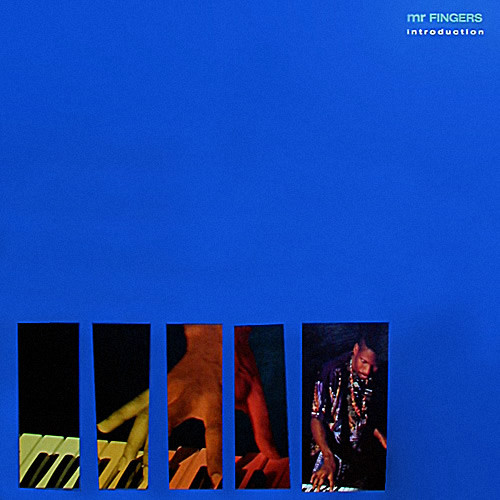
But it was Mr. Fingers’ Introduction that introduced all of it collectively, first heard when Murphy was simply starting to DJ and attend events at The Loft and began working at Dance Tracks quickly afterwards. She was within the fledgling phases of a lifelong love affair with home music, and Introduction was a mannequin of the style’s thrilling scope. 

“There’s a lot happening on this album — clearly Larry Heard has a complete historical past of jazz,” says Murphy, noting that Heard began enjoying in a jazz fusion band in Atlanta when he was 17 (with Adonis, no much less). “But it’s developed songwriting, there’s pop sensibilities in there, there’s counterpoint, there’s jazz, there’s home, there’s Chicago type of futuristic home as nicely. There’s R&B, there’s soul, there’s neo-soul…”

There are additionally loads of vocals on the album (Heard’s and people of celebrated home vocalist Robert Owens) which drew Murphy in as somebody who remixes vocals “virtually at all times” when producing nowadays. “I need a good tune, good songwriting hooks, you already know?” she says. “When I began listening to Introduction by Mr. Fingers just a few days in the past, I believed, ‘Oh my gosh, it’s all in right here.”

The document got here out when Murphy was 23 or 24 (placing it in that formative 14 to 25-year-old album listening bracket). Primal Scream’s Screamadelica was one other contender for this column (“Andrew Weatherall’s manufacturing has particularly influenced the indie dance stuff that I’ve completed”) however as an exemplar of songwriting, Introduction stands aside. 

“Sometimes, dance music and home music have very lazy vocals and songs,” says Murphy. “There are so many songs I move over [to remix], and I’m not saying writing a tune within the studio is essentially a foul factor as a result of it might probably work, and generally celebratory issues like ‘I get lifted’ — it really works, ‘get increased’ — it really works. But generally it will get a bit drained if it’s the identical factor again and again and there’s a number of, ‘Hey, let’s simply determine it out within the studio.’ It’s not good! And it’s lazy. And you can not say that about Larry Heard. He’s such an advanced producer, engineer, songwriter, musician.”

To Murphy, Introduction’s manufacturing type is paying homage to the work of her pal François Kevorkian. Each sound is actually thought of, she says, and “rounded and easy and exquisite. There’s no actual distortion. It’s all combined nicely in relation to 1 one other, and not one of the frequencies are combating. So they’re filling out this complete spectrum, this frequency spectrum from the bass, which is gorgeous and polished and spherical and bouncy, all the way in which as much as these actually tingly highs. Everything is stuffed out and every part has its place, its personal little sonic space, and it’s working collectively. Then there are counterpoint melodies and actually cute little memorable riffs and hooks and keyboard strains.”
After a protracted hiatus, Murphy returned to the studio through the pandemic, impressed by Julia Cameron’s seminal e book The Artist’s Way and the chance to remix a monitor that actually had her title on it —”Murphy’s Law” (by one other fabulous Murphy, Róisín). The authentic is great, after all, whereas Colleen’s model turns up the glam with sheeny disco riffs, whompy bass notes and funked-up keys given room to breathe and dance on their very own. Murphy says Kevorkian’s work was an affect — “that ‘80s Prelude sound”, and her Cosmodelica remix of “Murphy’s Law” kicked off a contemporary run of remixes within the three years since, together with work for Secret Night Gang, Lady Blackbird and Hard Feelings. But Murphy could be very selective about what she decides to tackle.

“I do flip down issues that I don’t assume I can do justice or the place there’s a component that I don’t assume I may do something with,” she says. “Either I need to assume in my head that I’m making it higher or I’m making a distinction.”

Murphy was not too long ago in her outdated stomping floor in New York and was listening to Introduction on her headphones as she wandered across the metropolis.

“It nonetheless sounds unbelievable to me. It’s so lush, it’s so nicely thought out, it’s so nicely engineered,” she says. Early home productions are sometimes charming of their rawness or experimentalism, however Heard’s imaginative and prescient arrived full. “This man is already advanced. He has his songs. He has the preparations. He has the manufacturing values. It’s simply all there.”

Surely the one factor left to do now’s to get Mr Heard on Classic Album Sundays…

Words by Annabel Ross

Volume Two of Murphy’s acclaimed Balearic Breakfast compilation comes out later this 12 months. The final monitor on the compilation is a canopy of Heard’s “What About This Love?” by a Japanese band Dip within the Pool, remixed by New Zealand duo Chaos within the CBD. 

Permanent Rotation: Colleen “Cosmo” Murphy on Mr. Fingers

Permanent Rotation is a sequence wherein producers, DJs, and musicians go deep on the albums which have impressed them.

The largest heroes of the underground usually wouldn’t describe themselves as such. Frankie Knuckles, Kelli Hand, Andrew Weatherall…all possessed a humility that made them much more honourable and endearing, they usually went about their enterprise with little regard for fame and a distaste for business bullshit.

Colleen “Cosmo” Murphy falls firmly into this class. She spent her adolescence in New York, changing into program director at WNYU radio station whereas working on the fabled Dance Tracks report retailer within the East Village and discovering a mentor in none apart from David Mancuso, whom she met at considered one of his legendary Loft events within the early ‘90s. She shortly grew to become considered one of his most trusted associates and collaborators. In the a long time since, she’s solid a embellished profession as a DJ, producer, radio host and audiophile, now primarily based in London however commonly talking at occasions and lighting up dancefloors all around the world. 

Perhaps unsurprisingly, on condition that she based the basic album listening initiative Classic Album Sundays, when requested to decide on the report that influenced her most, Colleen “Cosmo” Murphy responded with some anguish.

“It was exhausting once you requested the query as a result of it was particularly geared in direction of how it might affect my manufacturing,” she says. “That was troublesome as a result of a variety of issues that affect my manufacturing aren’t albums or singles. Norman Whitfield, as an example, was the pioneer of psychedelic soul. He’s considered one of my favorite producers of all time. But it’s not like I fully connect to a Temptations album or a Rose Royce album, or an Undisputed Truth album–all of the bands he produced and wrote for. They’re extra singles and songs, proper?”

I knew this is able to be good; I feel as I smile, nod, and stir my espresso. 

“Really, there’s this era between the ages of like 14 and 25 the place any album that you simply fall in love with, that you simply take heed to religiously over and over and over, is in your mind for the remainder of your life. You know all the things about it, you recognize the basslines, you recognize the keyboard strains, you recognize the lyrics, you recognize all the things.”

Read extra: Eris Drew on Information Society

More than most different genres, dance music is led by singles, not albums, we concur, and I remind Murphy she’s free to decide on any album in any respect. But she finds having a parameter useful. 

“The first dance album I fell in love with was Soul II Soul Club Classics Vol. One, however that’s after I was a radio DJ. I wasn’t a membership DJ and I wouldn’t say it’s essentially influenced my manufacturing. Massive Attack’s Blue Lines, that’s my subsequent favorite dance album. That’s after I do my type of downtempo dubby stuff, I can hear that coming by means of.”

But it was Mr. Fingers’ Introduction that introduced all of it collectively, first heard when Murphy was simply starting to DJ and attend events at The Loft and began working at Dance Tracks quickly afterwards. She was within the fledgling phases of a lifelong love affair with home music, and Introduction was a mannequin of the style’s thrilling scope. 

“There’s a lot occurring on this album — clearly Larry Heard has a complete historical past of jazz,” says Murphy, noting that Heard began enjoying in a jazz fusion band in Atlanta when he was 17 (with Adonis, no much less). “But it’s developed songwriting, there’s pop sensibilities in there, there’s counterpoint, there’s jazz, there’s home, there’s Chicago type of futuristic home as nicely. There’s R&B, there’s soul, there’s neo-soul…”

There are additionally loads of vocals on the album (Heard’s and people of celebrated home vocalist Robert Owens) which drew Murphy in as somebody who remixes vocals “virtually at all times” when producing as of late. “I need a good track, good songwriting hooks, you recognize?” she says. “When I began listening to Introduction by Mr. Fingers a number of days in the past, I believed, ‘Oh my gosh, it’s all in right here.”

The report got here out when Murphy was 23 or 24 (placing it in that formative 14 to 25-year-old album listening bracket). Primal Scream’s Screamadelica was one other contender for this column (“Andrew Weatherall’s manufacturing has particularly influenced the indie dance stuff that I’ve executed”) however as an exemplar of songwriting, Introduction stands aside. 

“Sometimes, dance music and home music have very lazy vocals and songs,” says Murphy. “There are so many songs I move over [to remix], and I’m not saying writing a track within the studio is essentially a foul factor as a result of it could actually work, and typically celebratory issues like ‘I get lifted’ — it really works, ‘get larger’ — it really works. But typically it will get a bit drained if it’s the identical factor time and again and there’s a variety of, ‘Hey, let’s simply determine it out within the studio.’ It’s not good! And it’s lazy. And you can not say that about Larry Heard. He’s such an advanced producer, engineer, songwriter, musician.”

To Murphy, Introduction’s manufacturing fashion is paying homage to the work of her buddy François Kevorkian. Each sound is absolutely thought-about, she says, and “rounded and easy and exquisite. There’s no actual distortion. It’s all combined nicely in relation to at least one one other, and not one of the frequencies are combating. So they’re filling out this entire spectrum, this frequency spectrum from the bass, which is gorgeous and polished and spherical and bouncy, all the way in which as much as these actually tingly highs. Everything is crammed out and all the things has its place, its personal little sonic space, and it’s working collectively. Then there are counterpoint melodies and actually cute little memorable riffs and hooks and keyboard strains.”

After an extended hiatus, Murphy returned to the studio in the course of the pandemic, impressed by Julia Cameron’s seminal e-book The Artist’s Way and the chance to remix a observe that actually had her title on it —”Murphy’s Law” (by one other fabulous Murphy, Róisín). The unique is superb, after all, whereas Colleen’s model turns up the glam with sheeny disco riffs, whompy bass notes and funked-up keys given room to breathe and dance on their very own. Murphy says Kevorkian’s work was an affect — “that ‘80s Prelude sound”, and her Cosmodelica remix of “Murphy’s Law” kicked off a recent run of remixes within the three years since, together with work for Secret Night Gang, Lady Blackbird and Hard Feelings. But Murphy may be very selective about what she decides to tackle.

“I do flip down issues that I don’t assume I can do justice or the place there’s a component that I don’t assume I may do something with,” she says. “Either I need to assume in my head that I’m making it higher or I’m making a distinction.”

Murphy was lately in her outdated stomping floor in New York and was listening to Introduction on her headphones as she wandered across the metropolis.

“It nonetheless sounds unimaginable to me. It’s so lush, it’s so nicely thought out, it’s so nicely engineered,” she says. Early home productions are sometimes charming of their rawness or experimentalism, however Heard’s imaginative and prescient arrived full. “This man is already advanced. He has his songs. He has the preparations. He has the manufacturing values. It’s simply all there.”

Surely the one factor left to do now could be to get Mr Heard on Classic Album Sundays…

Words by Annabel Ross

Volume Two of Murphy’s acclaimed Balearic Breakfast compilation comes out later this 12 months. The final observe on the compilation is a canopy of Heard’s “What About This Love?” by a Japanese band Dip within the Pool, remixed by New Zealand duo Chaos within the CBD. 
Permanent Rotation: Terre Thaemlitz on The Monkees

Permanent Rotation is a sequence by which producers, DJs, and musicians go deep on the albums which have impressed them.

It’s not an exaggeration to say that Terre Thaemlitz, aka DJ Sprinkles, is without doubt one of the most vital producers and DJs on the planet. For greater than 25 years the Japan-based artist, who prefers alternating he/she pronouns, has woven queer principle and identification politics into achingly lovely music, all of the whereas critiquing the socio-economic situations by which artwork is commercially produced and offered. 

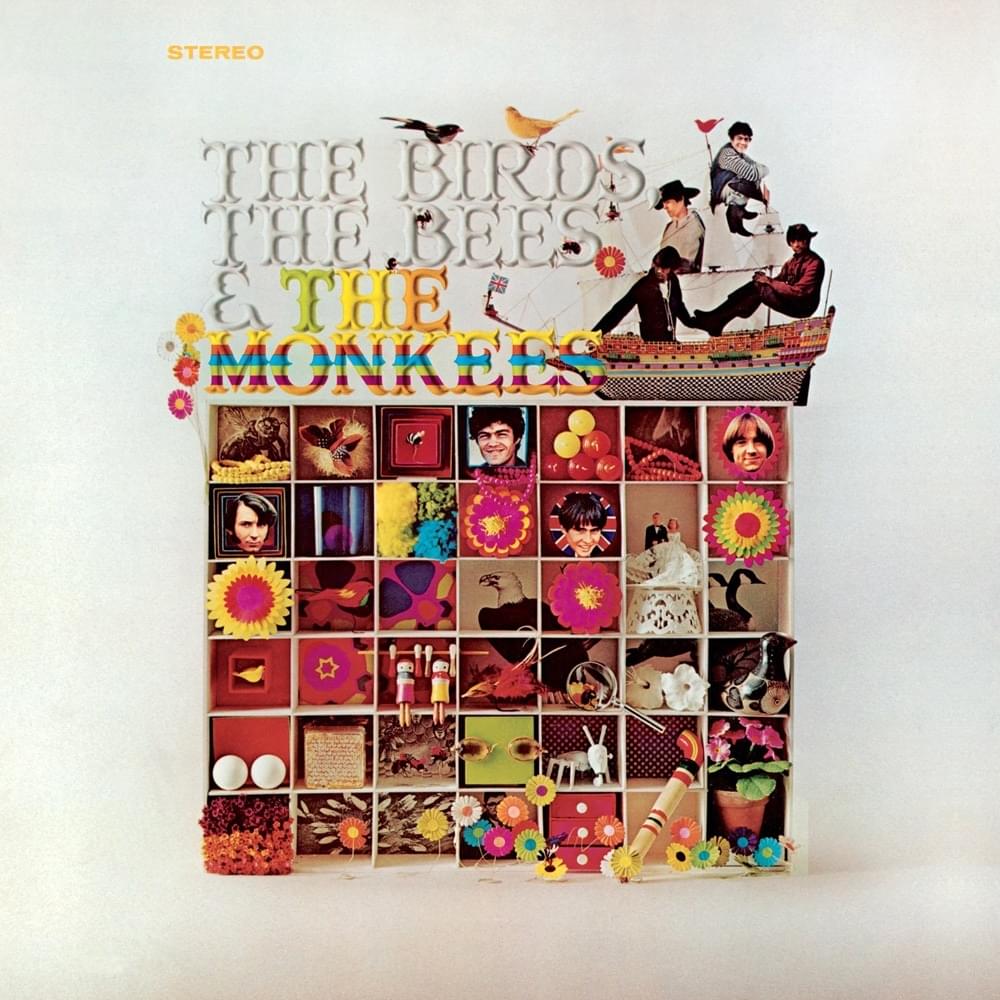
His 2008 album, 120 Midtown Blues, stays a peerless mix of essential principle and a few of the deepest, lushest home music you’ll ever hear. The remainder of her oeuvre, most of which might be discovered on her Comatonse Recordings label, is equally thought-provoking and impeccably crafted. His chosen album is The Birds, The Bees and The Monkees, the Monkees’ fifth studio album and their first to not attain no. 1 within the charts. 

When Terre Thaemlitz was within the second grade, he got here 4th in a spelling bee at college. His trainer took the chance to dump her Monkees albums as prizes. “I barely made the choice pool, I simply received this album as a result of it was the least needed album by all people else, who knew which Monkees records to take,” she says. But The Birds, The Bees and The Monkees would have an everlasting affect on Thaemlitz. “The album ended up having a number of bizarre continuities with a lot of the totally different work I’ve completed in home music in addition to electro-acoustic music and different issues,” he says.

Take the primary observe, “Dream World”, which sees singer-songwriter Davy Jones telling Pollyanna sorts to get up and odor the espresso, a materialist sentiment that aligns with Thaemlitz’s personal philosophy. “I’ve my very own factor in opposition to optimism and desires and hope,” says Thaemlitz, who has argued that the cultural demand for optimism even inside essential fields “merely displays our conformity to these First World humanist and capitalist practices we want to critique.”

The Birds The Bees and The Monkees incorporates the American pop-rockers’ second greatest hit, “Daydream Believer”, however for Thaemlitz, the songs that resonated most had been those written by bassist Michael Nesmith, and people organized by nation swing musician Don McGinnis. Nesmith’s “Writing Wrongs”, a shape-shifting piano ballad/jazz/prog rock epic, particularly stands out to Thaemlitz.

“I believe if individuals listened to that observe, although it’s clearly not a straight-up home observe, they’d most likely be like, ‘Ah, yeah, I see why Terre digs that,’” she says. [Side note: while listening to The Birds, The Bees and The Monkees, this writer thought she’d accidentally hit play on a DJ Sprinkles mix during this song].

Thaemlitz has truly made her personal “personal prolonged edit” of the music, together with an edit of one other Nesmith observe on the album, “Tapioca Tundra”. She doesn’t play them out fairly often, possibly “each ten gigs or so,” sometimes when she needs to take a home set in a jazzier path. 

“Sometimes I’ll be enjoying a few of the stuff I did dwell with Zeitkratzer, like their variations of Ok- S.H.E tracks, that are fairly eclectic and quick,” Thaemlitz says. “Then possibly I’ll combine in some Nina Simone or one thing like that, and attempt to work in ‘Writing Wrongs’ or the ‘Tapioca Tundra’ edit. They actually bomb each time,” he laughs, “I’ve by no means gotten them to work for anybody however me.”

The lyrics on the album held as a lot intrigue because the music for a younger Thaemlitz. There are references to grownup ideas comparable to nuclear struggle and suicide on “Writing Wrongs” and Thaemlitz appreciated being launched to social critique at an early age. There’s a line in “Tapioca Tundra” that speaks to Thaemlitz’s emotions in regards to the evolution of queer and trans actions over time, particularly the pleasure motion.

“I take into consideration the methods by which visibility and pleasure have actually altered how younger persons are uncovered to problems with gender and sexuality. Even although LGBT points nonetheless contain tensions with the mainstream, schooling on these points may be very a lot institutionalized and offered by means of the mainstream,” Thaemlitz says.

“You find yourself with very essentialist, identity-driven practices that develop into all about have an effect on, feeling, and the way you determine as a person – slightly than serious about how gender and sexual identities should not individualist however emerge from social exchanges that inscribe meanings upon our bodies.” The mainstream notion of what it’s to be queer or trans is “company bullshit” and “completely uninteresting”, in keeping with Thaemlitz. When Nesmith sings, “it can’t be part of me/for now it’s part of you,” Thaemlitz feels unhappiness for a motion she doesn’t subscribe to, one constructed on “the commodification of the traumas of my and earlier generations.”

Thaemlitz remembers being fascinated with one other Nesmith music, “Magnolia Simms”, which is textured with crackle and the sound of a file skipping. “I had most likely tried about 50 instances to get the file to play with out the skip, taping quarters on the turntable arm for weight to try to get it to play by means of. I didn’t realise it was all intentional,” says Thaemlitz.

“That sort of disruptive listening approach has all the time been an enormous a part of my electro-acoustic initiatives, particularly those from the ‘90s and early 2000s, the place it’s a must to stand up and alter the quantity, and marvel if one thing is glitching or if it’s within the recording.” Thaemlitz wasn’t essentially serious about The Monkees when engaged on these initiatives, however can’t assist however assume that “Magnolia Simms” may need laid the foundations for them again within the ‘70s. “I do assume that this album’s ‘built-in defects’ grew to become one other sort of bizarre carry over into my very own productions,” he says.

There’s a message on the again of the file — one Thaemlitz didn’t initially discover as a child. “Editor’s Note on “Magnolia Simms”: Warning! Your instrument has not stripped a gear. The “floor noise” and skipping impact are “in-built” to extra realistically seize the sound of the 1920-30 yippies.” Originally a portmanteau of yuppies and hippies, in 1968 yippies extra generally referred to members of the newly shaped Youth International Party, a radical counter-culture group.

“I believe Nesmith referencing the yippies was his approach of making an attempt to place in these little clues for youths to seek out their methods to politics,” says Thaemlitz, who credit the album’s subliminal messages with starting to form her worldview as a 7-year-old. 

Thaemlitz might not have received her second-grade spelling bee, however that day she took dwelling a file that would actually change her life. 

Words by Annabel Ross
Photos by Comatonse Recordings

From May 10 to July 2, Thaemlitz’s “Reframed Positions” solo survey exhibition can be offered at Halle Für Kunst Lüneberg, Lüneberg Germany. The exhibition is curated by Lawrence English in affiliation with Room 40.


Permanent Rotation: Whodat on Kraftwerk

Permanent Rotation is a sequence through which producers, DJs, and musicians go deep on the albums which have impressed them.

Terri McQueen is best often called Whodat, a first-rate Detroit selector, producer and purveyor of deep, soulful home music. With releases on Uzuri, Workshop, and a current look on Theo Parrish’s DJ-Kicks, Whodat is certainly one of Detroit’s dwelling treasures and a favorite amongst discerning crowds from her residence metropolis to so far as Germany and Japan. 

Terri McQueen is chatting with me by way of Zoom from her basement/studio in Detroit, the place a wall of records is stacked behind her. It’s only a small portion of her assortment, which is unfold throughout most rooms of her home. “I don’t know what number of [records] I’ve,” she says. “I’m beginning to realise that it’s lots.”

The measurement of her stash is smart if you study she’s been accumulating since she was simply 5 years outdated. She was six when she heard Kraftwerk’s Computer World for the primary time whereas hanging out at her older cousins’ place in Detroit. McQueen holds up a inexperienced copy of the document and says, “that is in all probability the one we had been listening to after I was a child.” McQueen, who additionally owns a transparent copy of the document, inherited her cousin’s assortment after he handed.

There was all the time music taking part in at her cousins’ place, the place McQueen and her older sister spent lots of time rising up. “I bear in mind distinctly my sister and her finest pal on the time used to do dance routines in the lounge,” McQueen says. “No one was actually DJing or something like that, they’d simply play records. And then anyone additionally in all probability had the cassette, possibly taking part in it from a boombox.” At the time, you might additionally hear legendary native DJ The Electrifying Mojo taking part in tracks from Computer World on the radio.

It was “so completely different” to something McQueen had heard earlier than—particularly the Michael Jackson and Prince records that had been enormous in Detroit on the time. “Everyone was listening to all this disco razzle-dazzle stuff after which this got here alongside and it was like—growth!—the whole lot went darkish after which the celebs got here out,” she says. Where songs on the likes of Off The Wall introduced themselves with drum fills, bass riffs and glitzy intros, Kraftwerk kicked off tracks with “no rhythm, nothing, simply the music beginning,” and created area of their music the place different artists rushed to fill it. The band’s sense of restraint is one thing that may have subconsciously seeped into her personal productions, McQueen says, alongside the extent of element and dynamics in Kraftwerk tracks. “They’re all the time having little issues bouncing round within the background and sure passages repeating,” McQueen says. “It’s bubblegum poppy however very completely different from the bubblegum pop we’re used to listening to.”

A few years after McQueen first heard Computer World, somebody gave her the inexperienced Pocket Calculator 7-inch, and it shortly turned her favorite observe on the document. Captivated and intrigued, a pint-sized McQueen demanded to know what she was listening to. “I used to be like, ‘Yo, what is that this? What are they saying? Are they talking in one other language? Are these numbers? Are they talking Japanese?’ And nobody would reply me. They had been similar to, ‘Can’t you simply take heed to the rattling tune?!’” McQueen chuckles. 

“‘Computer World’” was one other favorite, particularly “these loopy whispers the place they take a lot of the music out,” McQueen says, imitating a crackling sound, “and that bit proper earlier than the bass hits.”

The album artwork featured Kraftwerk photographed with slick, Lego males hairstyles and wearing matching shirts and ties, main McQueen to consider the band was made up of 4 Ken dolls. “That’s in all probability all I may affiliate them with, being that age,” she says. The laptop theme was additionally a supply of fascination. Computers weren’t but a family merchandise in 1981. Still, McQueen’s cousin owned one of many earliest video video games and the sonic and visible aesthetic of Computer World represented an thrilling future. 

Sometimes McQueen will play a Kraftwerk observe when DJing, normally as a result of she desires to listen to it on a superb sound system. But the response might be overwhelming, she says, particularly when the gang is listening to the tracks for the primary time. “When you play it for another person, they’re like, ‘Whoa. That was loopy!’ So it’s important to watch out,” McQueen says. “When they react greater than you anticipate, you’re like, ‘I knew it was gonna be cool however rattling, I wasn’t prepared for that!’”  

Her fandom for the document immediately is simply as pure because it was when she was a toddler. McQueen doesn’t examine Kraftwerk’s manufacturing methods and doesn’t actually know or care what tools they used to make the document. “The manufacturing model, I simply all the time beloved it. I really like the way it makes me really feel after I hear it,” she says. “It simply makes you cheerful when it comes on, ?” 

Words by Annabel Ross

Permanent Rotation: Eris Drew on Information Society

Permanent Rotation is a series in which producers, DJs, and musicians go deep on the albums that have inspired them.

Eris Drew is one of the most beloved and respected underground DJ/producers on the planet and the co-founder of T4T LUV NRG, the label she runs with her partner Octo Octa. She’s revered for her transcendental sets, impeccable, wide-ranging selections, and nostalgic productions that evoke the early ‘90s Midwest rave scene where she cut her clubbing teeth. Her musical DNA extends back further, however, most notably with the discovery of the Minneapolis-Saint-Paul synth-pop band Information Society as a 13-year-old.

Eris Drew has the school bully to thank for introducing her to Information Society and their 1988 self-titled album, a record she still studies to this day.

“He was kind of a terror but he was also kind of cool and he knew about pop music and he started talking about this group Information Society,” she recalls over Zoom, describing herself as an only child who was “kind of different, anyway”.

“So I was at the music store and I was like, Ok, I’m gonna buy this and check it out. I was trying to find music at the time and I totally fell in love with it. I loved all the electronics and how danceable it was and the use of the science fiction samples.”

The most memorable sci-fi sample on the record is Leonard Nimoy’s “pure energy” sound bite in the opening track “What’s On Your Mind (Pure Energy)”, one that Information Society lifted from a Star Trek episode with the blessing of Leonard’s son, Adam, who was a fan of the band. The song went to the top of the US dance chart that year and hit number three on the Hot 100 pop chart.

“For me, it was like The KLF’s The White Room before The White Room,” says Drew of Information Society, pulling out the original cassette she bought in 1988 alongside an impressive collection of accompanying merch. “There’s all this weird symbolism and strange sampling of cultural debris all over the record, but I don’t think the band had such a strong message—I think they were young and having fun and maybe taking the piss out of what an information society we were becoming. It was a little more punk-spirited.”

Information Society is a bold, richly layered blast of synth-pop, influenced as much by Depeche Mode and Pet Shop Boys as it is by D.A.F. and Kraftwerk (the album’s producer, Fred Maher, came to Information Society fresh from working on Kraftwerk and Scritti Politti records).

So instantly enamoured was Drew with the album, that she went out and bought all the singles, bundled with a bunch of remixes. She recalls asking her mother, “What’s a remix (pronounced rem-ix)?”. New York legend Justin Strauss was among the remixers, as was Little Louie Vega, whose “54 mix” of “What’s On Your Mind” is “pure freestyle minimalism”, says Drew.

“It’s really stripped back, and I was just like that’s me because it was all about the drums, all these different layers of drums and the ‘54 mix’ showed them off because the pop stuff was stripped off and it was just the meat of it.”

It’s a track Drew still DJs with today, some 35 years after stumbling across it for the first time. “I speed it up and then I mix that in with some breaks that are around 120 – 124 [BPM]. It sounds so dope, everything’s crystal clear, it’s got all this dynamic range in it,” she says. “I’ve got the double so I can do layers with them together and this, to me, it’s still immaculate. Sometimes when people are like, ‘Oh that’s held up pretty well,’ I’m like, ‘Nothing touches this’. I love new music, but this will always be this special little thing.”

Drew saw Information Society live just once, in Chicago, as part of the Club MTV Tour, which also featured Paula Abdul, Milli Vanilli and Tone Loc on the bill.

Sally Ven-Yu Berg, who died in 2015, was a touring drummer for the band, and she was “ferocious”, Drew says. “She was playing so intensely on all these electronic drums over the sample drums and she rocked it. She was super solid.” [Check the YouTube clip below from 47:35 to see Sally in action.]

Thinking about how Information Society might have informed her own approach to production, Drew cites the album’s “slick but raw” sound and the rhythmic bridges in songs connecting two different vocal parts (e.g. “Over the Sea”), qualities that can be heard on her own debut album Quivering in Time. The band’s name hints at the level of detail in their productions, layered to form a kind of “sound collage”, another characteristic that marks Drew’s own compositions.

Drew also takes cues from Information Society’s use of samples to signal transitions in their tracks. “I try to blend in that kind of way and there’s something about the energy of the transitions in their songs that I’m always trying to reproduce when I’m producing or playing,” she says.

It was about three years after discovering Information Society that Drew attended her first rave and, for Drew, it wasn’t hard to connect the dots between synth-pop and rave music. “It was really easy to move between those things as I got older even though they were made for different spaces,” she says, noting that Information Society had a surprise dance hit in 1985 with the freestyle song “Running”. “If you listen to Ex:el by 808 State, they feel like they’re cut from the same cloth, lots of layers of programmed drums and bright melodies made with digital synthesisers from the time,” Drew says.

Little Louie Vega’s “Running” instrumental was also popular with DJs such as DJ Dan in the late ‘80s. “The breakbeat scene at that time was definitely all about finding the hip-hop and pop B-side mixes that were super dope and Louie’s dub mix fits that bill for a wide range of DJs,” says Drew.

Drew went to her first rave with a kid from school — let’s call him G — after witnessing a “full-throated defence of Information Society” that he delivered at a party. “All the kids were into Jane’s Addiction and Pearl Jam and all this, quote, ‘real music’, and G was a drummer in the school band and he played first chair, and everyone knew he was a badass drummer, and he was like, ‘Information Society have the best drums’. He sat them down and taught them about syncopation and how the hi-hats were layered,” she recalls.

“Normally I cannot get a word in around these kids and they’re just listening dumbfounded as G tells them about how this music doesn’t get any respect in the ‘90s and the late ‘80s when it’s the best stuff out there and I was like,’ yeah, you’re alright G’, you know?” G drove Drew to the rave in his sports car decked out with subwoofers; the party ended up getting busted and “he dropped me off in a park and I was tripping,” Drew laughs.

Information Society was “not a cool band by any means” when Drew was in junior high, she says. Metal and hardcore rap held far more social currency, “but I liked Run DMC and Information Society and Depeche Mode and stuff like that,” Drew says.

To the school bully, Information Society was “probably cool for all of two weeks,” Drew says, “but I formed a whole identity around it and specifically around studying certain parts of its musicality and production that I’m still using today.”

For Drew, “mining your own true history” is what produces music that really resonates, which is why Information Society is a record she holds so dear.

“I think that was a golden age of pop music, and I think they were my Kraftwerk because they were this North American pop band that had really amazing electronics,” she says. “That was the music I was into when I was 13, when my musical values were really becoming really established, and by understanding that part of myself and that time, I have an interesting relationship to that music and an interesting well of ideas that someone else might not have.”

Words by Annabel Ross

Permanent Rotation: Jennifer Cardini on Aphex Twin

Permanent Rotation is a series in which producers, DJs, and musicians go deep on the albums that have inspired them.

Few women in electronic music are as respected as pioneering French DJ and producer Jennifer Cardini. She began her career in 1994 in Nice, France, then became an early resident at Paris institutions such as Rex Club and the now-closed, legendary lesbian nightclub Le Pulp. Coveted slots at festivals and venues such as Panorama Bar, fabric, Lux, De School and Good Room followed. She’s carved out an icon status over a nearly twenty-five-year career that includes helming two celebrated record labels; Correspondant and Dischi Autunno. A host of different albums shaped her as a teen, she says, including an ambient classic.

Full disclosure: Jennifer Cardini initially chose Depeche Mode’s Violator as the album that has had the most impact on her. 

“This album, you hear it in my 25-year career. You hear the influence of this album in every genre, and every song. You can hear it when I play more trance, you can hear it when I play more EBM… also Dopplereffekt, Drexicya, Aphex Twin. You hear this, even if it gets more indie or more house. There are always these hypnotic arpeggio pads, even when the genre’s changing.”

At this point, I asked her if she had a close runner-up for her most influential album title; Barbie Bertisch had spoken about a Depeche Mode album a few months prior and I didn’t want to double up. 

“We can talk about Selected Ambient Works,” she said decisively, “the one that came out in 1992.” 

Cardini tells the story best: “How I discovered this album was funny actually because somebody gave me a tape and on one side there was Brand New Heavies—not so much really my thing. On the other side was Aphex Twin. I remember I was like “rewind, rewind, rewind”. I listened to the album 100 times a day and was completely obsessed with it. I think this was the key to it all because after that I listened to Artificial Intelligence on Warp and then Drexciya and that was my entrance.”

Cardini still thinks it was Violator that sparked her foray into club music because “it was completely electronic, a more electronic album from Depeche Mode. It also sounds like Aux 88, in the textures of sound and what they used as instruments and samplers and stuff. It was the same stuff that Detroit musicians used, so I think it was this album that brought me to electronic music.”

Aphex Twin completely blew her mind, however—“that and LFO’s Frequencies. It’s difficult for me not to link those two albums together as being one big album. It was everything from early Warp, it was so new. It was like nothing else.”

She cites Selected Ambient Works’ softness and tenderness as the qualities that struck her most. “It’s really very beautiful,” she says. “For me, it was really trippy. You know, you really had the feeling he had all of his studio getting into a psychedelic conversation. At this time, we were all doing acid, so that might have something to do with it,” she laughs. 

“I think even if you’re not into electronic music you would listen to this. For me, it’s impossible that it wouldn’t move people,” she says. Cardini rates Analogue Bubblebath and Polygon Window too, “but I’ve always liked this electronica, ambient side of him more than the harsh stuff.”

When asked if Selected Ambient Works impacted her as a producer, she laughs. “I wish!” 

“I don’t know. I don’t spend enough time in the studio to be a full-grown producer. Aphex Twin is a genius. I think it takes so many hours of studio time to achieve that.”

Cardini once shared a bill with Aphex Twin, at a festival in France in the year 2000. She was performing as The Pussy Killers, an electro-punk duo that she formed with the late DJ Sextoy, aka Delphine Palatsi. “He DJed on his knees, he didn’t want people to see him,” Cardini recalls. “I don’t think I said hello. I was a bit starstruck.”

As a teen, Cardini was a fan of bands such as Joy Division and The Cure, but when she discovered Aphex Twin, “it kind of erased everything. There was only this,” she says. It was just a year earlier that she’d gone clubbing in Nice for the first time, which was a revelation for a 17-year-old “uncomfortable with who I was”, having grown up in the nearby and more conservative Monaco. 

“This first party I went to I was like, ‘Oh wow, I’m gay.’ And discovering techno, coming out, it all happened together,” she says. “I think without the club scene, coming out would have been a nightmare. I think that’s also why I’m so attached to it. It made me really happy. I met other people like me and I built a family and… it saved me.”

Words by Annabell Ross

Permanent Rotation: Anna Wall

Permanent Rotation is a series in which producers, DJs, and musicians go deep on the albums that have inspired them.

You only need to scan Anna Wall’s discography to hear the diverse influences and genres that have shaped her sound, which can be found on her house label The Bricks and ambient label Dream Theory. Earlier this year, the cherished Fabric resident and Rinse FM host released a lush downtempo album, Missing Moments. Here she traces its surprising connection with her first musical love, hip-hop. 

When Anna Wall was at high school in East London, rap and hip-hop were huge and while music-sharing services such as Napster were on the rise, hard copies were still coveted. “I remember I was the one person in my school to have Dr Dre’s The Chronic 2001 album,” recalls Wall, who got into hip-hop aged 11 and used to spend “ridiculous amounts of money” to get music shipped over from the US.  “It was CDs and tapes so you’d say, ‘I’ve got this,’ and you’d swap music with someone else and go home and listen to it.”

Delving deeper into hip-hop, Wall fell in love with “all the things that were going on below the surface,” she says. “There’s the commercial world of rap and all the things that blew up on MTV and stuff like that, but I was always interested in the further reaching sounds and subgenres.”

One such subgenre was backpacker hip-hop or backpack rap. It describes the kind of “underground” music that young hip-hop and rap fans would carry around in their backpacks in the ‘80s and ‘90s, with lyrics that centred social issues over braggadocio. Hieroglyphics, Aesop Rock and Atmosphere are commonly cited examples, along with a Harlem duo called Cannibal Ox. Their 2001 album, The Cold Vein, didn’t bother the charts but has since been hailed as an underground masterpiece.

“It felt really different to anything I’d heard at that time,” says Wall, who came across the album at 14. “When I discovered the label Definitive Jux, it was a goldmine of amazing music that really felt very different to what was going on, especially commercially in hip hop.”

Listening to The Cold Vein, it’s easy to see how it left an impression on a young Wall, incorporating traditional hip-hop beats with curious samples and industrial electronica. The first track, “Iron Galaxy”, includes a Giorgio Moroder sample  (“Leopard Tree Dream”). A Pitchfork review of the album compares the cacophony of bleeps that close out “Iron Galaxy” to a “Richie Hawtin rave-up”.

“It felt like it was veering way more into electronic than I’d heard before in hip hop,” Wall says of the record.  “It’s gritty and visceral. There’s really interesting production and electronics by the producer El-P.”

The album’s solemn mood and unflinching lyrics (chronicling addiction, generational trauma and New York’s mean streets) also struck a chord with Wall, who admits she was “probably pretty depressed” when she was younger. 

“The next phase of my life was dance music and going out and finding elation in that,” she says. “But when I was too young to go out I was finding solace in all these records.”

Wall initially wanted to be a hip-hop DJ when she started mixing records at 19, equipped with an old-school scratch mixer. “I remember trying and thinking, ‘Whoa, this is really difficult,” she says. “I think I got as far as something called the chicken scratch and was like, ‘Wow, ok, I don’t know if this is for me.’”

From hip-hop, she moved on to garage. The first pair of turntables she bought came with the previous owner’s collection of garage, jungle and DnB records. “I still play garage, I still collect garage,” says Wall. “I kind of discovered house through watching people’s garage sets and them playing all this US house music but super sped up at like 130-odd bpm.”

Wall’s recent ambient productions are “hugely influenced by hip-hop”. The connection might not be obvious, but Wall’s languid, lovely debut album Missing Moments shares traits with some of the Philip Glass sampling tracks on The Cold Vein, delicately building tension and atmosphere. “When I make something a little slower, I feel like those influences creep in for sure,” she says. 

Cannibal Ox’s discography is sparse; there’s just one other album, 2015’s Blade of the Ronin, but a couple of new singles were released last year. “I haven’t actually delved into that yet, it would be interesting to see where they’re at now, however many years later,” says Wall. “I think that’s my next experiment, to go and listen to that and see how that feels and see what they’re up to now.”


Photo: Netti Hurley