
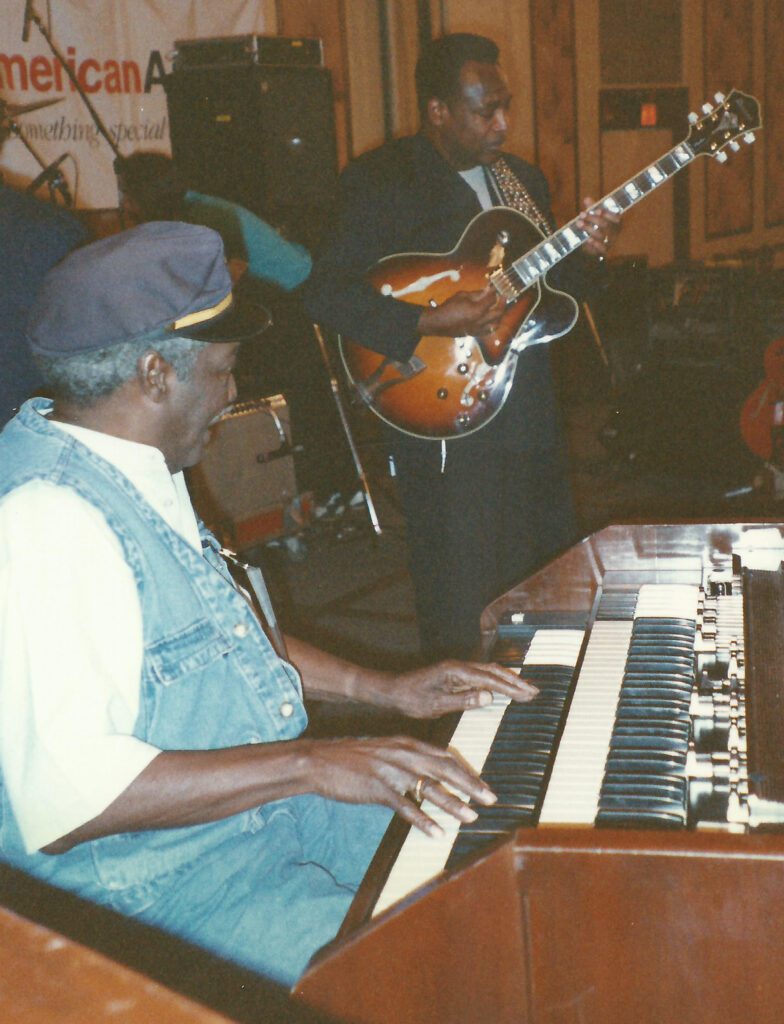
In June 1982, influential US jazz organist, ‘Brother’ Jack McDuff (1926-2001) and his group, Danny Wollinski on sax, guitarist Henry Johnson and drummer Garrick King, performed a week-long residency at Parnell’s, a membership in Seattle.
Forty years later, these uncommon and hitherto seemingly misplaced recordings of the concert events have lastly seen the sunshine of day. The recordings have been made by jazz organ aficionado and good friend of McDuff’s, Scott Hawthorn, on a C60 cassette from the venue’s pretty primary sound desk. They’ve been launched because the 15-track Live at Parnell’s, on the Soulbank Music label, as a three-LP set, or double CD.
Soulbank boss, Greg Boraman, first heard the reside recordings again in 1999, when Hawthorn made them obtainable to take heed to on-line as MP3 information, however there have been severe points with the audio high quality.
The cassette had degraded over the many years, and, in the course of the concert events, McDuff’s Leslie speaker cupboard – he performed a Hammond B-3 organ – had a rip within the bass woofer, which, when he stepped on a few of the pedals, created a really loud buzz, which was clearly audible.
In order to launch acceptable business variations of the recordings, Boraman despatched them to Claudio Passavanti, from UK-based mastering and audio manufacturing firm Doctor Mix.
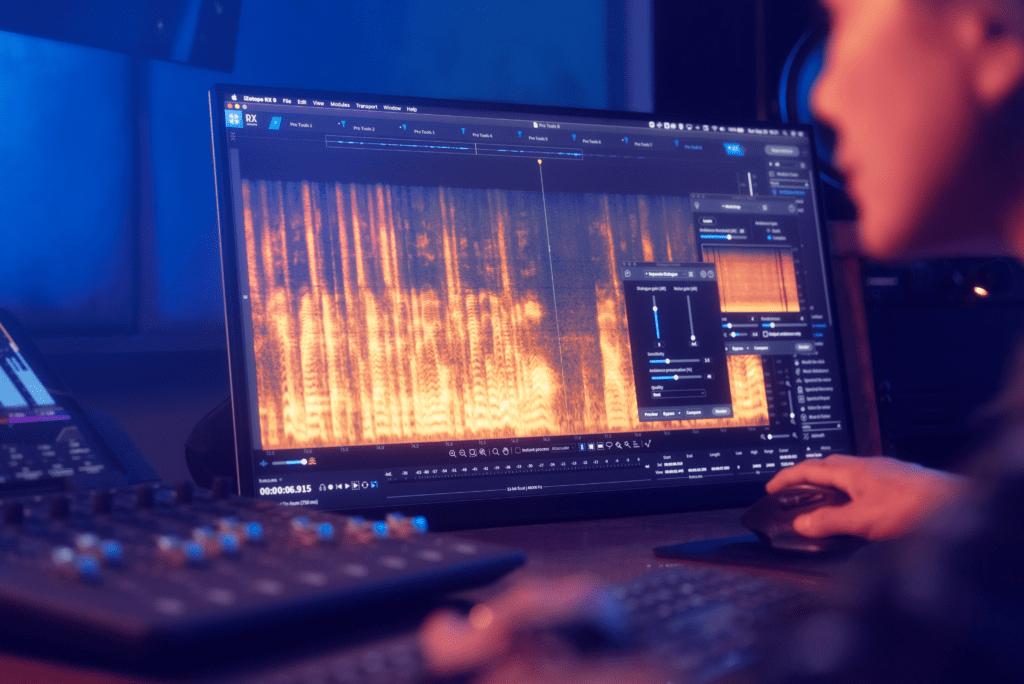
He assessed them after which began the method of restoring and reworking the fabric utilizing AI-based audio software program known as RX9, which was developed by specialist firm iZotope.
Passavanti was helped by Christoph Härtwig and his improvement workforce at iZotope, who acted as consultants on the mission.
For the vinyl model of Live at Parnell’s, Boraman approached London slicing home, The Carvery, which additional tweaked Passavanti’s work so it could possibly be used to chop the lacquers particularly for the vinyl format.
hi-fi+ spoke to Passavanti and Härtwig to find the challenges they encountered when restoring the recordings, how they overcame the difficulties with the usage of cutting-edge AI audio know-how and what they achieved with the outcomes.
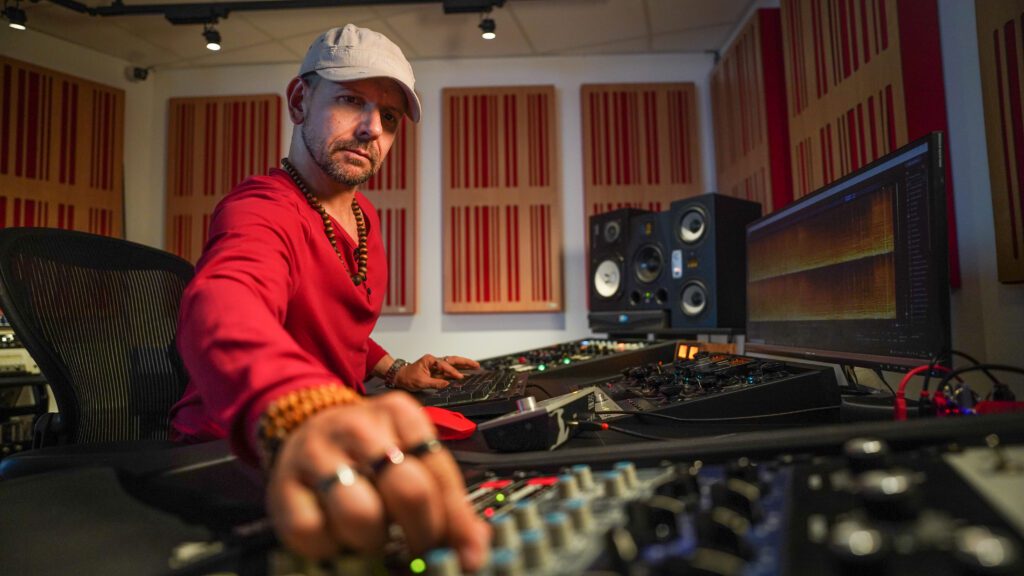
Claudio Passavanti : founding father of Doctor Mix
SH: What did you first suppose once you received concerned with the McDuff mission? Did you see it as being a serious problem?
CP: When it got here to us, the recording wasn’t a high-resolution one – it was on a [cassette] tape. One of the challenges was that the sign to noise ratio was barely acceptable and since it wasn’t an expert medium, the tape wobbled so much.
The recording wanted fixing. There have been all types of issues – the stereo area was crooked.
The very first thing we did was to stabilise the sound. There have been variations in pitch – wow and flutter – so know-how like AI actually made a distinction.
The neural community someway recognised the variations within the transportation of tape fairly than in music.
Then we had all of the background noises – typically the magnetic area can have an effect on the tape and masks the highest frequency. We needed to make up for what was missing.
What in regards to the defective organ sound? How did you take care of that?
Besides the recording issues and the shortage of depth and the weak spot of the sign, there was an issue with the organ itself – don’t neglect, this was a gig that wasn’t meant to be recorded.
The organ had a damaged speaker – on sure notes, it will vibrate and make a nasty noise.
What you hear now on the recording is 10 occasions higher as a result of we have been capable of tackle it and scale back it – we went to each half and manually mounted it utilizing spectrograms and AI to establish the international distortion.
There is a restrict, after all – if the sound isn’t there, you’ll be able to’t invent it, but when there may be an additional sound on or distortion on prime of it, you’ll be able to take away it, as a result of the distortion is louder than the sound itself.
Thanks to at the moment’s know-how, the restrict is gentle years forward of the place we have been 10 years in the past – it’s ground-breaking.
You can take away vocals from a document, which was thought-about black magic up till a number of years in the past. It would’ve been unthinkable to take a tape recording and get an honest sound out of it that you would press on vinyl. It’s life-changing in music.
How lengthy did you’re employed on the mission?
It took weeks as a result of firstly I needed to undergo all the fabric and perceive what the issues have been – then I had to make use of totally different instruments inside the software program to handle them.
Are you happy with the outcomes?
I’m shocked as a result of after I first received the recordings, I believed it was unattainable to launch them.
With iZotope’s assist we may push the envelope – we took it to the very restrict.
It’s a compromise – I understand how records of the identical period sound, so I didn’t need to make the error of creating it sound ‘hi-fi’. That’s not a sound that’s actual or genuine to that point.
Knowing the fashion, the references and the tradition behind it’s the exhausting half – you want a producer, a musician and a document collector or connoisseur. to be able to get that proper.
Christoph Härtwig product advertising and marketing supervisor, iZotope
SH: Can you inform us about iZotope’s RX audio software program know-how? How did it come about?
CH: It was invented by a man known as Alexey Lukin, who’s our principal software program engineer. He began utilizing AI to take away frequent issues in post-production on audio materials and he invented RX to eliminate undesirable noises – it’s change into well-known for its de-noising algorithms, that are just about business customary.
It was created to unravel noise issues whereas producing audio for movies however now there are use circumstances the place it’s caring for audio for archive materials that’s being digitised.
Over time, RX has additionally change into a device that music producers use as a result of even within the studio there’s hiss, like once you use outdated compressors, however it’s not taking the soul out of the music.
On the McDuff mission, I assume you would’ve stripped out many of the undesirable noise, however, as you say, you didn’t need to lose the soul or the reside really feel of the recordings…
Exactly. Some fashionable producers use RX as a artistic device, however it’s made for restoration.
If you need to restore audio, the very first thing that involves thoughts is RX.
How did you hook up with Claudio Passavanti of Doctor Mix?
I’ve identified him for a very long time – he known as me and mentioned he had a recording with a damaged Leslie cupboard that he needed to take care of. He requested me what we may do. We took a more in-depth have a look at it – the precise restore course of didn’t take too lengthy as a result of RX is basically intelligent.
We did some ‘spectral restore’ – the software program appears on the music prefer it’s an image. You can see the noise on a spectrograph and take it out. The restore took possibly a few hours – the primary move to see if it really works is about 5 minutes, however the half that takes longer is when you need to render it in prime quality.
When you’re working with compression or audio information, it may end up in lossy audio or artifacts – that’s when you need to tweak it.
Have you heard the completed album?
I’ve solely heard snippets and it sounds actually good. I hope I can get a vinyl model – I’m wanting ahead to that.
I’m a vinyl head – I like it due to the noise – however there are positively benefits with digital.
What’s subsequent for AI in audio? Where’s it heading?
That’s a very good query. The high quality is bettering – I’m a sound engineer and we will do issues at the moment that wouldn’t have been attainable 20 years in the past.
If you have got a stereo file, you’ll be able to enhance the quantity of the drums alone – you don’t should have the stems. That took place a few years in the past and it was a ‘wow’ second within the business. When it involves RX, the algorithms will enhance in order that it is possible for you to to take away noise or restore extra advanced audio.
On the music facet of issues, I believe AI will result in auto-generated music. It exists already, however it’s not superb.
I’m a guitar participant – no one will ever be capable of copy an actual instrumentalist, or his or her flaws, however AI will assist individuals who thought they’d by no means be capable of make music to take action.
I believe that’s the place it’s heading – it should allow us to create higher audio and the standard will enhance.
Live at Parnell’s by Jack McDuff is out on Soulbank Music. It’s obtainable on vinyl (three-LP) and double CD.
The submit Music Interview: Bringing Jack McDuff again to life appeared first on Hi-Fi+.
