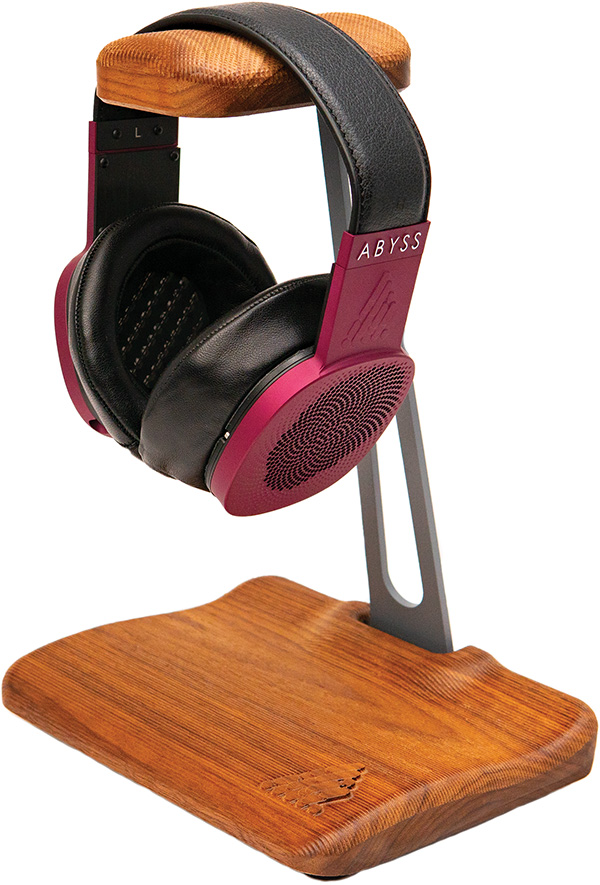
Author Archives: Herb Reichert

Gramophone Dreams #73: PTP Audio Solid9 Turntable, Sorane SA-1.2 Tonearm

I want that each one who love LP playback as a lot as I do might hear a Thorens TD 124 or Garrard 301 or EMT 930 of their programs, however these merchandise are topic to the vagaries of provide and demand: They are uncommon and dear.—Art Dudley


I’ve a good friend named Yale, a file producer, who lives in a capacious, art-filled SoHo loft with monumental home windows, craggy wooden floors, and a excessive, tin-tiled ceiling. I take pleasure in Yale’s firm as a result of he has terribly various, extremely developed style in music, artwork, structure, books, residence furnishings, and hi-fi tools.


In one a part of Yale’s loft, a big, tin cow weathervane stands on a bureau. Bolted to the ceiling above the eating room desk is a greasy black 300lb electrical motor with a large pulley—the sort previously used to show the belts that powered sweatshop machines ca 1920. In the purest essence of Nineteen Seventies SoHo type, a loft mattress is located above the closet and toilet, and the kitchen flooring is raised to shelter plumbing pipes. There’s an unnamable piece of equipment, concerning the measurement of a small canine, on the ground subsequent to the sofa. It sits there as a result of it seems to be elegantly mysterious, inspiring curiosity and contemplation. Yale and his architect spouse spent many years creating this dreamy, comfy house, which leads my thoughts to reminisce—and loft envy.


One sunny winter weekday, Yale invited me over for the categorical function of serving to him resolve which amp does a greater job powering his patinaed Nineteen Seventies Tannoy Cheviot audio system: his newly arrived, 1956 Fairchild 260 tube amplifiers or the shiny Line Magnetic 2A3 amp he’d been utilizing for a while. His “gear desk,” he stated, was too small for each.


As we unpacked the Fairchilds, we agreed: Those push-pull 6L6 mono amps are museum-quality masterpieces of commercial design. The Fairchild 260s are, together with the Marantz Model 2 and the Brook 12A, prime classics of American mono-era amplifier design.
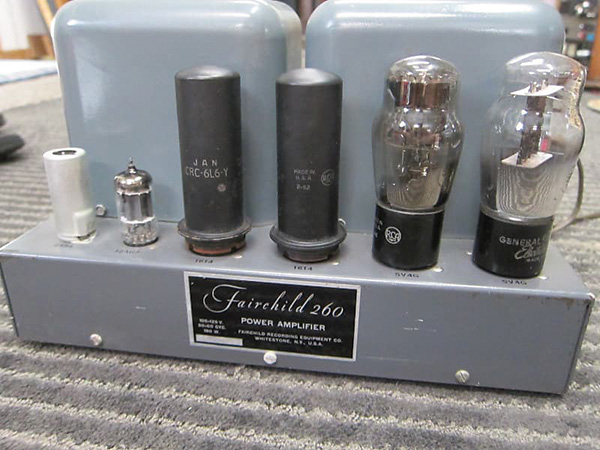


As we unwrapped the NOS tubes, I reminded Yale that RCA launched the 6L6 beam tetrode in 1936 and that it was designed particularly to have a distortion attribute excessive in second harmonic and low in third harmonic, to be used in push-pull, audio-frequency amplifiers during which the second harmonic will get canceled. Push-pull 6L6 tube amps are notoriously musical, revered particularly for his or her vocal replica. These uncommon Fairchild 260s are the holy grail of 6L6 design.


When we received the tubes in and the wires related, just one channel labored. After some fiddling, we had sound from each channels, however one speaker was out of section. As Yale troubleshot, I sat myself down in a random chair about 30′ from the audio system and started to verify my e mail. Suddenly, each audio system jolted into loud, in-phase motion, making my head jerk so quick I harm my neck. When I appeared down, I noticed my proper foot tapping like a stitching machine. Then I felt my head bobbing. I used to be having an “Oh my! Listen to that!” second.


Full-strength Pace, Rhythm, and Timing (PRaT). Unsuppressible ahead momentum. Music grooves owned the room. Artists’ intentions had been coming by. My mind gave no thought to “how does it sound?”


When the second file ended, I turned to Yale wide-eyed and exclaimed, “Wow! You had been proper. You’re not an audiophile. You are a music lover!” I stated this as a result of, earlier, Yale had denied being an audiophile, saying he simply likes “gear.”


It was apparent he cared little about all that “audiophile guidelines” stuff and in no way about these speaker setup–room arranging guidelines that place a excessive precedence on a strategically positioned listening chair and exactly targeted picture mapping. To me, it appeared that Yale’s system was rigorously curated to do one factor completely: remind himself and present his buddies how good his records are.


I requested Yale how he selected this specific combination of stuff. “I selected most of it as a result of I preferred the way it seems to be,” he answered. “I do not examine tools. I simply go by what strikes me.” That made me smile. “I consider that technique works,” I advised him. “Because … in my expertise, most elements do sound like they appear.” I complimented my good friend and his spouse on their good style, saying, “I believe your audio gear is ‘of a bit’ together with your artwork and furnishings and style in music.”
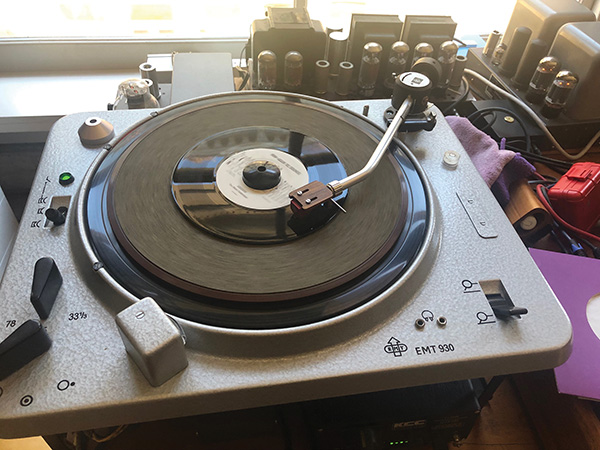


Watching me swoon over the grey, hammertone great thing about his EMT 930 turntable, Yale defined that he had owned fairly a couple of turntables, “however as soon as I noticed that loafer wheels had been near god, I purchased into the parable.” Yale advised me his EMT cartridge got here from Art Dudley, whose writing had been “an inspiration” throughout his gear-buying journey.


Yale has a second system, arrange alongside the lengthy, excessive books-and-records wall. It encompasses a crisp-looking Thorens TD 124 (fully inventory, restored by STS Turntables) with an SME 3012 arm and a Denon DL-103 transferring coil cartridge wired right into a Sixties Voice of Music, EL-84–based mostly built-in amplifier powering some snappy-looking Altec Model 14 audio system sitting on the ground mentioning at no specific chair. When he performed it, this technique stuffed the room with sound and gushed boogie issue like the primary one.


Both of Yale’s programs moved the music ahead higher than any newfangled system I’ve encountered. I wasn’t certain why. When a sound system excels at PRaT and momentum, these skills swamp all different issues. PRaT is engagement issue. It’s what seduces listeners. Forward momentum is what holds their consideration. When PRaT guidelines, noise, distortion, and frequency response turn out to be secondary. In order for me to like an audio system, it should have a strongly coercive nature: It should invite me in, pin me to my chair, and pressure me to hear intently. For me, it is PRaT (and genuine tone)—not SINAD (footnote 1)—that makes recorded music plausible and thrilling.


Ever since that day at Yale’s, I’ve spent a lot time fascinated about why idler-drive turntables excel at pushing music alongside. All my belt-drive and direct-drive gamers run on the similar 33 1/3 , 45, and 78 speeds, however in comparison with that EMT 930, my 1984 Linn LP12 feels prefer it’s dragging a hind paw. And Dr. Feickert’s Blackbird performs brisk and surefooted and makes records thrilling, nevertheless it’s not a locomotive like that EMT.


In the quiet passages, my LP12 is quieter than all types of direct or loafer drive, and its decrease noisefloor exposes extra of that interior element we audiophiles crave. But EMT’s 930—and likewise the PTP Audio idler-drive turntable I’m about to explain—do one thing distinctive with quietness, momentum, and what Art Dudley referred to as “contact,” which I interpret as a commingling of tactility and corporality.


What in all probability makes classic loafer drives so supercharged, PRaTwise, is the precision-made, high-torque AC motors they use to show heavy platters with no velocity correction or belt decoupling. To my unconscious thoughts, loafer drive feels extra solidly related to the music’s ahead momentum than direct drive does. To my aware thoughts, loafer drive seems much less conditioned, much less electrically affected, than direct drive. Compared to loafer and direct drive, belt drive feels prefer it decouples the platter and file grooves, not simply from the motor’s noise and vibration however from the essence of its torque and energy. I can not swear that I hear this, nor can I describe what loafer drive sounds like every greater than I have already got—however I can really feel it, as I did that day at Yale’s.


Since that day, belt-drive decks really feel like automobiles with computerized transmissions. Yale’s EMT loafer feels prefer it has a sturdy gearbox and a stiff clutch.
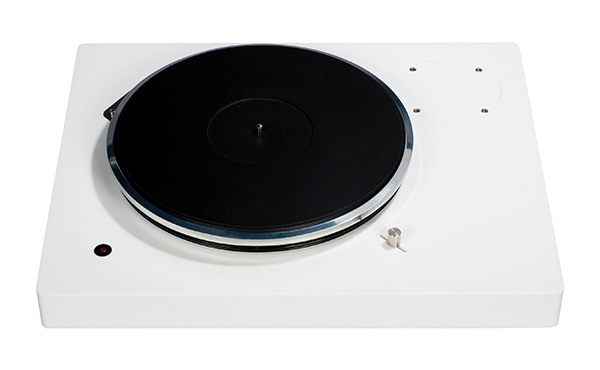


PTP Audio’s Solid9 Record Player

I’m residence now in my studio, listening to PTP Audio’s simple-as-a-rock Solid9 turntable (footnote 2). The Solid9 is a restored, hot-rodded, replinthed Lenco loafer drive (footnote 3) that my Eurofriend Peter Reinders builds in his store within the Netherlands (footnote 4). Every time I place a disc on its rubber Lenco platter mat, I love each no-frills factor about it. It seems to be stable and purposeful.


Back within the ’80s, once I was shopping for and promoting used, broadcast-quality decks, my Japanese clients’ first selection was at all times the rarest: a grey, hammertone, grease-bearing Garrard 301, adopted by an ivory-colored grease-bearing mannequin. In third place was Garrard’s ivory-colored oil-bearing mannequin.


Farther down my clients’ need record (and my value record) had been idler-drive fashions from Gates and Lenco. The made-in-Illinois Gates was a cool-looking, truck-tough turntable with a gearshift-styled speed-change lever and a selection of 16″ or 12″ platters. Its most distinguishing characteristic was the loafer mechanism: The loafer wheel did not drive the platter’s outer rim as within the Garrard and EMT; as an alternative, it drove a large interior hub surrounding the forged platter’s spindle. According to Gates’s promoting, this “hub-drive” technique decreased rumble by permitting the motor to function at a decrease velocity.
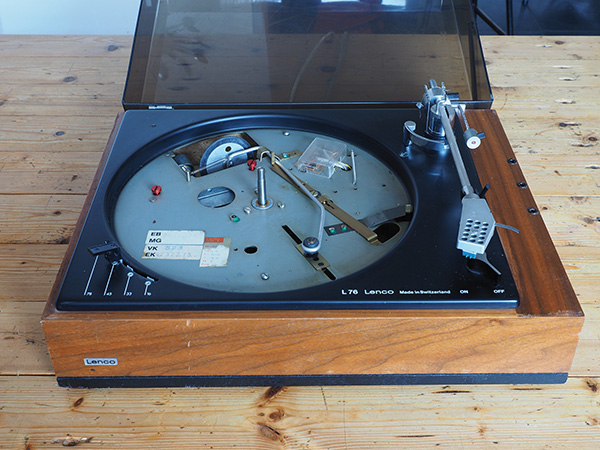


Between 1946 and 1979, the Lenco AG provided a 3rd method to loafer drive. These Lencos used a protracted, gently tapered, horizontally positioned motor shaft to drive the underside of the platter by way of a thin (4mm) spring-tensioned vertical loafer wheel. Where the loafer is positioned towards the tapered shaft determines the platter’s velocity. This is the mechanism utilized by the PTP Audio Solid ‘tables.


Footnote 1: SINAD stands for signal-to-noise-and-distortion ratio. See headphones.com/blogs/options/evaluating-sinad-why-its-not-important.


Footnote 2: Art wrote about PTP ‘tables a number of instances together with right here and right here.


Footnote 3: See en.wikipedia.org/wiki/Lenco_Turntables.


Footnote 4: PTP Audio/Audiomods, Email: [email protected] Web: ptpaudio.com
Posted in Uncategorized

Gramophone Dreams #73: PTP Audio Solid9 Turntable, Sorane SA-1.2 Tonearm

I want that every one who love LP playback as a lot as I do might hear a Thorens TD 124 or Garrard 301 or EMT 930 of their methods, however these merchandise are topic to the vagaries of provide and demand: They are uncommon and dear.—Art Dudley


I’ve a good friend named Yale, a document producer, who lives in a capacious, art-filled SoHo loft with huge home windows, craggy wooden flooring, and a excessive, tin-tiled ceiling. I get pleasure from Yale’s firm as a result of he has terribly numerous, extremely developed style in music, artwork, structure, books, dwelling furnishings, and hi-fi tools.


In one a part of Yale’s loft, a big, tin cow weathervane stands on a bureau. Bolted to the ceiling above the eating room desk is a greasy black 300lb electrical motor with a large pulley—the sort previously used to show the belts that powered sweatshop machines ca 1920. In the purest essence of Nineteen Seventies SoHo fashion, a loft mattress is located above the closet and loo, and the kitchen ground is raised to shelter plumbing pipes. There’s an unnamable piece of equipment, in regards to the dimension of a small canine, on the ground subsequent to the sofa. It sits there as a result of it appears to be like elegantly mysterious, inspiring curiosity and contemplation. Yale and his architect spouse spent a long time creating this dreamy, snug area, which leads my thoughts to reminisce—and loft envy.


One sunny winter weekday, Yale invited me over for the specific objective of serving to him resolve which amp does a greater job powering his patinaed Nineteen Seventies Tannoy Cheviot audio system: his newly arrived, 1956 Fairchild 260 tube amplifiers or the shiny Line Magnetic 2A3 amp he’d been utilizing for a while. His “gear desk,” he mentioned, was too small for each.


As we unpacked the Fairchilds, we agreed: Those push-pull 6L6 mono amps are museum-quality masterpieces of commercial design. The Fairchild 260s are, together with the Marantz Model 2 and the Brook 12A, prime classics of American mono-era amplifier design.


As we unwrapped the NOS tubes, I reminded Yale that RCA launched the 6L6 beam tetrode in 1936 and that it was designed particularly to have a distortion attribute excessive in second harmonic and low in third harmonic, to be used in push-pull, audio-frequency amplifiers during which the second harmonic will get canceled. Push-pull 6L6 tube amps are notoriously musical, revered particularly for his or her vocal replica. These uncommon Fairchild 260s are the holy grail of 6L6 design.


When we received the tubes in and the wires linked, just one channel labored. After some fiddling, we had sound from each channels, however one speaker was out of part. As Yale troubleshot, I sat myself down in a random chair about 30′ from the audio system and started to examine my electronic mail. Suddenly, each audio system jolted into loud, in-phase motion, making my head jerk so quick I harm my neck. When I regarded down, I noticed my proper foot tapping like a stitching machine. Then I felt my head bobbing. I used to be having an “Oh my! Listen to that!” second.


Full-strength Pace, Rhythm, and Timing (PRaT). Unsuppressible ahead momentum. Music grooves owned the room. Artists’ intentions have been coming by way of. My mind gave no thought to “how does it sound?”


When the second document ended, I turned to Yale wide-eyed and exclaimed, “Wow! You have been proper. You’re not an audiophile. You are a music lover!” I mentioned this as a result of, earlier, Yale had denied being an audiophile, saying he simply likes “gear.”


It was apparent he cared little about all that “audiophile guidelines” stuff and in no way about these speaker setup–room arranging guidelines that place a excessive precedence on a strategically positioned listening chair and exactly centered picture mapping. To me, it appeared that Yale’s system was fastidiously curated to do one factor completely: remind himself and present his mates how good his records are.


I requested Yale how he selected this explicit combination of stuff. “I selected most of it as a result of I favored the way it appears to be like,” he answered. “I do not examine tools. I simply go by what strikes me.” That made me smile. “I imagine that technique works,” I advised him. “Because … in my expertise, most parts do sound like they give the impression of being.” I complimented my good friend and his spouse on their good style, saying, “I believe your audio gear is ‘of a bit’ along with your artwork and furnishings and style in music.”


Watching me swoon over the grey, hammertone great thing about his EMT 930 turntable, Yale defined that he had owned fairly a couple of turntables, “however as soon as I noticed that loafer wheels have been near god, I purchased into the parable.” Yale advised me his EMT cartridge got here from Art Dudley, whose writing had been “an inspiration” throughout his gear-buying journey.


Yale has a second system, arrange alongside the lengthy, excessive books-and-records wall. It encompasses a crisp-looking Thorens TD 124 (utterly inventory, restored by STS Turntables) with an SME 3012 arm and a Denon DL-103 transferring coil cartridge wired right into a Sixties Voice of Music, EL-84–primarily based built-in amplifier powering some snappy-looking Altec Model 14 audio system sitting on the ground declaring at no explicit chair. When he performed it, this technique crammed the room with sound and gushed boogie issue like the primary one.


Both of Yale’s methods moved the music ahead higher than any newfangled system I’ve encountered. I wasn’t positive why. When a sound system excels at PRaT and momentum, these skills swamp all different concerns. PRaT is engagement issue. It’s what seduces listeners. Forward momentum is what holds their consideration. When PRaT guidelines, noise, distortion, and frequency response turn out to be secondary. In order for me to like an audio system, it should have a strongly coercive nature: It should invite me in, pin me to my chair, and power me to hear intently. For me, it is PRaT (and genuine tone)—not SINAD (footnote 1)—that makes recorded music plausible and thrilling.


Ever since that day at Yale’s, I’ve spent a lot time excited about why idler-drive turntables excel at pushing music alongside. All my belt-drive and direct-drive gamers run on the identical 33 1/3 , 45, and 78 speeds, however in comparison with that EMT 930, my 1984 Linn LP12 feels prefer it’s dragging a hind paw. And Dr. Feickert’s Blackbird performs brisk and surefooted and makes records thrilling, however it’s not a locomotive like that EMT.


In the quiet passages, my LP12 is quieter than all types of direct or loafer drive, and its decrease noisefloor exposes extra of that inside element we audiophiles crave. But EMT’s 930—and likewise the PTP Audio idler-drive turntable I’m about to explain—do one thing distinctive with quietness, momentum, and what Art Dudley known as “contact,” which I interpret as a commingling of tactility and corporality.


What in all probability makes classic loafer drives so supercharged, PRaTwise, is the precision-made, high-torque AC motors they use to show heavy platters with no velocity correction or belt decoupling. To my unconscious thoughts, loafer drive feels extra solidly linked to the music’s ahead momentum than direct drive does. To my acutely aware thoughts, loafer drive seems much less conditioned, much less electrically affected, than direct drive. Compared to loafer and direct drive, belt drive feels prefer it decouples the platter and document grooves, not simply from the motor’s noise and vibration however from the essence of its torque and energy. I am unable to swear that I hear this, nor can I describe what loafer drive sounds like several greater than I have already got—however I can really feel it, as I did that day at Yale’s.


Since that day, belt-drive decks really feel like vehicles with automated transmissions. Yale’s EMT loafer feels prefer it has a sturdy gearbox and a stiff clutch.


PTP Audio’s Solid9 Record Player

I’m dwelling now in my studio, listening to PTP Audio’s simple-as-a-rock Solid9 turntable (footnote 2). The Solid9 is a restored, hot-rodded, replinthed Lenco loafer drive (footnote 3) that my Eurofriend Peter Reinders builds in his store within the Netherlands (footnote 4). Every time I place a disc on its rubber Lenco platter mat, I love each no-frills factor about it. It appears to be like stable and purposeful.


Back within the ’80s, after I was shopping for and promoting used, broadcast-quality decks, my Japanese clients’ first alternative was all the time the rarest: a grey, hammertone, grease-bearing Garrard 301, adopted by an ivory-colored grease-bearing mannequin. In third place was Garrard’s ivory-colored oil-bearing mannequin.


Farther down my clients’ need record (and my worth record) have been idler-drive fashions from Gates and Lenco. The made-in-Illinois Gates was a cool-looking, truck-tough turntable with a gearshift-styled speed-change lever and a alternative of 16″ or 12″ platters. Its most distinguishing characteristic was the loafer mechanism: The loafer wheel did not drive the platter’s outer rim as within the Garrard and EMT; as an alternative, it drove an enormous inside hub surrounding the solid platter’s spindle. According to Gates’s promoting, this “hub-drive” technique lowered rumble by permitting the motor to function at a decrease velocity.


Between 1946 and 1979, the Lenco AG provided a 3rd strategy to loafer drive. These Lencos used an extended, gently tapered, horizontally positioned motor shaft to drive the underside of the platter by way of a thin (4mm) spring-tensioned vertical loafer wheel. Where the loafer is positioned in opposition to the tapered shaft determines the platter’s velocity. This is the mechanism utilized by the PTP Audio Solid ‘tables.


Footnote 1: SINAD stands for signal-to-noise-and-distortion ratio. See headphones.com/blogs/options/evaluating-sinad-why-its-not-important.


Footnote 2: Art wrote about PTP ‘tables a number of occasions together with right here and right here.


Footnote 3: See en.wikipedia.org/wiki/Lenco_Turntables.


Footnote 4: PTP Audio/Audiomods, Email: [email protected] Web: ptpaudio.com

TAD CE1TX loudspeaker

The most cash I’ve ever spent on a pair of loudspeakers was again within the early Nineties, once I purchased a pair of used TAD TH-4001 wood horns and their related TD-4001 compression drivers. The TAD horn’s clean, micro-resolved response was a refinement improve from my multicell Altec horns; plus, the TADs’ French-polished wooden regarded radically much less industrial than the soldered-tin, tar-filled 1005/288C horns they changed. None of my horn-fanatic pals had something sonically or aesthetically comparable, and all of them have been envious. I did not hold the TADs lengthy, as a result of the pal who admired them most made me a really “pleasant” provide.


That was my first expertise with Japanese loudspeaker design, and it uncovered me to a stage of engineering precision and positive craftmanship I had not but encountered in American-made audio system.


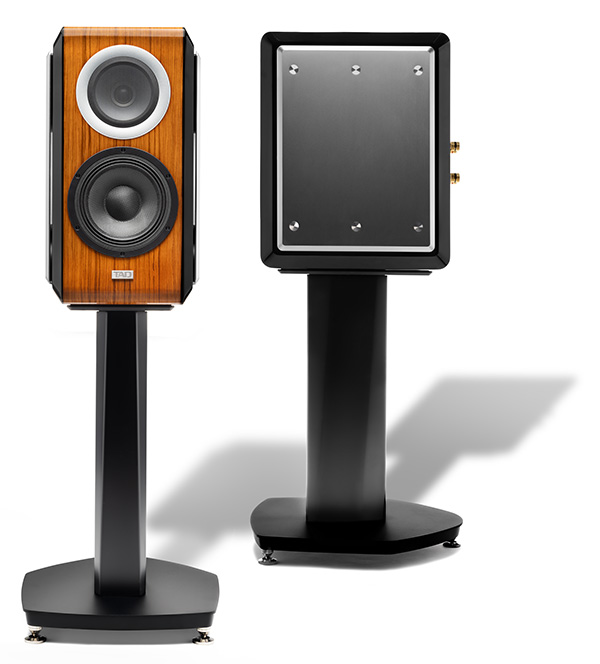
Thirty years later, I discover myself listening to a pair of brand-new TAD audio system, and as soon as once more, none of my pals have something sonically or aesthetically comparable. This time, although, it is a front room–pleasant, three-way, dynamic-driver standmount/bookshelf known as Compact Evolution One – Bookshelf Speaker System. The mannequin quantity is TAD-CE1TX-WN. It is exposing me to a stage of match’n’end and sonic insightfulness that’s uncommon amongst up to date audio system, even on the highest costs.


In the start

The firm all people is aware of as Pioneer was based by Nozomu Matsumoto in 1938 as a radio retailer and speaker restore store in Tokyo. Over the following a long time, Pioneer grew right into a revered model with a world attain. In 1978, Pioneer determined to interrupt into the skilled speaker market with a line of all-out recording studio displays manufactured beneath the identify Technical Audio Devices Laboratories. TAD’s first product was the TD-4001 compression driver talked about above.


According to the TAD web site, that driver and its related TH-4001 horn “discovered its means into famed recording studios around the globe, together with these designed by Tom Hidley, who was a top-rated acoustic designer of the time, in addition to AIR Studios, Capitol Records studios, and Record Plant.


“TAD speaker items have been additionally used as a part of a sound reinforcement system through the live performance tour the Eagles made round Japan in 1979, throughout which the efficiency of the TAD audio system dazzled audiences. Impressed with the status of TAD audio system, big-name musicians similar to Jimmy Page and Prince put in TAD audio system of their personal recording studios.”


In 2000, TAD launched its first speaker designed particularly for house audio use, the floorstanding M1, which featured the primary incarnation of TAD’s now-famous coaxial Coherent Source Transducer. The M1 developed into as we speak’s flagship Reference One Floor Standing Speaker (TAD-R1TX-EB/TAD-R1TX-BR), the massive brother of the Compact Evolution One I’m reviewing right here.


Description

What separates Technical Audio Devices Compact Evolution One from its audiophile-speaker opponents is its extremely developed 5.5″ coaxial “Coherent Source Transducer” (CST) driver, which is manufactured in-house in Japan and incorporates a “newly developed” magnesium midrange cone with a concentrically mounted beryllium dome tweeter that, based on TAD, is manufactured with their “proprietary vapor deposition method.” Impressively, TAD’s CST is specified to function between 250Hz and 100kHz.


The CE1TX is a three-way design. The backside three octaves are reproduced by TAD’s 7″ “aramid composite” (footnote 1) bass driver, which is product of “5 layers of woven and non-woven cloth” that TAD says “optimizes the vibration traits of the shell-shaped diaphragm that integrates the middle and the cone right into a single piece.”


Another function, which certainly contributes to the CE1TX’s sound character, is its “Bidirectional ADS Port”; ADS is brief for “AeroDynamic Slot.” These bidirectional slots are slit-shaped ducts with flared openings behind the audio system’ 17″ × 13″ sculpted-aluminum aspect panels, which seem to drift about 4mm past the cupboard’s sides. According to TAD’s web site, these slots enable inside air to circulation out easily, with out turbulence: “The symmetrically positioned port openings … cut back port noise and hold inside standing waves from escaping from the ports.”


These made-in-Japan audio system are heavy (63.9lb) and on the massive aspect for standmounts, measuring 11.3″ large × 20″ excessive × 17.6″ deep. Their sensitivity is listed as 85dB/W/m, and their nominal impedance is specified as 4 ohms. The CE1TX is priced at $32,500/pair; a pair of elective stands provides $2500.


Setup

Early in my TAD auditions, I noticed that the CE1TX presents unusually constant dispersion in each the vertical and horizontal planes, and that these twin aspect ports make them straightforward to position. The first couple of days, I moved them about in an compulsory method; irrespective of the place I set them down, they only checked out me and shrugged as if to say, “Put us wherever you need. We do not care.” I did not put them within the fridge, or beneath the mattress, however as I used to be transferring them, I remembered that skilled studio displays usually are not usually designed to take a seat removed from the entrance wall as many audiophile audio system are. Monitor audio system are, by necessity, pleasant with room boundaries. I did not strive it, however I really feel fairly sure the CE1TX would even work on an enormous desktop or a large shelf, so long as the tweeters have been roughly stage with the listener’s eyes and toed in to cross behind the listener’s head.


My evaluate samples ended up on 24″ Sound Anchor Reference stands, about 6′ aside and perhaps 30″ from their entrance face to the wall behind them. In that place, the 50Hz-to-200Hz area was flatter and cleaner than with any speaker I’ve reviewed on this room. All listening was carried out with the included woofer grilles off.


Listening

The distributor advised me that my pair of CE1TXs had greater than 100 hours on them on arrival. Nevertheless, for the primary week, I allow them to play 24/7 within the background at low quantity whereas I labored in my studio. Yet, again and again, I’d should cease what I used to be doing and examine my iPad to see: what is this fabulous new music Roon Radio has found for me? Every time I regarded, it was some new conductor or model of large-scale classical music I do not often get pleasure from as a result of the orchestra is simply too large, the music’s bombastic, and the recording sounds clogged and fatiguing to take heed to. This occurred so ceaselessly that the very first thing I wrote in my notes was “These audio system pressure me to love music I do not like.”


Powered by Parasound’s Halo A 21+ amplifier, the CE1TX loudspeakers sorted and offered the densest, most complex and overproduced music in ways in which made it extra intelligible and agreeable—and oftentimes extra stunning than it’s with my Falcons powered by the identical Parasound amp. During these early auditions, the CE1TXs made each recording sound correct and uniquely “like itself ” and, most definitely, the best way its producers hoped it will sound.


With this mixture, on the mind-pulling 33-minute Forbidden Love by Pulitzer Prize– successful composer Julia Wolfe (24/96 FLAC, Nonesuch/Qobuz), the So Percussion Ensemble generated startling, percussive struck-string transients that I may really feel in my intestine. The So Ensemble did this whereas portray essentially the most delicate particulars right into a deep, galaxy-like house behind them. If you benefit from the sound of appears like I do, this demonstration-quality recording will thrill you and your guests.


As I listened to the Julia Wolfe, I stored considering, it appears like I’m listening to the whole lot on the recording, but the sound isn’t too tough, sharp, dry, moist, muddled, muted, brief, or chilly, or something! Nothing is misplaced, and nothing is exaggerated. The CE1TXs sounded extra supple, textured, and relaxed than the Genelec G Threes or my reminiscence of the Harbeth 30.2 monitor audio system—which is the one speaker this TAD jogs my memory of most. Their sonics and tone stability are comparable, however the CE1TX is smoother, finer grained, and focuses the lens one other half-turn.


What stunned me was how these TAD audio system made the Parasound A 21+ sound extra colourful, three-dimensional, and energetic than regular. I prefer it when a brand new speaker makes a well-recognized amp sound higher. And vice-versa.


Shake Sugaree

I’m embarrassed to say I’d by no means heard of singer–songwriter–guitar participant extraordinaire Elizabeth Cotten (1893–1987). A music she wrote when she was 11 years outdated, “Freight Train,” was coated by Peter, Paul and Mary and have become a staple of the Sixties people revival (footnote 2). Her signature tune, “Shake Sugaree,” was coated by each Dylan and the Grateful Dead. I found Cotten’s music as a result of Roon Radio steered me to her after I listened to gospel by Old Regular Baptists. The sound of her voice and her subtle, left-handed, upside-down guitar choosing brought on her to leap proper out of the music stream. Cotten’s expertise was found whereas she was working as a maid for Pete Seeger’s household within the early Fifties. Through the CE1TXs, her vocal tone was exceedingly pure, disarmingly clear and honest—and adorably unpretentious (16/44.1 FLAC, Smithsonian Folkways/Tidal).


Footnote 1: Kevlar is an instance of an aramid fiber.


Footnote 2: See youtu.be/R2DCWfBkMSI.

Posted in Uncategorized

TAD CE1TX loudspeaker

The most cash I’ve ever spent on a pair of loudspeakers was again within the early Nineties, after I purchased a pair of used TAD TH-4001 wood horns and their related TD-4001 compression drivers. The TAD horn’s clean, micro-resolved response was a refinement improve from my multicell Altec horns; plus, the TADs’ French-polished wooden seemed radically much less industrial than the soldered-tin, tar-filled 1005/288C horns they changed. None of my horn-fanatic pals had something sonically or aesthetically comparable, and all of them have been envious. I did not maintain the TADs lengthy, as a result of the good friend who admired them most made me a really “pleasant” supply.


That was my first expertise with Japanese loudspeaker design, and it uncovered me to a stage of engineering precision and nice craftmanship I had not but encountered in American-made audio system.


Thirty years later, I discover myself listening to a pair of brand-new TAD audio system, and as soon as once more, none of my pals have something sonically or aesthetically comparable. This time, although, it is a front room–pleasant, three-way, dynamic-driver standmount/bookshelf referred to as Compact Evolution One – Bookshelf Speaker System. The mannequin quantity is TAD-CE1TX-WN. It is exposing me to a stage of match’n’end and sonic insightfulness that’s uncommon amongst modern audio system, even on the highest costs.


In the start

The firm everyone is aware of as Pioneer was based by Nozomu Matsumoto in 1938 as a radio retailer and speaker restore store in Tokyo. Over the following a long time, Pioneer grew right into a revered model with a worldwide attain. In 1978, Pioneer determined to interrupt into the skilled speaker market with a line of all-out recording studio screens manufactured underneath the title Technical Audio Devices Laboratories. TAD’s first product was the TD-4001 compression driver talked about above.


According to the TAD web site, that driver and its related TH-4001 horn “discovered its approach into famed recording studios world wide, together with these designed by Tom Hidley, who was a top-rated acoustic designer of the time, in addition to AIR Studios, Capitol Records studios, and Record Plant.


“TAD speaker items have been additionally used as a part of a sound reinforcement system through the live performance tour the Eagles made round Japan in 1979, throughout which the efficiency of the TAD audio system dazzled audiences. Impressed with the fame of TAD audio system, big-name musicians equivalent to Jimmy Page and Prince put in TAD audio system of their non-public recording studios.”


In 2000, TAD launched its first speaker designed particularly for residence audio use, the floorstanding M1, which featured the primary incarnation of TAD’s now-famous coaxial Coherent Source Transducer. The M1 developed into at this time’s flagship Reference One Floor Standing Speaker (TAD-R1TX-EB/TAD-R1TX-BR), the large brother of the Compact Evolution One I’m reviewing right here.


Description

What separates Technical Audio Devices Compact Evolution One from its audiophile-speaker rivals is its extremely developed 5.5″ coaxial “Coherent Source Transducer” (CST) driver, which is manufactured in-house in Japan and incorporates a “newly developed” magnesium midrange cone with a concentrically mounted beryllium dome tweeter that, in line with TAD, is manufactured with their “proprietary vapor deposition method.” Impressively, TAD’s CST is specified to function between 250Hz and 100kHz.


The CE1TX is a three-way design. The backside three octaves are reproduced by TAD’s 7″ “aramid composite” (footnote 1) bass driver, which is manufactured from “5 layers of woven and non-woven cloth” that TAD says “optimizes the vibration traits of the shell-shaped diaphragm that integrates the middle and the cone right into a single piece.”


Another characteristic, which absolutely contributes to the CE1TX’s sound character, is its “Bidirectional ADS Port”; ADS is brief for “AeroDynamic Slot.” These bidirectional slots are slit-shaped ducts with flared openings behind the audio system’ 17″ × 13″ sculpted-aluminum aspect panels, which seem to drift about 4mm past the cupboard’s sides. According to TAD’s web site, these slots permit inner air to movement out easily, with out turbulence: “The symmetrically positioned port openings … scale back port noise and maintain inner standing waves from escaping from the ports.”


These made-in-Japan audio system are heavy (63.9lb) and on the big aspect for standmounts, measuring 11.3″ broad × 20″ excessive × 17.6″ deep. Their sensitivity is listed as 85dB/W/m, and their nominal impedance is specified as 4 ohms. The CE1TX is priced at $32,500/pair; a pair of optionally available stands provides $2500.


Setup

Early in my TAD auditions, I noticed that the CE1TX presents unusually constant dispersion in each the vertical and horizontal planes, and that these twin aspect ports make them straightforward to position. The first couple of days, I moved them about in an compulsory method; regardless of the place I set them down, they only checked out me and shrugged as if to say, “Put us anyplace you need. We do not care.” I did not put them within the fridge, or underneath the mattress, however as I used to be transferring them, I remembered that skilled studio screens are usually not sometimes designed to sit down removed from the entrance wall as many audiophile audio system are. Monitor audio system are, by necessity, pleasant with room boundaries. I did not strive it, however I really feel fairly sure the CE1TX would even work on an enormous desktop or a large shelf, so long as the tweeters have been roughly stage with the listener’s eyes and toed in to cross behind the listener’s head.


My overview samples ended up on 24″ Sound Anchor Reference stands, about 6′ aside and possibly 30″ from their entrance face to the wall behind them. In that place, the 50Hz-to-200Hz area was flatter and cleaner than with any speaker I’ve reviewed on this room. All listening was achieved with the included woofer grilles off.


Listening

The distributor advised me that my pair of CE1TXs had greater than 100 hours on them on arrival. Nevertheless, for the primary week, I allow them to play 24/7 within the background at low quantity whereas I labored in my studio. Yet, again and again, I’d need to cease what I used to be doing and test my iPad to see: what is this fabulous new music Roon Radio has found for me? Every time I seemed, it was some new conductor or model of large-scale classical music I do not normally get pleasure from as a result of the orchestra is just too large, the music’s bombastic, and the recording sounds clogged and fatiguing to take heed to. This occurred so steadily that the very first thing I wrote in my notes was “These audio system power me to love music I do not like.”


Powered by Parasound’s Halo A 21+ amplifier, the CE1TX loudspeakers sorted and introduced the densest, most intricate and overproduced music in ways in which made it extra intelligible and agreeable—and oftentimes extra stunning than it’s with my Falcons powered by the identical Parasound amp. During these early auditions, the CE1TXs made each recording sound correct and uniquely “like itself ” and, more than likely, the best way its producers hoped it will sound.


With this mix, on the mind-pulling 33-minute Forbidden Love by Pulitzer Prize– profitable composer Julia Wolfe (24/96 FLAC, Nonesuch/Qobuz), the So Percussion Ensemble generated startling, percussive struck-string transients that I might really feel in my intestine. The So Ensemble did this whereas portray probably the most delicate particulars right into a deep, galaxy-like area behind them. If you benefit from the sound of seems like I do, this demonstration-quality recording will thrill you and your guests.


As I listened to the Julia Wolfe, I saved considering, it seems like I’m listening to every part on the recording, but the sound is rarely too tough, sharp, dry, moist, muddled, muted, quick, or chilly, or something! Nothing is misplaced, and nothing is exaggerated. The CE1TXs sounded extra supple, textured, and relaxed than the Genelec G Threes or my reminiscence of the Harbeth 30.2 monitor audio system—which is the one speaker this TAD jogs my memory of most. Their sonics and tone stability are related, however the CE1TX is smoother, finer grained, and focuses the lens one other half-turn.


What stunned me was how these TAD audio system made the Parasound A 21+ sound extra colourful, three-dimensional, and energetic than common. I prefer it when a brand new speaker makes a well-known amp sound higher. And vice-versa.


Shake Sugaree

I’m embarrassed to say I’d by no means heard of singer–songwriter–guitar participant extraordinaire Elizabeth Cotten (1893–1987). A music she wrote when she was 11 years outdated, “Freight Train,” was lined by Peter, Paul and Mary and have become a staple of the Sixties folks revival (footnote 2). Her signature tune, “Shake Sugaree,” was lined by each Dylan and the Grateful Dead. I found Cotten’s music as a result of Roon Radio steered me to her after I listened to gospel by Old Regular Baptists. The sound of her voice and her subtle, left-handed, upside-down guitar selecting induced her to leap proper out of the music stream. Cotten’s expertise was found whereas she was working as a maid for Pete Seeger’s household within the early Fifties. Through the CE1TXs, her vocal tone was exceedingly pure, disarmingly clear and honest—and adorably unpretentious (16/44.1 FLAC, Smithsonian Folkways/Tidal).


Footnote 1: Kevlar is an instance of an aramid fiber.


Footnote 2: See youtu.be/R2DCWfBkMSI.

Gramophone Dreams #72: Abyss Diana & Focal Utopia headphones; Eleven Audio Broadway & Naim Uniti Atom HE amplifiers

Since the Nineteen Eighties, I’ve been asking each speaker designer I meet, “What amplifier do you advocate utilizing together with your audio system?” Annoyingly, they at all times say, “My audio system are simple to drive. Any amp will do.” Whereupon I’d whine, “Aww, come on man, do not feed me that. What amp did you employ if you have been designing the speaker?” The closest any producer got here to offering an actual reply was Wendell Diller of Magnepan, who, after I reviewed his .7 quasi-ribbon speaker, stated, “We used an amp of our personal design. It’s not on the market. But any amp that doubles its energy into 4 ohms can be superb.” Wendell’s reply helped me select efficient amplification and really feel extra assured about my conclusions.


Unlike loudspeaker producers, headphone producers know that which amp a reviewer makes use of may make or break a evaluate of their product. So, properly, they appear grateful after I ask for steerage.


When I reviewed Dan Clark’s flagship Stealth planar-magnetic headphones in Gramophone Dreams #62, I requested Clark Audio’s president, Andy Regan, if he would “please” advocate an amp that he thought would permit the Stealth to carry out at its full potential. In response, he despatched me HeadAmp’s $1995 GS-X Mini headphone amplifier/preamp. This in style, drives-everything headphone amplifier allowed the Stealth and each different headphone I’ve run by means of it to breed recordings with a grainless, easy-flowing dynamic that makes vocal recordings sound exceptionally pure. Because it’s extra highly effective (6W into 25 ohms, 4W into 50 ohms, 2W into 100 ohms) than the amps described under, I used the GS-X Mini as a reference in the course of the course of this report.


When I evaluate state-of-the-art electrostatic headphones, Woo Audio proprietor Jack Wu loans me his divine $8999 parallel, single-ended 300B 3ES electrostatic amplifier/preamp. For all different kinds of headphone reviewing, and for each day use, I depend on Linear Tube Audio’s uniquely great Z10e, a full-function tube built-in amp that, along with powering magnetic headphones, drives electrostatic earspeakers and my reference loudspeakers. Ever since I first raved about it in Gramophone Dreams #36, the $6950 Z10e, which is specified to output 3W into 32 ohms, has been the steadfast anchor of my desktop system, driving my Dynaudio Excite X14 audio system whereas additionally permitting me to really feel like an old-school headphone connoisseur as I benefit from the luminous charms of my beloved Stax SR-007 Omega electrostatics.


Because the Z10e is the headphone amp I exploit most, it was excellent for double-checking my findings towards the opposite amplifiers supplied for this month’s headphone auditions, by Abyss and Focal.


Abyss goes high-fashion

Thirty years in the past, Joe Skubinski based what grew to become a profitable audio-cable manufacturing enterprise referred to as JPS Labs LLC. Ten years in the past, in his first-ever try at designing a headphone, he created what I nonetheless take into account the state-of-the-art planar magnetic: the Abyss AB-1266 (footnote 1). What are the possibilities of hitting a house run in your first main league at bat?


When I first reviewed the Abyss AB-1266 Phi headphones again in Gramophone Dreams #17, I discovered them to be probably the most open, lightning-fast, microscopically clear transducers I’d ever used. Their solely competitors for readability, element, and impartial tone have been Stax SR-009 electrostatics and AKG’s K812 dynamic open-backs. To me, the AB-1266 sounded extra conspicuously “proper” than any headphone I’d encountered since my audition of Sony’s MDR-Z10s from 1989.


Friends who tried the Abyss have been in awe of its sound, however all of them took some problem with its kind issue.


Besides their vaguely Frankenstein look, my head-fi friends struggled with the truth that the AB-1266 is large and designed to drift loosely close to the listener’s head as an alternative of sealing cosy towards the cranium. This not-unprecedented function triggered the Abyss to fall off when customers bent over, and it annoyed measurement geeks as a result of, like horns, omnidirectional audio system, and panel audio system, the AB-1266 is tough to measure in a manner that precisely displays its real-world efficiency. Nevertheless, skilled listeners accustomed to the sound of distortion knew instantly that the Abyss AB-1266 Phi was one of many lowest-distortion transducers ever invented.


In 2017, Joe obtained uninterested in folks bitchin’ about his headphone’s kind issue, so he went out and obtained all Anna Wintour on them, creating what is likely to be the “world’s most high-fashion” headphone. Realizing that the AB-1266’s distinctive bodily construction didn’t lend itself to prolonged informal listening, Skubinski determined to make his new headphone lighter, slimmer, and extra snug, becoming extra neatly onto the person’s cranium. This second headphone design, which he named after his spouse, Diana, employs a barely smaller (63mm vs 66mm) planar-magnetic driver that was tailored from the AB-1266 in a sturdy, luxurious, aluminum headset. The Abyss web site claims it’s the “world’s thinnest planar headphone.” The inventory, fourth-generation Abyss Diana TC I’m reviewing prices $4495 and could also be bought direct from Abyss in no fewer than 30 fashion-conscious colours of oven-cured polymer ceramic. Dealers carry solely grey and bronze.


What are the possibilities of hitting one other residence run in your second at bat?


For this report, Joe despatched me what he calls the Complete bundle, which, at $1500 further ($5995 complete), substitutes a 1.8m Superconductor HP cable for the usual 1.5m cable, in your selection of termination: three- or four-pin XLR or ¼” plug. (Other lengths can be found.) In addition, Joe despatched alongside a set of non-compulsory ported pads, which JPS affords as an alternative choice to the inventory lambskin or vegan Ultrasuede earcup pads. According to Skubinski, the ported pads “add a delicate bass bump within the decrease bass vary, including a bit extra soundstage depth and openness.”


In my expertise, headphone driver know-how not often accounts for greater than 60% of how a premium, audiophile headphone sounds. The different 40% is break up between cables and earpads. Headphone producers know this, so it isn’t shocking that Joe Skubinski began his audio life as a cable producer or that mastering the esoteric science of earpad design would attraction to him. His bass-bump pads are very cool: Each pad’s magnetic base is thickened by a millimeter or two, offering house for 4 acoustically formed ports that exit on the earcup’s corners. It was simple to differentiate between the punchier, extra direct inventory pads and the ported ones, which, as Joe instructed, play a contact hotter and extra spacious. It was not simple to decide on a favourite.


The Diana TC weighs 390gm (the AB-1266 weighs 640gm) and has a 69 ohm impedance (the AB-1266’s impedance is 47 ohms) anda 90dB/mW sensitivity (in comparison with 88dB for the 1266).


Eleven Audio Broadway

Like Andy Regan and Jack Wu earlier than him, Joe Skubinski despatched me his advisable headphone amp, the $2599 Broadway by XIaudio (aka “Eleven Audio” footnote 2). The Broadway is small (8.3″ × 6.1″ × 1.9″), gentle (2.5lb), and completely unglamorous trying. It is specified to output 1.5W into 32 ohms in full, differential-balanced class-A. Its solely enter is balanced (XLR), and its two outputs are each balanced: 4-pin XLR and 4.4mm Pentaconn. Its prime plate is straightforward to take away, exposing a colony of inexperienced boards populated by lots of of anthead-size surface-mount elements.


Besides the quantity management and a 3W energy resistor, the one normal-sized elements have been the 4 user-replaceable, 3000mAh, 3.7V Li-ion batteries. According to the Abyss web site, “This amp will run for as much as six hours with out AC energy, or plug in for steady play, with the identical extremely refined sound on both energy supply. Circuitry is designed to drift the batteries on the mains always.” I requested Joe what that meant. He instructed me that Michael Xiao, the Broadway’s designer, created this absolutely differential BJT amp to be run fully off user-replaceable batteries, even when the amp is related to the charger, and that Michael had gone to nice lengths to verify charging was not audible. Xiao stated the cells have been chosen for finest sound.


I examined Joe’s and Michael’s declare by listening with out the charger for about 4 hours. I seen no degradation of sound because the batteries misplaced cost. Then I related it to its wall wart and once more noticed no change in sound high quality. I additionally tried to see how lengthy it might play with out plugging in. It shut down after nearly six hours.


The Broadway has a 1.0V enter sensitivity and, in keeping with Joe’s measurements, a wholesome 18dB of acquire into 50 ohms.


Abyss Diana TC

The Broadway’s specified 1.5W into 32 ohms appeared prefer it is likely to be somewhat four-cylinder–ish for the heavyweight JPS Labs AB-1266, which thrives on turbocharged V8s. So, naturally, I began these auditions utilizing the Abyss AB-1266 Phi TC, to see if the Broadway may muster sufficient steam to breed the tempestuous Yuja Wang taking part in her 2018 Berlin Recital (24/96 FLAC, DG/Qobuz). My first impressions have been of energy and vigor and fierce ahead momentum, from the amp and the artist, with no noticeable clipping or compression.


The AB-1266 performed forcefully. More than pressure, although, what impressed me most concerning the 1266 with the Broadway amplifier was its delicacy, and the way it let sounds begin and cease naturally and breathe actual air in the course of the maintain, with full, understated assuredness. No headphone I do know manufactures a extra richly shaded sonic construction. At my low listening ranges, the 1266 and the Broadway labored superbly collectively.


I used to be shocked that, after I switched from the 50 ohm, 88dB/mW-sensitive Abyss AB-1266 Phi TCs to the 69 ohm, 90dB/mW-sensitive Abyss Diana TCs, I needed to flip the quantity down on the Broadway (footnote 3), and the way, with the Diana, the sound appeared to calm down somewhat. When I performed “Preludio: Asturias,” the primary observe on La Guitarra dels Lleons (16/44.1 FLAC Cantus/Tidal), with Xavier Díaz-Latorre on guitar and Pedro Estevan on percussion, the sense of pressing, delirious ahead momentum was spellbinding and impactful with the 1266s, solely barely much less so with the Diana. The 1266s have been breathier and extra specific above 2kHz and extra vivid and brighter by means of the higher bass, the place the Diana got here throughout as smoother, darker, extra luxuriant. The 1266 displayed extra of the energized air surrounding Díaz-Latorre’s guitar and uncovered extra of its inside quantity. The Diana TCs saved me glued to the performances.


Footnote 1: Abyss Headphones, a Division of JPS Labs LLC, 16 Lancaster Pkwy., Lancaster, NY 14086. Tel: (716) 288-9112. Web: abyss-headphones.com.


Footnote 2: XiAudio, imported by JPS Labs Labs LLC, 16 Lancaster Pkwy., Lancaster, NY 14086. Tel: (716) 288-9112. Web: abyss-headphones.com.


Footnote 3: Volume correlates to voltage, not energy.

Posted in Uncategorized

Gramophone Dreams #72: Abyss Diana & Focal Utopia headphones; Eleven Audio Broadway & Naim Uniti Atom HE amplifiers

Since the Nineteen Eighties, I’ve been asking each speaker designer I meet, “What amplifier do you advocate utilizing along with your audio system?” Annoyingly, they all the time say, “My audio system are straightforward to drive. Any amp will do.” Whereupon I’d whine, “Aww, come on man, do not feed me that. What amp did you employ while you had been designing the speaker?” The closest any producer got here to offering an actual reply was Wendell Diller of Magnepan, who, after I reviewed his .7 quasi-ribbon speaker, mentioned, “We used an amp of our personal design. It’s not on the market. But any amp that doubles its energy into 4 ohms will likely be high-quality.” Wendell’s reply helped me select efficient amplification and really feel extra assured about my conclusions.


Unlike loudspeaker producers, headphone producers know that which amp a reviewer makes use of might make or break a evaluation of their product. So, properly, they appear grateful after I ask for steering.


When I reviewed Dan Clark’s flagship Stealth planar-magnetic headphones in Gramophone Dreams #62, I requested Clark Audio’s president, Andy Regan, if he would “please” advocate an amp that he thought would enable the Stealth to carry out at its full potential. In response, he despatched me HeadAmp’s $1995 GS-X Mini headphone amplifier/preamp. This common, drives-everything headphone amplifier allowed the Stealth and each different headphone I’ve run via it to breed recordings with a grainless, easy-flowing dynamic that makes vocal recordings sound exceptionally pure. Because it’s extra highly effective (6W into 25 ohms, 4W into 50 ohms, 2W into 100 ohms) than the amps described under, I used the GS-X Mini as a reference through the course of this report.


When I evaluation state-of-the-art electrostatic headphones, Woo Audio proprietor Jack Wu loans me his divine $8999 parallel, single-ended 300B 3ES electrostatic amplifier/preamp. For all different forms of headphone reviewing, and for every day use, I depend on Linear Tube Audio’s uniquely fantastic Z10e, a full-function tube built-in amp that, along with powering magnetic headphones, drives electrostatic earspeakers and my reference loudspeakers. Ever since I first raved about it in Gramophone Dreams #36, the $6950 Z10e, which is specified to output 3W into 32 ohms, has been the steadfast anchor of my desktop system, driving my Dynaudio Excite X14 audio system whereas additionally permitting me to really feel like an old-school headphone connoisseur as I benefit from the luminous charms of my beloved Stax SR-007 Omega electrostatics.


Because the Z10e is the headphone amp I exploit most, it was good for double-checking my findings in opposition to the opposite amplifiers supplied for this month’s headphone auditions, by Abyss and Focal.


Abyss goes high-fashion

Thirty years in the past, Joe Skubinski based what grew to become a profitable audio-cable manufacturing enterprise referred to as JPS Labs LLC. Ten years in the past, in his first-ever try at designing a headphone, he created what I nonetheless think about the state-of-the-art planar magnetic: the Abyss AB-1266 (footnote 1). What are the possibilities of hitting a house run in your first main league at bat?


When I first reviewed the Abyss AB-1266 Phi headphones again in Gramophone Dreams #17, I discovered them to be essentially the most open, lightning-fast, microscopically clear transducers I’d ever used. Their solely competitors for readability, element, and impartial tone had been Stax SR-009 electrostatics and AKG’s K812 dynamic open-backs. To me, the AB-1266 sounded extra conspicuously “proper” than any headphone I’d encountered since my audition of Sony’s MDR-Z10s from 1989.


Friends who tried the Abyss had been in awe of its sound, however all of them took some problem with its kind issue.


Besides their vaguely Frankenstein look, my head-fi buddies struggled with the truth that the AB-1266 is huge and designed to drift loosely close to the listener’s head as an alternative of sealing comfortable in opposition to the cranium. This not-unprecedented characteristic triggered the Abyss to fall off when customers bent over, and it annoyed measurement geeks as a result of, like horns, omnidirectional audio system, and panel audio system, the AB-1266 is tough to measure in a means that precisely displays its real-world efficiency. Nevertheless, skilled listeners acquainted with the sound of distortion knew instantly that the Abyss AB-1266 Phi was one of many lowest-distortion transducers ever invented.


In 2017, Joe bought bored with folks bitchin’ about his headphone’s kind issue, so he went out and bought all Anna Wintour on them, creating what could be the “world’s most high-fashion” headphone. Realizing that the AB-1266’s distinctive bodily construction didn’t lend itself to prolonged informal listening, Skubinski determined to make his new headphone lighter, slimmer, and extra snug, becoming extra neatly onto the consumer’s cranium. This second headphone design, which he named after his spouse, Diana, employs a barely smaller (63mm vs 66mm) planar-magnetic driver that was tailored from the AB-1266 in a sturdy, luxurious, aluminum headset. The Abyss web site claims it’s the “world’s thinnest planar headphone.” The inventory, fourth-generation Abyss Diana TC I’m reviewing prices $4495 and could also be bought direct from Abyss in no fewer than 30 fashion-conscious colours of oven-cured polymer ceramic. Dealers carry solely grey and bronze.


What are the possibilities of hitting one other house run in your second at bat?


For this report, Joe despatched me what he calls the Complete bundle, which, at $1500 further ($5995 whole), substitutes a 1.8m Superconductor HP cable for the usual 1.5m cable, in your selection of termination: three- or four-pin XLR or ¼” plug. (Other lengths can be found.) In addition, Joe despatched alongside a set of optionally available ported pads, which JPS gives as an alternative choice to the inventory lambskin or vegan Ultrasuede earcup pads. According to Skubinski, the ported pads “add a delicate bass bump within the decrease bass vary, including a bit extra soundstage depth and openness.”


In my expertise, headphone driver expertise hardly ever accounts for greater than 60% of how a premium, audiophile headphone sounds. The different 40% is break up between cables and earpads. Headphone producers know this, so it isn’t shocking that Joe Skubinski began his audio life as a cable producer or that mastering the esoteric science of earpad design would enchantment to him. His bass-bump pads are very cool: Each pad’s magnetic base is thickened by a millimeter or two, offering house for 4 acoustically formed ports that exit on the earcup’s corners. It was straightforward to tell apart between the punchier, extra direct inventory pads and the ported ones, which, as Joe prompt, play a contact hotter and extra spacious. It was not straightforward to decide on a favourite.


The Diana TC weighs 390gm (the AB-1266 weighs 640gm) and has a 69 ohm impedance (the AB-1266’s impedance is 47 ohms) anda 90dB/mW sensitivity (in comparison with 88dB for the 1266).


Eleven Audio Broadway

Like Andy Regan and Jack Wu earlier than him, Joe Skubinski despatched me his really helpful headphone amp, the $2599 Broadway by XIaudio (aka “Eleven Audio” footnote 2). The Broadway is small (8.3″ × 6.1″ × 1.9″), gentle (2.5lb), and completely unglamorous trying. It is specified to output 1.5W into 32 ohms in full, differential-balanced class-A. Its solely enter is balanced (XLR), and its two outputs are each balanced: 4-pin XLR and 4.4mm Pentaconn. Its high plate is straightforward to take away, exposing a colony of inexperienced boards populated by a whole bunch of anthead-size surface-mount components.


Besides the amount management and a 3W energy resistor, the one normal-sized components had been the 4 user-replaceable, 3000mAh, 3.7V Li-ion batteries. According to the Abyss web site, “This amp will run for as much as six hours with out AC energy, or plug in for steady play, with the identical extremely refined sound on both energy supply. Circuitry is designed to drift the batteries on the mains always.” I requested Joe what that meant. He informed me that Michael Xiao, the Broadway’s designer, created this totally differential BJT amp to be run completely off user-replaceable batteries, even when the amp is related to the charger, and that Michael had gone to nice lengths to ensure charging was not audible. Xiao mentioned the cells had been chosen for finest sound.


I examined Joe’s and Michael’s declare by listening with out the charger for about 4 hours. I seen no degradation of sound because the batteries misplaced cost. Then I related it to its wall wart and once more noticed no change in sound high quality. I additionally tried to see how lengthy it might play with out plugging in. It shut down after nearly six hours.


The Broadway has a 1.0V enter sensitivity and, in accordance with Joe’s measurements, a wholesome 18dB of achieve into 50 ohms.


Abyss Diana TC

The Broadway’s specified 1.5W into 32 ohms appeared prefer it could be a little bit four-cylinder–ish for the heavyweight JPS Labs AB-1266, which thrives on turbocharged V8s. So, naturally, I began these auditions utilizing the Abyss AB-1266 Phi TC, to see if the Broadway might muster sufficient steam to breed the tempestuous Yuja Wang enjoying her 2018 Berlin Recital (24/96 FLAC, DG/Qobuz). My first impressions had been of power and vigor and fierce ahead momentum, from the amp and the artist, with no noticeable clipping or compression.


The AB-1266 performed forcefully. More than power, although, what impressed me most in regards to the 1266 with the Broadway amplifier was its delicacy, and the way it let sounds begin and cease naturally and breathe actual air through the maintain, with full, understated assuredness. No headphone I do know manufactures a extra richly shaded sonic construction. At my low listening ranges, the 1266 and the Broadway labored fantastically collectively.


I used to be shocked that, after I switched from the 50 ohm, 88dB/mW-sensitive Abyss AB-1266 Phi TCs to the 69 ohm, 90dB/mW-sensitive Abyss Diana TCs, I needed to flip the amount down on the Broadway (footnote 3), and the way, with the Diana, the sound appeared to chill out a little bit. When I performed “Preludio: Asturias,” the primary observe on La Guitarra dels Lleons (16/44.1 FLAC Cantus/Tidal), with Xavier Díaz-Latorre on guitar and Pedro Estevan on percussion, the sense of pressing, delirious ahead momentum was spellbinding and impactful with the 1266s, solely barely much less so with the Diana. The 1266s had been breathier and extra express above 2kHz and extra vivid and brighter via the higher bass, the place the Diana got here throughout as smoother, darker, extra luxuriant. The 1266 displayed extra of the energized air surrounding Díaz-Latorre’s guitar and uncovered extra of its inside quantity. The Diana TCs saved me glued to the performances.


Footnote 1: Abyss Headphones, a Division of JPS Labs LLC, 16 Lancaster Pkwy., Lancaster, NY 14086. Tel: (716) 288-9112. Web: abyss-headphones.com.


Footnote 2: XiAudio, imported by JPS Labs Labs LLC, 16 Lancaster Pkwy., Lancaster, NY 14086. Tel: (716) 288-9112. Web: abyss-headphones.com.


Footnote 3: Volume correlates to voltage, not energy.

Gramophone Dreams #72: Abyss Diana & Focal Utopia headphones; Eleven Audio Broadway & Naim Uniti Atom HE amplifiers

Since the Nineteen Eighties, I’ve been asking each speaker designer I meet, “What amplifier do you advocate utilizing along with your audio system?” Annoyingly, they at all times say, “My audio system are straightforward to drive. Any amp will do.” Whereupon I’d whine, “Aww, come on man, do not feed me that. What amp did you utilize if you had been designing the speaker?” The closest any producer got here to offering an actual reply was Wendell Diller of Magnepan, who, after I reviewed his .7 quasi-ribbon speaker, mentioned, “We used an amp of our personal design. It’s not on the market. But any amp that doubles its energy into 4 ohms will probably be high-quality.” Wendell’s reply helped me select efficient amplification and really feel extra assured about my conclusions.


Unlike loudspeaker producers, headphone producers know that which amp a reviewer makes use of may make or break a overview of their product. So, properly, they appear grateful after I ask for steerage.


When I reviewed Dan Clark’s flagship Stealth planar-magnetic headphones in Gramophone Dreams #62, I requested Clark Audio’s president, Andy Regan, if he would “please” advocate an amp that he thought would enable the Stealth to carry out at its full potential. In response, he despatched me HeadAmp’s $1995 GS-X Mini headphone amplifier/preamp. This widespread, drives-everything headphone amplifier allowed the Stealth and each different headphone I’ve run by means of it to breed recordings with a grainless, easy-flowing dynamic that makes vocal recordings sound exceptionally pure. Because it’s extra highly effective (6W into 25 ohms, 4W into 50 ohms, 2W into 100 ohms) than the amps described under, I used the GS-X Mini as a reference in the course of the course of this report.


When I overview state-of-the-art electrostatic headphones, Woo Audio proprietor Jack Wu loans me his divine $8999 parallel, single-ended 300B 3ES electrostatic amplifier/preamp. For all different sorts of headphone reviewing, and for each day use, I depend on Linear Tube Audio’s uniquely fantastic Z10e, a full-function tube built-in amp that, along with powering magnetic headphones, drives electrostatic earspeakers and my reference loudspeakers. Ever since I first raved about it in Gramophone Dreams #36, the $6950 Z10e, which is specified to output 3W into 32 ohms, has been the steadfast anchor of my desktop system, driving my Dynaudio Excite X14 audio system whereas additionally permitting me to really feel like an old-school headphone connoisseur as I benefit from the luminous charms of my beloved Stax SR-007 Omega electrostatics.


Because the Z10e is the headphone amp I exploit most, it was excellent for double-checking my findings in opposition to the opposite amplifiers offered for this month’s headphone auditions, by Abyss and Focal.


Abyss goes high-fashion

Thirty years in the past, Joe Skubinski based what turned a profitable audio-cable manufacturing enterprise known as JPS Labs LLC. Ten years in the past, in his first-ever try at designing a headphone, he created what I nonetheless contemplate the state-of-the-art planar magnetic: the Abyss AB-1266 (footnote 1). What are the possibilities of hitting a house run in your first main league at bat?


When I first reviewed the Abyss AB-1266 Phi headphones again in Gramophone Dreams #17, I discovered them to be essentially the most open, lightning-fast, microscopically clear transducers I’d ever used. Their solely competitors for readability, element, and impartial tone had been Stax SR-009 electrostatics and AKG’s K812 dynamic open-backs. To me, the AB-1266 sounded extra conspicuously “proper” than any headphone I’d encountered since my audition of Sony’s MDR-Z10s from 1989.


Friends who tried the Abyss had been in awe of its sound, however all of them took some challenge with its kind issue.


Besides their vaguely Frankenstein look, my head-fi friends struggled with the truth that the AB-1266 is huge and designed to drift loosely close to the listener’s head as a substitute of sealing cosy in opposition to the cranium. This not-unprecedented function prompted the Abyss to fall off when customers bent over, and it pissed off measurement geeks as a result of, like horns, omnidirectional audio system, and panel audio system, the AB-1266 is troublesome to measure in a manner that precisely displays its real-world efficiency. Nevertheless, skilled listeners accustomed to the sound of distortion knew instantly that the Abyss AB-1266 Phi was one of many lowest-distortion transducers ever invented.


In 2017, Joe acquired uninterested in individuals bitchin’ about his headphone’s kind issue, so he went out and acquired all Anna Wintour on them, creating what is perhaps the “world’s most high-fashion” headphone. Realizing that the AB-1266’s distinctive bodily construction didn’t lend itself to prolonged informal listening, Skubinski determined to make his new headphone lighter, slimmer, and extra snug, becoming extra neatly onto the consumer’s cranium. This second headphone design, which he named after his spouse, Diana, employs a barely smaller (63mm vs 66mm) planar-magnetic driver that was tailored from the AB-1266 in a sturdy, luxurious, aluminum headset. The Abyss web site claims it’s the “world’s thinnest planar headphone.” The inventory, fourth-generation Abyss Diana TC I’m reviewing prices $4495 and could also be bought direct from Abyss in no fewer than 30 fashion-conscious colours of oven-cured polymer ceramic. Dealers carry solely grey and bronze.


What are the possibilities of hitting one other residence run in your second at bat?


For this report, Joe despatched me what he calls the Complete bundle, which, at $1500 additional ($5995 whole), substitutes a 1.8m Superconductor HP cable for the usual 1.5m cable, in your alternative of termination: three- or four-pin XLR or ¼” plug. (Other lengths can be found.) In addition, Joe despatched alongside a set of optionally available ported pads, which JPS gives as a substitute for the inventory lambskin or vegan Ultrasuede earcup pads. According to Skubinski, the ported pads “add a mild bass bump within the decrease bass vary, including a bit extra soundstage depth and openness.”


In my expertise, headphone driver know-how hardly ever accounts for greater than 60% of how a premium, audiophile headphone sounds. The different 40% is cut up between cables and earpads. Headphone producers know this, so it is not stunning that Joe Skubinski began his audio life as a cable producer or that mastering the esoteric science of earpad design would attraction to him. His bass-bump pads are very cool: Each pad’s magnetic base is thickened by a millimeter or two, offering area for 4 acoustically formed ports that exit on the earcup’s corners. It was straightforward to tell apart between the punchier, extra direct inventory pads and the ported ones, which, as Joe urged, play a contact hotter and extra spacious. It was not straightforward to decide on a favourite.


The Diana TC weighs 390gm (the AB-1266 weighs 640gm) and has a 69 ohm impedance (the AB-1266’s impedance is 47 ohms) anda 90dB/mW sensitivity (in comparison with 88dB for the 1266).


Eleven Audio Broadway

Like Andy Regan and Jack Wu earlier than him, Joe Skubinski despatched me his really helpful headphone amp, the $2599 Broadway by XIaudio (aka “Eleven Audio” footnote 2). The Broadway is small (8.3″ × 6.1″ × 1.9″), gentle (2.5lb), and completely unglamorous trying. It is specified to output 1.5W into 32 ohms in full, differential-balanced class-A. Its solely enter is balanced (XLR), and its two outputs are each balanced: 4-pin XLR and 4.4mm Pentaconn. Its prime plate is simple to take away, exposing a colony of inexperienced boards populated by lots of of anthead-size surface-mount elements.


Besides the quantity management and a 3W energy resistor, the one normal-sized elements had been the 4 user-replaceable, 3000mAh, 3.7V Li-ion batteries. According to the Abyss web site, “This amp will run for as much as six hours with out AC energy, or plug in for steady play, with the identical extremely refined sound on both energy supply. Circuitry is designed to drift the batteries on the mains always.” I requested Joe what that meant. He informed me that Michael Xiao, the Broadway’s designer, created this totally differential BJT amp to be run totally off user-replaceable batteries, even when the amp is related to the charger, and that Michael had gone to nice lengths to verify charging was not audible. Xiao mentioned the cells had been chosen for greatest sound.


I examined Joe’s and Michael’s declare by listening with out the charger for about 4 hours. I observed no degradation of sound because the batteries misplaced cost. Then I related it to its wall wart and once more noticed no change in sound high quality. I additionally tried to see how lengthy it will play with out plugging in. It shut down after virtually six hours.


The Broadway has a 1.0V enter sensitivity and, based on Joe’s measurements, a wholesome 18dB of acquire into 50 ohms.


Abyss Diana TC

The Broadway’s specified 1.5W into 32 ohms appeared prefer it is perhaps somewhat four-cylinder–ish for the heavyweight JPS Labs AB-1266, which thrives on turbocharged V8s. So, naturally, I began these auditions utilizing the Abyss AB-1266 Phi TC, to see if the Broadway may muster sufficient steam to breed the tempestuous Yuja Wang enjoying her 2018 Berlin Recital (24/96 FLAC, DG/Qobuz). My first impressions had been of energy and vigor and fierce ahead momentum, from the amp and the artist, with no noticeable clipping or compression.


The AB-1266 performed forcefully. More than power, although, what impressed me most in regards to the 1266 with the Broadway amplifier was its delicacy, and the way it let sounds begin and cease naturally and breathe actual air in the course of the maintain, with full, understated assuredness. No headphone I do know manufactures a extra richly shaded sonic construction. At my low listening ranges, the 1266 and the Broadway labored superbly collectively.


I used to be shocked that, after I switched from the 50 ohm, 88dB/mW-sensitive Abyss AB-1266 Phi TCs to the 69 ohm, 90dB/mW-sensitive Abyss Diana TCs, I needed to flip the quantity down on the Broadway (footnote 3), and the way, with the Diana, the sound appeared to loosen up somewhat. When I performed “Preludio: Asturias,” the primary monitor on La Guitarra dels Lleons (16/44.1 FLAC Cantus/Tidal), with Xavier Díaz-Latorre on guitar and Pedro Estevan on percussion, the sense of pressing, delirious ahead momentum was spellbinding and impactful with the 1266s, solely barely much less so with the Diana. The 1266s had been breathier and extra specific above 2kHz and extra vivid and brighter by means of the higher bass, the place the Diana got here throughout as smoother, darker, extra luxuriant. The 1266 displayed extra of the energized air surrounding Díaz-Latorre’s guitar and uncovered extra of its inner quantity. The Diana TCs stored me glued to the performances.


Footnote 1: Abyss Headphones, a Division of JPS Labs LLC, 16 Lancaster Pkwy., Lancaster, NY 14086. Tel: (716) 288-9112. Web: abyss-headphones.com.


Footnote 2: XiAudio, imported by JPS Labs Labs LLC, 16 Lancaster Pkwy., Lancaster, NY 14086. Tel: (716) 288-9112. Web: abyss-headphones.com.


Footnote 3: Volume correlates to voltage, not energy.

Mojo Mystique X SE D/A processor

When I survey the realms of fancy-pants audio, the very first thing I discover are cohorts of luxury-brand producers promoting delight of possession with emblematic faceplates. After that, I spot one other kind of producer, one which mocks the primary kind and goals its merchandise at a youthful, extra working-class demographic, seducing potential clients with how a lot “reality” they’re providing for under $15. But generally, after I look past the full-page adverts and large rooms at audio exhibits, I uncover a rogue producer that’s peddling a really particular kind of listening expertise, which they imagine is the most effective. A listening expertise solely they might have created. I’m grateful for producers like this. They make my job extra attention-grabbing, and I like them for his or her braveness in betting on their very own style in music replica.


I’m relating these observations as a result of this month I’m reviewing a digital converter from an off-the-paved-road audio producer named Benjamin Zwickel. He operates an organization known as Mojo Audio, which is situated in Albuquerque, New Mexico. When Editor Jim Austin requested if I used to be keen on reviewing Mojo Audio’s Mystique X SE DAC, I instructed him I had by no means heard of Mojo Audio, however that I’d try their web site. Halfway via the primary web site web page, I spotted Mr. Zwickel was a type of too-rare producers with a robust viewpoint, one which conjures up him to create merchandise designed with a selected kind of listening expertise in thoughts. Zwickel explores an engineering technique he believes is more true than others to the info in our digital recordsdata.


His well-stated beliefs reeled me in with shocking ease. I instructed Jim I used to be curious to see how Zwickel’s “uncommon” method to DAC design would work in my outlier sound system.


The Mojo’s mystique

Mojo Audio’s $9999 Mystique X SE digital-to-analog converter is an evolution of the corporate’s earlier sequence of DACs, the EVO sequence. Like these earlier DACs, the Mystique is what Zwickel describes as “purist design” as a result of it solely processes PCM—no DSD or MQA—and solely does D/A conversion. According to the Mojo web site, the Mystique X options an R-2R circuit that makes use of a pair of 20-bit Analog Devices AD1862 ladder DAC chips. “There is not any pre-digital filtering, digital noise shaping, upsampling, oversampling, or error correction. Your DAC will decode as much as 24/192 however will truncate 24 to 20-bit.” (footnote 1) The SE model of the Mystique X employs a “large” energy provide that makes use of Lundahl amorphous-core chokes (one for + and one for –) feeding 5 impartial secondary voltages, one for every stage within the DAC circuit. Additionally, 9 ultralow-noise, ultrahigh-dynamics Belleson SPX discrete regulators are used to isolate energy to the clock, DAC chips, and the Staccato op-amps used for its direct-coupled analog output.


After unpacking the $9999 Mystique X SE, I held its 19lb, 9″ W × 4″ H × 16″ D extruded aluminum chassis on my lap, turning it round, absorbing its darkish minimalist aesthetic. It regarded just like the DAC I’d been wishing for: a easy heavy field I can simply plug in and overlook about. No brightly lit show. No menu. No setup. No app for my iPad. No software program updates. No plastic distant. No PCM filter decisions. No exterior clocks. No DDCs. And! Only three digital inputs: a galvanically remoted asynchronous XMOS-compatible USB-B, AES3, and coaxial (S/PDIF). And two analog outputs: single-ended (RCA) and balanced (XLR). Also on the Mystique’s again panel, beside the mains energy change and IEC socket, there’s a sliding DC ground-lift change.


The Mojo’s distinctively styled black entrance panel appears to be like artfully rugged with its baked-polymer end and engraved insignia. Above the faceplate-filling “Mystique X” lettering sits three barely noticeable little buttons, every with its personal tiny blue LEDs, used to pick one of many DAC’s three digital inputs. A fourth, pink LED above these signifies S/PDIF or AES3 enter errors.


A number of days after I acquired the Mystique X SE DAC, Mr. Zwickel despatched me an electronic mail with a hyperlink to his weblog and a pdf of a lecture he gave at AXPONA 2022 entitled “The Seven Myths of Digital Audio Dispelled.” (footnote 2) In that electronic mail, Zwickel additionally gave me what he known as a “small glimpse” into the design methods employed within the SE model of the Mystique X DAC I used to be reviewing.


“What makes Mojo Audio DACs so distinctive is that this: We use the most effective of 100-year-old, 40-year-old, and fashionable applied sciences. The energy provides we use are LC choke-input, the most important, heaviest, costliest, and least environment friendly kind of energy provide potential. It was well-known over 100 years in the past that this was the most effective energy provide, the one kind of energy provide to offer instantaneous present, and the one kind of energy provide to have the ability to yield appropriate time and tune of music. Any different energy provide typology is engineered to decrease price, scale back dimension and weight, and improve effectivity. Not to enhance efficiency.


“As for the 40-year-old know-how, that will be the classic R-2R DAC chips we use. We’re removed from the one firm who’s utilizing these classic chips, however do not mistake true R-2R for the fashionable discrete-segmented R-2R.” Here, Zwickel named a number of well-respected DAC producers (footnote 3). “They use a number of 8-bit discrete R-2R ladders after which use a FPGA to weigh and mix the ladders to attain greater bit depths and higher linearity. Sort of like a mix of true R-2R and Delta-Sigma applied sciences. And that’s what they sound like: a cross between true R-2R and Delta-Sigma.


“As far as fashionable know-how, we search the world for the most effective in modules and parts, resembling Vishay’s finest TX2575 ‘Nude’ resistors, SiC Silicon Carbide zero-recovery Schottky diodes, Belleson discrete regulators, and JL Sounds XMOS USB enter modules. Our chassis might seem like a easy black field however it’s something however. Aside from the huge aluminum development, we use a baked-on polymerized end, which lowers mechanical resonance by about 11% over the anodized finishes most firms use, in addition to enhancing sturdiness. We use an Alodine undercoating, which lowers RFI and improves end cohesion much more. We use all nonmagnetic, non-rusting chrome steel {hardware}.”


Zwickel concluded, “The most essential factor is to be open minded and to all the time consider parts within the system they are going to be performed in utilizing the digital supply and software program that shall be feeding it. … Do some blind A/B comparisons with pals, the place the listener doesn’t know what they’re listening to.”


The $9999 “SE” model of the usual $7999 Mystique X provides ultrafast, ultralow-noise, zero-recovery SiC Schottky rectification diodes and ups the capacitance of the four-pole Mundorf capacitors to 22,000µF; it additionally provides Lundahl amorphous-core enter transformers on the S/PDIF and AES3 inputs.


Mojo sells its merchandise direct to the tip consumer and affords a 45-day, no-risk audition and a five-year transferrable guarantee.


Footnote 1: See mojo-audio.com/weblog/the-24bit-delusion/. I believe what Zwickel is referring to is that whatever the variety of bits within the sign path, the real-world “decision” of the perfect DACs is within the 20-bit vary. JA’s measurements have discovered that just a few do barely higher (and a few do significantly worse; see JA’s measurements on this overview), however 21 bits appears to be the present higher restrict. That’s a real-world limitation that is tough to beat—and perhaps pointless, since, as Zwickel additionally notes in that essay, when you think about not simply the entire sign path but in addition the listening room, the true noisefloor is way greater. The solely DAC I recall that Stereophile has reviewed that deliberately truncates to twenty bits is the Schiit Yggdrasil—due to Technical Editor John Atkinson for reminding me of that. I’m conscious of some others that use classic chips and so truncate the datastream to 16 bits.—Jim Austin


Footnote 2: See mojo-audio.com/weblog/7-myths-of-digital-audio-dispelled.


Footnote 3: We determined to not listing the businesses Zwickel named as a result of they won’t have a possibility to reply. Still, I respect his opinionated candor.—Jim Austin

Posted in Uncategorized

Mojo Mystique X SE D/A processor

When I survey the realms of fancy-pants audio, the very first thing I discover are cohorts of luxury-brand producers promoting delight of possession with emblematic faceplates. After that, I spot one other kind of producer, one which mocks the primary kind and goals its merchandise at a youthful, extra working-class demographic, seducing potential prospects with how a lot “fact” they’re providing for under $15. But generally, once I look past the full-page advertisements and massive rooms at audio exhibits, I uncover a rogue producer that’s peddling a really particular kind of listening expertise, which they imagine is the perfect. A listening expertise solely they may have created. I’m grateful for producers like this. They make my job extra fascinating, and I like them for his or her braveness in betting on their very own style in music replica.


I’m relating these observations as a result of this month I’m reviewing a digital converter from an off-the-paved-road audio producer named Benjamin Zwickel. He operates an organization referred to as Mojo Audio, which is positioned in Albuquerque, New Mexico. When Editor Jim Austin requested if I used to be involved in reviewing Mojo Audio’s Mystique X SE DAC, I informed him I had by no means heard of Mojo Audio, however that I’d try their web site. Halfway via the primary web site web page, I noticed Mr. Zwickel was a type of too-rare producers with a powerful viewpoint, one which evokes him to create merchandise designed with a selected kind of listening expertise in thoughts. Zwickel explores an engineering technique he believes is more true than others to the info in our digital recordsdata.


His well-stated beliefs reeled me in with stunning ease. I informed Jim I used to be curious to see how Zwickel’s “uncommon” strategy to DAC design would work in my outlier sound system.


The Mojo’s mystique

Mojo Audio’s $9999 Mystique X SE digital-to-analog converter is an evolution of the corporate’s earlier sequence of DACs, the EVO sequence. Like these earlier DACs, the Mystique is what Zwickel describes as “purist design” as a result of it solely processes PCM—no DSD or MQA—and solely does D/A conversion. According to the Mojo web site, the Mystique X options an R-2R circuit that makes use of a pair of 20-bit Analog Devices AD1862 ladder DAC chips. “There is not any pre-digital filtering, digital noise shaping, upsampling, oversampling, or error correction. Your DAC will decode as much as 24/192 however will truncate 24 to 20-bit.” (footnote 1) The SE model of the Mystique X employs a “large” energy provide that makes use of Lundahl amorphous-core chokes (one for + and one for –) feeding 5 unbiased secondary voltages, one for every stage within the DAC circuit. Additionally, 9 ultralow-noise, ultrahigh-dynamics Belleson SPX discrete regulators are used to isolate energy to the clock, DAC chips, and the Staccato op-amps used for its direct-coupled analog output.


After unpacking the $9999 Mystique X SE, I held its 19lb, 9″ W × 4″ H × 16″ D extruded aluminum chassis on my lap, turning it round, absorbing its darkish minimalist aesthetic. It regarded just like the DAC I’d been wishing for: a easy heavy field I can simply plug in and overlook about. No brightly lit show. No menu. No setup. No app for my iPad. No software program updates. No plastic distant. No PCM filter decisions. No exterior clocks. No DDCs. And! Only three digital inputs: a galvanically remoted asynchronous XMOS-compatible USB-B, AES3, and coaxial (S/PDIF). And two analog outputs: single-ended (RCA) and balanced (XLR). Also on the Mystique’s again panel, beside the mains energy change and IEC socket, there’s a sliding DC ground-lift change.


The Mojo’s distinctively styled black entrance panel appears artfully rugged with its baked-polymer end and engraved insignia. Above the faceplate-filling “Mystique X” lettering sits three barely noticeable little buttons, every with its personal tiny blue LEDs, used to pick out one of many DAC’s three digital inputs. A fourth, pink LED above these signifies S/PDIF or AES3 enter errors.


Just a few days after I obtained the Mystique X SE DAC, Mr. Zwickel despatched me an electronic mail with a hyperlink to his weblog and a pdf of a lecture he gave at AXPONA 2022 entitled “The Seven Myths of Digital Audio Dispelled.” (footnote 2) In that electronic mail, Zwickel additionally gave me what he referred to as a “small glimpse” into the design methods employed within the SE model of the Mystique X DAC I used to be reviewing.


“What makes Mojo Audio DACs so distinctive is that this: We use the perfect of 100-year-old, 40-year-old, and fashionable applied sciences. The energy provides we use are LC choke-input, the biggest, heaviest, costliest, and least environment friendly kind of energy provide attainable. It was well-known over 100 years in the past that this was the perfect energy provide, the one kind of energy provide to offer instantaneous present, and the one kind of energy provide to have the ability to yield appropriate time and tune of music. Any different energy provide typology is engineered to decrease price, cut back measurement and weight, and improve effectivity. Not to enhance efficiency.


“As for the 40-year-old know-how, that might be the classic R-2R DAC chips we use. We’re removed from the one firm who’s utilizing these classic chips, however do not mistake true R-2R for the trendy discrete-segmented R-2R.” Here, Zwickel named a number of well-respected DAC producers (footnote 3). “They use a number of 8-bit discrete R-2R ladders after which use a FPGA to weigh and mix the ladders to realize larger bit depths and higher linearity. Sort of like a mixture of true R-2R and Delta-Sigma applied sciences. And that’s what they sound like: a cross between true R-2R and Delta-Sigma.


“As far as fashionable know-how, we search the world for the perfect in modules and parts, reminiscent of Vishay’s finest TX2575 ‘Nude’ resistors, SiC Silicon Carbide zero-recovery Schottky diodes, Belleson discrete regulators, and JL Sounds XMOS USB enter modules. Our chassis might appear like a easy black field however it’s something however. Aside from the large aluminum building, we use a baked-on polymerized end, which lowers mechanical resonance by about 11% over the anodized finishes most corporations use, in addition to enhancing sturdiness. We use an Alodine undercoating, which lowers RFI and improves end cohesion much more. We use all nonmagnetic, non-rusting stainless-steel {hardware}.”


Zwickel concluded, “The most necessary factor is to be open minded and to at all times consider parts within the system they are going to be performed in utilizing the digital supply and software program that will probably be feeding it. … Do some blind A/B comparisons with pals, the place the listener doesn’t know what they’re listening to.”


The $9999 “SE” model of the usual $7999 Mystique X provides ultrafast, ultralow-noise, zero-recovery SiC Schottky rectification diodes and ups the capacitance of the four-pole Mundorf capacitors to 22,000µF; it additionally provides Lundahl amorphous-core enter transformers on the S/PDIF and AES3 inputs.


Mojo sells its merchandise direct to the top consumer and presents a 45-day, no-risk audition and a five-year transferrable guarantee.


Footnote 1: See mojo-audio.com/weblog/the-24bit-delusion/. I feel what Zwickel is referring to is that whatever the variety of bits within the sign path, the real-world “decision” of the easiest DACs is within the 20-bit vary. JA’s measurements have discovered that a couple of do barely higher (and a few do significantly worse; see JA’s measurements on this assessment), however 21 bits appears to be the present higher restrict. That’s a real-world limitation that is tough to beat—and perhaps pointless, since, as Zwickel additionally notes in that essay, when you think about not simply the entire sign path but in addition the listening room, the true noisefloor is far larger. The solely DAC I recall that Stereophile has reviewed that deliberately truncates to twenty bits is the Schiit Yggdrasil—due to Technical Editor John Atkinson for reminding me of that. I’m conscious of some others that use classic chips and so truncate the datastream to 16 bits.—Jim Austin


Footnote 2: See mojo-audio.com/weblog/7-myths-of-digital-audio-dispelled.


Footnote 3: We determined to not listing the businesses Zwickel named as a result of they won’t have a possibility to reply. Still, I respect his opinionated candor.—Jim Austin

Mojo Mystique X SE D/A processor

When I survey the realms of fancy-pants audio, the very first thing I discover are cohorts of luxury-brand producers promoting delight of possession with emblematic faceplates. After that, I spot one other kind of producer, one which mocks the primary kind and goals its merchandise at a youthful, extra working-class demographic, seducing potential prospects with how a lot “reality” they’re providing for less than $15. But typically, once I look past the full-page adverts and massive rooms at audio exhibits, I uncover a rogue producer that’s peddling a really particular kind of listening expertise, which they imagine is the perfect. A listening expertise solely they might have created. I’m grateful for producers like this. They make my job extra attention-grabbing, and I love them for his or her braveness in betting on their very own style in music copy.


I’m relating these observations as a result of this month I’m reviewing a digital converter from an off-the-paved-road audio producer named Benjamin Zwickel. He operates an organization referred to as Mojo Audio, which is positioned in Albuquerque, New Mexico. When Editor Jim Austin requested if I used to be eager about reviewing Mojo Audio’s Mystique X SE DAC, I instructed him I had by no means heard of Mojo Audio, however that I’d take a look at their web site. Halfway by means of the primary web site web page, I spotted Mr. Zwickel was a type of too-rare producers with a powerful viewpoint, one which conjures up him to create merchandise designed with a particular kind of listening expertise in thoughts. Zwickel explores an engineering technique he believes is more true than others to the info in our digital recordsdata.


His well-stated beliefs reeled me in with shocking ease. I instructed Jim I used to be curious to see how Zwickel’s “uncommon” strategy to DAC design would work in my outlier sound system.


The Mojo’s mystique

Mojo Audio’s $9999 Mystique X SE digital-to-analog converter is an evolution of the corporate’s earlier collection of DACs, the EVO collection. Like these earlier DACs, the Mystique is what Zwickel describes as “purist design” as a result of it solely processes PCM—no DSD or MQA—and solely does D/A conversion. According to the Mojo web site, the Mystique X options an R-2R circuit that makes use of a pair of 20-bit Analog Devices AD1862 ladder DAC chips. “There isn’t any pre-digital filtering, digital noise shaping, upsampling, oversampling, or error correction. Your DAC will decode as much as 24/192 however will truncate 24 to 20-bit.” (footnote 1) The SE model of the Mystique X employs a “large” energy provide that makes use of Lundahl amorphous-core chokes (one for + and one for –) feeding 5 unbiased secondary voltages, one for every stage within the DAC circuit. Additionally, 9 ultralow-noise, ultrahigh-dynamics Belleson SPX discrete regulators are used to isolate energy to the clock, DAC chips, and the Staccato op-amps used for its direct-coupled analog output.


After unpacking the $9999 Mystique X SE, I held its 19lb, 9″ W × 4″ H × 16″ D extruded aluminum chassis on my lap, turning it round, absorbing its darkish minimalist aesthetic. It regarded just like the DAC I’d been wishing for: a easy heavy field I can simply plug in and neglect about. No brightly lit show. No menu. No setup. No app for my iPad. No software program updates. No plastic distant. No PCM filter selections. No exterior clocks. No DDCs. And! Only three digital inputs: a galvanically remoted asynchronous XMOS-compatible USB-B, AES3, and coaxial (S/PDIF). And two analog outputs: single-ended (RCA) and balanced (XLR). Also on the Mystique’s again panel, beside the mains energy swap and IEC socket, there’s a sliding DC ground-lift swap.


The Mojo’s distinctively styled black entrance panel seems to be artfully rugged with its baked-polymer end and engraved insignia. Above the faceplate-filling “Mystique X” lettering sits three barely noticeable little buttons, every with its personal tiny blue LEDs, used to pick out one of many DAC’s three digital inputs. A fourth, pink LED above these signifies S/PDIF or AES3 enter errors.


Just a few days after I obtained the Mystique X SE DAC, Mr. Zwickel despatched me an e mail with a hyperlink to his weblog and a pdf of a lecture he gave at AXPONA 2022 entitled “The Seven Myths of Digital Audio Dispelled.” (footnote 2) In that e mail, Zwickel additionally gave me what he referred to as a “small glimpse” into the design methods employed within the SE model of the Mystique X DAC I used to be reviewing.


“What makes Mojo Audio DACs so distinctive is that this: We use the perfect of 100-year-old, 40-year-old, and fashionable applied sciences. The energy provides we use are LC choke-input, the biggest, heaviest, costliest, and least environment friendly kind of energy provide attainable. It was well-known over 100 years in the past that this was the perfect energy provide, the one kind of energy provide to offer instantaneous present, and the one kind of energy provide to have the ability to yield appropriate time and tune of music. Any different energy provide typology is engineered to decrease price, scale back measurement and weight, and enhance effectivity. Not to enhance efficiency.


“As for the 40-year-old expertise, that might be the classic R-2R DAC chips we use. We’re removed from the one firm who’s utilizing these classic chips, however do not mistake true R-2R for the trendy discrete-segmented R-2R.” Here, Zwickel named a number of well-respected DAC producers (footnote 3). “They use a number of 8-bit discrete R-2R ladders after which use a FPGA to weigh and mix the ladders to attain greater bit depths and higher linearity. Sort of like a mixture of true R-2R and Delta-Sigma applied sciences. And that’s what they sound like: a cross between true R-2R and Delta-Sigma.


“As far as fashionable expertise, we search the world for the perfect in modules and elements, reminiscent of Vishay’s finest TX2575 ‘Nude’ resistors, SiC Silicon Carbide zero-recovery Schottky diodes, Belleson discrete regulators, and JL Sounds XMOS USB enter modules. Our chassis might appear to be a easy black field however it’s something however. Aside from the large aluminum development, we use a baked-on polymerized end, which lowers mechanical resonance by about 11% over the anodized finishes most corporations use, in addition to bettering sturdiness. We use an Alodine undercoating, which lowers RFI and improves end cohesion much more. We use all nonmagnetic, non-rusting chrome steel {hardware}.”


Zwickel concluded, “The most essential factor is to be open minded and to all the time consider elements within the system they are going to be performed in utilizing the digital supply and software program that might be feeding it. … Do some blind A/B comparisons with mates, the place the listener doesn’t know what they’re listening to.”


The $9999 “SE” model of the usual $7999 Mystique X provides ultrafast, ultralow-noise, zero-recovery SiC Schottky rectification diodes and ups the capacitance of the four-pole Mundorf capacitors to 22,000µF; it additionally provides Lundahl amorphous-core enter transformers on the S/PDIF and AES3 inputs.


Mojo sells its merchandise direct to the top person and affords a 45-day, no-risk audition and a five-year transferrable guarantee.


Footnote 1: See mojo-audio.com/weblog/the-24bit-delusion/. I believe what Zwickel is referring to is that whatever the variety of bits within the sign path, the real-world “decision” of the perfect DACs is within the 20-bit vary. JA’s measurements have discovered that a number of do barely higher (and a few do significantly worse; see JA’s measurements on this evaluate), however 21 bits appears to be the present higher restrict. That’s a real-world limitation that is tough to beat—and possibly pointless, since, as Zwickel additionally notes in that essay, when you think about not simply the entire sign path but in addition the listening room, the true noisefloor is far greater. The solely DAC I recall that Stereophile has reviewed that deliberately truncates to twenty bits is the Schiit Yggdrasil—because of Technical Editor John Atkinson for reminding me of that. I’m conscious of some others that use classic chips and so truncate the datastream to 16 bits.—Jim Austin


Footnote 2: See mojo-audio.com/weblog/7-myths-of-digital-audio-dispelled.


Footnote 3: We determined to not checklist the businesses Zwickel named as a result of they won’t have a possibility to reply. Still, I respect his opinionated candor.—Jim Austin