As I feel I wrote someplace, it is one factor to listen to tools at a present, one other factor to listen to it at dwelling. I meant to suggest that, after all, at house is the one strategy to actually hear a chunk, in your reference system.
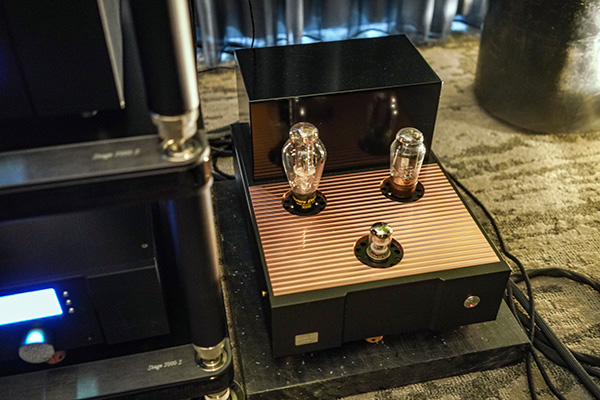
But at AXPONA, the place George (middle) and Carolyn Counnas (proper) debuted their new Zesto Audio Eros 500 Select KT-150 geared up, class-A monoblocks, with Zesto Audio’s Leto Ultra II preamp, which I reviewed in January 2021, I used to be flummoxed at the great thing about sound, extravagance of liquidity and element, and practically non secular physicality the system endowed to a wide range of music.
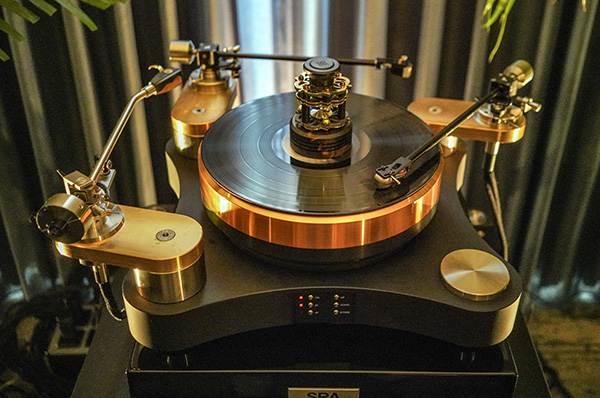
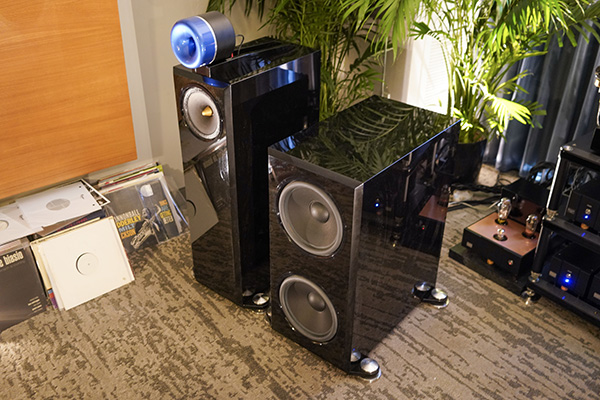
The Counnas’s system, offered with Reference Analog’s Jeff Harris (left), included a Dr. Feickert Analogue Blackbird Deluxe turntable ($8635), Tri-Planar U2-SE 9.8″ tonearm ($8600), Tri-Planar VII-U2 9.8″ tonearm ($6900), Ortofon Verismo MC cartridge ($6999), Benz Micro Gullwing SLR MC cartridge ($3600) right into a Zesto Audio Andros Téssera Reference vacuum-tube phono stage ($19,900). The Zesto Audio Leto Ultra II vacuum tube preamp ($11,900) drove the Eros 500 Select monoblocks (250Wpc into 8 ohms, $35,000/pair), which powered a pair of Dali-esque YG Acoustics Hailey 2.2 loudspeakers ($52,800/pair).
Amp stands and racks have been by Stillpoint ($719–$1999); cables by Cardas Audio, together with Beyond interconnects ($4250/1m pair), Clear Beyond Dual Phono ICs ($4600/one-meter pair), Clear Beyond speaker cables ($9220/2m pair), Beyond XL energy cords ($2750/1m), and Nautilus Power Strip ($1500).
Playing Hank Mobley’s basic Blue Note launch, No Room for Squares, and the equally basic however misunderstood (by me), Witches Brew, by Alexander Gibson and the New Symphony Orchestra of London, the Zesto blew out my opinions and deranged my preconceptions.
The Zesto rig revealed all of the drive, momentum, and tonal splendor of Mobley’s tenor, but additionally turned Witches Brew, which I at all times deemed one other corny “hi-fi report,” right into a viable check report for excessive hi-fi antics from mad dynamics and vary warping instrumentation to bombastic low-end frivolity. Beautiful layering and seamless integration of range-spanning sounds produced constant engagement. Ray Brown’s Soular Energy, utilized in numerous rooms at AXPONA, sung with deep bass traction, energetic drums and Gene Harris’s glowing piano. A deal with of magnificent transparency and terrific tonality.