Author Archives: Kevin Fiske

Triangle Borea BR09

Lord Darlington, in Oscar Wilde’s play ‘Lady Windermere’s Fan’, famously observes that “a cynic is someone who knows the price of everything and the value of nothing.”

We all know people who complain that in audio the link between the cost of manufacture and retail price is often tenuous at best. The resistors used in Product A can be had for less than five pence a pop and the capacitors a mere 30 pence each. In plain speak, vendors are being accused of profiteering.

It’s all good sport of course, but as an argument it fails to account for the overheads of employing design and production staff, providing a building for them to work in and equipment to work with, marketing and advertising, a dealer margin of perhaps 40%, plus service and support.

French cuisine

And, anyway, as Lord Darlington reminds us, value is not cost. Unless we are members of the distortion police, those for whom measurements are all, we approach to value in audio much the same way we might approach a meal. Two chefs cook the French peasant dish ratatouille. The minimal cost of the ingredients is identical, but the more skilful chef turns out a dish that tastes quite sublime while the other’s is rather ho-hum. By happily paying more for one of them, we demonstrate our sensitivity to value.

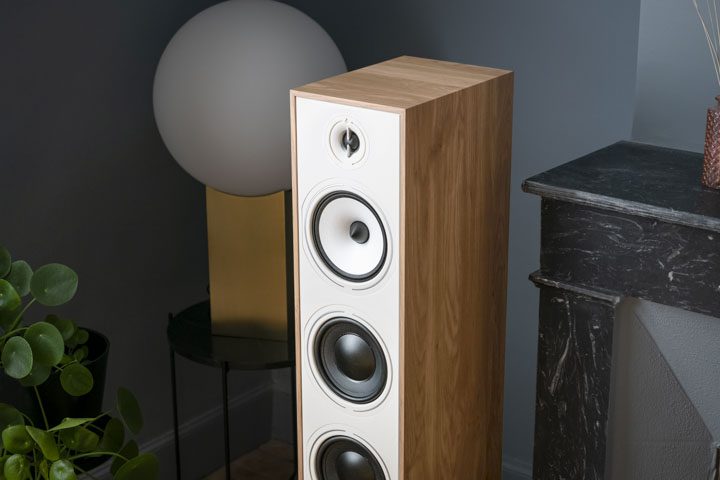
Enter Triangle’s Borea BR09 floorstanding speaker. At a recommended UK price of £1,149 for a pair, the French company gives us a lot for the money; a boxy but aesthetically inoffensive package just over a metre high with three ways, five drivers, and a front-mounted port. The review samples were neatly finished in cream-coloured fronts, with light oak vinyl wrap everywhere else. The speaker is also available in black, white and walnut finishes.

TRIANGLE_BOREA_LIGHT_OAK_LIFESTYLE_01

Triangle designs all of its products at its factory in Soissons but outsources the build of Borea speakers to China. The ’09 is the largest model in a range that comprises two stand-mounted designs, three floorstanders, a centre-channel speaker and a dedicated wedge-shaped speaker designed to deliver movie sound effects. While the Boreas are the least-costly speakers made by Triangle – the company’s portfolio tops out with the Magellan Grand Concert speaker at circa £50,000 – the review sample Boreas impressed right from the start by delivering a good measure of the characteristically entertainingly expressive DNA to be heard further up the Triangle price ladder.

Editor Alan Sircom had a similar reaction when he reviewed the slightly smaller Borea BR08 back in Issue 186. The synchronicity of our respective findings is no coincidence. In most respects the two speakers are the same; the same 25mm neodymium silk dome tweeter with phase plug, the same 16cm paper-coned mid-range driver and the same width and depth dimensions. However, whereas the ’08 has two 16cm fibreglass coned woofers, the ’09 has three, plus an extra 75mm in cabinet height to accommodate the added woofer.

That third driver and resultantly larger bass reflex enclosure allow the ’09 to dig deeper into the lower octaves than the ’08. Triangle claims a minus 3dB point at 35Hz rather than the ’08s 40Hz. With careful siting to take advantage of room gain the review samples generated rather amusing levels of bass slam and weight as part of a relatively linear frequency response.

Take your positions

In my six by four metre listening room, I ended up with the ’09s positioned within a centimetre or so of the dimensions recommended as a starting point by Triangle; a little over half a metre from speaker sides to the side walls, a little under half a metre from the front wall to the rear of each speaker, and with a very slight toe-in towards the listening position. The review samples – brand new out of the packaging –sounded very tight and not well integrated at the start, but after four days I felt I could confidently make listening notes.

To drive the BR09s I used a Bryston 4B Cubed power amplifier connected to the speakers via Quiescent Peak silver cables. The source was Jay’s CDT2-MK3 transport feeding a Denafrips Gaia DDC/re-clocker and a Terminator Plus DAC whose balanced output was attenuated by an icOn 4PRO balanced passive line stage.
TRIANGLE_BOREA_LIGHT_OAK_LIFESTYLE_02

Triangle is not alone in offering floorstanders at a price level where AV buyers and two-channel buyers tend to bump into each other. The Borea BR09s are not so inexpensive that they occupy the AV basement, but neither in two-channel terms are they at all costly, especially for a three-way.

The ’09’s third woofer, aided by the extra efficiency resulting from the port, allowed the speakers to generate enough low-frequency energy in my listening room to jiggle internal organs gently. Movie buffs who want ‘good enough’ and who don’t want the faff, loss of floor space and expense of subs might find a pair of ’09s with the Borea centre speaker to be sufficient. If not, then Triangle makes subs as well.

Tipsy uncle

As a two-channel speaker, the ’09s are a complete riot. Yes, I know that’s not respectable reviewer language, but while they do serve up a very satisfactory level of tonal sophistication and dynamic detail, and I’ll come back that shortly, as an overall package it’s their get-up-and-go that leaves a particularly strong impression. If they were human, they’d be our favourite uncle who turns up slightly tipsy at a sober family gathering. Suddenly it’s a party. The room comes alive, people beam at each other, and everyone feels slightly deflated when he’s been helped into the taxi at the end of the evening.

I played The Mothership Returns, the live recording by Return To Forever [Eagle Records] and on the track ‘Renaissance’, the ’09s absolutely nailed the bite and tone of Jean Luc Ponty’s electric violin, slightly forward but underpinned by the locked-in driving pulse of Stanley Clarke’s bass and Lenny White’s drumming. The track showed that the ’09 drivers are well integrated, and able to perform with satisfying subjective integrity in both the time and frequency domains. The low end sounded crisp and punchy with a surprisingly generous measure of texture, and the mid-range from that 16cm paper-coned driver had me shaking my head in amazement. It’s no particular surprise that a speaker manufacturer should employ its best technical chops on the mid-range driver since it covers the part of the audio bandwidth that many people latch onto first. Still, Triangle’s mid-range driver in the Borea BR09 delivers acoustic instruments and voice with a degree of sophistication quite out of proportion to the modest price point. The woofers are well-controlled and scatter notably little unwelcome harmonic distortion through the audio band to veil that fine mid-range quality. Soundstaging is also a strong point, as might be expected given the narrow cabinet dimensions and the quality of the drivers.

Emotional buttons

It’s not my usual musical fare, but when I played Rag’n’Bone Man’s duet with Pink, the track ‘Anywhere Away From Here’ on the album Life By Misadventure [Columbia Records], the ’09s delivered one of that hairs-on-the-back-of-the-neck moment, so open, immediate and vital was the sound. The same track provided further evidence of the effort that Triangle’s designers have gone to in integrating the drivers. Despite a second-order bass-to-mid crossover point at 310Hz, Rag’n’Bone Man’s rich baritone wove around Pink’s raspy higher-range vocals with a highly satisfying sense of two voices at different frequencies combined seamlessly into a cohesive performance. Quite unexpectedly, it pushed my emotional buttons.
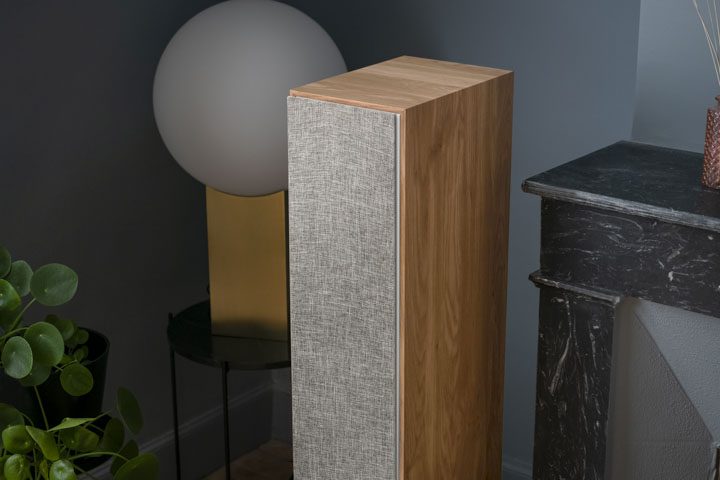
TRIANGLE_BOREA_LIGHT_OAK_LIFESTYLE_04

Some have fingered the silk-domed tweeter used in the Borea range for sometimes drawing attention to grain or brashness elsewhere in the system. On Patricia Kopatchinskaja’s spellbinding recording of Ligeti’s Violin Concerto with the Frankfurt Radio Symphony Orchestra [Naïve] the soloist and violin section explore the instrument’s 3.5kHz upper limit, and there’s piccolo at up to 5kHz. On some systems, these can be finger-nails-on-chalkboard moments, but in my room, with my system, I hardly felt a twinge of discomfort. Perhaps this is system-dependent. Perhaps the added low-end heft of the ’09 over the ’08 to an extent counterbalances any undesirable tendencies at the top end.

Either way, I can imagine that Oscar Wilde’s Lord Darlington would wholly approve of the Triangle Borea BR09. It is honest sonic value, a rare exemplar of strong but understated technical achievement for not a lot of money.

Technical specifications

  • Number of drivers 5
  • Number of ways 3
  • Sensitivity 92.5 dB/W/m
  • Frequency range 35 Hz–22 kHz (+/- 3 dB)
  • Power handling 170 W
  • Nominal impedance 8 Ω
  • Minimum impedance 3.3 Ω
  • Dimensions 206 × 1095 × 314 mm
  • Weight 23.4 kg
  • Price £1,149 per pair

Manufacturer

Triangle

trianglehifi.com

UK distributor

Exertis

exertis.co.uk

+44(0)1256 378751

Back to Reviews

The post Triangle Borea BR09 appeared first on Hi-Fi+.
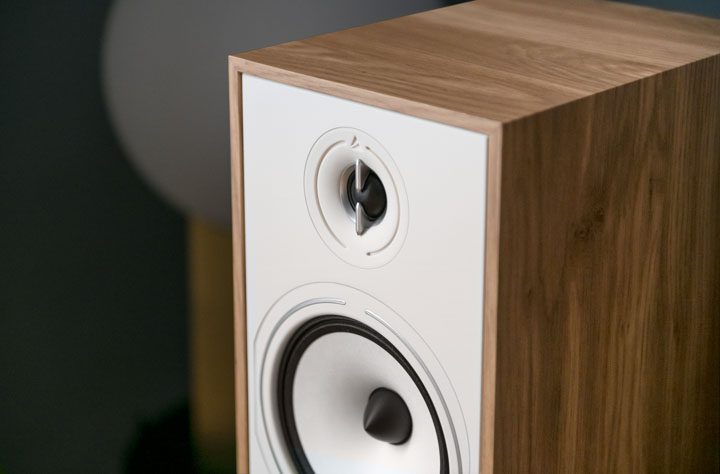
Triangle Borea BR09

Lord Darlington, in Oscar Wilde’s play ‘Lady Windermere’s Fan’, famously observes that “a cynic is someone who knows the price of everything and the value of nothing.”

We all know people who complain that in audio the link between the cost of manufacture and retail price is often tenuous at best. The resistors used in Product A can be had for less than five pence a pop and the capacitors a mere 30 pence each. In plain speak, vendors are being accused of profiteering.

It’s all good sport of course, but as an argument it fails to account for the overheads of employing design and production staff, providing a building for them to work in and equipment to work with, marketing and advertising, a dealer margin of perhaps 40%, plus service and support.

French cuisine

And, anyway, as Lord Darlington reminds us, value is not cost. Unless we are members of the distortion police, those for whom measurements are all, we approach to value in audio much the same way we might approach a meal. Two chefs cook the French peasant dish ratatouille. The minimal cost of the ingredients is identical, but the more skilful chef turns out a dish that tastes quite sublime while the other’s is rather ho-hum. By happily paying more for one of them, we demonstrate our sensitivity to value.

Enter Triangle’s Borea BR09 floorstanding speaker. At a recommended UK price of £1,149 for a pair, the French company gives us a lot for the money; a boxy but aesthetically inoffensive package just over a metre high with three ways, five drivers, and a front-mounted port. The review samples were neatly finished in cream-coloured fronts, with light oak vinyl wrap everywhere else. The speaker is also available in black, white and walnut finishes.

TRIANGLE_BOREA_LIGHT_OAK_LIFESTYLE_01

Triangle designs all of its products at its factory in Soissons but outsources the build of Borea speakers to China. The ’09 is the largest model in a range that comprises two stand-mounted designs, three floorstanders, a centre-channel speaker and a dedicated wedge-shaped speaker designed to deliver movie sound effects. While the Boreas are the least-costly speakers made by Triangle – the company’s portfolio tops out with the Magellan Grand Concert speaker at circa £50,000 – the review sample Boreas impressed right from the start by delivering a good measure of the characteristically entertainingly expressive DNA to be heard further up the Triangle price ladder.

Editor Alan Sircom had a similar reaction when he reviewed the slightly smaller Borea BR08 back in Issue 186. The synchronicity of our respective findings is no coincidence. In most respects the two speakers are the same; the same 25mm neodymium silk dome tweeter with phase plug, the same 16cm paper-coned mid-range driver and the same width and depth dimensions. However, whereas the ’08 has two 16cm fibreglass coned woofers, the ’09 has three, plus an extra 75mm in cabinet height to accommodate the added woofer.

That third driver and resultantly larger bass reflex enclosure allow the ’09 to dig deeper into the lower octaves than the ’08. Triangle claims a minus 3dB point at 35Hz rather than the ’08s 40Hz. With careful siting to take advantage of room gain the review samples generated rather amusing levels of bass slam and weight as part of a relatively linear frequency response.

Take your positions

In my six by four metre listening room, I ended up with the ’09s positioned within a centimetre or so of the dimensions recommended as a starting point by Triangle; a little over half a metre from speaker sides to the side walls, a little under half a metre from the front wall to the rear of each speaker, and with a very slight toe-in towards the listening position. The review samples – brand new out of the packaging –sounded very tight and not well integrated at the start, but after four days I felt I could confidently make listening notes.

To drive the BR09s I used a Bryston 4B Cubed power amplifier connected to the speakers via Quiescent Peak silver cables. The source was Jay’s CDT2-MK3 transport feeding a Denafrips Gaia DDC/re-clocker and a Terminator Plus DAC whose balanced output was attenuated by an icOn 4PRO balanced passive line stage.

TRIANGLE_BOREA_LIGHT_OAK_LIFESTYLE_02

Triangle is not alone in offering floorstanders at a price level where AV buyers and two-channel buyers tend to bump into each other. The Borea BR09s are not so inexpensive that they occupy the AV basement, but neither in two-channel terms are they at all costly, especially for a three-way.

The ’09’s third woofer, aided by the extra efficiency resulting from the port, allowed the speakers to generate enough low-frequency energy in my listening room to jiggle internal organs gently. Movie buffs who want ‘good enough’ and who don’t want the faff, loss of floor space and expense of subs might find a pair of ’09s with the Borea centre speaker to be sufficient. If not, then Triangle makes subs as well.

Tipsy uncle

As a two-channel speaker, the ’09s are a complete riot. Yes, I know that’s not respectable reviewer language, but while they do serve up a very satisfactory level of tonal sophistication and dynamic detail, and I’ll come back that shortly, as an overall package it’s their get-up-and-go that leaves a particularly strong impression. If they were human, they’d be our favourite uncle who turns up slightly tipsy at a sober family gathering. Suddenly it’s a party. The room comes alive, people beam at each other, and everyone feels slightly deflated when he’s been helped into the taxi at the end of the evening.

I played The Mothership Returns, the live recording by Return To Forever [Eagle Records] and on the track ‘Renaissance’, the ’09s absolutely nailed the bite and tone of Jean Luc Ponty’s electric violin, slightly forward but underpinned by the locked-in driving pulse of Stanley Clarke’s bass and Lenny White’s drumming. The track showed that the ’09 drivers are well integrated, and able to perform with satisfying subjective integrity in both the time and frequency domains. The low end sounded crisp and punchy with a surprisingly generous measure of texture, and the mid-range from that 16cm paper-coned driver had me shaking my head in amazement. It’s no particular surprise that a speaker manufacturer should employ its best technical chops on the mid-range driver since it covers the part of the audio bandwidth that many people latch onto first. Still, Triangle’s mid-range driver in the Borea BR09 delivers acoustic instruments and voice with a degree of sophistication quite out of proportion to the modest price point. The woofers are well-controlled and scatter notably little unwelcome harmonic distortion through the audio band to veil that fine mid-range quality. Soundstaging is also a strong point, as might be expected given the narrow cabinet dimensions and the quality of the drivers.

Emotional buttons

It’s not my usual musical fare, but when I played Rag’n’Bone Man’s duet with Pink, the track ‘Anywhere Away From Here’ on the album Life By Misadventure [Columbia Records], the ’09s delivered one of that hairs-on-the-back-of-the-neck moment, so open, immediate and vital was the sound. The same track provided further evidence of the effort that Triangle’s designers have gone to in integrating the drivers. Despite a second-order bass-to-mid crossover point at 310Hz, Rag’n’Bone Man’s rich baritone wove around Pink’s raspy higher-range vocals with a highly satisfying sense of two voices at different frequencies combined seamlessly into a cohesive performance. Quite unexpectedly, it pushed my emotional buttons.

TRIANGLE_BOREA_LIGHT_OAK_LIFESTYLE_04

Some have fingered the silk-domed tweeter used in the Borea range for sometimes drawing attention to grain or brashness elsewhere in the system. On Patricia Kopatchinskaja’s spellbinding recording of Ligeti’s Violin Concerto with the Frankfurt Radio Symphony Orchestra [Naïve] the soloist and violin section explore the instrument’s 3.5kHz upper limit, and there’s piccolo at up to 5kHz. On some systems, these can be finger-nails-on-chalkboard moments, but in my room, with my system, I hardly felt a twinge of discomfort. Perhaps this is system-dependent. Perhaps the added low-end heft of the ’09 over the ’08 to an extent counterbalances any undesirable tendencies at the top end.

Either way, I can imagine that Oscar Wilde’s Lord Darlington would wholly approve of the Triangle Borea BR09. It is honest sonic value, a rare exemplar of strong but understated technical achievement for not a lot of money.

Technical specifications

  • Number of drivers 5
  • Number of ways 3
  • Sensitivity 92.5 dB/W/m
  • Frequency range 35 Hz–22 kHz (+/- 3 dB)
  • Power handling 170 W
  • Nominal impedance 8 Ω
  • Minimum impedance 3.3 Ω
  • Dimensions 206 × 1095 × 314 mm
  • Weight 23.4 kg
  • Price £1,149 per pair

Manufacturer

Triangle

trianglehifi.com

UK distributor

Exertis

exertis.co.uk

+44(0)1256 378751

Back to Reviews

The post Triangle Borea BR09 appeared first on Hi-Fi+.
Quiescent Apex 40 coupler and Peak loudspeaker module

Products that aim to mitigate the sonic damage being done to audio reproduction by electromagnetic and radio frequency interference are common. Not least because the latter is a higher frequency version of the former. However, there is a third corrupting influence that is less frequently addressed. It is microphony. Quiescent is one of the few brands attempting to reduce EMI, RFI and microphony.

If we leave aside micro-tremors from the earth’s crust and from traffic, microphony in our audio systems has the same primary source; the speakers. The acoustic energy from them modulates ambient air pressure against our eardrums, but it also vibrates our audio system too. Inside most speaker cabinets, the crossover is bombarded by energy from the rear of the speaker drivers. Meanwhile circuit boards in system components such as amplifiers are effectively palpated by the modulated air in the room.

Energy conversion

Those who paid attention at school will recall that physical energy applied to a conducting material is converted to electrical energy. During normal playback, our systems are processing not just the musical signal that we want to hear but, electrical artefacts that we don’t want to hear. These travel back down the speaker cables to the amplifier, and propagate from discrete components such as capacitors in system separates. They become particularly audible when contending fundamentals or harmonics beat against each other to produce intermodulation distortion, typically heard as ringing.

Even if our audio system is powered through a filter or regenerator, and even if we turn off everything electrical in the house and listen through headphones, we still cannot escape radiated electrical energy and microphony. Audio separates, in particular digital devices, and some discrete components too, are themselves active emitters even when simply passing an audio signal. Once EMI, RFI and microphony have entered the signal chain our costly wires simply perform as conduits for the unwanted noise.

Quiescent has been ploughing something of a lone furrow in its focus on EMI, RFI and microphony mitigation, and in particular on both prevention and removal. The company’s approach is two-part: speaker, interconnect and mains cable designs that resist mechanical excitation and which absorb EMI/RFI, plus passive devices — the company calls them Couplers and Modules — that drain microphony, EMI and RFI. Quiescent is patenting globally the technology used in a new generation of Couplers and Modules, and invited this publication to be the first to try them.

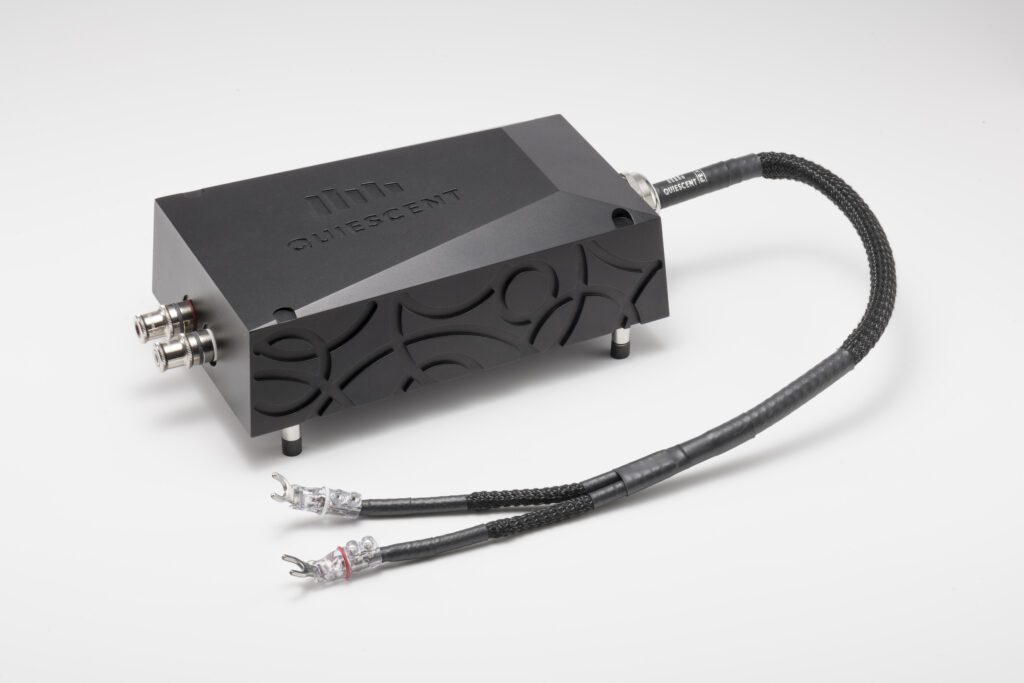
The Apex Speaker Module is a block of black anodised aluminium, machined from billet, with no parallel faces and an acoustically disruptive milled pattern on the outside. It is about the size of a house brick, but weighs rather more at some 4.5 kg. Two continuous lengths of solid silver conductor wire run internally, starting at a pair of silver WBT binding posts and emerging at the other end as a length of captive speaker cable terminated in silver WBT bananas or spades. The first generation Module clamps the naked conductors between two halves of a multi-directional, multi-length labyrinth formed of ceramic. Designed to present a virtual black hole to acoustic energy, the labyrinth prevents transmission either from the speaker to the amplifier or vice versa. The module also contains a passive electrical network to burn off radiated RFI.

Sceptical in the extreme

I tried this early version of the Module in 2018, sceptical in the extreme, but in my system, with two types of amplification and three different speakers, the noise floor was lowered, tonal density and timing cues were enhanced, dynamic energy increased and sound-staging improved. I bought the review pair and for over two years they were a key element in my system, allowing me to hear more deeply into recordings, and to discern more clearly how review kit performed.

Quiescent’s revised Peak Speaker Module has the same form-factor and operational principle as before, but the labyrinth is now made from a composite of granite, ceramic and a high-carbon polymer, the latter material being the subject of the in-process patenting. The company is opaque about the ratios of the three elements, and over what bandwidth the new Module works, except to assert that it is effective on microphony over a wider range than before, and that the carbon polymer increases the bandwidth over which unwanted electro-magnetic energy is absorbed.

The new Apex 40 Couplers are not footers or supports as we might understand the terms, but 3D printed shallow boxes, overall a little less than the size of two packets of playing cards laid side by side. Like the Modules their exterior is irregular with a deep acoustically disruptive pattern. They contain the same tri-material and a passive RFI absorbing network. A sharply pointed electrode on top allows the Couplers to drain acoustic vibration that would otherwise cause microphony, and to terminate radiated electrical energy.

Quiescent Peak Speaker Module

Meanwhile, the Peak Speaker Modules were compared back-to-back with the previous model in my review system, placed between a Bryston 4B Cubed stereo amplifier and PMC MB2se speakers. They brought a far-from-subtle further lowering of the noise floor, the increase in dynamic headroom partnered by greater tonal density, and better focused spatial detail. Improved intermodulation suppression tamed piano recordings that had previously been teetering on the edge of offensively bright and ringy, while excessively sibilant voices were calmed. Bass weight and definition also increased – a finding that Quiescent says results from even more unwanted artefacts being stripped from the signal chain leaving the amplification with less work to do.

The company says the Apex Couplers should be placed under a component either side of the power supply with the third opposing, like a tripod. A firm press from above on the review system DAC enabled the Couplers to make electrical contact with the chassis, and there was an immediate reduction in background hash, stridency and hissy sibilance.

More. Better.

Further sets of Couplers were then added in turn under other components. The sonic gains were cumulative, particularly striking with the CD transport, DAC, pre-amplifier and phono stage, slightly less so, but still very worthwhile, with the power amplifier and turntable power supply.

Fully equipped with Couplers and the Speaker Modules, the review system, no slouch before, was transformed in every dimension, delivering greater dynamic agility and power, tonal density and timing cues; in all posting a quite remarkable cumulative uplift in performance that most listeners familiar with the system put in the order of 50%.

Improvements in perceived timing were particularly noted, there being a greater immediacy and drive that made complex, multilayered and polyrhythmic programme easier to listen to and appreciate. It reminded me of my ‘yikes, this is closer to live’ epiphany on first hearing a pair of Kii Three speakers, phase-correct right across the audio band and thus able to deliver more of the you-are-there experience. There’s no suggestion of equivalence here; but by doing what they do do, the Modules and Couplers brought about a very obvious reduction in the degree of damage being done to phase by the review system’s non-DSP disk-to-speaker audio chain.

The elephant in the room is of course cost. Using the Quiescent products in even a simple system is not for the faint of heart or shallow of wallet. It would take particular bravery to put a pair of £4,500 Modules with £1,000 floor standing speakers. Would the result be at least £5,500 worth of sonic value?

Cost/benefit

However, in the context of the total RRP of the review system, the cost/benefit ratio of the Quiescent products can, in my view, be easily be justified; does it need to be said that a 50% gain in sonic quality is not trivial?

The most likely explanation for Quiescent’s shyness over measurements is not that it hasn’t done any — come on, of course it has — but, probably correctly, the company understands that expensive products like these are not bought by customers on the basis of metrics, but of audition. And that is the market model that Quiescent is now returning to after a three year dalliance with direct selling. Dealers who will carry demo stock and facilitate no-risk in-home evaluation are being appointed across the UK.

Price and Contact details

  • Apex 40 Couplers
  • Price: £740 a set of three
  • Peak Speaker Modules
  • Price: from £4,673 a pair

Manufacturer:

Quiescent

URL: quiescent.co.uk

Back to Reviews

The post Quiescent Apex 40 coupler and Peak loudspeaker module appeared first on Hi-Fi+.

Burson Soloist 3X GT

The personal corner of the audio market is abuzz as vendors compete to out-do each other in the measurement stakes. Some of the latest personal audio amplifiers, many from China, almost defy electro-physics with distortion artefacts that are not just inaudible, but a challenge to detect with even the most sensitive of test gear. They also defy commercial convention with prices as low as £500-£600. Yes. If we believe that measurements tell us everything we need to know about how an amplifier will sound, that really is all we need to spend.

Burson from Australia has long been the exception to that rule and its new Soloist 3X GT combined personal audio amplifier and line stage is an intriguing product because the Soloist 3X GT doesn’t exactly push the measurements envelope. And neither does it cost £500 or £600. More like £2,500.

Burson Soloist 3XGT

Burson made a name for itself by designing and manufacturing op-amps for studio and OEM applications. The latest generation of Burson op-amps, such as the flagship V6 Vivid, are notable for being built with discrete components rather than being on-chip devices. Alongside, Burson has developed its own range of finished amplifiers and DACs, currently starting with the £544 Funk Class AB speaker/headphone amplifier and topping out cost-wise with the Soloist 3X GT.

Pure Class A

The Soloist 3X GT is a pure Class A design. It has a claimed +/-1 dB bandwidth of DC to 48 kHz. Burson provides no figures for channel phase balance. THD into headphones is quoted as 0.0015% and SNR as 112 dB into 16 Ohms; not class leading, but not shabby either.

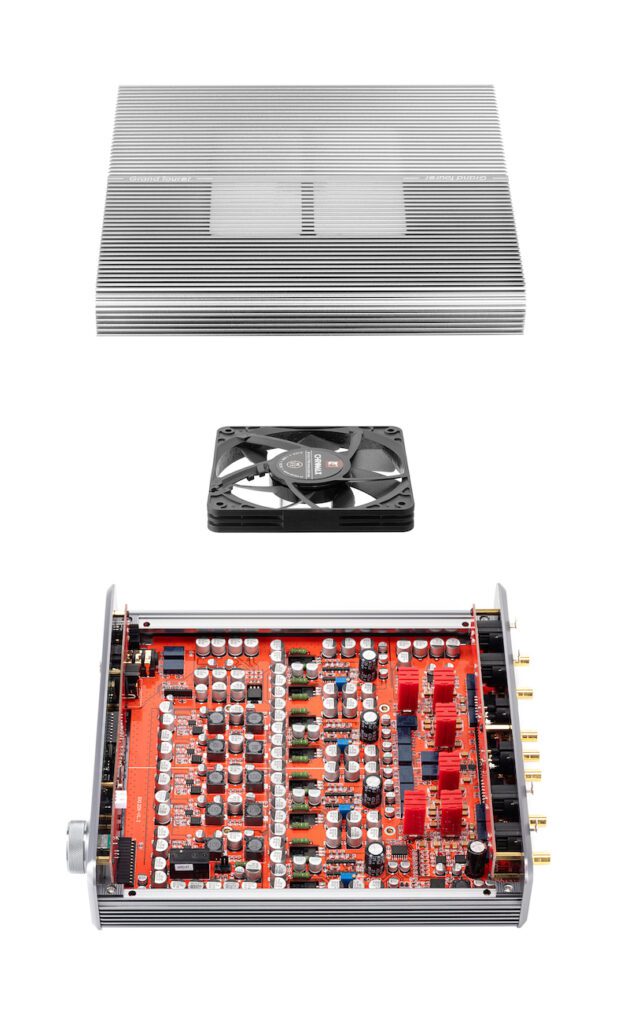
Burson’s design aesthetic is impossible to mistake for that of any other audio manufacturer. From the diminutive Funk upwards, the company’s finished products have ribbed aluminium cases with front and back plates of smooth aluminium, all electro-plated in the same light grey. The design is an efficient heat radiator in its own right, and so it tells us something that the Soloist 3X GT has an internal cooling fan. It needs one because it draws 90 Watts even when idle, and that translates into grunt, at least in headphone amplifier terms, with a capital G. The output of 10 Watts per channel into a 16 Ohm XLR load and 640 mW into 600 Ohms is more than twice that of some of its competitors. Output halves if the single-ended TRS socket is used.

Burson Soloist 3X GT

The review sample was left running for four weeks constantly. From a distance of a foot or so, the fan was audible between tracks when using an open-back headphone, but at greater distances the whirr disappeared into the nominal 31 dBA background level of the listening room. The fan is a standard low-noise computer device, widely available, so replacements should not be a problem.

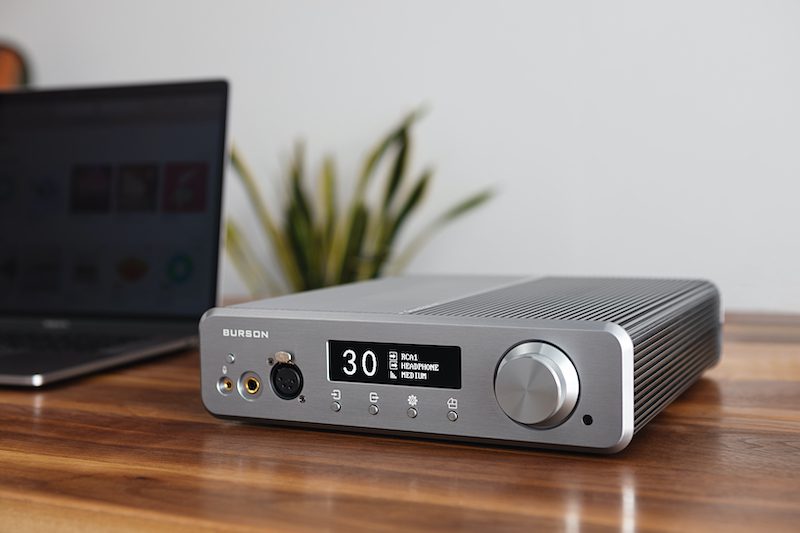
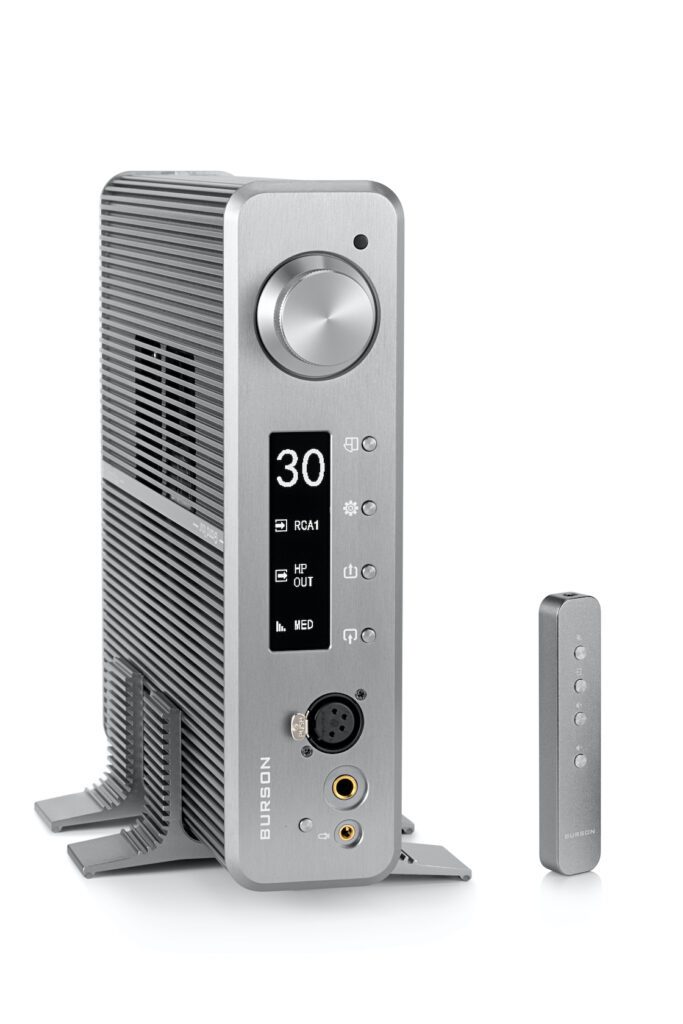
The Soloist 3X GT’s internal switching power supply is fed by a wall-wart and operates at 170 kHz. Also inside the distinctive case are a pair of symmetrical mono amplifiers, each using three V6 Vivid op-amps. Gain is governed by two high-end volume control chips. On the back panel are XLR and RCA inputs, XLR and RCA outputs, plus a RCA sub-out that can be used for both headphone and line stage outputs. There are also three 12V trigger sockets and a microphone by-pass socket. On the front a dimmable white OLED display shows the gain selected by the rotary control, while buttons give access to input and output configuration, display orientation and a menu of options including line-stage balance, three levels of gain and three levels of crossfeed.

Flagship challenge

I used a LCD-5 headphone for most of the listening sessions. Audeze’s latest flagship planar model presents a load of 14 Ohms with a claimed efficiency of 90 dB. Even on its lowest gain setting the Soloist 3X GT comfortably drove the LCD-5, requiring a volume setting of 79 from a maximum of 100 to achieve more than loud enough sound pressure levels. On the highest gain setting a similar subjective volume was achieved with the control set to just 14. With no signal on the input, even on its highest setting and with the volume wound up to maximum, the review sample was silent into the Audeze LCD-5 and a Sennheiser HD650. It is safe to assume that with this level of sophistication, and an output impedance of 0.5 Ohms, it would likely be a good match for sensitive in‑ear-monitors too.

Burson’s designers have declined to just focus on stats but instead also paid attention to the key musical qualities of dynamic agility, dynamic expression, tonal density and timing. The payback for this approach is apparent within seconds of pressing the play button on the first quality recording of acoustic material. Teamed with the Audeze LCD-5, the Soloist 3X GT rendered the drum beats in the intro to the opening track of the Tingvall Trio’s 2017 album Cirklar [Skip] with a distinctly high-end and satisfying sense of texture to the skin tension and shell resonances.

Burson Soloist-3XGT-Cool-Stand

For much of the second track on the same album, double bass player Omar Rodriguez Calvo mirrors the melody that pianist Martin Tingvall plays with his left hand. In the last 12 months I’ve heard several headphone amplifiers that boasted absolutely stellar measurements… yet rendered the two layers as a homogenised, untextured and sterile sound.

In contrast, the 3X GT made it possible not only to hear each player’s subtle timing variations but also to discern the distinct tonal and percussive characters of their instruments. If we are wondering how the Burson might be worth five times the price of a £500 amplifier that measurers perfectly, then maybe there’s our answer. Or at least part of it. Because the Soloist 3X GT demonstrated too, on the same track and in the span of a handful of bars, that it is more than simply a detail machine. Several times Calvo pops out from under Tingvall’s left hand to play a dazzling fill before diving back under again to resume doubling on the main figure. Here, the Burson showed class-leading levels of both dynamic agility and dynamic expression, making listeners jump in surprise at the weight, power and texture of Calvo’s double-bass. In the intro of the same track, the Bonham-esque polyrhythmic pattern played by drummer Jürgen Spiegel was accurately nailed with speed and exemplary timing.

Philip Glass Philip Glass Glass Glass Glass Philip

The Atlanta Symphony Orchestra and Chorus under Robert Shaw playing Philip Glass’s Itaipu [Sony] is a reference recording of a towering, majestic work. Shaw makes full use of the impressive resources to hand, and the huge dynamic range and raw power of the performance poses a stern test of the entire audio chain, sometimes sending weak components into spasms of intermodulation, dynamic compression and flattened sound-staging. The Soloist 3X GT driving the Audeze LCD-5 headphone did not break a sweat.

I have to confess to being caught out. During a quiet passage and marvelling at the amplifier’s ability to throw perhaps the best sound stage available at or near the price, I was lured into winding the gain control ever upwards. So deep in concentration was I that I had temporarily lost my bearings in the piece, forgetting that a few bars on Shaw asks the orchestra and chorus for full throttle. When it came, the massive dynamic peak had me lunging in desperate self-preservation for the pause button on the CD transport, but not before registering that while the volume was painfully loud, the Burson had not lost its impressive level of composure.

Burson Soloist 3X GT

Complaints? I have but two. Why is there no way to turn off the display? Much headphone listening happens at night. Do we really want the womb-like hygge of our listening room ruined by penetrating OLED white? And why offer a balance function only on the line output? Few people have symmetrical hearing. But in every other respect the Burson Soloist 3X GT is an impressive package. Its neutral, natural, expansive and dynamically expressive abilities, coupled to that class-leading level of spatial resolution, makes it a serious contender for our money, putting it in a similar bracket to the Sparkos Labs Aries and the Benchmark HPA4, two notably high-achieving alternatives.

The Burson Soloist 3X GT is proof indeed, if proof were needed, that measurements do not always tell the whole story.

TECHNICAL SPECIFICATIONS

  • Type: Class A dual mono headphone amplifier and line stage preamplifier
  • Inputs: 2× RCA stereo pair, 2xXLR stereo pair
  • Headphone outputs: 3.5mm stereo jack, 6.3mm stereo jack, four-pin XLR balanced
  • Outputs: 1× RCA stereo pair, 1× XLR stereo pair, 1× RCA subwoofer output
  • Headphone power: 10Wpc (XLR) and 5Wpc (single‑ended)
  • Gain levels: Three, matching headphones from 60db to 108db sensitivity
  • Volume control: 2 X MUSES72320 + V6 Burson Vivid op‑amp discrete buffer
  • Features: Speaker soundstage centring, three levels of hardware-based headphone crossfeed
  • Dimensions: 25.5 × 27 × 7cm
  • Weight: 5kg
  • Price: £2,499

Manufacturer:

Burson Audio

URL: bursonaudio.com

UK Retailers

Hifonix: hifonix.co.uk

Tel: +44(0)121 382 5444

HiFiHeadphones: hifiheadphones.co.uk

Tel: +44(0)1903 768910

Back to Reviews

The post Burson Soloist 3X GT appeared first on Hi-Fi+.

Burson Soloist 3X GT

The personal corner of the audio market is abuzz as vendors compete to out-do each other in the measurement stakes. Some of the latest personal audio amplifiers, many from China, almost defy electro-physics with distortion artefacts that are not just inaudible, but a challenge to detect with even the most sensitive of test gear. They also defy commercial convention with prices as low as £500-£600. Yes. If we believe that measurements tell us everything we need to know about how an amplifier will sound, that really is all we need to spend.

Burson from Australia has long been the exception to that rule and its new Soloist 3X GT combined personal audio amplifier and line stage is an intriguing product because the Soloist 3X GT doesn’t exactly push the measurements envelope. And neither does it cost £500 or £600. More like £2,500.

Burson Soloist 3XGT

Burson made a name for itself by designing and manufacturing op-amps for studio and OEM applications. The latest generation of Burson op-amps, such as the flagship V6 Vivid, are notable for being built with discrete components rather than being on-chip devices. Alongside, Burson has developed its own range of finished amplifiers and DACs, currently starting with the £544 Funk Class AB speaker/headphone amplifier and topping out cost-wise with the Soloist 3X GT.

Pure Class A

The Soloist 3X GT is a pure Class A design. It has a claimed +/-1 dB bandwidth of DC to 48 kHz. Burson provides no figures for channel phase balance. THD into headphones is quoted as 0.0015% and SNR as 112 dB into 16 Ohms; not class leading, but not shabby either.

Burson’s design aesthetic is impossible to mistake for that of any other audio manufacturer. From the diminutive Funk upwards, the company’s finished products have ribbed aluminium cases with front and back plates of smooth aluminium, all electro-plated in the same light grey. The design is an efficient heat radiator in its own right, and so it tells us something that the Soloist 3X GT has an internal cooling fan. It needs one because it draws 90 Watts even when idle, and that translates into grunt, at least in headphone amplifier terms, with a capital G. The output of 10 Watts per channel into a 16 Ohm XLR load and 640 mW into 600 Ohms is more than twice that of some of its competitors. Output halves if the single-ended TRS socket is used.

Burson Soloist 3X GT

The review sample was left running for four weeks constantly. From a distance of a foot or so, the fan was audible between tracks when using an open-back headphone, but at greater distances the whirr disappeared into the nominal 31 dBA background level of the listening room. The fan is a standard low-noise computer device, widely available, so replacements should not be a problem.

The Soloist 3X GT’s internal switching power supply is fed by a wall-wart and operates at 170 kHz. Also inside the distinctive case are a pair of symmetrical mono amplifiers, each using three V6 Vivid op-amps. Gain is governed by two high-end volume control chips. On the back panel are XLR and RCA inputs, XLR and RCA outputs, plus a RCA sub-out that can be used for both headphone and line stage outputs. There are also three 12V trigger sockets and a microphone by-pass socket. On the front a dimmable white OLED display shows the gain selected by the rotary control, while buttons give access to input and output configuration, display orientation and a menu of options including line-stage balance, three levels of gain and three levels of crossfeed.

Flagship challenge

I used a LCD-5 headphone for most of the listening sessions. Audeze’s latest flagship planar model presents a load of 14 Ohms with a claimed efficiency of 90 dB. Even on its lowest gain setting the Soloist 3X GT comfortably drove the LCD-5, requiring a volume setting of 79 from a maximum of 100 to achieve more than loud enough sound pressure levels. On the highest gain setting a similar subjective volume was achieved with the control set to just 14. With no signal on the input, even on its highest setting and with the volume wound up to maximum, the review sample was silent into the Audeze LCD-5 and a Sennheiser HD650. It is safe to assume that with this level of sophistication, and an output impedance of 0.5 Ohms, it would likely be a good match for sensitive in‑ear-monitors too.

Burson’s designers have declined to just focus on stats but instead also paid attention to the key musical qualities of dynamic agility, dynamic expression, tonal density and timing. The payback for this approach is apparent within seconds of pressing the play button on the first quality recording of acoustic material. Teamed with the Audeze LCD-5, the Soloist 3X GT rendered the drum beats in the intro to the opening track of the Tingvall Trio’s 2017 album Cirklar [Skip] with a distinctly high-end and satisfying sense of texture to the skin tension and shell resonances.

Burson Soloist-3XGT-Cool-Stand

For much of the second track on the same album, double bass player Omar Rodriguez Calvo mirrors the melody that pianist Martin Tingvall plays with his left hand. In the last 12 months I’ve heard several headphone amplifiers that boasted absolutely stellar measurements… yet rendered the two layers as a homogenised, untextured and sterile sound.

In contrast, the 3X GT made it possible not only to hear each player’s subtle timing variations but also to discern the distinct tonal and percussive characters of their instruments. If we are wondering how the Burson might be worth five times the price of a £500 amplifier that measurers perfectly, then maybe there’s our answer. Or at least part of it. Because the Soloist 3X GT demonstrated too, on the same track and in the span of a handful of bars, that it is more than simply a detail machine. Several times Calvo pops out from under Tingvall’s left hand to play a dazzling fill before diving back under again to resume doubling on the main figure. Here, the Burson showed class-leading levels of both dynamic agility and dynamic expression, making listeners jump in surprise at the weight, power and texture of Calvo’s double-bass. In the intro of the same track, the Bonham-esque polyrhythmic pattern played by drummer Jürgen Spiegel was accurately nailed with speed and exemplary timing.

Philip Glass Philip Glass Glass Glass Glass Philip

The Atlanta Symphony Orchestra and Chorus under Robert Shaw playing Philip Glass’s Itaipu [Sony] is a reference recording of a towering, majestic work. Shaw makes full use of the impressive resources to hand, and the huge dynamic range and raw power of the performance poses a stern test of the entire audio chain, sometimes sending weak components into spasms of intermodulation, dynamic compression and flattened sound-staging. The Soloist 3X GT driving the Audeze LCD-5 headphone did not break a sweat.

I have to confess to being caught out. During a quiet passage and marvelling at the amplifier’s ability to throw perhaps the best sound stage available at or near the price, I was lured into winding the gain control ever upwards. So deep in concentration was I that I had temporarily lost my bearings in the piece, forgetting that a few bars on Shaw asks the orchestra and chorus for full throttle. When it came, the massive dynamic peak had me lunging in desperate self-preservation for the pause button on the CD transport, but not before registering that while the volume was painfully loud, the Burson had not lost its impressive level of composure.

Burson Soloist 3X GT

Complaints? I have but two. Why is there no way to turn off the display? Much headphone listening happens at night. Do we really want the womb-like hygge of our listening room ruined by penetrating OLED white? And why offer a balance function only on the line output? Few people have symmetrical hearing. But in every other respect the Burson Soloist 3X GT is an impressive package. Its neutral, natural, expansive and dynamically expressive abilities, coupled to that class-leading level of spatial resolution, makes it a serious contender for our money, putting it in a similar bracket to the Sparkos Labs Aries and the Benchmark HPA4, two notably high-achieving alternatives.

The Burson Soloist 3X GT is proof indeed, if proof were needed, that measurements do not always tell the whole story.

TECHNICAL SPECIFICATIONS

  • Type: Class A dual mono headphone amplifier and line stage preamplifier
  • Inputs: 2× RCA stereo pair, 2xXLR stereo pair
  • Headphone outputs: 3.5mm stereo jack, 6.3mm stereo jack, four-pin XLR balanced
  • Outputs: 1× RCA stereo pair, 1× XLR stereo pair, 1× RCA subwoofer output
  • Headphone power: 10Wpc (XLR) and 5Wpc (single‑ended)
  • Gain levels: Three, matching headphones from 60db to 108db sensitivity
  • Volume control: 2 X MUSES72320 + V6 Burson Vivid op‑amp discrete buffer
  • Features: Speaker soundstage centring, three levels of hardware-based headphone crossfeed
  • Dimensions: 25.5 × 27 × 7cm
  • Weight: 5kg
  • Price: £2,499

Manufacturer:

Burson Audio

URL: bursonaudio.com

UK Retailers

Hifonix: hifonix.co.uk

Tel: +44(0)121 382 5444

HiFiHeadphones: hifiheadphones.co.uk

Tel: +44(0)1903 768910

Back to Reviews

The post Burson Soloist 3X GT appeared first on Hi-Fi+.

Jay’s Audio CDT2-MK3

Chinese audio manufacturers have mostly pitched their tents in the high volume, low cost corner of the market. In general, the high-end has been left to western vendors or at least ‘Western design, Eastern build’ products. But it was always only a matter of time.

Audio Music is one of the pathfinders for the Chinese drive into the high-end, offering products underpinned by serious engineering and production values. The company’s RT preamplifier remains one of my personal all-time favourite high-end preamps. It justifies its desirability through sheer sonic quality alone. The comparatively low price – it would likely be four, five times as much with a European or US badge on the front – is simply the cherry on a very tempting cake.

Fewer still will have heard of another Chinese company; Jay’s Audio. It currently offers just three products through a website managed by global distributor Vinshine Audio in Singapore. The company’s CD player, built around a discrete R2R DAC board by Danish specialist Soekris, and the stand-alone DAC using the same core OEM technology, will have to wait for another day. This review considers the CDT2-MK3 top-loading Red Book-only transport. If you want the key take-away up-front, it’s a product that kicks sand in the face of those that assert that no quality audio engineering comes out of China. As with the Audio Music RT preamplifier, the performance/price ratio is off of the scale. Beginning to see a pattern here?

Stout boxing

The CDT2-MK3 review sample arrived stoutly double-boxed. Having often experienced a much longer than advertised burn-in, I was pleasantly surprised to find that the CDT2-MK3, left running 24/7, stabilised around the 400 hour mark, just as predicted by Jay’s Audio. It was placed in a review system comprising a Denafrips Gaia DDC/re-clocker, a Denafrips Terminator Plus DAC, Bryston BP-17 Cubed and 4B Cubed pre- and power-amplifiers, and PMC MB2se speakers. Speaker cables, mains wires and single-ended interconnects were all by Quiescent. AudioQuest and Gothic Audio digital interconnects were also used.

The CDT2-MK3 is available in black anodised or plain brushed aluminium finish and weighs 15 kg. The oh-so-silky movement of the top-loading shutter and the thickness and fit’n’finish of the CNCd aluminium chassis bespeak quality engineering. Even the accompanying remote control is machined from billet aluminium and weighs a hefty 390 grammes.

Jay's Audio CDT2 Mk 3

Undo the eight stainless Allen bolts that secure the transport’s top plate, and inside we find audiophile-grade engineering and component quality. There are two power supplies, one for the drive and its servo circuit, the other for the transport’s DSP and clock elements. Incoming mains is filtered for EMI on a separate board, followed by two potted 50VA Noratel toroidal mains transformers backing over 50,000uFs of Nichicon capacitance and 10 individual DC regulated feeds. The oven-controlled oscillator module with its associated PLL circuit is also a Jay’s design.


Rear Panel Power

Rear panel BNC, S/PDIF, AES/EBU and HDMI/I2S sockets are coupled to the output through isolation transformers. A CDM4/19 CD drive is bolted to a separate high-mass machined chassis and has its own underslung control board that, like the main board, is a proprietary Jay’s Audio design. On the front of the CDT2-MK3 an OLED display shows track and disc information, and buttons allow access to basic functions. Handset buttons enable more advanced track programming and up-sampling to 176.4kHz.

Would a CDT2-MK3 have to be sent back to Singapore in the event of a fault? The answer is that it is designed to allow easy service in the field. The optical drive type is known for a particularly long service life, but should it fail the replacement process is quite literally plug and play. The circuit boards too are designed to be swapped in a similar manner.

Some doubt Jay’s Audio’s claim to have sourced some 3,000 new old stock pieces of the Philips drive, a type that has been out of production for some years. Frankly, I doubt the doubters. Regardless, you’ll soon read why the company is right to be proud of its IP in the circuitry of the CDT2-MK3, and Jay’s Audio would on one hand be mad not to stress the positive, and would likely have later cause to regret the attempted deceit.

And of course, what really matters is how it sounds. The news is that in every key aspect of performance except perhaps subjective background noise, the Jay’s proved equal or superior to the latest three-times-the-cost offering from the company that leads the field in belt-drive CD transports. Out of the box the Jay’s makes a bankable down-payment of sonic value that places it firmly in the high end. Through the burn-in process it matures to offer a particularly well balanced and generous measure of the key musical pillars of dynamic expression and agility, tonal detail, image placement and timing.


Belt Drive

The belt drive transport mentioned just a moment ago was uncannily electrically quiet when I reviewed it, able to draw attention to subtle musical detail that other transports hadn’t revealed. The Jay’s ‘does detail’ to nearly the same degree, but in addition serves up a richer palette of tonal and textural content that makes familiar recordings still more satisfying. And, despite not having the theoretical technical advantages conferred by belt drive, it nonetheless transcribes material with a relaxed flow that somehow just sounds more natural and easy to live with than many alternatives which contrive to sound buttoned-up and overtly digital. A notable transport for any money? Yes. Particularly remarkable for what it costs? Yes again.

Like a growing number of manufacturers on either side of the bamboo curtain including Denafrips, Holo, PS Audio and Rockna, Jay’s Audio is keen on I2S as a way of linking audio components. Unlike coax and AES/EBU, which send everything down the same conductor, I2S uses dedicated conductors for each data type and is less prone to errors because music does not have to be parsed from clock data. So much for the theory. The CDT2-MK3 was the fifth component through my hands in the last six months to demonstrate that while I2S can offer slightly superior separation, well-implemented S/PDIF and AES/EBU, using quality code on a FPGA rather than an off-the-peg receiver chip, remains a solid option. After trying all the possible combinations of cable types I settled on an AudioQuest AES/EBU Diamond cable from transport to DDC and an AudioQuest Dragon HDMI cable from DDC to DAC. A made-in-Manchester solid silver AES/EBU cable by Gothic Audio ran the Diamond a very close second.

Jay's Audio CDT2 Mk3

Experimenting with the cables types in order to determine the optimum combination, I spent quite a bit of time listening to symphonic recordings. The system as configured demonstrated an impressive ability to resolve such complex material and confirming that the CDT2-MK3 serves up solid timing. I then played the same tracks with the transport connected directly to the Denafrips DAC, without the Gaia DDC/re-clocker in circuit. Sound staging and low-end performance fell back as might be expected, jitter being particularly damaging to these two aspects of performance, but on its own the Jay’s still proved no slouch – evidence that the transport’s own internal oven-controlled clock does a very good job of minimising jitter. A visiting friend, hearing the system in this configuration, commented, “Oh the bass! That’s some grunt.”


He’s Not The Messiah… but he’s not a very naughty boy!

The truth, though, is that the Jay’s Audio CDT2-MK3 is well-balanced and impartial right across the audible bandwidth. Some people are never satisfied, though. Mike Christ (he’s not the Messiah; it’s a relatively common German surname) who runs HEADquarter Audio near Cologne (headquarteraudio.de), sells a range of brands, including Jay’s Audio. While he admires the CDT2-MK3 very much, he felt the standard puck – a plastic disk with a neoprene underside – could be better. His alternative is the £120 QStab puck – 3D printed from a bone-like material – and while it’s designed for the CDT2-MK3, it should work with other top-loading transports that also use the CDM4 drive. I’m not usually a fan of tweaks. I can’t remember the last time I mentioned one in a review, but the HEADquarter QStab puck is winningly complementary, allowing the CDT2-MK3 to resolve even deeper layers of tonal colour, texture and timing.

That doesn’t detract, though, from what Jay’s Audio has achieved with its CDT2-MK3. It is an impressively engineered and fine sounding transport deserving of serious respect. That it costs as little as it does is further reason to pay it attention.

TECHNICAL SPECIFICATIONS

  • Type: CD transport
  • Transport Mechanism: Philips CDM4/19
  • Digital Output: AES/EBU 5Vrms, 110ohm, HDMI I2S LVDS
  • Output Sampling Rate: 16 Bit/44.1kHz or 176.4kHz o COAX (RCA/BNC) 2Vrms, 75ohm
  • Dimensions: 430mm × 380mm × 120mm
  • Weight: 15KG
  • Price: £2,398

Manufacturer: Jay’s Audio

URL: jays-audio.com

Distributed by: Willow Tree Audio

URL: willowtreeaudio.co.uk

Tel: +44(0)7412690415

Back to Reviews

The post Jay’s Audio CDT2-MK3 appeared first on Hi-Fi+.