Author Archives: Robert Baird

Revinylization #38: <I>At My Window</I> by Townes Van Zandt

To be a poet is to be tormented. And singer/songwriter Townes Van Zandt’s demons were relentless: mental illness, addiction, willful recklessness. He constantly complicated his life and the lives of those around him. Even fans who felt lucky just to have him play their town were unwittingly drawn in, often exhilarated but occasionally aghast. Yet judged by his recordings, he was indisputably a songwriting genius—often sad and confused but gifted nonetheless. The scion of a storied and wealthy Texas clan, he was that rare artist who was compelled to create art.


As John Prine put it, “Townes, Bob Dylan and Leonard Cohen absolutely had to write. They had no choice in it. They had to get it out of ’em.” Haunted and otherworldly, his songs bore the deep scars of self-inflicted wounding. They were full of what music writer Robert Palmer called “prickly uncomfortable truths and unsentimental reflection,” qualities on display, eg, in the opening lines of “Still Lookin’ for You” from At My Window: “Ain’t much I ain’t tried / Fast livin’ slow suicide / Then a-runnin’ in a place to hide.” Artists inevitably find a strong suit; a mood, feeling, or emotion they relate to best. For Bob Dylan, it is profundity. John Philip Sousa was triumphant. The Gershwins were about joy. Primarily a ballad singer, Townes feared heartbreak.


In the mid-1980s, Van Zandt’s life tornado slowed, and he entered a period of atypical calm. His finances were never better, with royalty checks arriving regularly as other artists like Emmylou Harris and Willie Nelson covered his magical songs. He and his third wife, Jeanene, had a new son, Will. His hope and energies rising, his focus turned toward entering a recording studio for the first time in nine years. In March 1987, sessions commenced with his longtime producer, “Cowboy” Jack Clement, at Clement’s Nashville studio, Cowboy Arms Hotel and Recording Spa. The resulting album, At My Window, has been reissued by Craft Recordings to celebrate its 35th anniversary.


Remastered by Kevin Gray at Cohearent Audio, this reissue was pressed at Memphis Record Pressing in Memphis, Tennessee, on speckled sky-blue 160gm vinyl in a limited edition of 6000 copies ($29.99). While Gray’s remastering is up to his usual high standards, with a slightly clearer stereo image than either the original 1987 pressing or the very limited (1000 copies) 2012 RSD (Record Store Day) reissue, my copy of this edition is noisy and slightly warped.


As was often the case with Van Zandt albums, the collection of tunes assembled for these sessions was a mixed bag. The title track from his 1968 debut album, “For the Sake of the Song,” would eventually appear on four Van Zandt albums. Both “At My Window” and “Buckskin Stallion Blues” were first recorded in 1973 but remained unreleased in their original versions until the 1993 album The Nashville Sessions. The closer, “Catfish Blues,” a Van Zandt original, was finished in the mid-1980s but not recorded until At My Window.

223town.2


Talent attracts talent. The group of musicians chosen for the At My Window sessions included the cream of Nashville players at that time. Bassist Roy Husky Jr., fiddler Mark O’Connor, and harmonica player Mickey Raphael all add their consummate voices to the proceedings. Most essential of all was Mickey White, Van Zandt’s longtime guitarist. In John Kruth’s excellent Van Zandt biography, To Live’s to Fly, White, who’d seen it all by 1987, was critical of the At My Window sessions, saying, “Townes’ skills were not consistent. … [H]e didn’t fingerpick as well as he used to. And he started getting a little lazy as a singer.”


Ostensibly produced by Jack Clement, engineer Jim Rooney did all the actual work. In Kruth’s book, he described fond memories of the sessions, saying in part, “Townes was in a good place. … The musicians responded to his songs and his singing. It was all seamless. To make it sound as good as we could, I brought in Rich Adler, a real engineer, to mix the album.”


Van Zandt’s melodies were often simple and easy to follow. His titles often referred to the American West, no matter where the lyrics went. He often used the suffix of “Blues,” though his definition of that foundational American musical form strayed far from its well-established essence.


At My Window opens with a stone Van Zandt classic, “Snowin’ on Raton,” which, despite a title that refers to the mountain pass between Colorado and New Mexico, eloquently dives into the downside or at least the inconstancy of love: “Shall I cast my dreams upon your love, babe?/And lie beneath the laughter of your eyes.” His other ruling obsession—of course—was death. (This is a man who released The Late Great Townes Van Zandt when he was 28. It was his best album.) Here, both love and death bubble up in the title track, where he reckons, “Ah living is dancing/Dying does nothing at all.”


Best known for his troubled, often desolate songs, Van Zandt also wrote under-appreciated upbeat beauties like “Ain’t Leavin’ Your Love,” undoubtedly written for Jeanene. The album’s other Van Zandt classic is “Buckskin Stallion Blues.” This brilliant, oft-covered original contains some of his most intricate and persuasive lyrics: “If three and four were seven only?/ Where would that leave one and two? / If love can be and still be lonely / Where does that leave me and you?”


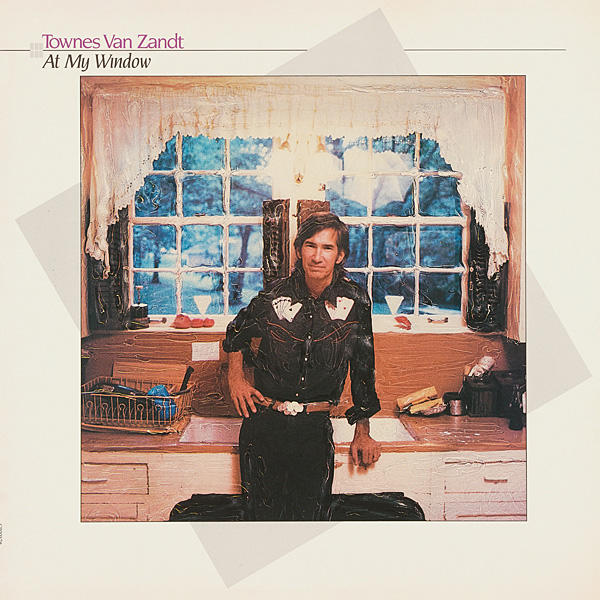
The cover of At My Window features a manipulated Polaroid cover shot, which many have interpreted as a deliberate representation of Van Zandt’s often-fragile mental state. Yet, after several listens, At My Window exhibits the camouflaged strength that underlies Van Zandt’s work. Insecure and attracted to self-destruction and its resulting griefs, he was also a tenacious survivor who understood and appreciated the visionary songwriting genius that was uniquely his.
Revinylization #38: <I>At My Window</I> by Townes Van Zandt

To be a poet is to be tormented. And singer/songwriter Townes Van Zandt’s demons were relentless: mental illness, addiction, willful recklessness. He constantly complicated his life and the lives of those around him. Even fans who felt lucky just to have him play their town were unwittingly drawn in, often exhilarated but occasionally aghast. Yet judged by his recordings, he was indisputably a songwriting genius—often sad and confused but gifted nonetheless. The scion of a storied and wealthy Texas clan, he was that rare artist who was compelled to create art.


As John Prine put it, “Townes, Bob Dylan and Leonard Cohen absolutely had to write. They had no choice in it. They had to get it out of ’em.” Haunted and otherworldly, his songs bore the deep scars of self-inflicted wounding. They were full of what music writer Robert Palmer called “prickly uncomfortable truths and unsentimental reflection,” qualities on display, eg, in the opening lines of “Still Lookin’ for You” from At My Window: “Ain’t much I ain’t tried / Fast livin’ slow suicide / Then a-runnin’ in a place to hide.” Artists inevitably find a strong suit; a mood, feeling, or emotion they relate to best. For Bob Dylan, it is profundity. John Philip Sousa was triumphant. The Gershwins were about joy. Primarily a ballad singer, Townes feared heartbreak.


In the mid-1980s, Van Zandt’s life tornado slowed, and he entered a period of atypical calm. His finances were never better, with royalty checks arriving regularly as other artists like Emmylou Harris and Willie Nelson covered his magical songs. He and his third wife, Jeanene, had a new son, Will. His hope and energies rising, his focus turned toward entering a recording studio for the first time in nine years. In March 1987, sessions commenced with his longtime producer, “Cowboy” Jack Clement, at Clement’s Nashville studio, Cowboy Arms Hotel and Recording Spa. The resulting album, At My Window, has been reissued by Craft Recordings to celebrate its 35th anniversary.


Remastered by Kevin Gray at Cohearent Audio, this reissue was pressed at Memphis Record Pressing in Memphis, Tennessee, on speckled sky-blue 160gm vinyl in a limited edition of 6000 copies ($29.99). While Gray’s remastering is up to his usual high standards, with a slightly clearer stereo image than either the original 1987 pressing or the very limited (1000 copies) 2012 RSD (Record Store Day) reissue, my copy of this edition is noisy and slightly warped.


As was often the case with Van Zandt albums, the collection of tunes assembled for these sessions was a mixed bag. The title track from his 1968 debut album, “For the Sake of the Song,” would eventually appear on four Van Zandt albums. Both “At My Window” and “Buckskin Stallion Blues” were first recorded in 1973 but remained unreleased in their original versions until the 1993 album The Nashville Sessions. The closer, “Catfish Blues,” a Van Zandt original, was finished in the mid-1980s but not recorded until At My Window.


223town.2


Talent attracts talent. The group of musicians chosen for the At My Window sessions included the cream of Nashville players at that time. Bassist Roy Husky Jr., fiddler Mark O’Connor, and harmonica player Mickey Raphael all add their consummate voices to the proceedings. Most essential of all was Mickey White, Van Zandt’s longtime guitarist. In John Kruth’s excellent Van Zandt biography, To Live’s to Fly, White, who’d seen it all by 1987, was critical of the At My Window sessions, saying, “Townes’ skills were not consistent. … [H]e didn’t fingerpick as well as he used to. And he started getting a little lazy as a singer.”


Ostensibly produced by Jack Clement, engineer Jim Rooney did all the actual work. In Kruth’s book, he described fond memories of the sessions, saying in part, “Townes was in a good place. … The musicians responded to his songs and his singing. It was all seamless. To make it sound as good as we could, I brought in Rich Adler, a real engineer, to mix the album.”


Van Zandt’s melodies were often simple and easy to follow. His titles often referred to the American West, no matter where the lyrics went. He often used the suffix of “Blues,” though his definition of that foundational American musical form strayed far from its well-established essence.


At My Window opens with a stone Van Zandt classic, “Snowin’ on Raton,” which, despite a title that refers to the mountain pass between Colorado and New Mexico, eloquently dives into the downside or at least the inconstancy of love: “Shall I cast my dreams upon your love, babe?/And lie beneath the laughter of your eyes.” His other ruling obsession—of course—was death. (This is a man who released The Late Great Townes Van Zandt when he was 28. It was his best album.) Here, both love and death bubble up in the title track, where he reckons, “Ah living is dancing/Dying does nothing at all.”


Best known for his troubled, often desolate songs, Van Zandt also wrote under-appreciated upbeat beauties like “Ain’t Leavin’ Your Love,” undoubtedly written for Jeanene. The album’s other Van Zandt classic is “Buckskin Stallion Blues.” This brilliant, oft-covered original contains some of his most intricate and persuasive lyrics: “If three and four were seven only?/ Where would that leave one and two? / If love can be and still be lonely / Where does that leave me and you?”


The cover of At My Window features a manipulated Polaroid cover shot, which many have interpreted as a deliberate representation of Van Zandt’s often-fragile mental state. Yet, after several listens, At My Window exhibits the camouflaged strength that underlies Van Zandt’s work. Insecure and attracted to self-destruction and its resulting griefs, he was also a tenacious survivor who understood and appreciated the visionary songwriting genius that was uniquely his.

January 2023 Rock/Pop Record Reviews

David Bowie: Divine Symmetry (An Alternative Journey Through Hunky Dory)

Parlophone (4 CD Box Set + Blu-ray). 2022. Various prods., engs.

Performance *****

Sonics ****


The David Bowie estate seems to raid more vaults than John Dillinger ever managed to. But then, if the quarry results in quality releases, why not?


Divine Symmetry certainly is a quality release. It’s not just the title, which is great (although it’s not the first time the “Quicksand” lyric has been used; there was also an unofficial release). Included in the box, alongside a lush book of essays and pics, is a Blu-ray of the 2015 remaster of Hunky Dory, the original album. The big draw here, though, are the previously unreleased songs, rarities, and 2021 remixes. A BBC recording from legendary DJ John Peel takes up one side; it includes a wonderful romp through Chuck Berry’s “Almost Grown.” (Bowie at the Beeb contained some of the same session.)


The demos on the first CD will probably be of greatest interest to Bowiephiles, perhaps a bit too in the weeds for everyone else. It is interesting to hear how classics such as “Life on Mars?” were tidied up for the official release. Often the changes (including of the song itself) are not major; Bowie tended to go into the studio with songs pretty much fully formed. There are also rarer songs. Occasionally, there’s a reason for that: His rendition of Biff Rose’s “Buzz the Fuzz” is nowhere near the standard of his take of another of Rose’s, “Fill Your Heart.”


Happily, there are plenty of gems. “Right on Mother,” about Bowie’s relationship with his mom (who’d have guessed), had been considered as a single, but it got lost in the oncoming Ziggy juggernaut. All by itself it makes the set worthwhile. Also in the chest of goodies: “Tired of My Life” is pretty much unknown except that several lines were used years later in “It’s No Game.”


Divine Symmetry is worth investing in. There’s much to treasure here.—Phil Brett


123rock.bo


Björk: Fossora

One Little Independent Records tplp1485 (LP; also available as CD, download, streaming). 2022. Björk, prod.; Bergur Thorisson, Jake Miller, others, engs.

Performance ****

Sonics ****


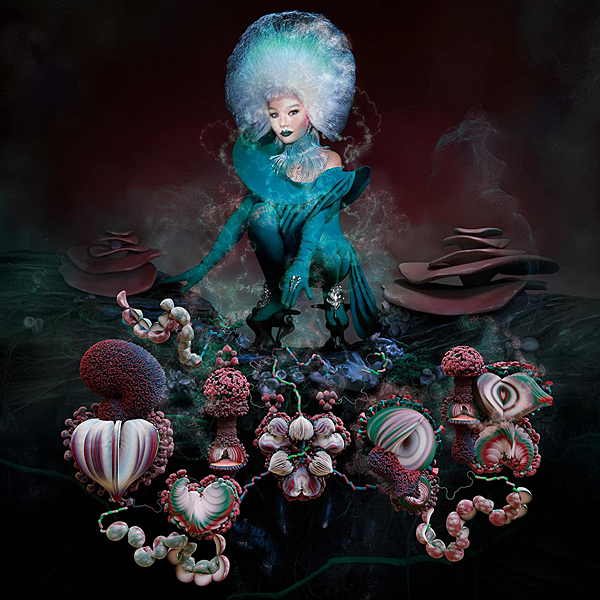
Oversharing has become Björk’s mission. On Fossora (from the Latin word for digger, burrower), another very personal journey is writ large for all to hear and ponder.


Here, the Icelandic creative force mourns the passing of her mother then moves on to ruminations about being a mother to her own daughter.


Never one to mince, she sets the tone in the ardent, near-dance-track opener, “Atopos”: “If we don’t grow outwards towards love/We’ll implode inwards towards destruction.” In “Sorrowful Soil,” a direct tribute to her late mother Hildur, a renowned environmentalist and also a nihilist, she speaks of an “emotional textile” and how in “a woman’s lifetime she gets 400 eggs/but only 2 or 3 nests.” In the brooding, groaning “Victimhood,” the narrative gets even more personal: “Rejection, it left a void that is never satisfied/sunk into victimhood/felt the world owed me love.”


While her words are very intimate, and she’s incredibly brave—rather than narcissistic—for proffering them, it’s the angular, avant music here, intricately recorded, that makes Fossora worth the listen. “Atopos” features a jolting, near-dance beat that she and Indonesian group Gabber Modus Operandi construct, and inside of which six clarinets and bass clarinets, arranged by Björk, flutter and feather. On “Sorrowful Soil,” a baroque-styled choir accompanies. Twelve flutes, again arranged by Björk, form diverse whirlwinds of sound in “Allow.” Opening with a gong, “Ancestress” is backed by a mini orchestra conducted by Ragheidur Ingunn Johannsdottir.


At times these hugely creative, otherworldly creations become mere settings for her exhortations and play like vocals in very unconventional, cutting-edge musical theater. It’s a strange musical universe of cinematic melodrama, not for everyone surely, but utterly original.—Robert Baird


123rock.em


Emily Scott Robinson: Built on Bones

Oh Boy Records (16-bit/44.1kHz streaming on Qobuz). 2022. Brandy Zdan, prod.; Teddy Morgan, eng.

Performance ****½

Sonics ****


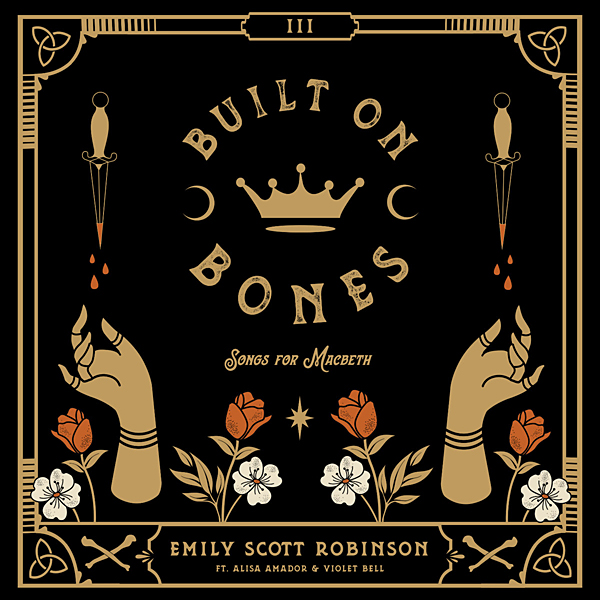
Emily Scott Robinson wants to counteract the trope of ugly, warty-nosed witches as a metaphor for intelligent, powerful women. And because Robinson has an arrestingly beautiful voice and a gift for poetry, her new EP, Built on Bones, is not at all the heavy-handed sermon this description might conjure up.


Originally conceived as a theatrical piece, these six songs were envisioned as being sung by the three witches in Shakespeare’s Macbeth. Joining Robinson, the songwriter, as the other two witches are Alisa Amador and Lizzy Ross (aka Violet Bell); their silken, eerie voices match well with Robinson’s and contribute to the message that these sorceresses are, in fact, good.


“Built on Bones” opens the EP with creepy pedal steel sucked back in time by acoustic-guitar fingerpicking, layered against it in a lilting, ancient rhythm. The string arrangements by Kristin Weber favor low, earthy pitches.


It would have been unthinkable not to use the title “Double Double.” Co-written with Colin Sullivan, who originally commissioned this music, Robinson’s spooky rock song is the least interesting of the cycle. The other Sullivan collaboration, “Men and Moons,” also lacks the magical draw of the other tracks. “Sleep No More” brings back the fairyland feel with its a cappella three-part harmony, the witches preparing mad Lady Macbeth for the afterlife.


The song cycle follows the highlights of Shakespeare’s play from the witches’ point of view. Blossoming with mountain harmony, “Old Gods” imagines the love between Macbeth and his wife. It is sung first in major and then later in minor, after Lady Macbeth’s death. The minor version is the record’s highlight; the voices intertwine like moonlit gossamer, accompanied with bowed bass, piano, and Eamon McLaughlin’s wistful fiddle line. There is nothing ugly about these witches.—Anne E. Johnson

Posted in Uncategorized