Author Archives: Robyn Flans

Capturing Michael Whalen’s ‘Our April Tigers’

Michael Whalen in his synth-dominated recording studio.Photo: Michael Whalen.
Michael Whalen in his synth-dominated recording studio. Photo: Michael Whalen.

Michael Whalen describes the making of Our April Tigers, to be launched April 21 by Michael Whalen Music, as “kinda like a dream crew, kinda like a blind date.”

This wasn’t like all blind date that the majority of us ever went on, however he undoubtedly introduced in a dream crew—one which included Karsh Kale, classical and digital tabla participant, and movie and TV composer; bass virtuoso Michael Manring; Michael Brook, guitarist, producer and movie composer; and trumpeter Jeff Oster.

It turned out to be a match made in heaven, possible as a result of Whalen, a two-time Emmy Award-winning movie and tv composer, selected the musicians himself, regardless that he had by no means met any of them besides Oster. To at the present time, he nonetheless hasn’t met all of them in individual, because the music was recorded by every particular person remotely. Given their demanding schedules, Whalen knew he’d by no means get them in a room collectively.

After Whalen’s earlier (and extraordinary) solo musical outing, Imaginary Trains, he determined that he would love the artistic enter of others. The collaboration that resulted in Our April Tigers is music for the senses.

It’s ear sweet. Close-your-eyes-and-take-a-journey music. A cinematic and phonic voyage made up of each ethereal and gritty choices. The canvas was fairly large open and undefined on the get-go, and when Whalen proposed the concept to the opposite gamers, he might sense some trepidation. The idea sounded a bit like, “I’m unsure what that is going to be, however I’ll cross it round and we’ll see what occurs.”

It sounded just a little bizarre, Whalen knew, however he assured everybody that they’d be co-writers and equal companions, and the one cause it seems as a “Michael Whalen” document is as a result of Spotify solely permits 4 featured individuals within the heading.

“It actually must be a bunch document as a result of it was written as a bunch and it was carried out as a bunch,” Whalen explains. “As the producer, I had remaining say as a result of I believe having a singular imaginative and prescient, particularly on the finish with the combo, is vital. I believe what has killed tasks up to now by different bands is having everybody within the studio with their fingers on a fader. Too many cooks.”

Alan Parsons Master Class Records, Mixes Contest Winner in Atmos

Ultimately, all of the co-conspirators took a leap of religion and Whalen started the method by giving every of them artistic carte blanche, whereas setting his personal private boundaries: He restricted himself to 1 synthesizer and electrical piano per tune. While up to now he might need laid down as much as 80 synth tracks on any given tune, he restricted himself to 2 or three or 4 or 5 per tune to present his companions room to be expressive. It turned out to be very satisfying.

His idea was to start out seven songs with a few keyboard components and a primary construction, after which cross it round with a “go forward and do something you need with them” instruction: “Cut it up, throw it out, play if it evokes you, do what you need.”

Michael Whalen's new album.
Michael Whalen’s new album.

The songs first went from Whalen in New York to Brook in Los Angeles for guitars, then to Kale in India for his percussive work. Next, the music went to San Francisco, the place Manring added bass, after which headed off to Oster, who lives in Mexico half of the 12 months, so he might add trumpets. (Oster, who doesn’t have a house studio, went to New Hampshire, the place Tom Eaton recorded his tracks.) After every completed their portion, the tracks have been returned to Whalen, who created new stems together with their completed components. Then it was despatched on to the following musician.

Whalen had his work lower out for him as many of the musicians labored on totally different platforms, so he despatched .WAV information to everybody to line up and document to. Whalen is an Apple Logic Pro X consumer, as is Karsh; Manring makes use of Pro Tools; Brook makes use of Cubase; and Eaton recorded Oster on Pro Tools.

“I edited and comped among the components, however generally, I went into the combo with 100% of everybody’s contributions out there, after which I made lots of selections about what stayed and what went,” Whalen says. “In the top, I made selections about retaining house whereas retaining components that forwarded the composition of every tune. More than a mission the place nice gamers play lots of notes and show-off, this mission was about 5 composers coming collectively and creating music collectively by way of listening and musical self-discipline.”

In truth, lots of Brook’s components have been so refined that Whalen was involved that the bass and percussion would crush the guitar components. From the start, he sought to make sure that everybody had equal illustration, so he constructed a number of of the mixes round Brook’s contributions.

“I’m so pleased I did,” he says. “The textures and inventiveness of Brook’s components actually units this mission aside. He is such a artistic and masterful composer and technologist.”

Explaining his strategy to the general combine, Whalen says, “I attempted to maintain the audio chain as easy and clear as doable. It was essential to me to have every of the musician’s musical ‘voices’ heard. All 5 of us have been contributing equally. Therefore, the combo wanted to really feel natural and dynamic so it might really feel like we have been all enjoying in the identical house collectively. Each of the musicians is somebody who listens so deeply that the combo was pretty straightforward to discover a stability.

“I really like punchy percussion, however typically punchy percussion isn’t acceptable and also you need percussion to do different issues dynamically,” he continues. “On a document like this, it’s very, very straightforward for the percussion to take all the things over, particularly on the sooner songs. One of the issues I did was be sure that the percussive parts have been backed-off. You undoubtedly get the ‘level’ and fringe of the components, nevertheless it’s just like the percussion is a step again from the opposite devices. It makes the house really feel larger with out having an excessive amount of reverb or sonic ‘mud’ that some individuals need to take care of of their mixes. I like readability, depth and textural curiosity in my tracks.”

He used an SSL2+ audio interface on the mission and combined on Dynaudio Core 7 studio screens, which he loves as a result of they’re “very, very true.”

His favored outboard gear consists of the SSL Studio Collection apps, “particularly the compressors and EQ. Great sound,” he says. He loves the ValhallaDSP plug-ins and says their reverb and delays performed a serious half within the Our April Tigers mixes. He additionally used lots of the Apple Logic plug-ins, Lexicon reverbs and even some outboard results like his Moog MoogerFoogers and Mu-tron Bi-Phase reverb, which he says is lots of enjoyable.

The unorthodox recording course of took about 5 months, with roughly two weeks to finish the combo, with revisions and wanted breaks. Ultimately, he discovered the complete enterprise satisfying.

“I liked how nicely every of the songs got here out compositionally,” Whalen states. “The gamers made some nice selections. I knew how gifted all of them have been, however they went past what I might have hoped for.”
Classic Tracks: Martina McBride’s “Independence Day”

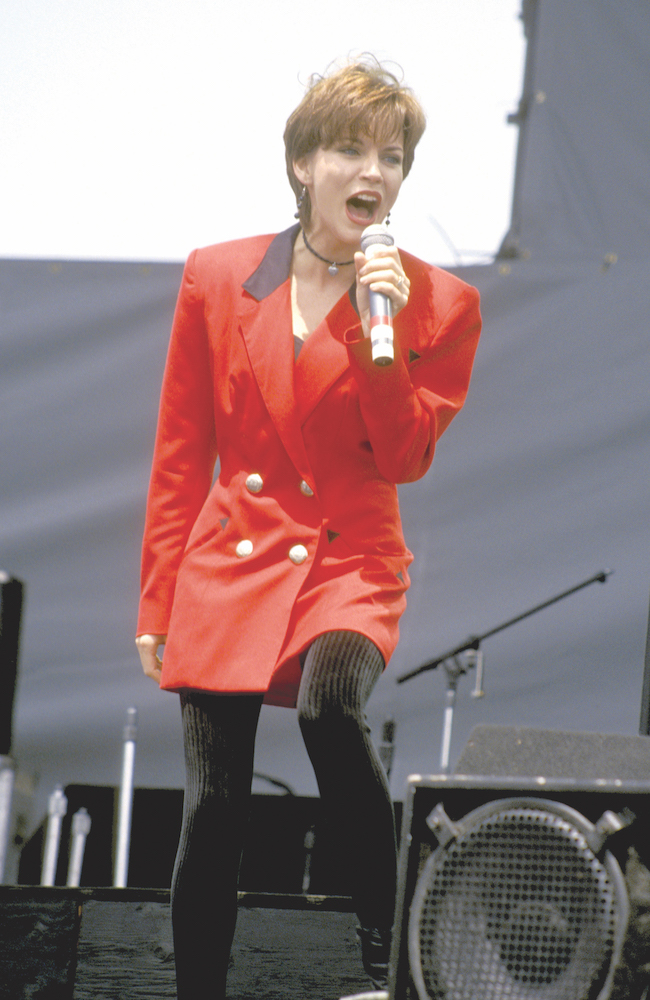
Martina McBride during 1994 Country Music “Fanfest” at Pomona Fairgrounds in Pomona, California, United States.
Martina McBride during 1994 Country Music “Fanfest” at Pomona Fairgrounds in Pomona, California, United States. (Photo by Ron Galella/Ron Galella Collection via Getty Images)

O.J. Simpson may have killed the chances of Martina McBride seeing “Independence Day” reaching Number 1. The song, which tackled domestic abuse in a poignant yet powerful manner, was released in May 1994, and Nicole Brown Simpson and Ronald Goldman were stabbed to death on June 12 of that same year. While some radio stations believed the song was relevant, others banned it.

So a song that McBride so passionately delivered and which should have been a Number 1—the Country Music Association pronounced it Song of the Year—halted at Number 12 on the charts.

After hearing from her promotional team that there were multiple stations that would not play the single, McBride actually asked for a list of those music directors and called them. She remembers saying, “I’d like to have a conversation about this song. What’s the problem?

“They said, ‘We just don’t feel it fits on our radio station,’” she continues. “I remember saying, ‘But you’re talking about the O.J. Simpson trial every day on your radio station at noon and 6 p.m. and whenever you do your news. What’s the difference?’ Then I remember another programmer telling me, ‘When that video comes on and my daughter comes in the room, now I have to have a conversation with her about it.’ ‘Yeah, maybe that’s not a bad thing; maybe you should do that.’”

McBride was able to change some opinions, but ultimately 10 stations refused to play the song. From the moment she heard it, however, McBride never hesitated to record it. She says that she felt its power instantly.

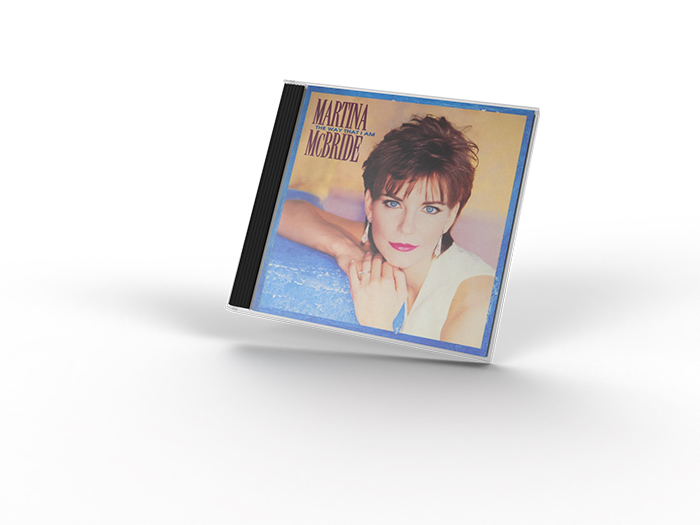
“Independence Day” was the third single from McBride’s second album, The Way That I Am, produced by Paul Worley, Ed Seay and McBride, and engineered by Ed Seay and Clarke Schleicher.

TRACKING AT THE MONEY PIT

Seay recalls that the basic tracks were done at The Money Pit in Nashville, owned by drummer Eddie Bayers, Jr., and his father Eddie Sr. He says they had done something of an overhaul on the studio a couple of years prior, which included the purchase of a Trident 80B console from Track Record Studios in Los Angeles, where he and Worley had been working on a project.

“This Trident 80B had an oversized power supply, or we bought a bigger power supply, just like a bigger engine for the console,” Seay recalls. “We got all the newest chip upgrades; the fastest, hottest-sounding console we could. And then we had a Mitsubishi X-850—that was big in town, but it didn’t sound that great. We got a guy to modify the analog circuitry, and it became the best-sounding X-850 I’d ever heard.”

The main room at The Money Pit was live-sounding, with linoleum floors and a wall covering called OSB that Seay describes as looking like chipboard. The room had a 14-foot ceiling and a vocal booth in one corner, with non-rectangular design throughout. The control room was expanded to include a medium-wood room, fairly live and splashy. Behind it, the acoustic guitars—in this case, Paul Worley and Bill Hullett—would set up to record. On both acoustic guitars, Seay used AKG 414s through an 1176. An office was converted into a keyboard area behind the vocal booth for the 9-foot Baldwin SD-10 Concert Grand piano, a Wurlitzer and a Twin reverb. Steve Nathan handled keyboard duties on the session.

Joe Chemay recorded his bass in the control room in front of the console, direct into an 1176. He had a view of drummer Lonnie Wilson, who Seay miked with a Neumann 47 FET on the kick drum into a GML preamp and an ADR Vocal Stressor. Seay placed a Shure SM57 on the snare, through a GML preamp into a GML EQ. On the hi-hat, he used an AKG 451; the overheads were AKG 451s. On the toms, Seay used Sennheiser 421s with an ADR E900 sweep EQ, which he describes as a “musical, but with very aggressive EQ which makes the drums explode.”

His room mics were Crown SASS-Ps—stereo PZM into UREI 1178S. “You put it out in front of the drums, and you get a perfect stereo image,” Seay asserts.

The Money Pit’s “secret weapon,” though, was the Sky Hook.

MAKING IT UNIQUE, POWERFUL

“I really haven’t seen other studios do this,” Seay maintains. “The ceiling in the main drum room was 14 feet high, and the Sky Hook was an SM 57 up at the very top of the ceiling, looking down on the floor. We put a lot of compression on it from a dbx 160X. It added so much explosiveness to the drum sound. It was so exciting, and to mix some of that in, to have a track of that, it sounded like you were in the room.”

It was just what the powerful song needed — for the listener to feel the implied explosion and fireworks of the subject matter.

Across the hall from the control room was the studio lounge, which doubled as the recording area for electric guitar. Brent Mason was miked with a SM57 into a GML pre to a Sontec DRE 202 compressor, then GML EQ. “It was a real suck-and-blow compressor, Seay explains. “It made up a lot of gain. It would explode. It was an important-sounding compressor. Some compressors tend to turn things down. This one kind of turns things up.”

Steel player Paul Franklin shared the area, but was separated from Mason by a large foam chunk about 8x4x1 feet. Sennheiser 421s were used on each of his cabs. Steve Nathan played all the keyboards, including the orchestra bells (overdubbed right after the basics were cut) on his synthesizer.

“A lot of people said, ‘Tell me about the theater chimes,’” Seay laughs. “And I said, ‘Well, Steve played a sample on a synthesizer. I’m not going to lie.’”

The Martina McBride Album, "The Way I Am"
The Martina McBride Album, “The Way I Am”

THE POWER OF VOICE

The studio had a two-channel headphone system and a gigantic 1,500-watt UREI power amp that many of the players regularly said were some of the best-sounding headphones they ever heard.

Seay says the musicians constantly remarked how inspiring it was to hear McBride in their headphones because, even though she was just providing a scratch vocal to their basic track, she was going for it on every pass. McBride used a hot-rodded Neumann U 87 converted into a tube mic on the scratch vocals. Seay says they definitely nailed it by take three, although it was probably take two. “We had great players, and the song was great,” he recalls. “It was one of those times where everything was 100 percent— the studio was 100 percent, the players were 100 percent, the artist was 100 percent. It was as good as it got.”

Classic Tracks: Steve Earle’s “This City”

Classic Tracks: Eddie Cochran’s “Summertime Blues”

Producer Worley and engineer Schleicher oversaw the recording of McBride’s final vocals. Schleicher believes they used a Sony C800G on her voice, but he’s not absolutely certain. No one remembers the studio used, but it didn’t really matter because they brought their own gear for the vocals to keep everything consistent while Seay worked at The Money Pit. “We kind of created a vocal path—mics, preamp, compressor, EQ—that we carried with us so we could go anywhere and work,” Schleicher explains. “Our typical vocal path at the time was a GML preamp, an LT Sound CLX-2 compressor and then a GML EQ—and we were working on the Mitsubishi X-850 digital tape machine.” Schleicher says Worley’s vocal method was to warm up the artist and then have the singer do six or seven top-to-bottom performances. Then Worley would put together a comp from those takes, and Schleicher would make rough mixes and give them to the artist. Schleicher says making comps for McBride was not easy because everything out of her mouth was good.

Nonetheless, she would take Comp One home.

“And man, she would do her homework!” Scheicher exclaims. “She would come back, warm up, and sing another round of six or seven great vocals. Then Paul would take Comp One and all the new vocals and create Comp Two. For an artist like Martina, Comp Two was all you needed, but I would make a rough mix of it and she would live with it and maybe sometimes she would come back and sing it again or sometimes she would come back and we’d say, ‘Let’s just sing it again for fun. You’ve got Comp Two. It’s genius. Pressure’s off.’ Martina was so good at listening to her performances and adding new great stuff.”

MIXING MARTINA

The Money Pit had lots of outboard gear, which Seay says compensated for the minimal EQ on the Trident console. “The studio had lots of 1176 compressors, and I had four racks of gear that I was bringing,” he remembers. “We had everything we needed. I remember when I mixed the song, I used an EMT 250 Digital reverb, a Yamaha SPX 900 Digital Reverb, and we also had an EMT 140 plate at the studio. If you hear a little tape slap on her voice, it was my Roland Chorus Echo for delay. I spent about a day mixing the song and toward the end of the day, Paul and Martina dropped by and we made a few minor adjustments, and that was it.”

Seay still marvels at what an incredible record “Independence Day” is.

“It was just one of those breathtaking songs. It was so exciting,” Seay says. “It had a soaring chorus. The band was tight and tough, and it went down very quickly. It was just one of those where you felt, ‘This is a real record!’”

McBride agrees: “To me, the recording sounds like the musicians really took it seriously—not like they were playing their fourth song of the day, like it was really important. It feels to me like it has an intention that the musicians played with intention and heart—the bells, the acoustic riffs that start it out, the drums sound big. It always comes down to a lot of things that make a record work, and for that one, it was the power of the lyric, the song and the melody. When you write that lyric out, it’s poetry—all the use of metaphor and how that picture was painted, so real and raw. I think the conviction came through in my vocal, and the band played it with such energy and passion.”