Author Archives: Sarah Jones

Recording Jane Ira Bloom’s ‘Picturing the Invisible: Focus 1’

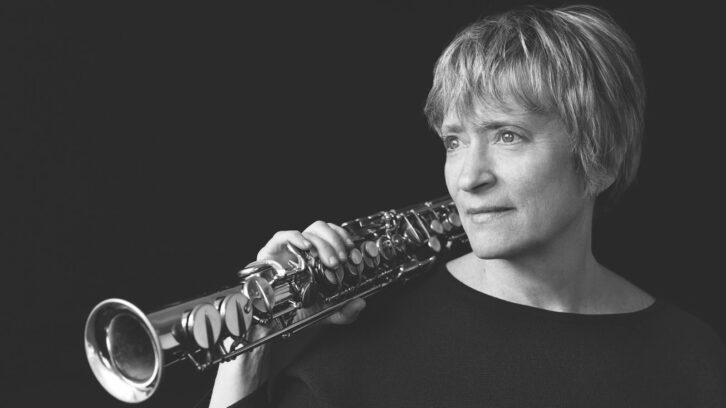
 Jane Ira Bloom
Jane Ira Bloom. PHOTO: Brigitte Lacombe

Grammy-winning soprano saxophonist and composer Jane Ira Bloom has always pushed the envelope. Her innovative spirit manifests in her music, through collaborations with iconic jazz artists like Kenny Wheeler and Charlie Haden, and world artists including South Indian veena artist Geetha Ramanathan Bennett and Korean komungo player Jin Hi Kim.

That innovative approach extends to technology, as she has proven herself to be a pioneer in the use of live electronics in jazz and a passionate advocate of high-resolution and immersive recording. In a most interesting side note, she was the first musician commissioned by the NASA Art Program, and even has an asteroid named after her: asteroid 6083janeirabloom.

So when Bloom set out to record her 19th album, Picturing the Invisible: Focus 1, in 2020— right at the onset of the Covid pandemic—she made a radical move that pushed her to her creative limits, while bringing a new sense of immediacy and honesty to the collaborative process.

Picturing the Invisible: Focus 1 is a series of eight compositions inspired by the striking, spare, black-and-white science photography of New York City artist Berenice Abbott. “I looked at these unbelievably gorgeous, scientific photos that Berenice Abbott took in the ’50s and ’60s,” Bloom recalls. “They were demonstrations of what goes on in physics with light waves and sound waves, and had never been done before. They’re just starkly beautiful.”

The expression of cyclical motion and momentum and ebb and flow in the photographs resonated with her as an improviser, she says: “I was interested in how sound changes when it moves, and physics.”

For the project, supported by the New York City Women’s Fund for Media, Music and Theatre, Bloom wanted to bring art and audio science together in a way that mirrored the original impulse of Abbott’s photography. “The idea of a very powerful visionary artist, a female artist like Berenice Abbott, communicated to me,” she says, “and then the idea that this could be a sound capture where art and science could mingle in a way that would be very new and exciting.”

“These pictures kind of look like the pictures that you get in audiobooks, like the interferences when you have two sound sources that overlay each other,” adds recording engineer Ulrike Schwarz. “In order to make these interferences really audible, I thought, ‘That calls for super-high resolution, and wouldn’t it be even cooler if it was also 3D?’”

Picturing the Invisible: Focus 1—which was nominated for a Grammy in Best Immersive Album after this story was turned in—is now an ultra-high-resolution recording available in stereo and 5.1 surround (up to 384 kHz/32-bit), Dolby Atmos, AURO-3D FLAC (96 kHz/24-bit), and high-resolution streaming in MQA and other formats.
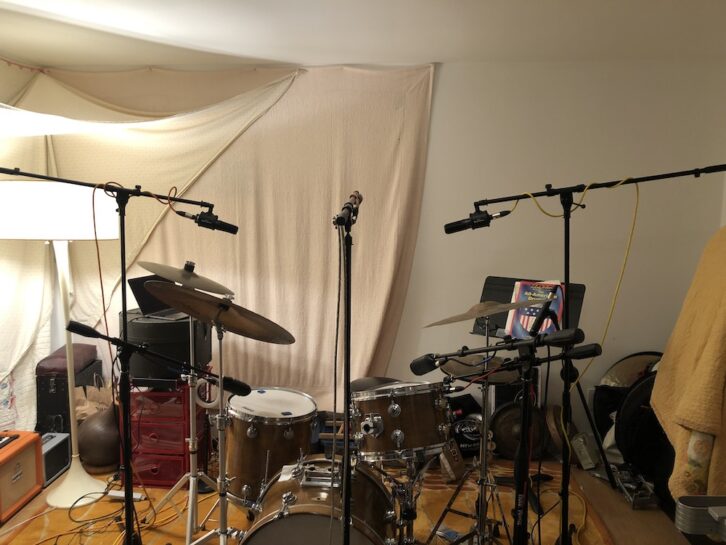
The drum setup in musicianAllison Miller’s New York City home.
The drum setup in musician Allison Miller’s New York City home. PHOTO: Courtesy of Ulrike Schwarz

IMMERSIVE IN MIND

Bloom has long embraced immersive recording, a passion borne out of her decades-long collaborative partnership with producer/ engineer team (and married partners) Ulrike Schwarz and Jim Anderson.

“My music has always had a strong interest in how sound changes when it moves,” Bloom explains. “The history of working with Jim and my music has also been thinking very fully about how to amplify it into an immersive audio recording experience.”

An idea evolved to employ high-resolution, immersive recording techniques to capture music that Bloom would compose and perform with several world-renowned improvisers in New York. The pieces were written, studio plans were beginning to take shape…and then, the world shut down.

Reimagining the Jane Ira Bloom project in the face of pandemic limitations meant forming a new means of recording. The focus shifted to honing the music into duets and devising a way for musicians to improvise together in real-time, connecting remotely from their homes in New York City, while preserving the highest level of immersive sound capability.

“The way we imagined this was, spare was better, both compositionally and sonically,” says Bloom. She paired with three renowned improvisers: drummer Allison Miller, koto artist Miya Masaoka and bassist Mark Helias. “I couldn’t do this with just anybody,” she adds. “These are musicians whom I have a history of playing with, so there’s a lot of collaborative vocabulary that we already shared for many, many years of performing.”

“It became, ‘Let’s really focus on silence,’” says Schwarz, “but still, I was hoping to keep the 3D element. I knew we would go to very, very small rooms and not ideal rooms, but in the end, we were still able to get there because later we took it out to our favorite live chamber at Skywalker Sound, where it was mixed by Jim.”
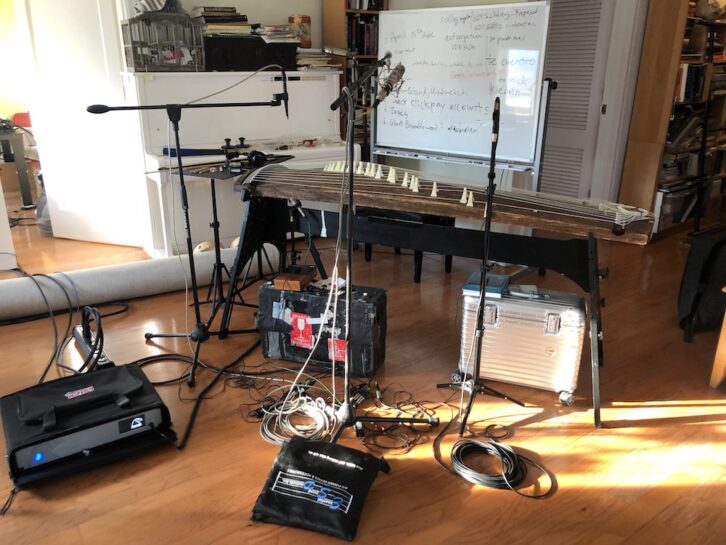
The tracking setup for recording koto artist Miya Masaoka in her New York City home.
The tracking setup for recording koto artist Miya Masaoka in her New York City home. PHOTO: Courtesy of Ulrike Schwarz

HI-RES TRACKING AT HOME

Tracking took place over three days in February 2022. The project was recorded, mixed and mastered using Merging Technologies Horus/Pyramix recording systems and the Merging+Clock U. Schwarz set up a computer in Bloom’s tiny home office, applying ad-hoc acoustic treatment: towels on a desk, a coat on the sofa. The workstation in Bloom’s office, remotely controlled by Schwarz, ran at 384 kHz.

A second recording system and iPad (equipped with a high-speed internet hub for gaming to accelerate the process) traveled with Schwarz to each of the other musician’s homes. The musicians used Zoom as a visual reference and communicated sonically through SonoBus.

The recording chain was minimalist, centered mainly around a stereo mic pair: one Sanken CU-41 and one Neumann TLM170.

“Instead of the usual seven microphones or sometimes nine that Jim [Anderson] would be using in a studio recording, we had to bring it down to stereo, so that was the part that I really had to figure out,” says Schwarz, “and then, of course, you have to hope that these people live in somewhat quiet apartment buildings.

“What is special about this album is that we used a normal internet connection that was available from each musician’s home,” she adds, noting that she was able to keep latency to a level that made improvising possible. “I mean, if I had asked someone in broadcast, ‘Hey, I need two of these units and I need a fixed bandwidth for half an hour,’ that wouldn’t have been that spectacular. But the way we did it— recording on both ends in super-high definition and doing it with ‘home means’ using personal computers— that made it unique.
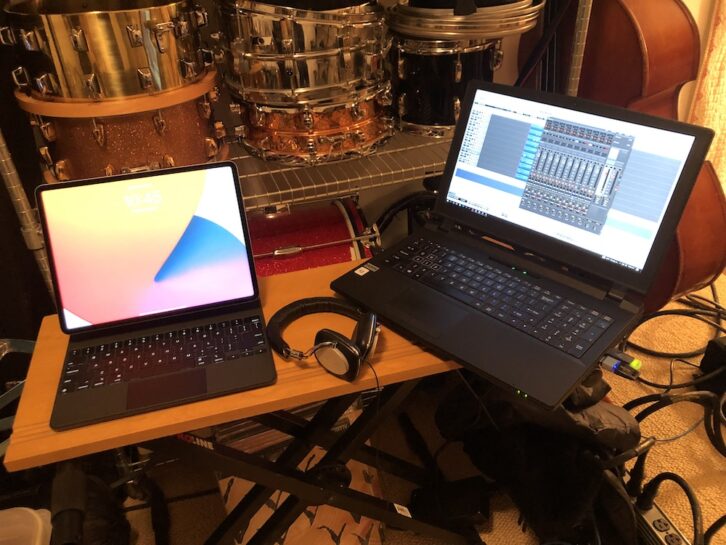
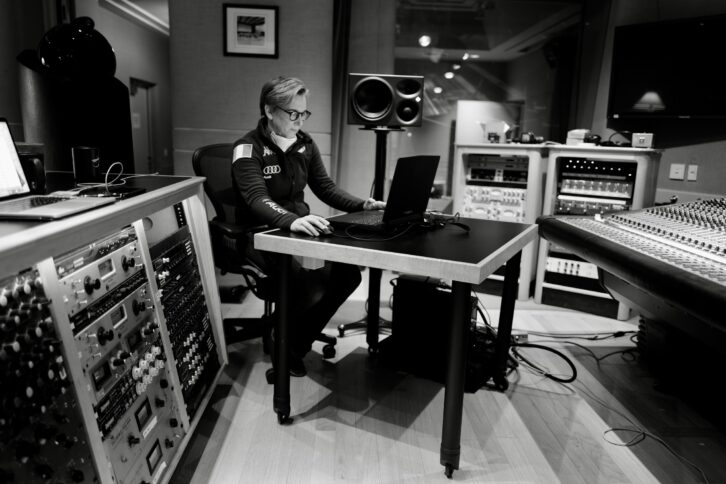
Engineer Ulrike Schwarz’s portable recording rig, based around Merging Technologies Horus/Pyramix 384 kHZ recording systems, with B&W P5 headphones.
Engineer Ulrike Schwarz’s portable recording rig for the Jane Ira Bloom project, based around Merging Technologies Horus/Pyramix 384 kHZ recording systems, with B&W P5 headphones.PHOTO: Courtesy of Ulrike Schwarz

“I had spent a lot of time calculating bandwidth and calculating speeds to find out what I could get away with, because all these latencies relate to sample rate,” she continues. “If you go with 192 kHz, you have a fourth of the time than if you were at 48, and a lot less than if you tried to do this with any type of data-reduced signal.”

Schwarz quickly hit a snag at Miya Masaoka’s house. “I was checking the internet, and I thought, ‘She has a gigabyte line; somebody’s taking speed away.’ Her son was playing video games—and when you have to tell a teenager that he has to get off the internet and not play with his friends, that’s not how you make friends. That was one thing I had to navigate.”

In the end, when connections were fast and stable, latency ran just 8 to 10 milliseconds.

“I was trying to give them something resembling a studio experience in terms of reliability,” she said, “but for me, it was really more of a guerrilla command, in that I had to keep everybody and everything a little bit under control.”
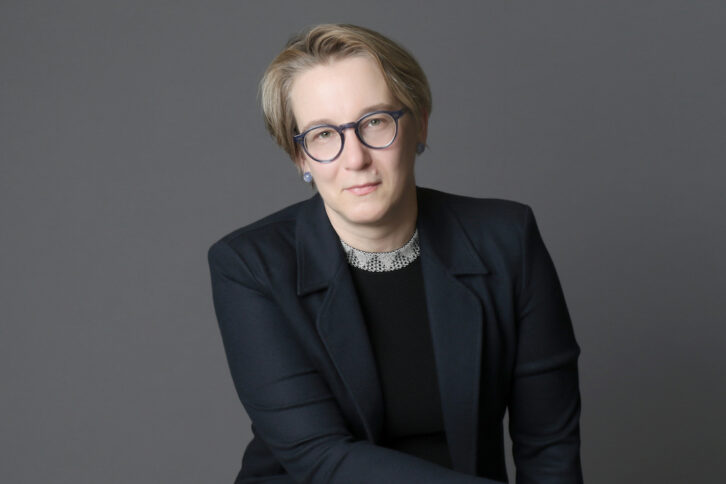
Recording, mix and mastering engineer Ulrike Schwarz.
Recording, mix and mastering engineer Ulrike Schwarz. PHOTO: Courtesy of Ulrike Schwarz

HI-RES, IMMERSIVE MASTERING

The Jane Ira Bloom recordings and rig were sent to Skywalker Sound, where Anderson created immersive mixes. “We flew the whole shebang there: The clock was there, the power was there,” says Schwarz, who, together with Anderson, frequently works at Skywalker. “It’s really nice that they let us completely take their studio and turn it into our studio.”

Schwarz mastered the stereo and 5.1 mixes at Anderson Audio, a studio she shares with her husband in their home in Brooklyn. “In my editing suite, I have Wilson CUBs and an Eclipse TD725SW subwoofer,” she explains. “When I’m working, I’m listening through the Pyramix and sometimes have our clock there as well, to really see what’s going on. The amps are Benchmark ABH2 mono blocks and HPA4 preamplifier. My favorite headphones are B&W P5s; I took them with me for these recordings.”

She mastered the immersive mixes in collaboration with Morten Lindberg, in his newly updated Oslo studio: “With the help of Morten, we are able to not only offer this breathtaking album in conventional formats like stereo and 5.1 surround, but also in immersive audio on streaming and download platforms.”

Franco Ambrosetti’s ‘Nora’—Capturing a Jazz Legacy in Hi-Res, 5.1 Surround

Ultimately, Jane Ira Bloom’s Picturing the Invisible is a stunning study in contrasts: sound and silence, simple and complex, high-tech and low-tech, together and apart. “I say this with great passion: Sometimes it’s the negative space, it’s the use of silence as well as sound in this recording that makes it unique, thinking of an immersive sound environment,” says Bloom.

“It’s a rare moment in a musical life where the sound—which your ears are so attuned to the depth, the timbre of it, the spaciousness of it—is ever really captured in the level of definition that Ulrike is capturing,” she adds. “That is such an extraordinary experience for the artist because it’s reaffirming sonically what you experience internally, but almost never experience in the normal recording world. It’s a peak musical experience; that’s the best way I can describe it.”
Franco Ambrosetti’s ‘Nora’—Capturing a Jazz Legacy in Hi-Res, 5.1 Surround

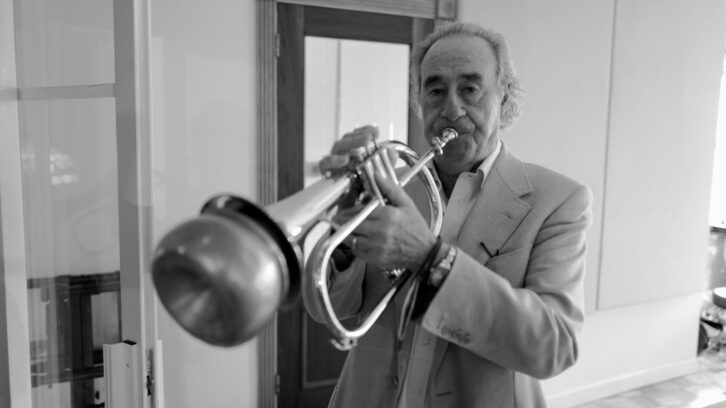
Franco Amrosetti at Sear Sound, New York City
Franco Ambrosetti at Sear Sound, New York City. PHOTO: Jim Anderson

For six decades, Swiss jazz icon Franco Ambrosetti has been a revered trumpeter and flugelhornist in the European scene, playing with the likes of Dexter Gordon, Woody Shaw, Louis Hayes and Donald Byrd, and recording 26 albums as a band leader with such esteemed players as Kenny Barron, Tommy Flanagan and Phil Woods.

At 80, Ambrosetti, long known as a fluid improviser with blistering chops, is trading some of that ferocity for a more restrained approach. “When you’re in your 20s, you want to play as fast as you can and as high as you can, like Clifford [Brown],” he says in his new album’s liner notes. “But somewhere after turning 50, you concentrate on more important things, and you try to say something with just a few notes, but the right ones, like Miles Davis did.”

Ambrosetti’s latest release, Nora, serves that muse in a grand, orchestral statement; a crowning accomplishment of a long legacy. The sweeping collection of ballads spans the decades, from Ambrosetti’s own “Nora’s Theme,” written for a 1997 theater production of Ibsen’s A Doll’s House, to interpretations of classics including “Autumn Leaves,” John Coltrane’s “After the Rain” and Miles Davis’ “All Blues.”

“He wanted to summarize his life musically,” says producer Jeff Levenson, “and I don’t want to sound like a Hallmark greeting card, but there’s a lot of love in this project.” Levenson, a Grammy-winning producer whose collaborators have included Branford Marsalis, McCoy Tyner, Arturo Sandoval and the Bill Evans Trio, brought a dream lineup together for Nora: Ambrosetti leads an all-star ensemble featuring pianist Uri Caine, bassist Scott Colley, guitarist John Scofield and drummer Peter Erskine, along with a 22-piece string orchestra conducted by Grammy-winning pianist/arranger Alan Broadbent. The SACD album was mixed in stereo and 5.1 by immersive audio veterans Jim Anderson and Ulrike Schwarz and mastered in stereo by Greg Calbi and in surround by Bob Ludwig.

Grammy Engineering and Production Nominations Announced

For Levenson, it was important that the musicians brought a sense of camaraderie, of family and community, to the collaboration. “Everyone who has come together on this project—John Scofield, Peter Erskine, Scott Colley, Uri Caine—there’s a very strong sense of ‘let’s come together and enable Franco’s dream,” he says. “I think there’s a profound emotional investment to provide for Franco and to discover, collectively, ‘What are we trying to achieve?’”

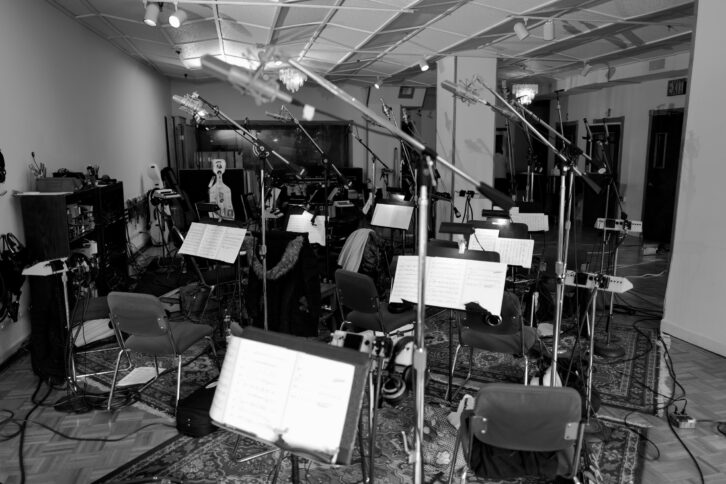
A quintessential New York jazz project, Nora was recorded at Manhattan’s legendary Sear Sound, which imbued the sessions with a distinctive sense of place. “Sear Sound was a place that fostered or nurtured comfort,” says Levenson. “I think there’s no way to fully quantify or delineate its importance or value, but it was important and it had value. The room feels worn. It feels used. It feels kind of rich with history. Also, this was a room that accommodated 22 strings.”

The idea to record a surround album came from Jim Anderson, a 10-time Grammy winner who has recorded five Ambrosetti records, dating back to 1992’s Live at the Blue Note. “The deal was, we would mix stereo here, and while we were in the middle of the sessions, I said, ‘Guys, we’re going to miss an opportunity here because there’s so little in the surround and immersive world being done in this kind of music with this kind of quality and with these kinds of players,’” he explains. “I said, ‘We really have to take advantage of this.’”

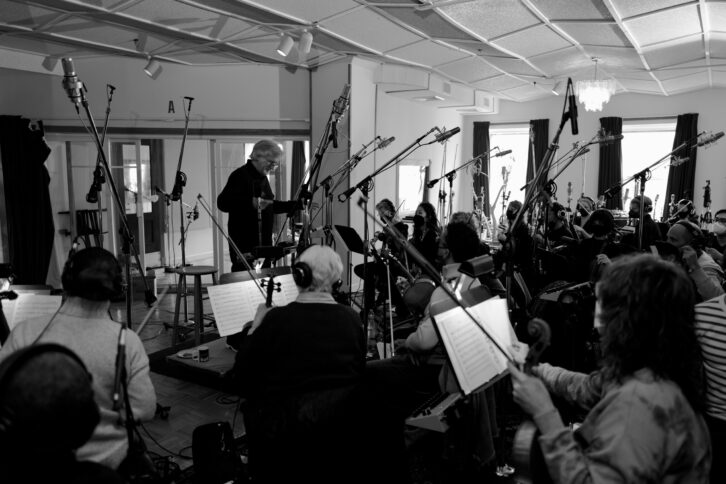
The studio setup at Sear Sound, New York City, for the 22-piece string section, awaiting the musicians. PHOTO: Jim Anderson

PLANNED SPONTANEITY

It was a whirlwind week of sessions: Ambrosetti, Erskine, Colley, Caine and Scofield were recorded on a Monday and Tuesday; strings arrived that Wednesday, which meant Anderson had to turn around edited references in just a few hours.

“I had said to Jeff, ‘Hey, man, any chance we could have them come in on Thursday?’ ‘Nope. They’re booked.’” he explains. “Anything that had to be done to the session had to be finished so the string players could just play right through. The assistant and I just went through and made sure that we had everything edited properly and that all the sessions were preloaded and ready to go for 22 strings.”

Because the strings and the combo were recorded on different days, musicians played to a click track, a somewhat unusual approach for a jazz recording. To try preserving a live, spontaneous feel, arranger Broadbent says, “My method is to have the orchestra involved in what I call a subsong, where the ensemble is playing its own melody, lifting and expressing things in quiet counterpoint with the lead song.”

Meanwhile, Anderson used the scores to build tempo maps for each session. “Some songs have an introduction and then there’s a little ritard, and then we go on; with all those things, there’s nothing left to chance,” he explains. “The rhythm section’s live, so if there’s any kind of interchange, it’s not like we’re building up from drums and then bass and piano. The strings never have anything that they have to respond to that’s not written out.”

On the final day, Ambrosetti could then respond to everything that had been captured. “What I’m trying to do is make sure I have the flexibility so that I’m not going to get locked into anything I record on Monday or Tuesday, with Franco not being able to, say, duck in and replace,” says Anderson. “That’s the real trick. I wanted spontaneous, but also I wanted it to be flexible at the same time.”

When it comes to miking, Anderson approaches every project with immersive mixing in mind. “Since 2006, I’ve just been adding the little extra pieces so if we ever got into a surround system of some sort, we’d have some flexibility and we’re not just taking mono bits,” he says. “I’ve actually got multiple stereo images of instruments that can make for a fairly convincing soundscape…I did this with the bass, for example. I had a couple of PZMs on the floor so I can actually have a little bit of natural room sound on the bass. Same for the guitar and piano: I have two or three stereo pairs building out the sound. I’ve left myself a lot of options, which will work fine in stereo, and then I also have options that I can use in surround.”

MIKING THE ENSEMBLE

Anderson captured strings using a Decca Tree with an A/B pair behind that, “so I could open things up for surround,” he explains. Mics included Brauner VM-1 in left/center/right and Sennheiser MKH 8020 left and right, with Sanken CU-41 dual-capsule cardioid condensers, Sennheiser MKH 70s and DPA 4007s on sections.

On Ambrosetti, Anderson used an RCA DX-77 and Sennheiser MKH 8020. “Franco is always, and rightfully so, concerned about the sound of his horn,” he says. “He’s the leader, and he wants it to be as lush and full as it possibly can be, so I had a combination of ribbons and condensers to fill him out a bit.”

Arranger/conductor Alan Broadbent leads the strings through two days of sessions PHOTO: Jim Anderson

Guitar and piano were each captured with Sanken CU-41s; a Shure SM57, Neumann USM69 stereo condenser and an AMB tube-buffered DI were used on bass.

For Scofield’s guitar, Anderson says, “John came in with his amp, and he plugged it in and it just had this just nasty little hum, something I knew really wouldn’t be nice in either stereo or in surround. We had all these ESP music cord cables. I had one left over, and I said, ‘Let me just try this.’ I went in, plugged in my $800 AC cord, and the noise went away. On top of that, John’s sound became really tight and focused. In fact, on the first playback, John said, ‘What have you done to me?’ I said, ‘I replaced your AC cord.’

“[Then] John said, ‘There’s a little distortion. I’m doing that on purpose. Don’t take it away.’ There are a couple of notes on ‘After Green’ where he’s got just a bit of a bite on it, a little edge.”

On drums, Anderson used Sanken CU-31s and DPA 4007s, with Sanken CMS-2 M/S stereo mics and CU-41s on overheads. “In stereo, you’re trying to make everything pop out of two speakers,” he explains, “so if I can take the M/S over the drum kit and the A/B that I have over the drum kit, and I can put them front and back, I can create this. I like to call it almost like a cap or a lid on top of the mix; it feels like there are upper mics, but there aren’t. We actually are achieving that through a pair of stereo pairs.”

Recording chains were straightforward: Mics went through Anderson’s John Hardy and Millennia mic preamps, into Sear’s 60-input, custom-built Avalon console, captured in Pro Tools at 32-bit/192 kHz.

SURROUND MIXING

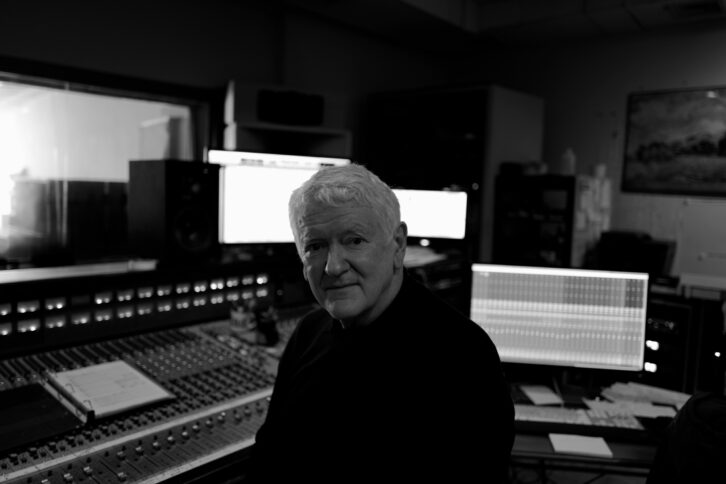
Mixing the Ambrosetti album was handled by the husband-and-wife team of Jim Anderson and Ulrike Schwarz, who have produced hundreds of critically acclaimed recordings and earned dozens of Grammy Award nominations and wins between them. They completed the stereo mix at Anderson Audio, their Brooklyn studio, and did the surround mix at Skywalker Sound. “We did stereo first because we wanted to get that approved, with the intention that those mixes would be the basis of the surround mix,” Anderson explains.

Stereo and surround music mixer Ulrike Schwarz. PHOTO: Jim Anderson

“We’re working in Pyramix here, so we had to have sessions that could be imported or exported from Pro Tools and imported into Pyramix,” he adds, “and, we think it just sounds better at the same time. We’ve done all those moves in stereo, so they’re all written into Pyramix. When we go out to Skywalker, all that work is done so we can just work on the enhancement of the surround.” They took a judicious approach with effects, focusing on lush reverb, including Universal Audio’s Capitol Chambers plug-in; for the surround mixes, the duo employed their “Skywalker trick” in the facility’s live chamber: “We set up a cube of four microphones on the first plane, and then about 15 feet above that is another cube of four microphones,” Anderson explains. “We have a pair of large Meyer monitors that blast and hit the diffusers and excite the room, and that’s our live chamber. That’s how we get our quad reverb; we actually have natural reverb with height.”

Stereo and surround music mixer Ulrike Schwarz. PHOTO: Jim Anderson

Anderson originally approached the Ambrosetti project with the idea of creating an Atmos mix, but Sear Sound’s low ceilings proved to be a challenge for height capture, and during mixing, the team decided to move to 5.1. “That felt right,” he says. “We could really wrap the orchestra and then present Franco in front of you, and the rhythm section, too.

“There’s always a new audience, especially when you get into surround,” says Anderson. “It’s nice that Franco thinks about a project once a year or maybe once every two years, and I’m so happy that we can introduce him to a brand-new audience that’s maybe never heard him.”

Focal Alpha 80 Evo studio monitor review: Next-gen pro powerhouse

Mix with confidence with this speaker that hits the sweet spot of performance and price. We may earn revenue from the products available on this page and participate in affiliate programs. Ask recording engineers to name the most important gear in their studio, and they’ll point to their reference …