Author Archives: Steve May

Could James Cameron’s return to Pandora with Avatar: The Way of Water kickstart a 3D TV revival?

Could James Cameron’s return to Pandora with Avatar: The Way of Water kickstart a 3D TV revival? Steve May considers the proof

Will the Avatar sequel usher in a brand new era of 3D TVs? I’ve been pondering this since seeing James Cameron’s mega-budget sequel.

The authentic Avatar, which as everyone knows proved moderately standard in theatres when launched in 2009, led to a brand new era of 3D within the dwelling. For some time, 
it was subsequent to not possible to purchase a premium TV that wasn’t 3D enabled, and a slew of BDs had been launched on the format. Rival TV manufacturers championed completely different 3D codecs, energetic and passive, every claiming theirs to be higher. Then the 3D bandwagon ran out of gasoline.

Still, stereoscopy is nothing if not persistent. It’s a cyclical development, and the Avatar sequel may properly herald its return. I put this 
to LG, the OLED innovator. LG Display is a main supply of glass utilized by the TV trade, so it ought to know. This was the spokesperson’s reply: ‘As an individual that loves 3D, 
I perceive your want for 3D TVs to make a comeback however at this date we’re not able to announce any new 3D TVs.’

Now I discovered this fascinating. It wasn’t a flat 
out ‘no’, for one factor. Obviously, LG will not be going 
to confide confidential information about upcoming developments, even to your favorite AV Avenger. The smallest advances are swathed in secrecy and solely divulged underneath embargo. But I believe you may interpret that reply as a ‘perhaps’ – at a stretch.

The future is shiny?
Whatever your view of 3D, the prospect of a next-gen 3D TV is mouthwatering. One of the preliminary issues with the format was picture brightness, particularly the shortage of it. That wouldn’t be the case immediately, provided that OLED panels are typically 20-30 per cent brighter than they had been within the early 2010s.

Similarly, movie-making know-how has advanced. Cameron’s movie introduces a brand new type of variable High Frame Rate projection, dubbed ‘Cinematic HFR’. When you noticed Avatar: The Way of Water in 3D at 
a premium display, be it Dolby Cinema, IMAX with Laser or Sony Finity, you noticed it projected in 48fps, moderately than the usual 24fps. But the movie itself is a mixture of 24fps and 48fps – the underwater bits, and a few of the flying sequences, are introduced 48fps, whereas the remaining is 24fps. This prevents the film wanting hyper-real and stagey, an issue that has beset earlier HFR motion pictures comparable to Ang Lee’s Gemini Man and Peter Jackson’s The Hobbit.

The 24fps sequences are introduced in theatres 
as double frames, that’s to say the identical body 
is proven twice. This combine and match method, developed by TrueCut Motion and utilized throughout post-production, is undetectable when watched, 
however the outcomes are beautiful. Not solely does the method take away the blur and judder related to 24fps, it additionally stops the movie wanting low-cost (which it undoubtedly is not) and soapy.

Helpfully, increasingly TVs deal with High 
Frame Rate video, pushed by the recognition of 120fps gaming. It’s totally conceivable that 48fps assist might be launched down the road, in a brand new era of TrueCut Motion-certified screens.

Of course, if we do get this new era of 3D TV, the place would the software program come from? Blu-ray 
is a non-starter. UHD discs don’t assist 3D or 48fps. So it must come by way of streaming platforms. This is much extra doable, because the streamer controls each playout and decoding inside an app, and might replace both as required.

Will 3D TVs make a comeback? I wouldn’t be too stunned. But I’ll wager per week’s value of fish they gained’t be curved.

Posted in Uncategorized

Could James Cameron’s return to Pandora with Avatar: The Way of Water kickstart a 3D TV revival?

Could James Cameron’s return to Pandora with Avatar: The Way of Water kickstart a 3D TV revival? Steve May considers the proof

Will the Avatar sequel usher in a brand new technology of 3D TVs? I’ve been pondering this since seeing James Cameron’s mega-budget sequel.

The authentic Avatar, which as everyone knows proved relatively well-liked in theatres when launched in 2009, led to a brand new technology of 3D within the residence. For some time, 
it was subsequent to unattainable to purchase a premium TV that wasn’t 3D enabled, and a slew of BDs have been launched on the format. Rival TV manufacturers championed totally different 3D codecs, energetic and passive, every claiming theirs to be higher. Then the 3D bandwagon ran out of fuel.

Still, stereoscopy is nothing if not persistent. It’s a cyclical development, and the Avatar sequel would possibly properly herald its return. I put this 
to LG, the OLED innovator. LG Display is a major supply of glass utilized by the TV business, so it ought to know. This was the spokesperson’s reply: ‘As an individual that loves 3D, 
I perceive your need for 3D TVs to make a comeback however at this date we aren’t able to announce any new 3D TVs.’

Now I discovered this fascinating. It wasn’t a flat 
out ‘no’, for one factor. Obviously, LG just isn’t going 
to confide confidential data about upcoming developments, even to your favorite AV Avenger. The smallest advances are swathed in secrecy and solely divulged underneath embargo. But I feel you would possibly interpret that reply as a ‘perhaps’ – at a stretch.

The future is vibrant?
Whatever your view of 3D, the prospect of a next-gen 3D TV is mouthwatering. One of the preliminary issues with the format was picture brightness, particularly the shortage of it. That wouldn’t be the case right now, on condition that OLED panels are usually 20-30 per cent brighter than they have been within the early 2010s.

Similarly, movie-making know-how has advanced. Cameron’s movie introduces a brand new type of variable High Frame Rate projection, dubbed ‘Cinematic HFR’. When you noticed Avatar: The Way of Water in 3D at 
a premium display, be it Dolby Cinema, IMAX with Laser or Sony Finity, you noticed it projected in 48fps, relatively than the usual 24fps. But the movie itself is a mixture of 24fps and 48fps – the underwater bits, and among the flying sequences, are offered 48fps, whereas the remainder is 24fps. This prevents the film trying hyper-real and stagey, an issue that has beset earlier HFR films corresponding to Ang Lee’s Gemini Man and Peter Jackson’s The Hobbit.

The 24fps sequences are offered in theatres 
as double frames, that’s to say the identical body 
is proven twice. This combine and match method, developed by TrueCut Motion and utilized throughout post-production, is undetectable when watched, 
however the outcomes are beautiful. Not solely does the method take away the blur and judder related to 24fps, it additionally stops the movie trying low-cost (which it positively is not) and soapy.

Helpfully, increasingly more TVs deal with High 
Frame Rate video, pushed by the recognition of 120fps gaming. It’s totally conceivable that 48fps assist may very well be launched down the road, in a brand new technology of TrueCut Motion-certified screens.

Of course, if we do get this new technology of 3D TV, the place would the software program come from? Blu-ray 
is a non-starter. UHD discs don’t assist 3D or 48fps. So it must come through streaming platforms. This is way extra doable, because the streamer controls each playout and decoding inside an app, and may replace both as required.

Will 3D TVs make a comeback? I wouldn’t be too shocked. But I’ll wager every week’s value of fish they received’t be curved.

Could James Cameron’s return to Pandora with Avatar: The Way of Water kickstart a 3D TV revival?

Could James Cameron’s return to Pandora with Avatar: The Way of Water kickstart a 3D TV revival? Steve May considers the proof

Will the Avatar sequel usher in a brand new era of 3D TVs? I’ve been pondering this since seeing James Cameron’s mega-budget sequel.

The authentic Avatar, which as everyone knows proved slightly standard in theatres when launched in 2009, led to a brand new era of 3D within the house. For some time, 
it was subsequent to inconceivable to purchase a premium TV that wasn’t 3D enabled, and a slew of BDs had been launched on the format. Rival TV manufacturers championed completely different 3D codecs, lively and passive, every claiming theirs to be higher. Then the 3D bandwagon ran out of fuel.

Still, stereoscopy is nothing if not persistent. It’s a cyclical development, and the Avatar sequel would possibly effectively herald its return. I put this 
to LG, the OLED innovator. LG Display is a main supply of glass utilized by the TV business, so it ought to know. This was the spokesperson’s reply: ‘As an individual that loves 3D, 
I perceive your want for 3D TVs to make a comeback however at this date we aren’t able to announce any new 3D TVs.’

Now I discovered this attention-grabbing. It wasn’t a flat 
out ‘no’, for one factor. Obviously, LG shouldn’t be going 
to confide confidential information about upcoming developments, even to your favorite AV Avenger. The smallest advances are swathed in secrecy and solely divulged below embargo. But I feel you would possibly interpret that reply as a ‘perhaps’ – at a stretch.

The future is shiny?
Whatever your view of 3D, the prospect of a next-gen 3D TV is mouthwatering. One of the preliminary issues with the format was picture brightness, particularly the shortage of it. That wouldn’t be the case right now, provided that OLED panels are typically 20-30 per cent brighter than they had been within the early 2010s.

Similarly, movie-making know-how has developed. Cameron’s movie introduces a brand new model of variable High Frame Rate projection, dubbed ‘Cinematic HFR’. When you noticed Avatar: The Way of Water in 3D at 
a premium display screen, be it Dolby Cinema, IMAX with Laser or Sony Finity, you noticed it projected in 48fps, slightly than the usual 24fps. But the movie itself is a mixture of 24fps and 48fps – the underwater bits, and a number of the flying sequences, are introduced 48fps, whereas the remainder is 24fps. This prevents the film trying hyper-real and stagey, an issue that has beset earlier HFR films similar to Ang Lee’s Gemini Man and Peter Jackson’s The Hobbit.

The 24fps sequences are introduced in theatres 
as double frames, that’s to say the identical body 
is proven twice. This combine and match approach, developed by TrueCut Motion and utilized throughout post-production, is undetectable when watched, 
however the outcomes are gorgeous. Not solely does the method take away the blur and judder related to 24fps, it additionally stops the movie trying low cost (which it undoubtedly is not) and soapy.

Helpfully, an increasing number of TVs deal with High 
Frame Rate video, pushed by the recognition of 120fps gaming. It’s completely conceivable that 48fps assist may very well be launched down the road, in a brand new era of TrueCut Motion-certified screens.

Of course, if we do get this new era of 3D TV, the place would the software program come from? Blu-ray 
is a non-starter. UHD discs don’t assist 3D or 48fps. So it must come through streaming platforms. This is much extra doable, because the streamer controls each playout and decoding inside an app, and may replace both as required.

Will 3D TVs make a comeback? I wouldn’t be too shocked. But I’ll wager every week’s value of fish they gained’t be curved.

Amazon’s ‘Omni’ Fire TV 4K QLED takes on Sky Glass and The Frame

Amazon has launched its personal vary of Fire TV-powered flatscreens within the UK, led by a QLED flagship lineup dubbed the Omni Series.

Fire TV is one among Amazon’s largest successes, with over 200 million units offered worldwide. New fashions promise essentially the most personalised Fire TV expertise but, and on the Omni there are some modern new options, together with AI generative artwork -–simply ask Alexa to create an AI picture as a TV backdrop, and some moments later a customized piece seems in your display.

Amazon is pitching its Omni proposition someplace between Sky Glass and Samsung’s QLED The Frame, albeit with out the fashion.

Much like The Frame, the Omni can show artworks and function as a sensible dwelling hub. However there is no such thing as a month-to-month subscription required to show the Omni into an artwork gallery. Amazon plans to supply free entry to a set of greater than 1,700 gallery-quality photographs and curated artwork items. Cutely, you can even ask Alexa to inform you somewhat concerning the varied artworks it’s displaying. There are additionally 80 ‘movement backgrounds’ that are partially animated, or brief video sequences.

The Omni is accessible in 43in, 50in, 55in and 65in display sizes, priced at £550, £650, £750, and £999 respectively. The QLED panel options full-array native dimming, with as much as 80 zones on the most important mannequin, and has built-in assist for HDR10+, HLG and Dolby Vision (together with HDR10+ Adaptive and Dolby Vision IQ). We had an in depth have a look at the set at its London launch; photos exhibit good bright-room distinction and color pop. An Adaptive Brightness function will dynamically change brightness ranges relying on ambient lighting situations.

Unveiling the display, Amazon mentioned it was eager for its new Fire TV {hardware} to supply performance, even when no TV programme was being watched -–therefore the Fire TV Ambient Experience. Paintings and art work are displayed in native 4K decision, and you’ll pull up private photographs. The Omni additionally introduces Alexa Widgets: small color blocks which might be calendar reminders, sticky notes and good dwelling system controllers, the latter for Alexa powered lighting, thermostats or safety cameras.

The set has built-in far-field microphones, plus built-in presence sensors to detect when an individual enters the room and activate this ambient expertise. In addition to the acquainted Fire TV interface, all new Amazon Fire TVs have Freeview Play tuners.

Gamers ought to observe that the Omni is a 60Hz panel, and doesn’t assist 4K/120fps gaming. There is eARC, although, and Amazon continues to be pushing the gaming angle exhausting, particularly its cloud-based Luna platform, which incorporates Twitch integration.

Supporting the Omni display are Fire TV 4-series, and entry degree 2-series units. The 4-Series is accessible at 43in, 50in and 55in, and options HDR 10 and HLG HDR assist. Prices begin at £430.

The entry-level 2-Series is accessible as both a 32in HD display or 40in 4K mannequin. Both are HDR-compatible, and costs begin at £250.

All Amazon’s new Fire TVs flatscreen can be found for pre-order. To rejoice their launch, patrons can save as much as £300 off fashions.

Posted in Uncategorized

Amazon’s ‘Omni’ Fire TV 4K QLED takes on Sky Glass and The Frame

Amazon has launched its personal vary of Fire TV-powered flatscreens within the UK, led by a QLED flagship lineup dubbed the Omni Series.

Fire TV is certainly one of Amazon’s greatest successes, with over 200 million units offered worldwide. New fashions promise probably the most personalised Fire TV expertise but, and on the Omni there are some revolutionary new options, together with AI generative artwork -–simply ask Alexa to create an AI picture as a TV backdrop, and some moments later a customized piece seems in your display screen.

Amazon is pitching its Omni proposition someplace between Sky Glass and Samsung’s QLED The Frame, albeit with out the fashion.

Much like The Frame, the Omni can show artworks and function as a sensible residence hub. However there isn’t a month-to-month subscription required to show the Omni into an artwork gallery. Amazon plans to supply free entry to a set of greater than 1,700 gallery-quality images and curated artwork items. Cutely, you may as well ask Alexa to let you know somewhat concerning the numerous artworks it’s displaying. There are additionally 80 ‘movement backgrounds’ that are partially animated, or brief video sequences.

The Omni is accessible in 43in, 50in, 55in and 65in display screen sizes, priced at £550, £650, £750, and £999 respectively. The QLED panel options full-array native dimming, with as much as 80 zones on the most important mannequin, and has built-in help for HDR10+, HLG and Dolby Vision (together with HDR10+ Adaptive and Dolby Vision IQ). We had a detailed take a look at the set at its London launch; photos exhibit good bright-room distinction and color pop. An Adaptive Brightness characteristic will dynamically change brightness ranges relying on ambient lighting situations.

Unveiling the display screen, Amazon stated it was eager for its new Fire TV {hardware} to offer performance, even when no TV programme was being watched -–therefore the Fire TV Ambient Experience. Paintings and paintings are displayed in native 4K decision, and you may pull up private images. The Omni additionally introduces Alexa Widgets: small color blocks which could be calendar reminders, sticky notes and good residence system controllers, the latter for Alexa powered lighting, thermostats or safety cameras.

The set has built-in far-field microphones, plus built-in presence sensors to detect when an individual enters the room and activate this ambient expertise. In addition to the acquainted Fire TV interface, all new Amazon Fire TVs have Freeview Play tuners.

Gamers ought to word that the Omni is a 60Hz panel, and doesn’t help 4K/120fps gaming. There is eARC, although, and Amazon remains to be pushing the gaming angle arduous, particularly its cloud-based Luna platform, which incorporates Twitch integration.

Supporting the Omni display screen are Fire TV 4-series, and entry degree 2-series units. The 4-Series is accessible at 43in, 50in and 55in, and options HDR 10 and HLG HDR help. Prices begin at £430.

The entry-level 2-Series is accessible as both a 32in HD display screen or 40in 4K mannequin. Both are HDR-compatible, and costs begin at £250.

All Amazon’s new Fire TVs flatscreen can be found for pre-order. To have fun their launch, consumers can save as much as £300 off fashions.

Marantz Cinema 50 AV receiver evaluate

Marantz rings the adjustments with this new-look residence cinema amplifier. Steve May will get all emotional


What higher solution to put this Marantz high-end residence cinema amplifier by means of its paces than with some high-brow music. Specifically, Winter, from Vivaldi’s The Four Seasons (or, as I prefer to name it, Le quattro stagioni). The trilling of violins, superbly elucidated by this amplifier’s melodious HDAM amplification,
is elegant, and I simply love the way in which the strings are dramatically engulfed by a full orchestral storm… and heavy weapons hearth.

John Wick is on the hunt (John Wick: Chapter 3 – Parabellum, 4K Blu-ray). The aforementioned needle drop, that includes Slovakia’s Cappella Istropolitana chamber orchestra, offers a wonderful accompaniment to the symphony of violence about to unfold, and any preconceived notion {that a} Marantz AV amp is just too refined to do justice to real cinematic mayhem is rapidly dispelled. Automatic weapons discharge throughout me, and the transients are quick and fabulous. My ears ring. Now that is what you name music!

Turn up the Wick
The closely armed brokers of The High Table are swarming The Continental resort, however they do not stand an opportunity. Wick has entry to weapons – numerous weapons – and he is getting by means of the armoury at velocity. The barrage of gunfire from each angle is astonishing; that is Dolby Atmos audio writ massive. When Wick and concierge Charon improve to heavy-gauge, armour-piercing shells, the gun retorts grow to be much more visceral. I really feel an urge to nudge the amount up additional, one thing I’ve been doing all by means of the film. Yet the amp, like Wick, stays unflustered. It by no means sounds underneath pressure, at all times teasing extra energy within the tank.

The Cinema 50 heralds a major change to Marantz’s residence cinema line. Most clearly, it introduces a wholly new design, and I definitely approve. But the adjustments aren’t simply beauty, they’re additionally underneath the hood, from the interface to connectivity.

This is a nine-channel mannequin, priced at £1,700, so coming into the premium finish of the market. In phrases of positioning, it truly sits under the Marantz Cinema 40 (the reverse nomenclature generally is a little complicated),
which generally sells for £2,400. The Cinema 40 is broadly comparable in specification to the mannequin on our check bench, and principally justifies its worth hike with a better claimed energy output – 9 x 125W/8ohm vs the 9 x 110W/8ohm of the Cinema 50.


Marantz_Cinema_50_detail

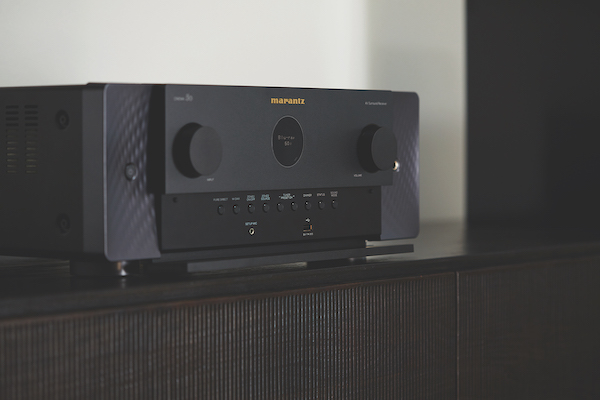
The entrance panel, housing quantity
and supply buttons, sits happy with a textured fascia


If you need the brand new styling but additionally hanker after a radio tuner, Marantz’s Cinema 60 is out there in FM and FM/DAB variations, priced £1,250 and £1,300 respectively. Power on each is rated at 100W/8ohm, by way of seven onboard channels. Providing an entry level for 2023 is the slimline Cinema 70, one other seven-channel mannequin priced £850.If you are shopping for Stateside, all of the Cinema fashions are receivers, as a result of that is the market choice.

Hey, good lookin’
Marantz’s new HD consumer interface is uncluttered. Setting up any AV amplifier or receiver generally is a harrowing affair, however the GUI right here, which is definitely generated by the Cinema 50’s HEOS community module, gives calm, orderly steering.

As for look of the {hardware}, I’m not unhappy to say goodbye to the normal Marantz curved fascia. This new design, accessible in Black or Silver Gold finishes, follows within the modern footsteps of Marantz’s two-channel amplifiers, the Model 30 and Model 40n. With squared-off, symmetrical edges, and a novel textured end, this Marantz feels recent, reborn. There’s nonetheless the normal ‘porthole’ show, although. Flanked by reasonably sized quantity and supply knobs, this offers simply sufficient room to establish the chosen supply plus any quantity adjustment. It’s a bit squint-inducing, however on the plus aspect it isn’t overly shiny or distracting in a dark-room cinema surroundings.

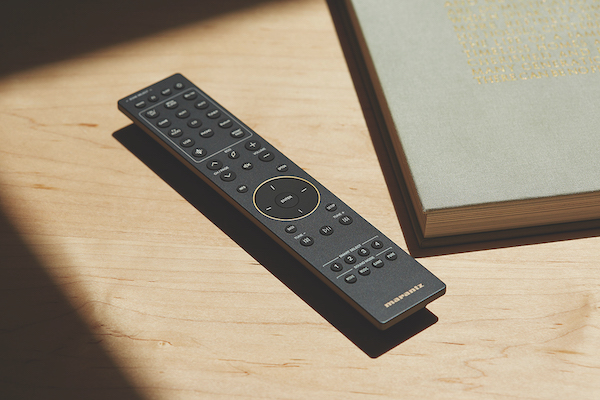
The amp comes with a somewhat good, slim distant management. Marantz hasn’t opted to cut back the variety of buttons
on provide, however the wand feels good within the hand regardless. There’s a backlighting button on the suitable edge, which
I initially missed.


Marantz_Cinema_50_rear

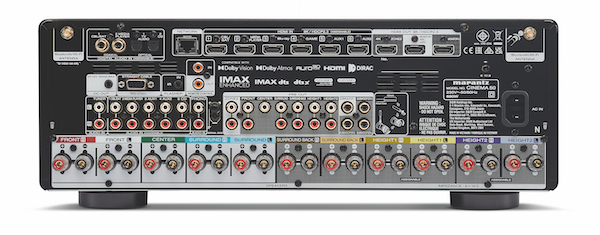
Back-panel is effectively stocked with analogue and digital ins,
HDMI stage, and 11.4-channel pre-outs


Want to be extra hands-on? The Cinema 50’s pull-down flap conceals controls, together with Zone 2 energy and supply, HDMI output and Status and Sound mode buttons. There’s additionally a USB-A connection and mic setup jack.

There’s no front-mounted HDMI enter although – all ports are across the again, with six HDMI inputs and three outputs (one with eARC/ARC help, one a secondary monitor for a projector, one to help Zone 2). All inputs help 4K/120Hz and 8K as customary, plus upscaling if required, whereas HDR dealing with stretches from vanilla by means of to Dolby Vision and HDR10+. The amp can also be nice with ALLM (Auto Low Latency Mode) passthrough.

Also on provide are 4 digital audio inputs (break up between coaxial and optical), 5 analogue inputs, phono for a vinyl deck, and no fewer than 4 subwoofer outputs. If you are system constructing, there is a full 11.4 financial institution of pre-outs, together with a stereo Zone Two output. Wireless help covers Bluetooth, Wi-Fi, and AirPlay 2. Streaming and multiroom are courtesy of the HEOS platform.

EQ choices
Follow the clear, concise setup directions and you will be prompted to EQ the Cinema 50 to your listening room. Room calibration comes by way of Audyssey MultEQ XT32, with Dynamic Volume and LFC calibration. You can measure
as much as eight positions within the room, the concept being to cowl the principle seating space.

If you need to dig deeper, the Cinema 50 works with Audyssey’s new Windows PC-based software program package deal, MultEQ X, however this requires the acquisition of a licence to make use of. The amp can also be as a result of obtain a Dirac Live firmware replace anytime quickly, which means tweakers might purchase a licence for that, too. For most customers, I believe Audyssey MultEQ XT32 will suffice.


Marantz_Cinema_50_remote

Marantz has remodelled its distant handset too


Usability on the Cinema 50 is superb. Menus are fast to navigate, and what you have to regulate isn’t too distant. Pressing the Info button on the zapper identifies the enter sign, with each channel that is energetic highlighted alongside the post-processing energetic speaker configuration, so you already know when sources are being upmixed. The show additionally identifies the codec and post-processing, be it Dolby Atmos, Dolby Surround, DTS:X and so forth. An extra click on will impart HDR, decision and color house particulars.

North star
The Cinema 50 makes use of the aforementioned HDAM amplification circuitry, broadly acknowledged to offer a characteristically heat, Marantz sound. Less continuously shared is simply how marvellously malevolent this output might be. The gritty opening preamble to The Northman (Dolby Atmos, Sky Cinema) is constructed on a bedrock of menacing volcanic rumble, whereas ethereal whispers creep from each the Atmos top layer and the rear audio system. It provides a spine-tingling instance of simply how seamlessly built-in the Cinema 50’s 3D soundscape is.

A quartet of sound modes are accessed by the distant management: Movie, Music, Game and Pure. These, in flip, subdivide to Auro 3D, Auro 2D encompass, multichannel stereo, common stereo, Dolby Digital, Dolby Surround, and DTS Neural:X. Choosing between these is essentially a matter of style. If you need to hold issues easy stick with Pure, which is the direct feed.

A lacking sound preset is Sport; Marantz has seemingly forgotten that residence cinema techniques are additionally used for footie, preventing and F1, so there is no go-to preset. I made a decision that DTS Neural:X labored finest when it got here to making a reside, stadium atmosphere, and to enhance commentary readability I tweaked the Dialogue Enhancer (accessible within the Options menu) to medium.

What is not lacking although is emotional kick. It’s not
a simple attribute for an amplifier to grasp, because it’s
so intangible, however you already know it whenever you hear it.


Marantz_Cinema_50_rear

The Cinema 50 can also be
offered in a black end,
seen right here with the front-flap down


For the primary act, the soundmix of Edgar Wright’s Last Night in Soho (Dolby Atmos, Sky Cinema), is L/C/R with
a sub; nearly monophonic in its presentation. But when Ellie timeslips again to the Nineteen Sixties, rising from that darkish tunnel into Picadilly Circus, each channel on the Marantz amplifier blooms into life. It’s lovely.
Traffic honks from the peak channel, and the orchestra soars from the rear. The Cinema 50 handles this transition with acceptable awe and surprise. When Ellie enters the Cafe de Paris, and descends the mirrored staircase, the strings are achingly candy, and dialogue gently reverberant. This is immersive audio in its most literal sense.

Good for the soul
With this new amplifier, Marantz has convincingly positioned itself as hardcore residence cinema with a coronary heart. You can definitely purchase extra brawn for a similar money, however few residence cinema amplifiers boast comparable soul.

Inevitably, there are minor niggles – a front-mounted HDMI enter would have been good, and a few would commerce all these analogue ins for a USB-B jack – however these are trifling notes. The model’s new premium design is stylish
and up to date, and the restyled consumer interface suits the cool replace completely. HEOS is a peerless streaming and multiroom shopper, whereas the up to date 4K/120Hz HDMI board brings with it some welcome future-proofing.
And then there’s the sound efficiency: effortlessly easy and balanced, with whip-snap steering and popcorn-jolting dynamics. Marantz’s Cinema 50 is an AV amplifier for all seasons.


HCC Verdict


Marantz Cinema 50


Price: £1,700

www.marantz.com


We say: The Cinema 50 is a knockout AV amp, with a forward-leaning spec, wonderful connectivity and a efficiency that’s as easy and exhilarating as a bobsleigh run.


Overall: 5/5

Specifications


DOLBY ATMOS: Yes DTS:X: Yes IMAX ENHANCED: No MULTICHANNEL INPUT: No
MULTICHANNEL PRE-OUT: Yes. 11.4 MULTICHANNEL OUTPUT (claimed):
9 x 110W
(into 8ohm) MULTIROOM: Zone 2 AV, plus HEOS HDMI: Yes.
6 x inputs and three x outputs VIDEO UPSCALING: Yes. 8K AV INPUTS: 4 x digital audio
(2 x optical and a couple of x coaxial); 6 x analogue stereo DIMENSIONS: 442(w) x 392(d) x 165(h)mm (excl. wi-fi aerials) WEIGHT: 13.5kg


FEATURES: HEOS streaming and multiroom; Audyssey MultEQ XT32 calibration; Dirac Live suitable (future firmware); Auro-3D suitable; 360 Reality Audio help; Bluetooth (together with headphone help); Ethernet, Wi-Fi; Voice Assistant suitable (Alexa/Google Assistant/Apple HomePod); USB playback of MP3, WMA, AAC, FLAC, WAV, ALAC and DSD; Movie, Music, Game and Pure sound modes; Auro, DTS and Dolby upmixing; backlit distant management; HDAM modules; HDMI 2.1


Posted in Uncategorized

Marantz Cinema 50 AV receiver overview

Marantz rings the adjustments with this new-look residence cinema amplifier. Steve May will get all emotional
What higher option to put this Marantz high-end residence cinema amplifier via its paces than with some high-brow music. Specifically, Winter, from Vivaldi’s The Four Seasons (or, as I prefer to name it, Le quattro stagioni). The trilling of violins, fantastically elucidated by this amplifier’s melodious HDAM amplification,
is elegant, and I simply love the best way the strings are dramatically engulfed by a full orchestral storm… and heavy weapons fireplace.

John Wick is on the hunt (John Wick: Chapter 3 – Parabellum, 4K Blu-ray). The aforementioned needle drop, that includes Slovakia’s Cappella Istropolitana chamber orchestra, offers an excellent accompaniment to the symphony of violence about to unfold, and any preconceived notion {that a} Marantz AV amp is simply too refined to do justice to real cinematic mayhem is shortly dispelled. Automatic weapons discharge throughout me, and the transients are quick and fabulous. My ears ring. Now that is what you name music!

Turn up the Wick
The closely armed brokers of The High Table are swarming The Continental lodge, however they do not stand an opportunity. Wick has entry to weapons – numerous weapons – and he is getting via the armoury at velocity. The barrage of gunfire from each angle is astonishing; that is Dolby Atmos audio writ massive. When Wick and concierge Charon improve to heavy-gauge, armour-piercing shells, the gun retorts turn into much more visceral. I really feel an urge to nudge the quantity up additional, one thing I’ve been doing all via the film. Yet the amp, like Wick, stays unflustered. It by no means sounds beneath pressure, at all times teasing extra energy within the tank.

The Cinema 50 heralds a big change to Marantz’s residence cinema line. Most clearly, it introduces a wholly new design, and I actually approve. But the adjustments aren’t simply beauty, they’re additionally beneath the hood, from the interface to connectivity.

This is a nine-channel mannequin, priced at £1,700, so getting into the premium finish of the market. In phrases of positioning, it really sits under the Marantz Cinema 40 (the reverse nomenclature generally is a little complicated),
which generally sells for £2,400. The Cinema 40 is broadly comparable in specification to the mannequin on our take a look at bench, and largely justifies its value hike with a better claimed energy output – 9 x 125W/8ohm vs the 9 x 110W/8ohm of the Cinema 50.


Marantz_Cinema_50_detail

The entrance panel, housing quantity
and supply buttons, sits happy with a textured fascia


If you need the brand new styling but additionally hanker after a radio tuner, Marantz’s Cinema 60 is accessible in FM and FM/DAB variations, priced £1,250 and £1,300 respectively. Power on each is rated at 100W/8ohm, by way of seven onboard channels. Providing an entry level for 2023 is the slimline Cinema 70, one other seven-channel mannequin priced £850.If you are shopping for Stateside, all of the Cinema fashions are receivers, as a result of that is the market desire.

Hey, good lookin’
Marantz’s new HD consumer interface is uncluttered. Setting up any AV amplifier or receiver generally is a harrowing affair, however the GUI right here, which is definitely generated by the Cinema 50’s HEOS community module, affords calm, orderly steering.

As for look of the {hardware}, I’m not unhappy to say goodbye to the normal Marantz curved fascia. This new design, out there in Black or Silver Gold finishes, follows within the trendy footsteps of Marantz’s two-channel amplifiers, the Model 30 and Model 40n. With squared-off, symmetrical edges, and a novel textured end, this Marantz feels contemporary, reborn. There’s nonetheless the normal ‘porthole’ show, although. Flanked by reasonably sized quantity and supply knobs, this offers simply sufficient room to establish the chosen supply plus any quantity adjustment. It’s a bit squint-inducing, however on the plus facet it isn’t overly brilliant or distracting in a dark-room cinema atmosphere.

The amp comes with a quite good, slim distant management. Marantz hasn’t opted to cut back the variety of buttons
on supply, however the wand feels good within the hand regardless. There’s a backlighting button on the correct edge, which
I initially missed.


Marantz_Cinema_50_rear

Back-panel is nicely stocked with analogue and digital ins,
HDMI stage, and 11.4-channel pre-outs


Want to be extra hands-on? The Cinema 50’s pull-down flap conceals controls, together with Zone 2 energy and supply, HDMI output and Status and Sound mode buttons. There’s additionally a USB-A connection and mic setup jack.

There’s no front-mounted HDMI enter although – all ports are across the again, with six HDMI inputs and three outputs (one with eARC/ARC help, one a secondary monitor for a projector, one to help Zone 2). All inputs help 4K/120Hz and 8K as commonplace, plus upscaling if required, whereas HDR dealing with stretches from vanilla via to Dolby Vision and HDR10+. The amp can also be tremendous with ALLM (Auto Low Latency Mode) passthrough.

Also on supply are 4 digital audio inputs (break up between coaxial and optical), 5 analogue inputs, phono for a vinyl deck, and no fewer than 4 subwoofer outputs. If you are system constructing, there is a full 11.4 financial institution of pre-outs, together with a stereo Zone Two output. Wireless help covers Bluetooth, Wi-Fi, and AirPlay 2. Streaming and multiroom are courtesy of the HEOS platform.

EQ choices
Follow the clear, concise setup directions and you will be prompted to EQ the Cinema 50 in your listening room. Room calibration comes by way of Audyssey MultEQ XT32, with Dynamic Volume and LFC calibration. You can measure
as much as eight positions within the room, the thought being to cowl the principle seating space.

If you wish to dig deeper, the Cinema 50 works with Audyssey’s new Windows PC-based software program package deal, MultEQ X, however this requires the acquisition of a licence to make use of. The amp can also be because of obtain a Dirac Live firmware replace anytime quickly, which means tweakers might purchase a licence for that, too. For most customers, I think Audyssey MultEQ XT32 will suffice.


Marantz_Cinema_50_remote

Marantz has remodelled its distant handset too


Usability on the Cinema 50 is superb. Menus are fast to navigate, and what it is advisable alter isn’t too distant. Pressing the Info button on the zapper identifies the enter sign, with each channel that is energetic highlighted alongside the post-processing energetic speaker configuration, so you already know when sources are being upmixed. The show additionally identifies the codec and post-processing, be it Dolby Atmos, Dolby Surround, DTS:X and so forth. An further click on will impart HDR, decision and color area particulars.

North star
The Cinema 50 makes use of the aforementioned HDAM amplification circuitry, extensively acknowledged to present a characteristically heat, Marantz sound. Less steadily shared is simply how marvellously malevolent this output will be. The gritty opening preamble to The Northman (Dolby Atmos, Sky Cinema) is constructed on a bedrock of menacing volcanic rumble, whereas ethereal whispers creep from each the Atmos top layer and the rear audio system. It provides a spine-tingling instance of simply how seamlessly built-in the Cinema 50’s 3D soundscape is.

A quartet of sound modes are accessed by the distant management: Movie, Music, Game and Pure. These, in flip, subdivide to Auro 3D, Auro 2D encompass, multichannel stereo, common stereo, Dolby Digital, Dolby Surround, and DTS Neural:X. Choosing between these is essentially a matter of style. If you wish to maintain issues easy follow Pure, which is the direct feed.

A lacking sound preset is Sport; Marantz has seemingly forgotten that residence cinema programs are additionally used for footie, combating and F1, so there is not any go-to preset. I made a decision that DTS Neural:X labored finest when it got here to making a reside, stadium atmosphere, and to enhance commentary readability I tweaked the Dialogue Enhancer (out there within the Options menu) to medium.

What is not lacking although is emotional kick. It’s not
a straightforward attribute for an amplifier to grasp, because it’s
so intangible, however you already know it whenever you hear it.


Marantz_Cinema_50_rear

The Cinema 50 can also be
offered in a black end,
seen right here with the front-flap down


For the primary act, the soundmix of Edgar Wright’s Last Night in Soho (Dolby Atmos, Sky Cinema), is L/C/R with
a sub; nearly monophonic in its presentation. But when Ellie timeslips again to the Sixties, rising from that darkish tunnel into Picadilly Circus, each channel on the Marantz amplifier blooms into life. It’s lovely.
Traffic honks from the peak channel, and the orchestra soars from the rear. The Cinema 50 handles this transition with acceptable awe and marvel. When Ellie enters the Cafe de Paris, and descends the mirrored staircase, the strings are achingly candy, and dialogue gently reverberant. This is immersive audio in its most literal sense.

Good for the soul
With this new amplifier, Marantz has convincingly positioned itself as hardcore residence cinema with a coronary heart. You can actually purchase extra brawn for a similar money, however few residence cinema amplifiers boast comparable soul.

Inevitably, there are minor niggles – a front-mounted HDMI enter would have been good, and a few would commerce all these analogue ins for a USB-B jack – however these are trifling notes. The model’s new premium design is stylish
and up to date, and the restyled consumer interface suits the cool replace completely. HEOS is a peerless streaming and multiroom consumer, whereas the up to date 4K/120Hz HDMI board brings with it some welcome future-proofing.
And then there’s the sound efficiency: effortlessly clean and balanced, with whip-snap guidance and popcorn-jolting dynamics. Marantz’s Cinema 50 is an AV amplifier for all seasons.


HCC Verdict


Marantz Cinema 50


Price: £1,700

www.marantz.com


We say: The Cinema 50 is a knockout AV amp, with a forward-leaning spec, wonderful connectivity and a efficiency that’s as clean and exhilarating as a bobsleigh run.


Overall: 5/5

Specifications


DOLBY ATMOS: Yes DTS:X: Yes IMAX ENHANCED: No MULTICHANNEL INPUT: No
MULTICHANNEL PRE-OUT: Yes. 11.4 MULTICHANNEL OUTPUT (claimed):
9 x 110W
(into 8ohm) MULTIROOM: Zone 2 AV, plus HEOS HDMI: Yes.
6 x inputs and three x outputs VIDEO UPSCALING: Yes. 8K AV INPUTS: 4 x digital audio
(2 x optical and a couple of x coaxial); 6 x analogue stereo DIMENSIONS: 442(w) x 392(d) x 165(h)mm (excl. wi-fi aerials) WEIGHT: 13.5kg


FEATURES: HEOS streaming and multiroom; Audyssey MultEQ XT32 calibration; Dirac Live appropriate (future firmware); Auro-3D appropriate; 360 Reality Audio help; Bluetooth (together with headphone help); Ethernet, Wi-Fi; Voice Assistant appropriate (Alexa/Google Assistant/Apple HomePod); USB playback of MP3, WMA, AAC, FLAC, WAV, ALAC and DSD; Movie, Music, Game and Pure sound modes; Auro, DTS and Dolby upmixing; backlit distant management; HDAM modules; HDMI 2.1

Hands-on: Samsung previews 2023 QD OLED, Neo QLED Mini LED and 4K QLED TVs

Next-generation Samsung QD OLED screens, Neo QLED fashions with Mini LED backlighting, and a raft of largescreen 4K sensible TVs have made their European bow at a ‘Tech Summit and Showcase’ held in Frankfurt. The 2023 fashions, which can hit shops sooner relatively than later, symbolize essentially the most complete lineup of TV expertise but seen from Samsung.

HCC was there for the large TV reveal and we’ve taken an in depth have a look at all the foremost fashions from the model – and sure to draw big consideration from cinephiles are the 2 new Quantum Dot OLED screens, the S90C and flagship S95C.

The S95C is definitely distinguished from its stablemate on account of a newly redesigned One Connect Box. This exterior tuner and interface {hardware} can lock onto the again of the panel, when you don’t wish to put it in your tools rack.

The TV will get has a so-called LaserSlim design but nonetheless manages to pack in a 70W-rated multichannel OTS+ sound system. It additionally debuts a brand new display filter mentioned to scale back the prospect of picture burn – excellent news for avid gamers.

Both the S95C and the S90C shall be out there in 55in, 65in and 77in display sizes. The S90C mannequin is barely extra typical, with all inputs and tuner inbuilt.

The huge query is what’s the distinction between the 2 QD OLED fashions in terms of picture high quality? We can verify the S95C advantages from an enormous brightness increase over final 12 months’s Samsung QD OLED debut, with a claimed peak HDR brightness of some 2000 nits. This has been achieved by the event of latest panel expertise and algorithms.

When requested if the S90C makes use of the identical panel because the S95C, Samsung is predictably coy. While it confirms the S90C isn’t as shiny as its brother in terms of peak brightness, it declines to enter specifics. Samsung means that the S90C has a peak HDR brightness of 1,000 nits, which is corresponding to 2022’s S95B mannequin.

We pushed them on this discrepancy and acquired the next assertion: ‘The S95C and 90C performances are totally different (line-up differentiation), sadly, we don’t disclose detailed panel data.’ Make of that what you’ll…

The S95C definitely regarded spectacular at its Frankfurt unveiling. This brightness increase clearly results in higher color depth and vibrancy. Are we seeing a brand new benchmark being set for OLED image high quality? We can’t wait to get one in for overview.

Samsung can be doubling down on 8K for 2023, having lastly labored out methods to reside inside the EU’s restrictive energy consumption mandates (its resolution is to ship new 8K screens with a low-brightness Eco mode because the default setting, however the excellent news is you could manually deselect this dim choice and benefit from the panel’s picture high quality unfettered).

There shall be three 8K TV fashions within the 2023 lineup: the QN900C, QN800C and the QN700C. All use One Connect packing containers. The QN900C and QN800C shall be out there in 65in, 75in and 85in, whereas the QN700C is on the market at 55in, 65in and 75ins. You get fewer dimming zones as you step down the vary.

Finally, in terms of 4K QLED, count on to see Q60C, Q70C, and Q80C ranges, alongside the Neo QLED with Mini LED QN85C, QN90C and QN95C.

We have been actually impressed with the QN95C, which advantages from extra dimming zones and appears far much less vulnerable to blooming artefacts than earlier Mini LED designs. There aren’t any One Connect Boxes with these screens, however all of them boast a slick ‘Infinity One’ design.

Naturally, audio techniques fluctuate between fashions, however the higher-end choices all embrace immersive OTS sound techniques. They additionally include 4K/120Hz HDMI assist as customary, in addition to a bunch of VRR and gaming choices.

Posted in Uncategorized

Hands-on: Samsung previews 2023 QD OLED, Neo QLED Mini LED and 4K QLED TVs

Next-generation Samsung QD OLED screens, Neo QLED fashions with Mini LED backlighting, and a raft of largescreen 4K good TVs have made their European bow at a ‘Tech Summit and Showcase’ held in Frankfurt. The 2023 fashions, which can hit shops sooner somewhat than later, symbolize essentially the most complete lineup of TV know-how but seen from Samsung.

HCC was there for the massive TV reveal and we’ve taken an in depth take a look at all the most important fashions from the model – and sure to draw enormous consideration from cinephiles are the 2 new Quantum Dot OLED screens, the S90C and flagship S95C.

The S95C is well distinguished from its stablemate resulting from a newly redesigned One Connect Box. This exterior tuner and interface {hardware} can lock onto the again of the panel, for those who don’t need to put it in your gear rack.

The TV will get has a so-called LaserSlim design but nonetheless manages to pack in a 70W-rated multichannel OTS+ sound system. It additionally debuts a brand new display filter mentioned to cut back the possibility of picture burn – excellent news for players.

Both the S95C and the S90C shall be obtainable in 55in, 65in and 77in display sizes. The S90C mannequin is barely extra typical, with all inputs and tuner inbuilt.

The massive query is what’s the distinction between the 2 QD OLED fashions on the subject of picture high quality? We can affirm the S95C advantages from an enormous brightness enhance over final 12 months’s Samsung QD OLED debut, with a claimed peak HDR brightness of some 2000 nits. This has been achieved by way of the event of recent panel know-how and algorithms.

When requested if the S90C makes use of the identical panel because the S95C, Samsung is predictably coy. While it confirms the S90C isn’t as brilliant as its brother on the subject of peak brightness, it declines to enter specifics. Samsung means that the S90C has a peak HDR brightness of 1,000 nits, which is akin to 2022’s S95B mannequin.

We pushed them on this discrepancy and obtained the next assertion: ‘The S95C and 90C performances are completely different (line-up differentiation), sadly, we don’t disclose detailed panel data.’ Make of that what you’ll…

The S95C definitely seemed spectacular at its Frankfurt unveiling. This brightness enhance clearly results in better color depth and vibrancy. Are we seeing a brand new benchmark being set for OLED image high quality? We can’t wait to get one in for assessment.

Samsung can also be doubling down on 8K for 2023, having lastly labored out the right way to reside throughout the EU’s restrictive energy consumption mandates (its resolution is to ship new 8K screens with a low-brightness Eco mode because the default setting, however the excellent news is that you may manually deselect this dim choice and benefit from the panel’s picture high quality unfettered.

There shall be three 8K TV fashions within the 2023 lineup: the QN900C, QN800C and the QN700C. All use One Connect containers. The QN900C and QN800C shall be obtainable in 65in, 75in and 85in, whereas the QN700C is out there at 55in, 65in and 75ins. You get fewer dimming zones as you step down the vary.

Finally, on the subject of 4K QLED, anticipate to see Q60C, Q70C, and Q80C ranges, alongside the Neo QLED with Mini LED QN85C, QN90C and QN95C.

We have been actually impressed with the QN95C, which advantages from extra dimming zones and appears far much less liable to blooming artefacts than earlier Mini LED designs. There are not any One Connect Boxes with these screens, however all of them boast a slick ‘Infinity One’ design.

Naturally, audio methods differ between fashions, however the higher-end choices all embrace immersive OTS sound methods. They additionally include 4K/120Hz HDMI assist as commonplace, in addition to a bunch of VRR and gaming choices.

Hands-on: Samsung previews 2023 QD OLED, Neo QLED Mini LED and 4K QLED TVs

Next-generation Samsung QD OLED screens, Neo QLED fashions with Mini LED backlighting, and a raft of largescreen 4K good TVs have made their European bow at a ‘Tech Summit and Showcase’ held in Frankfurt. The 2023 fashions, which can hit shops sooner moderately than later, symbolize probably the most complete lineup of TV know-how but seen from Samsung.

HCC was there for the large TV reveal and we’ve taken an in depth have a look at all the foremost fashions from the model – and sure to draw enormous consideration from cinephiles are the 2 new Quantum Dot OLED screens, the S90C and flagship S95C.

The S95C is definitely distinguished from its stablemate resulting from a newly redesigned One Connect Box. This exterior tuner and interface {hardware} can lock onto the again of the panel, should you don’t need to put it in your tools rack.

The TV will get has a so-called LaserSlim design but nonetheless manages to pack in a 70W-rated multichannel OTS+ sound system. It additionally debuts a brand new display screen filter stated to cut back the possibility of picture burn – excellent news for avid gamers.

Both the S95C and the S90C will probably be accessible in 55in, 65in and 77in display screen sizes. The S90C mannequin is barely extra standard, with all inputs and tuner inbuilt.

The massive query is what’s the distinction between the 2 QD OLED fashions in relation to picture high quality? We can affirm the S95C advantages from a giant brightness enhance over final yr’s Samsung QD OLED debut, with a claimed peak HDR brightness of some 2000 nits. This has been achieved by means of the event of recent panel know-how and algorithms.

When requested if the S90C makes use of the identical panel because the S95C, Samsung is predictably coy. While it confirms the S90C isn’t as brilliant as its brother in relation to peak brightness, it declines to enter specifics. Samsung means that the S90C has a peak HDR brightness of 1,000 nits, which is corresponding to 2022’s S95B mannequin.

We pushed them on this discrepancy and obtained the next assertion: ‘The S95C and 90C performances are completely different (line-up differentiation), sadly, we don’t disclose detailed panel info.’ Make of that what you’ll…

The S95C actually seemed spectacular at its Frankfurt unveiling. This brightness enhance clearly results in larger color depth and vibrancy. Are we seeing a brand new benchmark being set for OLED image high quality? We can’t wait to get one in for evaluation.

Samsung can be doubling down on 8K for 2023, having lastly labored out the way to reside throughout the EU’s restrictive energy consumption mandates (its resolution is to ship new 8K screens with a low-brightness Eco mode because the default setting, however the excellent news is you can manually deselect this dim choice and benefit from the panel’s picture high quality unfettered.

There will probably be three 8K TV fashions within the 2023 lineup: the QN900C, QN800C and the QN700C. All use One Connect packing containers. The QN900C and QN800C will probably be accessible in 65in, 75in and 85in, whereas the QN700C is obtainable at 55in, 65in and 75ins. You get fewer dimming zones as you step down the vary.

Finally, in relation to 4K QLED, anticipate to see Q60C, Q70C, and Q80C ranges, alongside the Neo QLED with Mini LED QN85C, QN90C and QN95C.

We had been actually impressed with the QN95C, which advantages from extra dimming zones and appears far much less liable to blooming artefacts than earlier Mini LED designs. There are not any One Connect Boxes with these screens, however all of them boast a slick ‘Infinity One’ design.

Naturally, audio techniques differ between fashions, however the higher-end choices all embrace immersive OTS sound techniques. They additionally include 4K/120Hz HDMI assist as normal, in addition to a number of VRR and gaming choices.