Author Archives: toneaudio

The SVS PB-1000 Pro and SB-1000 Pro Subwoofers

Here’s a twist for you. Normally, I’m always comparing cars to hifi gear. But not this time.

There’s a great burger place in my neighborhood called Killer Burger, that plays metal music most of the time and their burgers all have great names. My favorite burger is called “the fun guy.” That’s what the 1000 Pro series subwoofers are from SVS. The fun guy. Big fun.

If you haven’t heard of SVS, they aren’t far away. No other audio company is more ubiquitous in the world of social media. Not JBL, Not McIntosh Group. None of them come close. They are always doing cool product giveaways, group chats, instructional videos, and just plain entertaining stuff. They even posted a video the other day of the PB (ported) 16-Ultra sub knocking down a platoon of plastic army men with the bass ports. How cool is that?

I had to try this for myself, so I set up some army men and cranked up some Public Enemy through the PB-1000 we have here for review. About 20 seconds into “Fight the Power,” I’d slain them all. I told you that hifi should be more than charts and graphs.

Fun guys indeed

Billie Eilish’s recent release, Happier Than Ever, is full of deep, rumbling bass lines. It’s a testament to the SVS engineering team and production team’s prowess. These are some incredibly good subwoofers for $599 and $799 respectively.

Thanks to a 12-inch driver with a massive voice coil, and a 325-Watt Mosfet amp that gets the job done, whether you’re a music lover, movie goer, or both. If you have the space, and the budget, SVS gives you a $50 discount on a pair of SB’s and $100 on a pair of PB’s, free shipping, and they offer financing with Affirm. Top that with some of the best customer service in the business and you have no excuse for not having a system with serious bass extension.

The difference?

The PB-1000 Pro is the “ported box,” and the SB-1000 Pro is a “sealed box.” If you’re a new audio enthusiast, and aren’t familiar with the differences, the difference in enclosure makes for a different way to tune the woofer. A sealed box subwoofer doesn’t go quite as low as a ported box (all things pretty much equal as they are here) with the SB going down to 20Hz and the PB to 17Hz.
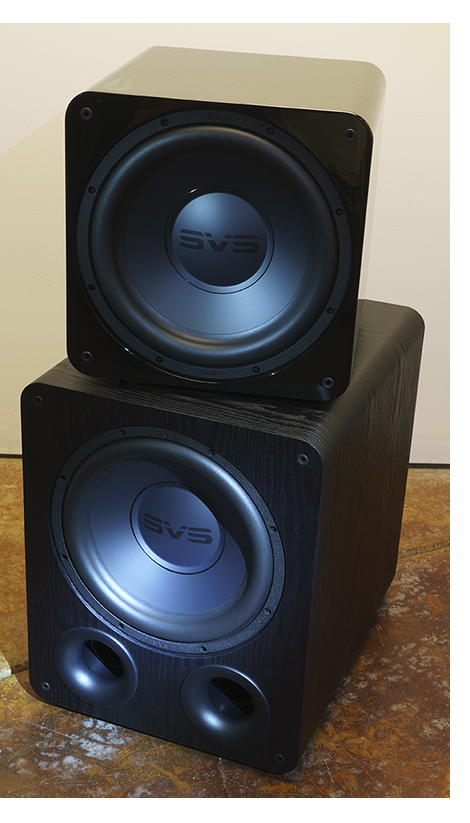
The bass characteristic of the ported PB-1000 Pro is a slightly looser and less defined, but a little more powerful. The SB-1000 Pro reproduces bass with a slightly taughter voice. There’s no better or worse here, but if you are watching more movies, you might prefer that extra bit of authority that the PB gives up when listening to bomb blasts, cannons, and the like. However, if you listen to more jazz, you might prefer the slightly more resolving presentation the SB offers when listening to a fretless electric bass, or a standup acoustic. It’s cool that SVS offers you the choice.

I listen to such a wide range of program material, I can have a great time with either. Not sure? If you have the extra room for the PB-1000 Pro, you can get port plugs (free of course, from the fun guys at SVS) and split the difference. This gives you the option to let the ports move a little more air when you’re watching your favorite movies, and plug them up when you’re feeling a little more audiophile-y.
Setup – part 1
Some people don’t realize that setting a subwoofer up for maximum bass extension, minimum upper bass bloat, and a seamless blend to your main speakers takes a bit of time to finesse. Those that blame “boominess” on the subwoofer, just don’t have them set up properly. That’s no fun.
Without the front grille, the SB-1000 Pro is nearly a 13” cube, making it easy to place just about anywhere. The PB-1000 Pro slightly larger, is about a 19” cube. You can find the full specs of both subwoofers here on the SVS site.

Working with both, in a side by side comparison, the first choice is always a corner placement if you can. Again, pay close attention to the transition from lower bass up through mid-bass and how it responds to your room. Find your favorite piece of music that has a lot of LF content that you are very familiar with. Get ready to play the track over and over, moving the box ever so slightly out from the corner until it no longer feels overly heavy.

Advanced setup

Should corner placement not work, go for placement up against the wall. Try starting about a foot away from the wall and do the same thing, though you will probably have to turn the level up a little higher. With 325 watts on tap, you can still pull this off with ease. If your room is reasonably symmetrical, do the same thing on the other side of the room.

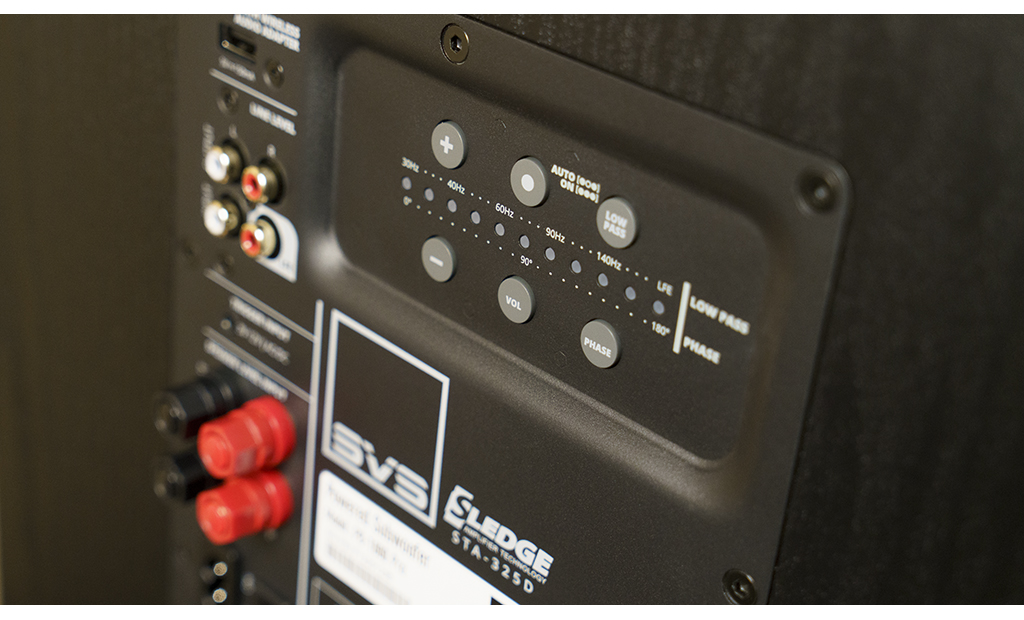
Here’s what makes the 1000 series easier to use than the rest. In addition to their built-in DSP processing, they’ve made it something you can adjust from the convenience of your listening chair. This is awesome for two reasons: it’s a time saver and you can fine-tune the setup just right from your exact listening position. Just download the SVS app to your tablet or smartphone. I use this app with my PC-4000 and 3000 Micro subwoofers, and it’s a snap to use.

In addition to allowing you to set crossover frequency and level, the SVS app gives you a parametric EQ and the ability to save multiple setups. It’s like having the 1, 2, and 3 buttons on your car’s adjustable seats. Make it easy for different people or different moods.

The 1000 series can be wired with high level speaker connections, line level outputs from your preamplifier, or as a .1LFE channel for your surround/multichannel system. If that’s not convenient, you can add the SVS Wireless adapter. Of course, you can adjust all this from the rear panel of the subwoofer, but it’s so much more fun to do it from your phone!

If this feels a bit daunting, you can head back to the SVS website, where they have a number of great tips, and YouTube videos that will assist you in the finer points of subwoofer setup. These are well-executed, offering great information for audio enthusiasts at all skill levels.

Further advantages to the DSP

But the true advantage of DSP is that is gives you more placement options than subs that lack DSP. You can look at this two ways – the purist audiophile approach or what makes the most sense for your environment. We can’t always put speakers and subwoofers exactly where they need to sound perfect and let everything else fall by the wayside. Living your life comes first.

DSP will make up for nearly all of the room anomalies, getting you so much closer, and in some cases better without a lot of moving subwoofer(s) around. I still advise you to do as much physical optimization beforehand, but you’ll be amazed at the difference of your system’s sound before and after you run the DSP.
Thanks to said presets, if you happen to be an audio enthusiast that uses multiple speaker setups, or want to mix it up now and then, being able to store a few setups makes it a lot easier to engage multiple speakers. Using a pair of stand mounted monitors for a more intimate system, or perhaps swap for some large floorstanders, or drag a pair of Magnepans out? Easy, and I did just that, trying the 1000 series subs with a pair of small Maggies, a pair of Sonus faber Lumina 1s and a pair of Focal Arias. All were easy to mate with the SVS subs. I wouldn’t hesitate to use them with anything.

Final thoughts and listening

Hundreds of hours spent putting both subwoofers through extensive listening, with many different speakers proves them to be musical and of high quality. These are the easiest subwoofers to use on the market, and that’s as fun as hifi gets. Grab a pair of SVS 1000 series subwoofers and be the fun guy to everyone, except maybe your downstairs neighbors. Another Exceptional Value Award winner, to be sure!

The SVS PB-1000 Pro and SB-1000 Pro

Price: $799 and $599

svsound.com


Original article: The SVS PB-1000 Pro and SB-1000 Pro Subwoofers

Please note that all TONE Audio copy and photography is © 2005–2018 TONE Magazine LLC. This RSS feed is provided for personal, non-commercial use only.

If you are not reading this content in your news aggregator, RSS reader, or direct, then the site you are looking at may be guilty of copyright infringement. If you locate this anywhere, please contact [email protected] so we can take action immediately.

TONEAudio MAGAZINE. All Rights Reserved.
The new Fozgometer is here…

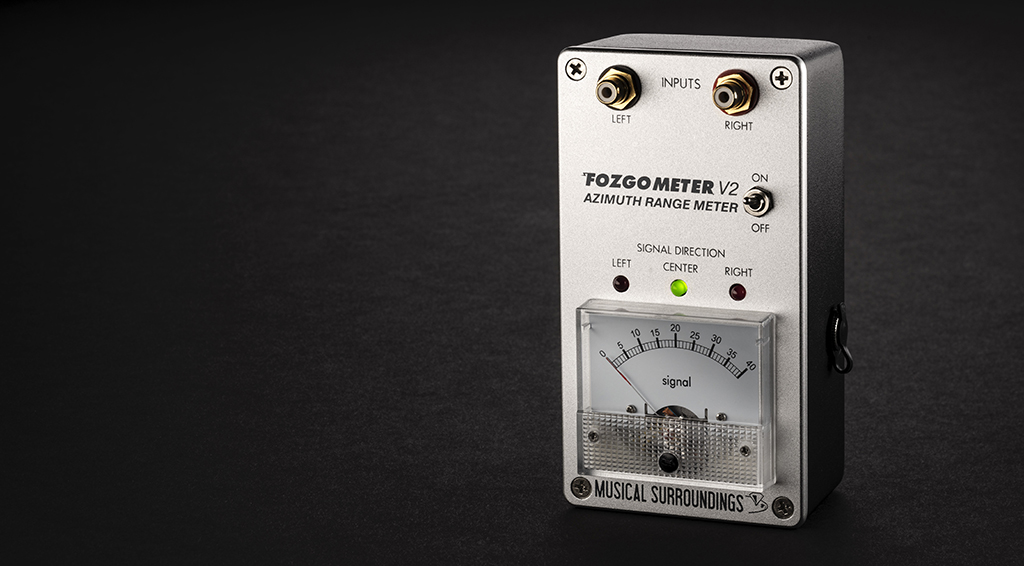
Musical Surroundings just announced their new Fozgometer V2 azimuth range meter, a unique tool to optimize phono cartridge azimuth for the best sound from your HiFi system.

To achieve the best performance, your phono cartridge’s azimuth must be properly calibrated. Today’s Line Contact and Micro Line styli have a very small groove contact area as compared to elliptical styli, thus requiring finer adjustment. Correct azimuth alignment assures the highest channel separation and best channel balance, providing outstanding sound and imaging.

The Fozgometer V2 incorporates a sensitive “Log Ratio Detector” to measure the channel separation and channel balance of your phono cartridge. It features higher sensitivity, greater accuracy, a new meter design, and AC or battery power for more accurate azimuth calibration.

The original Fozgometer was introduced in 2010 with almost 5,000 sold worldwide. We’ve used ours with excellent result. #toneaudioapproved.

For more information contact: [email protected]

Original article: The new Fozgometer is here…

Please note that all TONE Audio copy and photography is © 2005–2018 TONE Magazine LLC. This RSS feed is provided for personal, non-commercial use only.

If you are not reading this content in your news aggregator, RSS reader, or direct, then the site you are looking at may be guilty of copyright infringement. If you locate this anywhere, please contact [email protected] so we can take action immediately.

TONEAudio MAGAZINE. All Rights Reserved.
Last minute shopping with REL

REL 2022 Price Increases, Effective 01.15.2022

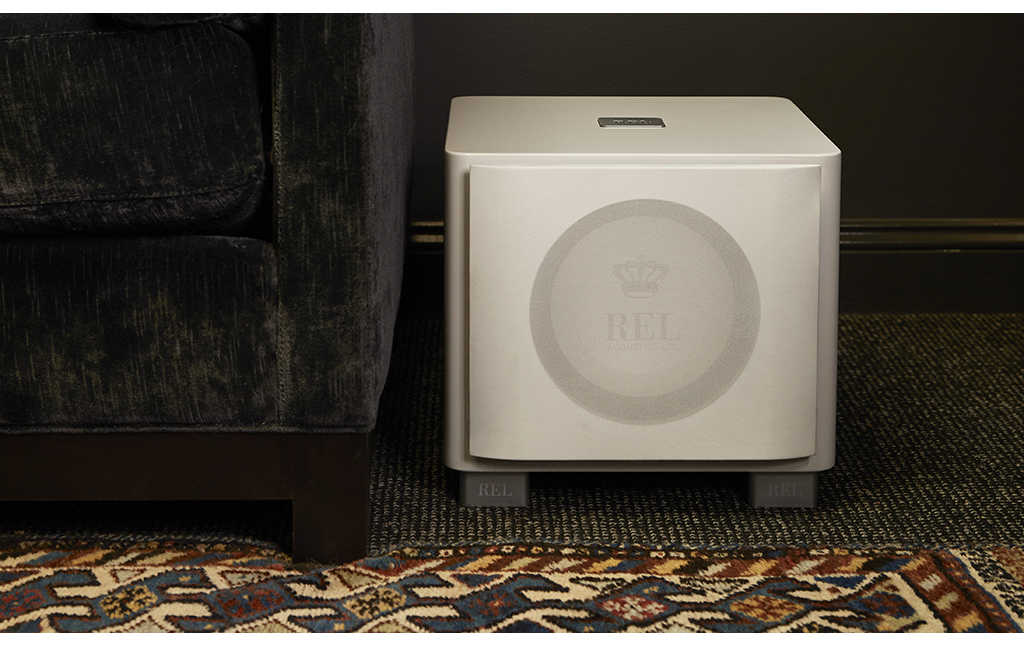
REL has been forced to raise their prices for all the usual reasons (400% shipping increases and an average of 21% per model cost increases). We’re lucky, they’ve decided to only pass on a portion of it so the biggest cost increases are 10% and some (T/5x) are as little as 3%, while others (T/9x) haven’t gone up at all. Serie S will see a 10% rise so the S/812 goes to $3,299, the S/510 up to $2,749.

Special Offer is Almost Over: For those of you in the U.S. you have just a few days left to buy them on their December Serie S Special, thereby saving you $600 on the S/812 and $450 on the S/510 compared with they’ll run you in just a couple weeks. Don’t say we didn’t warn you.

Original article: Last minute shopping with REL

Please note that all TONE Audio copy and photography is © 2005–2018 TONE Magazine LLC. This RSS feed is provided for personal, non-commercial use only.

If you are not reading this content in your news aggregator, RSS reader, or direct, then the site you are looking at may be guilty of copyright infringement. If you locate this anywhere, please contact [email protected] so we can take action immediately.

TONEAudio MAGAZINE. All Rights Reserved.

Issue 110

Cover Story:

Awards!

Features

Old School: The Dynaco Stereo 400
-By Jeff Dorgay

Cartridge Dude: The Ortofon Concorde Century

1095: Gear for Just over a G
The Dynaudio Emit 10 Speakers

Shanon Says: Shanon McKellar discovers the York phono stage

Merch Table: Relics From Rock’s Past

Mine: It Should Be Yours

Music

Playlists:  We share our readers choices from around the world

Future Tense

Gear in our immediate future

Original article: Issue 110

Please note that all TONE Audio copy and photography is © 2005–2018 TONE Magazine LLC. This RSS feed is provided for personal, non-commercial use only.

If you are not reading this content in your news aggregator, RSS reader, or direct, then the site you are looking at may be guilty of copyright infringement. If you locate this anywhere, please contact [email protected] so we can take action immediately.

TONEAudio MAGAZINE. All Rights Reserved.
Why High-End Audio Gear and Luxury Goods Are Strange Bedfellows

To the segment of the high-end audio industry trying to reposition components as luxury goods, I have a message: you’re barking up the wrong tree. To the new entrants trying to create “curated luxury goods experiences,” I submit that you’re wasting your time. No, I’m not trying to be a jerk. I’m actually trying to help.

As someone who’s spent an incredibly disproportionate amount of my income on audio gear since I turned 14 and who has been writing about said equipment for more than two decades, I have gotten to know many audio enthusiasts around the globe. My love of automobiles has also introduced me to another segment of affluent consumers. In addition, my first wife’s parents were incredibly wealthy and put me in touch with people in their network. While I may not be a total expert, I have relevant data points to share from four decades of experience. And, being the human equivalent of a fox terrier, I always ask questions. Here’s what I’ve learned.

Many of our industry’s best companies possess a level of passion for visual and electronic design that matches the intensity of any of the world’s finest automobile manufacturers. They also have the same density of thought. But a difference occurs downstream. Almost no one thinks you’re awesome because you bought a $100k DAC. (Guilty as charged.) In our influencer-driven, ADD world, hi-fi doesn’t have the same cache of a new Porsche GT3 or a Patek Phillipe watch. Sorry, but it’s true.

Don’t believe me? Tell 100 non-audio people you just bought a pair of Sonus faber speakers. (Again, guilty.) I’ll bet a healthy sum that nobody will even know what you’re talking about, other than you got a pair of speakers. Tell the same 100 people you just bought a new Rolex and they will all be impressed or possibly start a conversation with you about watches or jewelry. Tell 100 people you just bought a new Harley, Ducati, or Porsche 911, and you’ll probably have at least a dozen new friends that want to hang with you.

Why? One reason is because hi-fi isn’t transportable. You can’t take it to lunch and show it off or attend a cars-and-coffee event, casually trotting over to the pack after getting out of your new toy. Like it or not, part of the appeal of owning luxury goods is getting to brag about them and being included in a community. Hi-fi doesn’t work that way. For example, telling 100 Porsche owners you just bought a new GT3 might start a minor argument about whether you bought the right one with a manual gearbox or Porsche’s excellent PDK automatic. No matter which option you chose, you’re still a god in that universe. Tell 100 audiophiles you just bought a $50k turntable, or even better, upgraded your system with $50k of premium wire, and 97 of them will tell you why you’re an idiot and why their $4,000 system is far better than your mega system. The issues run deeper.

Because they are often experience-driven and time-challenged, high-income earners don’t spend major cash on high-end audio systems. On rare occasions, I’ve met a few people with means that love to hang out with friends, relax, and listen to music. Some are members of the Greater Toronto Area Audiophile Club. I know there are more, and I’ve seen a few groups on Facebook that I’d love to meet when travel eases again. But assuming that someone who owns a nice car or a collection of nice cars (or watches, cameras, wine, etc.) will automatically want to buy a mega audio system, even if it is branded a “luxury good,” is just wrong.

Maybe it’s because music is a deeply personal thing. It might also relate to high-end audio’s exclusionary nature. In order to derive the most pleasure from a system, you must sit in the sweet spot. Alone. In silence. That’s not something everyone wants to do. Most people would rather go to a concert. Or go on vacation. Granted, the recent COVID lockdowns and limits on mobility have contributed to a couple of terrific years in the industry. Still, I’m curious how many will upgrade their systems with equal enthusiasm when it’s relatively safe to travel again.

Where does that leave us?

The future of audio isn’t bleak. There are more and better choices than ever before. The point of entry for serious sound is far less expensive than any other time in history, and the proliferation of online retailers and used-gear vendors has made it easier to acquire last year’s toys. I’ve always said well-loved, pre-owned gear is a great way to start an audiophile journey.

A good friend who has been an audio retailer for as long as I’ve been buying gear once said: “My average customer is like you, a person that makes a decent living, that spends way too much of it on his hi-fi system. Where do I get a mailing list for that?”

While that doesn’t make for exciting social media, I suspect the world of high-end audio will still thrive the way it always has: by way of enthusiasts and enthusiast publications. Keep passing the word around.  -Jeff Dorgay

Original article: Why High-End Audio Gear and Luxury Goods Are Strange Bedfellows

Please note that all TONE Audio copy and photography is © 2005–2018 TONE Magazine LLC. This RSS feed is provided for personal, non-commercial use only.

If you are not reading this content in your news aggregator, RSS reader, or direct, then the site you are looking at may be guilty of copyright infringement. If you locate this anywhere, please contact [email protected] so we can take action immediately.

TONEAudio MAGAZINE. All Rights Reserved.

Tone’s Last Minute Holiday Shopping Guide – Sponsored by MoFi Distribution

For those of you like us, that either leave shopping and holidays to the last minute, or somehow end up being the person that buys yourself the best presents at the end of the day, here’s a few suggestions from the crew at MoFi Distribution.

Little Fwend Automatic Tone Arm Lifter. This one reminds us of the automatic and semi automatic tables of the old days, when you could walk away from your turntable, knowing nothing bad would happen at the end of the record.   https://www.littlefwend.com/about


MoFi Ultra Low Noise Feet.
We’ve used these with a number of different components to great effect.  https://mofi.com/collections/accessories/products/mofi-electronics-ultra-low-noise-feet


MoFi Super Heavy Weight Champion Weight. This one’s so awesome, we’ve got three of em – one for each of our Technics decks.   https://www.mofi.com/product-p/mfeshwch.htm
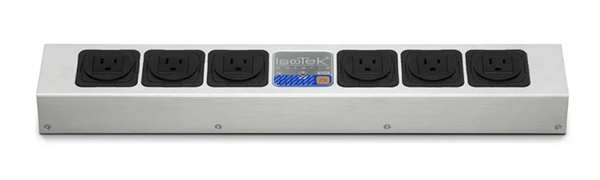
IsoTek EVO3 Polaris. We use the larger Sirius version, but this and the Polaris offer up a great power conditioning solution for small systems. Very reasonably priced, too.   https://isoteksystems.com/products/evo3-polaris/


Suntory Whisky Toki.  More cocktails, less arguing about cables, pressings, and politics. Sign us up. Back when we all went to hifi shows, this crew made the best drinks. Here’s one of their secrets. (Key ingredient of the MoFi Japanese Old Fashioned)   https://www.youtube.com/watch?v=X27SEBppHnQ


Dr. Feickert Next Generation Cartridge Alignment Tool.
Another #ToneAudioApproved product. We started with the Geo Disc and graduated to the Feickert Protractor nearly a decade ago. The current version is even easier to use with a great instruction booklet. https://www.musicdirect.com/analog-accessories/feickert-next-generation-cartridge-alignment-tool

PIEGA ACE 30 Speakers. These mini monitors from Piega, pack a major punch. Say that ten times as fast as you can. Bonus points for saying this ten times after a few Old Fashioned’s. Ha.   https://piega.ch/en/products/ace-30


MoFi Script T-Shirt.
Our publisher’s been wearing one of these since the day TONE was launched. If you are a true vinylista, you really need one.  https://mofi.com/collections/accessories/products/mfslsshirtscript_mofi_script_t-shirt


Wharfdale Diamond 12.2 Speakers.
These mini monitors with Wharfdale’s new Klarity cones will surprise you. In a good toys instead of socks kind of way. https://www.wharfedaleusa.com/collections/diamond-12/products/diamond-12-2-bookshelf-speakers


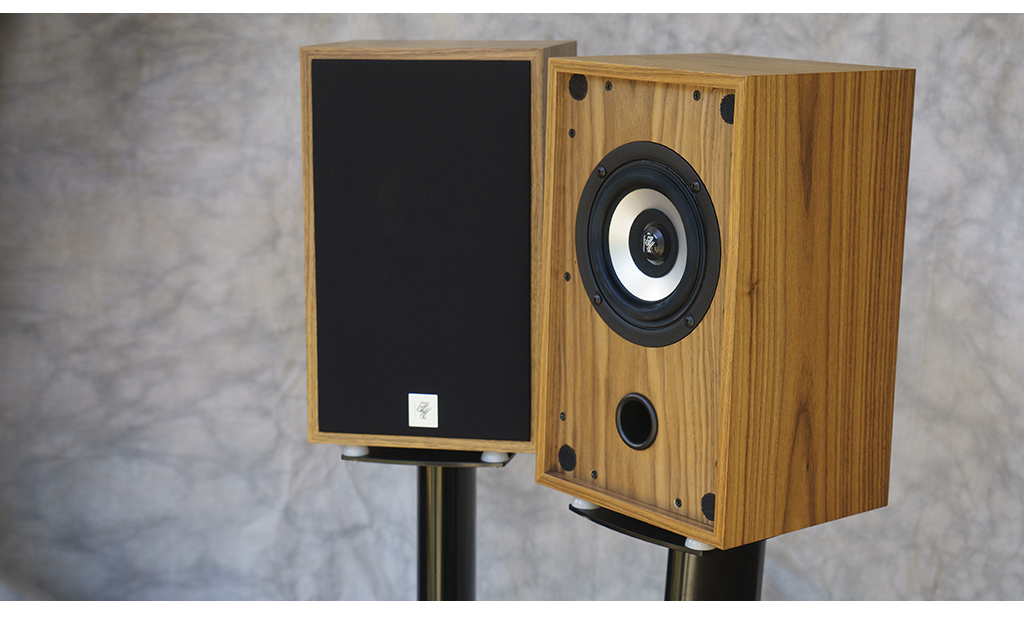
MoFi Edition LS3/5a Speakers. There are a number of variations on the LS3/5a theme. These are one of the best. We could argue THE best, but hey, let’s have some of that whisky, and listen to another record instead…  https://falconspeakers.com/collections/ls3-5a/products/falcon-ls3-5a-mofi-edition-loudspeakers

Finite Element Ceraball Feet. Finite makes incredibly good equipment racks (that just happen to be gorgeous as well) and these Ceraball feet work remarkably well, eliminating even more vibration from diffusing the sonic picture your system presents. We’ve had incredibly good luck with these under vacuum tube components. Hint, hint. https://www.leakaudio.com/collections/upgrades/products/finite-elemente-ceraball-isolation-feet

Leak Audio Stereo 130. This one sounds great, and pays homage to Leak’s beginning. Not to mention looks super cool. Don’t forget the matching CD player!  https://www.leakaudio.com/collections/stereo-130/products/leak-stereo-130-integrated-amplifier.

SolidSteel SS Series Speaker Stands. Practical, affordable, and hold a lot of weight. The perfect thing for those big monoblocks. What, no big monoblocks? Keep shopping.  https://www.leakaudio.com/collections/speakers/products/solidsteel-ss-series-speaker-stands?variant=32905664594013.

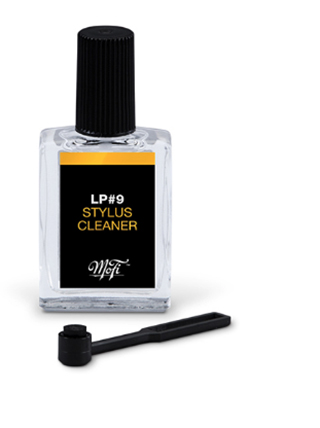
MoFi LP #9 Stylus Cleaner. Keep that stylus clean! It’s easy. Just go back to front. Remember that.  https://mofi.com/collections/accessories/products/mfsllp9_lp-9_stylus_cleaner

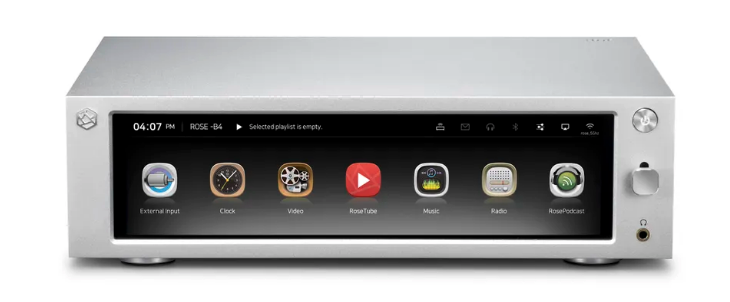
HiFi Rose RS201 The new HiFi Rose streamers are our favorites, bar none. This one’s got an integrated amp built in, making it the perfect audiophile gift for your non-audiophile friends. They won’t know you snuck it in under the tree. Just add whisky and speakers for instant party. See how easy that was? https://eng.hifirose.com/RS201E-info

Original article: Tone’s Last Minute Holiday Shopping Guide – Sponsored by MoFi Distribution

Please note that all TONE Audio copy and photography is © 2005–2018 TONE Magazine LLC. This RSS feed is provided for personal, non-commercial use only.

If you are not reading this content in your news aggregator, RSS reader, or direct, then the site you are looking at may be guilty of copyright infringement. If you locate this anywhere, please contact [email protected] so we can take action immediately.

TONEAudio MAGAZINE. All Rights Reserved.

Issue 109

Cover Story:

Three Integrated Amplifiers from Audia Flight

Long term reviews of BAT REX 3 Preamplifier
and REL Carbon Special Subwoofer

Features

Old School: The Pioneer RT-707 Reel to Reel Deck
-By Ken Kessler

The Audiophile Apartment: The PrimaLuna EVO 100 DAC
-By Sean Zloch

1095: Gear for Just over a G
We check out the SVS SB and PB-1000 Subwoofers

Shhhh…. Systems for low level listening
T+A’s Caruso R and matching speakers

Merch Table: Relics From Rock’s Past

Mine: It Should Be Yours

Music

Playlists:  We share our readers choices from around the world

Jim Macnie on Jazz

Review: Nancy Sinatra’s BOOTS re-issue
-By Pam Griffin

Future Tense

Gear in our immediate future

Original article: Issue 109

Please note that all TONE Audio copy and photography is © 2005–2018 TONE Magazine LLC. This RSS feed is provided for personal, non-commercial use only.

If you are not reading this content in your news aggregator, RSS reader, or direct, then the site you are looking at may be guilty of copyright infringement. If you locate this anywhere, please contact [email protected] so we can take action immediately.

TONEAudio MAGAZINE. All Rights Reserved.
The EJ Jordan Marlow Speakers

Listening to Al Green’s “Let’s Stay Together” is increasing the gravitational pull of the couch the minute I hit the play button. If you’ve never heard a good single driver speaker, you might just freak out. In a good way.

There is something so special about the absence of a crossover network, and all the artifacts that come along with even the best ones – you don’t realize it until it’s missing. And the EJ Jordan Marlows are great single driver speakers.

Moving on to Keith Jarrett’s The Koln Concert makes this particular listening session even more of a treat. There’s a silkiness to the piano that feels absent or forced on other speakers. Where something like a big pair of Wilsons, Focals, or Magicos almost seem hyperdetailed, there’s a relaxed detail here. You can’t have a speaker that is more coherent than one with a single driver.

No, you shouldn’t trade in your Grande Utopias just yet. If you are a true audio enthusiast, this is a pair of speakers you should own, just to have the experience – even if you have a massive pair of floor standers. Just as there are certain watches you should own if you are a watch collector, and certain motorbikes you should take for a spin if that is your passion – I submit you should own a pair of Marlows, and build a system around them.

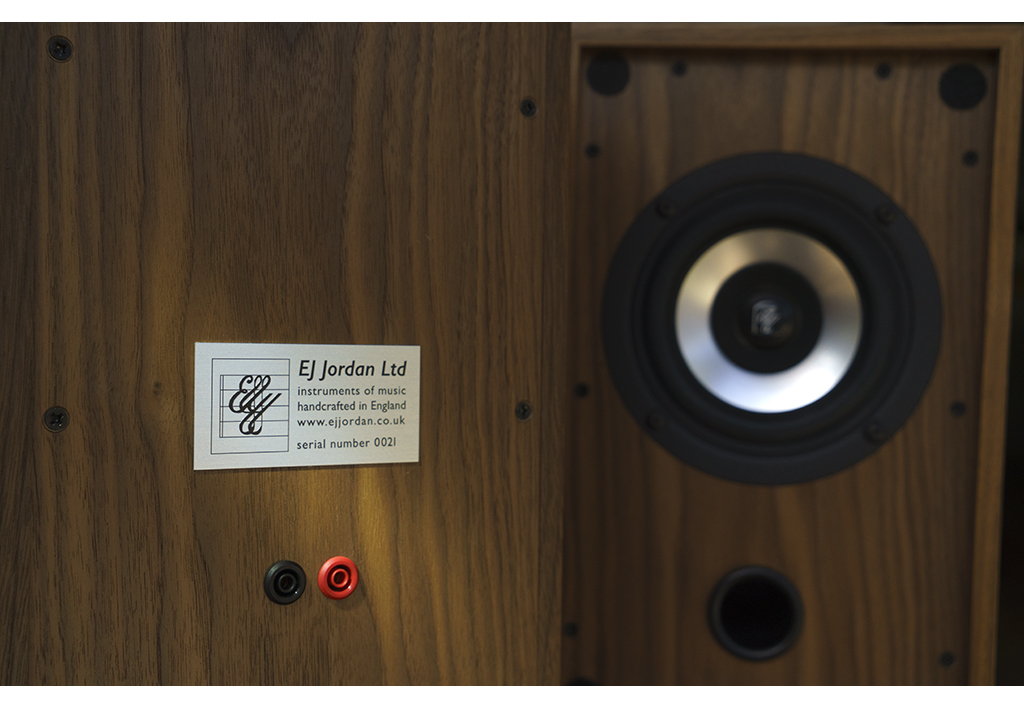
At about $2200/pair, the Marlows are on the low end of the price scale, if you’re looking at LS3/5As, and even if you go upscale to their CE version (about $300/pair more) these are more than fairly priced. The CE model features pure copper binding posts that will allow you to use speaker cable with spade lug ends, and offer additional damping inside. Our review concentrates on the standard Marlow model, which can only work with banana termination. This was easy as our reference living room system uses Cardas Clear Ultra cables, with banana plugs.


Amplifier choices

EJ Jordan states the Marlows will produce 86db with one watt – and with no crossover to absorb any power, they are more efficient than other speakers with a similar sensitivity. If you are familiar with Nelson Pass’ theory of the first watt – (if the first watt doesn’t sound great, the rest won’t either) the Marlows are incredibly easy to drive. Staying with that train of thought, starting the listening with the First Watt F3 amplifier that is optimized for single-driver speakers is positively heavenly. The Marlows gave their most extended performance with this amplifier – delivering the most solid, extended bass response and hf response.

A handful of tube amplifiers on hand also prove excellent, but different. The PrimaLuna ProLogue One (30 wpc, EL34 tubes) a warmer, mellower, almost fatter sound, than the Octave V110SE, which is more neutral, yet more dynamic. The conrad-johnson CAV54 mk 2 in our living room system is right down the middle, in terms of dynamics and extension, but proves to be the most three-dimensional experience. My Dynaco Stereo 70 is yet another sonic journey. See why these are so fun?

Back to the music

Now, you don’t have to be an obsessed audiophile to love the Marlows. Hook them up to your favorite integrated and sources and just enjoy them. A pair of 4-inch drivers will only move so much air and play so loud. You can’t rock the house with Zeppelin, but you might just be surprised at how loud these will play in a small-ish room. That’s not really what these are about though – the Marlows are definitely a quality over quantity decision. They provide satisfying results in our 13 x 18 foot room, but were even more lovely when moved to our back room that is only 11 x 13 feet.

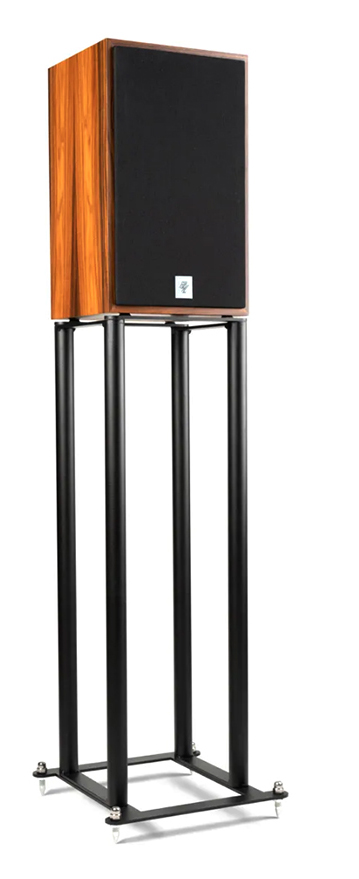
On a pair of Sound Anchors 24” stands, about 6 feet apart, finding the perfect spot from the back wall to balance the bass and upper bass just right is critical. Plan on the better part of the day to really optimize these, if you don’t you will find the Marlows only average, and it’s not their fault. You can drive a 43 horsepower Austin Healy Sprite rather spiritedly down a country road, provided you don’t waste a single one of those horses.
The same approach applies to the Marlows. Use decent quality sources, a good amplifier, good cables and be relentless with the setup and they will make magic for you. If your musical taste does center more around vocals, string ensembles, and modest rock/jazz selections without the most major dynamic swings, these speakers will give their all. Going back to “Quiet Houses” from the Fleet Foxes s/t debut, and way back to “Helplessly Hoping” from the Crosby, Stills, and Nash debut both serve up equal levels of excitement. These speakers are all about subtle delicacy, providing a very immersive listening experience at a moderate volume.

Much like a pair of Magnepan SMGs, the bass response that the Marlows offer up is detailed and solid. Listening to the acoustic bass intro to Rickie Lee Jones’ “Easy Money” (especially in my smaller room) is more than compelling enough to have you lamenting what you’re missing. Ending the evaluation with Right Said Fred’s “I’m Too Sexy” is a ton of fun – as he proclaims his sexiness, the way RSF’s drawl eases into nothingness has me re-thinking the fidelity of this track.

Familiar look, yet different internals

If you aren’t paying careful attention, the BBC inspired styling cues of the EJ Jordan Marlow speakers might fool you into thinking you were looking at another LS3/5A. Yet these small British speakers couldn’t be more different. Because they are not under license from the BBC, the Marlows are not held to the same design constraints.

They are meticulously made, yet these compact speakers utilize a single 3.93 inch (100mm) full range Eikona driver. If you click here to go to the EJ Jordan site and poke around a bit, you’ll find out that their designer, Ted Jordan is a powerhouse of speaker engineering. The Eikona driver is assembled at Scan Speak with critical parts originating in the UK.

A major variation on the theme

I’ve never thought of LS3/5As as wooly or boxy (though they are a bit colored, especially through the mid bass range), but always as fun, very engaging, very musical small speakers that deliver a certain magic in a small room – in a near field situation. Thanks to my friend Erik at Gig Harbor Audio, I’ve even heard the LS3/5As rock in a medium sized room with a good subwoofer.

going back to my pair of reference LS3/5As, I’m now ruined by the clarity that the Marlows provide. I hope the folks at Jordan won’t be too upset with me, but with a pair of REL TZero Mark IIIs staring right at me (with 6-inch woofers, easily able to keep up with the small Jordan cones) it begged to be investigated. I won’t tell you that you must have a pair of small REL subs to enjoy the Marlows, but as someone who uses them with a pair of LS3/5As, you might really dig this combination. It’s a different vibe than the Marlow’s alone, yet with some care, it was easy to tune the RELs to come in ever so gently on the bottom where the Eikona driver rolls off. If your musical taste heads more towards electronica and more full scale music, it’s cheating doing it this way, but really fun. It’s almost like using a pair of Quad 57s (guilty of that sin as well) with subs.

It’s also worth mentioning here that Marlow suggests their stands that are optimized for these speakers. Though my Sound Anchors do, in fact have the solid plate that Marlow advises against. Rather than blu-tack them down as with any other speaker with a more dense, thick wall cabinet, digging a set of Finite Elemente Cerebase pods out of the toolbox, brought a cleaner sound overall. I suspect that going a step futher with the Jordan stands will offer every bit these speakers have to offer.

A must have

Whether you are building a compact, yet high-performance system for a small room, a second system, or even just want to keep a pair of these around for when you’re in the mood for a different drive, the EJ Jordan Marlows are one of the most enjoyable speakers we’ve had the pleasure to listen too. These may just end up back here at some point on a permanent basis.

www.ejjordan.co.uk

Original article: The EJ Jordan Marlow Speakers

Please note that all TONE Audio copy and photography is © 2005–2018 TONE Magazine LLC. This RSS feed is provided for personal, non-commercial use only.

If you are not reading this content in your news aggregator, RSS reader, or direct, then the site you are looking at may be guilty of copyright infringement. If you locate this anywhere, please contact [email protected] so we can take action immediately.

TONEAudio MAGAZINE. All Rights Reserved.
REL T/9x Subwoofer

REL, often gets tagged on social media and mentioned in other platforms for their massive six-pack arrays, which are unquestionably awesome.

However, just as some Porsche or Range Rover, potential uniformed buyers can be frightened by what these premium models cost, not realizing that their engineering expertise goes all the way back to their entry and slightly above entry models as well. You don’t have to go into hock to get great subwoofer performance from REL.

I’m happy to say I use a six-pack of their top, no.25 subs in my main system, yet to put things in perspective, I use their $449 TZero III sub in my desktop system and a six-pack of the 510s in my living room. What this has given me is an opportunity to experience most of the lineup and see just how much quality and performance has been brought to bear on their T/x series. A while back, we did a comparison review of the entire T/x series, the T/5x, T/7x, and T/9x.

This is a more in-depth review of the T9/x, which is the top of this series. Not everyone has the room, the budget, or the system to support $50k worth of subwoofers, but a hifi system is just that, a system, and it’s important to keep a handle on trying to achieve synergy between the components to achieve the maximum result within what you have to work with.

Much has been said about this elusive concept of synergy, about magical systems that deliver well beyond what one might expect for the amount of cash spent. Consider each building block of an audio system in terms of just how much music said component can reveal. Often, we see proud pictures of systems on Facebook and Instagram featuring a “jewel” component, that is well beyond the capability of the rest of the components featured. More often than not, the owner has found an incredible deal on a used piece, or a demo piece priced so much lower than they expected, so it makes perfect sense.

Machine like

I’m often asked why I compare audio systems to automobiles, and the main reason is because the most successful automobiles, if you truly enjoy the tactile pleasure of driving, are not necessarily the fastest ones, but the ones that provide the best balance. The number of people that have called the first-generation Mazda Miata a “chick car” are often flabbergasted by how fast that little car can hustle down a twisty country road, providing an engaging driving experience that many, much more expensive cars cannot.

The same thing goes for a great hifi system, no matter what the cost. If you can choose components that will work in concert with your room, and the other components, it’s possible to achieve results you may never have dreamed possible on even a limited budget. Another big part of this equation is the ability to set your system up to the absolute limit of its ability, but that’s another article.

Enter the T/9x

Another point that needs to be underscored with REL, (and another reason for the comparison between hifi and autos) is their approach of bringing flagship technology to the rest of the lineup. What they learn in their top models, always finds a way, albeit abbreviated to their entry level models.

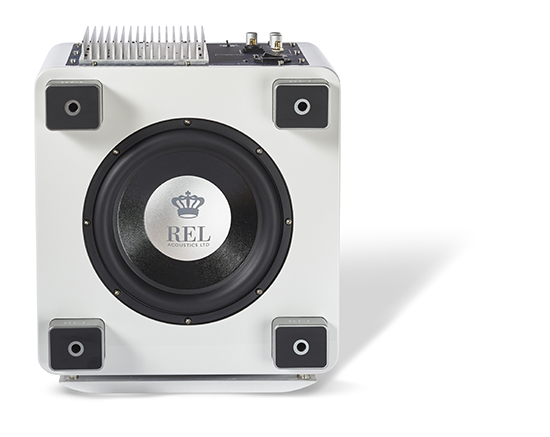
Successful experiments in materials, topology, and cabinet construction are all in full effect here. One of the first things you might notice about the current range is the rounded cabinet corners. Harder to make, but better for acoustics. Refinements to their 300-Watt A/B amplifier and filter network all contribute to the sonics provide by the 10-inch FibreAlloy™ woofer, and 10-inch, downward facing passive.

As with REL’s other subwoofer families, there is an underlying design brief, with each model in the range going deeper with more LF extension than the model before. Where the T5/x is more of a fit for a room with a smaller volume, the T/9x moves more air, suited to a bigger room, and a main speaker that can dig a little deeper.

Setup and such

We agree with REL that if you can, consider a pair of subwoofers rather than a single, because it makes it easier to optimize the bass response in your room. Of course, if you have to start with one, by all means. While you will get more ultimate output with a pair, the major gain with two comes with the way they couple to your main speakers, providing a more effortless, more transparent blend.

Starting with our pair of Eggleston Nicos ($5,495/pair, review HERE) and the Luxman L-550AXII ($5,995, review HERE), a solitary T/9x makes an excellent match in our 13 x 15-foot room. RELs comprehensive setup guide suggests corner placement, yet in this particular room, a single subwoofer works well slightly off center. Setting up in this configuration will require slightly different settings because the room gain achieved from corner placement is diminished in the middle of the room.

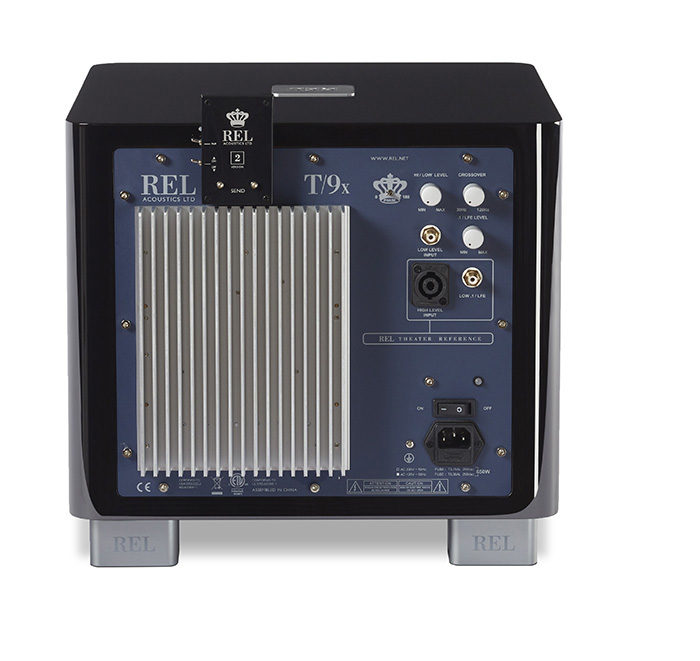
Moving out to the 13 x 18-foot living room (which opens into the rest of the house) makes for a perfect dual woofer setup. As the Nicos go down fairly low, setting the T9/x crossover down fairly low works perfectly. If you are new to the REL way of doing things, they use a high-level connection, from your speaker outputs. This lets the subwoofer follow the same signal that is going to your speakers in terms of sound character, but more importantly, makes it much easier to get a seamless blend with your main speakers.

Letting the main speakers run full range, and letting their low frequency output roll off naturally makes for subwoofers that will blend perfectly with your mains, and providing more sonic cohesion – provided you take the care to set them up correctly. And blend seamlessly they did. In the slightly bigger room, the extra T/9x adds more upper bass and lower midrange body to the Nico’s presentation. The extra grunt provided on bass-heavy tracks is equally enjoyed, but again, the presence provided by these subwoofers is unmistakably good.

As with every REL-based system I’ve set up over the years, when properly set up the RELs are undetectable, until you turn them off. In addition to the lowest bass fundamentals diminishing, the front to back imaging component of the system nearly disappears. Even when listening to music that doesn’t have a ton of heavy bass. The level of depth that the REL subwoofers provide never ceases to amaze me.

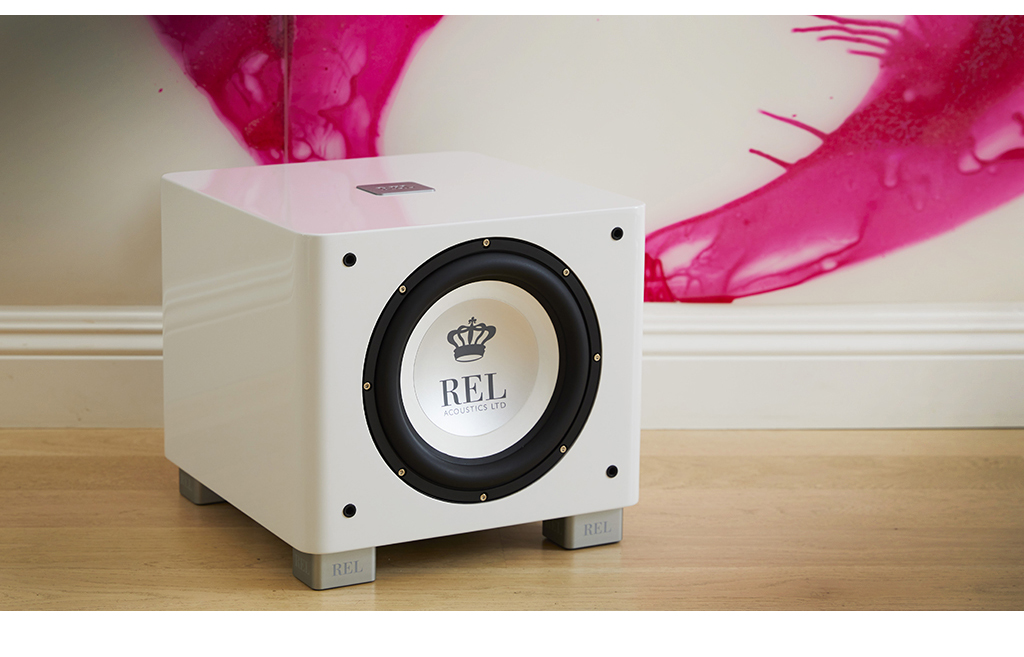
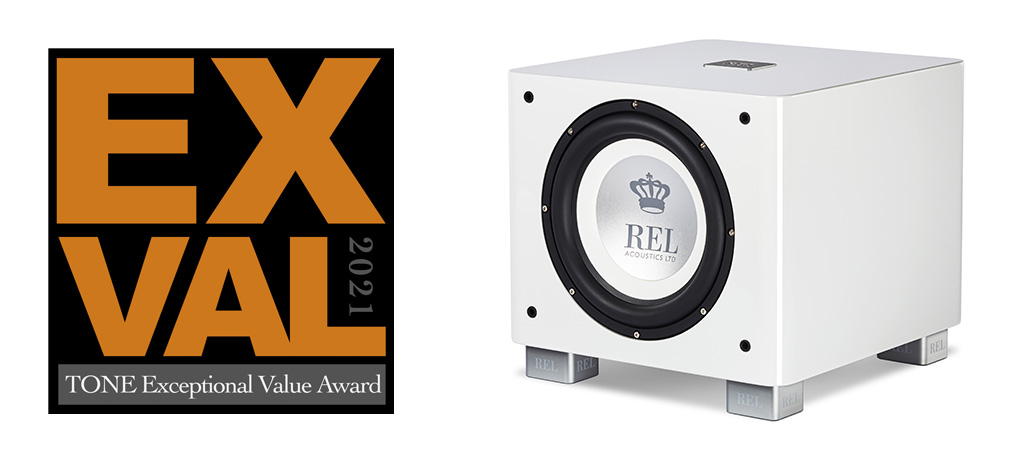
In case you are wondering, the T/9x tips the scale at a mere 45.5 pounds (20.6kg), so these are subs you can move by yourself. They are available in high gloss black and high gloss white. That’s no marketing speak – when REL says “high gloss,” they mean it. There isn’t a new automobile on the market at any price that has as deep a finish as what comes standard on a REL. Cabinet size is a compact 14.5” wide, 13.4” high, and 15.5” deep. You should be able to install them nearly anywhere without issue.

That the T/9x can take advantage of REL’s Arrow wireless system, makes system integration and installation even easier. $199 gets you a transmitter and receiver, allowing you to place your T9/x’s up to 50 feet away. Setup is painless and takes less than 90 seconds to implement. We did not use the Arrow system in the context of this review, but past experience with REL wireless options on other subwoofers is fantastic.

Further listening

Tracking through the title of Carole King’s classic, Tapestry – an album not known for its LF content, reveals much more body and saturation in her voice and piano with the RELs active. Moving on to Duran Duran’s latest record, Future Past begins with some amazing bass grooves, right from the start. Those loving bass will really enjoy this, because that’s what you add subwoofers for, right? To feel that bass.

Mating the T9/x’s up with a few different speakers delivers equally good results. In addition to their power and extension, these subs are fast, dynamic, and articulate. Swapping the Eggleston out for a pair of Magnepans and some vintage Acoustat ESLs, prove they can keep up with the pace of the delicate ESL panels. I wish I would have had a pair of these 30 years ago, when my main system used Acoustat 1+1s! The Luxman amp has two pairs of speaker outputs, making it incredibly easy to hear the difference between subs in and out of the system. There’s no turning back.

Final thoughts

As mentioned, each of the three models in the /x series provide a similar voice and level of resolution. The one (or pair) you choose will depend heavily on how low your main speakers can extend, the volume of your listening room, and ultimately how loud you play music.

Moving up to the Serie S subs brings more refinement in every aspect, though at a higher cost. If you are looking for a high performance, yet compact and cost-effective way to add low frequency extension, the REL T/9x is fantastic. The T/x subwoofers are meant to be used as single subwoofers or in pairs, they can’t be expanded to six-pack array service. This may be your ultimate decision when trying to decide between a pair of T/9x’s and a single S510. If you want bang for the buck, and a minimal box compliment, the T/9x will serve you well. Higher audiophile ambitions? Maybe the S/510. Or, just put the T/9xs in another system. I can spend your money all day.

Either way, the REL T/9x is highly recommended and worthy of one of our Exceptional Value Awards for 2021.

-Photos courtesy of REL.

www.rel.net

Original article: REL T/9x Subwoofer

Please note that all TONE Audio copy and photography is © 2005–2018 TONE Magazine LLC. This RSS feed is provided for personal, non-commercial use only.

If you are not reading this content in your news aggregator, RSS reader, or direct, then the site you are looking at may be guilty of copyright infringement. If you locate this anywhere, please contact [email protected] so we can take action immediately.

TONEAudio MAGAZINE. All Rights Reserved.
Legendary McIntosh Amp goes for BIG bucks!

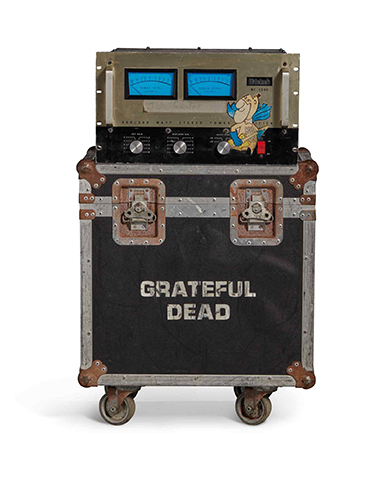
Legendary Grateful Dead guitarist, Jerry Garcia’s MC2300 power amplifier just sold at Sotheby’s for a record $378,000.

That’s not a typo.

While Sotheby’s did not disclose the buyer, there were other parts of the Grateful Dead’s setup that also went on the auction block.

These days, you can find a nice, used 2300 in the $3,000 – $5,000 range, but finding a vintage Bud Man sticker may be tougher. Might be a good time to grab one before prices head up! These are still great amplifiers by any standard. And the heritage is unmatched.

www.mcintoshlabs.com

Original article: Legendary McIntosh Amp goes for BIG bucks!

Please note that all TONE Audio copy and photography is © 2005–2018 TONE Magazine LLC. This RSS feed is provided for personal, non-commercial use only.

If you are not reading this content in your news aggregator, RSS reader, or direct, then the site you are looking at may be guilty of copyright infringement. If you locate this anywhere, please contact [email protected] so we can take action immediately.

TONEAudio MAGAZINE. All Rights Reserved.