Author Archives: toneaudio

New Focal Powered by Naim Spaces in Barrie and Winnipeg

The Vervent Group, that unites Naim and Focal has opened two more “Focal Powered by Naim” stores in Canada. Winnipeg and Barrie to be precise. This is an incredible way to experience the full depth of these brands, along with their personal audio products. It’s a big win for new and seasoned audio enthusiasts.

Focal Powered by Naim Barrie takes place in the EQ Audio Video store, led by Edward O’Herlihy, an expert in audio solutions for more than thirty years. Focal Powered by Naim Winnipeg moves to Creative Audio in St. Boniface’s French Quarter, a store run by audio enthusiast Jeff Kowerchuk.

CUSTOMER EXPERIENCE IN THE SPOTLIGHT

Through their global network of stores and shop-in-shops, Focal and Naim put their customer at the center of their attention and offer them an authentic experience. Discovery of complete systems and high-end products, sound advice and listening experiences. They allow you to fully grasp the quality of Focal and Naim sound and to project yourself at home with a hi-fi or Home Cinema solution.

FOCAL POWERED BY NAIM BARRIE

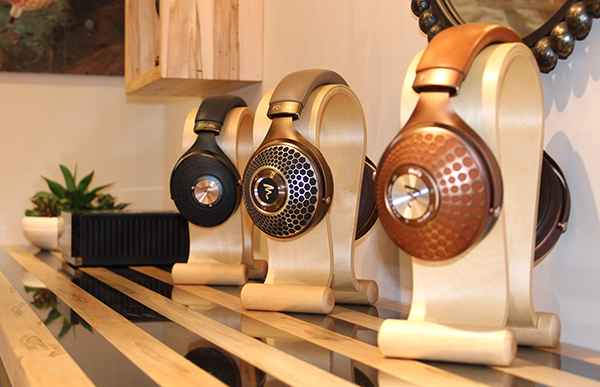
Close to the Barrie Molson Center, this shop-in-shop invites you to discover the World of Focal and Naim and test products via the four demonstration rooms of the luxurious EQ Audio Video store and a headphone bar with Focal’s headphones for a unique listening experience.

Highlighting the space will be the exclusive Focal Naim 10th Anniversary Edition system. It includes Focal Sopra N°2, Naim NDX 2 – NAC 282 – HICAP DR and NAPSC – NAP 250 DR for $48,000 USD and $62,400 CAD. The system includes all the connections you need, including a pair of Naim’s top-range Super Lumina speaker cables.

Focal Powered by Naim Barrie

130 Saunders Road, Units 5,6,7

Barrie, Ontario, L4N 9A8

Email: [email protected]

Website: https://www.focal.com/en/focal-powered-by-naim-barrie

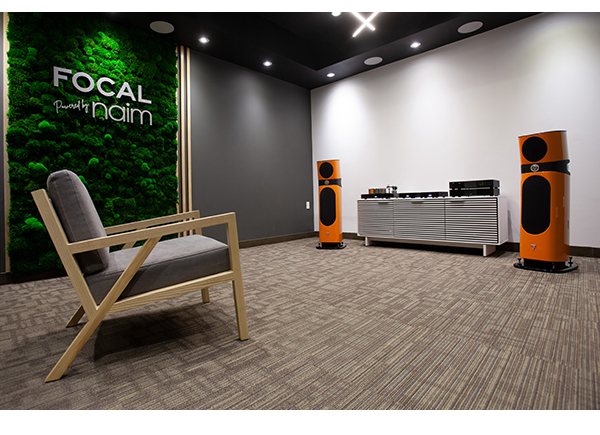
Located in the Creative Audio store, Winnipeg’s Focal and Naim shop-in-shop offers immersive listening in its two demonstration rooms, as well as more intimate listening at its Focal headphone bar. Designed around sharing, the space presents hi-fi and home cinema products of excellence but also unique finishes, such as the Focal Sopra N°2 speaker available in its Electric Orange finish.

Focal Powered by Naim Winnipeg

7-353 Provencher Boulevard Winnipeg, Manitoba R2H 0G8

Email: [email protected]

Website: https://www.focal.com/en/focal-powered-by-naim-winnipeg-0

Original article: New Focal Powered by Naim Spaces in Barrie and Winnipeg

Please note that all TONE Audio copy and photography is © 2005–2018 TONE Magazine LLC. This RSS feed is provided for personal, non-commercial use only.

If you are not reading this content in your news aggregator, RSS reader, or direct, then the site you are looking at may be guilty of copyright infringement. If you locate this anywhere, please contact [email protected] so we can take action immediately.

TONEAudio MAGAZINE. All Rights Reserved.

Lab 12 Mighty Power Amplifier

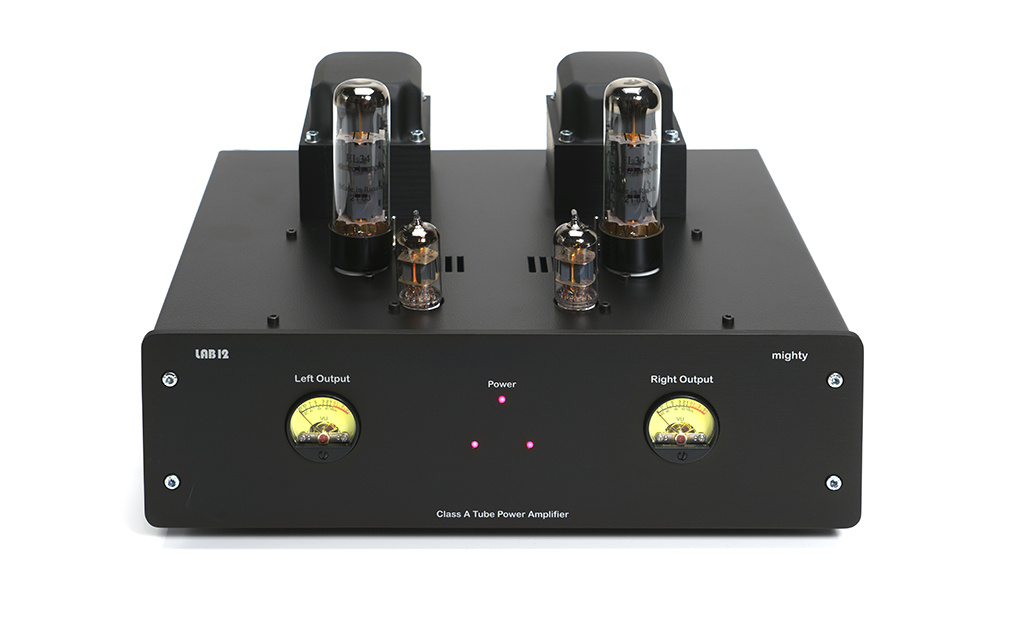
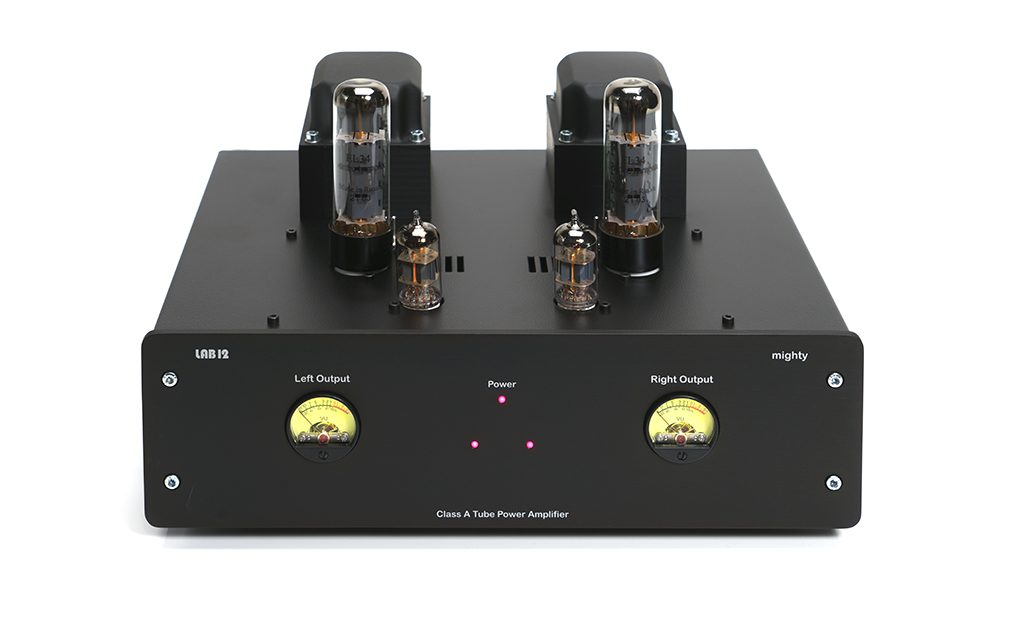
Don’t let the small footprint of this 10 Watt per channel fool you.

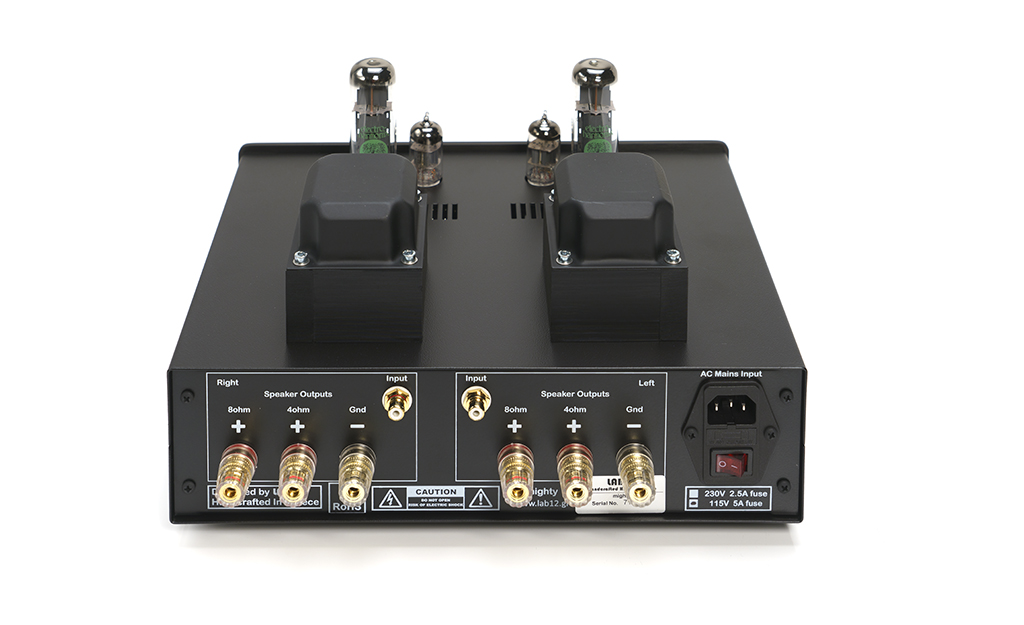
Even though it has a modest output, this single ended Class-A amplifier can be used in ultralinear or triode mode. It ships with a pair of EL34s, but can also be used with 6550 or KT88 output tubes. We tried them all and it’s more of a different, than better sound. (of course, our personal favorite is the EL34) A pair of 6NP1 dual-triodes round out the tube compliment. Simple.

From the coolio power output meters to the glowing tubes, this amplifier is a dream come true for anyone using efficient, high-sensitivity speakers. Thanks to The Heretic Speaker Company’s A614s, there’s an incredibly musical system playing in room 2 these days.

Though we did cheat a bit, using the Pass XS Pre and dCS Vivaldi ONE digital player to establish the Mighty’s performance envelope, moving to a more reasonably priced front end (the Naim Uniti Headphone Amplifier used as a DAC/PRE) is just as enjoyable. Even with less sensitive speakers (the Eggleston Nico EVOs, with an 87db/1Watt rating), the Mighty still delivers great, low volume listening.

With a single pair of RCA inputs, it’s easy to put in your system, and the sound is robust. The epitome of tubey-ness, the Mighty is a wonderful blend of new and old, providing a massive soundfield, well controlled bass, and a luscious top end. This is one you can listen to all day.

$2,190

www.lab12.gr (factory)
www.fidelisdistribution (US Distributor)

Original article: Lab 12 Mighty Power Amplifier

Please note that all TONE Audio copy and photography is © 2005–2018 TONE Magazine LLC. This RSS feed is provided for personal, non-commercial use only.

If you are not reading this content in your news aggregator, RSS reader, or direct, then the site you are looking at may be guilty of copyright infringement. If you locate this anywhere, please contact [email protected] so we can take action immediately.

TONEAudio MAGAZINE. All Rights Reserved.

The Sendy Audio Peacock Headphones

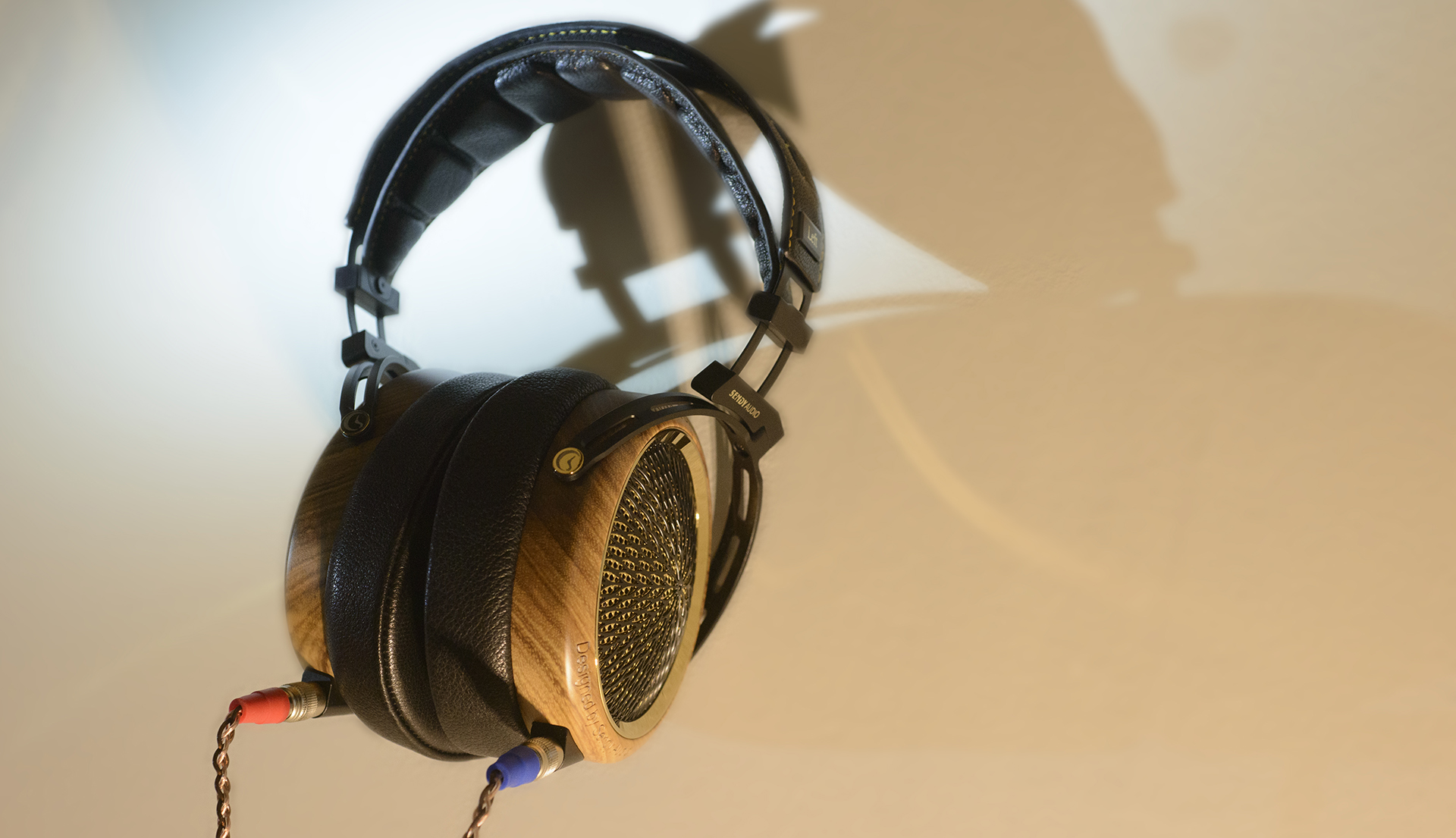
A few strums into Al DiMeola’s new live recording, Saturday Night in San Francisco is all it takes to reveal the delicacy these new phones from Sendy Audio possess. It wasn’t that long ago, there were a few mega-expensive electrostatic phones, and Audeze. Times have changed. While not having the last 5% of sheer speed and transparency that the best ESL phones have, the Peackocks are extremely musical and inviting overall. There’s a slightly warm tonality going on here that will keep them on your head for a long time.

Build quality is high, and the packaging lovely, but not overdone – and not overdone to the point where you might worry that too much effort went into the packaging. A quick look at the Sendy website shows how much thought and engineering prowess has gone into the drivers in these phones.

Switching from DiMeola to some classic Soul II Soul shows these phones can produce some major bass. If your musical taste leans towards house, hip hop, and electronica – the Peacocks might just be your new favorite musical tool.

But don’t think the Peacocks are Beats reincarnated. Regardless of genre, they deliver a high level of musical satisfaction. Their pleasing rendition and utter lack of distortion makes whatever music you love accessible. The midrange is clean, and the top end transparent.

They ship from the factory with a mini headphone plug, but Sendy includes ¼-inch and balanced adaptors. Putting these phones through their paces with everything from an older iPhone to our Manley reference headphone amplifier shows the Peacocks incredibly easy to drive. That’s great news no matter where you are on your personal listening journey.

Full review soon – highly recommended.

$1,499/pair

www.underwoodhifi.com

Original article: The Sendy Audio Peacock Headphones

Please note that all TONE Audio copy and photography is © 2005–2018 TONE Magazine LLC. This RSS feed is provided for personal, non-commercial use only.

If you are not reading this content in your news aggregator, RSS reader, or direct, then the site you are looking at may be guilty of copyright infringement. If you locate this anywhere, please contact [email protected] so we can take action immediately.

TONEAudio MAGAZINE. All Rights Reserved.

Lyle Lovett’s latest

If you’re in the mood for some musical comfort food, consider Lyle Lovett’s recent release – 12th of June.

If you’re a fan of his 1989 release, Lyle Lovett And His Large Band, and the 1992 follow up, Joshua Judges Ruth, this record picks up the same groove those records put down. Much like the opening of Large Band, Lovett begins this record with a short, snappy, uptempo instrumental that gets your ears warmed up for the rest of the journey. It feels as if this could have easily been release six months later.

Lovett is a musical chef that combines blues, country, Americana, and a little bit of jazz on the side to create a musical dish that’s mmm, mmm good. The title is a tribute to his twins born on June 12, how can you not love this guy?

The songs are great, with titles like “Pants is Overrated” (about his twins and their diapers), and “Pig Meat Man.” “Bring it to me on a great big platter – I’m a pig meat man, I like bacon and ham (with toast and jam).” You just want to call him up and go to Denny’s for a Grand Slam.

The record is fleshed out stylistically and texturally a lot like the Large Band record, and that’s a good thing. Featuring longtime collaborator Francine Reed, (who incidentally has just announced her retirement) the record flies by, perhaps too soon. This record is exquisitely recorded, and the musicianship first rate. Lovett’s voice doesn’t sound like its aged a day, even though a decade has flown by since we last heard from him. Let’s hope it doesn’t take this long for the next one.

12th of June is out on all formats, but if you need to live with it a bit before you buy a vinyl copy, it is also streaming with all the majors.

Original article: Lyle Lovett’s latest

Please note that all TONE Audio copy and photography is © 2005–2018 TONE Magazine LLC. This RSS feed is provided for personal, non-commercial use only.

If you are not reading this content in your news aggregator, RSS reader, or direct, then the site you are looking at may be guilty of copyright infringement. If you locate this anywhere, please contact [email protected] so we can take action immediately.

TONEAudio MAGAZINE. All Rights Reserved.

The FYNE 500SP

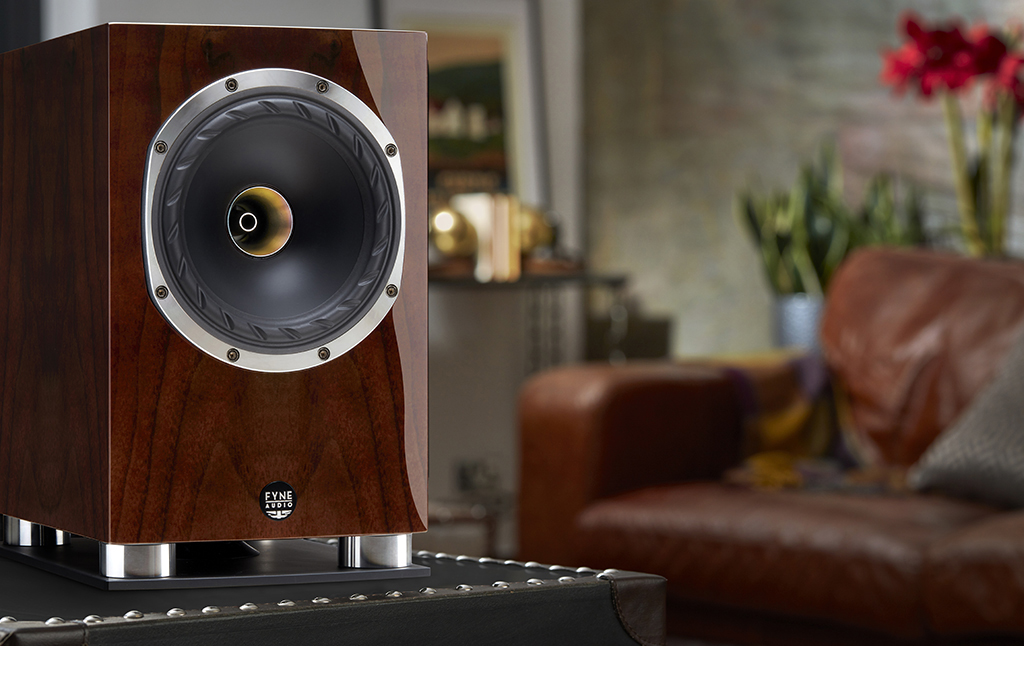
Small speakers can rarely energize a good-sized room with full-range sound. This is always the magic that is FYNE.

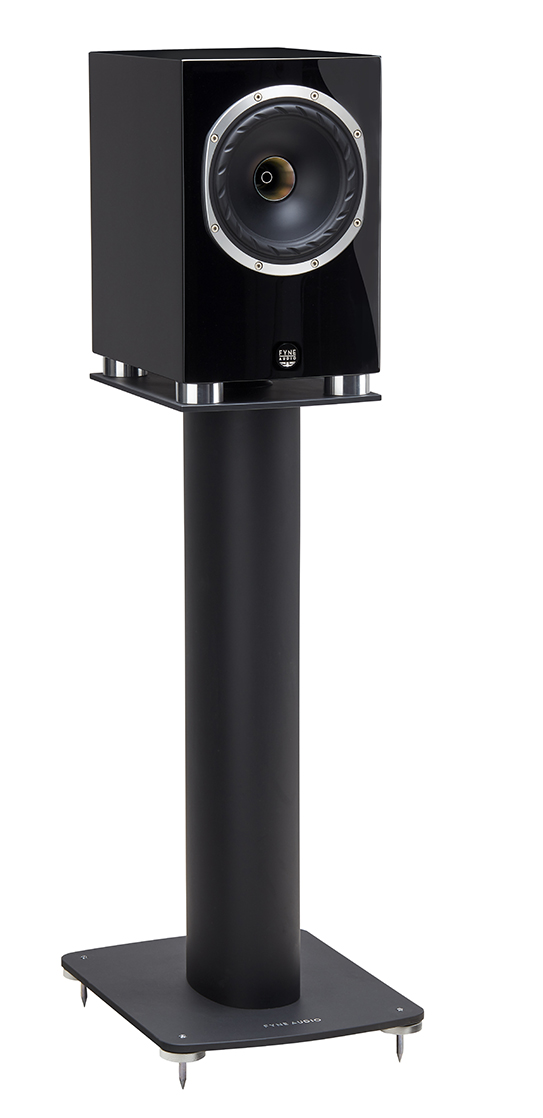
Featuring the coherence that usually only comes with electrostatic speakers, the time-aligned, coaxial driver of the FYNE speakers delivers a seamlessness that you might expect from a pair of vintage Quads, with a serious dynamic punch as well. Without the inherent graininess that plagues the other small speaker darlings – i.e., KEF and ELAC. (I say that with all respect, as a former Blade and LS50 owner) And it comes in an enclosure that isn’t even a cubic foot. At $1,995 a pair, these speakers are a mega value. The FYNE speakers are in a league of their own.

Tracking through Aphex Twin’s Syro album, the 500SPs generate a vast sound field in all three dimensions in our 15 x 26-foot main listening room. Only about 6 feet apart and 4 feet from the rear walls (with about 10 feet to each side), the small FYNEs open up, rendering layer upon layer of musical detail. Perhaps this isn’t the absolute sound, but music with a dense, atmospheric vibe needs this kind of presentation to engage you thoroughly.

Similarly trippy records from Yes, Art of Noise, and Steven Wilson are just as compelling. If you are a music lover who craves a spacious, dynamic sound at this price point and form factor, the FYNE 500SP should be at the top of your list. The toy piano in Gruppo Sportivo’s “Blah Blah Magazines” jumps way out in front of the speakers, showing how immersive the 500SPs are.

Superb standards

Switching it up, The Ginger Baker Trio’s Going Back Home reveals more insight into the level of nuance the SP500s deliver. Combining Baker’s powerful yet airy drumming, Bill Frisell on guitar, and Charlie Haden on bass, these speakers prove their prowess with acoustic instruments. There’s so much texture here in Baker’s drumming, and Haden’s runs up and down the neck of the acoustic bass, you’ll swear you’re listening to a much larger (and much more expensive) set of speakers. The extension and resolution of the lower frequencies are stunning with the SP500s.

Female vocal lovers will be equally delighted with the resolution the SP500s deliver. A long playlist of current and classic vocalists reveals the FYNE speakers are equally competent here. Though audiophiles have a tendency to lean on female vocals to judge speaker character, switching to male vocals is where many speakers fail to deliver. Johnny Cash’s “Delia,” from his original American Recordings, is always a go-to track because of his husky vocal delivery. Speakers lacking low-end reinforcement make Cash sound like a busboy with a lightweight character. The 500SPs allow this character to be the menacing executioner that the song portrays.

Again, our favorites fall to just about anything by Tom Waits or Buddy Guy. I’m sure you have your favorite demo tracks to see how well these speakers work in this context.

Finally, the 500SPs can play loud when the mood strikes. Watching the meter needles on the 100 Wpc Nagra Classic Amp hit 0dB on peaks made a thunderous presentation indeed when listening to Mott The Hoople’s “All the Young Dudes.” FYNE suggests amplifiers in the 30 – 120 Watt per channel (60 Watts, continuous), and we agree.

In a moderately sized space, you may never explore the upper reaches of these speakers’ dynamic capabilities. Your only limitation will be with bass-heavy material. The big drums in Peter Gabriel’s “The Rhythm of the Heat” are able to bottom the woofers at high volume, and this kind of punishment will probably be frowned upon should you return your damaged speakers to FYNE for repair.

This is the double-edged sword of the 500SP. In addition to their impressive tonal characteristics, this is a very low-distortion speaker as well. It makes for fatigue-free listening, but approach high sound pressure levels slowly at first, so you can find the overload point for your system and your ears. You will be surprised at the high sound pressure level the 500SPs can produce.

Choose your voice

Overall, the SP500s are a touch forward in their presentation but not harsh or strident. Thanks to a 90db/1-Watt sensitivity, they don’t need a massive power amplifier to make music at adequate listening levels. A well-designed crossover network, with a first-order slope going up from the 1.7kHz crossover frequency and a second-order slope going downwards, is a massive contributor to the smooth vocal character and lack of artifacts in the crossover region. However, their high level of resolving power allows them to shine with higher quality components. This leaves the music lover a wide range of options. You may find yourself pairing the FYNE speakers with more expensive components than you initially thought practical.

Rega’s Brio-R remains one of our favorite high-quality integrated amplifiers for just under $1,000 and is our starting point for this review after the initial break-in. A Prima Luna ProLogue 1 and the Luxman N-150 Neo Classic rounded out the picture for vacuum tube amplification choices. The T+A Caruso R and Cyrus Cast ONE both feature Class-D amplification, though the digital amplifiers start to become too much of a good thing.

The 500SPs resolving ability makes them less than perfect for older vintage solid-state amplifiers and receivers only because they tend to expose the flaws in the components upstream. Giving them a go with a re-capped Marantz 2270 feels a little dull, though putting them in a system with a set of freshly rebuilt Nakamichi 600 components (a distinct step up back in the day) made for a charming overall effect.

However, we all like something different. But, if you have a digital amplifier, you’ve been warned. The 500SPs relative neutrality gives you a wider range of options than most speakers at this price level to fine-tune the voice of your system, a definite plus.

Because of their wide dispersion and a downward-firing port between the cabinet base and bottom, these are incredibly easy speakers to place in your room. They are top performers in an environment where the speakers can’t always go in the optimum spot for perfect sound. If you don’t opt for the FYNE stands, go for the most massive, rigid ones that make sense for your wallet and décor. Flimsy stands will compromise bass extension and quality.

One thing unique to the FYNE speakers is their fifth ground lug on the back of the speakers. FYNE claims it will “ground the driver chassis and eliminate amp or cable born RF interference.” While the TONE studio is a big, metal building (essentially a Faraday cage), we don’t usually have this problem. However, in the house’s unshielded environment, taking advantage of this did make a slightly noticeable – and positive effect. A nice touch, indeed.

While the review set arrived in gloss black, gloss white, and gloss walnut is also available. The finish quality is exquisite. The 500SPs are designed and built in the UK. It shows. If you’ve spent any time at all with modestly priced speakers that hail from China, you’ll notice that the fine details are not executed as well as they are here.

Should you put a pair of 500SPs in your system, the only thing you might consider after you’re used to the speakers is a pair of high-quality jumpers to connect the woofer and tweeter, if you aren’t using bi-wired speaker cables. Jumpers from Tellurium Q and Cardas both added another margin of HF smoothness that is worth exploring.

It’s easy to give the FYNE 500SPs one of our Exceptional Value Awards for 2022. Every aspect of these speakers is flawlessly executed within the price point.

www.soundorg.com (US distributor)

www.fyneaudio.com (Manufacturer)

Original article: The FYNE 500SP

Please note that all TONE Audio copy and photography is © 2005–2018 TONE Magazine LLC. This RSS feed is provided for personal, non-commercial use only.

If you are not reading this content in your news aggregator, RSS reader, or direct, then the site you are looking at may be guilty of copyright infringement. If you locate this anywhere, please contact [email protected] so we can take action immediately.

TONEAudio MAGAZINE. All Rights Reserved.

Joni Mitchell: Live at Carnegie Hall – 1969

When I was a little kid, I remember listening to albums from my parent’s collection that that have stuck with me throughout the ups and downs of life.

Throughout her career as a songwriter, painter and musician, Joni Mitchell has never made any excuses about being a strong Canadian woman, expressing herself in her art and music. Perhaps those memories of Clouds on that 60′s record player help me enjoy and appreciate The Hissing of Summer Lawns even more today. Mitchell’s Blue and Ladies of the Canyon are two of my favorite late night headphone listening albums – I’ll never shy away from that emotional journey. Her unique voice, distinct guitar sound are never far from my turntable.

The 3 album box set of Joni Mitchell’s career-changing debut at Carnegie Hall saw its first-ever release late in 2021 and I was fortunate enough to land the 180-gram, three LP, snow white vinyl version. This jewel is a must have for dedicated Joni fans.

From the first time you hold the beautiful but heavy jacket, to immersion in the music, Live at Carnegie Hall’ captures a time and place in history. When a 25-year-old Joni Mitchell stepped on stage in her long vintage skirt on February 1, 1969 in front of a packed house, it was her first major concert.  Her partner at the time, Graham Nash sat in the audience along with her parents and Bob Dylan. Her debut album, Song to a Seagull had been released less than a year prior, produced by David Crosby. This Canadian was new to California, but familiar with performing at coffee houses and nightclubs. But this was big.

The black and white photo on the cover features Mitchell, pin-straight hair down her back, sitting at a Steinway, 3 mic stands, and her trademark Martin D-28 Dreadnought laying on an otherwise empty stage. If a picture could tell a story, this one certainly sets the tone for what a treasure that jacket holds, captured on vinyl. Joel Bernstein’s candid photographs, Mitchell’s handwritten changes to the set list and lyrics to Blue Boy offer a glimpse into that night in New York.

For first play, this gorgeous white vinyl went onto my reference Acoustic Solid Vintage Exclusive with a low-output Dynavector DV-20X2 cartridge. The album begins with an appreciative crowd and Mitchell opening the 19 song concert with “Chelsea Morning.” According to the notes written by Graham Nash, she had started the song, but had to stop.The crowd, in support of the important event they were witnessing, gave her a Valentine which she held up, smiling on stage. You can hear the nervousness in her voice as she acknowledges this kind gesture, but the initial hesitancy melts away when she settles into “Cactus Tree.”  From that moment on, she sounds relaxed, confident and in her element both in her voice and instruments as she bares her heart and soul on that famous stage. She is almost apologetic for her piano playing but nails it on “Blue Boy.”  Her lighthearted banter in between tracks sounds more like a conversation she is having with a small intimate crowd instead of addressing the 3,600 seats in front of her. On side 2, (my personal favorite track) the stellar a Capella rendition of “The Fiddle and The Drum” follows her explanation of what it was like to be a Canadian living in America during this incredibly important time in history.

The second set starts with “Marcie”, a song for a friend. The initial nerves are a distant memory, and her voice confidently holds the listener’s attention. Immersed in the music, Mitchell continues her musical storytelling. Dedicating “Morning Morgantown” to her parents, there is a realization that this young woman, alone on stage, has her friends and family there to support her during her first big show, not a seasoned professional who was accustomed to performing to large crowds. The second set ends with a medley of “The Circle Game, and Little Green.” There is a poignant edge to her description of the latter track as being “about a little girl.”  At that time in her career, not much was known about her personal struggle after surrendering her daughter for adoption in 1965. Perhaps only a few people in this crowd knew Mitchell’s longing and heartbreak. As she fluidly shifts between the 2 songs, the emotional connection to her story deepens, drawing your focus to the fusion.

The fifth side contains her encore, starting with “Michael From Mountains,” closing the show with “Urge For Going,” after she retunes her guitar and acknowledges how far it is from Saskatoon to Carnegie Hall. Her delightful fingerpicking on the final track draws the listener in as her voice delicately lifts and swells, describing a Sasketchewan winter.

The vibrato in her voice, the sound of fingers plucking steel strings and the voices of the crowd singing with her on Get Together are clearly heard, even when in the background, reflecting the talent of Bernie Grundman’s mastering. Overall, this live recording is dynamic and well balanced without taking away from the artist alone on stage. The exquisite layers and passion behind the music are attained in this album. From the first play, this peek into music history has quickly become a frequent flyer on my TT.

Live at Carnegie hall, 1969 is a gift from a place in history that needs to be remembered as a time of change and uncertainty. This album not only pulls the listener back to late 60′s free spirit hippy culture that embraced my parents, but draws you in with honest vulnerability and creativity. The special place I have for Joni Mitchell and her music throughout my life, in my collection and in Canadian music history, just grew by leaps and bounds. Two very enthusiastic Canadian thumbs up.

www.jonimitchell.com

Original article: Joni Mitchell: Live at Carnegie Hall – 1969

Please note that all TONE Audio copy and photography is © 2005–2018 TONE Magazine LLC. This RSS feed is provided for personal, non-commercial use only.

If you are not reading this content in your news aggregator, RSS reader, or direct, then the site you are looking at may be guilty of copyright infringement. If you locate this anywhere, please contact [email protected] so we can take action immediately.

TONEAudio MAGAZINE. All Rights Reserved.

Issue 111

Cover Story:

We pay tribute to the Bowers & Wilkins Zeppelin:
A product that defined a market segment

Features

Old School: The ESS AMT-1b
-By Jeff Dorgay

Cartridge Dude: The BENZ LP-S

1095: Gear for Just over a G
The LSA LS 50 Signatures

Merch Table: Relics From Rock’s Past

Mine: It Should Be Yours

Music

Playlists:  We share our readers choices from around the world
LIVE!  Emily Duff covers Aimee Mann
Jim Macknie on JAZZ

Future Tense

Gear in our immediate future

Original article: Issue 111

Please note that all TONE Audio copy and photography is © 2005–2018 TONE Magazine LLC. This RSS feed is provided for personal, non-commercial use only.

If you are not reading this content in your news aggregator, RSS reader, or direct, then the site you are looking at may be guilty of copyright infringement. If you locate this anywhere, please contact [email protected] so we can take action immediately.

TONEAudio MAGAZINE. All Rights Reserved.

The Heretic A614 Speakers

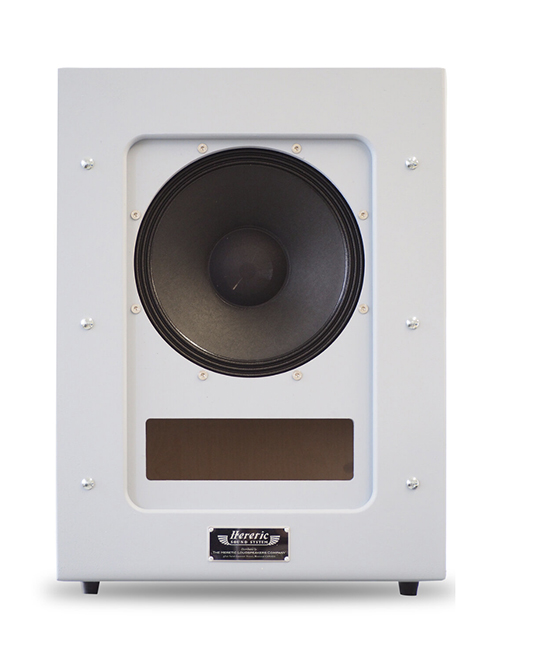
Warning, these speakers tend to keep you cemented in your listening chair. The Heretics are “album side” speakers if that makes sense.

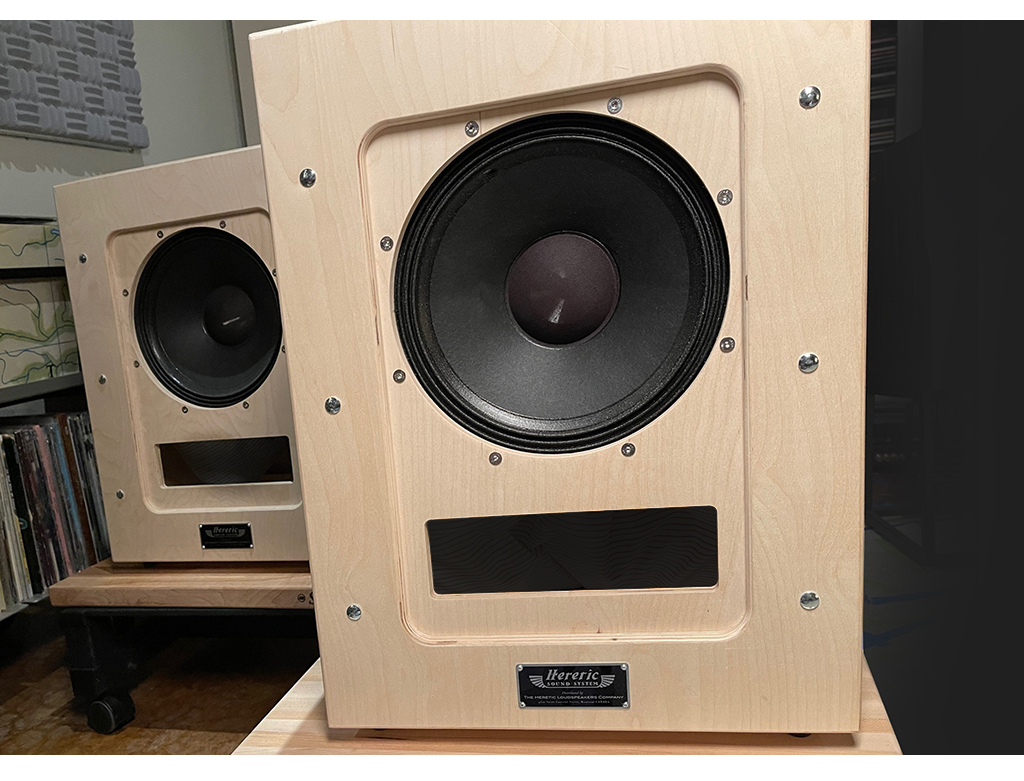
Spinning Nightmares on Wax’s In A Space Outta Sound, the dub heavy, trippy vibe is intoxicating. Next up, Propellerheads Decksanddrumsandrockandroll. Again, the whole album goes by without the slightest urge to make a playlist. The bass line in “Oh Yeah?” is so much fun. The 12” coaxial driver combined with the ported cabinet adds up to a very organic, tuneful (yet not overdamped) bottom end.

If you’ve looked at Heretic’s website (www.thehereticspeaker.com) you’ll notice the famous shot of EMI studios, with the Beatles in the control room. They are listening to what looks like the larger Heretic A612, but these are actually Altec drivers in the cabinets. Robert Gaboury, the man behind the Heretic has taken this 12” coax and the Altec cabinet design and brought it into the modern age, to produce a speaker that is really a pleasure to listen to.

Powered by the Lab12 Mighty amplifier, which only produces 10 watts per channel, these speakers sporting a 97db/1-Watt sensitivity rating barely make the cool, circular VU meters move from rest. Seriously, how often do most of you listen to music at a 97db level? It’s unbelievable that this pair of speakers, combined with a $2,400 power amplifier can create such an expansive and immersive musical experience. But it does. Pricing is TBA right now, but they will be under $8k/pair for the smaller 614s, reviewed here.

Quick, adjective barrage

All of those audiophile cliches we’ve heard a million times over truly do apply to the Heretic A614s, but they are one of those rare speakers that provide instant fun. If you’re a persnickity audiophile, you’ll find things to nitpick, but then you will no matter what you’re listening to. These won’t be the speakers for you.

You can look at these speakers one of two ways – you can be fussy and point out the small things they don’t do (as you would with every single other speaker made) or you can sink into the vibe and just enjoy them. To give you a reference point of where I’m coming from (because saying a speaker is “fun,” really doesn’t give you much to go on…) my short list of fun, under $10k/pair speakers are in no order, The Vandersteen 1C, The JBL L-100 Century Classic, The Magnepan SMG, A nice used pair of MartinLogan CLS’s, The Harbeth C7s, The Zu Dirty Weekends.

Speakers that are not necessarily the last word in audiophile speakers, but ones that you can sit around all evening listening to music with, have a great time, and not have to engage the audiophile part of your consciousness that feels the need to dissect everything.

Quick setup

Thanks to their relatively light weight – about 40 pounds each, with a profile of 19” wide, 15” deep, and about 26” tall, you can move the Heretics around and set them up easily by yourself.
Having used these in small (10 x 13 foot), medium (11 x 18 foot) and large (15 x 26 foot) the Heretics deliver great results anywhere, though you will get a little bit more bass loading in an extremely small room, that may or may not work to your advantage.

While these speakers come with feet attached for use on the floor, I had the best results getting them about 13” off the floor. Custom stands are on the way, but for now a pair of heavy Sound Anchors stands with 1.25 thick butcher block boards work splendidly. A little blu tack between the boards and the stands really helps too. Getting that tweeter up a little higher than ground level makes for a lot less mid-bass bloom/roundness and gives up nothing on the bottom end. This also helps the Heretics to create a larger soundstage, eliminating a lot of reflection right from the floor.

Because the originals have that EMI heritage, the push for some Beatle’s was just too much to resist, and considering it’s that time of the year here in America again, Revolvers’ “Taxman” was perfect. These speakers do such a great job at holding the bass line rock solid, the drums in place and a clear view of all the harmonies – it’s incredible. And incredibly enjoyable. Whether you prefer the stereo or mono Beatles, this is a treat. Switching it up for Cheap Trick’s “Taxman, Mr. Thief” is equally rewarding. And this is not an awesome recording by any stretch. Yet the slightly round bottom end of these speakers gives a little bit of help to the average recordings in your collection. Again, that fun thing.

For those of you that haven’t been following my ongoing narrative, one of my biggest hot buttons is coherence. Thanks to the coaxial tweeter, these speakers sound like a big single driver speaker with extension. The crossovers are well designed, as the transition from woofer to tweeter is as good as it gets – seamless and free of grain. Regardless of what kind of music you enjoy, these speakers do a fantastic job rendering it.

Vocals are transcendent with the Heretics, both in terms of tonality and the way they can decode layered harmonies. The Heretics are highly natural in their presentation, and again thanks to the high sensitivity, nothing is ever working hard to produce sound – resulting in low distortion and fatigue. These are speakers you can listen to all day without becoming the least bit tired.

Amplification

Don’t let the sensitivity rating fool you, even though these speakers don’t need a tremendous amount of power to play really loud, it’s a quality thing. A few obvious choices (the Cary 805 SET monos, the Line Magnetic 815) didn’t provide killer results, yet the 4 watt per channel Finale is out of this world good. As mentioned at the beginning of this review, Lab12s Mighty (10 watts per channel) is also fantastic. Our Pass First Watt SIT-3 was also a stunner. This amplifier is very speaker sensitive, but in this case, the match is perfection. This single ended solid-state amplifier delivers about 92% of the texture and depth of the best tube combinations, with a bigger image, and a lot more slam on the low end. So, again – big fun with these speakers. And there’s still about five or six amplifiers to try.

Perhaps we were cheating a bit at first, using the Pass XS Pre, XS Phono and dCS Vivaldi One with Vivaldi Clock, but even when bringing the associated components downstream in keeping with you’d probably expect to be in a system with a pair of speakers in this price range, the results are still excellent. The only thing tried that was less than awesome was our vintage Marantz 2270. This just sounded flat.

The rest of the story

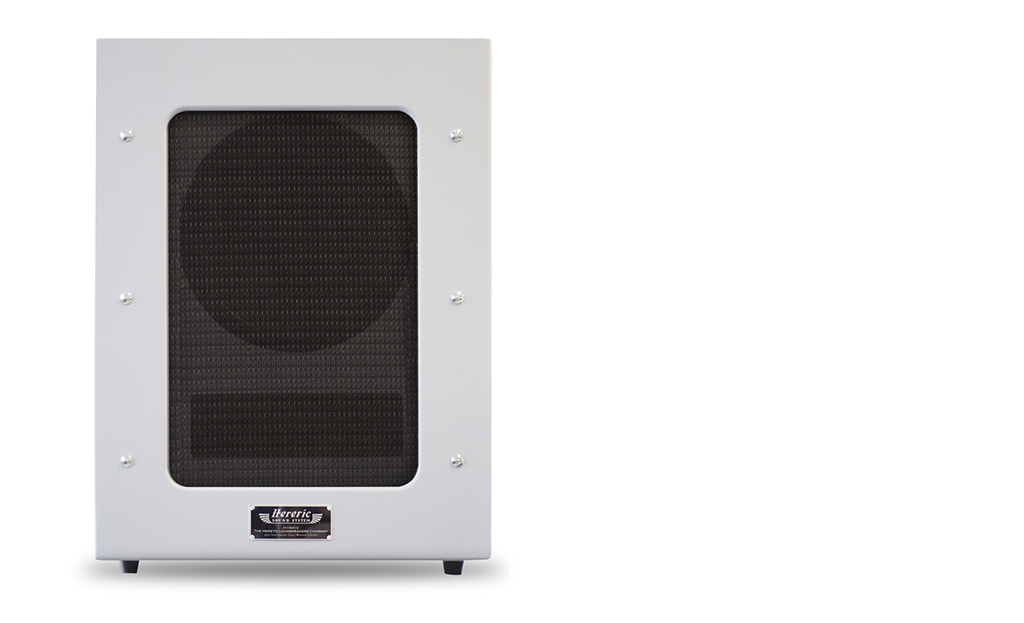
Looking at the Heretic site, you’ll see there are several other finishes available, and you can order the speakers with or without grilles. If you have munchkins or pets, seriously consider the grilles. Our review pair came in the natural finish.

Gaboury says that the cabinets are made from 12mm Canadian ultra-premium birch plywood. The website says, “Because of tone. Tone comes from rigidity, lightness, and compliance, but not too much.” Rather than go on and on, if there is any way you can give these speakers a listen, if you share some of my listening priorities, I think you will really enjoy the Heretics. Should you have a larger room, or need more bass extension, they also make the A612, which is the same driver in a cabinet with more volume.

Sensitivity remains the same, but there is an additional half octave of bass extension. When Mr. Gaboury catches up with orders, he’s promising to send us a pair. For now, provisionally, I am purchasing the review pair, but I may hold the checkbook close to the vest until I hear the bigger model. I’ve got the room. Either way, these speakers have provided some of the most fun I’ve had in a long time just hanging out and listening to music for its own sake. You’ll only need one or two of your favorite tracks to decide if they are the droids you want.

For now, highly recommended, and #toneaudioapproved.

www.thehereticspeaker.com. (manufacturer)

www.fidelisdistribution.com. (importer/distributor)

But wait, there’s more

At the end of this review, designer Robert Gaboury had a bit of spare time in the middle of getting ready for Axpona, to fill me in on the fine details of how these great speakers came to be. Here’s what he has to share:

First thing, the ductless design.  Thiele/Small parameters are used to predict and accurately simulate low frequency behavior of transducers in closed and vented box. These days, all designers (including me) use software simulation in the development of loudspeaker enclosures.

However, T/S parameters were derived in the 1970s, meaning that Altec designers, when designing the 614 and 612 (1940 something) « utility cabinets » , which are ported, used another method to calculate vent area relative to enclosure volume. I found this fascinating, and decided 3 years ago to investigate, out of curiosity, what was happening.

Nowadays, we all want the best possible low frequency extension in the smallest air volume and most contemporary speakers use vented boxes with transducers designed especially for this. This is usually a tube in a box, and by adjusting area and length (along with enclosure volumes and transducer’s T/S parameters), the box is tuned to « load » the transducer at the lowest possible frequency. Loading happens when the air in the box opposes the cone motion, and at this point (the tuning frequency), the cone motion is nil and vent output is maximal. Below that frequency, the driver is unloaded, moves a lot, yet produces no sound, because the air pressure just escapes the port, out of phase with the driver, creating an acoustic short-circuit.

In recent years, passive transducers have been used when we want to tune a box to a lower frequency that would be practical with a tube (i-e, the tube is too long to fit in the box). This means that modern drivers are made to work in small boxes and generate ample LF. And accuracy in the mid-band is often sacrificed (I’d say always) a consequence of the quest for LF, because in order to allow a small transducer to resonate at – very – low frequency, the cone must be heavy. I simplify a bit, but think of a 1973 Buick Electra hitting potholes, versus a Lotus formula car… The Buick will resonate at very low frequency – and take a long time to settle, but won’t handle as well as the Lotus. As you can guess, the Lotus is a lot stiffer.

Back to the enclosure: a vent tube is always tuned to a specific frequency, say 42 Hz.  I found out, using simulation, that a ductless vent (such as the old Altec) is not precisely tuned. In fact, it is tuned to a much broader frequency band, which is highly desirable:  no « one-note » bass.

Also, a super stiff suspension is very desirable for medium (vocal range) definition. Think Lotus. So, if you accept the notion of a big transducer, a big box and ductless designs, something interesting is possible: musicality. That is Heretic.

Second thing: co-ax design, re-invented. Older professional coax drivers such as Altec 604 (and others) use a compression driver mounted in the woofer voice coil. The downside is the compression driver, which has a large dome (usually 3 to 4 inches). In the Heretic, the dome is quite small, almost as small as a modern tweeter, yet, it is horn loaded by a short aluminum horn, itself loaded with the woofer’s membrane, acting as a waveguide. Smaller dome means smaller mass, means higher resonant frequency (think Lotus), means very good extension – much better than older Altec 604 for example.

Third thing: serial crossover network. This alone is, for the designer, guaranteed headache. Because the woofer and tweeter are connected in series, the network logic is inverted. If you want to fix something in the high frequencies, you must act on the LF section. It like writing with your left hand in front of a mirror. Yet, when (and if) you get it right, it has a level of coherency not possible to achieve with normal parrallel networks used in 99% of all loudspeakers.

For me, designing Heretic was something extraordinary because it opened up a box of ideas that was shut and sealed somewhere in the 1970s, when acoustic suspensiuon was the « in » thing. For me, performance and musicality are two sides of a same token. Along with low mass and tight handling. That’s heretic.

Original article: The Heretic A614 Speakers

Please note that all TONE Audio copy and photography is © 2005–2018 TONE Magazine LLC. This RSS feed is provided for personal, non-commercial use only.

If you are not reading this content in your news aggregator, RSS reader, or direct, then the site you are looking at may be guilty of copyright infringement. If you locate this anywhere, please contact [email protected] so we can take action immediately.

TONEAudio MAGAZINE. All Rights Reserved.

Bob Carver at Axpona with their newest…

Stop by the Carver room at Axpona to see their latest.

As you may or may not know, Bob Carver is back, with a great team of engineers and craftspeople to implement his latest visions. Company director of operations, Jim Clark, will be in room 1410 at this week’s Axpona, answering questions and showing off the new goodies.

Need questions answered right now?

Call Jim Clark at (815) 323-0898

[email protected]

Original article: Bob Carver at Axpona with their newest…

Please note that all TONE Audio copy and photography is © 2005–2018 TONE Magazine LLC. This RSS feed is provided for personal, non-commercial use only.

If you are not reading this content in your news aggregator, RSS reader, or direct, then the site you are looking at may be guilty of copyright infringement. If you locate this anywhere, please contact [email protected] so we can take action immediately.

TONEAudio MAGAZINE. All Rights Reserved.
Silent Angel’s New Power Supply

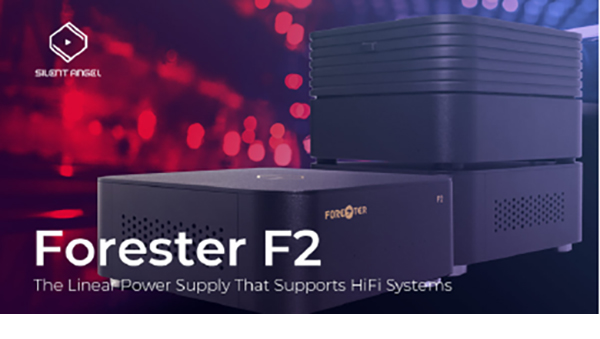
Audio and network components that use small, switching power supplies can be very detrimental to your system’s sound. Silent Angel has a great solution that is compact, and offers 12V/1A, 12V/3A, 5V/1A, and 5V/3A outlets for those devices.

This is a great way to get those noisy wall warts out of your system. Cost is $1,599.

We’ve got one on the way, so we’ll keep you posted ASAP.

www.silentangel.com

Original article: Silent Angel’s New Power Supply

Please note that all TONE Audio copy and photography is © 2005–2018 TONE Magazine LLC. This RSS feed is provided for personal, non-commercial use only.

If you are not reading this content in your news aggregator, RSS reader, or direct, then the site you are looking at may be guilty of copyright infringement. If you locate this anywhere, please contact [email protected] so we can take action immediately.

TONEAudio MAGAZINE. All Rights Reserved.