Author Archives: toneaudio

Ella’s Latest: A must hear

A couple of years ago it was a German recording. Lost tapes of a 1962 show that caught Ella in some kind of prime (yes, she had several, as committed Fitzgerald fans know) were found and released, and from the crazed swing of “Jersey Bounce” to the sublime diction of “Mr. Paganini,” it was a jewel.

So is this new find, a Bowl/Berlin confluence from the summer of ‘58 that finds the singer’s voice limber, playful, commanding, fiery and thrilling…to say the least. I guess a case could be made that those adjectives could correctly be used during much of the icon’s career, but here listening on the back porch on a 2022 summer night, the blend of craft and esprit she brought to the Hollywood Bowl is euphoric.

Her famed songbook series was on its fourth installment, and it had just earned her a Grammy for Best Female Vocal Performance. Irving Berlin’s “Blue Skies,” “Isn’t This a Lovely Day” and “Remember” were probably pinging through the heads of ticket-buyers when the First Lady of Song, backed by a contingent of brass, reeds and strings helmed by the album’s conductor Paul Weston, stepped up to the mic to sweep everyone away. “As you listen to the band, don’t cha get a bubble? As you listen to them play, don’t cha get a glow?” The opening of “Let Yourself Go” is a good place to point your ears. Team Weston is taking the advice of the song’s lyrics, bouncing the beat like transcendence could be part of every bar.

Ella grabs the vibe and doubles down through many of these performances. Dash and drive fight it out with zing and zip as she conveys the anticipation of a night on the town in “Top Hat, White Tie, and Tails.” And the brass section’s brio meshes nicely with the singer’s vocal acrobatics on “Heat Wave.” The occasional indictment that Fitzgerald lacked sufficient dramatic skills to convincingly convey despair is swept to the side here, too. Her quaver sets a forlorn tone on “Russian Lullaby” (a duet with the harpist) and the poignancy is palpable when she speaks from behind a broken heart in “You’re Laughing At Me.” But the ballads are in the minority here. By the time the giddy swag of “Alexander’s Ragtime Band” closes the deal, we’ve all been reminded that Ella set the bar high when it came to dispensing exuberance. Artistry abounds on this must-hear find.

Original article: Ella’s Latest: A must hear

Please note that all TONE Audio copy and photography is © 2005–2018 TONE Magazine LLC. This RSS feed is provided for personal, non-commercial use only.

If you are not reading this content in your news aggregator, RSS reader, or direct, then the site you are looking at may be guilty of copyright infringement. If you locate this anywhere, please contact [email protected] so we can take action immediately.

TONEAudio MAGAZINE. All Rights Reserved.

Issue 112

Cover Story

A Chat With Al DiMeola:
Saturday Night, The Beatles, and much more!


Features

Old School: Stax SR34

Cartridge Dude: The Skyanalog G-2

1095: The Music Hall Analogue A3

The Audiophile Apartment: Auto return with the Technics SL-1500C

Journeyman Audiophile: The Focal 936K2 Speakers

Short Take: The Naim HiCap DR

Reviews

The REL T/9X Subwoofer
HiFi Rose RS 150B Streamer/DAC/Preamp
Rega Elicit Mk.5 Integrated Amplifier
LAB12 Melto 2 Phono Preamplifier

On With The Show! A quick recap on Munich Hi End 2022
By Mario Dolinar/photos by Mario D and Angela Cardas

Music

Playlists:  We share our readers choices from around the world
Setlist:  Sean Zloch sees Roger Waters
Jim Macknie on JAZZ

Mine: It Should Be Yours

Future Tense: Gear in our immediate future

Original article: Issue 112

Please note that all TONE Audio copy and photography is © 2005–2018 TONE Magazine LLC. This RSS feed is provided for personal, non-commercial use only.

If you are not reading this content in your news aggregator, RSS reader, or direct, then the site you are looking at may be guilty of copyright infringement. If you locate this anywhere, please contact [email protected] so we can take action immediately.

TONEAudio MAGAZINE. All Rights Reserved.

New buds from Nura feature Dirac…

We are anxiously awaiting a review sample of these new ear buds from Australian manufacturer Nura. The following is their release info:

The NuraTrue Pro is designed to deliver audiophile-grade sound with the convenience of a wireless earbud, by combining lossless audio with Nura’s award-winning personalized technology for perfectly balanced sound. The Dirac Virtuo spatial audio solution adds a new dimension to the enthusiast-grade sound, turning the high-end headphone audio experience into a speaker-like immersive sound experience that puts listeners in the studio to hear music as artists intended.

“The NuraTrue Pro delivers uncompromised sound fidelity with its cutting edge technologies and innovative design,” said Mats Oberg, Chief Commercial Officer, Dirac. “Dirac Virtuo elevates the experience further with its uncompromised spatialization. We ensure that standard stereo sound is spatialized with high accuracy, bringing out the spatial cues that already exist in stereo recordings. Users enjoy an immersive audiophile-grade sound with standard stereo content, without requiring any specific streaming platform.”

The award-winning Dirac Virtuo solution employs a high-resolution binaural room impulse response technology to restore speaker crosstalk and correct the stereo soundstage. With Dirac Virtuo, sound seemingly comes from a pair of premium stereo speakers in front of the listener, rather than from inside their head – creating a truer, more accurate stereo soundstage than regular headphones can deliver.

“In designing the NuraTrue Pro, we adopted a ‘no compromise’ philosophy that applies to all aspects of the product, from audio performance through to product design and user experience,” said Dr. Luke Campbell, CEO and Co-Founder at Nura. “In keeping with that philosophy, it is natural for us to adopt Dirac Virtuo to deliver the highly demanded spatial audio to our users, crafting a premium experience that ensures nothing gets between you and what matters most, your music.”

Dirac Virtuo is also supported by the headphone industry’s most common chipsets and frameworks, including Qualcomm, BES, and MediaTek. By enabling spatial audio natively in wireless headphones, Dirac ensures manufacturers like Nura can differentiate their offerings in a highly competitive market, and consumers can enjoy immersive, high-quality sound from standard stereo content – for elevated music listening, gaming, and movie watching experiences.

In addition to Dirac Virtuo and lossless audio over Bluetooth, the new NuraTrue Pro wireless earbuds feature Nura’s award-winning Personalized Sound technology which measures a user’s hearing to create an individualized EQ; the new Nura ProEQ for manual EQ fine-tuning within the companion app; four microphones including a bone conduction sensor for crystal clear voice calls; wireless charging through any Qi-compatible charging device; and up to eight hours of playback on a single charge, with an additional 24 hours from the included charging case.

Here’s a link to their early-purchase Kickstarter program:

https://www.kickstarter.com/projects/nura/nuratrue-pro-lossless-audio-earbuds-with-personalised-sound

Original article: New buds from Nura feature Dirac…

Please note that all TONE Audio copy and photography is © 2005–2018 TONE Magazine LLC. This RSS feed is provided for personal, non-commercial use only.

If you are not reading this content in your news aggregator, RSS reader, or direct, then the site you are looking at may be guilty of copyright infringement. If you locate this anywhere, please contact [email protected] so we can take action immediately.

TONEAudio MAGAZINE. All Rights Reserved.

REVIEW: The LSA Signature 80 Speakers

As mentioned in our TONE/Distilled review, the first track played on the LSA Signature 80s is The Art of Noise’s “Moments in Love.” Immediately, the deep bass groove on this track is in full effect, and this is not a wimpy presentation.

While electronic music doesn’t give a listener an absolute sonic reference the way a track of a string quartet does, this music offers up a massive soundfield, with many sonic tidbits in all three dimensions. A mediocre speaker presents this music in a benign way, lacking an immersive quality. Space and dynamics are the third and fourth dimension of music to me, and the Signature 80s pass the initial “are these cool enough to investigate further” test with ease.

There’s a reason that everything I hear isn’t “mindblowing,” and the new Signature 80 from LSA is the perfect example. Great as their $599/pair Signature 50s are (and they deliver a lot of music for the money) the 80s deliver more. Legitimate products should deliver more performance as you go up the range, and the LSA Signature 80s do not disappoint. There is a twist however – where the Signature 50 uses a soft-dome tweeter and is voiced slightly more on the warm/saturated/lush side of neutral, the Signature 80s are more resolving, more dynamic, and go down deeper. In short for $1,299/pair, you get a speaker that can deliver more musical information than the model beneath it. Bravo.

Retaining the 86dB/1-Watt sensitivity of the Signature 50, the Signature 80 swaps the soft dome tweeter and paper cone woofer for a metal coned woofer and a planar tweeter. Who knows, more resolution or not, you may even prefer the Signature 50. If so, more money for beer, records, or maybe a haircut? Bottom line, LSA has delivered yet another compact speaker (15.75” H x 9.1” W x 12” D) delivering exceptional performance at a relatively modest price.

Easy to set up

Sitting on a pair of sand filled 20” Sound Anchor stands gives the Signature 80s the perfect ear alignment in my listening chair. The relatively small panel area of the planar tweeter demands that you spend a little extra time getting the speaker height and rake angle on the money for best results. Depending on your listening position, you may find the best results with stands between 18 and 24 inches.

Planar drivers offer a level of transparency that many cone and dome drivers do not, but with physics (and ex-wives) everything has a cost. The tweeter in the Signature 80 is very resolving, and offers a high degree of horizontal dispersion, but vertical dispersion is somewhat limited. Once you’ve optimized the Signature 80s in your room for solid bass and a smooth bass to midrange transition, slowly raise and lower your head to find the spot where you hear the most high-frequency extension. That’s the magic spot. Adjust speaker rake angle to maximize this position, and you’re set.

Potential suitors

One of the most interesting changes between the 50 Signature and the 80 Signature is the 10-ohm impedance – making these speakers incredibly tube amp friendly. While we had excellent luck with solid-state and tube amplification, these speakers are particularly engaging with tubes. Don’t be discouraged by a somewhat low sensitivity spec – these speakers are super easy to drive.

After using a wide range of amplifiers in our listening, most was done with LSA’s VT-70 (EL34) tube amp and my Rega Brio. Depending on which sonic signature you prefer either of these amplifiers are very affordable and will make the cornerstone of a high-performance system that is approachable for a wide range of music lovers. Digital source was our OPPO 105, and a Technics SL-1600/Ortofon 2M Red rounded out the analog side. All cabling was Tellurium Q Black II. All in, this made for a system that plays analog and digital for under $5k.

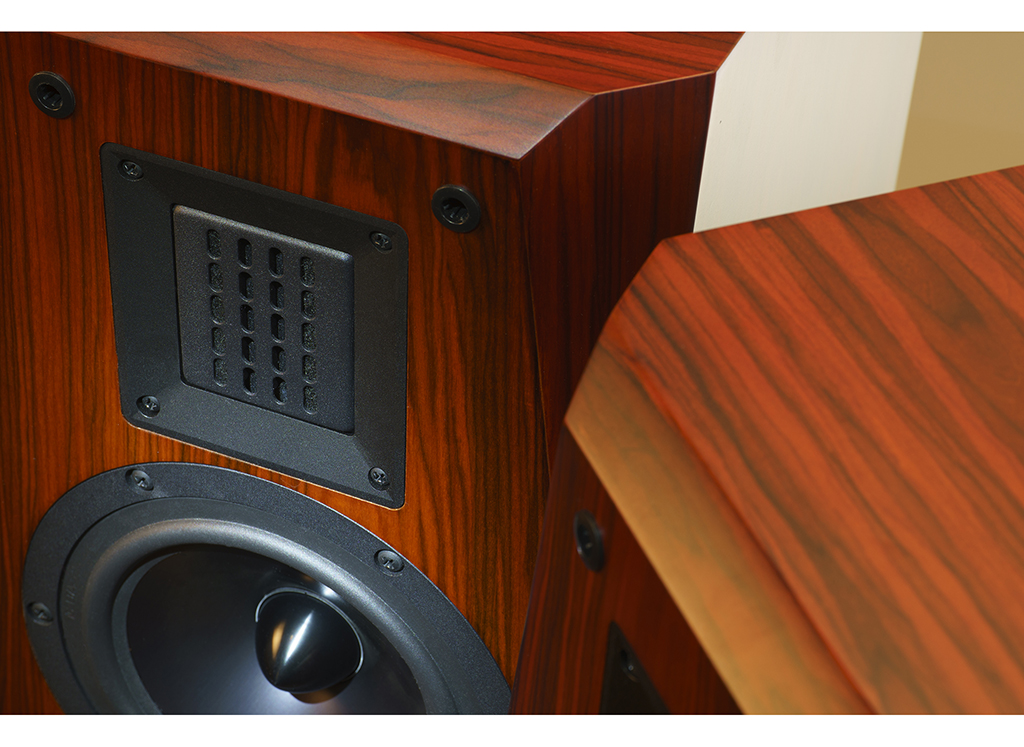
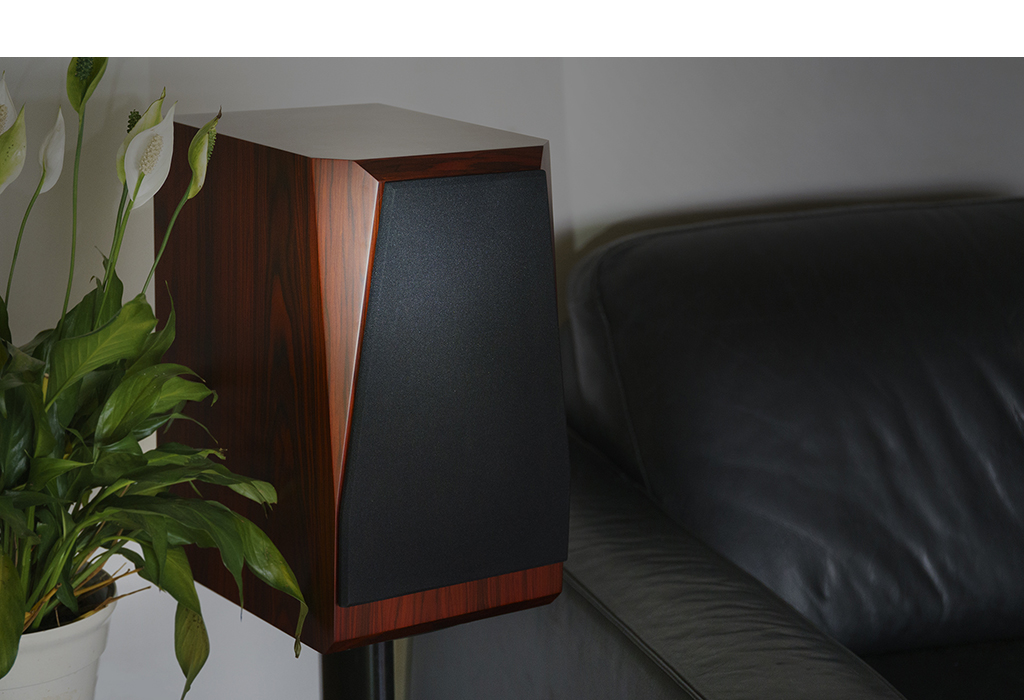
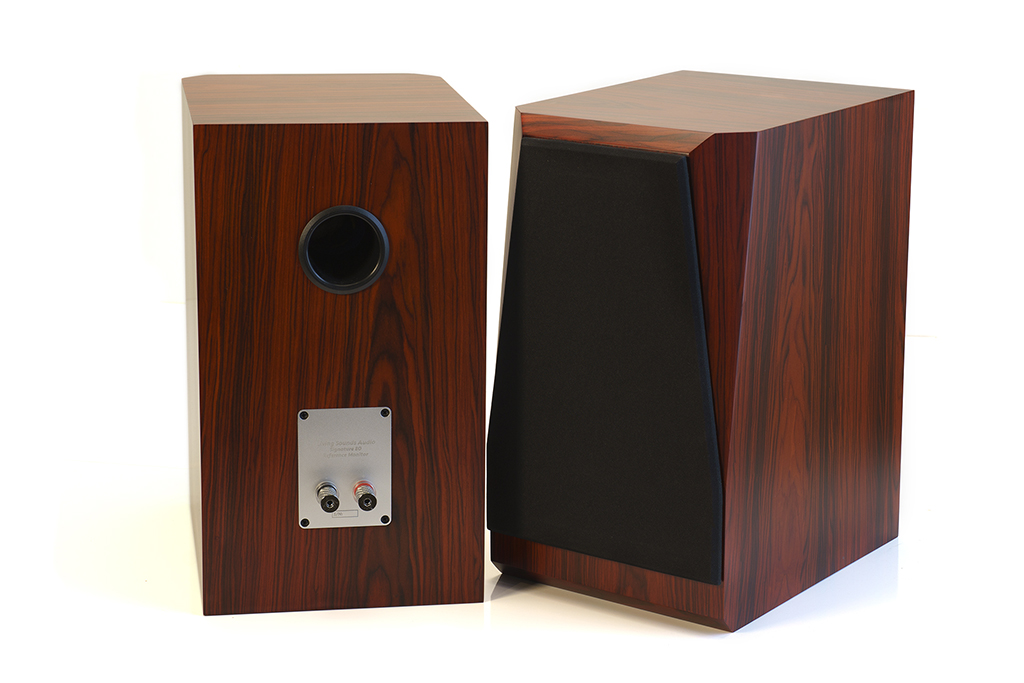
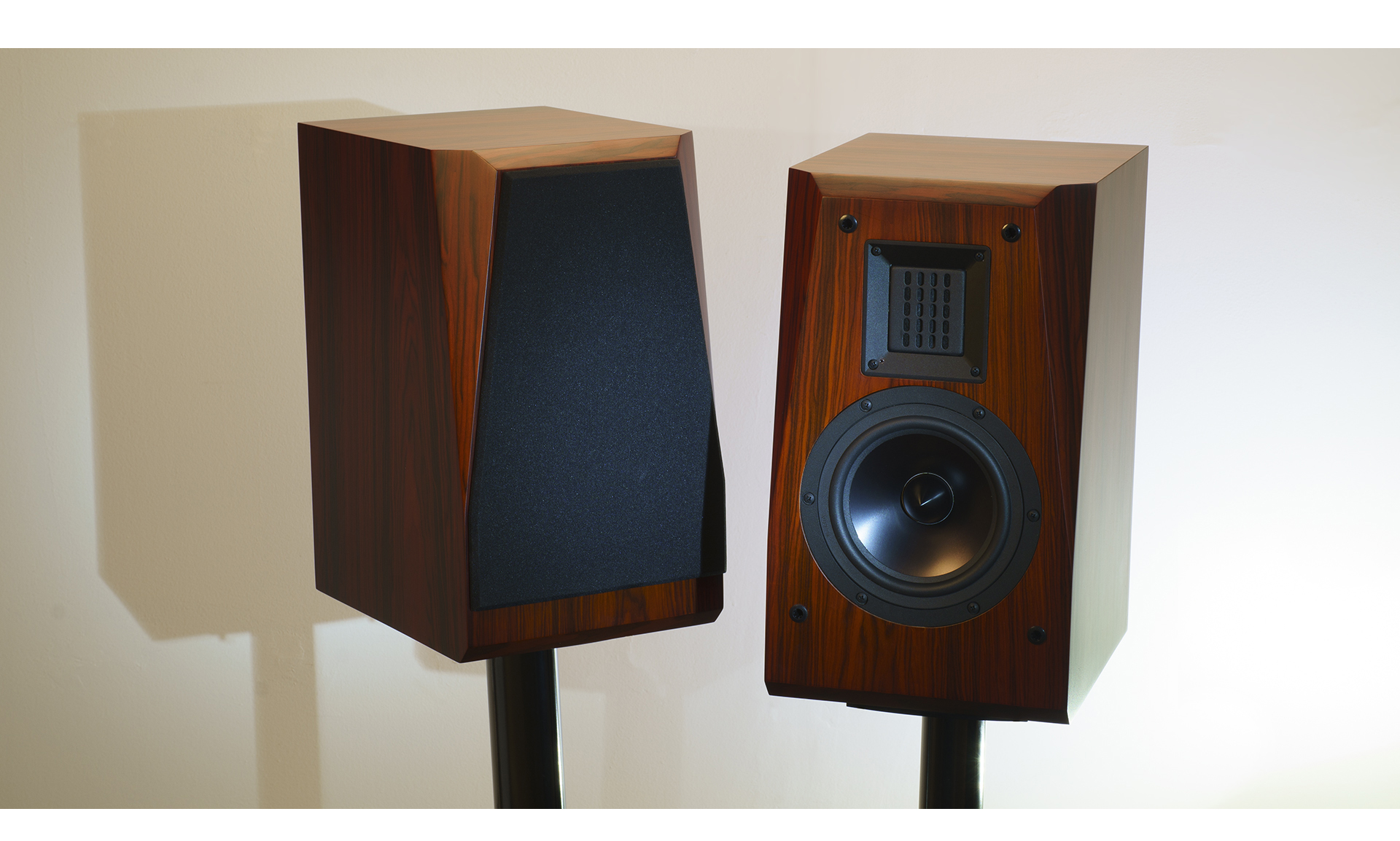
Where LSA’s Signature 50s pay a bit of an homage to the Sonus faber look, with their more organic shape and leather front panel, the Signature 80s are more angular, looking like the shape that Avalon made famous. They come in a beautiful Rosewood, matte lacquer finish. Again, at this price point, not offering a range of finish choices keeps the cost down and the performance up.

Further listening

Thanks to solid bass performance, the Signature 80 feels like a bigger speaker than it is. It’s amazing how far today’s technology has come, allowing speakers this size to deliver this level of sonics.

Rather than bore you with a long list of tracks that you don’t know or don’t like, let’s break it down somewhat. Integrating a planar or ribbon tweeter is always a tough job, yet the team at LSA succeeds brilliantly, resulting in natural midrange. Much of this has to do with careful crossover design, and there is a photo comparing a Signature 80 crossover to that of a big industry favorite, the KEF LS50. As you can see, the LSA crossover is far more robust. There’s nowhere to hide when it comes to this kind of thing. Every additional $20 spent here makes for a substantial jump in the final product.

Tracking through our workhorse cuts from Joni Mitchell, Ella Fitzgerald, Billie Eilish and Johnny Cash is incredibly satisfying. The Signature 80s can deliver more than enough resolution to get a solid sense of presence and body. Highs are smooth and extended without sizzle, or feeling tipped up – cymbals sound as they should, and along with percussion, there is a decent amount of airiness. Bass response is equally impressive. The Signature 80s deliver enough grunt and fundamental low-frequency information to deliver the goods. Whether you are delving full bore into your favorite electronica, rock or hip-hop tracks all but the heaviest bass heads will be happy. And of course you can always add a sub. Pairing the Signature 80s with the $899 SVS SB-3000 mini subwoofer adds a lot of grunt and still keeps the budget reasonable. Again, we’re just exploring reasonably priced possibilities – don’t think you need a sub to enjoy the Signature 80s. The smaller your room is, the less likely you will, however as you go to a smaller room, more careful speaker placement will be required to nail the balance between low-frequency output and midrange/mid-bass smoothness. But you can do it.

Thanks to that planar tweeter we’ve been talking about, these small speakers create a very wide stereo image. Part of this will depend on the quality of your source components, the other part on your setup skills. The Signature 80s sound good just thrown in the room, yet an hour or so spent on careful fine tuning will yield very worthwhile results. As your listening skills improve, you may find that your Signature 80s have still more to give, and that’s a good thing.

Finally, the Signature 80s can play loud without distortion, giving them a more dynamic presentation than several other small speakers we’ve heard. Often, music lovers forget about dynamics as the fourth dimension, and this is why so many small speakers sound so small. Even when connected to our big Pass XA200.8 monoblocks, it is impressive how loud these speakers can play before distortion sets in. This makes for fatigue free listening, and a speaker that you can listen to all day without becoming tired or bored.

Listener friendly, room friendly and wallet friendly

This is the point in the “conclusion” that we’re supposed to tell you that these speakers eclipse anything for ten grand. Sorry, that’s not happening. It’s more important to hear what a big part of the musical spectrum these little speakers get right in a direct comparison to a few speakers on hand in the 10-20k range. Really right.

The $1,000 – $2,500 speaker market is probably one of the most highly competitive segments going. The LSA Signature 80 belongs in the top tier of this group. Rather than concentrating on blowing you away with one optimized aspect of the frequency range, the LSA team brings you a well-balanced speaker, that you can actually live with.

It’s hard for companies like KEF, Elac and such to put as much forward in this area of high-end audio, because everyone needs to get their piece of the pie. For those of you looking for the maximum value, it’s tough to beat a company like LSA, because there is no importer, distributor and dealer in the chain. Comparing the Signature 80 to the KEF LS-50 and the ELAC Uni-Fi, the Signature 80s not only reveal more music, they are much easier to drive.

Highly recommended.

www.underwoodhifi.com

Original article: REVIEW: The LSA Signature 80 Speakers

Please note that all TONE Audio copy and photography is © 2005–2018 TONE Magazine LLC. This RSS feed is provided for personal, non-commercial use only.

If you are not reading this content in your news aggregator, RSS reader, or direct, then the site you are looking at may be guilty of copyright infringement. If you locate this anywhere, please contact [email protected] so we can take action immediately.

TONEAudio MAGAZINE. All Rights Reserved.

Acora SRC-1 Speakers

Acora’s Scott Sefton opened the door with their stand mount SRB speakers a while back, delivering a lovely experience. Even their stand mount speakers generate a lot of low-frequency energy from a compact enclosure.

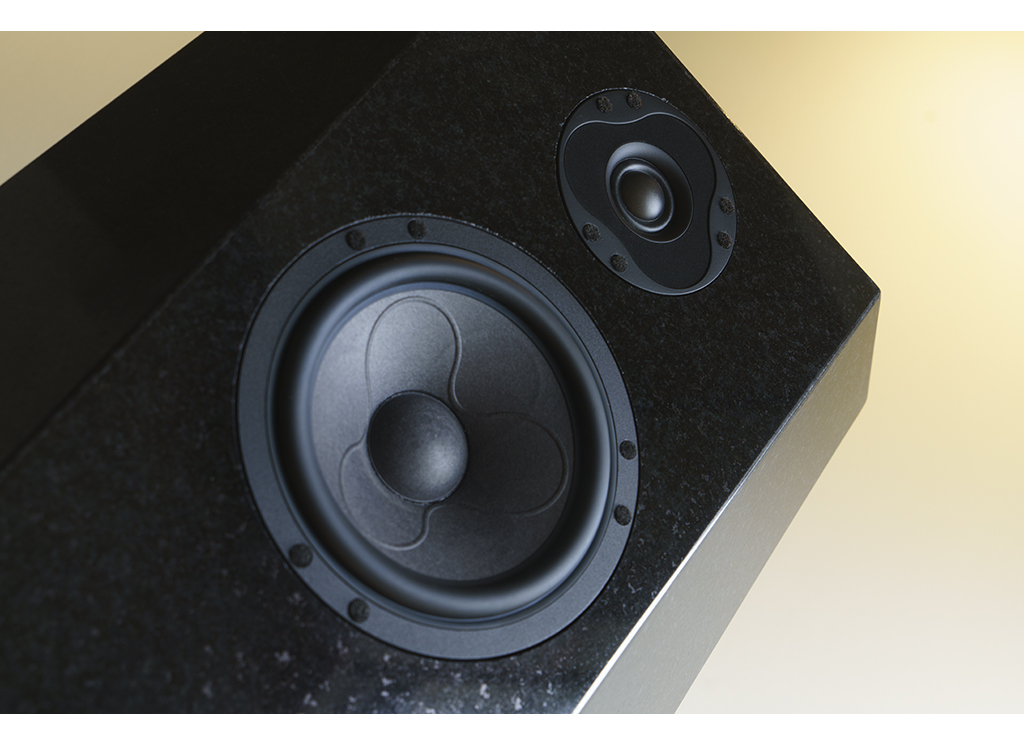
Like a well tuned, high-performance car, it’s not just one aspect of the speaker that excites the senses. Still, a system that all parameters have been carefully optimized from driver choice to crossover components to their inert cabinets – made entirely of granite.

Valerio Cora, the man who designs the Acora speakers, chooses different driver combinations for each of their three loudspeakers for best effect. A casual look makes it seem like he’s merely added a larger woofer and then two in the bigger SRC-2 model. This is not the case.

Where the SRB uses a beryllium tweeter, the SRC-1 features a soft dome tweeter. This accounts for the SRC-1 sounding slightly less forward than the SRB. It’s not a huge difference, much like moving back about five seats in a good hall. The largest speaker in their range offers more bass extension and dynamic ability as well. In this respect, the Acora speakers remind me of a Magnepan or the old Acoustat ESL speakers in that you choose the speaker for the size room you intend to place it in.

All three speakers share a family sound delivering a relatively similar performance when used in the correct sized room. Other a little bit of ultimate bass extension, the SRB in a small room at modest to loud levels sounds remarkably similar to the bigger Acora models in progressively larger rooms. This is no small engineering feat.

Rather than make you wait to the end, here’s the money quote: the SRC-1 is the most neutral speaker I’ve had the pleasure of listening to. We are keeping these to become part of my living room reference setup because they are such a great place to start when reviewing other components. They are that good. Will they be the speaker for you? Read on and see if this approach makes sense. I’ll do my best.

Lack of coloration

Everyone perceives sound differently (just as we do color), and everyone has different goals for their HiFi system. If your priorities lean towards tonal accuracy, it’s easy to get too much of a good thing, ending up with strident speakers that wear on you after extended periods in the listening chair. At times, that extra dose of resolution that catches your ear at a HiFi show or in a dealer showroom is too much in your room after a few long days. Hyper detail can be a cruel and painful addiction.

The SRC-1s do not suffer from this issue in the slightest. The closest comparison that comes to mind is the 3000 series Boulder monoblock amplifiers. They are highly resolving yet not fatiguing, imposing no sonic signature of their own. You can listen to them all day without the slightest bit of fatigue or boredom. They offer an unmatched clarity that is unfortunately out of reach for most music lovers at just over $300k per pair. You can’t get that much money for both of your kidneys. At $28,000/pair, the SRC-1s are not out of reach. Easter’s coming; sedate a family member after dinner, snatch a kidney, bam. They won’t miss it.

After 17 years of publishing TONE, we’ve talked to many of our readers via various channels, and you’ve been telling us that a lot of you possess systems in the $50k – $100k range. If you’ve been planning on building a system around this kind of sound, I highly suggest the SRC-1 for many reasons.

Season to taste

Because music is so personal, most of us usually prefer “a sound.” The Acoras let you play it straight, go for a bit more resolution, or a bit more romance simply by switching the components. The Boulder 866 integrated the T+A 2500 and the combination of the Audio Research REF 80S/LS-28SE all provided a more neutral voice during extended listening sessions. The ARC combo is the most resolving of the group, creating a soundfield that is deep, deep, deep. Nagra’s Classic Pre and Amp offered just a touch more dynamic drive than the ARC pair, with slightly more presence in the lower registers but still closer to what we’d consider natural/neutral.

My reference Pass XS Pre/XS Phono/XA 200.8 monoblock combination delivers a warmer tonal balance. Still, the extra current drive helps the SRC-1s produce an even larger sonic landscape than the previous components. Even warmer still, the PrimaLuna EVO 400 Monoblocks (with KT-150 tubes) shrink the sonic space slightly but add tons of personality, embellishing the midrange as a classic tube amplifier is wont to do.

Acora’s 90.5dB/1-watt sensitivity rating only tells part of the story. These speakers are very easy to drive with anything. Should you be an audio enthusiast that loves single-ended triodes, again, the SRC-1s provide a lovely presentation. Bringing the CARY 805 monos front and center produces a very colored but oh-so-magical SET vibe to the party. Going through a long playlist of vocal and acoustic tracks proves immersive and beguiling. If your musical taste is heavily weighted in this direction, you could happily live here.

It will be tricky to find electronics that will out resolve the SRC-1s unless you have Ferrari money at your disposal. The good news is, whether you purchase a pair of SRC-1s as the endcap on your audio system or use them to explore a wide range of components, cables, and recordings, they are incredibly versatile.

Further listening

The Acora speakers will bring a lot of “wow, I didn’t hear that before” or “I didn’t hear it like that before” moments. Rather than bore you with what seems like an endless barrage of record reviews, forcing my questionable musical taste upon you, suffice to say, these speakers will keep you riveted to your listening chair for hours.

The more time spent listening to these speakers the more challenging it is to describe the lack of sound and voice they possess. Treble is extended but not harsh, tizzy, or tipped up, and bass is equally extended, with a high level of resolution. All but the most hard-core electronica listeners should find the lower registers of these speakers more than adequate.

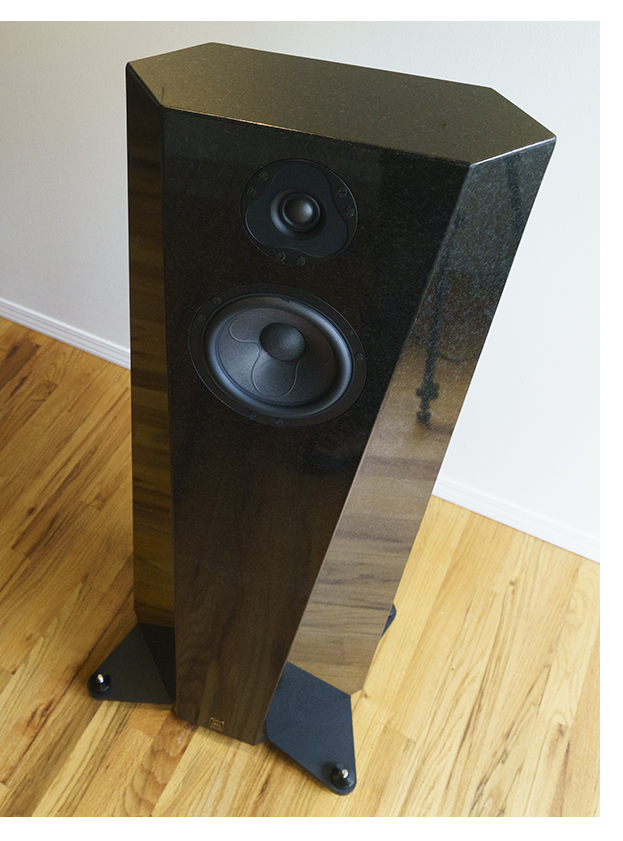
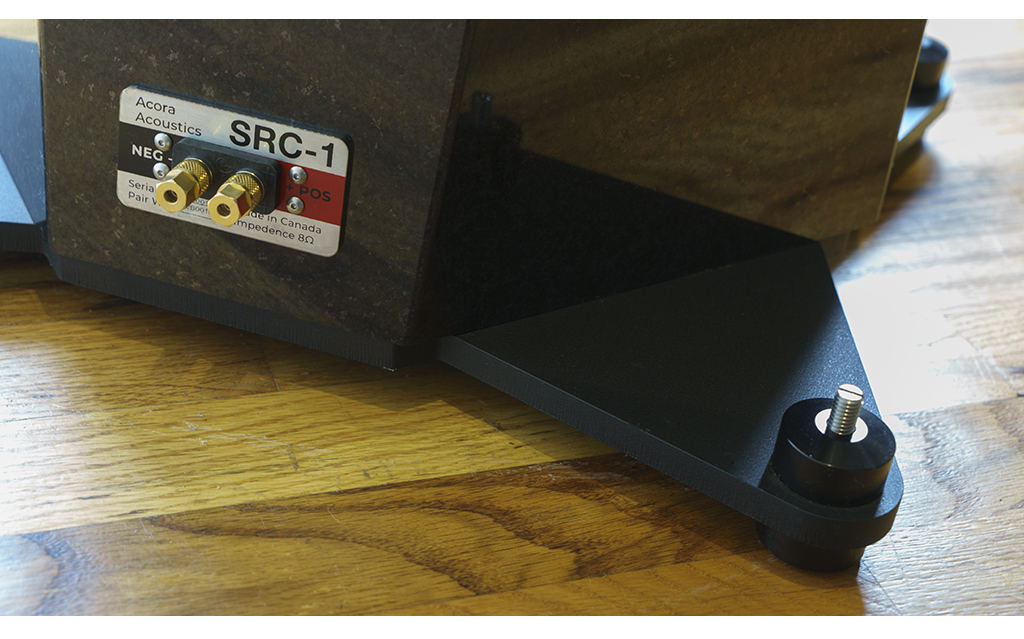
Interestingly, Acora suggests no toe-in for setup, and while this seemed a little counterintuitive at first, it works wonders. Bringing the speakers a little closer in (we ended up about 6 feet apart in the small room and 8 feet apart in the big room) and eliminating toe-in dramatically increases horizontal image size and image precision. At 246 pounds each, get a friend to help you to place the SRC-1s before you install the spikes, or you could damage something. You might jump to the conclusion from my pictures that I have the speakers “set up wrong,” because the screw adjusters are showing. What I’ve done here, and I suggest for anyone with hardwood floors, is to use the black cups that normally would screw on top here, (and finely finished they are) to use OVER the spikes, acting like pucks. As I have an older home and wasn’t quite sure just how much weight per square inch would work, I decided to be safe rather than sorry.

At the beginning of the review, there was a passing reference to planar and electrostatic speakers. I have always had an admitted bias towards coherence over almost anything else, and in this aspect, the Acoras excel. They feel like a single-driver speaker, but with extension and dynamics. Combined with the inert cabinet, these speakers disappear in the room like few others.

And, those cabinets

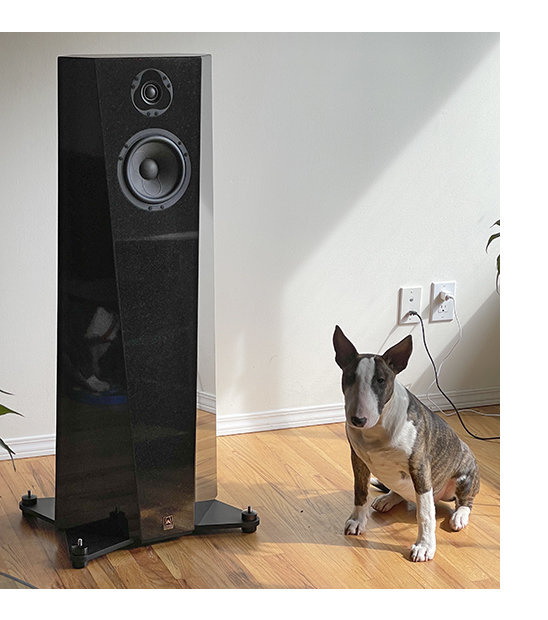
Now that I have a wily pair of Bull Terriers zooming around my house, pet-friendly speakers have become more of a priority. Lucy and Ricki’s massive teeth can’t touch that granite enclosure, and at almost 300 pounds each, they can not tag-team them to the floor either. I’m guessing the same amount of non-destructibility applies to those of you with toddlers as well.

The granite also makes for an incredibly inert way to mount drivers – making for an enclosure that simply lets the drivers do their thing. While companies like Sonus faber, Harbeth, and others “tune” the cabinet to work with their drivers, once you hear the purity of Acora’s approach, you’ll always hear the cabinets elsewhere, at least to some extent. (And I say this as a Harbeth and Sonus faber owner.)

Practicality aside, the SRC-1s are beautiful. Not entirely as black as the Spinal Tap album cover, they still have some detail in the black, looking absolutely beautiful when light hits them. They are austere enough that they should work within any décor, though they probably lend themselves to a more modern room. As does everything black. The amount of time and precision to cut granite to this level of accuracy should not be overlooked either. The cabinet joints and driver cutouts are perfectly executed.

Are they your cup of?

The toughest part of writing about products like this (i.e., ones you really like) is not sounding like a fanperson. But, I genuinely hope that if the description of the SRC-1s sounds intriguing, you’ll seek out a pair to listen to. These really have been a favorite. Very few speakers can serve double duty as a reviewing tool yet provide hours of musical enjoyment when not in gear evaluation mode.

Having a speaker with such a natural presentation on its own makes for a $28,000 pair of speakers you can keep around for a very long time – maybe forever. When you consider the expense of buying and selling multiple pairs of $10k speakers (and losing a few thousand bucks every single time) putting the SRC-1 in your system and getting your sonic moods satisfied by merely changing electronics is a pretty good value at the end of the day. Actually an Exceptional Value Award.

www.acoraacoustics.com

Original article: Acora SRC-1 Speakers

Please note that all TONE Audio copy and photography is © 2005–2018 TONE Magazine LLC. This RSS feed is provided for personal, non-commercial use only.

If you are not reading this content in your news aggregator, RSS reader, or direct, then the site you are looking at may be guilty of copyright infringement. If you locate this anywhere, please contact [email protected] so we can take action immediately.

TONEAudio MAGAZINE. All Rights Reserved.

A Box of NOTHING from McIntosh: The LB200

The first hifi system I experienced was comprised of McIntosh components, so I’ve been a fan for about 50 years. I’ve owned my fair share of Mc gear over the years, and love my MC275.

I kept my mouth shut when the McIntosh people published press photos with turntables on the same shelves as speakers. “We’re just doing it to look photogenic,” they said. I kept my mouth shut earlier this year when they released $7,500 worth of wood slabs, passing them off as vibration control devices. “They are made by a very prestigious, environmentally conscious furniture manufacturer,” they said. I even kept my mouth shut when they released that rubbish $500 wifi thing – which I actually bought so we could get one in for review sooner than later. BTW, you can’t even read the logo on it – guess you have to pay four figures now at Mc to get a legible logo.

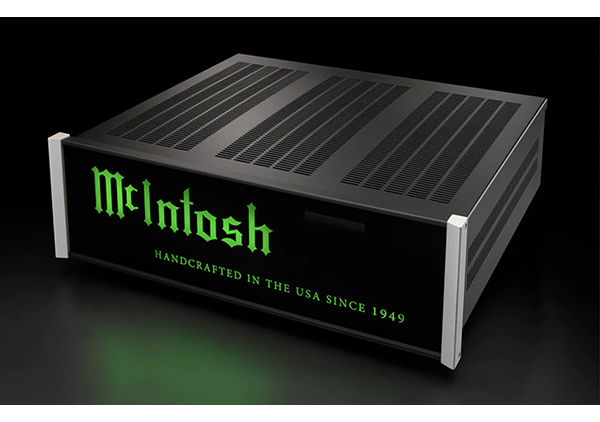
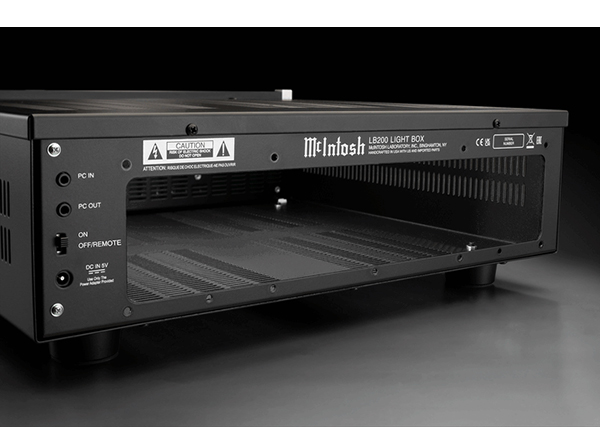
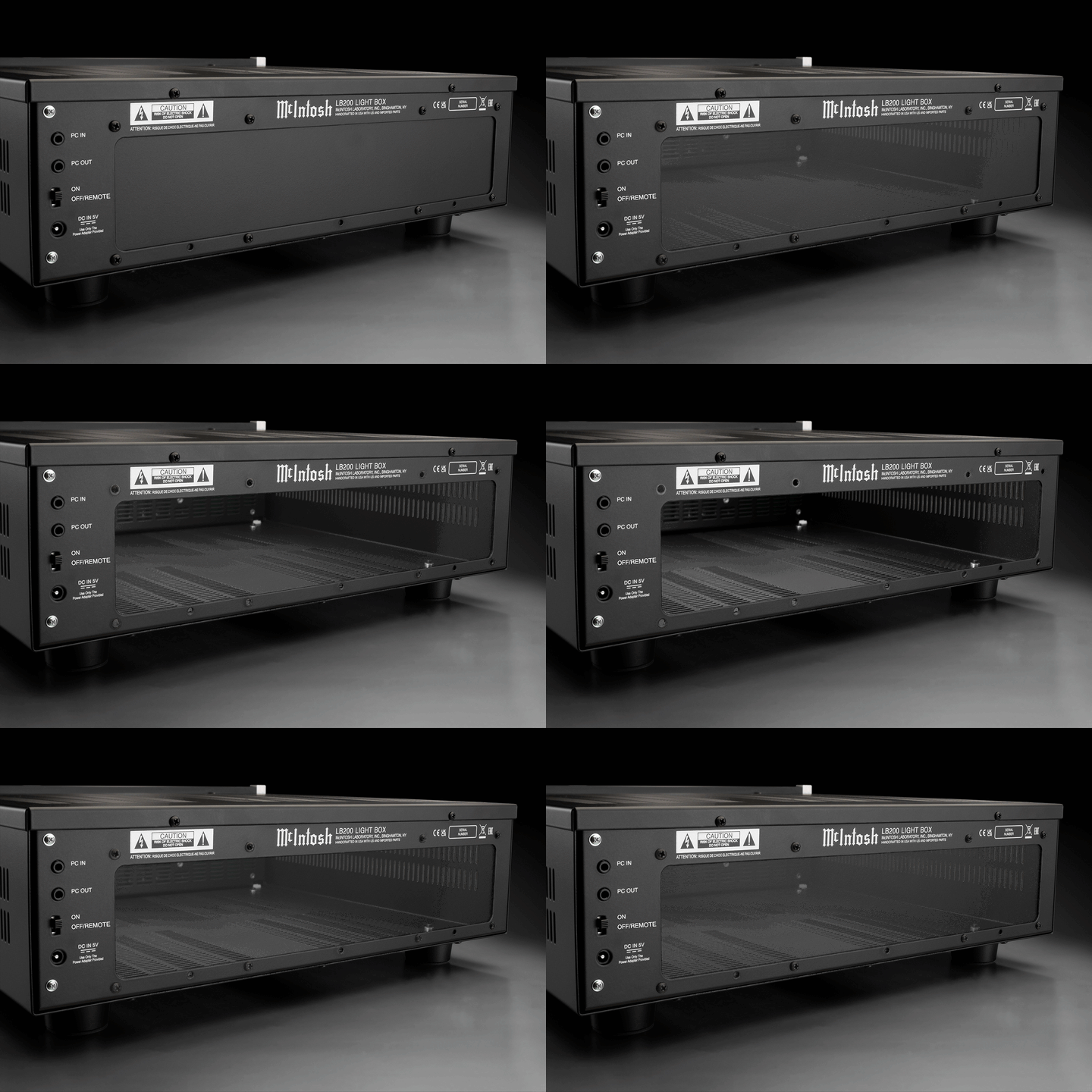
Today I got the press release for the new LB200 Light Box that retails for $1,500. And guess what’s inside? NOTHING. No really. NOTHING. This is fucked up. Really fucked up.  “Have you spent a lot of time creating a beautiful McIntosh system ONLY TO HAVE IT TARNISHED BY A NON PREMIUM COMPONENT?” Are you kidding me? Now if this were $199, or better yet a GIVE AWAY with Mc systems, hell yeah. I know how Mc lovers love big racks full of stuff with the logo and the meters. The more the merrier at that point.

But $1,500 for this thing, really? I could see if they brought back the neon McIntosh clock that used to hang in dealers for say, $300 – $500. That would have been cool. This thing doesn’t even tell the time. It just has the McIntosh logo on it. That’s it. “Handcrafted in the USA with US AND IMPORTED PARTS.” So basically, they are buying the front face plate with the LED assembly for three dollars in China, and taking the casework they already are building for standard sized Mc components.

I have never said anything overly negative about the industry I love, a brand I grew up with (and respected until today) and love but this is just too much. I can never own a piece of McIntosh gear again. I don’t care if it’s a mint pair of MC30s at a reasonable price. This is so wrong on so many levels. And it’s a major slap in the face to other companies that actually make decent (yet NON-PREMIUM) components that actually have something in the fucking box for $1,500.

I don’t EVER want to hear another comment about this product or that product “not being worth the money,” as long as the McIntosh LB200 exists. The good news is that the value of everything made in high end audio that actually has COMPONENTS inside is now worth double. Cables aren’t worth the money? Shut up.

This is the best that the new owners of McIntosh can come up with? Really?

As William Shatner and Henry Rollins once said: “I can’t get behind that.”

PS:  Really not pulling your legs here. NOTHING inside:

Original article: A Box of NOTHING from McIntosh: The LB200

Please note that all TONE Audio copy and photography is © 2005–2018 TONE Magazine LLC. This RSS feed is provided for personal, non-commercial use only.

If you are not reading this content in your news aggregator, RSS reader, or direct, then the site you are looking at may be guilty of copyright infringement. If you locate this anywhere, please contact [email protected] so we can take action immediately.

TONEAudio MAGAZINE. All Rights Reserved.
The LSA VT-70 Integrated Amplifier

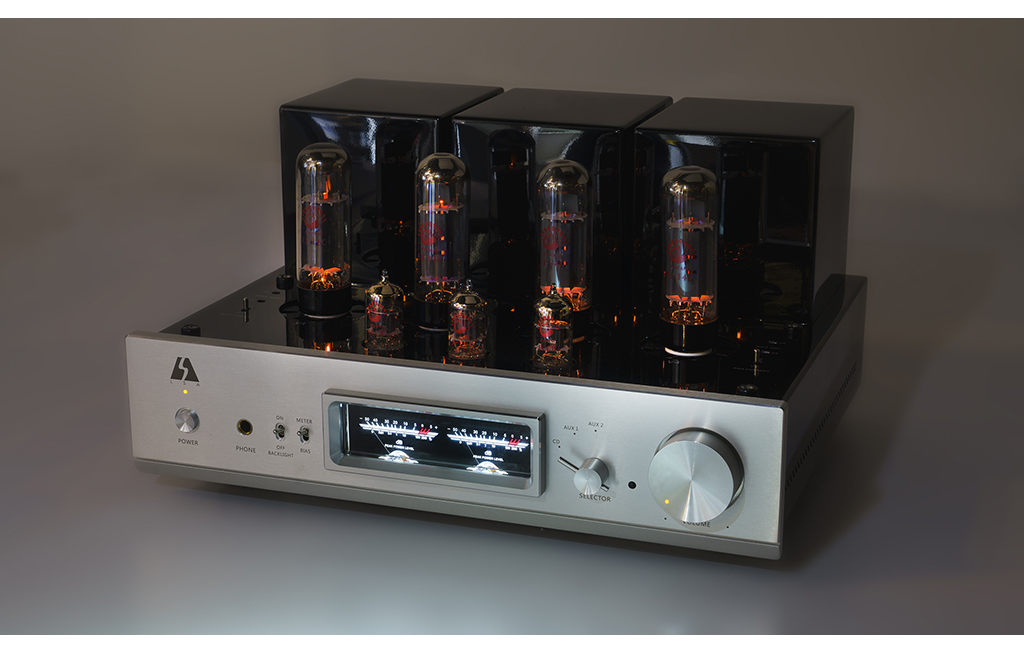
There’s always something special about an EL-34 based tube amp, with a pair of output tubes per channel, and a pretty simple circuit.

Less to screw up, or as Nelson Pass likes to say, “simple circuits usually sound best.” Honestly, I’ve never heard a bad EL-34 amp, but like Baskin – Robbins, there are a lot of different flavors, from vintage, warm, and syrupy, like a Dynaco Stereo 70 or Marantz 8B to highly refined, like an Octave or VAC amplifier. And plenty of variations on the theme in-between.

For years, the budget yet high-quality entry-level tube amp has been the PrimaLuna ProLogue 1. I started my hifi writing career with this amp and still have the review sample. Nearly 20 years ago it was $1,095 and a killer value. The new EVO 100 is still a great value, and benchmark, but it’s $2,395 now. So, what the audiophile world needs now is a great budget tube amp.

Enter the VT70

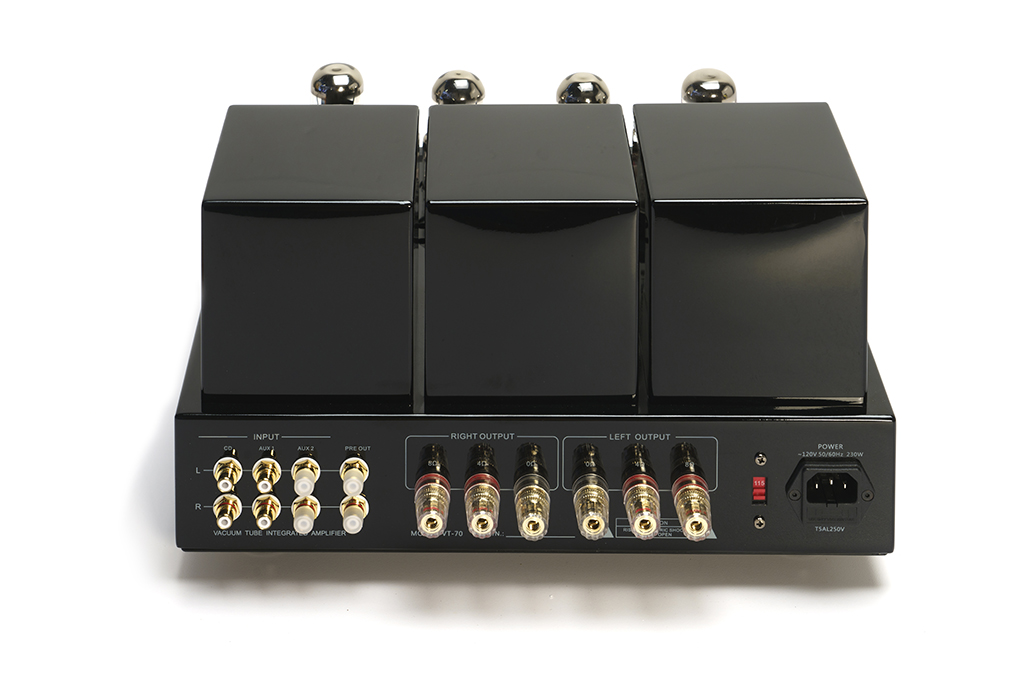
Priced at $1,295, we are slightly going outside the parameters of this column, but it’s too good not to share. With 35 watts per channel on tap, it’s got more than enough juice to drive most comparably priced speakers to a reasonable level, and three single ended RCA inputs should be more than enough for a phonostage, DAC/Streamer and maybe even a tape deck.

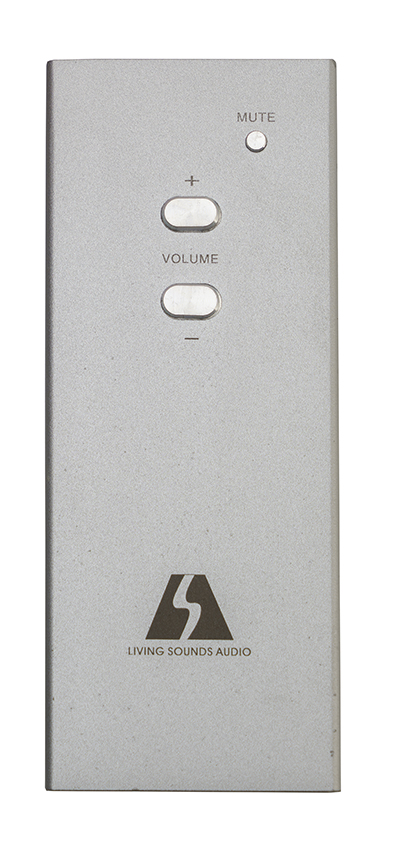
The VT70 also sports a headphone output as well as a preamp out to drive a powered sub. The remote control is a nicely presented steel remote, not a plastic, kids meal remote, as many other products costing significantly more bring to the table. The VT70 brings a lot of juice to the game.

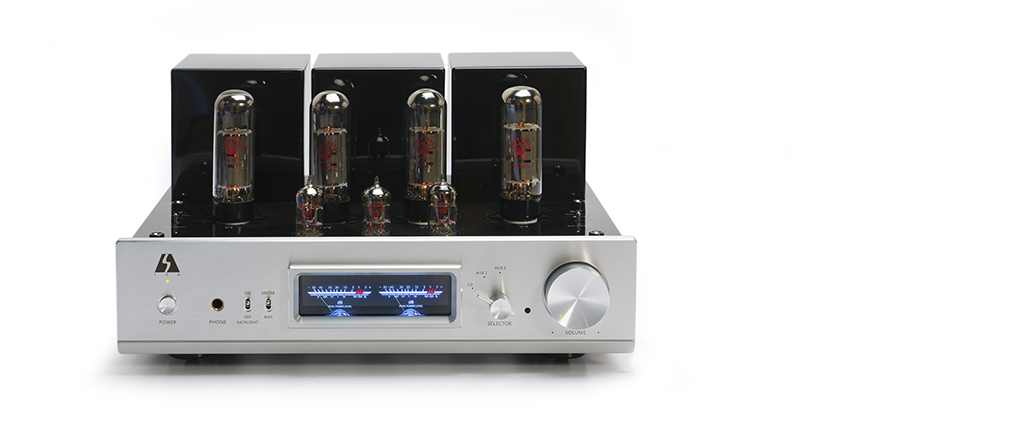
It’s a classic EL-34 design, with a 12AX7, two 12AU7s and four EL-34s (two per channel). The black chassis has a machined silver aluminum front faceplate sporting a pair of output meters that do double duty for biasing the tubes when needed. If you aren’t familiar with this procedure, just follow the manual. Turn the volume all the way down, switch to “bias” mode and adjust the trim pots on the top face of the amp until the meter reads 100%. Be careful not to go past 100%, or you can burn up the output tubes.

Check the bias when you get your amp out of the box, we had two tubes at 200%, so a quick adjustment had us right back on the money and eliminated a slight hum as well. Pro tip: set bias when you unbox your amp, then check again after a couple of weeks. Fresh tubes usually need re-biasing at about 100 hours, then they stay stable until almost expired. Again, those handy meters make it easy to double check.

The incredible lightness of being tubey

Most budget solid-state amplifiers sound flat and lifeless. While the world’s best tube amplifiers from the major manufacturers take advantage of massive power supplies and custom output transformers to work their magic, a basic EL-34 amplifier can work wonders with the basics, and that’s exactly what the VT70 delivers.

You won’t mistake this amplifier for something from ARC, BAT, or CJ, (and you won’t mistake the price tag either…) but this little amplifier musters good sound, and is miles more engaging, than nearly any comparably priced solid-state amplifier. It’s so much easier to build a good tube amp for this kind of money.

While you can tube roll, and swap tubes forever with the VT70, I submit that this takes away from the approachable ethos. I can’t get behind spending another $500-$800 on boutique tubes for a 1200-dollar amplifier. And the VT70 does arrive with a full complement of PSVANE tubes. Underwood’s Mark Schifter says that PSVANE is supplying them with matched output tubes – another one of those little touches you’ll pay extra for elsewhere.

The setup

We stuck to three speakers with the VT70, a pair of Harbeth Compact 7s, the Audio GE-Teddy speakers (also available from LSA) and our desktop pair of Jern EH-14s. That this amp plays fantastic with speakers 2-4 times its asking price tells you everything you need to know.

Bass is well defined, and the top end is nice and smooth, without rolloff. By comparison, our Dynaco ST-70 has fairly sloppy bass, and the highs roll off pretty quick. Power supply parts have come a long way in 50 years. The key to success with this amplifier is to not push it beyond what it is capable of. Playing at modest levels, not driving it to clipping (which ANY 35Wpc tube amp is going to do) is absolutely lovely.

Matched up with the Teddy’s, which have a sensitivity of 89dB/1-watt is a sweet spot, led me to borrowing staffer Jerold O’Brien’s older pair of Vandersteen 1s, which have a 90dB/1-watt sensitivity as well. I’m sure LSA wants to sell you a pair of Teddy’s, but if you are really on a budget, you can snag a nice used pair of Vandersteens or something similar for about 600 bucks, find a great DAC and you have a rocking system for barely over $2k. This amplifier is a great way to get into the tube experience. Trying to keep it all reasonable, I used my older Naim CD-5i, with fantastic results.

More on the sound

As with other favorite EL-34 amps, the midrange is the strength. This amplifier offers up such a natural midrange, with so much soundstage depth, you’ll forget what isn’t happening. You’ll be spoiled for solid-state. Going back to a recently re-capped Marantz 2270 receiver with the Teddy’s felt like I had asbestos insulation in my ears. And a nice 2270 easily fetches more on the used market than a new VT70. Impressive.

Again, playing to the strength of this amplifier, you’ll find yourself sifting through your favorite acoustic tracks and perhaps even some 60s and 70s classics should you feel so inclined. Cue up some Joni Mitchell, Crosby, Stills and Nash, or some Greatful Dead and you will freak out. A long playlist of Bowie tracks from Hunky Dory all the way through Blackstar were equally tasty.

The Jerns don’t have a ton of deep bass output, so pulling in our SVS 3000 Micro subwoofer, rounded out the package to provide an incredibly powerful desktop system, which is actually where the VT70 is staying. It’s too much fun to send back, so this one is #toneaudioapproved.

Running through a short list of headphones from the LSA HP3 Novas, a pair of Audeze LCD-2s, and our workhorse Sennheiser 650s (with Cardas cabling) all worked well. Headphone fanatics are probably still going to want an outboard amplifier for the best results, but we’re on the budget tip here. And, this is certainly an engaging enough headphone amp to make you want to grab a set, and see what the excitement in personal audio is all about.

You can’t lose

With internet pundits claiming high end audio is going under on nearly a daily basis, this is precisely the kind of product to get more people interested in a decent music system that might have thought they couldn’t afford it. Honestly, we need a few more benchmarks like this.

The LSA VT70 is the perfect amp at the perfect price, whether you’re investigating high performance audio for the first time, taking your first spin with a tube amplifier, or perhaps looking for a great second system. It’s musical satisfying, aesthetically pleasing, and gets the job done. Highly recommended.

www.underwoodhifi

Original article: The LSA VT-70 Integrated Amplifier

Please note that all TONE Audio copy and photography is © 2005–2018 TONE Magazine LLC. This RSS feed is provided for personal, non-commercial use only.

If you are not reading this content in your news aggregator, RSS reader, or direct, then the site you are looking at may be guilty of copyright infringement. If you locate this anywhere, please contact [email protected] so we can take action immediately.

TONEAudio MAGAZINE. All Rights Reserved.
Welcome to Distilled!

Hello and welcome to our new part – Distilled.

We will not be abandoning our normal evaluations, however for these of you that would love a bit of greater than the canned press releases everybody else is posting, however unsure if you wish to make the time funding in a full evaluate, we current the distilled column.

A fast overview of parts that might be 200-300 phrases. No house for blather, pontification, or quite a lot of “I, Me, Mine” stuff.

We’ll do our greatest to current a few good pics, a hyperlink to the complete evaluate (if it’s achieved and also you’re so intrigued) and a hyperlink to the producer. On event, we’ll even publish a purchase order hyperlink if it is smart. Please NOTE: we’re doing this to your comfort, and these will not be sponsored or affiliate hyperlinks.

Thank you for studying!

Original article: Welcome to Distilled!

©2023 TONEAudio MAGAZINE. All Rights Reserved.

LSA Signature 80 Reference Monitor

It just took the first bass riff in The Art of Noise’s “Moments in Love” to convince me that the new LSA 80s deliver some major bass. These dig deep. In a moderate sized room, you won’t need a subwoofer with these – that’s a plus. Especially for entry level audiophiles on a tight budget.

But bass isn’t everything. These speakers have done an incredible job of blending the tweeter and midrange for a seamless audio experience. They produce a big, big sound that is tough to beat for small monitors, especially at their introductory price o $1,299/pair. Much as we enjoyed the LSA 50s, like Spinal Tap says, “well, these are one better…”

The cabinets are well finished, and the execution is equally great. Not too fancy, but really good for what they are. Easy to drive, we’ve had excellent result with everything from our 10 Watt per channel LAB 12 Mighty to the Pass XA 200.8 monoblocks. By the way – these lovely little speakers are available direct from Underwood HiFi, and their VT-70 tube integrated at $1,195 makes a killer combination.

So, what’s not to love?

Just click here to go to the Underwood site.

Original article: LSA Signature 80 Reference Monitor

Please note that all TONE Audio copy and photography is © 2005–2018 TONE Magazine LLC. This RSS feed is provided for personal, non-commercial use only.

If you are not reading this content in your news aggregator, RSS reader, or direct, then the site you are looking at may be guilty of copyright infringement. If you locate this anywhere, please contact [email protected] so we can take action immediately.

TONEAudio MAGAZINE. All Rights Reserved.

Manley Labs Chinook Special Edition mk.II Phono

Many a vinyl enthusiast has envisioned owning a Manley Steelhead phono preamplifer.

It’s a killer phono stage, with tons of adjustments, and inputs for three turntables. How cool is that? It also features a volume control, and a single line input, so you could use it as your system’s front end. Just add your favorite DAC, power amp and roll.

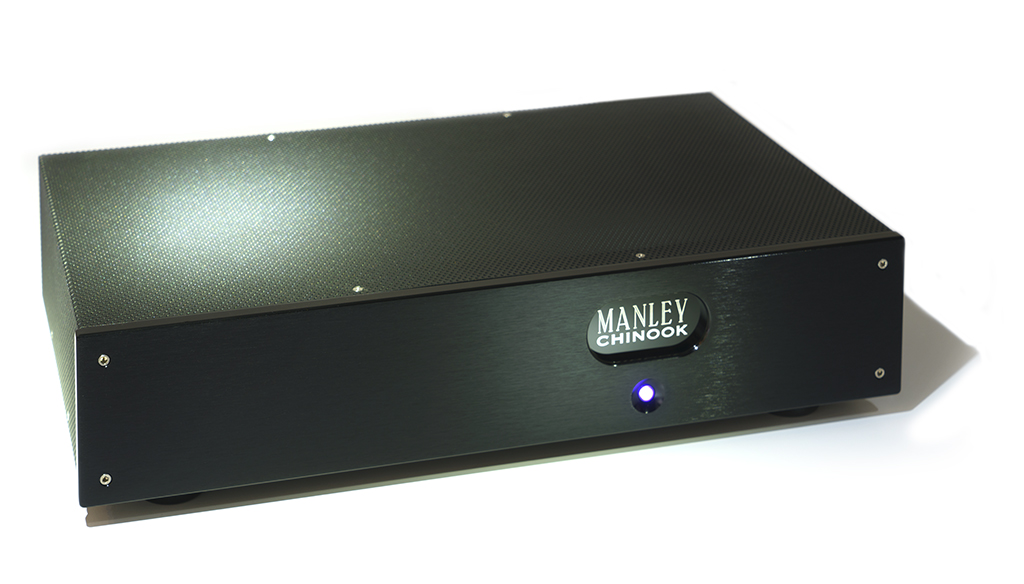
Not everyone needs three inputs, or has close to $10k for the current Steelhead. EveAnna Manley and Kevin Deal of Upscale Audio are two of the coolest cats in hifi, and have they got a deal for you. $2,899 gets you an “Upscale Audio Edition” Chinook.

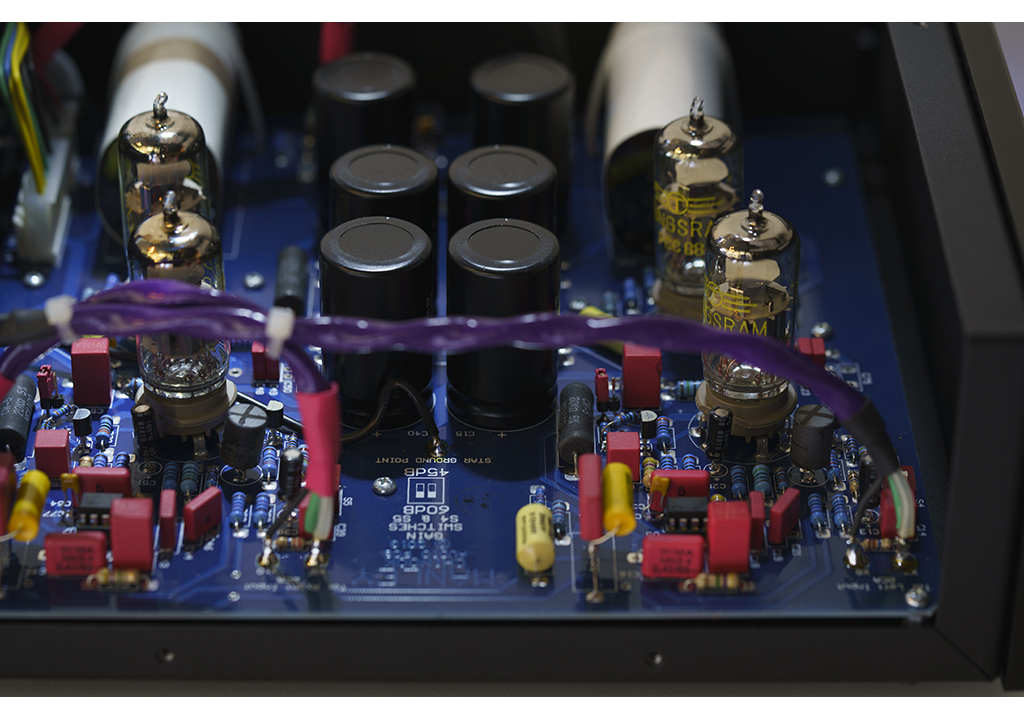
This single input, single chassis, MM/MC wonder has a lot (a lot, a lot) of Steelhead DNA inside. Most $3k phono preamps weigh about as much as an iPad these days, and are big on empty space when you open the case. The Steelhead is built just like all the other pro gear Manley is famous for (i.e. reliable…) and Mr. Deal hand picks the tubes. Just look at the inside of this beauty!

Should you be a PrimaLuna owner, you know that they don’t make a matching phono preamplifier, and cool as the regular Manley Chinook is, it only comes in Manley purple. (not that I don’t love purple, but if you’re trying to be all matchy-matchy, it doesn’t work) So, Kevin and EveAnna made a series of these in black or silver to match your PrimaLunas, or whatever gear you happen to have in black or silver, in case you can’t wrap your brain around purple.

We’ve got a full review in the works, but the short story is: Big, dynamic, quiet, and three-dimensional. It’s way beyond wow for the price asked.

You can go right here to purchase one. Tell them we sent you. Highly recommended.

Original article: Manley Labs Chinook Special Edition mk.II Phono

Please note that all TONE Audio copy and photography is © 2005–2018 TONE Magazine LLC. This RSS feed is provided for personal, non-commercial use only.

If you are not reading this content in your news aggregator, RSS reader, or direct, then the site you are looking at may be guilty of copyright infringement. If you locate this anywhere, please contact [email protected] so we can take action immediately.

TONEAudio MAGAZINE. All Rights Reserved.