Author Archives: toneaudio

Issue 115

Cover Story:

Awards!

The Moscow HiFi Show
-By Misha Kucherenko

Old School: The Mark Levinson No. 26 Linestage
-By Jeff Dorgay

Cartridge Dude: The Luxman LMC-5

Mine: It Should Be Yours

Music

Playlists:  We share our readers choices from around the world

Future Tense

Gear in our immediate future

Original article: Issue 115

©2023 TONEAudio MAGAZINE. All Rights Reserved.

Issue 114

Cover Story

Cutting Edge Digital:
The latest DAC and Transport from Aqua Audio

Features

Old School: Sony TC-355 Reel to Reel
by Scott M. Frary

1095: SONY SACD player for $159!
by Jerold O’Brien

The Audiophile Apartment: The Luxman’s SQ-N150 Integrated

Journeyman Audiophile: Luxman’s New L-507Z Integrated

Headphone Arts:  Focal Clear mg

Short Take: The Nordost Grounding System
by Lawrence Devoe

Mine: It Should Be Yours
The MOONSWATCH by Ken Kessler

Swill: Kiss Cold Gin
by Jeff Dorgay

Future Tense: Gear in our immediate future

Reviews

the dCS Vivaldi ONE/APEX – By Jeff Dorgay

Music

Playlists:  We share our readers choices from around the world
Jim Macnie lists his 10 favorite Jazz albums

Original article: Issue 114

©2022 TONEAudio MAGAZINE. All Rights Reserved.

The XSA Labs Vanguard – a new paradigm.

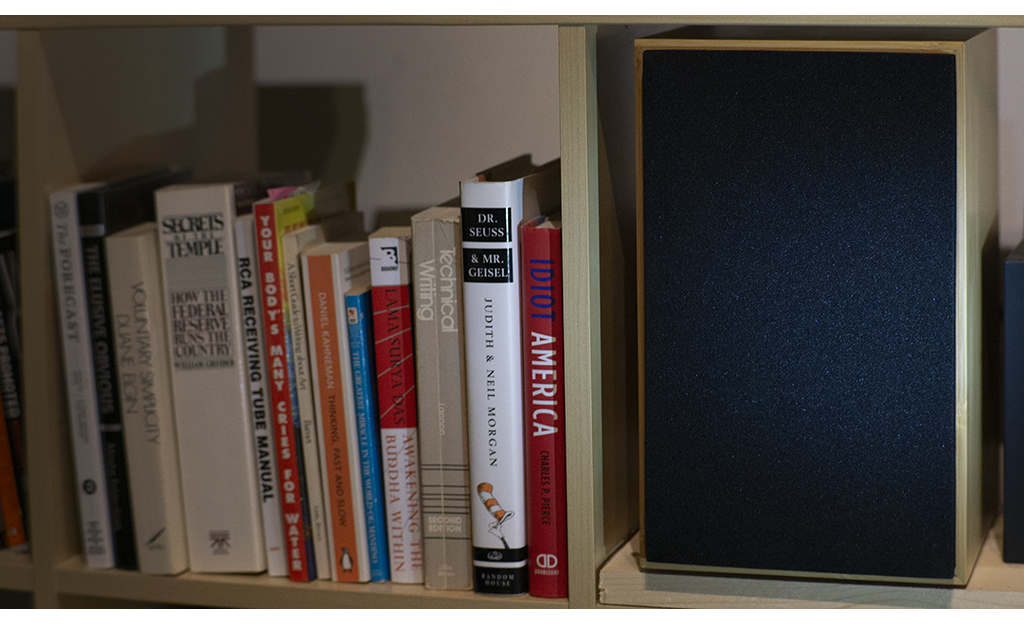
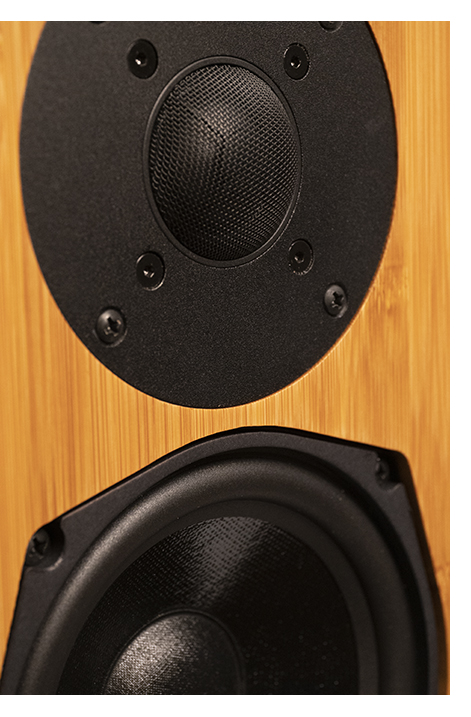
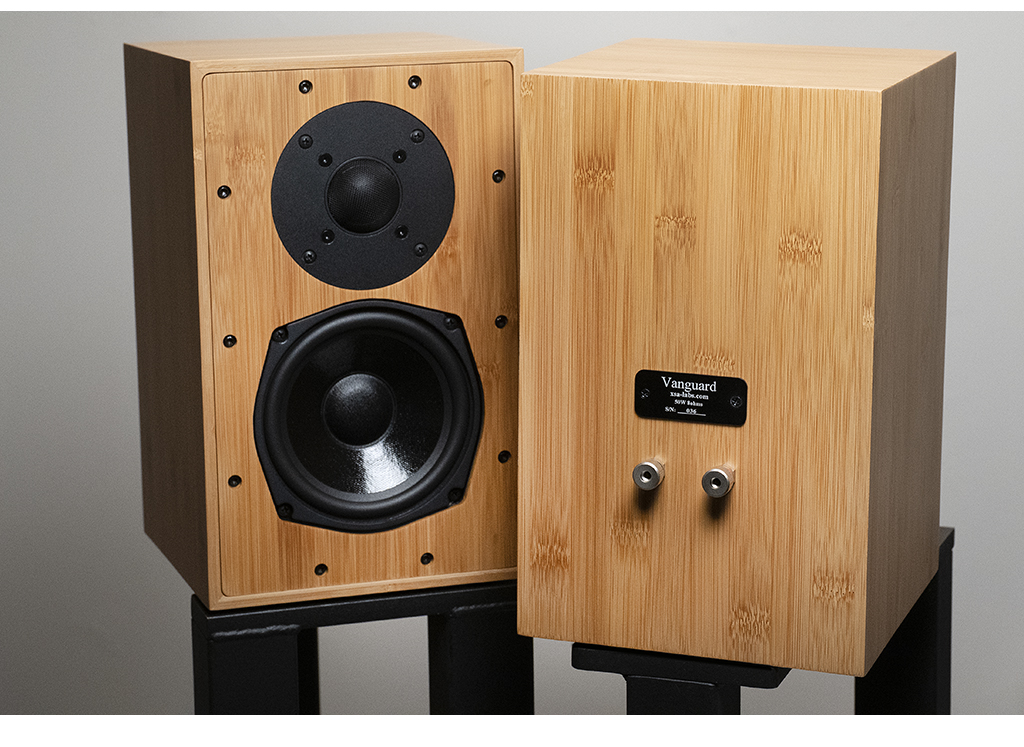
In case you’re wondering, XSA stands for “eXtremely Sexy Audio,” and the Vanguard monitors you see here, done up in bamboo are certainly that. Those of you that work with wood on a regular know how hard bamboo is to work with and get it to look right.

Bamboo is the carbon fiber of woods – it’s hardness is much tougher to cut and machine to tolerance – one mistake and you’ve blown it. Careful inspection of the cabinet corners and the cutouts for the drivers is a real work of industrial art. Sexy indeed.

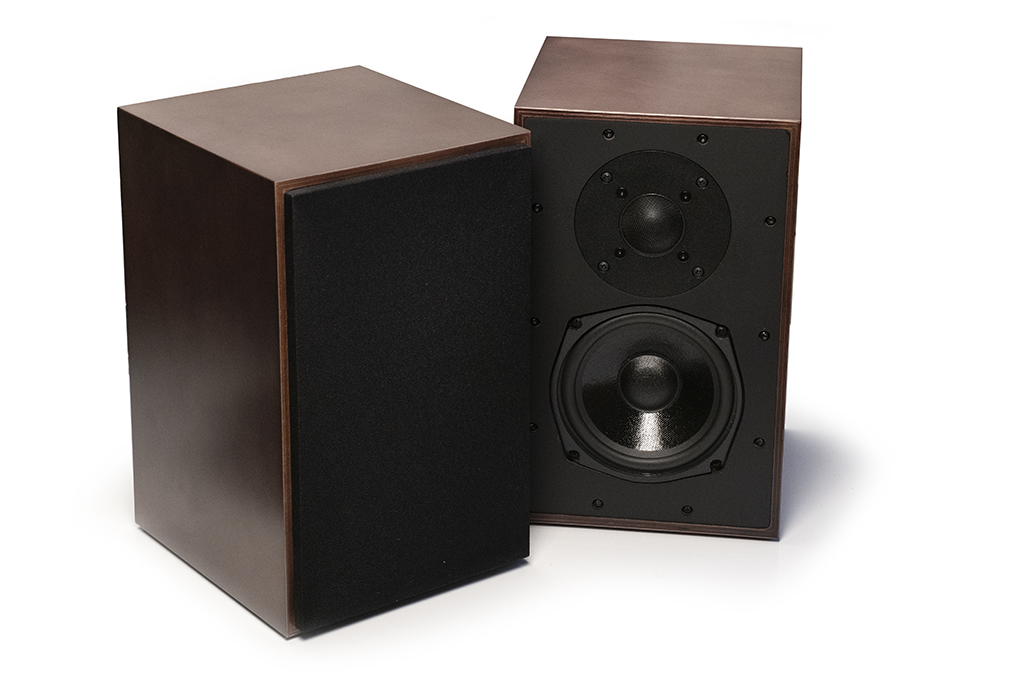
Listening to the rich vocal harmonies in Crowded House’s Woodface brings the capabilities of this great little speaker immediately. They deliver a huge sound field, that is deep and wide. Top to bottom is pretty good for such a small speaker as well. With grilles removed, it’s easy to see the homage to the LS3/5a, but I suggest that this is a different beast. And for $799 a pair, a beast you just might want to welcome into your home.

The Vanguard is about an inch and a half deeper than the LS3/5a cabinet; designer Dr. Viet Nguyen makes this choice to get a bit more bass extension from the 5.25” treated paper cone woofer. Moving from boomer rock to 90s obscurity, with Crash Test Dummies’ “Just Chilin’” reveals where the bass rolloff is – but again, this is an impossible feat for any small speaker. However, in a smaller room the fundamental is still there. Moving back almost a decade to the Dummies’ “Superman’s Song” is where the Vanguards shine. They keep lead singer Brad Robert’s deep voice perfectly blended with the light background vocal of Ellen Reid.

Playing music that doesn’t push the Vanguards out of their sweet spot is a revelation. Winding up this listening session with Elvis Costello and Burt Bacharach’s “I’ll Never Fall In Love Again,” from the Austin Powers soundtrack is truly groovy baby.

A Bit of back story

The BBC LS3/5a monitor has been a staple of small room audiophilia for decades. This diminutive monitor, in a small-ish room with the right electronics does such a fantastic job achieving a natural sounding midrange, you forget about what it doesn’t do. Because the BBC engineers were using it as a location recording monitor, their goal was to get the voices right. I’ll bet they had no idea their creation would become such a cherished thing. Measurement geeks will complain to the stars about a lack of bass and treble extension, and rolled off highs – yet when you sit in the chair and listen, it’s hard to not come away amazed and smiling.

There have been a number of BBC licensed LS3/5a variations over the years, all with a somewhat different sound. Several manufacturers like Harbeth, have done their own updated variation on the theme, and while not following the design exactly, keep with the spirit. Most of these speakers run in the $2,500 – $3,500 range and are all well-crafted. Just as we can have a heated discussion about which version of the 12AX7 tube is “the best,” the same can be said for the LS3/5a and the speakers it’s inspired.

Back to the future

While it’s always fun to respect the past, drivers and crossover components have improved dramatically over the years, and what used to cost megabucks is now much more approachable. Dr. Nguyen’s hard work came to the attention of Mark Schifter, (an industry vet  who’s influenced a number of great brands over the years) who is not only a main collaborator on this speaker, but the LSA 50, 60, and 80 – another group of speakers offering tremendous performance and value.

If you’d like a little bit more tech perspective on the Vanguards, there’s a lively discussion over at Superbestaudiofriends.org, illuminating more of Dr. Nguyen’s design decisions, and of course, measurements. However, measurements don’t tell the whole story, and they don’t speak to the natural tonality that these speakers deliver. Just as most reasonably priced EL-34 tube amplifiers deliver a slightly warm overall sound with a slight bump in the upper bass/lower midrange (to great effect I might add), all of the LS3/5a speakers I’ve heard are goosed in a similar manner. Some not so much, yet it’s always there if you listen for it.

The Vanguards don’t have this pronounced effect, delivering what is arguably a slightly more transparent midrange. I admit to being biased towards a warmer sound, mating the Vanguards to a tube amplifier is more my cup of than a budget solid-state amp. Where the LS3/5a’s combined with a tube amplifier can be too much of a good thing with certain pairings, the Vanguards are lovely. Of course, you must be the final judge.

A quick peek inside the Vanguard reveals high quality crossover components, and less of them. Where the BBC licensed speakers use 11 components, Dr. Nguyen’s design makes do with 6. Claimed sensitivity is 84.5dB/1-watt, but thanks in part to this reduced parts count, the Vanguard is incredibly easy to drive. 25 Watts per channel will get you rocking.

Running the gamut

You’ve probably seen massive amplifiers powering small speakers at hifi shows to deliver higher than expected performance. You might consider this “cheating,” yet it does reveal just how much a budget speaker can deliver. Taking this approach, listening began with the dCS Vivaldi ONE-Apex, Pass Labs XS Pre and a pair of Pass XA200.8 monoblocks, all connected with Cardas Clear cable.

I’d be lying if I didn’t say this was pretty awesome, albeit unrealistic. After trying several different amplification choices, the two I settled on for most of this review were both realistic matches. The $1,299 LSA VT-70 (EL-34 powered), and the ($4,100) T+A Caruso R (solid-state, all in one) delivered great performance, and both make great partners for these speakers. While the T+A Caruso R is three times the cost of the LSA amp, it does feature an integrated tuner, DAC, CD player, streamer and MM phono stage. Together with the Technics SL-1200G, we are awarding this combination one of our two system of the year picks for The Audiophile Apartment.

Investigating the vintage path, the Vanguards also work well with the vintage components we have on hand from Sansui, Marantz, and Nakamichi, though keep in mind these speakers resolve enough detail that you will detect a bit more “wooliness” with older gear.

Substitutions

Many audio enthusiasts love mating mini monitors to a small subwoofer to extend total system response. Most listening was done in an 11 x 13-foot room and a 12 x 18-foot room. As you might suspect, the larger room benefitted more from a bit of LF augmentation, though with careful setup, it worked in the small room as well. However, resist the urge to combine the Vanguards with a budget subwoofer. The detail that they do resolve in the lower register will be lost in the lack of transient speed that always comes along with a cheap subwoofer.

That being said, the SVS Micro ($899) and the REL Tzero MKIII ($499) both make an excellent match for these speakers, but that’s another movie. You do not need to have a subwoofer to enjoy these speakers.

In Perspective

In a day where some speaker manufacturers charge more to custom paint a speaker cabinet than Porsche charges to paint your car a unique color, no one at XSA is getting rich building these speakers. Even if these cabinets were made from MDF (and they wouldn’t sound nearly as good) $799 would be an incredible bargain. To keep it a fair fight, because these speakers are only sold factory direct, they should be compared to speakers costing twice as much – yet they still deliver superb performance.

As a reviewer, it’s easy to lose your way, trying to convince the audience that they need to spend more, more, more, and if you don’t, you can’t play. It’s also easy to lose sight that anything beyond a pair of wireless buds for your smart phone is a luxury on one level, because that’s all you really need to be a music lover. Investing more than that in your hifi system is still a luxury, no matter what level you are engaged.

Some of the most passionate audio enthusiasts I’ve encountered over the years have been those that put a $2,000 – $10,000 system together with extreme care, working hard to achieve the maximum value with every component.

Whether you are putting together your first major system, downsizing from a big system, or putting an additional system together in another part of your living space, the Vanguards are a great pair of speakers that are more than worth the price asked. Should you purchase a pair, I hope you enjoy them as much as I do – they are staying.

$799/pair

www.xsa-labs.com

Original article: The XSA Labs Vanguard – a new paradigm.

©2022 TONEAudio MAGAZINE. All Rights Reserved.

The Carver Black Magic 25

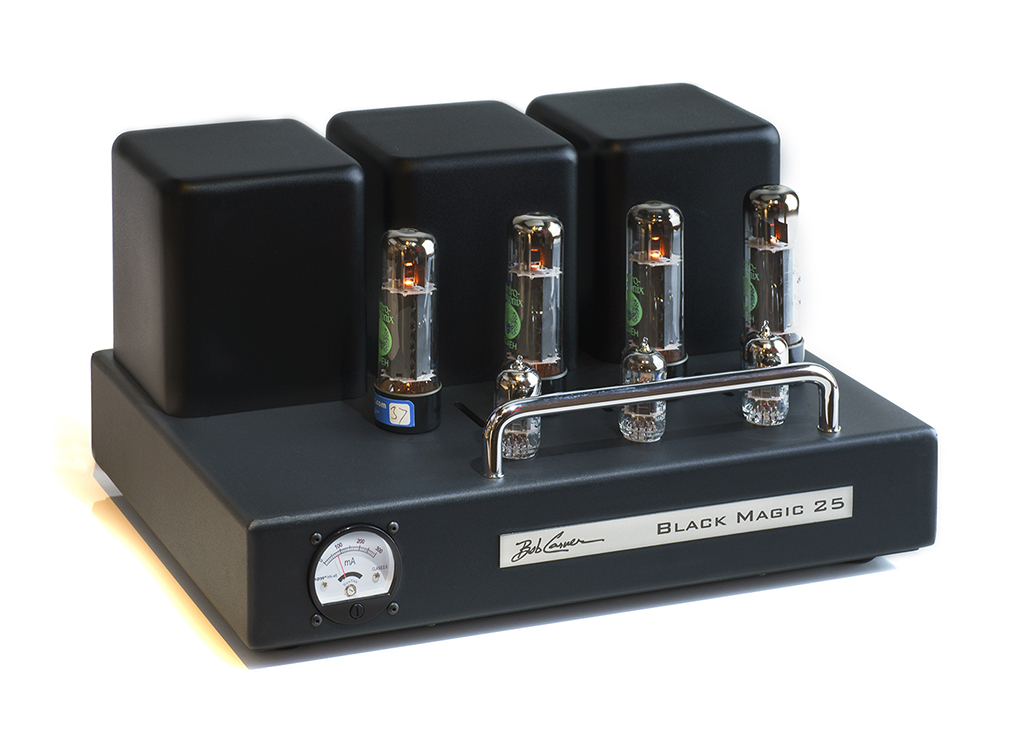
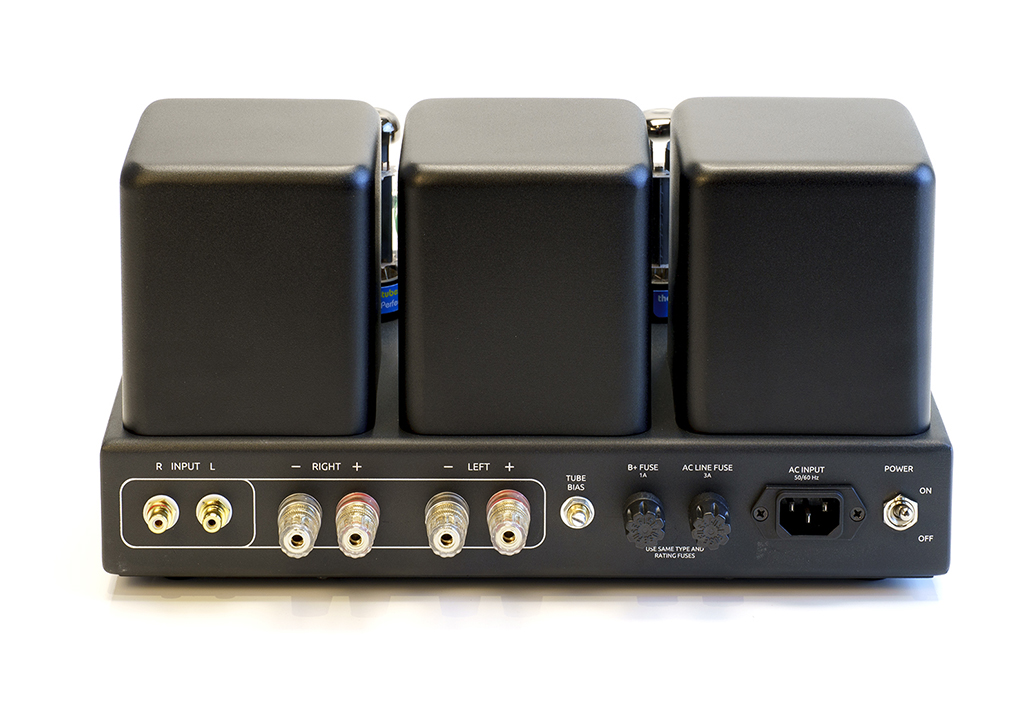
Sometimes less is more, especially when it comes to vacuum tubes. There’s always something special about a low-powered tube amp and a pair of fairly sensitive speakers. Bob Carver’s latest, the Black Magic 25 is a perfect example. Sporting a fairly compact chassis size and tube compliment (1-12AU7, 2-12AX7’s, and 4-EL34s) the Black Magic certainly made some great music here, paired with our Zu Dirty Weekends and the Heretic A-1614s.

Build quality is robust, yet sparse, and the amplifier is a cinch to use. There is a handy meter on the front panel that can be used as a tube tester, as well as for setting the output tube bias. Carver claims that their unique circuit means you don’t need matched output tubes, yet our experience with only one bias control for four tubes suggests otherwise.

The amp runs cool, and provides a sound not as romantic as a vintage Mcintosh, Marantz or Dynaco amp, yet still delivers plenty of tubey, midrange magic that you’d expect. And of course, with only three input tubes, you can roll em’ if you’ve got em’ to fine tune and experiment.

Thanks to careful design, this little jewel plays louder than you would expect a 25Wpc amp to play, even with less efficient speakers like a pair of Harbeths, or your favorite LS3/5a variation on the theme.

Definitely a good thing in a small package!

https://www.bobcarvercorp.com/black-magic-25

Original article: The Carver Black Magic 25

©2022 TONEAudio MAGAZINE. All Rights Reserved.

REL Raises The Bar

The new no.31 Reference Subwoofer is a substantial improvement.

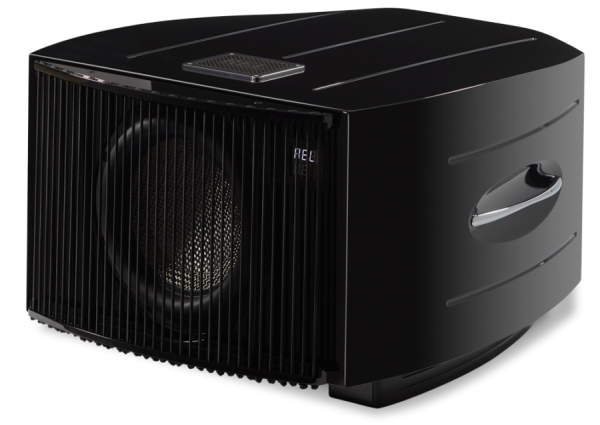
If you aren’t paying close attention, you might easily mistake REL’s new no.31 subwoofer for one of their outgoing reference models. Upon close inspection, aside from the new super-coolio carbon fiber badge, the rear facets of the cabinet top are beveled – a further effort to refine the shape and eliminate resonance.

We often discuss break-in time in terms of days and hours, yet the difference between the no.31 and RELs past is immediate. The no.31 is faster, more nimble. If you only think of the low-frequency augmentation provided by a subwoofer as a single sonic shade, be prepared to have your paradigm reset.

Those familiar with the effect of adding one (or more) REL subwoofers to their system, will be equally impressed. John Hunter and his team have pushed the possibility of what a subwoofer can add to a high performance audio system further than ever.

$7,000 ea.

Please click here to visit the REL site, for full specifications. We’ll have a full review shortly.

Original article: REL Raises The Bar

©2022 TONEAudio MAGAZINE. All Rights Reserved.

The Carver Black Magic 25 Amplifier

Sometimes less is more, especially when it comes to vacuum tubes.

There’s always something special about a low-powered tube amp and a pair of fairly sensitive speakers. Bob Carver’s latest, the Black Magic 25 is a perfect example. Sporting a fairly compact chassis size and tube compliment (1-12AU7, 2-12AX7’s, and 4-EL34s) the Black Magic certainly made some great music here, paired with our Zu Dirty Weekends and the Heretic A-1614s.

Build quality is robust, yet sparse, and the amplifier is a cinch to use. There is a handy meter on the front panel that can be used as a tube tester, as well as for setting the output tube bias. Carver claims that their unique circuit means you don’t need matched output tubes, yet our experience with only one bias control for four tubes suggests otherwise.

The amp runs cool, and provides a sound not as romantic as a vintage Mcintosh, Marantz or Dynaco amp, yet still delivers plenty of tubey, midrange magic that you’d expect. And of course, with only three input tubes, you can roll em’ if you’ve got em’ to fine tune and experiment.

Thanks to careful design, this little jewel plays louder than you would expect a 25Wpc amp to play, even with less efficient speakers like a pair of Harbeths, or your favorite LS3/5a variation on the theme.

Definitely a good thing in a small package!

https://www.bobcarvercorp.com/black-magic-25

Original article: The Carver Black Magic 25 Amplifier

Please note that all TONE Audio copy and photography is © 2005–2018 TONE Magazine LLC. This RSS feed is provided for personal, non-commercial use only.

If you are not reading this content in your news aggregator, RSS reader, or direct, then the site you are looking at may be guilty of copyright infringement. If you locate this anywhere, please contact [email protected] so we can take action immediately.

TONEAudio MAGAZINE. All Rights Reserved.

More Power From LSA!

The New VT-150 rocks…

$2,499 Intro price: $1,999 (Black Friday – 3 days ONLY)

You know we had a great time with LSA’s VT-70, featuring EL-34 power. Jerold O’Brien even
bought the review sample. It’s a pretty incredible little amp for the size and definitely for the
price.

However, 35-40 Watts per channel isn’t always enough for everyone. Bam, they just introduced
the latest VT-150 model, sporting four KT-88 tubes. Following the PrimaLuna and McIntosh
playbook, the tubes are “branded” with the LSA logo. Nice touch.

The newer (and heavier) amplifier now pushes out about 75 Watts per channel, and the bias
can be dialed up to work with the KT-150 tubes for close to 100 Watts per channel. Those of
you not familiar, keep in mind those last 20 Watts are gonna set you back about $600, (for a
set of KT150s) so if you HAVE to have it, that’s the cost of more juice. The rest of you will do
just fine with the KT88s.

Thanks to the careful attention paid to component choice and transformer construction, the
VT-150 is a class leader, just like the VT-70. Slightly less sweet, but more extended at both ends
of the frequency spectrum, as it is with all other amplifiers utilizing this tube.

We’ll have a full review shortly, but our initial impression is VERY favorable!

www.underwoodhifi.com

Original article: More Power From LSA!

©2022 TONEAudio MAGAZINE. All Rights Reserved.

The XSA Labs Vanguard Speakers

In case you’re wondering, XSA stands for “eXtremely Sexy Audio,” and the Vanguard monitors you see here, done up in bamboo are certainly that.

Those of you that work with wood on a regular know how hard bamboo is to work with and get it to look right. Bamboo is the carbon fiber of woods – it’s hardness is much tougher to cut and machine to tolerance – one mistake and you’ve blown it. Careful inspection of the cabinet corners and the cutouts for the drivers is a real work of industrial art. Sexy indeed.

Listening to the rich vocal harmonies in Crowded House’s Woodface brings the capabilities of this great little speaker immediately. They deliver a huge sound field, that is deep and wide. Top to bottom is pretty good for such a small speaker as well. With grilles removed, it’s easy to see the homage to the LS3/5a, but I suggest that this is a different beast. And for $799 a pair, a beast you just might want to welcome into your home.

The Vanguard is about an inch and a half deeper than the LS3/5a cabinet; designer Dr. Viet Nguyen makes this choice to get a bit more bass extension from the 5.25” treated paper cone woofer. Moving from boomer rock to 90s obscurity, with Crash Test Dummies’ “Just Chilin’” reveals where the bass rolloff is – but again, this is an impossible feat for any small speaker. However, in a smaller room the fundamental is still there. Moving back almost a decade to the Dummies’ “Superman’s Song” is where the Vanguards shine. They keep lead singer Brad Robert’s deep voice perfectly blended with the light background vocal of Ellen Reid.

Playing music that doesn’t push the Vanguards out of their sweet spot is a revelation. Winding up this listening session with Elvis Costello and Burt Bacharach’s “I’ll Never Fall In Love Again,” from the Austin Powers soundtrack is truly groovy baby.

A bit of back story

The BBC LS3/5a monitor has been a staple of small room audiophilia for decades. This diminutive monitor, in a small-ish room with the right electronics does such a fantastic job achieving a natural sounding midrange, you forget about what it doesn’t do. Because the BBC engineers were using it as a location recording monitor, their goal was to get the voices right. I’ll bet they had no idea their creation would become such a cherished thing. Measurement geeks will complain to the stars about a lack of bass and treble extension, and rolled off highs – yet when you sit in the chair and listen, it’s hard to not come away amazed and smiling.

There have been a number of BBC licensed LS3/5a variations over the years, all with a somewhat different sound. Several manufacturers like Harbeth, have done their own updated variation on the theme, and while not following the design exactly, keep with the spirit. Most of these speakers run in the $2,500 – $3,500 range and are all well-crafted. Just as we can have a heated discussion about which version of the 12AX7 tube is “the best,” the same can be said for the LS3/5a and the speakers it’s inspired.

Back to the future

While it’s always fun to respect the past, drivers and crossover components have improved dramatically over the years, and what used to cost megabucks is now much more approachable. Dr. Nguyen’s hard work came to the attention of Mark Schifter, (an industry vet  who’s influenced a number of great brands over the years) who is not only a main collaborator on this speaker, but the LSA 50, 60, and 80 – another group of speakers offering tremendous performance and value.

If you’d like a little bit more tech perspective on the Vanguards, there’s a lively discussion over at Superbestaudiofriends.org, illuminating more of Dr. Nguyen’s design decisions, and of course, measurements. However, measurements don’t tell the whole story, and they don’t speak to the natural tonality that these speakers deliver. Just as most reasonably priced EL-34 tube amplifiers deliver a slightly warm overall sound with a slight bump in the upper bass/lower midrange (to great effect I might add), all of the LS3/5a speakers I’ve heard are goosed in a similar manner. Some not so much, yet it’s always there if you listen for it.

The Vanguards don’t have this pronounced effect, delivering what is arguably a slightly more transparent midrange. I admit to being biased towards a warmer sound, mating the Vanguards to a tube amplifier is more my cup of than a budget solid-state amp. Where the LS3/5a’s combined with a tube amplifier can be too much of a good thing with certain pairings, the Vanguards are lovely. Of course, you must be the final judge.

A quick peek inside the Vanguard reveals high quality crossover components, and less of them. Where the BBC licensed speakers use 11 components, Dr. Nguyen’s design makes do with 6. Claimed sensitivity is 84.5dB/1-watt, but thanks in part to this reduced parts count, the Vanguard is incredibly easy to drive. 25 Watts per channel will get you rocking.

Running the gamut

You’ve probably seen massive amplifiers powering small speakers at hifi shows to deliver higher than expected performance. You might consider this “cheating,” yet it does reveal just how much a budget speaker can deliver. Taking this approach, listening began with the dCS Vivaldi ONE-Apex, Pass Labs XS Pre and a pair of Pass XA200.8 monoblocks, all connected with Cardas Clear cable.

I’d be lying if I didn’t say this was pretty awesome, albeit unrealistic. After trying several different amplification choices, the two I settled on for most of this review were both realistic matches. The $1,299 LSA VT-70 (EL-34 powered), and the ($4,100) T+A Caruso R (solid-state, all in one) delivered great performance, and both make great partners for these speakers. While the T+A Caruso R is three times the cost of the LSA amp, it does feature an integrated tuner, DAC, CD player, streamer and MM phono stage. Together with the Technics SL-1200G, we are awarding this combination one of our two system of the year picks for The Audiophile Apartment.

Investigating the vintage path, the Vanguards also work well with the vintage components we have on hand from Sansui, Marantz, and Nakamichi, though keep in mind these speakers resolve enough detail that you will detect a bit more “wooliness” with older gear.

Substitutions

Many audio enthusiasts love mating mini monitors to a small subwoofer to extend total system response. Most listening was done in an 11 x 13-foot room and a 12 x 18-foot room. As you might suspect, the larger room benefitted more from a bit of LF augmentation, though with careful setup, it worked in the small room as well. However, resist the urge to combine the Vanguards with a budget subwoofer. The detail that they do resolve in the lower register will be lost in the lack of transient speed that always comes along with a cheap subwoofer.

That being said, the SVS Micro ($899) and the REL Tzero MKIII ($499) both make an excellent match for these speakers, but that’s another movie. You do not need to have a subwoofer to enjoy these speakers.

In Perspective

In a day where some speaker manufacturers charge more to custom paint a speaker cabinet than Porsche charges to paint your car a unique color, no one at XSA is getting rich building these speakers. Even if these cabinets were made from MDF (and they wouldn’t sound nearly as good) $799 would be an incredible bargain. To keep it a fair fight, because these speakers are only sold factory direct, they should be compared to speakers costing twice as much – yet they still deliver superb performance.

As a reviewer, it’s easy to lose your way, trying to convince the audience that they need to spend more, more, more, and if you don’t, you can’t play. It’s also easy to lose sight that anything beyond a pair of wireless buds for your smart phone is a luxury on one level, because that’s all you really need to be a music lover. Investing more than that in your hifi system is still a luxury, no matter what level you are engaged.

Some of the most passionate audio enthusiasts I’ve encountered over the years have been those that put a $2,000 – $10,000 system together with extreme care, working hard to achieve the maximum value with every component.

Whether you are putting together your first major system, downsizing from a big system, or putting an additional system together in another part of your living space, the Vanguards are a great pair of speakers that are more than worth the price asked. Should you purchase a pair, I hope you enjoy them as much as I do – they are staying. And, if the bamboo isn’t sexy enough, the Vanguards will also be available in antique brown or a transparent natural finish over Russian Birch wood.

$799/pair

www.xsa-labs.com

Original article: The XSA Labs Vanguard Speakers

Please note that all TONE Audio copy and photography is © 2005–2018 TONE Magazine LLC. This RSS feed is provided for personal, non-commercial use only.

If you are not reading this content in your news aggregator, RSS reader, or direct, then the site you are looking at may be guilty of copyright infringement. If you locate this anywhere, please contact [email protected] so we can take action immediately.

TONEAudio MAGAZINE. All Rights Reserved.

Aqua Audio LaDiva CD transport and Formula xHD DAC

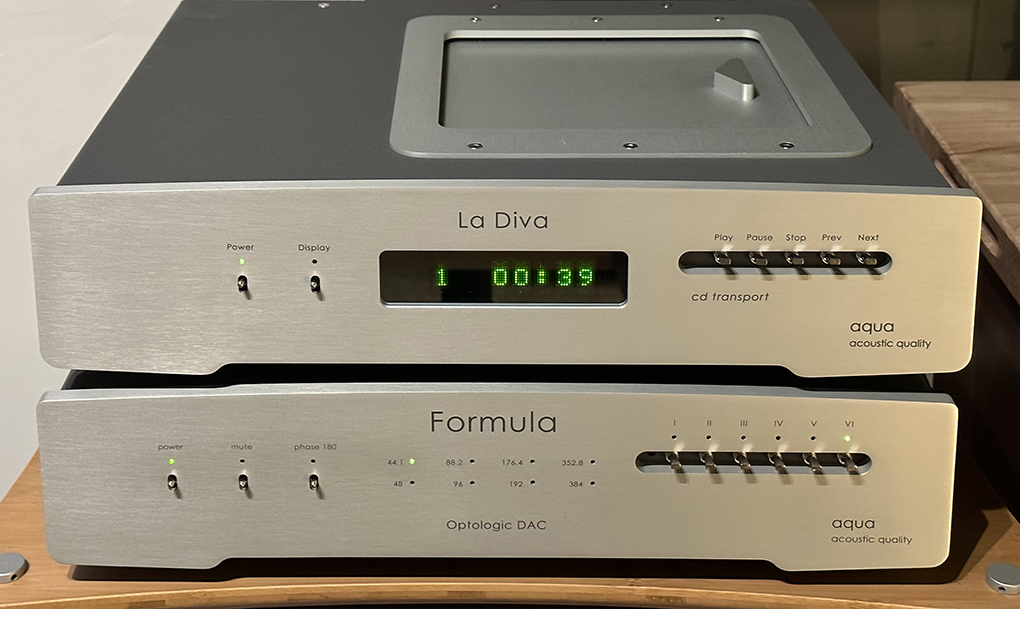
If you are still committed to the compact disc, Aqua Audio’s LaDiva transport and Formula xHD DAC is the loveliest combination I’ve had the pleasure to listen to. Period.

We currently use their LaScala DAC in system two with excellent results. Good as the LaScala is, this combination is an entirely different movie.

Long before the days of streaming, the Naim CD555/PS555 was our digital reference, and it was fantastic – but it played CDs and nothing else. Fortunately, you can add other digital sources (including Aqua’s excellent LIN Q streamer) to this stack and take care of everything digital but SACDs.

Much like vinyl is an old format refined to the hilt, I submit the same approach for the compact disc. The Aqua combination is liquid, lush, organic, and highly engaging. Where my other digital reference, the dCS Vivaldi ONE, resolves a bit more detail, the analog-like quality the Aqua pair provides feels more like listening to top-notch analog. There’s a little more tonal saturation, and It’s so inviting. If you’re of the maximum detail persuasion, it might not be for you, but this pair will fool you every time into thinking you just might be listening to a record. That’s the highest praise we can offer.

If you have an extensive collection of CDs that you have no intention of getting rid of and you want an end-game player, I can think of nothing finer.

www.aquahifi.com (mfr)

https://www.facebook.com/arcadiaaudiomarketing (NA distributor)

Original article: Aqua Audio LaDiva CD transport and Formula xHD DAC

Please note that all TONE Audio copy and photography is © 2005–2018 TONE Magazine LLC. This RSS feed is provided for personal, non-commercial use only.

If you are not reading this content in your news aggregator, RSS reader, or direct, then the site you are looking at may be guilty of copyright infringement. If you locate this anywhere, please contact [email protected] so we can take action immediately.

TONEAudio MAGAZINE. All Rights Reserved.
Issue 113

Cover Story

American Muscle:
Two Great Tube Power Amps from BAT and ARC

Features

Old School: McIntosh MC3500 Power Amplifier
by Ken Kessler

1095: LSA 0.5 Phono

The Audiophile Apartment: The Parasound P 6 Preamplifier

Journeyman Audiophile: Luxman’s New L-507Z Integrated

Headphone Arts:  Dekoni Ear Pads

Short Take: Pro-Ject RCM

Mine: It Should Be Yours

Future Tense: Gear in our immediate future

Reviews

Audience Front Row Cables – By Kevin Wolff
Pass XP-27 Phonostage – By Laurence Devoe
On With The Show! A quick recap on The Pacific Audio Fest
By Greg Weaver/photos by Greg W and Angela Cardas

Music

Playlists:  We share our readers choices from around the world
Setlist:  Todd Cooperider sees Eric Clapton

Original article: Issue 113

Please note that all TONE Audio copy and photography is © 2005–2018 TONE Magazine LLC. This RSS feed is provided for personal, non-commercial use only.

If you are not reading this content in your news aggregator, RSS reader, or direct, then the site you are looking at may be guilty of copyright infringement. If you locate this anywhere, please contact [email protected] so we can take action immediately.

TONEAudio MAGAZINE. All Rights Reserved.