Tag Archives: Gear Reviews

Our System of the Year for 2023

We’ve decided to do something different this year…

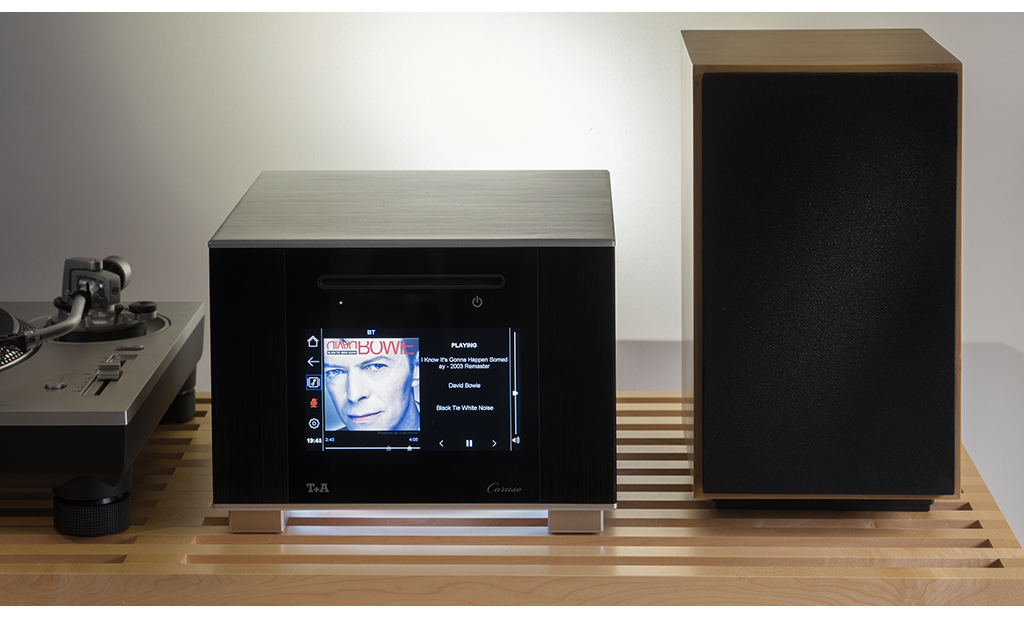
How about giving out an award at the beginning of the year and start out on a happy note? Bam. If you’re looking for a great all in one, turnkey system that will serve up music in every format, we suggest this setup.

Also, just so we’re CLEAR – we do not advocate putting a speaker on the same shelf as a turntable… Just trying to take a pretty picture here. PS: Click here to go to Design Within Reach if you’d like to purchase the Nelson Bench in the photo.

The rest of the system is built around The T+A Caruso R ($4,250) and the XSA Labs Vanguard ($795/pr). We’ve rounded it out with a Technics SL-1200G table ($1,699 without cartridge) the iFi Zen Phono ($199) and a pair of Tellurium Q Blue II speaker cables ($149 for a 2.5m pair). ($225/pair for the 1M RCA interconnects to the iFi Zen)

Original article: Our System of the Year for 2023

©2023 TONEAudio MAGAZINE. All Rights Reserved.

The XSA Labs Vanguard – a new paradigm.

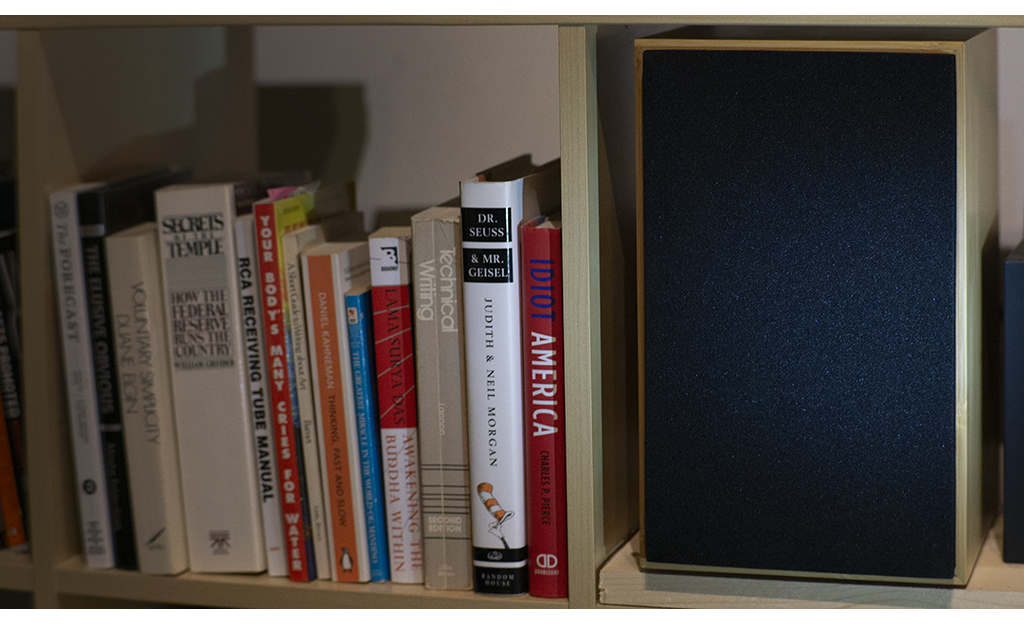
In case you’re wondering, XSA stands for “eXtremely Sexy Audio,” and the Vanguard monitors you see here, done up in bamboo are certainly that. Those of you that work with wood on a regular know how hard bamboo is to work with and get it to look right.

Bamboo is the carbon fiber of woods – it’s hardness is much tougher to cut and machine to tolerance – one mistake and you’ve blown it. Careful inspection of the cabinet corners and the cutouts for the drivers is a real work of industrial art. Sexy indeed.

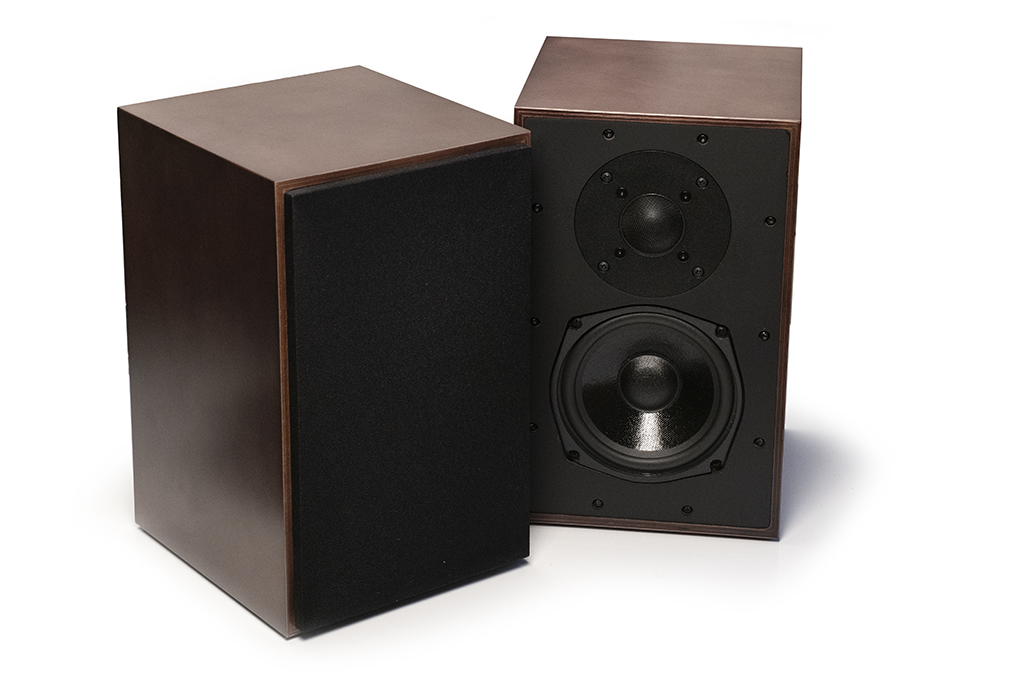
Listening to the rich vocal harmonies in Crowded House’s Woodface brings the capabilities of this great little speaker immediately. They deliver a huge sound field, that is deep and wide. Top to bottom is pretty good for such a small speaker as well. With grilles removed, it’s easy to see the homage to the LS3/5a, but I suggest that this is a different beast. And for $799 a pair, a beast you just might want to welcome into your home.

The Vanguard is about an inch and a half deeper than the LS3/5a cabinet; designer Dr. Viet Nguyen makes this choice to get a bit more bass extension from the 5.25” treated paper cone woofer. Moving from boomer rock to 90s obscurity, with Crash Test Dummies’ “Just Chilin’” reveals where the bass rolloff is – but again, this is an impossible feat for any small speaker. However, in a smaller room the fundamental is still there. Moving back almost a decade to the Dummies’ “Superman’s Song” is where the Vanguards shine. They keep lead singer Brad Robert’s deep voice perfectly blended with the light background vocal of Ellen Reid.

Playing music that doesn’t push the Vanguards out of their sweet spot is a revelation. Winding up this listening session with Elvis Costello and Burt Bacharach’s “I’ll Never Fall In Love Again,” from the Austin Powers soundtrack is truly groovy baby.

A Bit of back story

The BBC LS3/5a monitor has been a staple of small room audiophilia for decades. This diminutive monitor, in a small-ish room with the right electronics does such a fantastic job achieving a natural sounding midrange, you forget about what it doesn’t do. Because the BBC engineers were using it as a location recording monitor, their goal was to get the voices right. I’ll bet they had no idea their creation would become such a cherished thing. Measurement geeks will complain to the stars about a lack of bass and treble extension, and rolled off highs – yet when you sit in the chair and listen, it’s hard to not come away amazed and smiling.

There have been a number of BBC licensed LS3/5a variations over the years, all with a somewhat different sound. Several manufacturers like Harbeth, have done their own updated variation on the theme, and while not following the design exactly, keep with the spirit. Most of these speakers run in the $2,500 – $3,500 range and are all well-crafted. Just as we can have a heated discussion about which version of the 12AX7 tube is “the best,” the same can be said for the LS3/5a and the speakers it’s inspired.

Back to the future

While it’s always fun to respect the past, drivers and crossover components have improved dramatically over the years, and what used to cost megabucks is now much more approachable. Dr. Nguyen’s hard work came to the attention of Mark Schifter, (an industry vet  who’s influenced a number of great brands over the years) who is not only a main collaborator on this speaker, but the LSA 50, 60, and 80 – another group of speakers offering tremendous performance and value.

If you’d like a little bit more tech perspective on the Vanguards, there’s a lively discussion over at Superbestaudiofriends.org, illuminating more of Dr. Nguyen’s design decisions, and of course, measurements. However, measurements don’t tell the whole story, and they don’t speak to the natural tonality that these speakers deliver. Just as most reasonably priced EL-34 tube amplifiers deliver a slightly warm overall sound with a slight bump in the upper bass/lower midrange (to great effect I might add), all of the LS3/5a speakers I’ve heard are goosed in a similar manner. Some not so much, yet it’s always there if you listen for it.

The Vanguards don’t have this pronounced effect, delivering what is arguably a slightly more transparent midrange. I admit to being biased towards a warmer sound, mating the Vanguards to a tube amplifier is more my cup of than a budget solid-state amp. Where the LS3/5a’s combined with a tube amplifier can be too much of a good thing with certain pairings, the Vanguards are lovely. Of course, you must be the final judge.

A quick peek inside the Vanguard reveals high quality crossover components, and less of them. Where the BBC licensed speakers use 11 components, Dr. Nguyen’s design makes do with 6. Claimed sensitivity is 84.5dB/1-watt, but thanks in part to this reduced parts count, the Vanguard is incredibly easy to drive. 25 Watts per channel will get you rocking.

Running the gamut

You’ve probably seen massive amplifiers powering small speakers at hifi shows to deliver higher than expected performance. You might consider this “cheating,” yet it does reveal just how much a budget speaker can deliver. Taking this approach, listening began with the dCS Vivaldi ONE-Apex, Pass Labs XS Pre and a pair of Pass XA200.8 monoblocks, all connected with Cardas Clear cable.

I’d be lying if I didn’t say this was pretty awesome, albeit unrealistic. After trying several different amplification choices, the two I settled on for most of this review were both realistic matches. The $1,299 LSA VT-70 (EL-34 powered), and the ($4,100) T+A Caruso R (solid-state, all in one) delivered great performance, and both make great partners for these speakers. While the T+A Caruso R is three times the cost of the LSA amp, it does feature an integrated tuner, DAC, CD player, streamer and MM phono stage. Together with the Technics SL-1200G, we are awarding this combination one of our two system of the year picks for The Audiophile Apartment.

Investigating the vintage path, the Vanguards also work well with the vintage components we have on hand from Sansui, Marantz, and Nakamichi, though keep in mind these speakers resolve enough detail that you will detect a bit more “wooliness” with older gear.

Substitutions

Many audio enthusiasts love mating mini monitors to a small subwoofer to extend total system response. Most listening was done in an 11 x 13-foot room and a 12 x 18-foot room. As you might suspect, the larger room benefitted more from a bit of LF augmentation, though with careful setup, it worked in the small room as well. However, resist the urge to combine the Vanguards with a budget subwoofer. The detail that they do resolve in the lower register will be lost in the lack of transient speed that always comes along with a cheap subwoofer.

That being said, the SVS Micro ($899) and the REL Tzero MKIII ($499) both make an excellent match for these speakers, but that’s another movie. You do not need to have a subwoofer to enjoy these speakers.

In Perspective

In a day where some speaker manufacturers charge more to custom paint a speaker cabinet than Porsche charges to paint your car a unique color, no one at XSA is getting rich building these speakers. Even if these cabinets were made from MDF (and they wouldn’t sound nearly as good) $799 would be an incredible bargain. To keep it a fair fight, because these speakers are only sold factory direct, they should be compared to speakers costing twice as much – yet they still deliver superb performance.

As a reviewer, it’s easy to lose your way, trying to convince the audience that they need to spend more, more, more, and if you don’t, you can’t play. It’s also easy to lose sight that anything beyond a pair of wireless buds for your smart phone is a luxury on one level, because that’s all you really need to be a music lover. Investing more than that in your hifi system is still a luxury, no matter what level you are engaged.

Some of the most passionate audio enthusiasts I’ve encountered over the years have been those that put a $2,000 – $10,000 system together with extreme care, working hard to achieve the maximum value with every component.

Whether you are putting together your first major system, downsizing from a big system, or putting an additional system together in another part of your living space, the Vanguards are a great pair of speakers that are more than worth the price asked. Should you purchase a pair, I hope you enjoy them as much as I do – they are staying.

$799/pair

www.xsa-labs.com

Original article: The XSA Labs Vanguard – a new paradigm.

©2022 TONEAudio MAGAZINE. All Rights Reserved.

REVIEW: The LSA Signature 80 Speakers

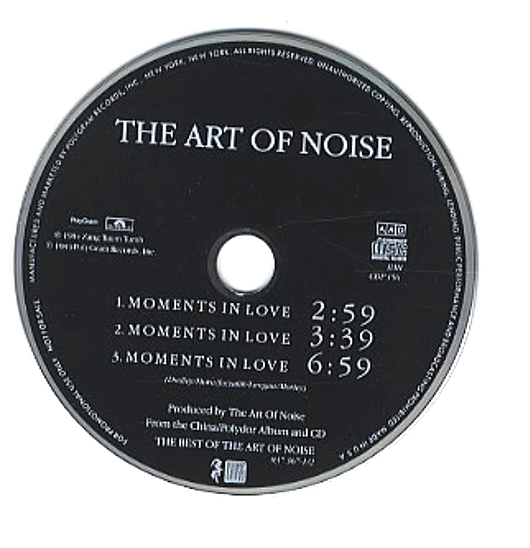
As mentioned in our TONE/Distilled review, the first track played on the LSA Signature 80s is The Art of Noise’s “Moments in Love.” Immediately, the deep bass groove on this track is in full effect, and this is not a wimpy presentation.

While electronic music doesn’t give a listener an absolute sonic reference the way a track of a string quartet does, this music offers up a massive soundfield, with many sonic tidbits in all three dimensions. A mediocre speaker presents this music in a benign way, lacking an immersive quality. Space and dynamics are the third and fourth dimension of music to me, and the Signature 80s pass the initial “are these cool enough to investigate further” test with ease.

There’s a reason that everything I hear isn’t “mindblowing,” and the new Signature 80 from LSA is the perfect example. Great as their $599/pair Signature 50s are (and they deliver a lot of music for the money) the 80s deliver more. Legitimate products should deliver more performance as you go up the range, and the LSA Signature 80s do not disappoint. There is a twist however – where the Signature 50 uses a soft-dome tweeter and is voiced slightly more on the warm/saturated/lush side of neutral, the Signature 80s are more resolving, more dynamic, and go down deeper. In short for $1,299/pair, you get a speaker that can deliver more musical information than the model beneath it. Bravo.

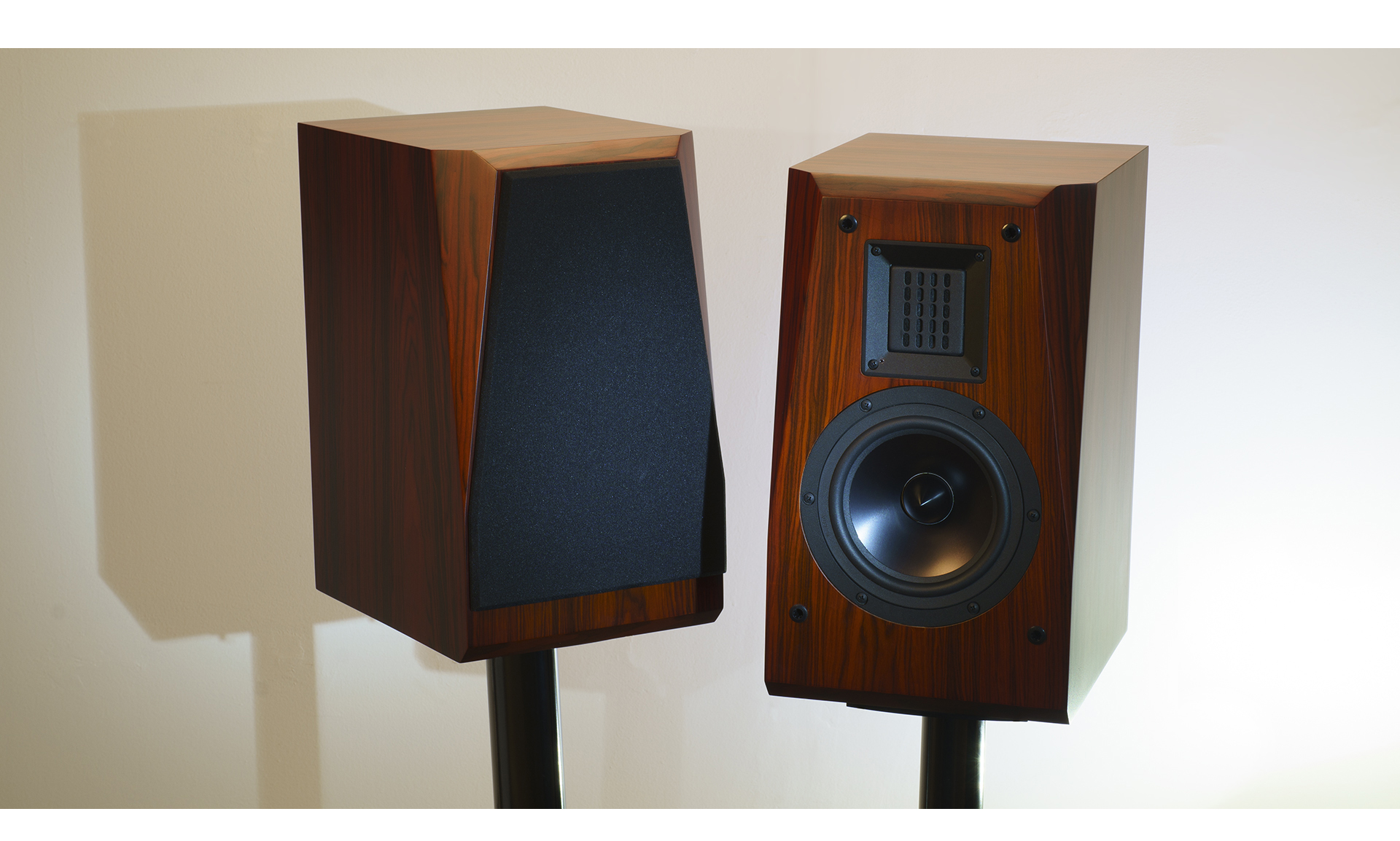
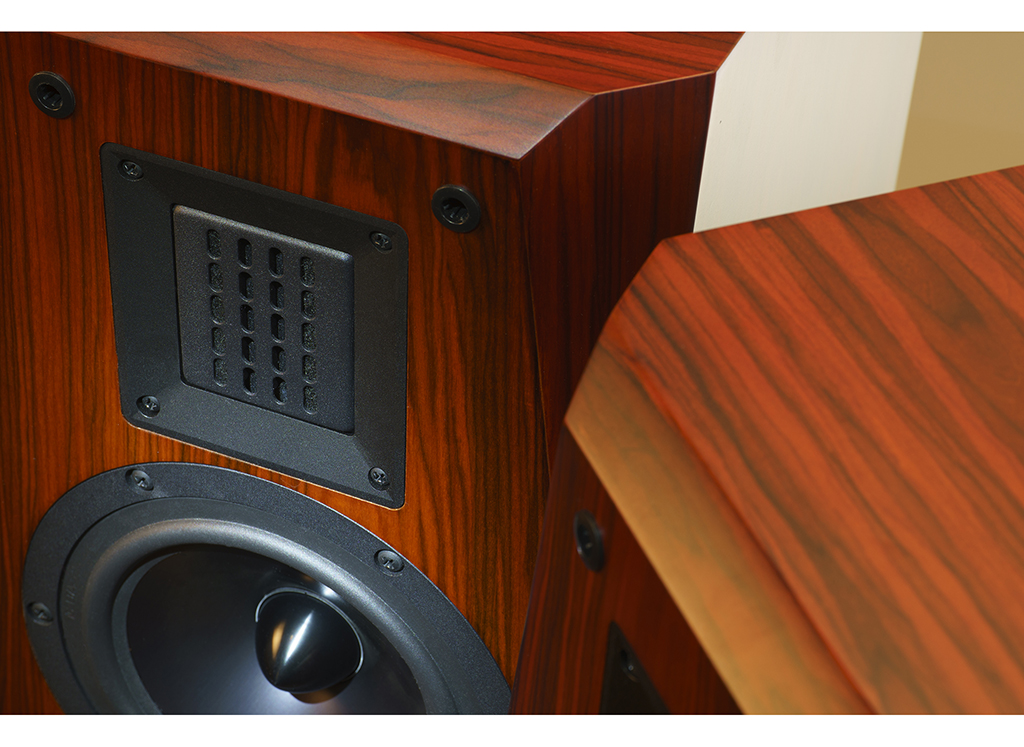
Retaining the 86dB/1-Watt sensitivity of the Signature 50, the Signature 80 swaps the soft dome tweeter and paper cone woofer for a metal coned woofer and a planar tweeter. Who knows, more resolution or not, you may even prefer the Signature 50. If so, more money for beer, records, or maybe a haircut? Bottom line, LSA has delivered yet another compact speaker (15.75” H x 9.1” W x 12” D) delivering exceptional performance at a relatively modest price.

Easy to set up

Sitting on a pair of sand filled 20” Sound Anchor stands gives the Signature 80s the perfect ear alignment in my listening chair. The relatively small panel area of the planar tweeter demands that you spend a little extra time getting the speaker height and rake angle on the money for best results. Depending on your listening position, you may find the best results with stands between 18 and 24 inches.

Planar drivers offer a level of transparency that many cone and dome drivers do not, but with physics (and ex-wives) everything has a cost. The tweeter in the Signature 80 is very resolving, and offers a high degree of horizontal dispersion, but vertical dispersion is somewhat limited. Once you’ve optimized the Signature 80s in your room for solid bass and a smooth bass to midrange transition, slowly raise and lower your head to find the spot where you hear the most high-frequency extension. That’s the magic spot. Adjust speaker rake angle to maximize this position, and you’re set.

Potential suitors

One of the most interesting changes between the 50 Signature and the 80 Signature is the 10-ohm impedance – making these speakers incredibly tube amp friendly. While we had excellent luck with solid-state and tube amplification, these speakers are particularly engaging with tubes. Don’t be discouraged by a somewhat low sensitivity spec – these speakers are super easy to drive.

After using a wide range of amplifiers in our listening, most was done with LSA’s VT-70 (EL34) tube amp and my Rega Brio. Depending on which sonic signature you prefer either of these amplifiers are very affordable and will make the cornerstone of a high-performance system that is approachable for a wide range of music lovers. Digital source was our OPPO 105, and a Technics SL-1600/Ortofon 2M Red rounded out the analog side. All cabling was Tellurium Q Black II. All in, this made for a system that plays analog and digital for under $5k.

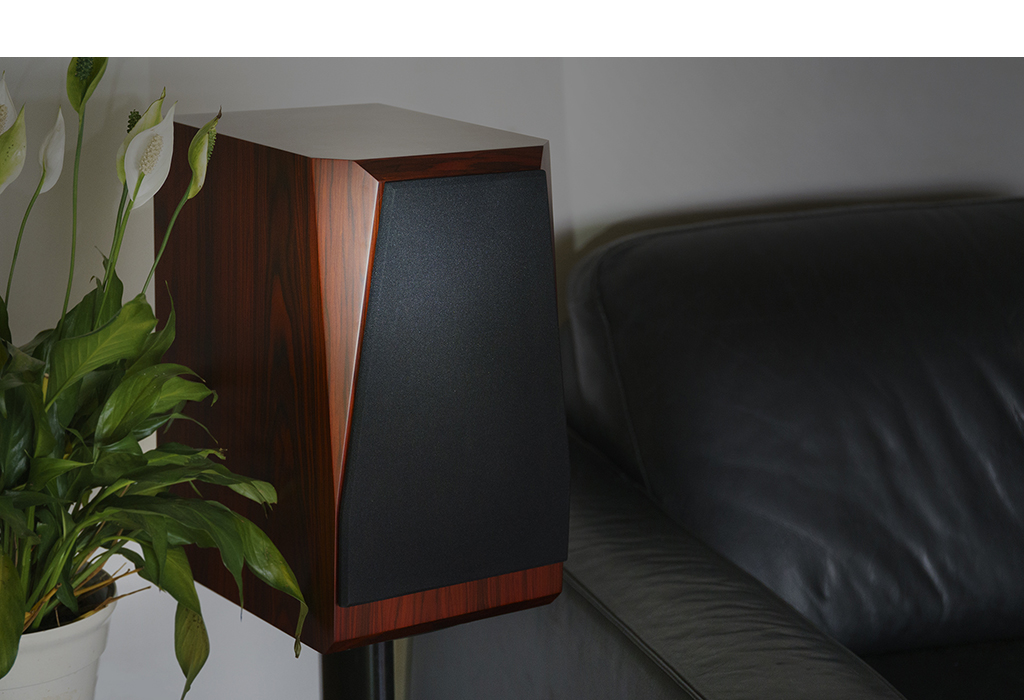
Where LSA’s Signature 50s pay a bit of an homage to the Sonus faber look, with their more organic shape and leather front panel, the Signature 80s are more angular, looking like the shape that Avalon made famous. They come in a beautiful Rosewood, matte lacquer finish. Again, at this price point, not offering a range of finish choices keeps the cost down and the performance up.

Further listening

Thanks to solid bass performance, the Signature 80 feels like a bigger speaker than it is. It’s amazing how far today’s technology has come, allowing speakers this size to deliver this level of sonics.

Rather than bore you with a long list of tracks that you don’t know or don’t like, let’s break it down somewhat. Integrating a planar or ribbon tweeter is always a tough job, yet the team at LSA succeeds brilliantly, resulting in natural midrange. Much of this has to do with careful crossover design, and there is a photo comparing a Signature 80 crossover to that of a big industry favorite, the KEF LS50. As you can see, the LSA crossover is far more robust. There’s nowhere to hide when it comes to this kind of thing. Every additional $20 spent here makes for a substantial jump in the final product.

Tracking through our workhorse cuts from Joni Mitchell, Ella Fitzgerald, Billie Eilish and Johnny Cash is incredibly satisfying. The Signature 80s can deliver more than enough resolution to get a solid sense of presence and body. Highs are smooth and extended without sizzle, or feeling tipped up – cymbals sound as they should, and along with percussion, there is a decent amount of airiness. Bass response is equally impressive. The Signature 80s deliver enough grunt and fundamental low-frequency information to deliver the goods. Whether you are delving full bore into your favorite electronica, rock or hip-hop tracks all but the heaviest bass heads will be happy. And of course you can always add a sub. Pairing the Signature 80s with the $899 SVS SB-3000 mini subwoofer adds a lot of grunt and still keeps the budget reasonable. Again, we’re just exploring reasonably priced possibilities – don’t think you need a sub to enjoy the Signature 80s. The smaller your room is, the less likely you will, however as you go to a smaller room, more careful speaker placement will be required to nail the balance between low-frequency output and midrange/mid-bass smoothness. But you can do it.

Thanks to that planar tweeter we’ve been talking about, these small speakers create a very wide stereo image. Part of this will depend on the quality of your source components, the other part on your setup skills. The Signature 80s sound good just thrown in the room, yet an hour or so spent on careful fine tuning will yield very worthwhile results. As your listening skills improve, you may find that your Signature 80s have still more to give, and that’s a good thing.

Finally, the Signature 80s can play loud without distortion, giving them a more dynamic presentation than several other small speakers we’ve heard. Often, music lovers forget about dynamics as the fourth dimension, and this is why so many small speakers sound so small. Even when connected to our big Pass XA200.8 monoblocks, it is impressive how loud these speakers can play before distortion sets in. This makes for fatigue free listening, and a speaker that you can listen to all day without becoming tired or bored.

Listener friendly, room friendly and wallet friendly

This is the point in the “conclusion” that we’re supposed to tell you that these speakers eclipse anything for ten grand. Sorry, that’s not happening. It’s more important to hear what a big part of the musical spectrum these little speakers get right in a direct comparison to a few speakers on hand in the 10-20k range. Really right.

The $1,000 – $2,500 speaker market is probably one of the most highly competitive segments going. The LSA Signature 80 belongs in the top tier of this group. Rather than concentrating on blowing you away with one optimized aspect of the frequency range, the LSA team brings you a well-balanced speaker, that you can actually live with.

It’s hard for companies like KEF, Elac and such to put as much forward in this area of high-end audio, because everyone needs to get their piece of the pie. For those of you looking for the maximum value, it’s tough to beat a company like LSA, because there is no importer, distributor and dealer in the chain. Comparing the Signature 80 to the KEF LS-50 and the ELAC Uni-Fi, the Signature 80s not only reveal more music, they are much easier to drive.

Highly recommended.

www.underwoodhifi.com

Original article: REVIEW: The LSA Signature 80 Speakers

Please note that all TONE Audio copy and photography is © 2005–2018 TONE Magazine LLC. This RSS feed is provided for personal, non-commercial use only.

If you are not reading this content in your news aggregator, RSS reader, or direct, then the site you are looking at may be guilty of copyright infringement. If you locate this anywhere, please contact [email protected] so we can take action immediately.

TONEAudio MAGAZINE. All Rights Reserved.

The LSA VT-70 Integrated Amplifier

There’s always something special about an EL-34 based tube amp, with a pair of output tubes per channel, and a pretty simple circuit.

Less to screw up, or as Nelson Pass likes to say, “simple circuits usually sound best.” Honestly, I’ve never heard a bad EL-34 amp, but like Baskin – Robbins, there are a lot of different flavors, from vintage, warm, and syrupy, like a Dynaco Stereo 70 or Marantz 8B to highly refined, like an Octave or VAC amplifier. And plenty of variations on the theme in-between.

For years, the budget yet high-quality entry-level tube amp has been the PrimaLuna ProLogue 1. I started my hifi writing career with this amp and still have the review sample. Nearly 20 years ago it was $1,095 and a killer value. The new EVO 100 is still a great value, and benchmark, but it’s $2,395 now. So, what the audiophile world needs now is a great budget tube amp.

Enter the VT70

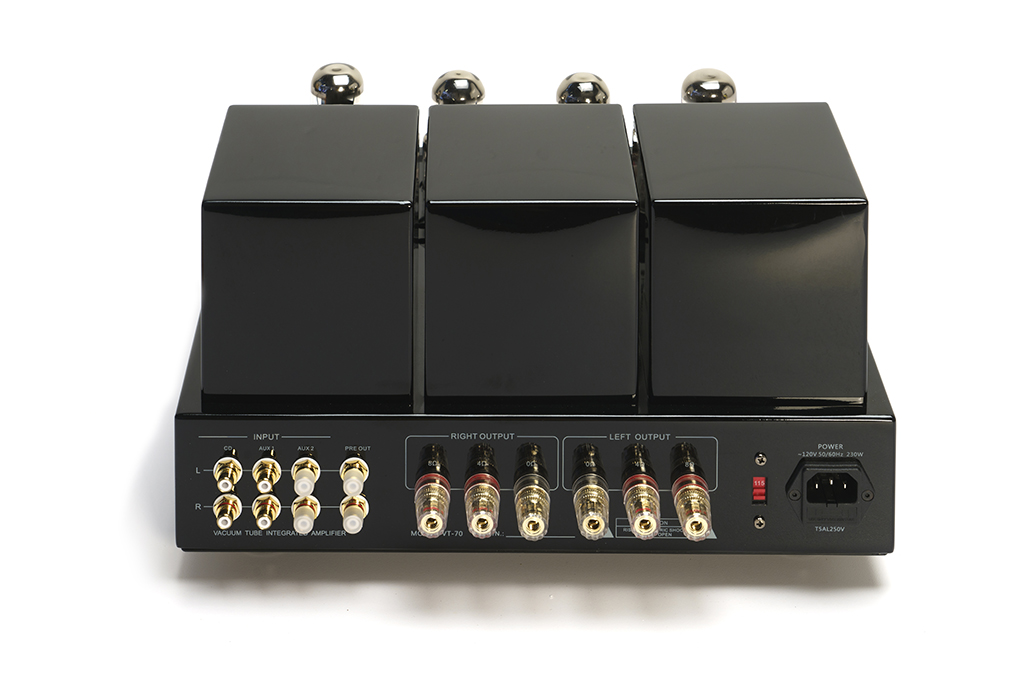
Priced at $1,295, we are slightly going outside the parameters of this column, but it’s too good not to share. With 35 watts per channel on tap, it’s got more than enough juice to drive most comparably priced speakers to a reasonable level, and three single ended RCA inputs should be more than enough for a phonostage, DAC/Streamer and maybe even a tape deck.

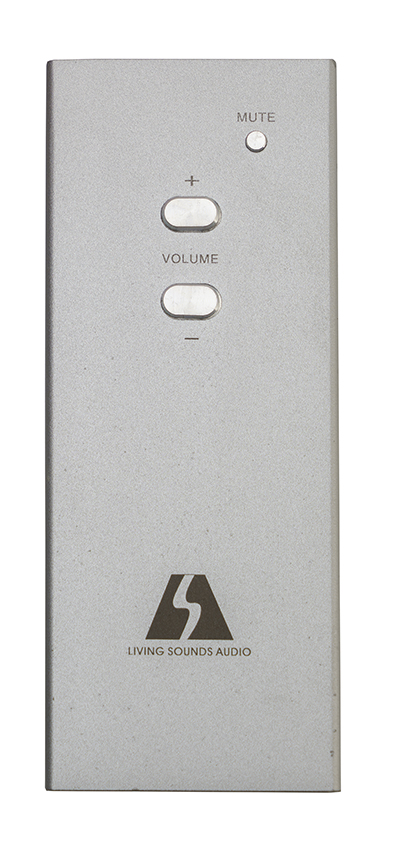
The VT70 also sports a headphone output as well as a preamp out to drive a powered sub. The remote control is a nicely presented steel remote, not a plastic, kids meal remote, as many other products costing significantly more bring to the table. The VT70 brings a lot of juice to the game.

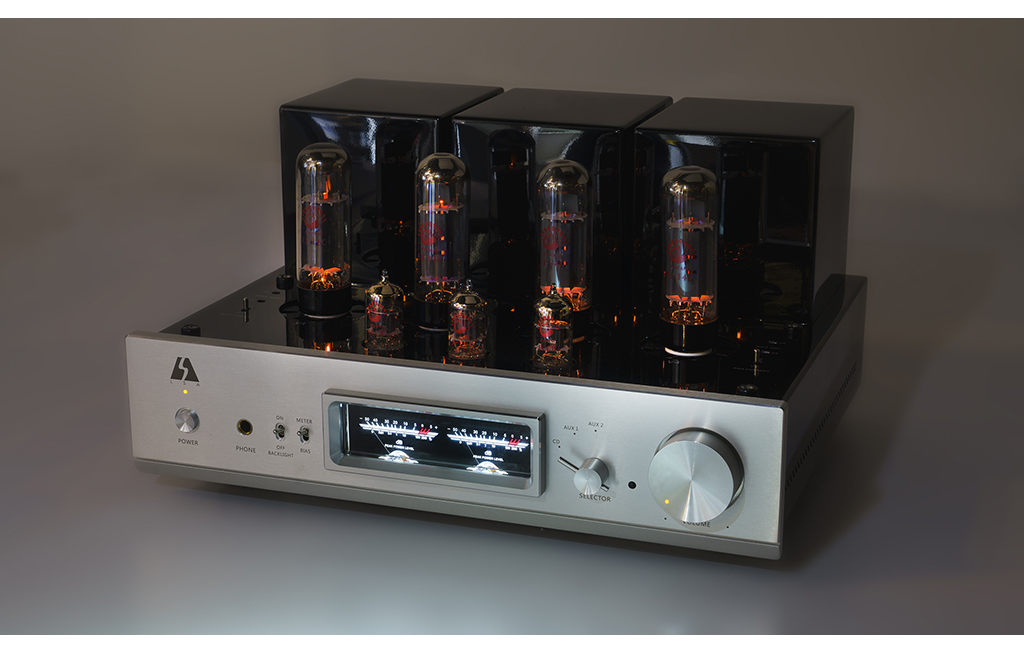
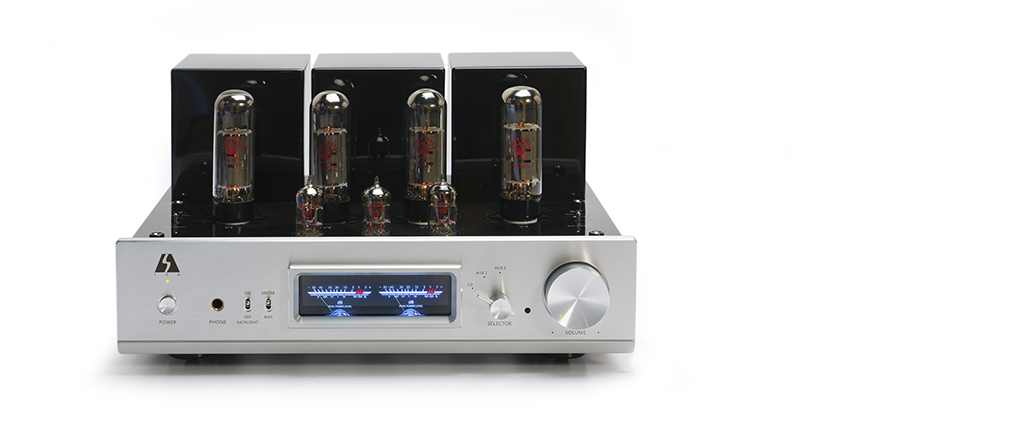
It’s a classic EL-34 design, with a 12AX7, two 12AU7s and four EL-34s (two per channel). The black chassis has a machined silver aluminum front faceplate sporting a pair of output meters that do double duty for biasing the tubes when needed. If you aren’t familiar with this procedure, just follow the manual. Turn the volume all the way down, switch to “bias” mode and adjust the trim pots on the top face of the amp until the meter reads 100%. Be careful not to go past 100%, or you can burn up the output tubes.

Check the bias when you get your amp out of the box, we had two tubes at 200%, so a quick adjustment had us right back on the money and eliminated a slight hum as well. Pro tip: set bias when you unbox your amp, then check again after a couple of weeks. Fresh tubes usually need re-biasing at about 100 hours, then they stay stable until almost expired. Again, those handy meters make it easy to double check.

The incredible lightness of being tubey

Most budget solid-state amplifiers sound flat and lifeless. While the world’s best tube amplifiers from the major manufacturers take advantage of massive power supplies and custom output transformers to work their magic, a basic EL-34 amplifier can work wonders with the basics, and that’s exactly what the VT70 delivers.

You won’t mistake this amplifier for something from ARC, BAT, or CJ, (and you won’t mistake the price tag either…) but this little amplifier musters good sound, and is miles more engaging, than nearly any comparably priced solid-state amplifier. It’s so much easier to build a good tube amp for this kind of money.

While you can tube roll, and swap tubes forever with the VT70, I submit that this takes away from the approachable ethos. I can’t get behind spending another $500-$800 on boutique tubes for a 1200-dollar amplifier. And the VT70 does arrive with a full complement of PSVANE tubes. Underwood’s Mark Schifter says that PSVANE is supplying them with matched output tubes – another one of those little touches you’ll pay extra for elsewhere.

The setup

We stuck to three speakers with the VT70, a pair of Harbeth Compact 7s, the Audio GE-Teddy speakers (also available from LSA) and our desktop pair of Jern EH-14s. That this amp plays fantastic with speakers 2-4 times its asking price tells you everything you need to know.

Bass is well defined, and the top end is nice and smooth, without rolloff. By comparison, our Dynaco ST-70 has fairly sloppy bass, and the highs roll off pretty quick. Power supply parts have come a long way in 50 years. The key to success with this amplifier is to not push it beyond what it is capable of. Playing at modest levels, not driving it to clipping (which ANY 35Wpc tube amp is going to do) is absolutely lovely.

Matched up with the Teddy’s, which have a sensitivity of 89dB/1-watt is a sweet spot, led me to borrowing staffer Jerold O’Brien’s older pair of Vandersteen 1s, which have a 90dB/1-watt sensitivity as well. I’m sure LSA wants to sell you a pair of Teddy’s, but if you are really on a budget, you can snag a nice used pair of Vandersteens or something similar for about 600 bucks, find a great DAC and you have a rocking system for barely over $2k. This amplifier is a great way to get into the tube experience. Trying to keep it all reasonable, I used my older Naim CD-5i, with fantastic results.

More on the sound

As with other favorite EL-34 amps, the midrange is the strength. This amplifier offers up such a natural midrange, with so much soundstage depth, you’ll forget what isn’t happening. You’ll be spoiled for solid-state. Going back to a recently re-capped Marantz 2270 receiver with the Teddy’s felt like I had asbestos insulation in my ears. And a nice 2270 easily fetches more on the used market than a new VT70. Impressive.

Again, playing to the strength of this amplifier, you’ll find yourself sifting through your favorite acoustic tracks and perhaps even some 60s and 70s classics should you feel so inclined. Cue up some Joni Mitchell, Crosby, Stills and Nash, or some Greatful Dead and you will freak out. A long playlist of Bowie tracks from Hunky Dory all the way through Blackstar were equally tasty.

The Jerns don’t have a ton of deep bass output, so pulling in our SVS 3000 Micro subwoofer, rounded out the package to provide an incredibly powerful desktop system, which is actually where the VT70 is staying. It’s too much fun to send back, so this one is #toneaudioapproved.

Running through a short list of headphones from the LSA HP3 Novas, a pair of Audeze LCD-2s, and our workhorse Sennheiser 650s (with Cardas cabling) all worked well. Headphone fanatics are probably still going to want an outboard amplifier for the best results, but we’re on the budget tip here. And, this is certainly an engaging enough headphone amp to make you want to grab a set, and see what the excitement in personal audio is all about.

You can’t lose

With internet pundits claiming high end audio is going under on nearly a daily basis, this is precisely the kind of product to get more people interested in a decent music system that might have thought they couldn’t afford it. Honestly, we need a few more benchmarks like this.

The LSA VT70 is the perfect amp at the perfect price, whether you’re investigating high performance audio for the first time, taking your first spin with a tube amplifier, or perhaps looking for a great second system. It’s musical satisfying, aesthetically pleasing, and gets the job done. Highly recommended.

www.underwoodhifi

Original article: The LSA VT-70 Integrated Amplifier

Please note that all TONE Audio copy and photography is © 2005–2018 TONE Magazine LLC. This RSS feed is provided for personal, non-commercial use only.

If you are not reading this content in your news aggregator, RSS reader, or direct, then the site you are looking at may be guilty of copyright infringement. If you locate this anywhere, please contact [email protected] so we can take action immediately.

TONEAudio MAGAZINE. All Rights Reserved.